- Yes
- No
Hello everyone and welcome to this new feature.
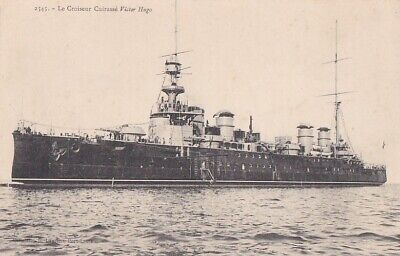
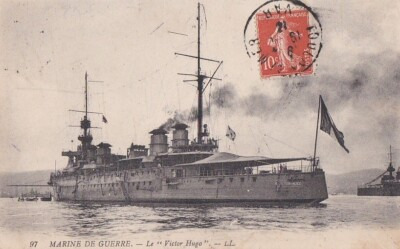
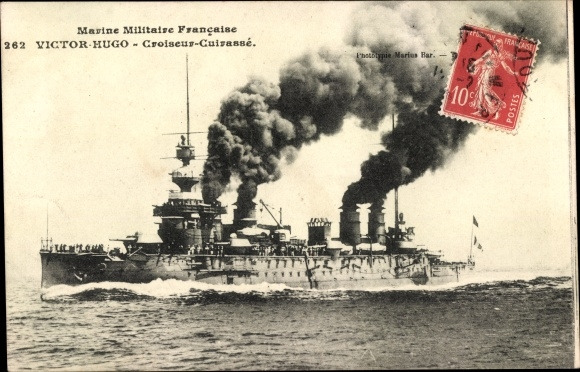
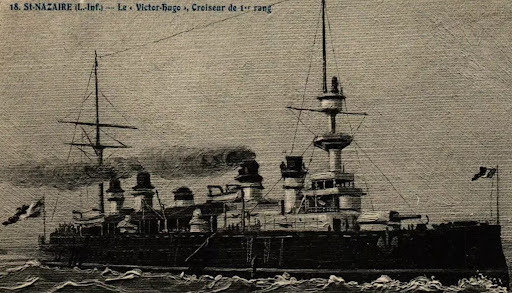
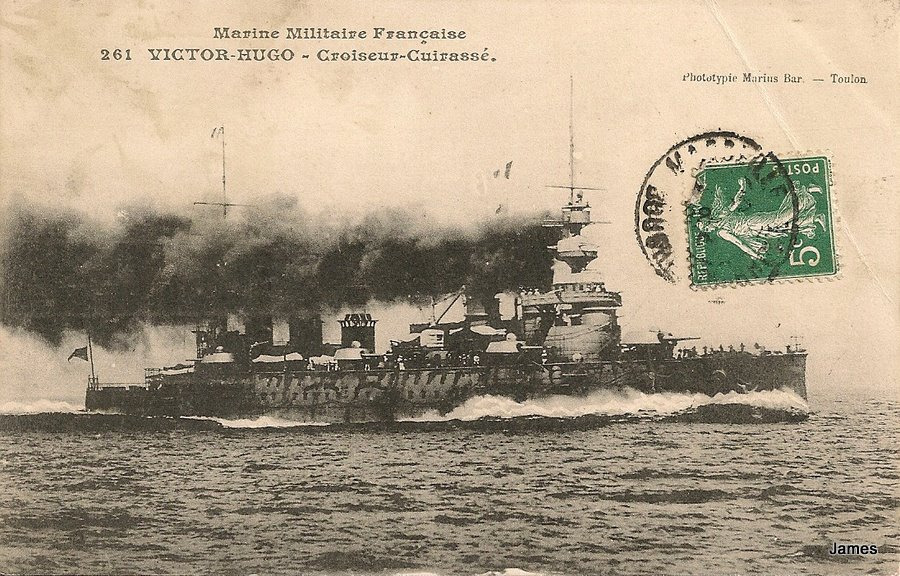
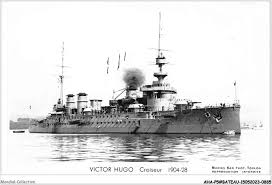
Today I’m presenting the last armored cruiser of the Léon Gambetta class, the Victor Hugo.
Laid down in 1903 and commissioned in 1907, the Victor Hugo was the third and final ship of its class. Like its two sister ships, it was assigned to the Mediterranean Squadron, where it served as a command ship.
During the war, the Victor Hugo carried out important but typical missions for a ship of its type: escorting convoys, protecting French Navy battleships, and participating in the blockade of the Austro-Hungarian Navy in the Adriatic Sea, particularly in the areas around the Strait of Otranto. In this role, it patrolled and helped isolate enemy naval forces, in coordination with the Allied forces. The pressures of war, logistical constraints, and evolving tactical needs led to a gradual shift in the use of the older armored cruisers as naval warfare evolved, particularly in the face of the submarine threat. The remaining ships of the Léon Gambetta class were thus relegated to transport roles towards the end of the war. After several years of operational service, Victor Hugo was placed in reserve in July 1918, marking the end of its active role in the conflict.
Following the armistice and the end of hostilities, Victor Hugo was not immediately decommissioned but entered a second period of service. It was recommissioned in 1922 and assigned for a time to the Atlantic Flying Division, then deployed to the Far East in 1922-1923. Upon its return from the Far East, it was once again placed in reserve at Toulon. Finally, after more than twenty years of various services, the Victor Hugo was struck from the Navy’s lists on January 2, 1928, and then sold for scrap on November 26, 1930. The Victor Hugo exemplifies the final development of pre-war French armored cruisers, built to rival the world’s major navies with their powerful artillery, protection, and considerable range. However, these ships quickly became less suited to the new conditions of modern warfare, particularly with the advent of submarine warfare and naval aviation.
The ship was named in honor of Victor Hugo, a French politician and writer, one of the most important French figures of his century, who advocated for the abolition of slavery and the death penalty.
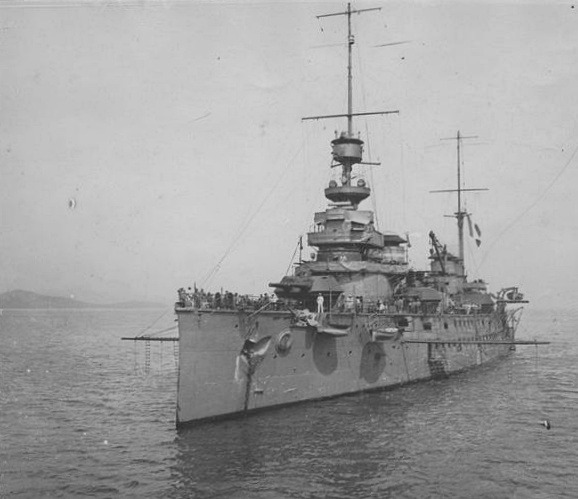
Characteristics
Length: 146.75m
Width: 21.41m
Draft: 8.05m
Mass: 12,400 tons
The ship is propelled by three steam engines generating 20,226kW of power, enabling it to reach a maximum speed of 22 knots and a range of 7,500 nautical miles at 10 knots.
Weapons
The ship is fairly well armed for its time. It differs only slightly from the first ship in having fewer torpedo tubes, but it carries twice the stock of sea mines as other ships of its class.
Guns:
- 2 x 2 194mm Mle1893/93
- 6 x 2 164mm Mle1893/96
- 4 x 1 164mm Mle1893/96
- 24 x 1 47mm Mle1902
Torpedo:
- 2 x 450mm torpedo tubes
Other:
- 20 mines
Armor
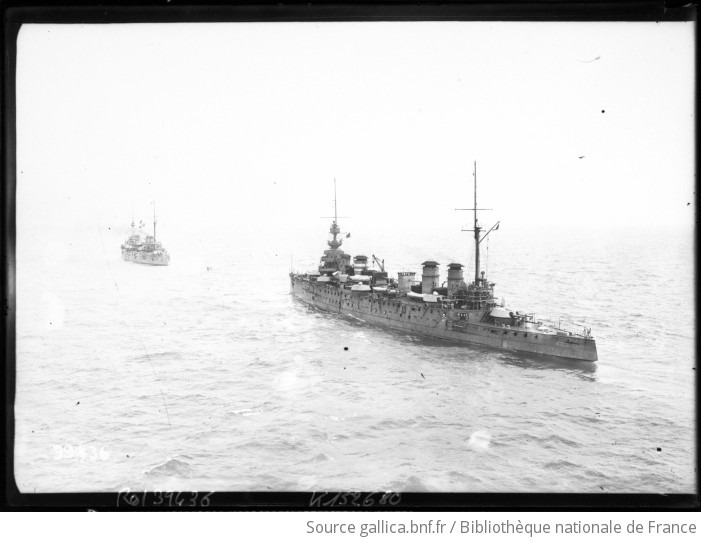
The ship possesses considerable armor, allowing it to withstand a certain number of hits.
- Waterline Belt: 80-150 mm
- Deck: 33-57 mm
- Turrets:
- Main: 138 mm
- Secondary: 102 mm
- Conning Tower: 174 mm
In the game, this last ship of the Léon Gambetta class would be a particularly interesting addition, providing a well-armed and well-defended warship capable of taking on a large number of enemies. It would thus bring an interesting ship to the French tech tree.