- Yes
- No
Hello everyone and welcome to this new suggestion.
Today I’m presenting a new ship from the Léon Gambetta class, the Jules Ferry.
Launched in 1903 and commissioned in 1907, the Jules Ferry was the second of three ships in the Léon Gambetta class. From its commissioning, the Jules Ferry was assigned to the Mediterranean Fleet: it became the flagship of the light squadron, along with the other cruisers of the class. During the period preceding the First World War, the ship participated in standard missions: naval presence, diplomatic missions, and navigation in the Mediterranean.
When war broke out in 1914, the Jules Ferry was put into service among the mobilized ships. It provided convoy escort, protected important vessels of the fleet, and participated in surveillance in the Mediterranean and Adriatic Seas. However, it saw little combat, being quickly reassigned as a transport ship, its coal and manpower resources being diverted to more modern vessels capable of withstanding the demands of the war.
After the war, the ship was placed in semi-reserve, but it was reopened for overseas missions: between 1923 and 1925, the Jules Ferry was assigned to the Far East Division. However, with the rapid evolution of naval technology—more modern battleships, naval aviation, submarines—the Jules Ferry, like many armored cruisers of its generation, gradually became obsolete. It was struck from the Navy’s lists in 1927 and then scrapped in 1928. The Jules Ferry embodies a pivotal period in the history of the French Navy: at the dawn of the 20th century, the French Navy sought to modernize its forces, combining firepower, autonomy, and power projection capabilities. The Léon Gambetta class, with the Jules Ferry as its flagship, exemplifies this ambition. For its time, the ship was a leading armored cruiser, a good compromise between speed, armament, and protection, well-suited to missions of presence, power projection, escort, or commerce raiding. However, the rapid evolution of naval technology—submarines, heavier artillery, and aviation—made this type of ship increasingly vulnerable and less useful, which explains its decommissioning in the 1920s.
The ship is named in honor of Jules Ferry, a 19th-century French politician who notably served as Minister of Education and whose policies are still in effect today. He is also known for his efforts to expand French colonies, particularly in Africa and Asia.
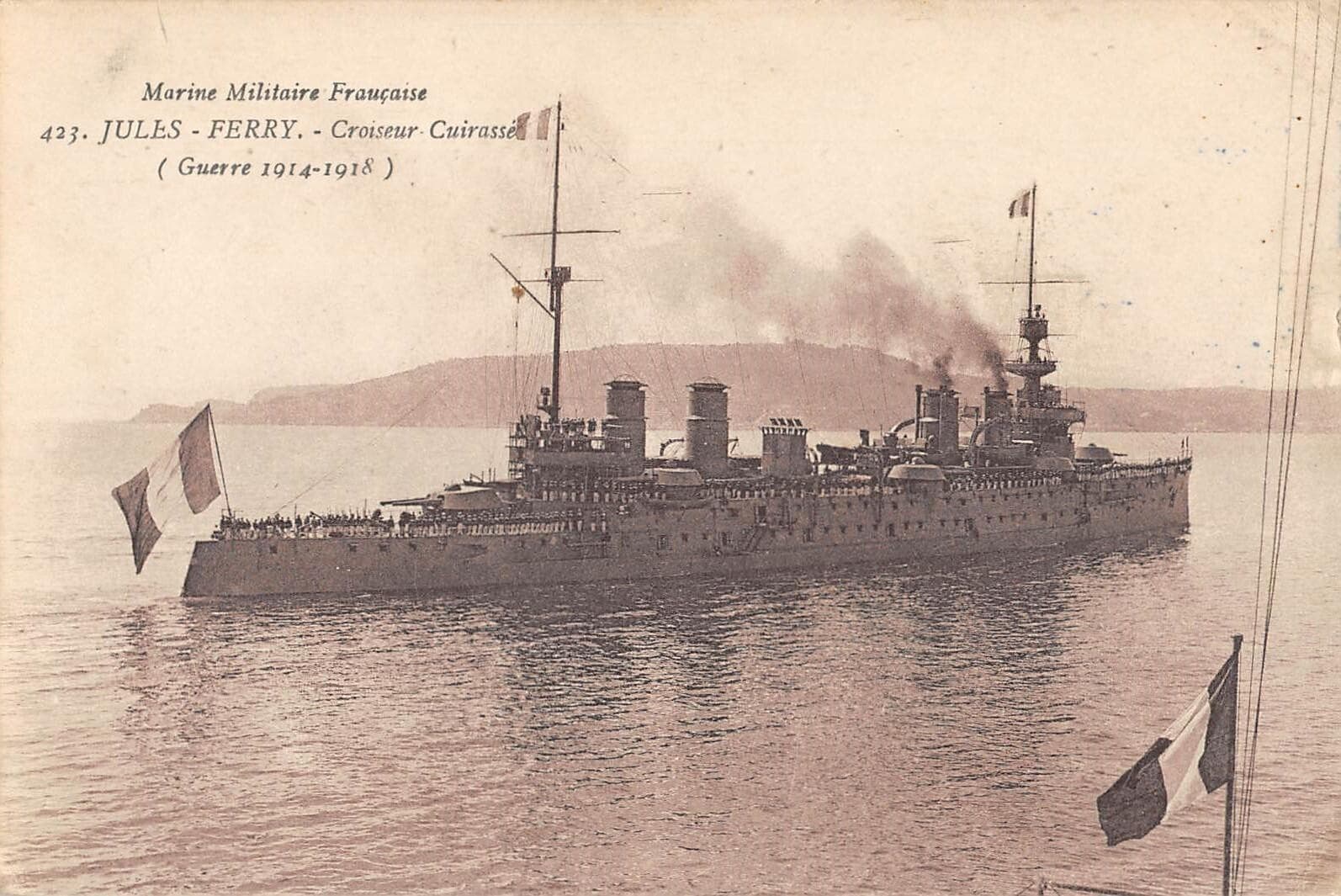
Characteristics
Length: 146.75m
Width: 21.41m
Draft: 8.05m
Mass: 12,400 tons
The ship is propelled by three steam engines generating 20,226kW of power, enabling it to reach a maximum speed of 22 knots and a range of 7,500 nautical miles at 10 knots.
Weapons
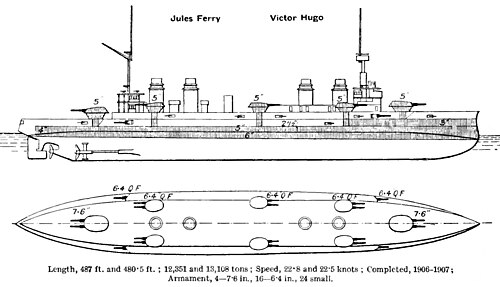
Although adequately armed, the Jules Ferry was the least well-equipped of the three ships in the class, possessing fewer torpedo tubes than the Léon Gambetta and fewer sea mines than the Victor Hugo.
Canons :
- 2x2 194mm Mle1893/93
- 6x2 164mm Mle1893/96
- 4x1 164mm Mle1893/96
- 24x1 47mm Mle1902
Torpedo :
- 2x 450mm torpedo tube
Other :
- 10 mines
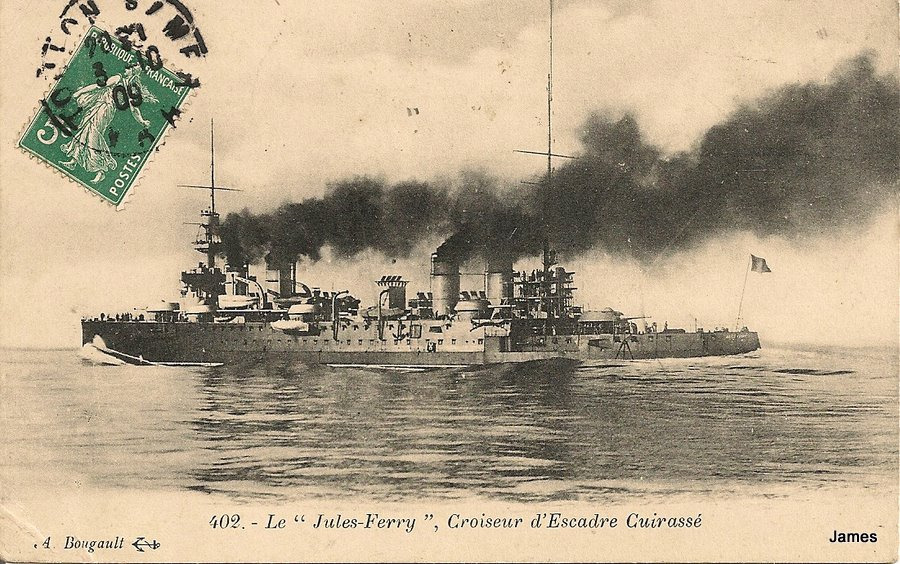
Armor
The ship possesses considerable armor, allowing it to withstand a certain number of hits.
- Waterline Belt: 80-150 mm
- Deck: 33-57 mm
- Turrets:
- Main: 138 mm
- Secondary: 102 mm
- Conning Tower: 174 mm
In this game, this second unit of the Léon Gambetta class would be a particularly interesting addition to the French tech tree, providing a powerful, well-armed and well-armored ship to bolster the ranks of battleships in the French high seas tech tree.
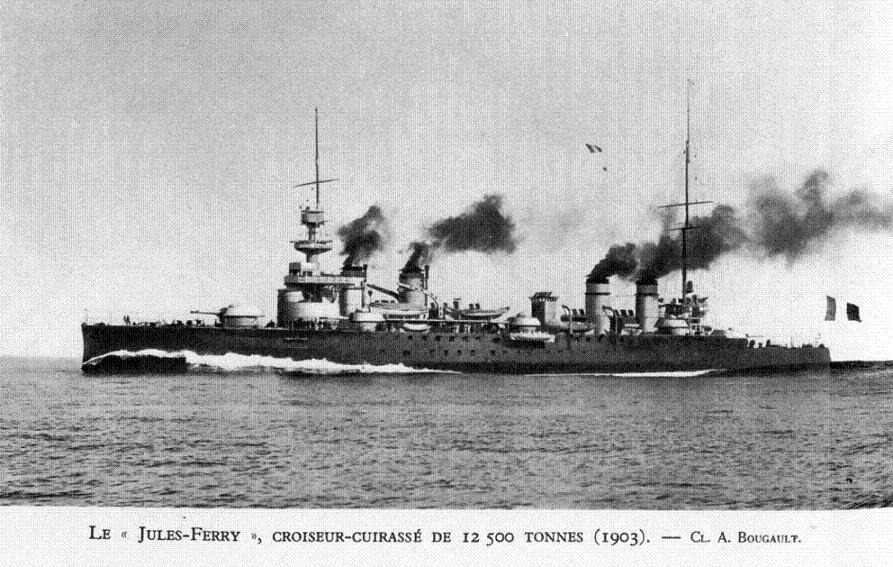
Pictures
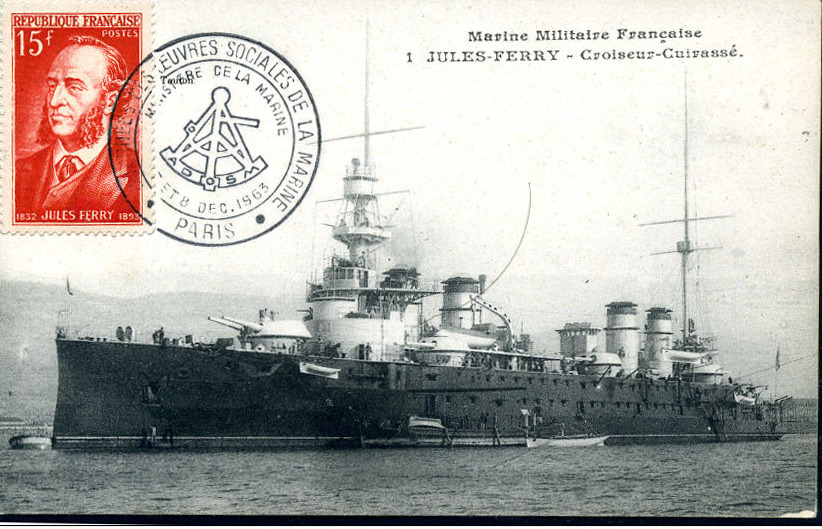
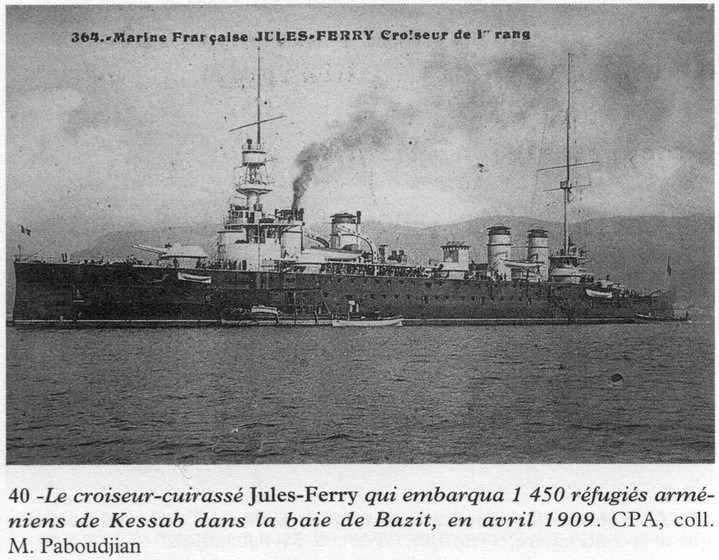
Sources
- https://imagesdefense.gouv.fr/fr/le-jules-ferry-en-pleine-mer-transportant-des-troupes-a-itea-pour-l-a-o-legende-d-origine.html
- https://www.servicehistorique.sga.defense.gouv.fr/ark/1016979
- LÉON GAMBETTA armoured cruisers (1905 - 1907)
- * JULES FERRY (1906/1927)
- La marine Français durant la grande guerre
- LISTE DES CLASSES DE NAVIRE
- Mémorial des officiers de marine
- https://www.avions-bateaux.com/uploads/attachment/produit//produit_4396_cc59b76456f705150374a8e293a1e973.pdf