- Yes
- No
- (independent) BeNeLux tree
- France: BeNeLux subtree
- other
- no/negative
- 1 × 20 mm autocannon + 1 × 12.7 mm HMG
- 2 × single 12.7 mm HMG
- other (please comment)
- no/negative

History
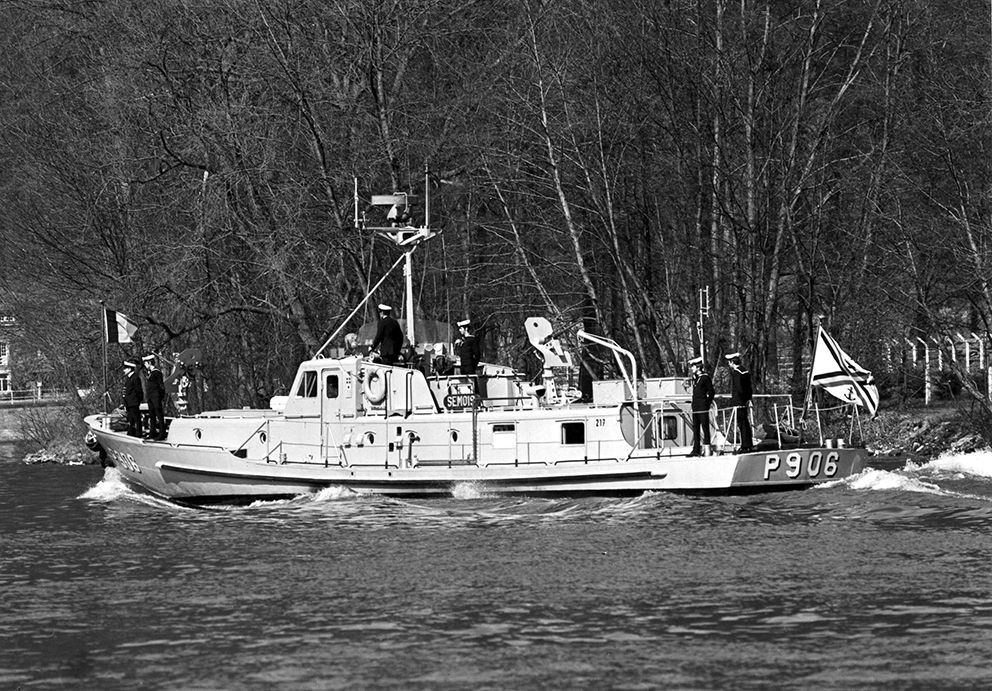
Service History of P906 Semois
The Semois was constructed at the Theodor Hitzler shipyard in Regensburg, Germany. Laid down on 14 March 1953 and launched on 24 October 1953, she was commissioned only four days later, on 28 October 1953.
She was part of the Belgian contribution to the Rijnsmaldeel (Rhine Flotilla), tasked with NATO river security and patrol duties during the early Cold War. Narrow, lightly built, and with a shallow draught of only 0.9 meters, the Leie-class vedetten were purpose-designed to navigate Europe’s rivers while maintaining respectable speed (up to 19 knots).
The Semois carried a crew of seven — a petty officer in command and six sailors. She could cover 2,300 nautical miles at 10 knots, making her effective for extended patrols. Her equipment included successive DECCA radar models during her service life.
Armament Changes
The Semois’s weaponry evolved during her time in service. Early in her career, she was armed with two 12.7 mm Browning M2 heavy machine guns, one fore and one aft. Later, she received a mixed armament fit with a 20 mm autocannon aft and a 12.7 mm HMG fore.
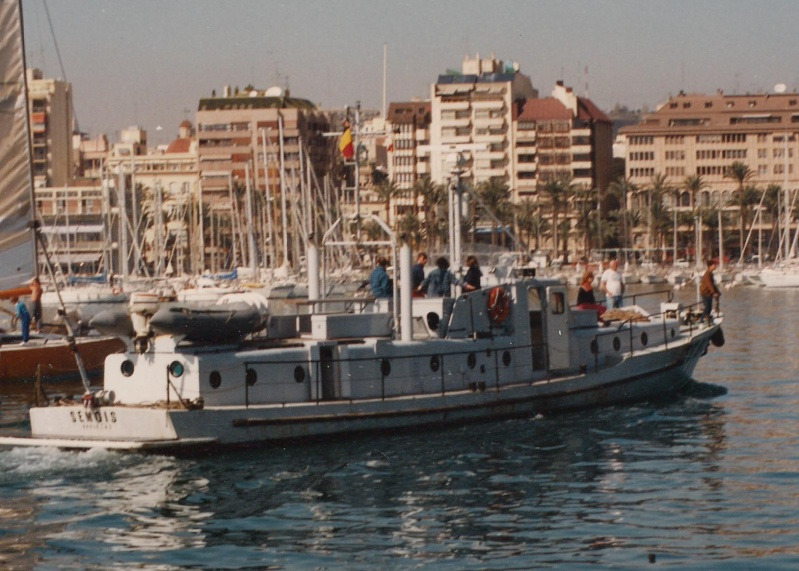
Her 2 × 12.7 mm Browning M2 HMG mountShe remained in naval service until 23 November 1984, when she was decommissioned. In February 1985, she was sold to the Corps Royal des Cadets de Marine in Brussels for 500,000 francs. Ultimately, she was lost at sea when she sank off Alicante, Spain.
Alicante on April 1992
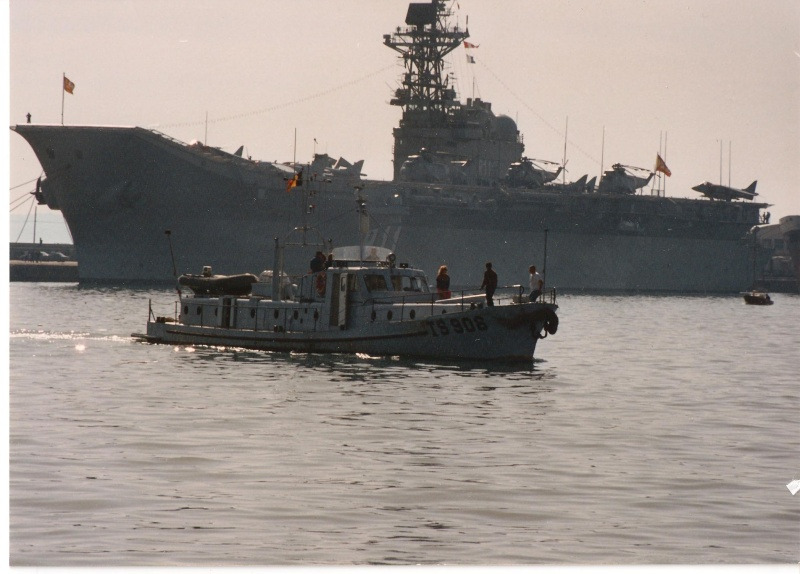
Near the Spanish Aircraft carrier PRINCIPE DE ASTURIAS in Alicante on April 1992Unlike her sister Schelde, the Semois was not preserved — but she remains an important part of Belgian Cold War naval history.
Specifications
Displacement: 25 tons
Length overall: 24.25 m
Length between P/P: 23.0 m
Beam: 3.8 m
Draught: 0.9 m
Range: 2,300 nm at 10 knots
Speed: 19 knots
Propulsion: 2 × MWM RHS 418 A 8-cyl diesels (220 hp each), 2 shafts
Radar: DECCA 707 (1954–1979), DECCA 1214 (1980–1984)
Crew: 1 petty officer + 6 sailors
Radio call sign: ORIGArmament Layouts
The Semois carried two main historical armament fits:
Variant Weapons Placement Notes Dual HMG 2 × 12.7 mm Browning M2 HMG Fore & aft Original configuration, similar to her sisters at commissioning (1953). Mixed Autocannon + HMG 1 × 20 mm autocannon + 1 × 12.7 mm Browning M2 HMG Aft (20 mm), fore (HMG) Later modification, giving her more effective firepower.
Place in War Thunder
The Semois would fit naturally into the lower tiers of a BeNeLux naval tree or a French subtree. With her two historically documented armament layouts, she offers at least two possible playable variants:
- Dual HMG version – a weaker, early-career patrol boat suitable as a reserve or BR 1.0 craft.
- Mixed 20 mm + HMG version – a more capable gunboat, potentially BR 1.3–1.7.
Both would offer BeNeLux naval forces an accessible introduction to postwar patrol craft, comparable to early German and French riverine boats already in the game.
While her preserved sister Schelde may be the more famous survivor, the Semois provides additional flexibility and historical variation to round out the Leie-class representation in War Thunder.
Sources
Sources
- Marine belge, P906 https://www.marinebelge.be/p906.html
- Coulier, F. (2008–2009). Het Belgisch maritiem Rijnsmaldeel I–IV, Neptunus
- Anrys H., De Decker de Brandeken J.-M., Eygenraam P. (1992). De Zeemacht
- Van Ginderen L. & Delgoffe C. Fotoboek Belgische Zeemacht 1946–1996
- MAS Antwerp archives (for Leie-class sister ship data)
- Jane’s Fighting Ships (1950s–1960s editions)