- Yes
- No
- (independent) BeNeLux tree
- France: BeNeLux subtree
- other
- no/negative
- 1 × 20 mm autocannon + 1 × 12.7 mm HMG
- 2 × single 12.7 mm HMG
- 1 × single 12.7 mm HMG (Fore)
- 1 × single 12.7 mm HMG (Aft)
- other (please comment)
- no/negative
TL;DR: Belgian Cold War river patrol boat, preserved as a museum ship, with four historical armament layouts (from dual HMGs to mixed 20 mm + HMG).
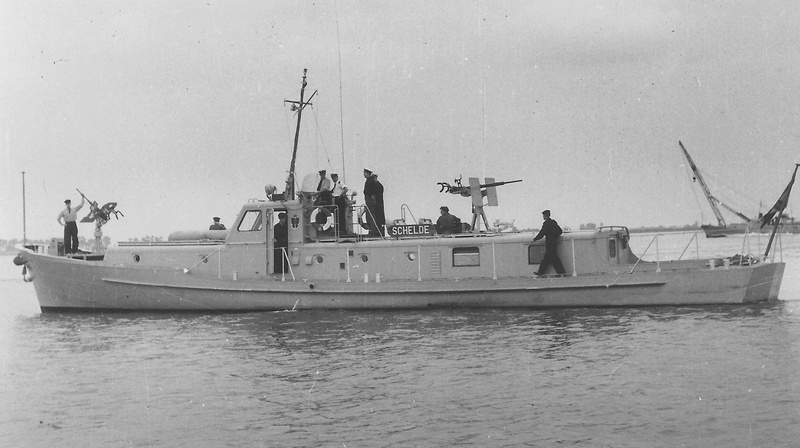
History
Service History of P905 Schelde
The Schelde was built at the Theodor Hitzler shipyard in Regensburg, Germany. She was laid down on 14 March 1953, launched on 29 August 1953, and commissioned into service on 2 September 1953. Assigned pennant number P905, she was one of six Leie-class vedetten named after Belgian rivers.
Initially, the Schelde joined the Rijnsmaldeel (Rhine Flotilla), a multinational NATO force responsible for patrolling and securing inland waterways across Germany and the Low Countries during the Cold War. Belgium’s contribution, the Leie-class, were designed specifically for shallow water: narrow, light, but long enough to reach higher speeds. With a displacement of 25 tons and powered by twin MWM diesel engines, the Schelde could reach 19 knots and operate for over 2,300 nautical miles.
Life on board was spartan. A crew of seven (one petty officer and six sailors) manned the ship, with accommodation squeezed into a forward mess and bunks, while the central engine room dominated the hull. A small galley and the petty officer’s cabin were aft. Despite the limited comfort, the crew kept the ship in constant readiness.
Shifting Roles and Armament
At the start of her career, the Schelde was equipped for active patrol and potential combat against infiltrators on the Rhine. Her original armament was two heavy machine guns, later upgraded to include a 20 mm autocannon. By the 1970s, as NATO priorities shifted and the Belgian Navy reduced its inland flotilla, her firepower was scaled back until she carried only a single HMG.
After three decades of service, the Schelde was decommissioned on 23 November 1984. Unlike most of her sisters, she avoided sale or scrapping. Instead, she was donated in May 1987 to the Nationaal Scheepvaartmuseum “Steen” in Antwerp, later becoming part of the MAS (Museum aan de Stroom) collection. Today, she remains preserved and displayed, one of the very few Belgian Cold War naval vessels to survive.
This makes Schelde not only an important piece of naval history, but also one of the rare Belgian warships accessible to the public today.
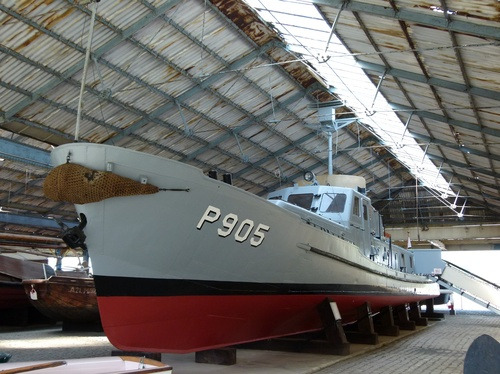
Specifications
Displacement: 25 tons
Length overall: 24.25 m
Length between P/P: 23.0 m
Beam: 3.8 m
Draught: 0.9 m
Range: 2,300 nm at 10 knots
Speed: 19 knots
Propulsion: 2 × MWM RHS 418 A 8-cyl diesels (220 hp each), 2 shafts
Radar: DECCA 707 (1954–1979), DECCA 1214 (1980–1984)
Crew: 1 petty officer + 6 sailors
Radio call sign: ORICArmament Layouts
Throughout her service, Schelde carried several different armament fits.
Variant Weapons Placement Notes Dual HMG (initial) 2 × 12.7 mm Browning M2 HMG Fore & aft Original Rhine Flotilla fit (1953). Mixed Autocannon + HMG 1 × 20 mm autocannon + 1 × 12.7 mm Browning M2 HMG Aft (20 mm), fore (HMG) Likely 1960s, increased firepower. Single HMG (fore) 1 × 12.7 mm Browning M2 HMG Fore Reduced fit in later service. Single HMG (aft) 1 × 12.7 mm Browning M2 HMG Aft Alternative late-career layout.
Place in War Thunder
The Schelde could be introduced in several different ways depending on which armament fit Gaijin chooses:
- Dual HMG version – suitable as a reserve or early rank I vessel, comparable to other small postwar patrol craft.
- Mixed 20 mm + HMG version – higher firepower, suitable for mid rank I.
- Single HMG versions – could serve as late-career/event/premium variants.
Because of her varied history, Schelde offers flexibility: she could appear either as a main tree progression craft with the dual HMG fit, with the mixed fit as a premium/event, or as a researchable refit system representing her evolving service.
For a prospective BeNeLux naval tree, she is a strong candidate as one of the earliest Cold War patrol craft like many of its sisters’ ships. Alternatively, she could fit into a French subtree.
Pictures
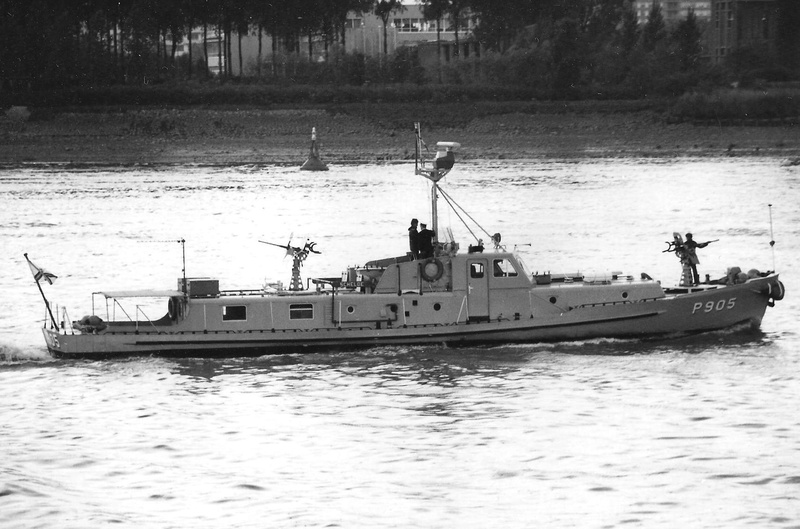
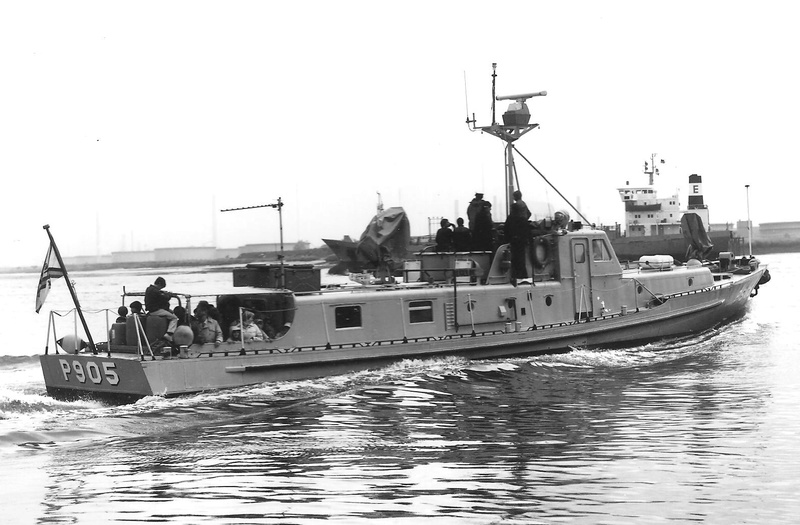
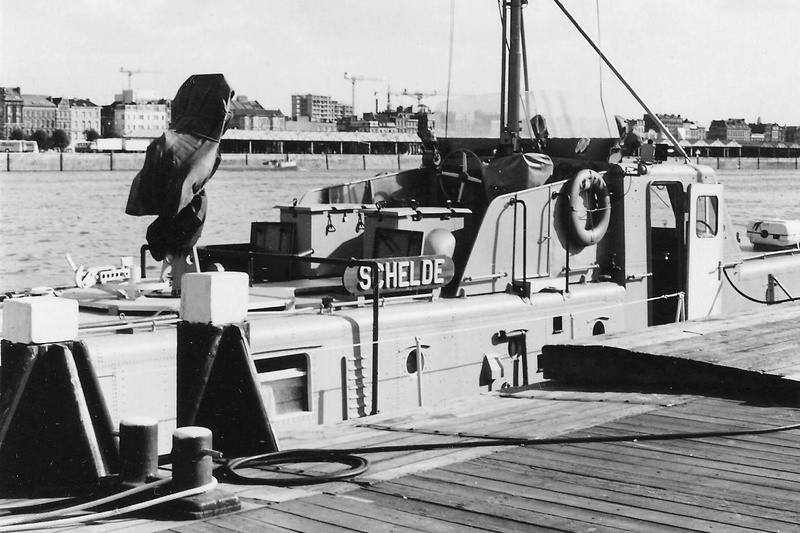
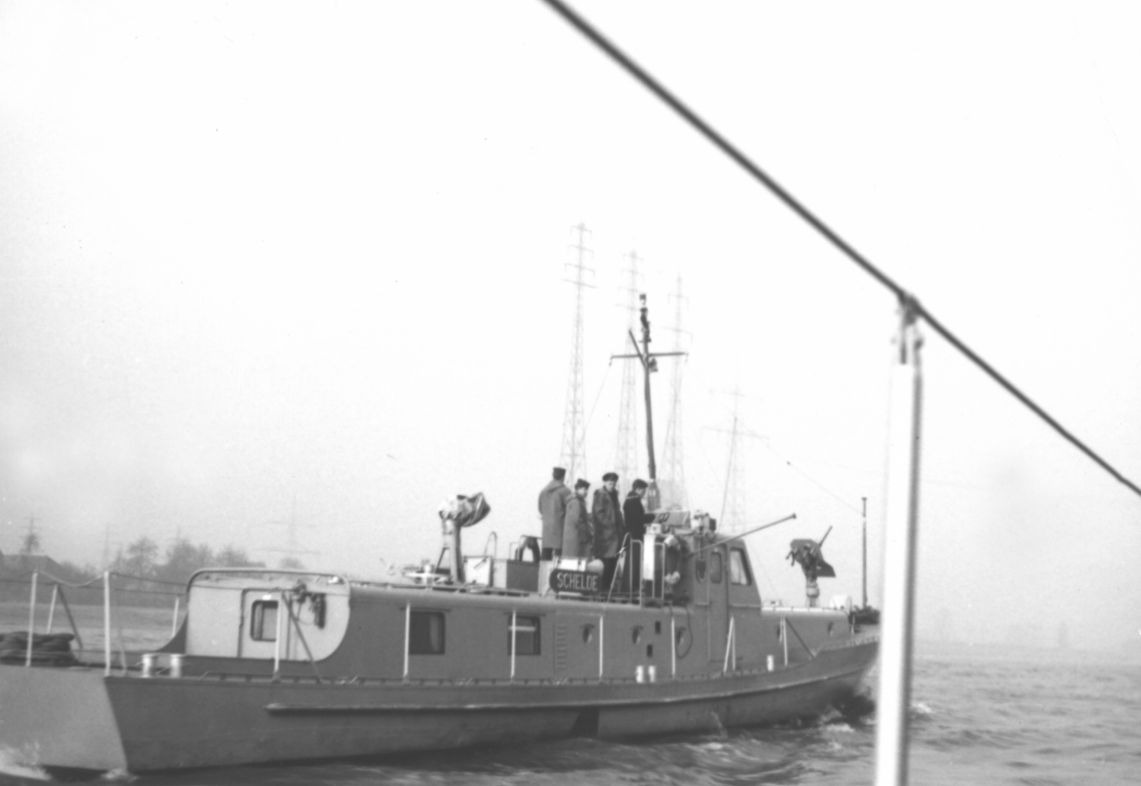
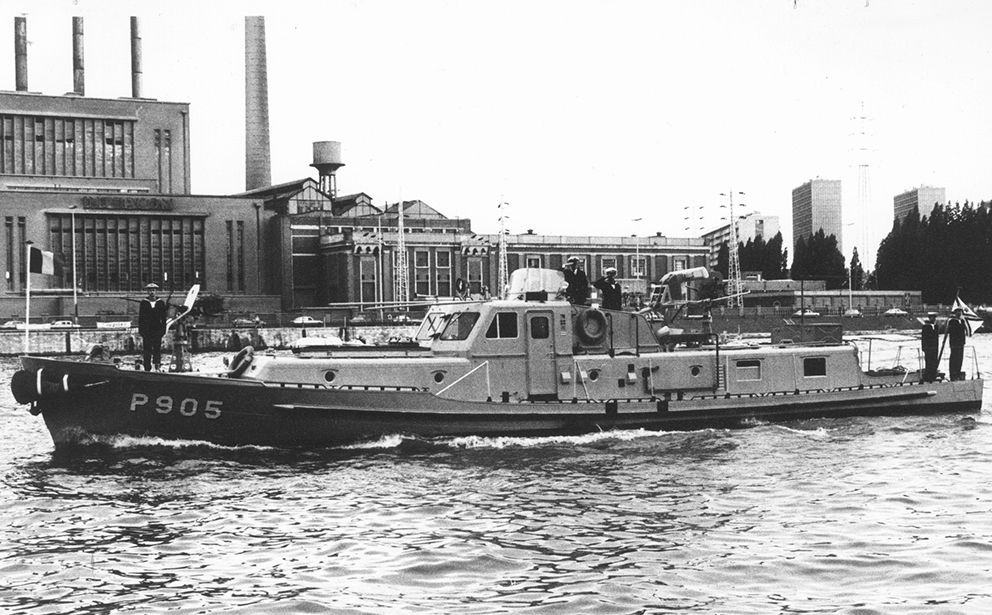
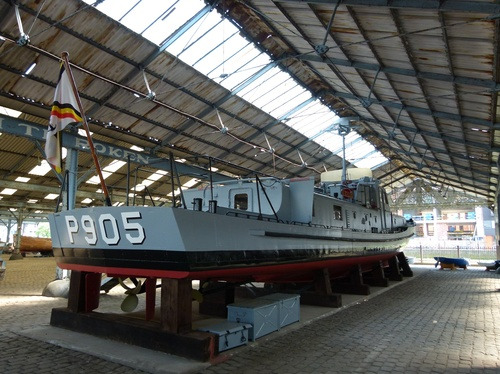
Sources
Sources
- Agentschap Onroerend Erfgoed — Inventaris Onroerend Erfgoed 2025: P905 Schelde [online], P905 Schelde | Inventaris Onroerend Erfgoed
- Coulier, F. (2008–2009). Het Belgisch maritiem Rijnsmaldeel I–IV, Neptunus
- Anrys H., De Decker de Brandeken J.-M., Eygenraam P. (1992). De Zeemacht
- S.N. (1980). 150 ans de marine militaire belge, Brussels
- Van Ginderen L. & Delgoffe C. Fotoboek Belgische Zeemacht 1946–1996
- MAS Antwerp — museum archives & ship collection data
- Jane’s Fighting Ships (1950s–1960s editions)