- Yes
- No
- (independent) BeNeLux tree
- France: BeNeLux subtree
- other
- no/negative
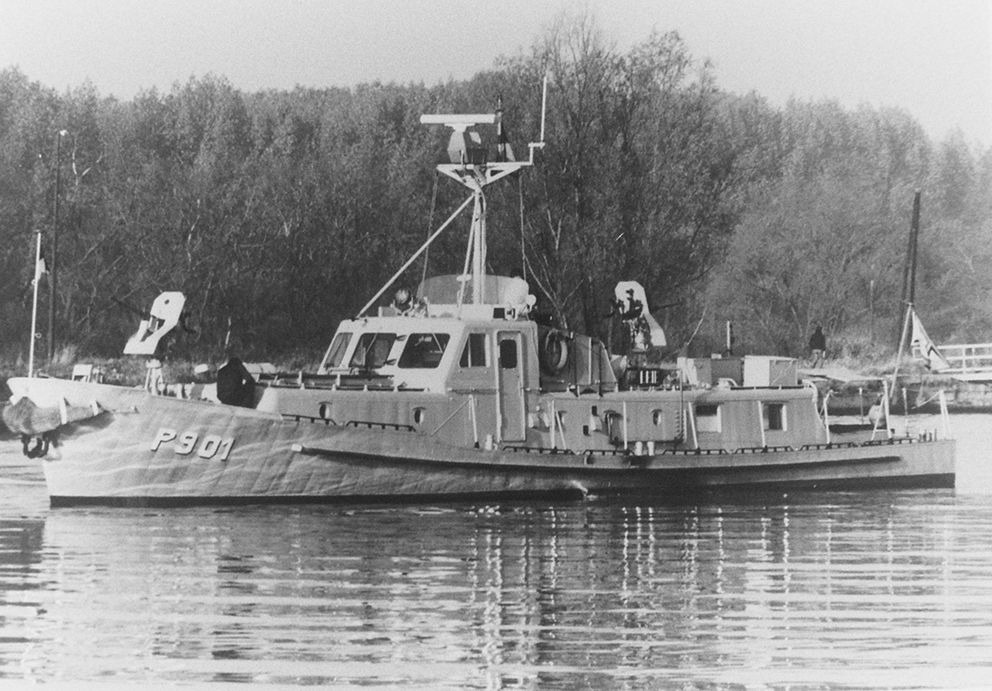
TL;DR: The lead ship of Belgium’s Leie-class river patrol boats, designed for shallow rivers, armed with two single 12.7 mm HMGs (fore & aft), and serving from 1953 to 1984.
History
Spoiler
The Leie (yard no. 188) was built at the Theodor Hitzler shipyard in Regensburg, Germany, laid down on 14 March 1953, launched 12 September 1953, and commissioned only a few days later on 16 September 1953. She was the first of six nearly identical Leie-class vedetten, built to equip the newly formed Belgian Rijnsmaldeel, a flotilla tasked with patrolling and controlling traffic on the Rhine during the tense early years of the Cold War.
Design
The design philosophy of the Leie-class focused on three requirements: high speed, shallow draught, and riverine maneuverability. The boats were narrow to reduce drag, but relatively long to achieve a higher theoretical hull speed. The hull lines were particularly sharp at the bow, with a flat run aft to reduce wake at maximum speed.
The construction was advanced for its time:
- Hull: riveted steel plates, later zinc-coated and faired with a hard filler for a perfectly smooth underwater profile.
- Deck and superstructure: lightweight aluminium, riveted rather than welded, as welding techniques for aluminium were still developing in the early 1950s.
- Machinery: 2 × MWM RHS 418 A diesel engines, each producing 180–220 hp, driving twin screws via Reintjes gearboxes. This gave the Leie-class an impressive 19 knots top speed for such small vessels.
- Steering & observation: Each had a distinctive open secondary wheelhouse on the upper deck for improved river navigation.
Service
Initially based at Niehl near Cologne, the Leie and her sisters patrolled a 250 km stretch of the Rhine between Koblenz and the Dutch border. Their missions included:
- monitoring traffic and enforcing control on NATO’s vital inland waterway,
- assisting shipping and barge crews,
- providing communication and liaison duties for naval command.
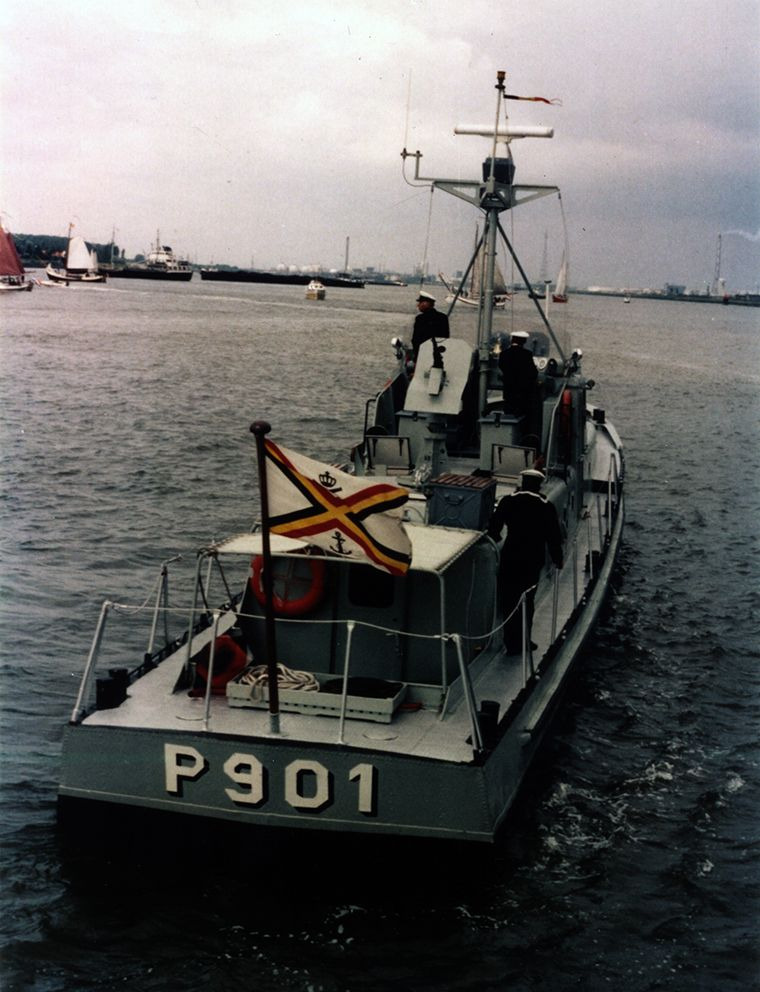
In 1960, after the disbandment of the Rijnsmaldeel, Leie was redeployed to Belgium, where she gained new duties: anti-pollution patrols, emergency response, and carrying university researchers. She was frequently designated the Ready Duty Ship, flying the Romeo flag to indicate her role as the first responder.
During the floods of 1976, she played a key role in supporting Belgian civil authorities. She remained in service until 23 November 1984, and was sold the following year to François Van den Berge of Bornem.
Legacy
Today, Leie is protected as part of Belgium’s floating naval heritage, recognized as an important Cold War-era patrol craft that bridged military, civic, and training roles over three decades.
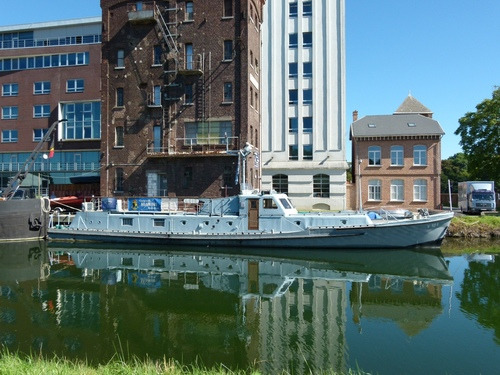
Specifications (P901 Leie)
General:
- Builder: Theodor Hitzler, Regensburg (Germany)
- Yard number: 188
- Laid down: 14 March 1953
- Launched: 12 September 1953
- Commissioned: 16 September 1953
- Decommissioned: 23 November 1984
- Displacement: 25 tons
Dimensions:
- Length overall: 24.25 m
- Length between perpendiculars: 23.0 m
- Beam: 3.8 m
- Draught: 0.9 m
Propulsion:
- 2 × MWM RHS 418 A 8-cylinder diesel engines, 180–220 hp each
- 2 shafts, twin screws
- Speed: ~19 knots
- Range: ~2,300 nm at 10 knots
- Fuel: diesel
Electronics:
- Radar: DECCA 707 (1954–1979), DECCA 1214 (1980–1984)
Crew:
- 1 petty officer + 6 sailors
Radio call sign: ORIB
Armament
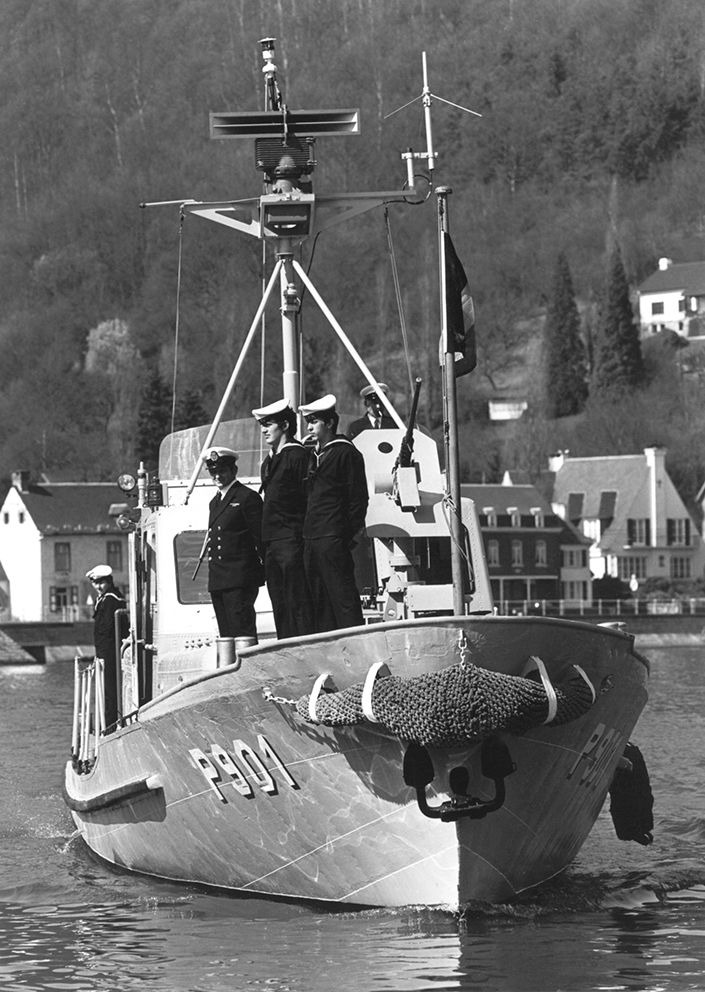
Configuration Weapons Location Standard fit 2 × single 12.7 mm Browning M2 HMG Fore & aft
Place in War Thunder
The Leie would be an excellent starter patrol boat in the BeNeLux coastal fleet:
- BR range: 1.0–1.3
- Role: Fast and agile, with dual HMGs for small boat combat and light AA.
- Placement: France (BeNeLux subtree) or an independent BeNeLux naval tree.
Though modest in firepower, its speed, shallow draught, and historical importance make it a solid and unique choice at the game’s entry-level coastal tiers.
Pictures
Spoiler
Sources
Spoiler
- Agentschap Onroerend Erfgoed — Inventaris Onroerend Erfgoed: V901 Leie
- S.N. (1980). 150 ans de marine militaire belge, Brussels
- Anrys, H., De Decker de Brandeken J.-M., Eygenraam P. (1992). De Zeemacht
- Coulier, F. (2008–2009). Het Belgisch maritiem Rijnsmaldeel I–IV, Neptunus
- S.N. (1955). Force de police fluviale (Escadrille navale du Rhin), Wandelaer et sur l’eau
- Van Ginderen L., Delgoffe C. Fotoboek Belgische Zeemacht 1946–1996