- Yes
- No
- (independent) BeNeLux tree
- France: BeNeLux subtree
- other
- no/negative
- Single fore 12.7 mm HMG
- 1 × 12.7 mm HMG (fore) + 1 × 20 mm autocannon (aft)
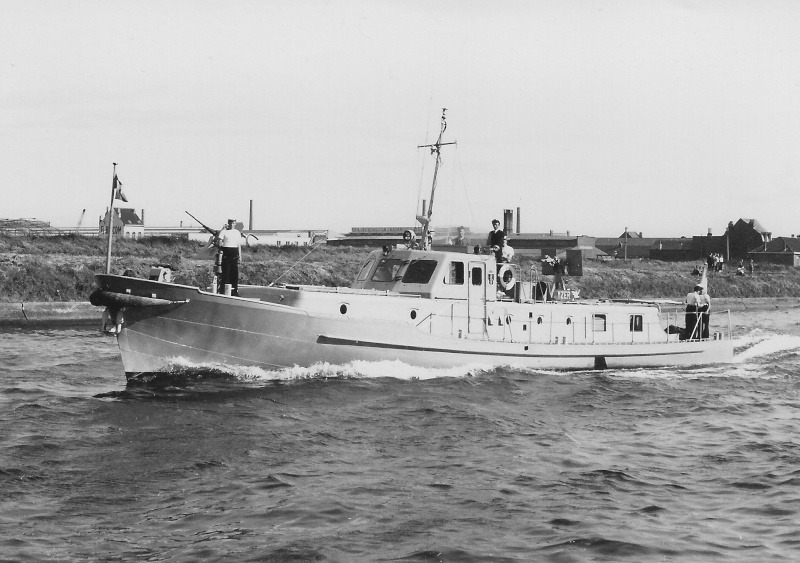
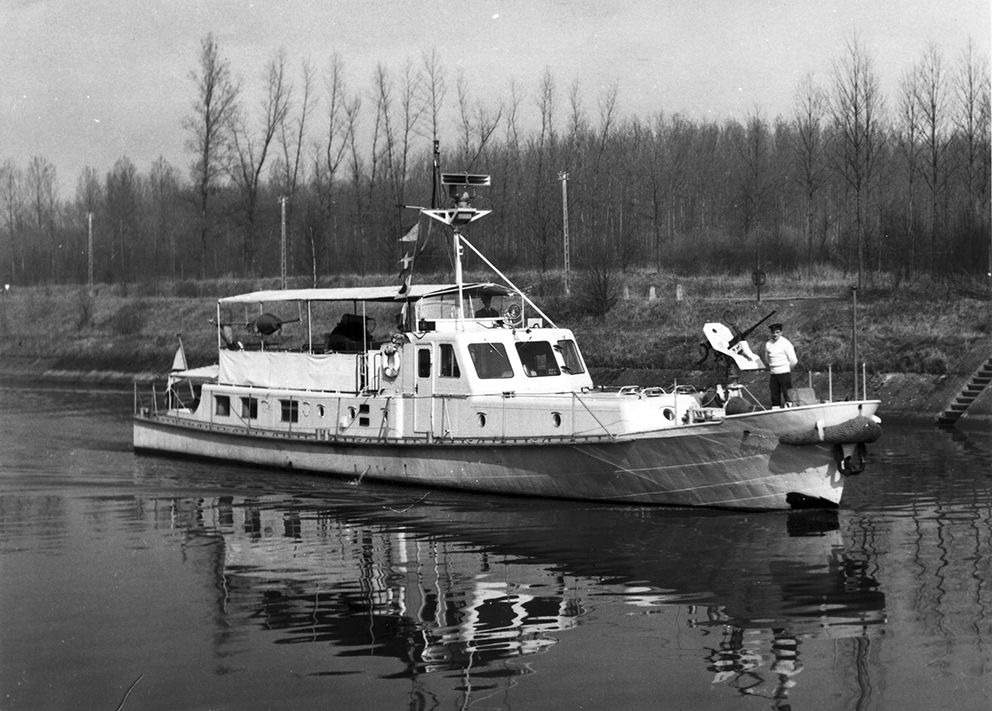
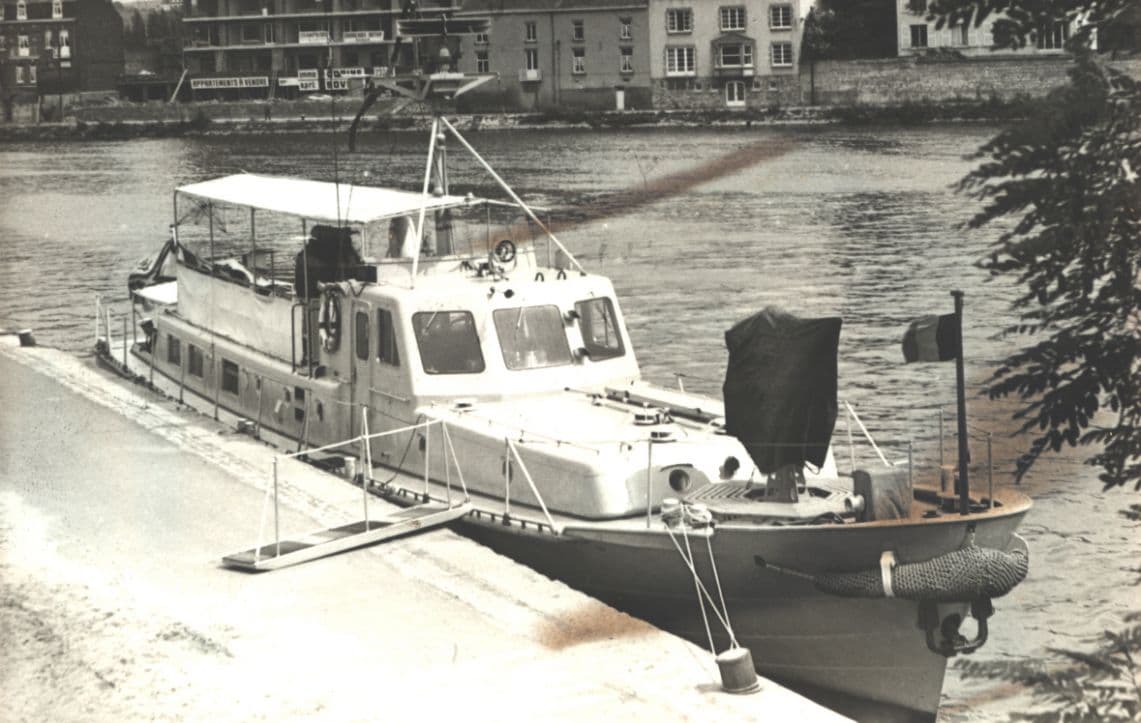
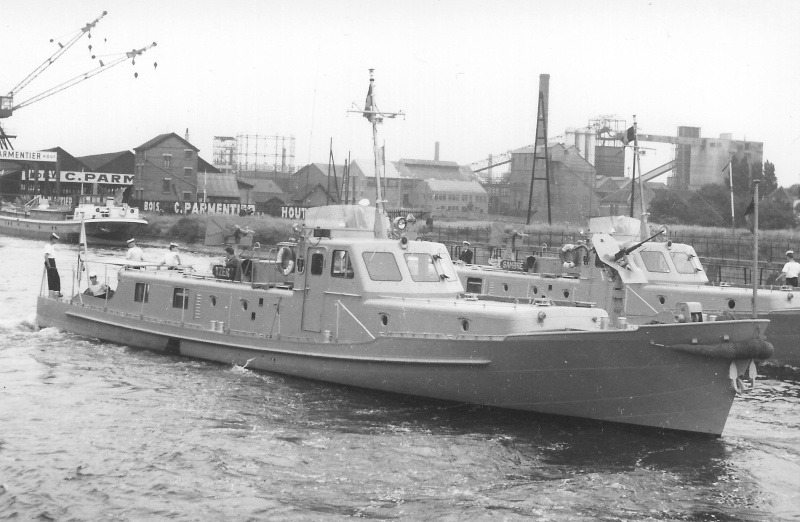
P900 Ijzer — Belgian Leie-class river patrol boat
The P900 Ijzer (Ijzer means the river Yser) was one of the six standard Leie-class river patrol boats (vedetten) commissioned by Belgium in 1953 to serve with the Rijnsmaldeel (Rhine flotilla). Built at the Theodor Hitzler shipyard in Regensburg, Germany, these nimble 25-ton vessels were designed for patrolling inland waterways like the Rhine during the early Cold War.
Like her sisters, Ijzer was fast, shallow-draught, and manned by a tiny crew of seven. She carried light armament suitable for escort and patrol duties, with two recorded variants: either a single 12.7 mm Browning M2 HMG in the fore position, or a more heavily armed version mounting the 12.7 mm forward plus a 20 mm autocannon aft.
After sixteen years of service with the Belgian Navy, she was decommissioned and sold in 1969. In War Thunder, Ijzer would bring a fast, small, and lightly armed Belgian Cold War patrol craft to the Coastal Fleet tree, a natural counterpart to American PBRs and German KS-boats.
TL;DR: A 25-ton Belgian Cold War patrol boat, with two historical armament variants (12.7 mm only, or 12.7 mm + 20 mm autocannon).
History
History
The Ijzer was laid down at Theodor Hitzler, Regensburg (yard no. 190) on 14 March 1953, launched on 10 October, and commissioned into service with the Belgian Navy on 14 October 1953. She was one of the six original Leie-class “vedetten,” alongside Leie, Meuse, Sambre, Schelde, and Semois.
From the modern base at Cologne-Niehl, the Belgian Rijnsmaldeel patrolled a 250 km stretch of the Rhine between Koblenz and the Dutch border. Their mission was both military and political: showing the Belgian flag, inspecting river traffic, and ensuring NATO control of the strategically vital waterway.
Ijzer shared in the flotilla’s routine of patrols, ceremonial cruises, and occasional joint operations with British, French, and American Rhine flotillas. Armed modestly, she was not built to engage enemy warships but to secure inland waters and act as a deterrent during the tense early years of the Cold War.
When the Rijnsmaldeel was dissolved in 1960, the Ijzer and her sisters were transferred back to Belgium. She spent the following years in reserve and support duties until 27 August 1969, when she was formally decommissioned. Shortly afterward, on 9 September 1969, she was sold to the Dutch firm Verwijs Roosendael for 820,000 Belgian francs.
Specifications (P900 Ijzer)
General:
- Builder: Theodor Hitzler, Regensburg (Germany)
- Yard number: 190
- Laid down: 14 March 1953
- Launched: 10 October 1953
- Commissioned: 14 October 1953
- Displacement: 25 tons
Dimensions:
- Length overall: 24.25 m
- Length between perpendiculars: 23.0 m
- Beam: 3.8 m
- Draught: 0.9 m
Propulsion:
- 2 × MWM diesel engines, 220 hp each (total 440 hp)
- 2 shafts, twin screws
- Speed: ~19 knots
- Range: ~10 knots cruising
- Fuel: diesel
Electronics:
- Radar: DECCA 707
Crew:
- 1 petty officer + 6 sailors
Radio call sign: ORID
Armament variants
Variant Weapons Location Light fit 1 × 12.7 mm Browning M2 HMG Fore Mixed fit 1 × 12.7 mm Browning M2 HMG + 1 × 20 mm autocannon Fore (12.7 mm), aft (20 mm)
Place in War Thunder
The P900 Ijzer would serve well as a low-tier Belgian patrol boat:
- BR range: 1.0–1.3 for the single HMG version, 1.3–1.7 for the 12.7 mm + 20 mm fit.
- Role: very light, fast patrol craft comparable to US PBRs, German KS-boats, or early Soviet river boats.
- Tree placement: BeNeLux subtree under France, or a future independent BeNeLux tree.
Its low tonnage, high mobility, and flexible armament fits would make it a perfect starter vessel in the Belgian coastal lineup.
Pictures
Sources
Spoiler
- Agentschap Onroerend Erfgoed — Inventaris Onroerend Erfgoed: V901 Leie (general class history)
- Coulier, F. (2008–2009). Het Belgisch maritiem Rijnsmaldeel (I–IV), Neptunus
- ANRYS H., DE DECKER DE BRANDEKEN J.-M., EYGENRAAM P. (1992). De Zeemacht: van de admiraliteit van Vlaanderen tot de Belgische zeemacht
- Technical fiche for P900 Ijzer (yard data, dimensions, propulsion, armament fits, service history, sale)