- Yes
- No
Hello everyone, and welcome to this new suggestion.
Today, I am presenting a new French Navy vessel that saw action during the Indochina War: the LCI Charmante, hull number 9050, formerly LCI-508.
LCIs, or Landing Craft Infantry, were amphibious landing vessels developed by the United States during the Second World War. These relatively small metal ships were designed to approach the shoreline as closely as possible and rapidly deploy infantry. Troops were carried inside the vessel and could disembark through ramps located along the sides, allowing large numbers of soldiers to be put ashore directly onto the beach.
LCI-508 was built in the United States during the 1940s. Following her completion, she was transferred to the United Kingdom, where she was initially used for training and preparation for amphibious operations. Her first major operational deployment came during the Normandy landings in June 1944, when Allied forces returned to mainland Europe. After the end of the war, the vessel returned to Britain and continued serving with the Royal Navy for a short period.
However, the end of the Second World War did not bring an end to France’s military commitments. Almost immediately, French forces became involved in a new conflict in Indochina. The growing need for amphibious warfare vessels led France to acquire a number of landing craft from Allied countries, including several LCIs.
LCI-508 was acquired by France in 1948. During her journey toward Southeast Asia, the vessel stopped at Bizerte, Tunisia, where she underwent a major modification. Unlike most of her sister ships, she was fitted with heavier armament, transforming her from a conventional landing craft into a dedicated fire-support vessel. At the same time, she was redesignated LCI-9050 and given the name Charmante.
Upon arriving in Indochina in early 1950, Charmante was assigned to DINASSAUT No. 6, a French naval assault unit specializing in amphibious operations. From there, she took part in numerous missions along the rivers and coastlines of Indochina, carrying out troop landings, escort duties, and fire-support missions in support of French ground forces.
Her heavier armament made her particularly valuable during operations where direct naval fire support was required. Rather than simply transporting troops to the shoreline, Charmante could actively engage enemy positions and provide covering fire during amphibious operations.
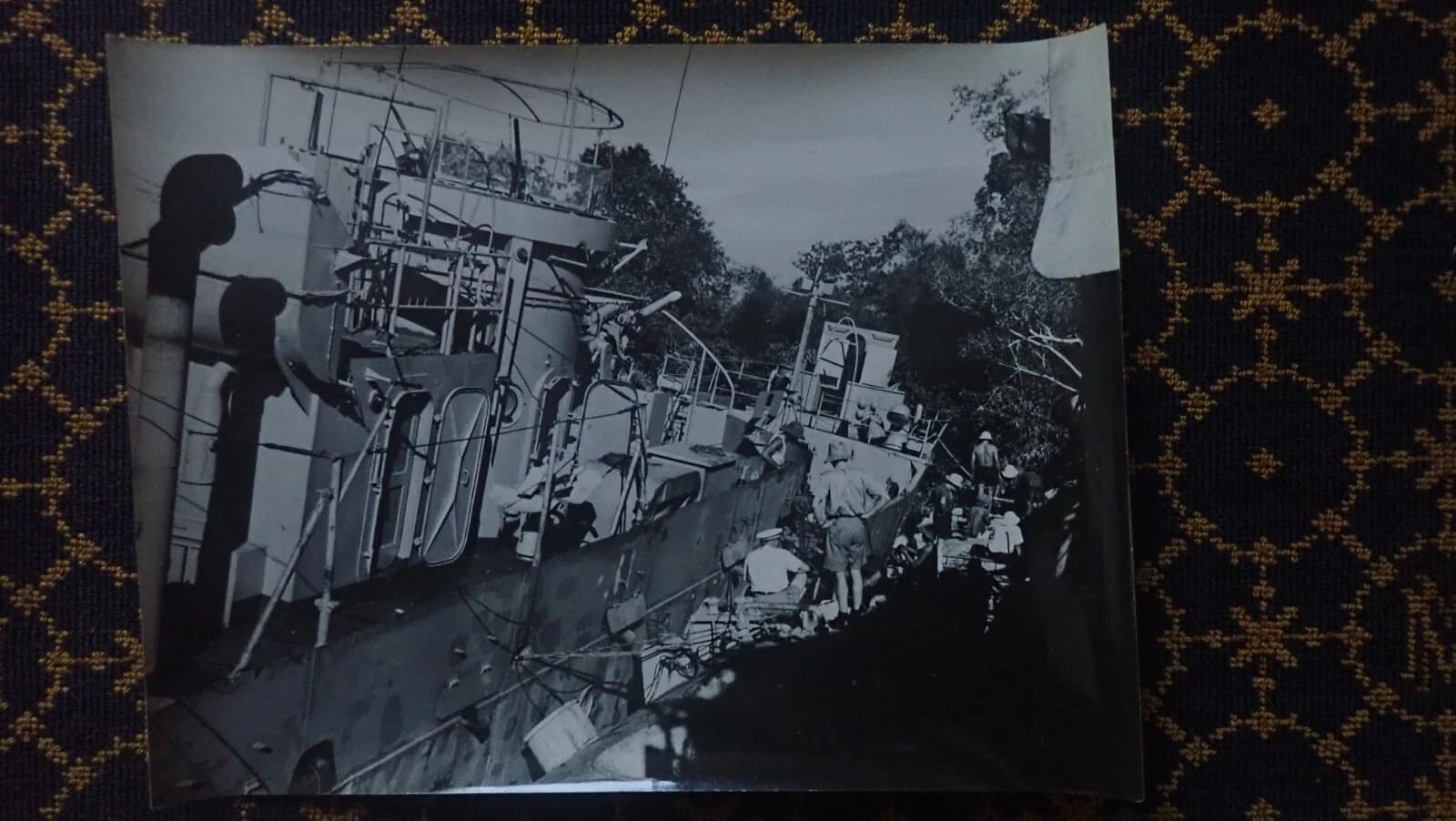
Unfortunately, her career came to a tragic end in 1953. During an operation, Charmante struck a mine, causing severe damage to the vessel. The explosion killed 21 members of her crew and ultimately resulted in the ship sinking.
The wreck was subsequently refloated several months later and towed back to Saigon. However, the damage was considered too severe to justify returning the vessel to service, and Charmante was ultimately dismantled.
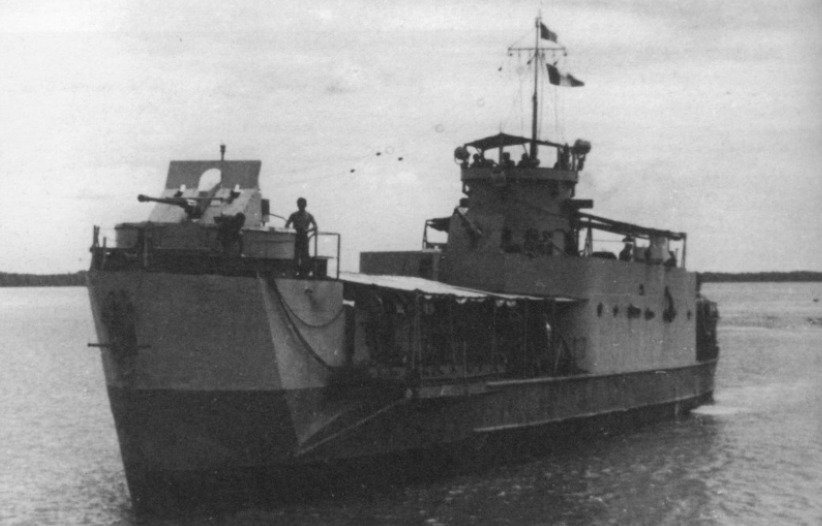
Characteristics
Length : 48.30 m
Width : 7.10 m
Draught : 1.80 m
Mass : 216 tons
The ship features a rather surprising propulsion system consisting of two propellers; the shafts for each are connected to four 225 hp Gray Marine diesel engines, providing a total output of 1,800 hp and a top speed of 12 knots.
The crew consists of 30 sailors.
Equipment
The ship lacks any particularly significant equipment, save for a navigation radar installed in the early 1950s.
Weapons
The ship’s armament is particularly noteworthy; its role as a fire-support vessel allowed it to carry a substantial weapons load to support ground forces.
Guns:
- 1 x 75mm gun (spar deck)
- 1 x 40mm gun (bow)
- 4 x 20mm guns (2 on the spar deck, 2 at the stern)
- 2 x 7.62mm machine guns (bridge)
Other:
- 2 or 3 x 81mm mortars
In-game, this ship would be an excellent addition to the French tree, providing a fire-support vessel with substantial firepower capable of effectively engaging all types of targets—thereby making a valuable contribution to the coastal fleet line.
Pictures