- Yes
- No
- New plane
- Modification
- No
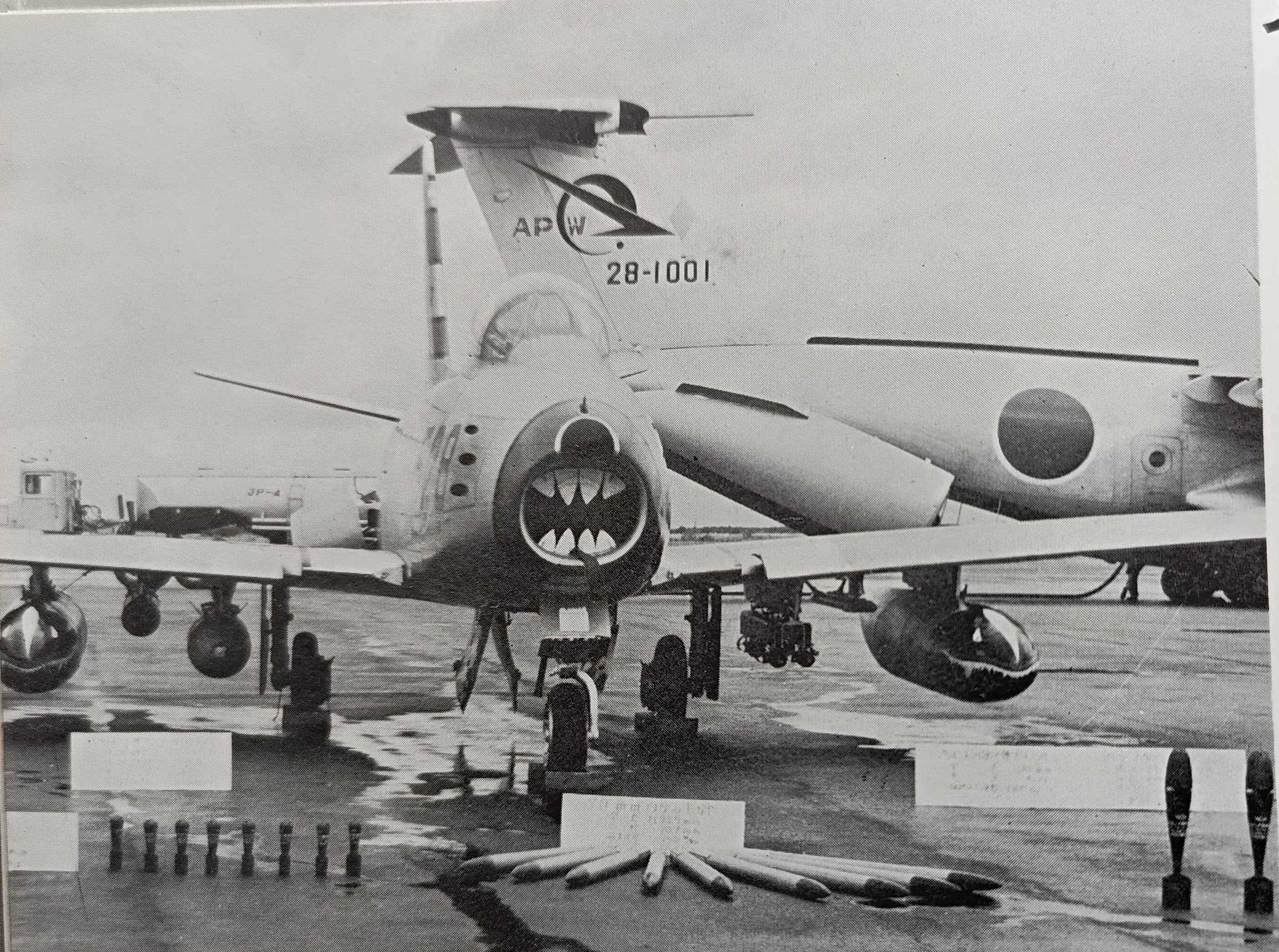
Late service of Japanese North American F-86F-40
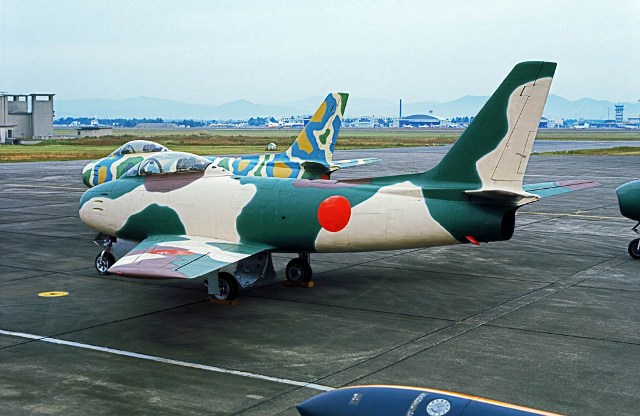
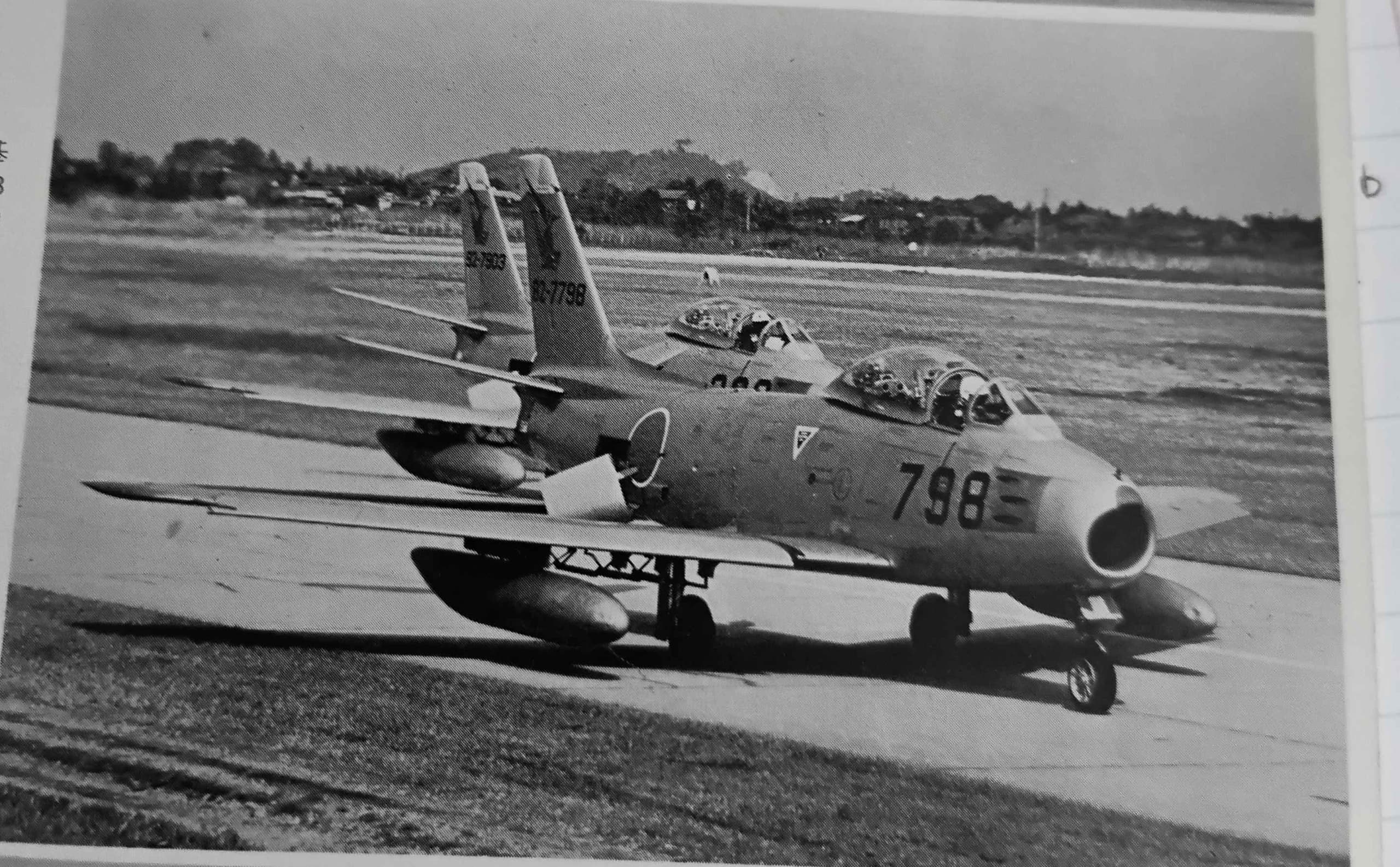
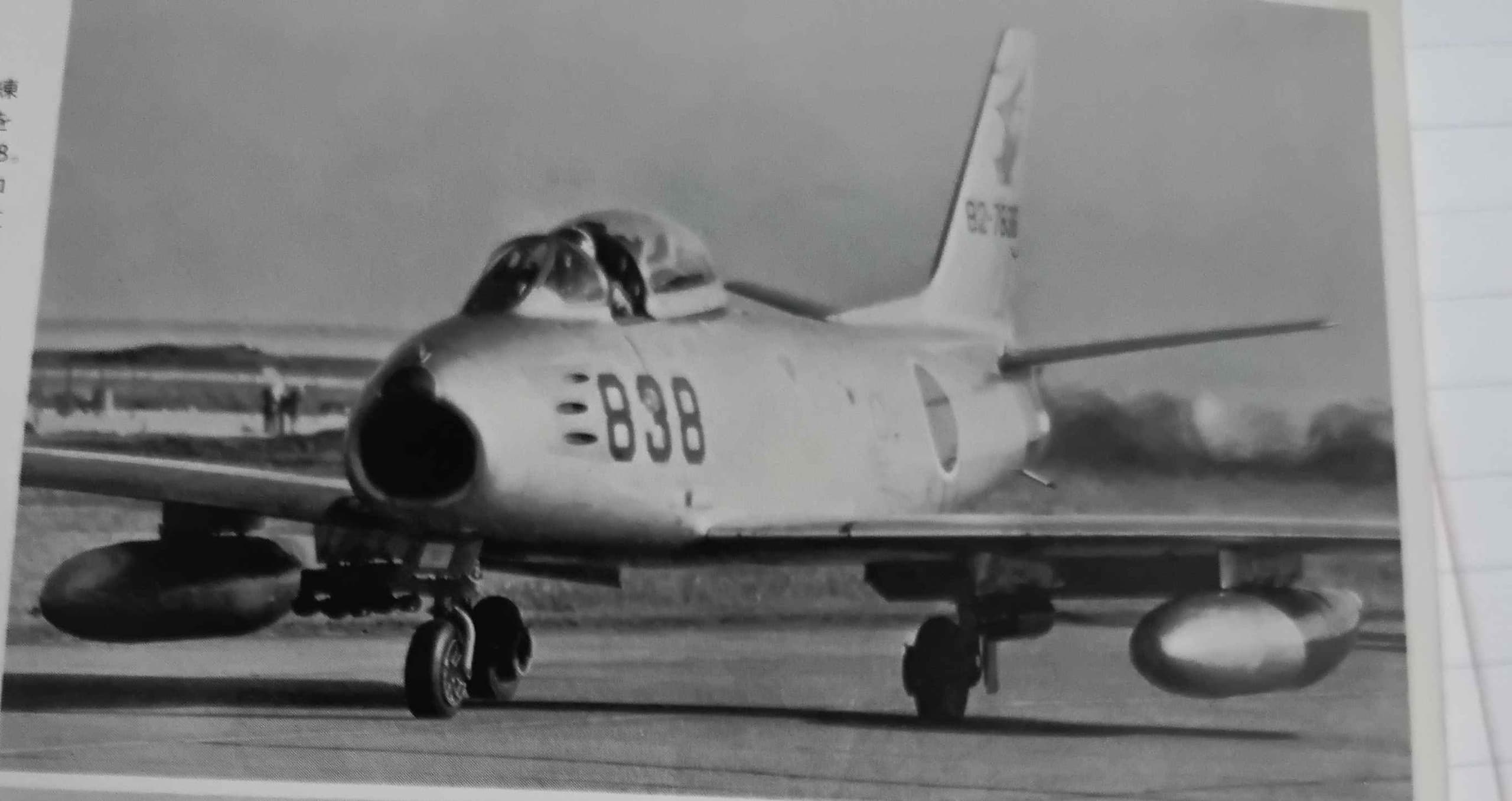
Japanese North American/Mitsubishi F-86F-40 aircraft, during their service from 1954, to March 15, 1982, initially served as the main fighter of the JASDF, and from 1962 took on the role of an air support fighter. This piece focuses on the modifications of the Japanese F-86F-40 that enhanced their fighter and battlefield support capabilities. The Japanese operated 480 (180 were received from the USA, and 300 were produced by Mitsubishi) North American F-86F aircraft (in F-86F-25, 30, and 40 versions). In Japanese service, this aircraft was nicknamed “Kyokukō” (Rising Sunbeam).
History
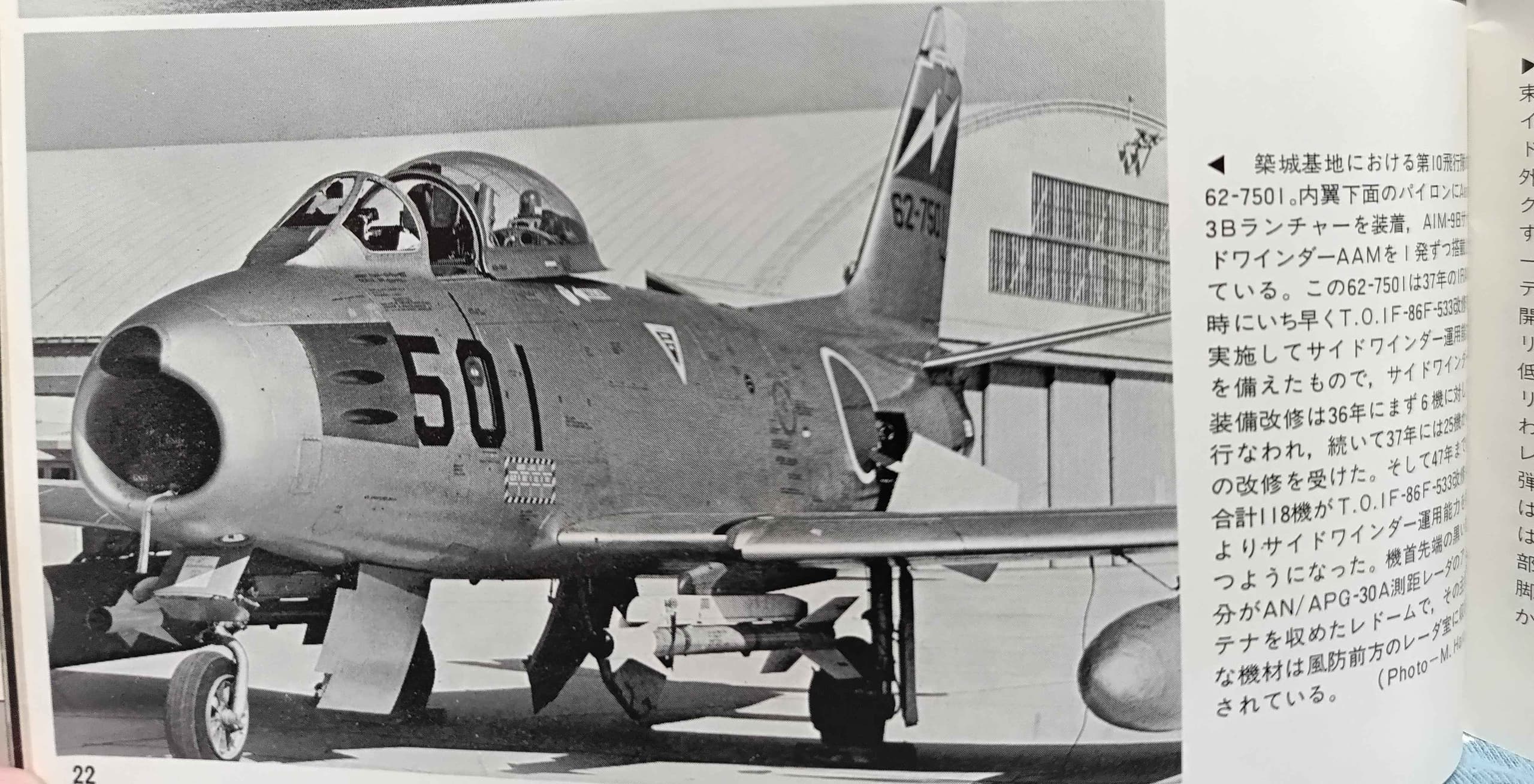
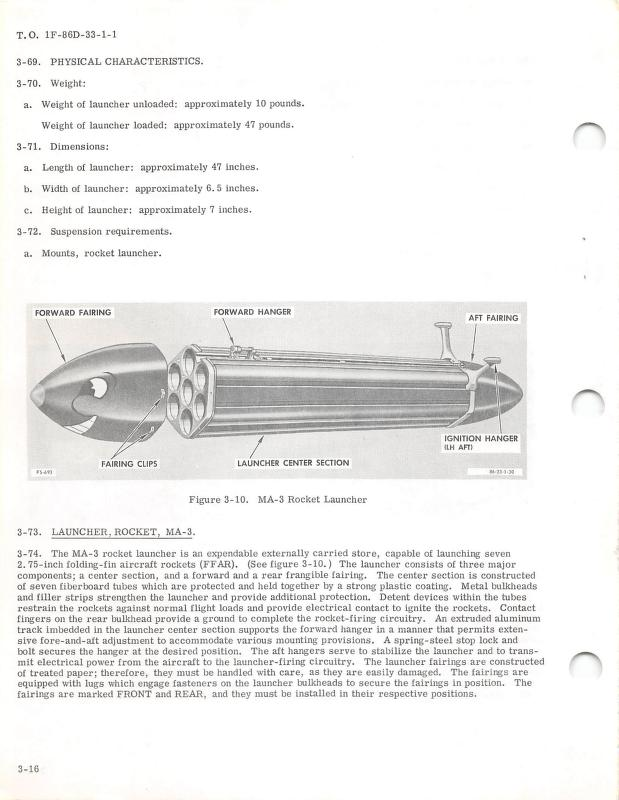
The Japanese received their first F-86Fs in 1954 from the USA as aid in building their self-defense forces… At the time the F-86F planes were introduced into service, they were very modern designs (initially these were F-86F-25 and F-86F-30, but newer F-86F-40s, which started being delivered in 1955, quickly joined them). In those early days, the JASDF relied on these planes, along with the modern Lockheed T-33A trainers, as the main air defense for Japan. The Japanese knew they needed a lot of fighters, so they acquired a license to produce F-86F-40s, which were built from 1957 to 1961 at the Mitsubishi factories. Initially, the planes were fairly versatile, but they quickly stopped being so due to the rapid development of military aviation. The initial armament of 6 heavy machine guns and optional AIM-9B missiles quickly became insufficient, so in 1962 the F-104J was adopted as JASDF’s main fighter, while the F-86F was relegated to ground support and secondary fighter roles. To better handle this role, modifications were introduced, including adaptation for the use of domestic AAM-1 missiles and AIM-9E. Additionally, for fighting land and sea forces, the aircraft were modified to carry more weapons under the wings. One of the modifications involved installing MA-3 mounts, which allowed fitting an M3 launcher (7 rockets), and MA-2 mounts, which allowed installing 2 FFAR rockets or 4 bombs weighing 25 lb. After these modifications, the F-86F could, for example, first fire a salvo of 14 FFAR rockets at enemy ships and then bomb them with 2 bombs weighing between 250 lb and 1000 lb. For fighting infantry, 750 lb napalm bombs could be used. The 25 lb bombs were mainly for training purposes. The Japanese knew that the F-86F couldn’t provide adequate ground support, so in 1977 they introduced better air support fighters, the Mitsubishi F-1, which started replacing the F-86F aircraft. By March 15, 1982, the last North American/Mitsubishi F-86F-40s were retired.
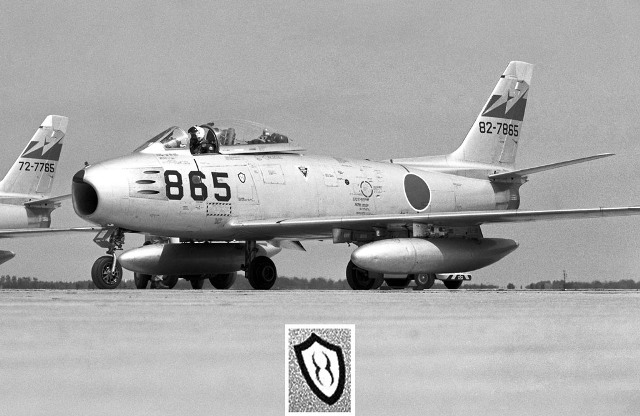
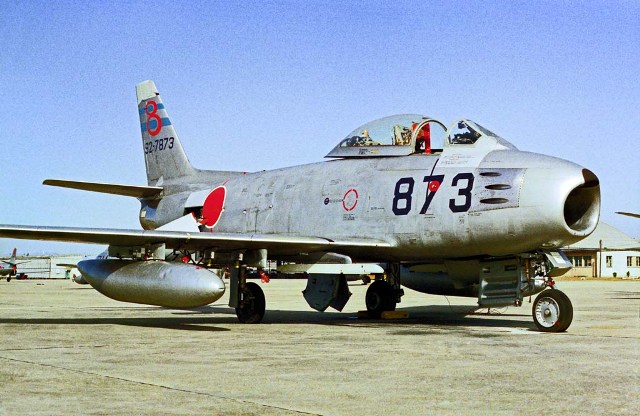
Photos of Noth American F-86F-40 (late servis)
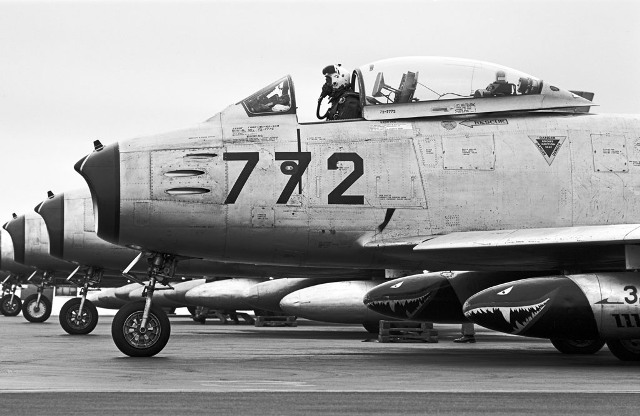
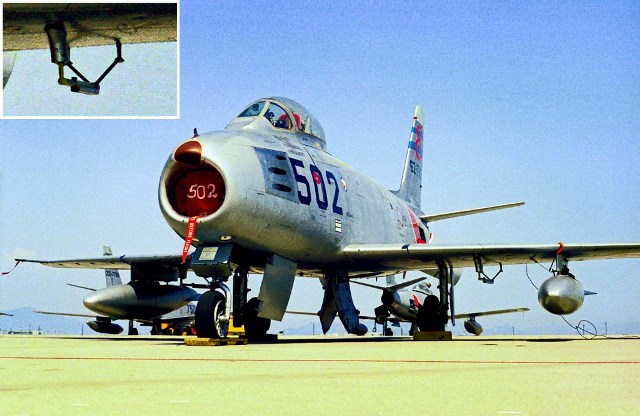
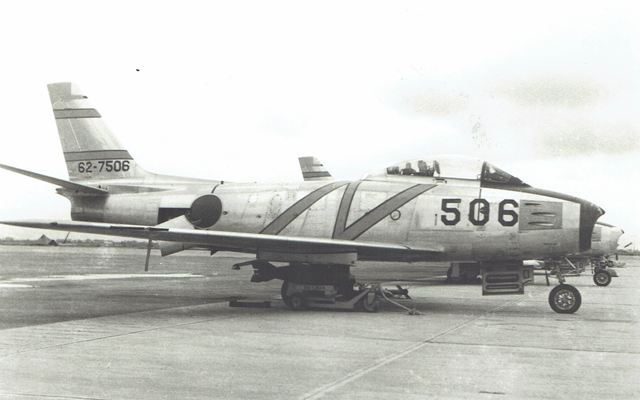
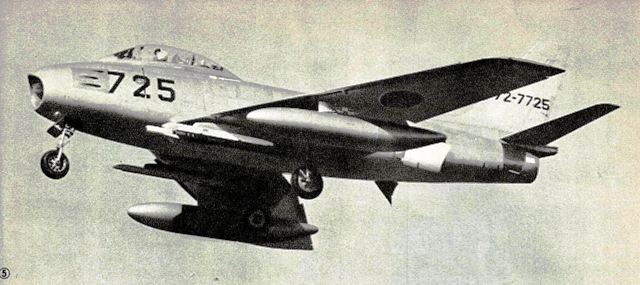

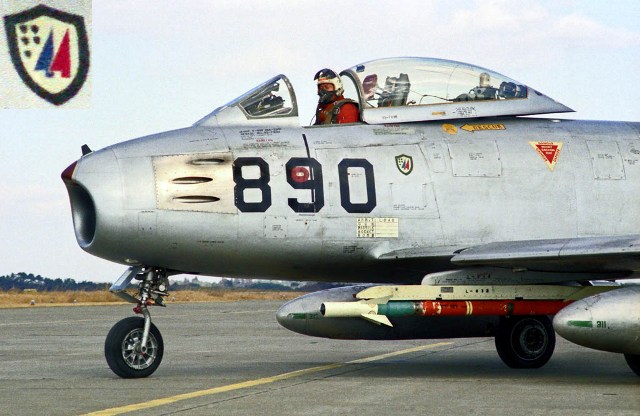
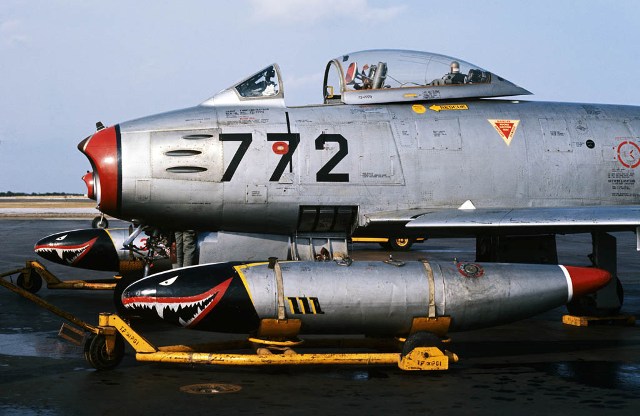

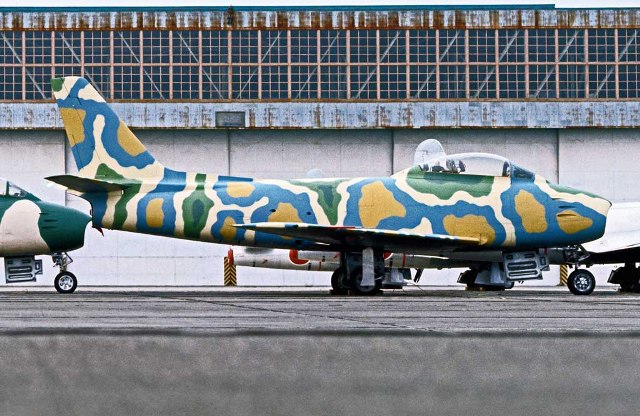
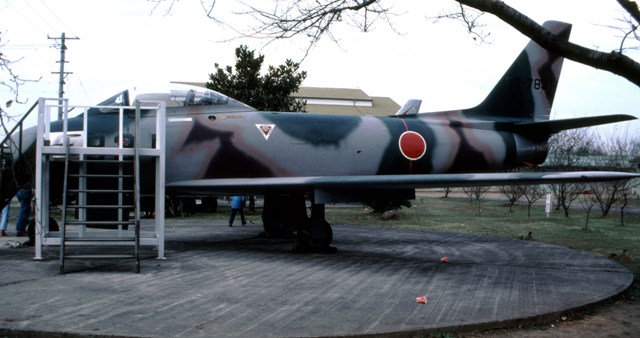
Possible interesting camouflages
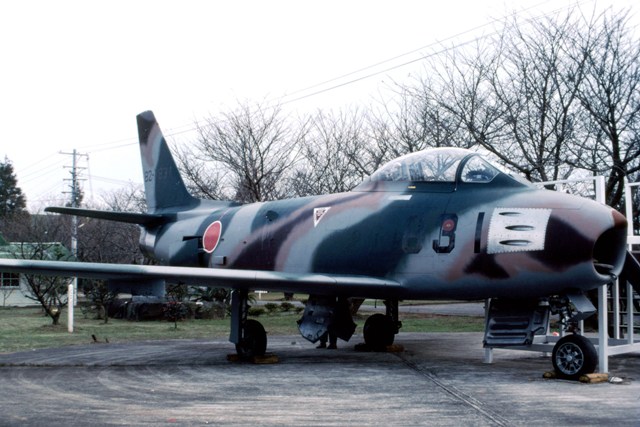
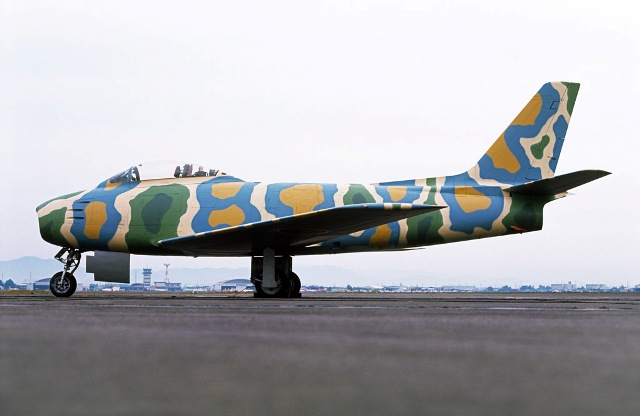
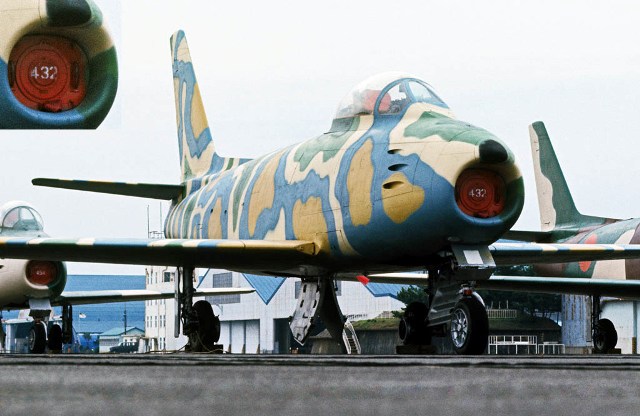

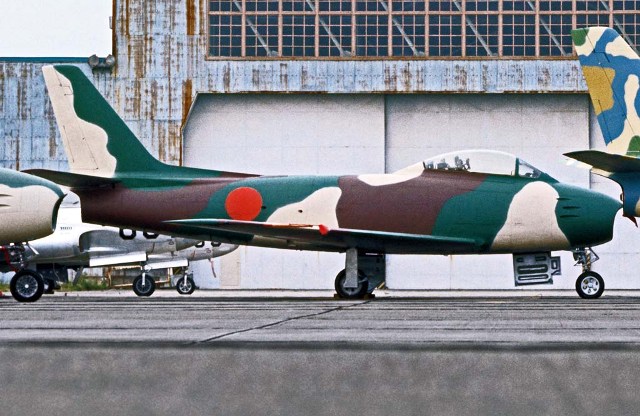
Construction description
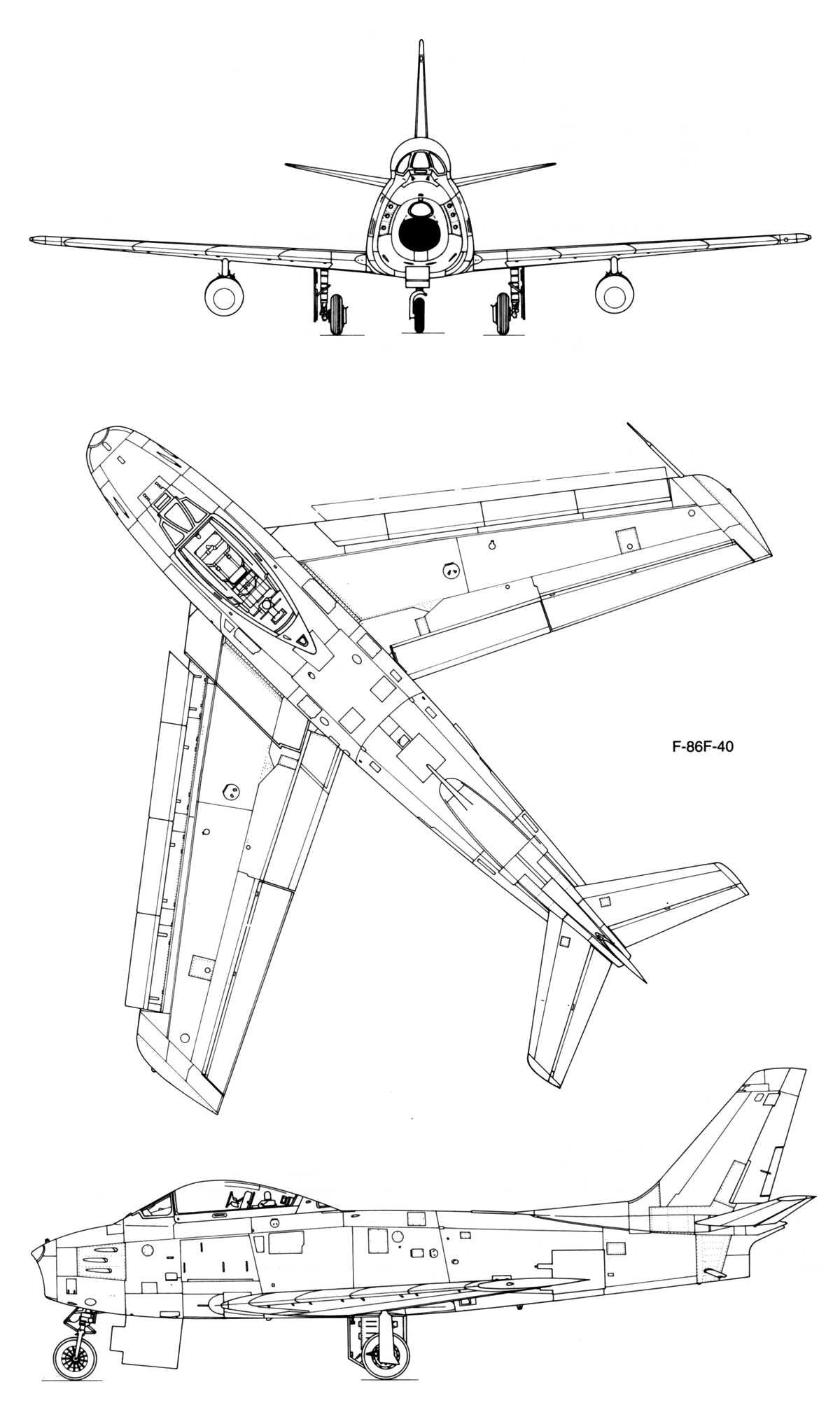
In terms of construction, the late-service F-86F-40 isn’t different from the F-86F-40 in the game. The main difference is the armament, which I’ll describe in another category.

Armament
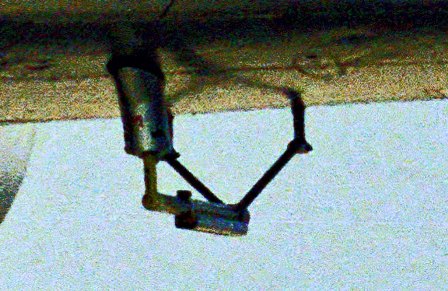
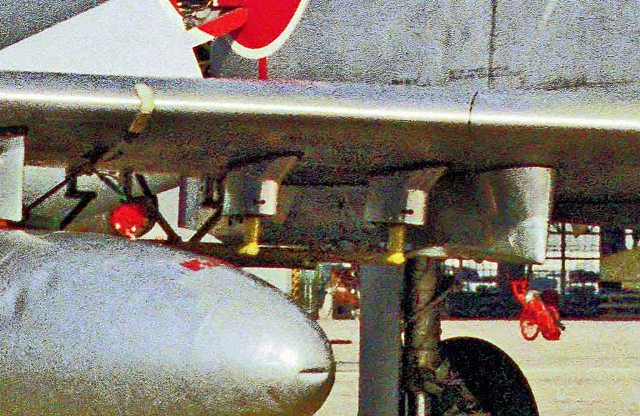
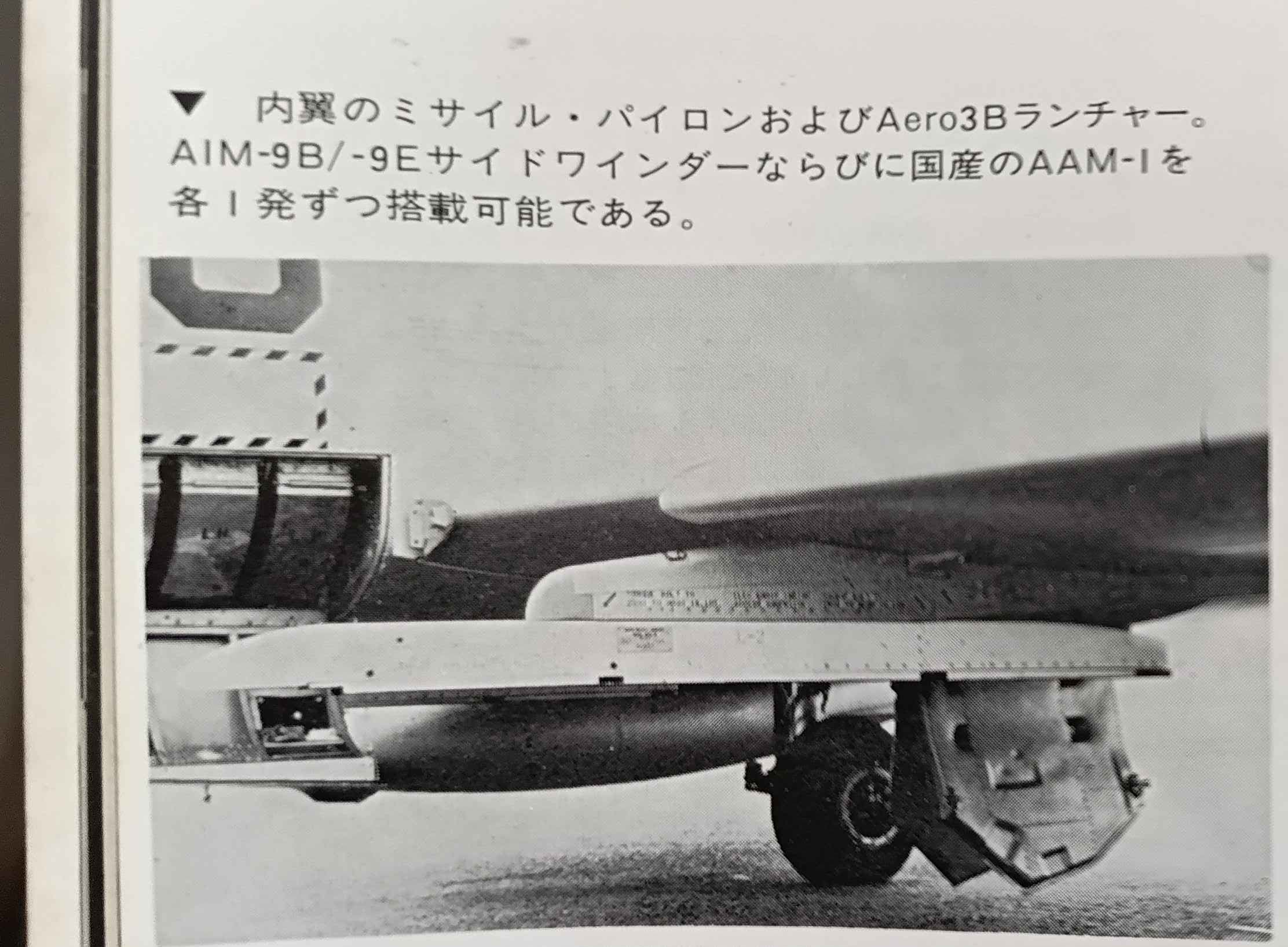
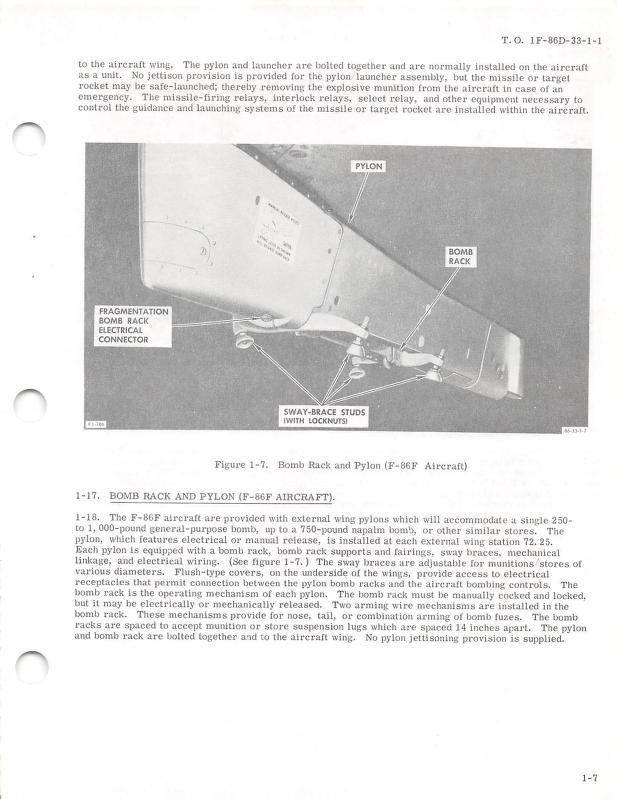
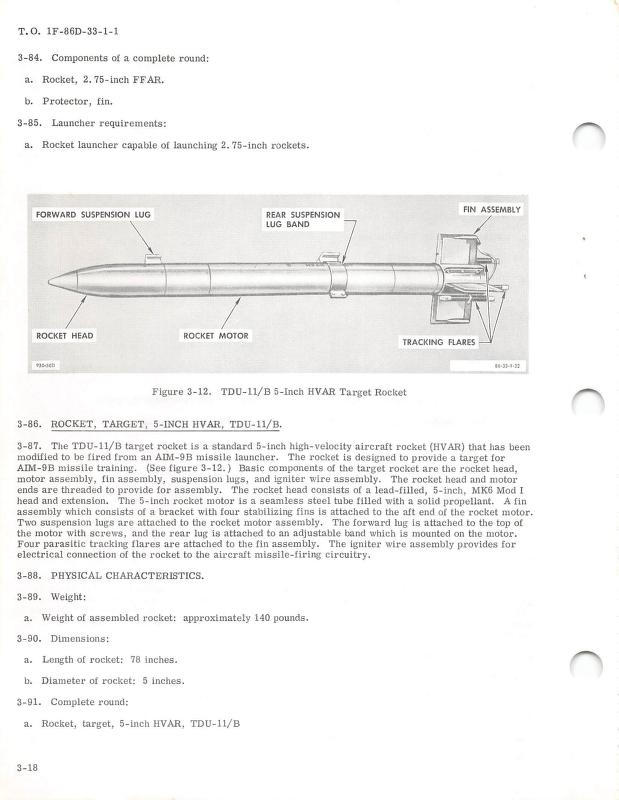
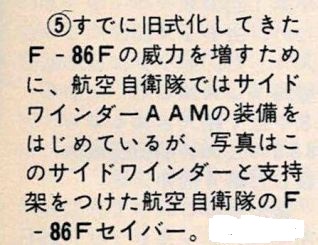
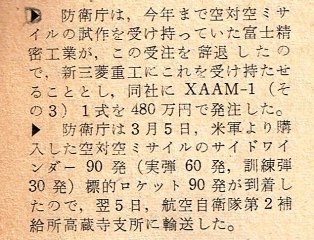
The North American/Mitsubishi F-86F-40 used by the Japanese in the later periods of service differ significantly in terms of armament from the F-86F-40 that are in the game. The Japanese adapted their F-86Fs to carry AAM-1 missiles and AIM-9E on Aero 3B launch rails. Additionally, on bomb pylons they could carry bombs weighing 250 lb, 500 lb, 750 lb, and 1000 lb, as well as incendiary napalm bombs weighing 750 lb. The Japanese modified their aircraft to mount two MA-2 and MA-3 racks on each wing, giving four mounts for FFAR missiles (MA-2 - 2 missiles per mount, MA-3 - 7 missiles per mount) or for two or four 25 lb bombs per mount (MA-2). Additionally, it was possible to install CBLS-200 training dispensers that allowed mounting four 25 lb bombs or four FFAR rockets. Under the wings, up to 16 HAVR rockets could be mounted.The F-86F kept its six heavy M3 12.7mm machine guns in the nose with a supply of 1,800 rounds. Under the wings, up to 16 HAVR rockets could be mounted.

General characteristics
- Crew: 1
- Length: 11,30 m
- Wingspan: 11,91 m
- Height: 4,29 m
- Wing area: 29,12 m2
- Empty weight: 5,046 kg
- Gross weight: 6,894 kg
- Max takeoff weight: 8,234 kg
- Powerplant: 1 × General Electric J47-GE-27 turbojet engine, 5,910 lbf (26.3 kN) thrust
Performance
- Maximum speed: 1,106 km/h
- Cruise speed: 826 km/h
- Range: 745 km
- Ferry range: 2,454 km
- Service ceiling: 14,330 m
- Rate of climb: 47,2 m/s
Armament
- Fixed armament
- 6 x Browning M3 12.7 mm machine gun (1800 rounds)
- Armament mounted on two fixed points under the wings
- 2 x AIM-9 Sidewinder (AIM-9B ,AIM-9E)
- 2 x Type 69 Air-to-Air Missile, AAM-1
- 4 x 25 lb bombs (4 on MA-2 rails)
- 2 x 250 lb bombs
- 2 x 500 lb bombs
- 2 x 750 lb bombs
- 2 x 750 lb Napalm bombs
- 2 x 1000 lb bombs
- 2 x CBLS-200 (Training dispenser.It can carry four 25-pound BDU-33 training bombs and four rockets 2,75 inches)
- 4 x Mighty Mouse 2.75 inches rockets in the M3 launcher (7 rockets)
- 4 x Mighty Mouse 2.75 inches rackets (2 on MA-2 rails)
- 16 x HVAR 5-Inch rockets
- Fuel dump tanks
- 2 x 120 gal drop tank
- 2 x 200 gal drop tank
- 2 x 120 gal drop tank + 200 gal drop tank
Special thanks
Summary
The late service Japanese North American/Mitsubishi F-86F-40 is an interesting aircraft for Japan in War Thunder. The late-service F-86Fs will be much more competitive compared to the current Japanese F-86F-40s and Malaysian CA-27 Mk.32s. The late-service Japanese F-86F-40s will provide much better air defense for Japanese ground players thanks to the ability to use Air-to-Air missiles at the same time as rockets and bombs, and they will also be useful in air battles where unguided rockets can be used as makeshift flares. Of course, it’s still the same F-86F-40 airframe, so the late-service versions could either be a modification for it or a separate aircraft in the hangar. I encourage you to discuss in the comments and to share your own knowledge on this subject.
Finally, I apologize for the linguistic and logical errors because unfortunately English is not my main language and I had to use google translator.
Internet sources
F-86 (航空機) - Wikipedia
North American F-86 Sabre - Wikipedia
航空自衛隊F-86Fの研究
North American F-86F Sabre : North American
Уголок неба ¦ North American F-86F Sabre
Book sources
- Bunrindo - Famous Airplanes of The World No.107 - North American F-86F Sabre
- 日本航空機辞典 1951年(昭和26年)~1989年(平成元年) 下巻 (Encyclopedia of Japanese Aircraft 1951 (Showa 26) - 1989 (Heisei 1) Volume 2) page 24-25
Additional sources

Thank you for reading the suggestion, see you in the next one. Good luck pilots