- Yes
- No
KM-SAM Cheongung Block II - The Korean Ballistic Curtain
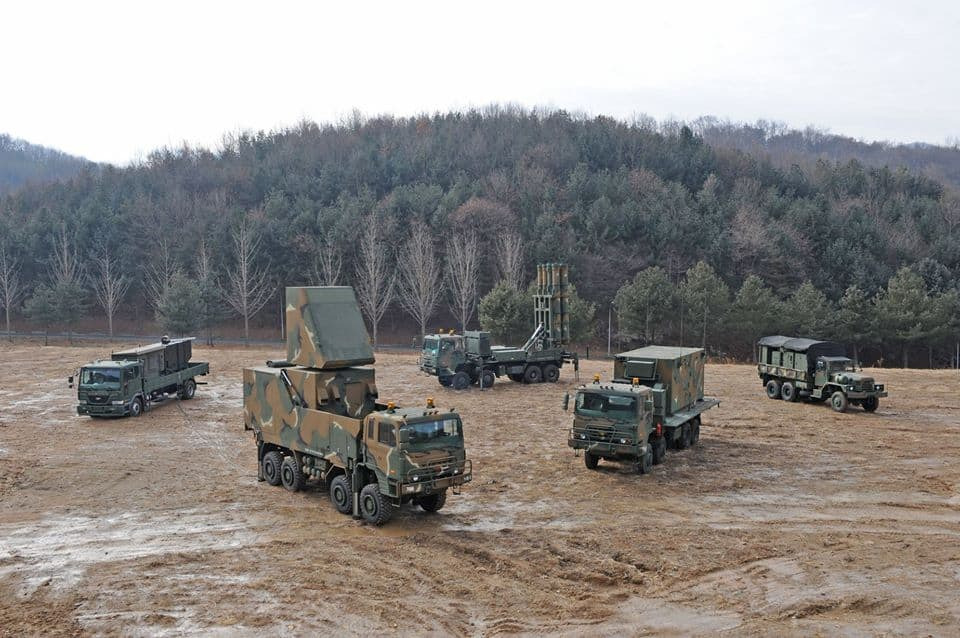
Hi and welcome to my 106th suggestion, which is about the KM-SAM with Block II missiles for a future Korean TT, hope you like it. 
First of all:
- Feel free to share more Information and / or correct me if something is wrong
- Discuss respectfully, any aggressive kind or verbal abuse will be reported, the Forum rules also apply here
Basic Background
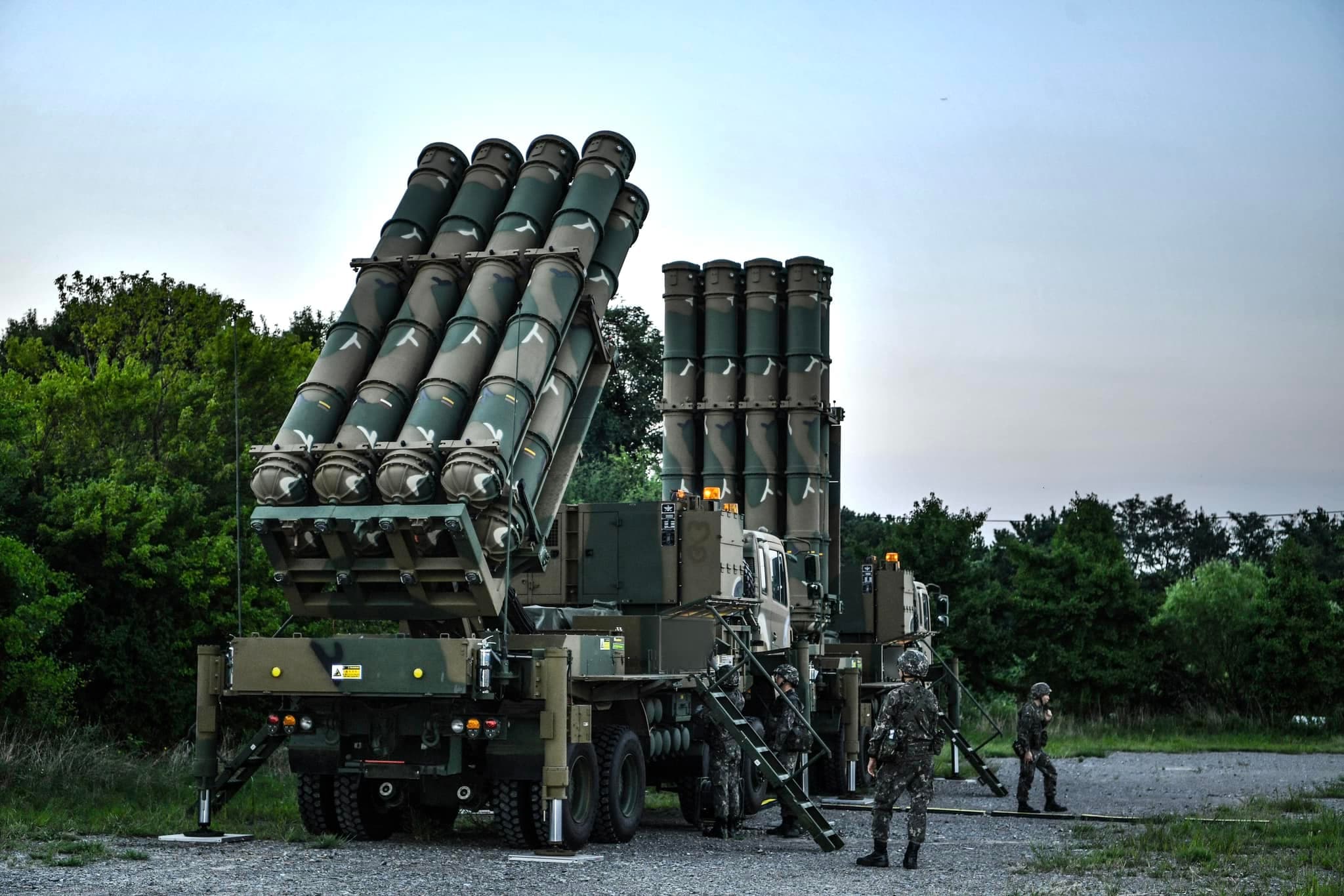
In mid-2015, the South Korean Air Force Command announced that the KM-SAM (Cheongung) medium-range air defense system would go into series production and be delivered to the Air Force starting in September of that year. The system replaces the Hawk anti-aircraft missiles, which have been in service since 1964 and were decommissioned in the US in 2002. The KM-SAM can engage up to six targets simultaneously and has electronic countermeasures to remain operational even in the event of jamming attempts. After successful operational testing in July 2015, the first deployment began in early 2016 on the west coast near the maritime border with North Korea.
The KM-SAM was developed by the South Korean Agency for Defense Development (ADD) with technical support from the Russian companies Almaz-Antey and Fakel, using technologies from the 9M96 missile from the S-350E and S-400 systems as a basis.
In 2017, South Korean military officials announced the development of an improved version equipped with hit-to-kill technology that can also intercept ballistic missiles.
This modernization program, known as Cheongung II, began in 2012 and, according to official figures, achieved a 100% hit rate in tests.
The first Cheongung II system was introduced in 2024, while full operational readiness of the second phase is expected by 2027.
The KM-SAM System Overall
The KM-SAM system uses a PESA antenna in the X-band, known as MPQ-540K, as its fire control radar. In search mode, the radar rotates 360° at a speed of 40 rpm and covers an elevation range from −3° to +80°. The maximum detection range for air targets is around 100 km. The system can track up to 40 targets simultaneously; for tracking a detected target, the radar offers a field of view of ±45° in the azimuth plane and −3° to +80° in the elevation plane.
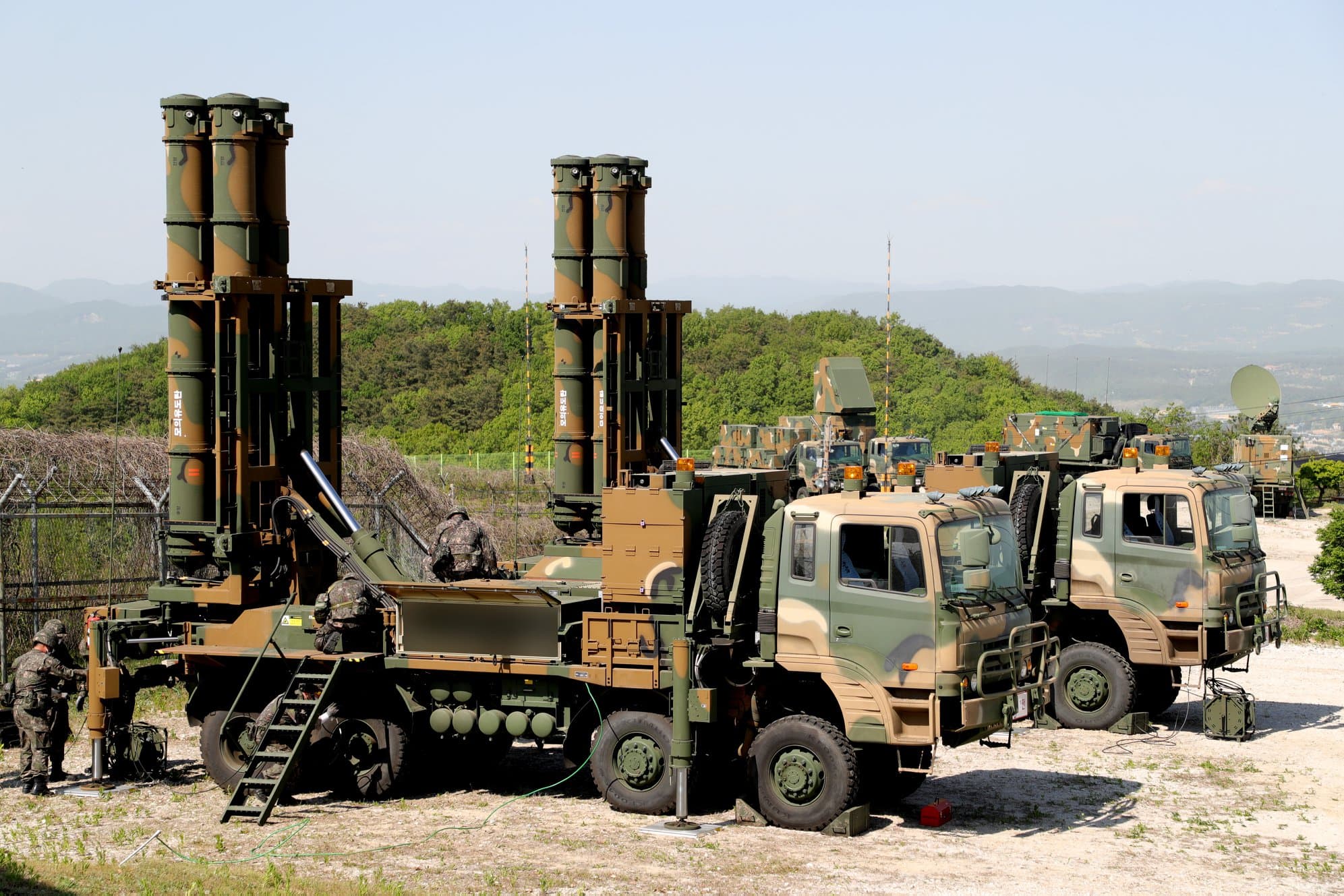
The carrier vehicles are based on the 8×8 truck family (K912 lineage) developed by KIA. Launcher and radar vehicles use the K916 chassis, the combat control/command center uses the K917, power generator vehicles also use the K917, and reloading vehicles use the K918. Generator and reloading vehicles are auxiliary units and are not essential for the operation of a battery. Dimensions of the launcher and radar vehicles: approximately 11.0 × 2.6 × 4.0 m (height with launchers lowered). The radar vehicle has an operating weight of approximately 18 tons. All trucks use a D6CA engine with 450 hp, and the maximum speed is approximately 90 km/h.
One launcher carries eight missiles, with an entire battery consisting of up to six launcher vehicles.
The Cheongung Block II missile Overall
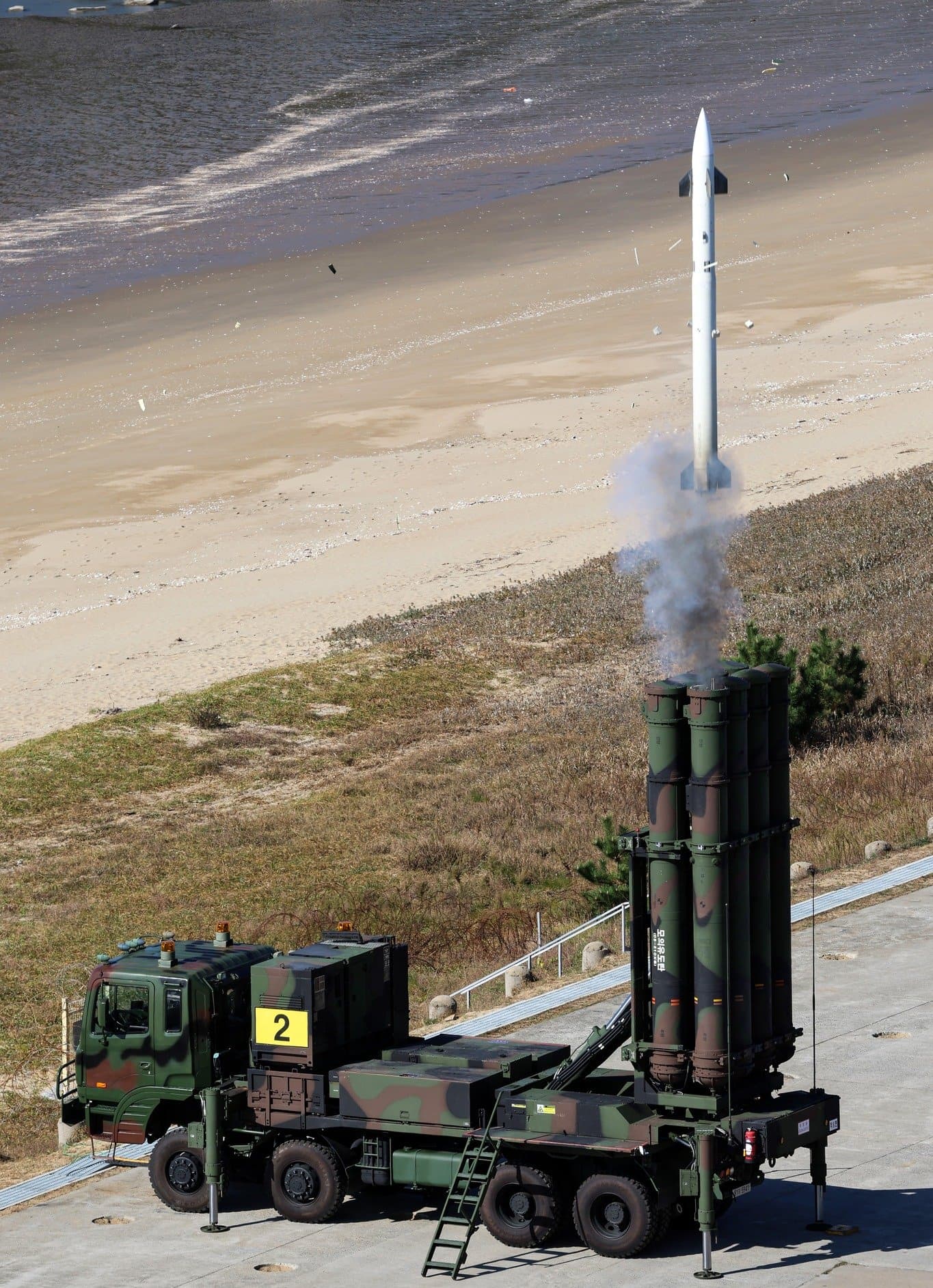
The Cheongung PIP (Product Improvement Program), known as Cheongung Block II, a fundamental redesign in configuration and purpose. Externally, the missile now closely resembles the Russian 9M96E used in the S-350E system. According to official research papers, the Block II missile integrates several major improvements: it employs a canard control system to enhance responsiveness and introduces large shutter-type side thruster near the missile’s center of gravity for precise trajectory correction during the terminal interception phase.
Unlike the plug-separation system used in the Russian 9M96E or the poppet-type On/Off thrusters (“piff-paff”) in French ASTER missiles, the new shutter-controlled thruster allows for independent and fine-tuned thrust modulation in all four directions, offering significantly improved accuracy.
Earlier studies conducted by Hanwha and the Agency for Defense Development (ADD) explored different side-thrust control methods, including simpler gas-port systems with stoppers, but these were limited in precision.
Beyond the missile itself, Cheongung II also features major system-level upgrades; the Operation Control Center (OCC) and Engagement Control Center (ECC) have both been modernized to support multiple tactical data links, including Link 16, ATDL-1, and MDIL. This allows seamless integration with allied networks and enhances interoperability across different defense platforms.
The Cheongung Block II missile also features a reworked active radar homing (ARH) guidance, an effective range of 50 km, a celling of up to 20 km, maneuverability of up >50 g, and top speeds of Mach 5 or higher. The weight and exact dimensions of the missile are unknown, but should not be too different from Block I.
Thanks for your time, hope you liked it 
[Will add more if there are some (more) important / declassified things]
[PM or comment if a Link or Picture isn´t working]
Sources: