- Yes
- No
Kaman HOK-1 Huskie
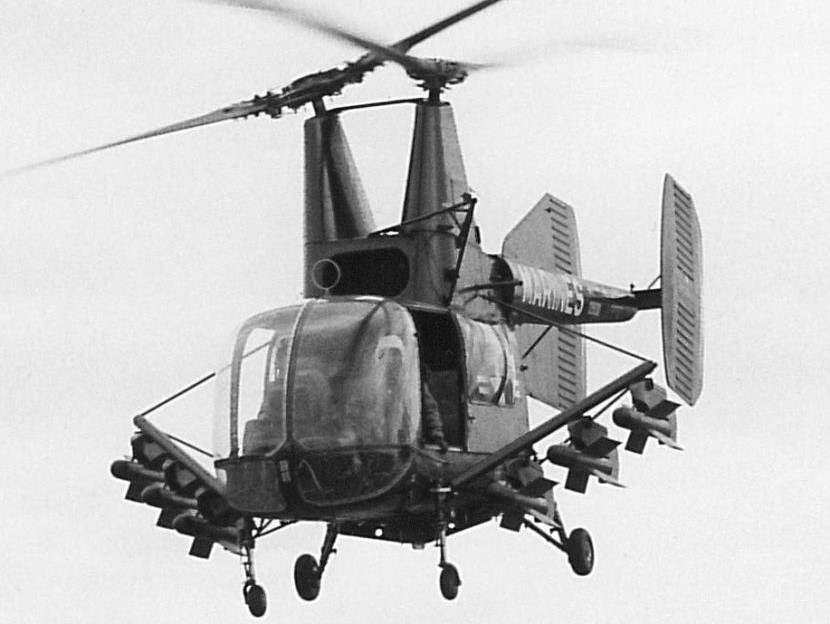
Today, we will take a look at the armed testbed variant of the HOK-1, a utility helicopter developed by Kaman Aircraft. Featuring distinctive intermeshing rotors, it stands as an extremely rare example of an armed synchropter.
Aircraft:
Kaman HOK-1 Huskie
Classification:
Utility Helicopter
Country of operation:
USA
history
The development of the HOK-1 traces back to a 1950 U.S. Navy competition for a new light observation helicopter for the Marine Corps, intended to replace the aging Sikorsky HO3S.
Although Sikorsky’s HO5S was initially declared the winner, the Navy was deeply impressed by the demonstration of Kaman’s prototype (K-225), which displayed exceptional flight characteristics, stability, and ease of control. As a result, in June 1950, the Navy signed a contract with Kaman for four HOK-1s to serve as a backup option to the HO5S.
However, after the primary choice—the Sikorsky HO5S—suffered from an underpowered engine and failed to meet performance expectations, Kaman’s backup design was officially adopted as the primary platform. In 1952, the Bureau of Aeronautics (BuAer) awarded Kaman a production contract for 46 units.
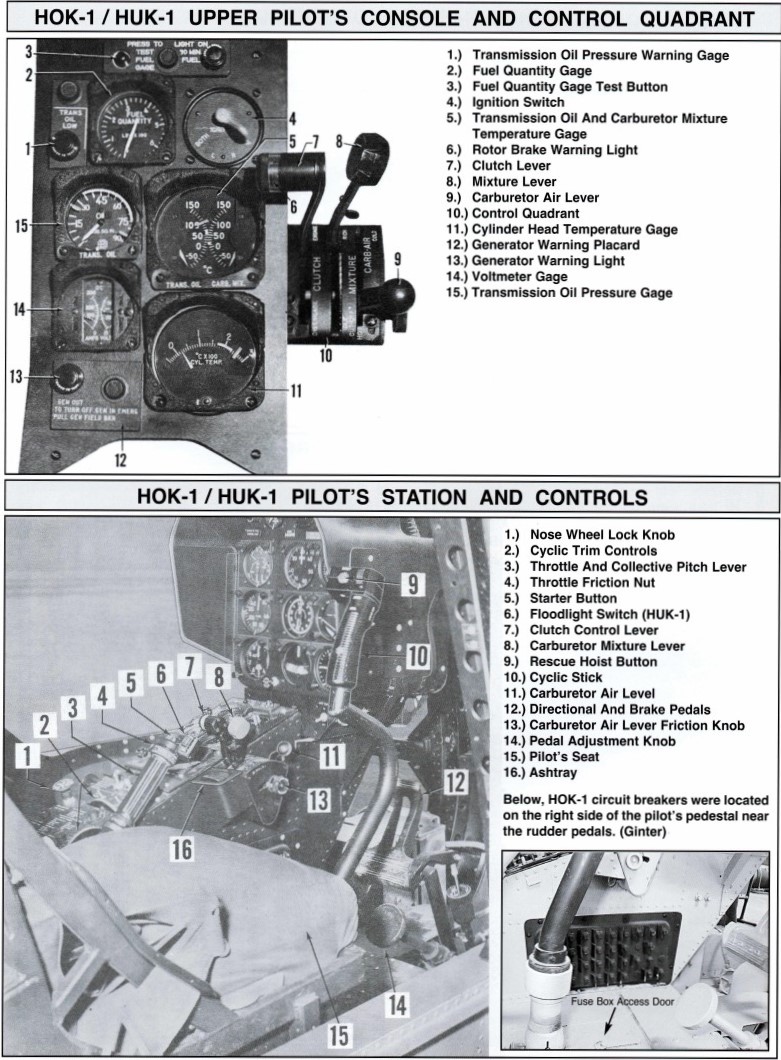
Technically, the aircraft incorporated the innovative “Synchropter” (intermeshing rotors) system and servo-flap control, concepts that founder Charles Kaman had pursued since establishing the company in 1945. This configuration eliminated the need for a tail rotor while delivering unmatched stability, famously allowing the aircraft to maintain a stable hover even with the pilot’s hands off the flight controls.
For the production models, the reliable Pratt & Whitney R-1340-48 engine (600 hp takeoff rating) was installed to ensure high operational dependability. Deliveries to the Marine Corps began in 1954, where the aircraft was deployed for observation, liaison, search and rescue (SAR), and medical evacuation (MEDEVAC) missions.
It was in the late 1950s that the idea of arming the HOK-1 entered the picture. While concepts of deploying helicopters for anti-tank missions and smoke-screening had been discussed as early as 1949—followed by USMC experiments in 1951 mounting machine guns and 2.75-inch rockets on the HTL-4—the response among pilots at the time was largely skeptical. With the Navy and Marine Corps heavily prioritizing fixed-wing aircraft for Close Air Support (CAS), research into armed rotorcraft remained strictly limited for nearly a decade.
The turning point came in 1957, when a Marine Corps delegation observed French military operations during the Algerian War. French forces demonstrated the effective use of helicopters armed with machine guns, rockets, and even anti-tank missiles for troop escort and mobile fire support. These field reports prompted the Marine Corps to fundamentally reassess the tactical value of armed helicopters.
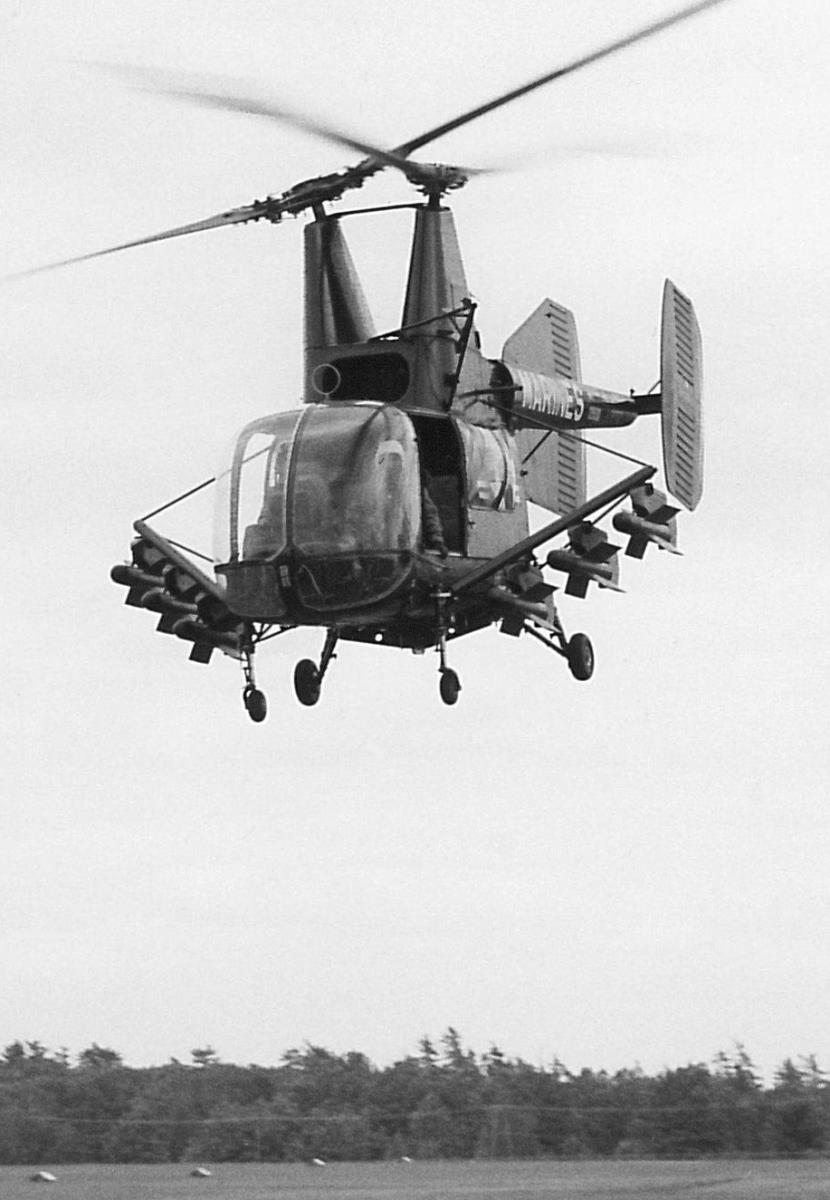
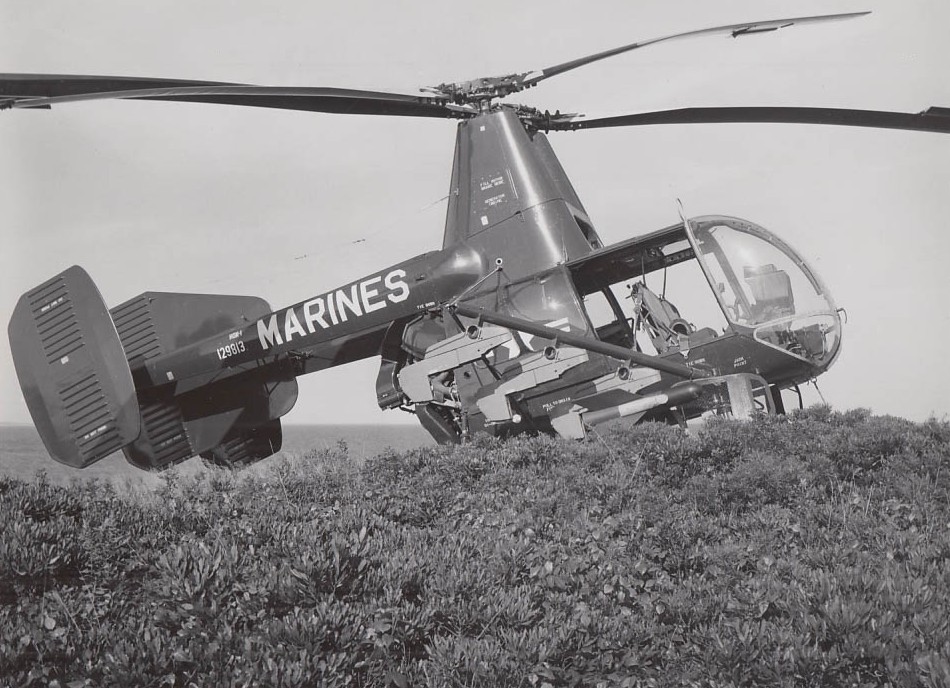
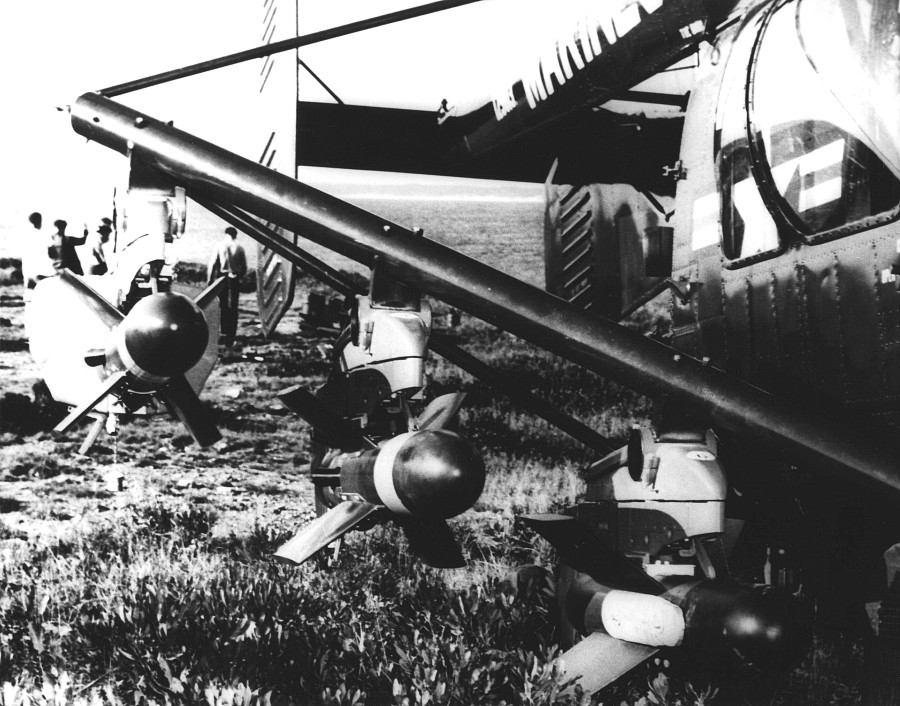
In light of these findings, the Navy and Marine Corps launched trials to evaluate helicopters as “flying artillery” and strike platforms. As part of this initiative, an HOK-1 (BuNo 129813) was selected in early 1959 for ground-attack testing. The aircraft was fitted with French-designed SS.11 wire-guided anti-tank missiles.
The Synchropter’s exceptional hover stability, inherent to its intermeshing rotors, provided an ideal, rock-solid platform for the operator to guide the wire-guided missiles with high precision. Although the HOK-1 itself was never formally adopted into serial production as a combat helicopter, these trials served as a crucial stepping stone toward the dedicated gunships that would define the Vietnam War.
Description
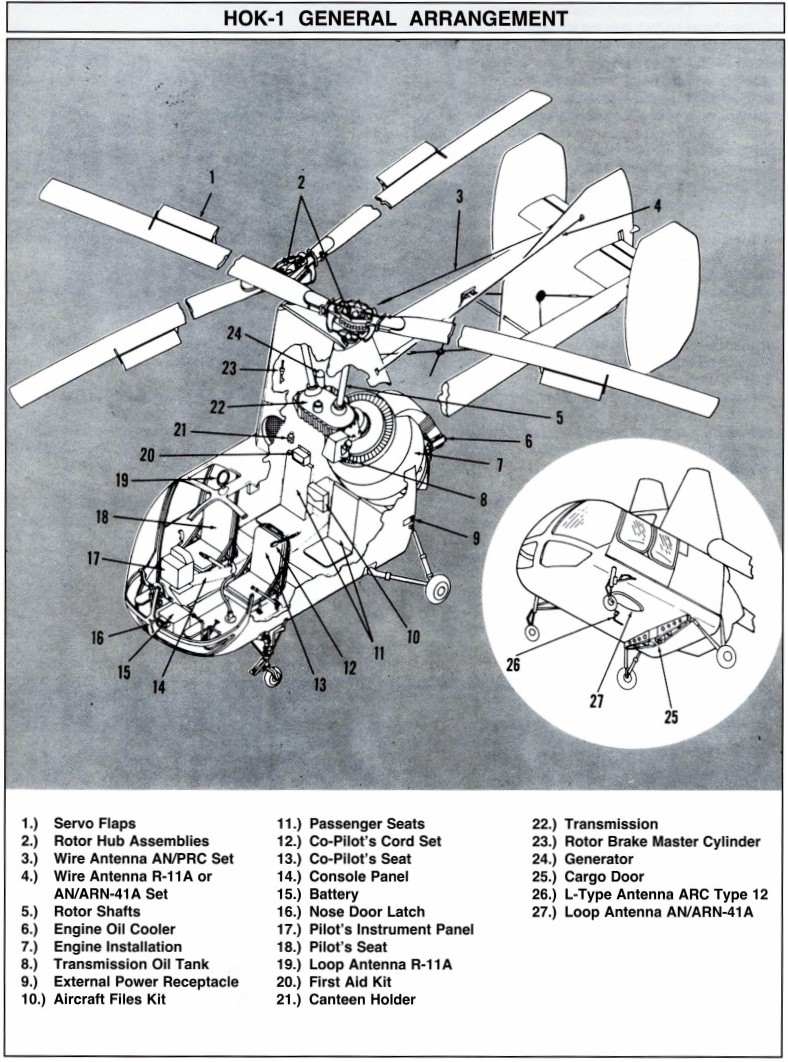
The HOK-1 is a single-engine utility helicopter designed and manufactured by Kaman Aircraft for the U.S. Marine Corps. Powered by a Pratt & Whitney R-1340-48 radial engine, it features seating for up to five occupants, including the pilot. Its primary defining characteristic is an intermeshing-rotor system (synchropter) controlled via aerodynamic servo-flaps. In this configuration, two side-by-side main rotors counter-rotate and intermesh with each other. This compact arrangement delivers exceptional hovering efficiency and handling qualities while minimizing both noise levels and rotor downwash.
Unlike conventional hydraulic actuators that pivot blades directly at the rotor hub, the flight controls mechanically actuate small servo-flaps mounted on each blade trailing edge to induce an aerodynamic twist along the blade span. This unique mechanism significantly reduces the physical force required by the pilot to manipulate the controls. Furthermore, as an intermeshing-rotor aircraft, the synchropter eliminates the need for an anti-torque tail rotor, allowing 100% of the engine power to be dedicated toward lift rather than lateral thrust generation.
Yaw control, traditionally handled by a tail rotor, is accomplished by applying differential collective pitch between the left and right rotors, differential longitudinal cyclic thrust, or a combination of both. During autorotation, this differential collective yaw system necessitates reversing the rudder pedal inputs; this control reversal is engaged automatically whenever the collective lever is placed in the fully lowered position.
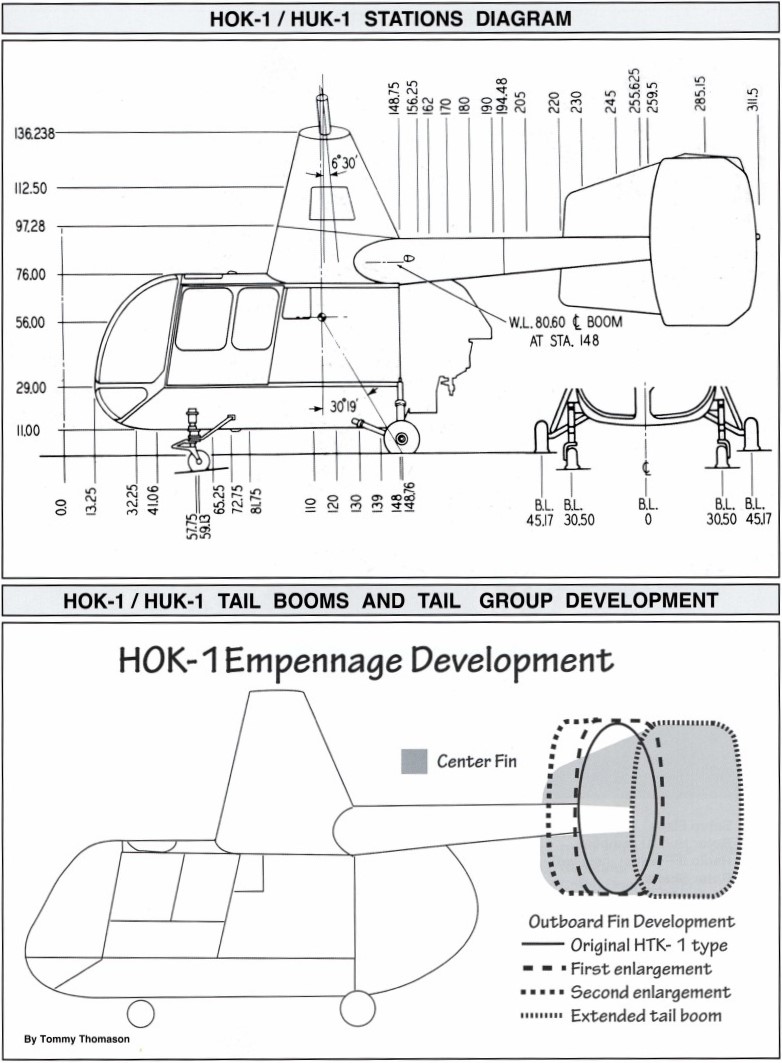
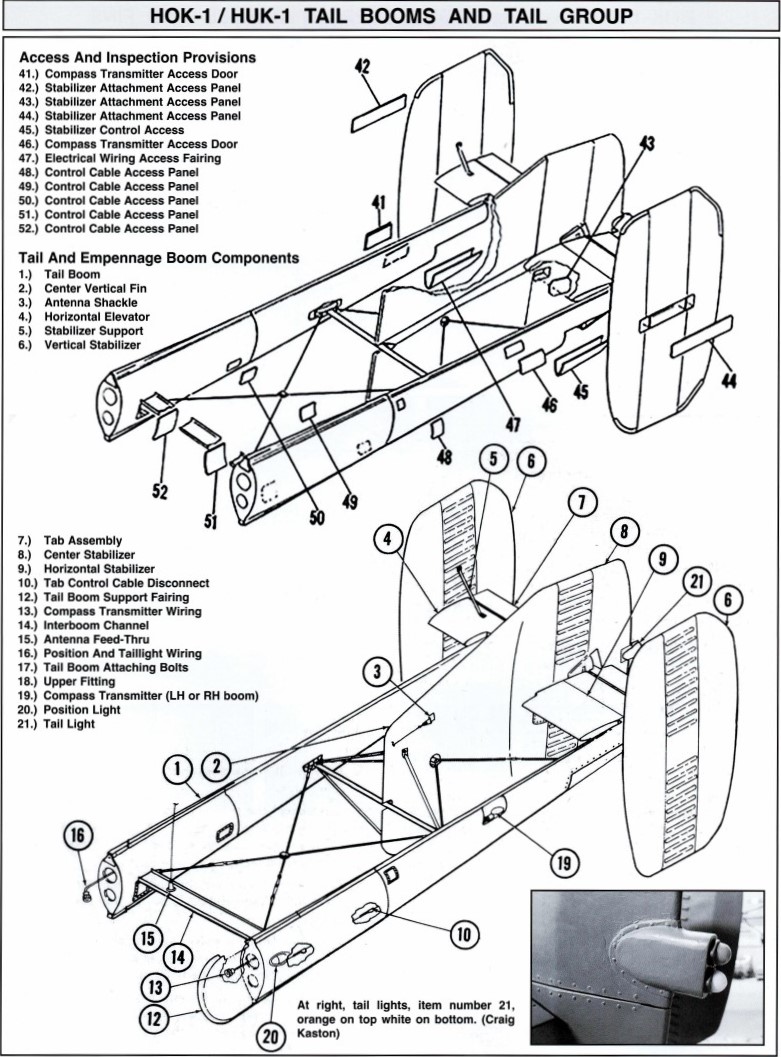
The tail unit is supported by twin booms framing a central horizontal elevator fitted with a servo-flap linked directly to the collective control. Raising the collective lever increases the angle of attack on the tailplane, effectively expanding the permissible longitudinal center-of-gravity range. This elevator is flanked by a large fixed central vertical stabilizer, while the outer vertical fins are integrated directly into the elevator structure and pitch in tandem with changes in its angle of attack. While early testing featured full engine cowlings, field operations routinely saw these covers removed to expose the radial engine for improved cooling and ease of maintenance.
In addition to the USMC HOK-1, the same platform was designated as the HUK-1 for the U.S. Navy and the H-43A for the U.S. Air Force. Under the 1962 Tri-Service aircraft designation system, the HOK-1 became the OH-43D, the HUK-1 was redesignated as the UH-43C, and the H-43A became the HH-43A. Subsequent turbine-powered developments, such as the H-43B, underwent extensive airframe modifications and represent a distinctly different aircraft line.
In War Thunder
Pros:
- High Payload Efficiency
- Superior Hover Stability
- No tail rotor required
Cons:
- Limited Top Speed
- Only missiles
- Complex and unconventional yaw control dynamics
In terms of in-game performance, the HOK-1 armed testbed does not offer a standout tactical role. Vehicles like the UH-1 can already carry six SS.11 missiles while boasting superior performance and a much wider variety of armament options. Even considering its limitations in flight performance and payload flexibility, its ability to carry 6x SS.11 missiles would likely place it at a Battle Rating similar to the UH-1B.
However, what truly justifies its addition to War Thunder is its defining characteristic: the synchropter configuration, which is currently unrepresented in the game. In a game that serves as a virtual museum for diverse military hardware, this intermeshing-rotor design represents a crucial piece of aviation history. Since a combat-capable variant actually existed, it holds immense value as a unique candidate to enrich War Thunder’s ever-expanding arsenal.
Specification
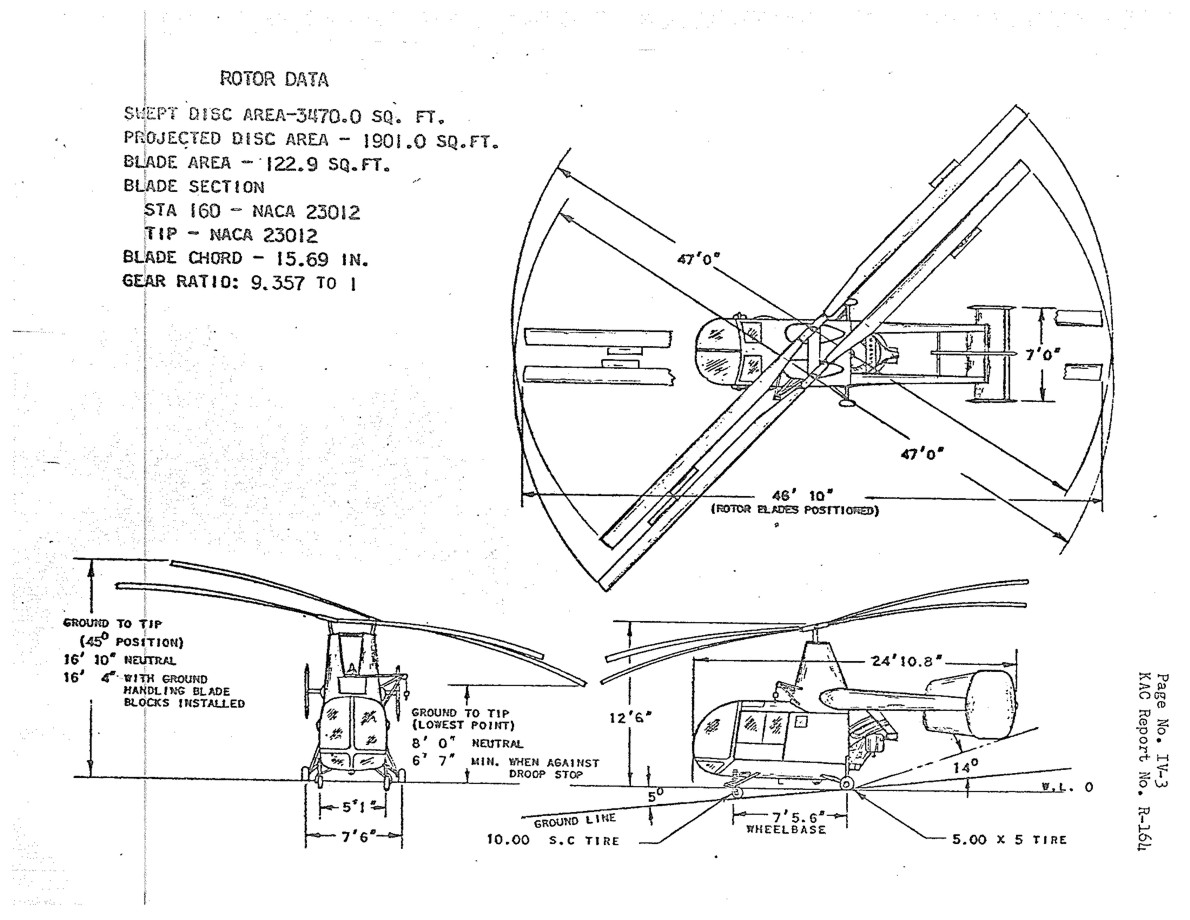
Data from Kaman Synchropter HTK-1/TH-43E, HOK-1/OH-43D, HUK-1/UH-43C Page 31
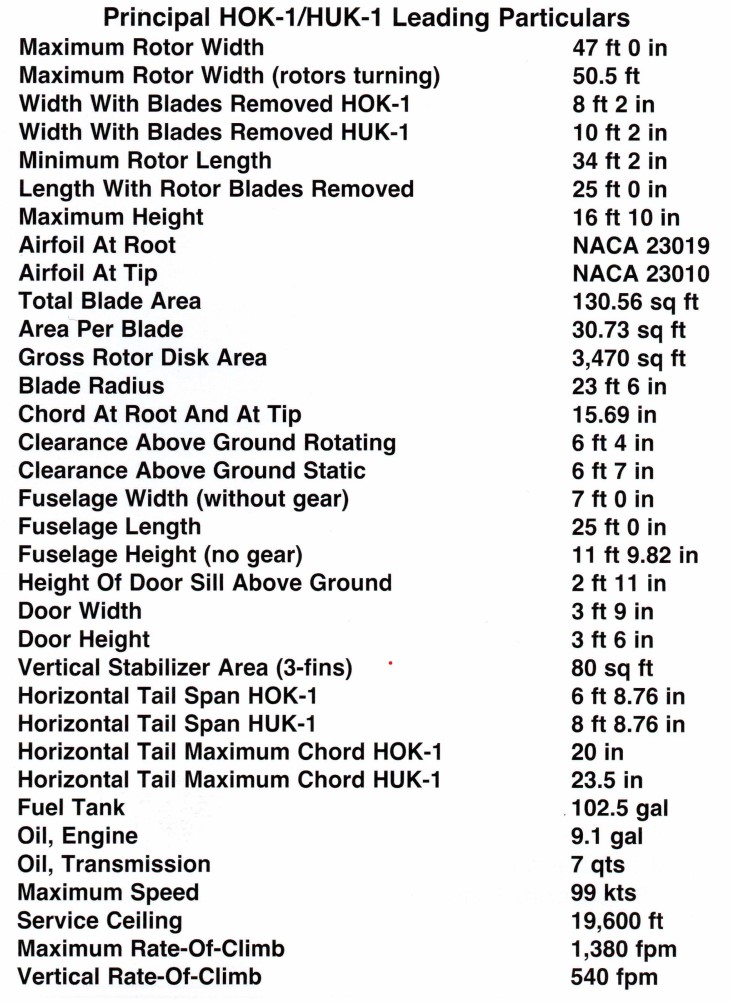
Armament: 6x hardpoints for SS.11 (AGM-22) MCLOS anti-tank missiles


Sources
Books:
Kaman Synchropter HTK-1/TH-43E, HOK-1/OH-43D, HUK-1/UH-43C ISBN-13 : 979-8989950942
Marines and Helicopters 1962-1973 ISBN-13 : 978-1482313598
Website:
https://www.ragay.nl/kaman-htk-hok-huk/hok-usmarines