- Yes
- No
Hello everyone, and welcome to this new suggestion.
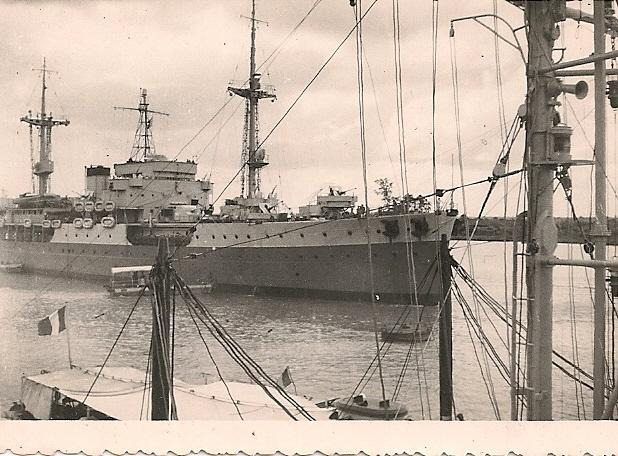
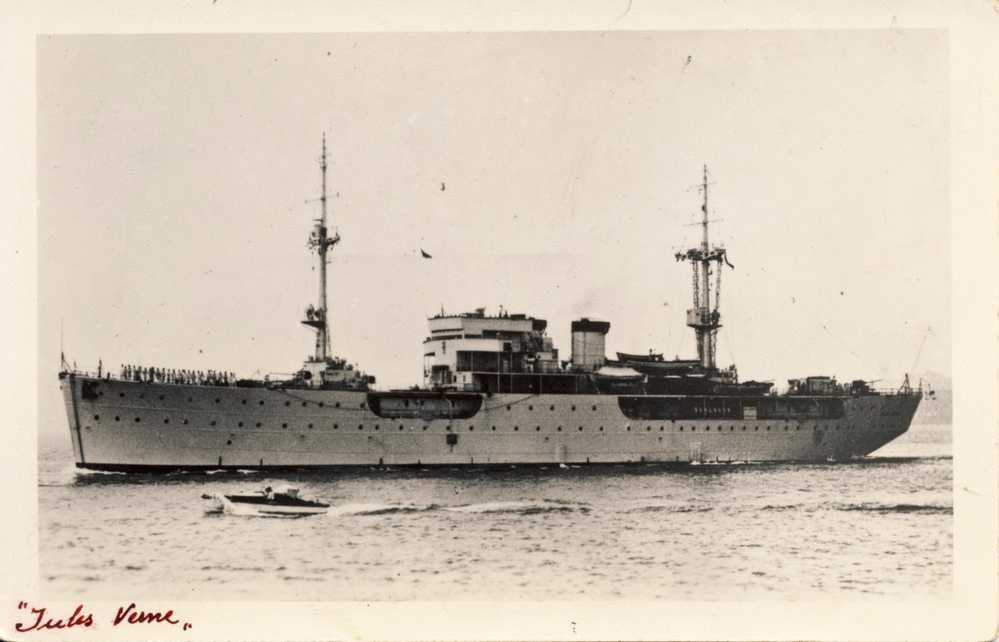
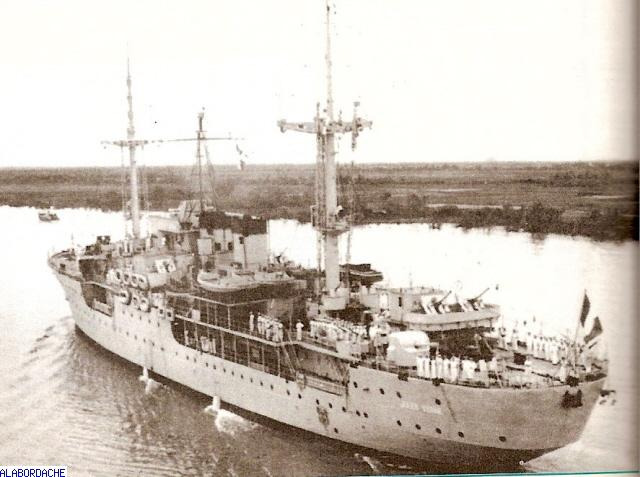
Today, I am presenting a new vessel from the French Navy: the submarine tender Jules Verne.
By the late 1920s, the French Navy was operating an increasingly large fleet of submarines. However, these vessels had a major logistical requirement: they needed regular access to fuel and supplies to remain operational for extended periods at sea. To address this issue, the French Navy ordered a dedicated vessel specifically designed to support and refuel submarines during their deployments.
Named Jules Verne, the ship was laid down in the early 1930s and entered service in 1931. Designed as a submarine tender, she was equipped to provide the fuel, supplies, and logistical support required by submarines operating far from their home ports.
Based at Brest, the Jules Verne was assigned to support a group of six submarines operating in the North Atlantic and the North Sea. In this role, she regularly accompanied submarine units on deployments and carried out numerous sorties at sea, allowing the submarines under her command to remain operational for longer periods without having to return to port.
With the outbreak of the Second World War, the Jules Verne and her submarines were called upon to support Allied operations. During the Norwegian Campaign in 1940, French naval forces were deployed to Scandinavia, including a submarine unit supported by the Jules Verne. Operating from Scotland, the tender was used to refuel and support Allied submarines operating close to the Norwegian coast.
Following the end of the campaign, the unit returned to France. However, with the German advance rapidly overwhelming French forces, the Jules Verne and her submarines were ordered to withdraw toward France’s African territories. The ship eventually reached Africa, where she would spend the remainder of the war.
During this period, the Jules Verne operated from several ports, including Casablanca and Algiers. As the war progressed and the balance of power shifted, the ship also underwent a number of modifications. Among the most important was the addition and modernization of her anti-aircraft armament, with her defensive weapons progressively brought closer to Allied standards.
Following the end of the Second World War, the Jules Verne received a new role. Rather than continuing as a submarine tender, she was converted into a dedicated repair ship and deployed to French Indochina, where she provided valuable logistical and technical support to French forces during the First Indochina War.
The ship remained in the region for nearly a decade, supporting French naval and military operations before finally returning to Toulon. There, she remained in service for several more years until she was ultimately decommissioned in 1961.
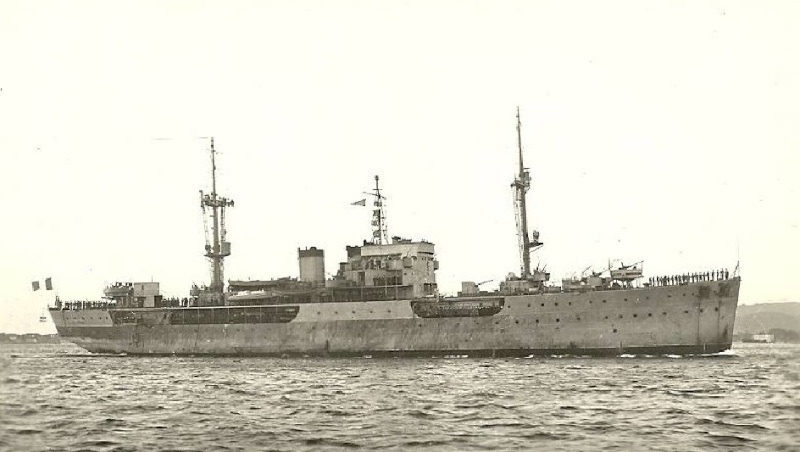
Characteristics
Length : 122.00 m
Width : 17.20 m
Draught : 5.80 m
Mass : 5,737 tons
The ship is powered by two Sulzer diesel engines delivering a total of 7,000 hp, allowing it to reach a top speed of 16 knots. It has a range of 18,500 nautical miles at a speed of 11 knots.
The crew consists of 186 sailors.
Weapons
The ship’s armament is peculiar, to say the least; despite its high tonnage and substantial size, it lacks large-caliber guns, with its heaviest weaponry being 90mm anti-aircraft guns.
Pre-war:
- 4 x 90mm anti-aircraft guns
- 4 x 37mm anti-aircraft guns
- 8 x machine guns
Post-war:
- 4 x 90mm anti-aircraft guns
- 7 x 40mm anti-aircraft guns
- 12 x 20mm anti-aircraft guns
In-game, this ship would be a particularly interesting addition to the French tech tree. As a large-tonnage vessel with limited offensive armament, it would fit into a low Battle Rating (BR) bracket with a role focused on anti-aircraft defense, thereby effectively complementing the French lineup.
Pictures