- Yes
- No
- Tech Tree
- Premium
- Event
- Battlepass
- Squadron
- I said no
- 1.0
- 1.3
- 1.7
- 2.0
- Other (comment)
- I said no
Ju 86K-1: South Africa’s Lone Soldier

History:
The South African Air Force can trace its roots back to the late 1800s with the opening of the first South African flight school. Formal assembly of a military aviation corps would not begin until 1912 when Defense Minister General Jan Smuts sent Brig. General C.F. Beyers to inspect military maneuvers in the UK and to report back on the viability of using aircraft in military operations. Following the breakout of World War One in 1914, the process of establishing an air force was accelerated, and the South African Aviation Corps (SAAC) was formally founded on January 29, 1915. Soon after, the process of acquiring aircraft began, with planes from France and the UK becoming the core of the fledgling air force. As time went on, the air force grew, notably during the interwar period, and by the late 1920s it had become a reasonably capable force.
In 1937, South African Airways ordered seventeen Ju 86Z civilian airliners. One Ju 86K-1 bomber was also bought for the SAAC to evaluate as a potential future purchase. It was first demonstrated to the SAAF on January 31, 1938 by distinguished Junkers pilot Robert Untucht. At this moment, the SAAC was severely underfunded, with the Great Depression hitting them hard. The plans for expansion during the mid-1930s never came to fruition, and they were in desperate need of new aircraft. Unfortunately due to said lack of funds, no further purchases of the K-1 could be made.
This need was compounded when World War Two broke out, dragging Britain and the Commonwealth into the largest conflict in history. Realizing they needed aircraft immediately, the SAAC requisitioned all aircraft from South African Airways, bringing all seventeen Ju 86Z-3/7s into military service. They were armed, repainted, and prepped for an initial role in coastal patrol. They initially equipped 15 Squadron, flying their first mission on September 21, 1939. This role was short-lived, however, and they were soon moved to land-based missions in East Africa under the command of 12 Squadron, leading the first attack against the Italians by the SAAF on June 11, 1940. From then on, these former civilian Ju 86Zs, joined by the lone military Ju 86K-1, would play a key role in the early campaign against Italy, with the remaining eight being moved to 16 Squadron in May of 1941 as they began to be lost from enemy fire or to lack of spare parts. They were passed from squadron to squadron as newer aircraft became available with their final role being a return to their first, serving as coastal patrol aircraft with 22 Squadron before ultimately being retired in September 1942.
Description:
The Ju 86K-1 is very similar to the Swedish B3C. In fact, aside from the armament and engines, it is identical. It has the same physical construction, the same crew count and location, the same twin-tail design, and the same (theoretical) payload capacity. The difference being that on the South African example, they had to use improvised bomb racks on the centerline for British bombs, as they did not have access to German bombs which would have fit in the bomb bay properly. Similar to the converted Ju 86Z-7s, it could carry up to a maximum of four 500 lb GP bombs, with alternatives including 250 lb and possibly 230 lb and smaller bombs as well. Below are some photo examples of bombs used on these improvised racks. I’ve attempted to identify them as best I can, but help is always appreciated, as documentation is lacking. The header photo is the only image I can find of the K-1 carrying bombs, so all the rest are of the converted Z-7s.
Various Bomb Images
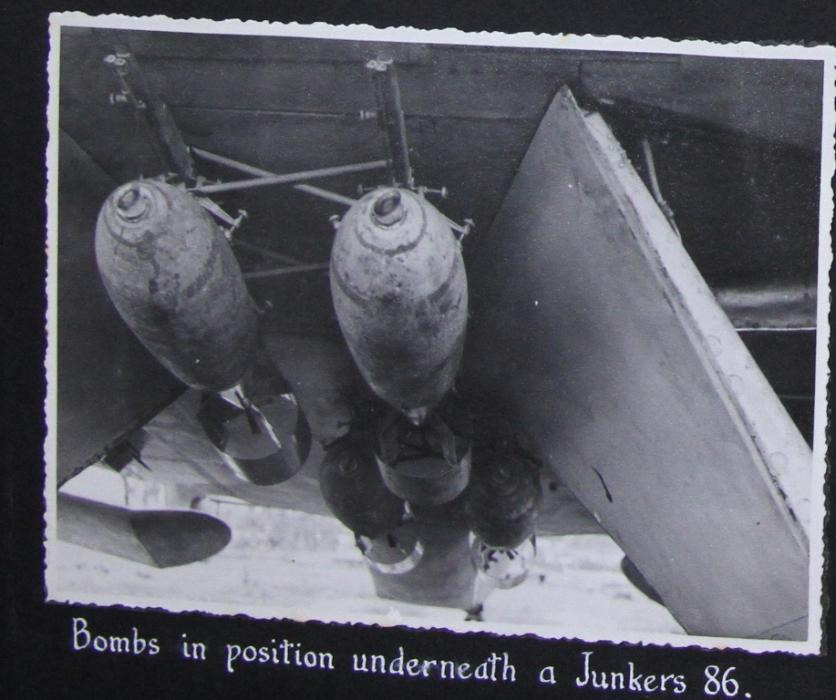
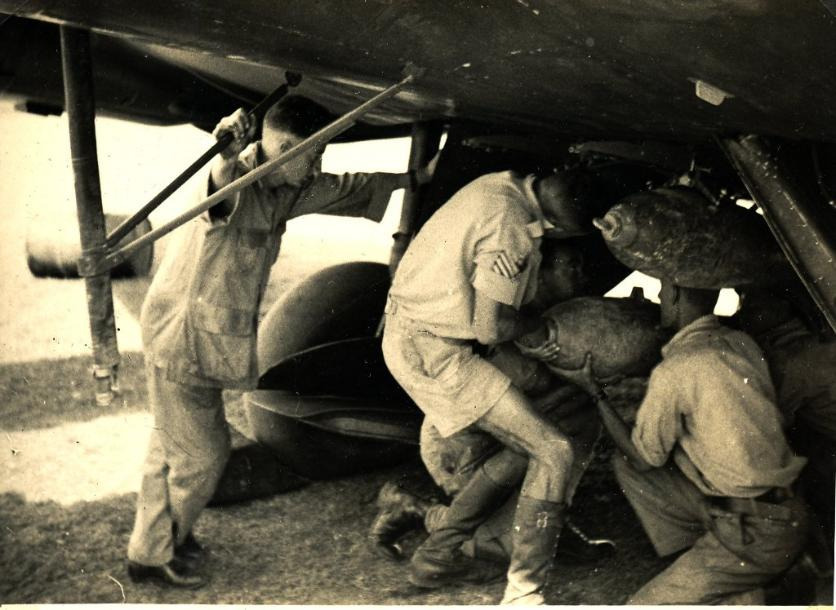
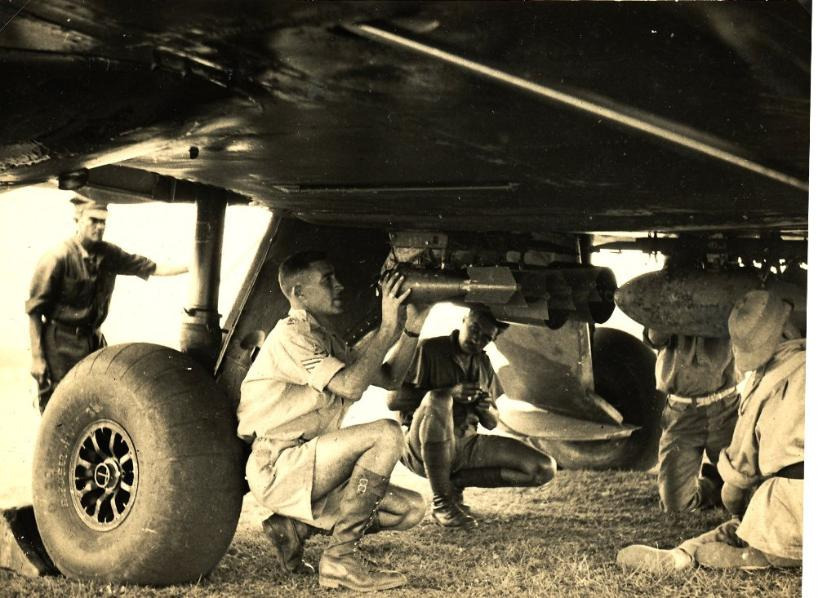
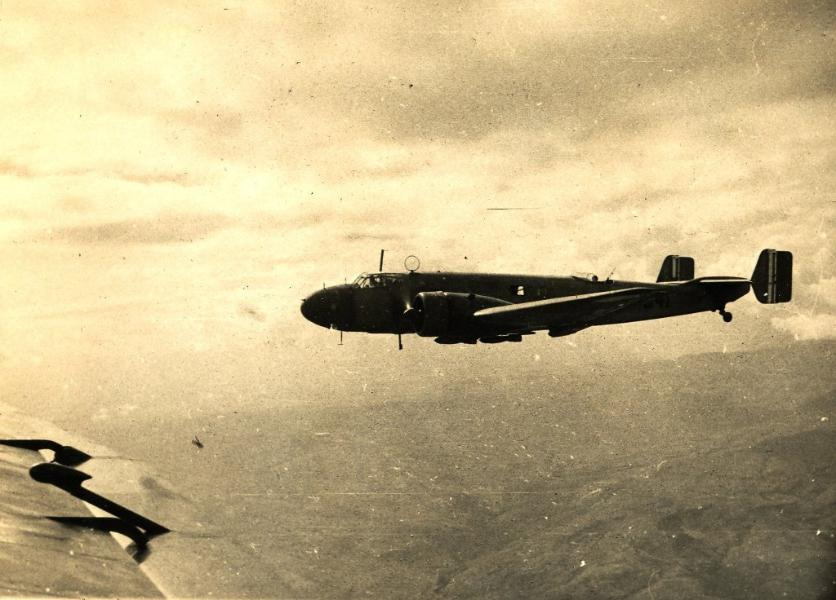
For defensive armament, the K-1 is equipped with three 7.92mm MG 15s. These were retained by the SAAF as 7.92mm ammo was used by the British military for the BESA machine gun, and large stockpiles were often captured from the enemy. One was mounted in the nose, one in a dorsal position, and one in a ventral “dustbin” retractable turret. This armament, while light, was enough to deter early war fighters and covered the three most common approaches.
The engines used were the BMW 132 9-cylinder radial engines, an improved German copy of the Pratt & Whitney Hornet. This was good for the SAAF, as the Ju 86Z-7s used the Hornet, making logistics easier. Which precise version of the 132 was used in the K-1 is unknown, meaning the exact horsepower is not known. However, given the era and available resources, they’d likely be around 870 hp, though additional confirmation would be appreciated. These drove two variable-pitch three-blade propellers.
Specifications:
Spoiler
General Characteristics:
Length: 17.6 m (58 ft 8 in)
Wingspan: 22.5 m (73 ft 10 in)
Height: 5.06 m (16 ft 7 in)
Empty Weight: 5,150 kg (11,354 lb)
Max Takeoff Weight: 8,200 kg (18,078 lb)
Engine: 2x 870 hp BMW 132 9-cylinder air-cooled radial engines
Propeller: 3-blade variable pitch
Crew: 4 (Pilot, Dorsal gunner, Ventral gunner, Nose gunner)
Performance:
(Sources conflict and not all info is available, may need adjusting)
Max Speed: 395 km/h (245 mph)
Service Ceiling: 5,900 m (19,357 ft)
Range: 2,500 km (1553 mi)
Armament:
Defensive Guns: 3x 7.92mm MG 15 (nose, dorsal, ventral)
Suspended Weapons: Various British bombs up to four 500 lb, likely also including smaller 250 lb and 230 lb.
Gallery:
Spoiler
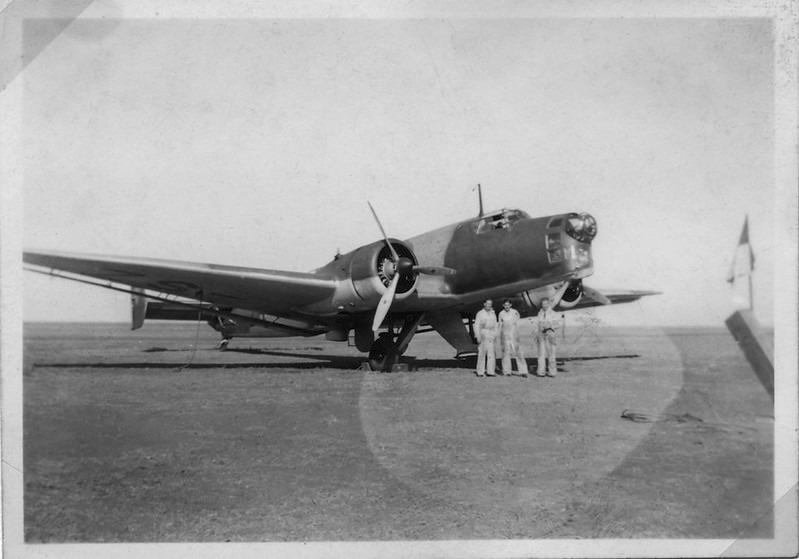
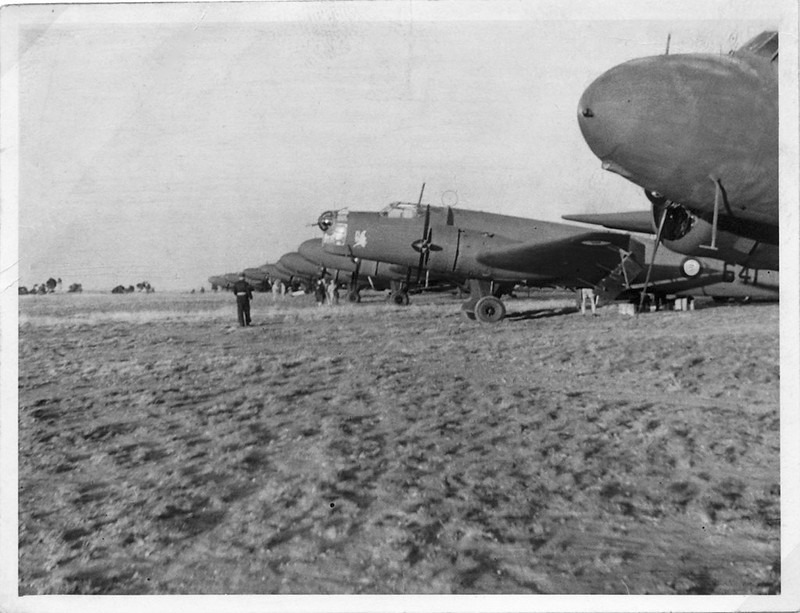
(K-1 is second in the lineup. Side Note: Could that tube visible in the nose of the first Ju 86Z-7 be the nose machine gun one source mentioned was added?)
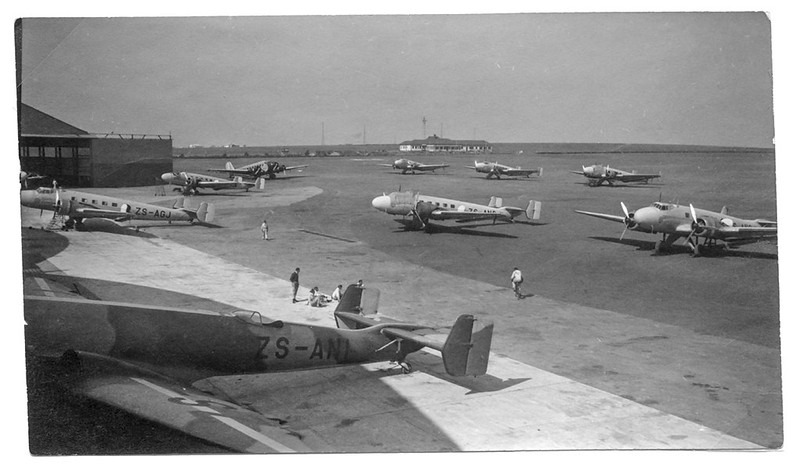
(K-1 is the plane in the foreground with only the rear 2/3 visible)
If there is anything I have missed or gotten incorrect, please let me know! I hope you enjoyed reading this, and I hope you will also check out my other suggestions! Thanks, and have a great day.
Sources:
Spoiler
https://ww2aircraft.net/forum/threads/ju-86k-1-of-the-saaf-12-squadron-gb.26830/
Junkers Ju 86 in South African Service - Destination's Journey
https://www.saairforce.co.za/the-airforce/aircraft/175/ju-86-k-3-z
Junkers Ju 86 - Wikipedia
History of the South African Air Force - Wikipedia
Ju 86 in SAAF service - Aircraft WWII - Britmodeller.com
https://www.avcom.co.za/phpBB3/viewtopic.php?t=212968&start=480
Question about South African Ju-86K-1 —defensive armament and external bomb load? - Aircraft WWII - Britmodeller.com
B3C | War Thunder Wiki
https://www.wardrawings.be/WW2/Files/2-Airplanes/Axis/4-Others/04-Hungary/Ju-86/Ju-86K-1.htm