- Yes - In the Tech Tree.
- Yes - Event/BP.
- Yes - Premium.
- No - I would not like to see HMNZS Inchkeith in game.

Description:
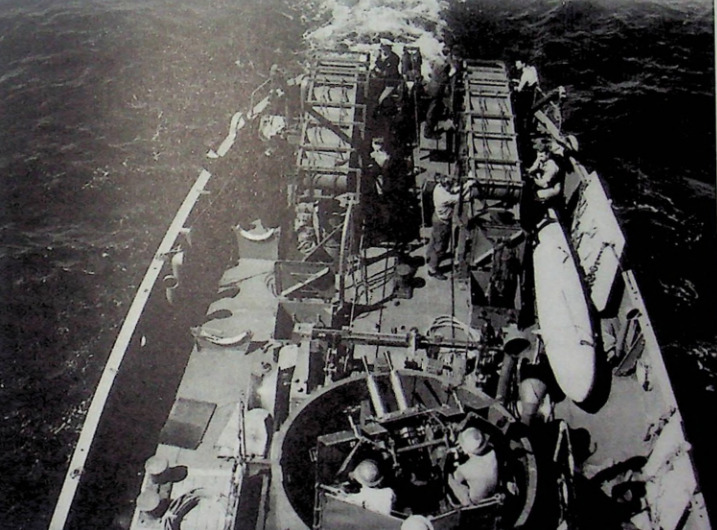
One of four Isles-class trawlers built in the United Kingdom for the Royal New Zealand Navy during the second world war, HMNZS Inchkeith would serve mostly in NZ waters, occasionally joining the escort force for convoys bound for the Pacific Islands.
In early 1940, the British Admiralty recommended the New Zealand Government purchase or acquire 19 vessels for minesweeping and anti submarine patrols for New Zealand’s waters, with further ships recommended for patrols outside of this area.
As coastal traders were seen as too valuable to the economy to requisition, new ships would be built. For this role in addition to the 13 Castle-class already being built in NZ yards and the three Bird-class ordered pre-war, four new build Isles-class were purchased for a total of £65,000 each from the UK. This gave the RNZN 20 purpose built minesweeping/anti-submarine vessels. In addition a further 13 requisitioned trawlers of varying classes were added to the fleet.
This gave the RNZN the capability to send the larger vessels overseas to assist in the Pacific, mostly in convoy escort and patrol duties while retaining a minesweeping capability within NZ itself. They also served a valuable training force, giving the RNZNR valuable experience.
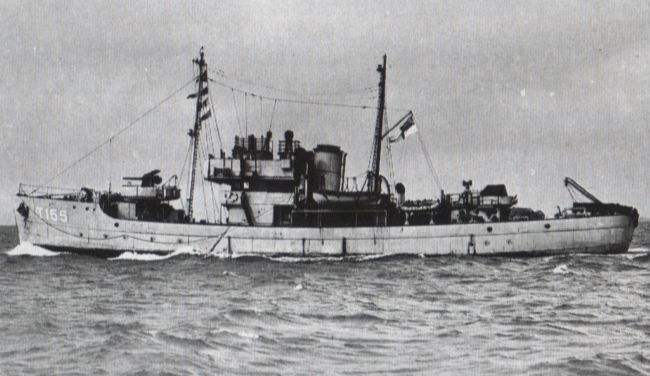
The ships themselves were identical to those serving with the Royal Navy, with very little modifications over their lifetime, however unlike the Royal Navy ships, they would not receive the extended superstructure aft, and the guns tubs forward for 20mm Oerlikons, instead they kept their twin .50 Vickers mounts abaft the funnel.
History:
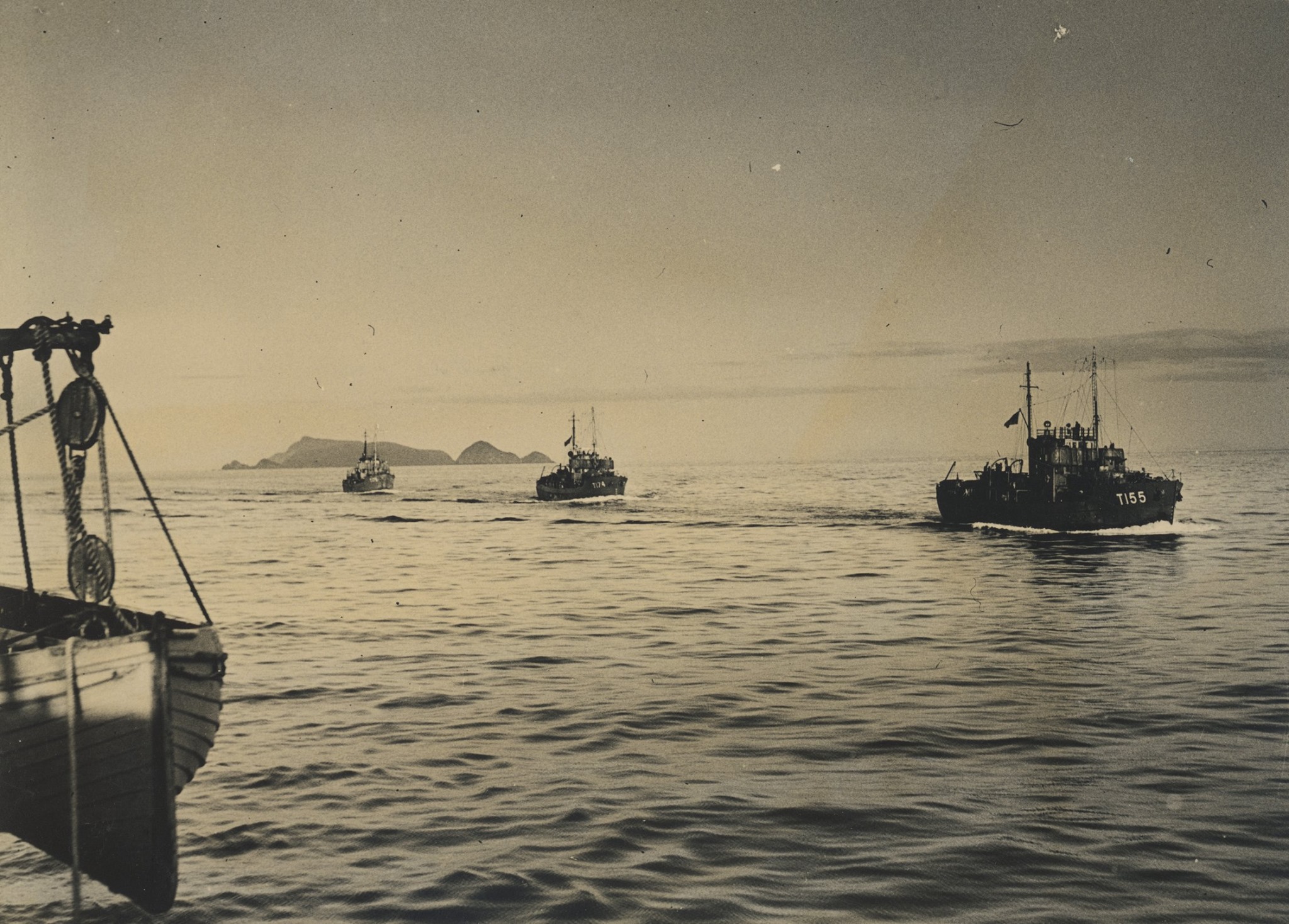
Laid down by John Lewis & Sons on the 6th of November 1940, in Aberdeen, Scotland, she would launch on the 10th of July 1941, completing her fitting out and commissioning directly into the RNZN on the 24th of October 1941.
She and her sisters, along with the Bird-class HMNZS Moa who had also recently completed, would join as convoy escort for a convoy bound for Canada. Then once they had reached Newfoundland they would turn south and travel down the US east coast, spending four days in Jamaica, before passing through the panama canal to California. While there they served as the anti-submarine escort for 10 USN tankers to pearl harbour.
All NZ ships then proceeded to Suva, Fiji, bar the HMNZS Killegray, who had boiler problems. From Suva they would then sail for Auckland, however the HMNZS Sanda ran out of coal on the 1st of August 1942, and Inchkeith had to take her in tow. They arrived in Auckland on the 4th. Whereupon her arrival she went into a small refit.
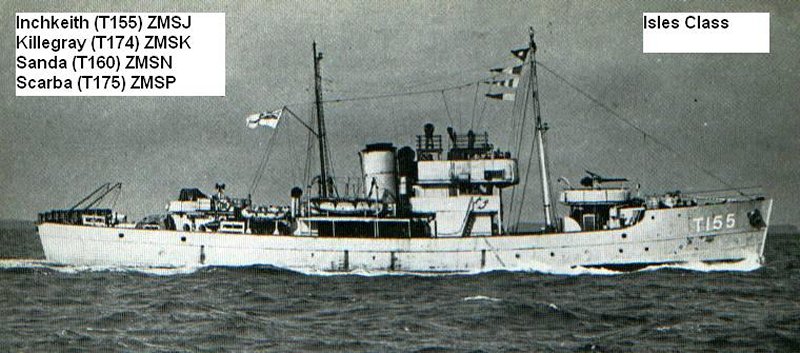
HMNZS Inchkeith would join the 7th minesweeping group out of Auckland upon finishing her refit. This group contained all of the NZ isles and included training, minesweeping along the Hauraki Gulf and Bay of Islands, as well as anti-submarine duties. This is where she would spend most of the war.
However an escort was needed to provide AS support for the steamer Waipori who was supplying the garrison at Norfolk Island. For this role Inchkeith and her sisters were chosen. They would escort the vessel to the island, then provide AS patrols around the island while the supplies were being unloaded. This work continued from October of 1942 to June of 1943, whereupon its finish she returned to patrolling NZ waters.
This is where she would see out the rest of the war relatively uneventfully. However Inchkeith had some troubles while on patrol off the Hauraki Gulf in January 1945, and had to be towed back to port by HMNZS Sanda.
From March to October 1945, they would clear the German Hauraki gulf minefields, as it was essential that the approaches to the Waitemata harbour be clear of mines. No mines were found or cleared, as the minefield itself was laid by the German Raider Orion in early 1940, and had not been maintained.
By October 1945, coal shortages forced the work to a close, and upon the conversion of the Flower-class corvettes HMNZS Arabis and Arbutus for minesweeping, Inchkeith and her sisters were laid up in reserve. She remained there until they were declared surplus in 1957 and sold to G.A. Sparrey in 1958 for scrap. They were broken up together in Lighter Basin, Auckland in 1959.
| General Characteristics: | |||||
|---|---|---|---|---|---|
| Name: HMNZS Inchkeith | |||||
| Country: New Zealand | |||||
| Type: Minesweeper | |||||
| Class name: Isles | |||||
| Year of commission: 1941 | |||||
| Refit: 1941 | |||||
| ----------------------------------------------------------------------------------------------------------------------------------------- | |||||
| Dimensions: | |||||
| Length: 164 ft (50 m) | |||||
| Beam: 27 ft 8 in (8.43 m) | |||||
| Draught: 11 ft 1 in (3.38 m) | |||||
| Displacement: 782t | |||||
| ----------------------------------------------------------------------------------------------------------------------------------------- | |||||
| Propulsion: | |||||
| Powerplant: coal fired triple expansion steam @ 850ihp (633kW) across one shaft | |||||
| Speed: 12kt | |||||
| Endurance: Unknown | |||||
| ----------------------------------------------------------------------------------------------------------------------------------------- | |||||
| Armament & sensors: | |||||
| Compliment: 40 | |||||
| Primary armament: 1x1 QF 12-pdr 12cwt | |||||
| Secondary armament: 1x2 Vickers 0.50/62 No.2 on Mount Mk.IV, placed abaft funnel | |||||
| 2x1 .303 Lewis guns | |||||
| Tertiary armament: 30 Depth Charges across two rails | |||||
| Sensors: ASDIC |
Sources
J.Harker (2000). The Rockies, New Zealand Minesweepers at War, (pp.63, 99)
McDougall, R. J. (1989). New Zealand Naval Vessels (p.61)
Gillett, R. (1983). Australian and New Zealand Warships 1914-1945 (p.290)
Waters, S.D (2003) The Royal New Zealand Navy (pp 298-299, 303-304, 387, 396)
HMNZS Inchkeith - Wikipedia
HMNZS Inchkeith (T 155) of the Royal New Zealand Navy - New Zealand MS Trawler of the Isles class - Allied Warships of WWII - uboat.net
HMNZS Inchkeith - Minesweeper — National Museum of the Royal New Zealand Navy