- Yes
- No

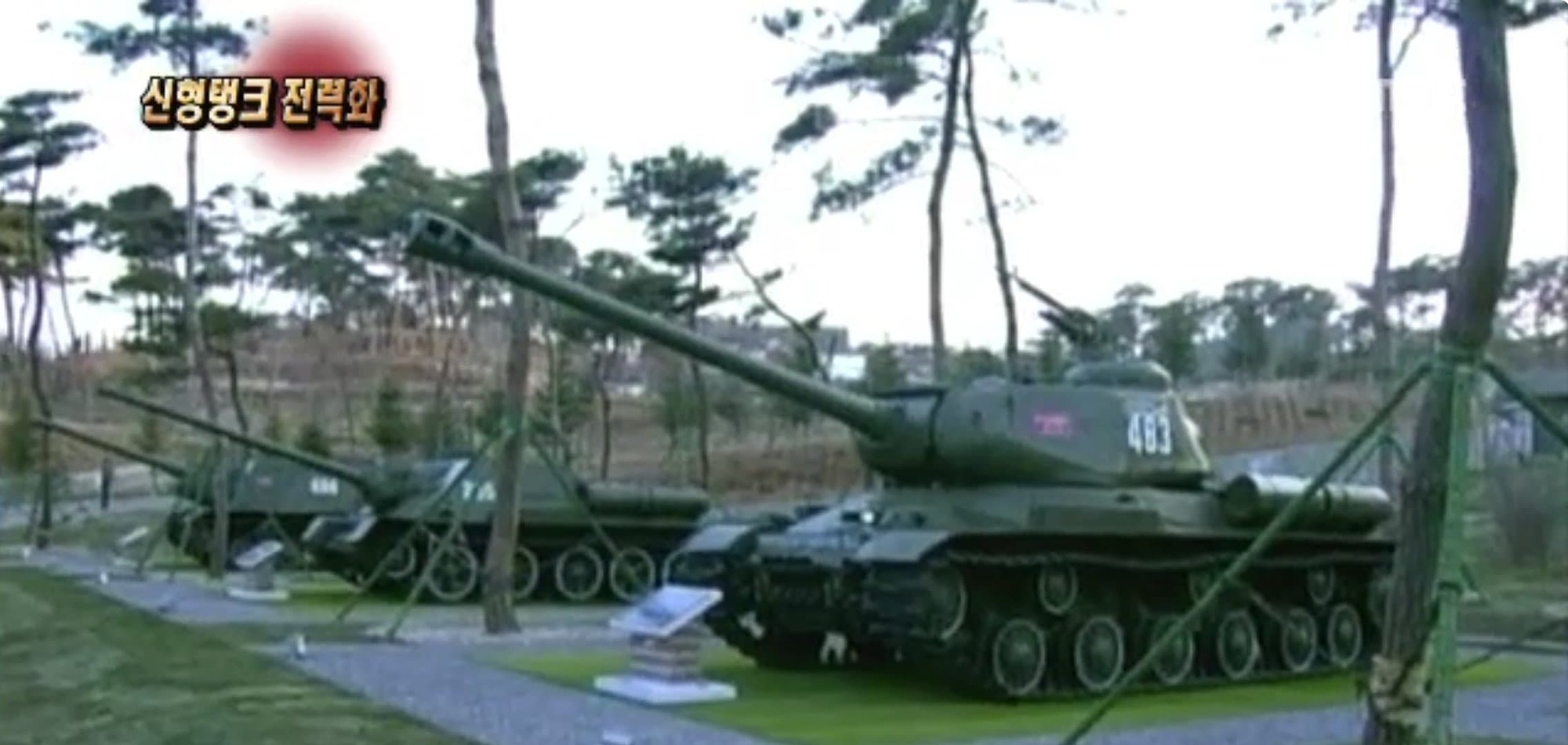
TL;DR: IS-2s given to China by the USSR, which fought during the Korean War, and were subsequently passed on to North Korea
History
The IS-2 was developed in late 1943 as an upgrade to the IS-1, fitted with a new 122mm cannon. Production began in November 1943, and over 100 were delivered by February 1944. In 1944, the IS-2 obr. 1944 entered production, featuring an improved turret, cannon, and hull front, along with other more minor changes. Production ended in 1945, after just under 3500 vehicles were built.
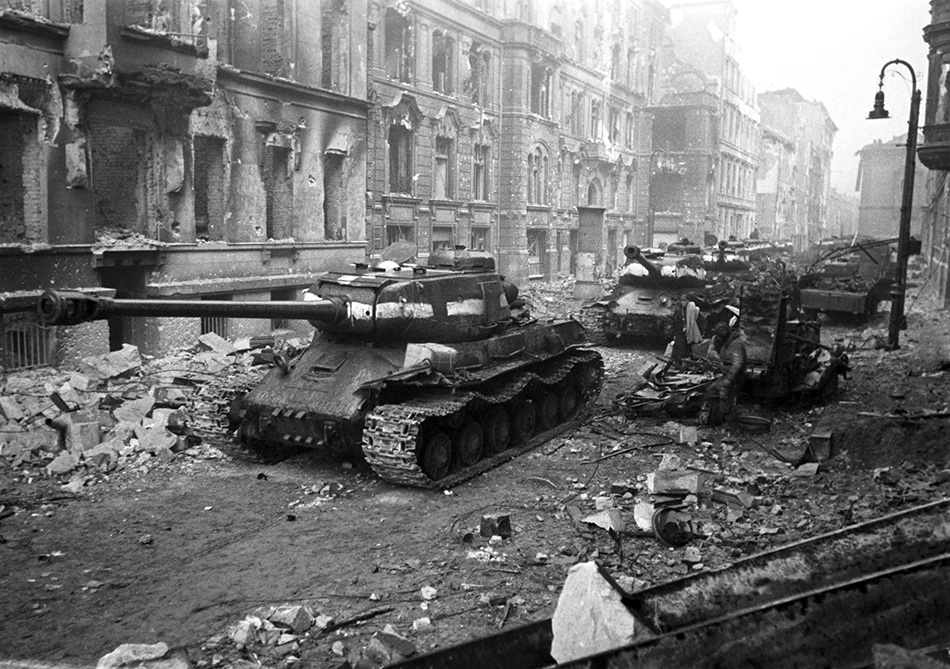
A column of IS-2 obr. 1944s in Berlin, 1945
Following the defeat of Japan and end of WW2 in 1945, Korea was occupied by the USA (South) and USSR (North), splitting the country along the 38th Parallel. Tensions rose over the next 5 years, until they culminated on the 25th June 1950, when the newly-founded Democratic People’s Republic of Korea (DPRK), or North Korea, invaded the Republic of Korea (ROK, South Korea). A variety of armoured vehicles saw combat during the brutal 3-year war — the North used T-34s and SU-76s, and while the South itself had very few tanks, US forces used M4s, M26s, and M46s to great effect.
By September, North Korean forces had pushed all the way to Busan and its surrounding area. However, after a successful landing at Incheon, near Seoul, and a large-scale offensive at Busan, UN forces began to drive North Korean forces back up, attempting to reach the Yalu River, on the border of North Korea and China. It was at this point that China entered the Korean War. Troops were transferred from the People’s Liberation Army (PLA) to the People’s Volunteer Army (PVA), an expeditionary force. The first PVA troops entered Korea on the 19th October 1950, and began to successfully repel UN advances.
In 1950, China received 60 IS-2s from the USSR, alongside 300 T-34-85s and 40 ISU-122s. The IS-2s were a mix of the 1943 and 1944 variants. A number of these were deployed to Korea with the PVA (numbers seem to vary from 30 to all 60). Partly due to American air superiority, the IS-2s were largely used as artillery support from bunkers, rather than for fighting tanks.
The most well-known battle that the PVA’s IS-2s participated in was the Second Battle of Maryangsan, from the 4th–6th November 1951. It followed from the First Battle of Maryangsan, from the 3rd–8th October 1951, in which UN forces — primarily Australian, British, and Canadian – successfully repelled dug-in PVA forces from along the Imjin River, and notably, the Maryangsan hill. During the second battle, just one month later, PVA forces overwhelmed British forces and recaptured the hill. At least three IS-2s engaged in combat during the battle, shelling British fortifications from afar. One such vehicle was no. 402, which destroyed six fortifications, and whose crew were subsequently awarded the second-class medal of merit.
By the end of the war in 1953, the PVA had a confirmed 38 IS-2s in service. It is unclear how many were lost during the war, if any. China received an additional 22 IS-2s in 1955. They were seen in parades in the late 1950s, until they were pulled from service from 1959 onwards.
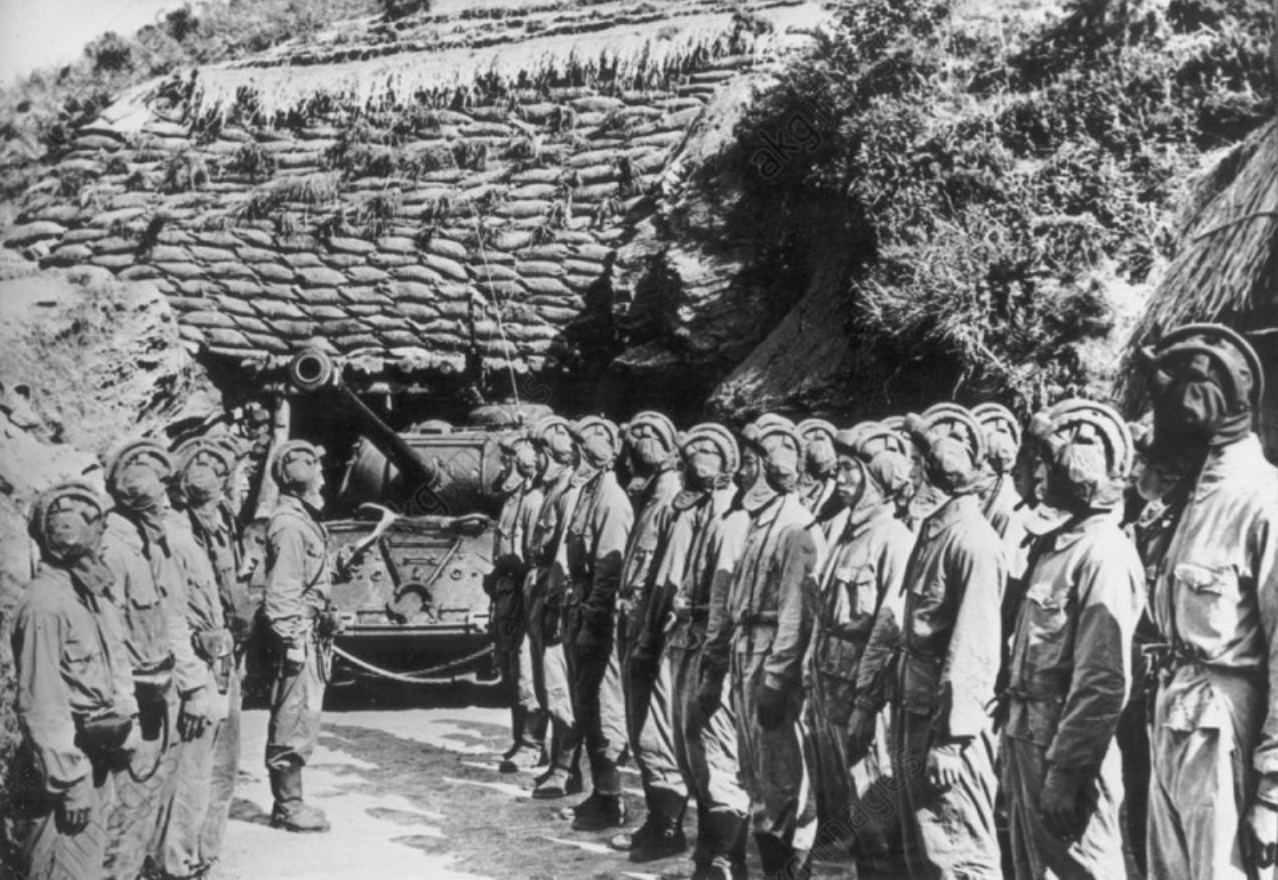
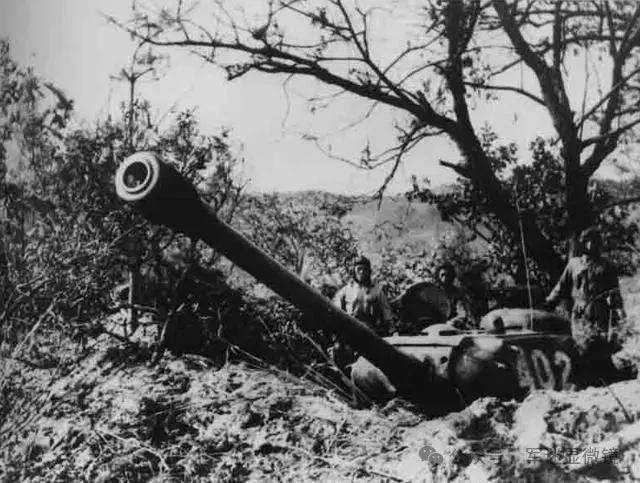
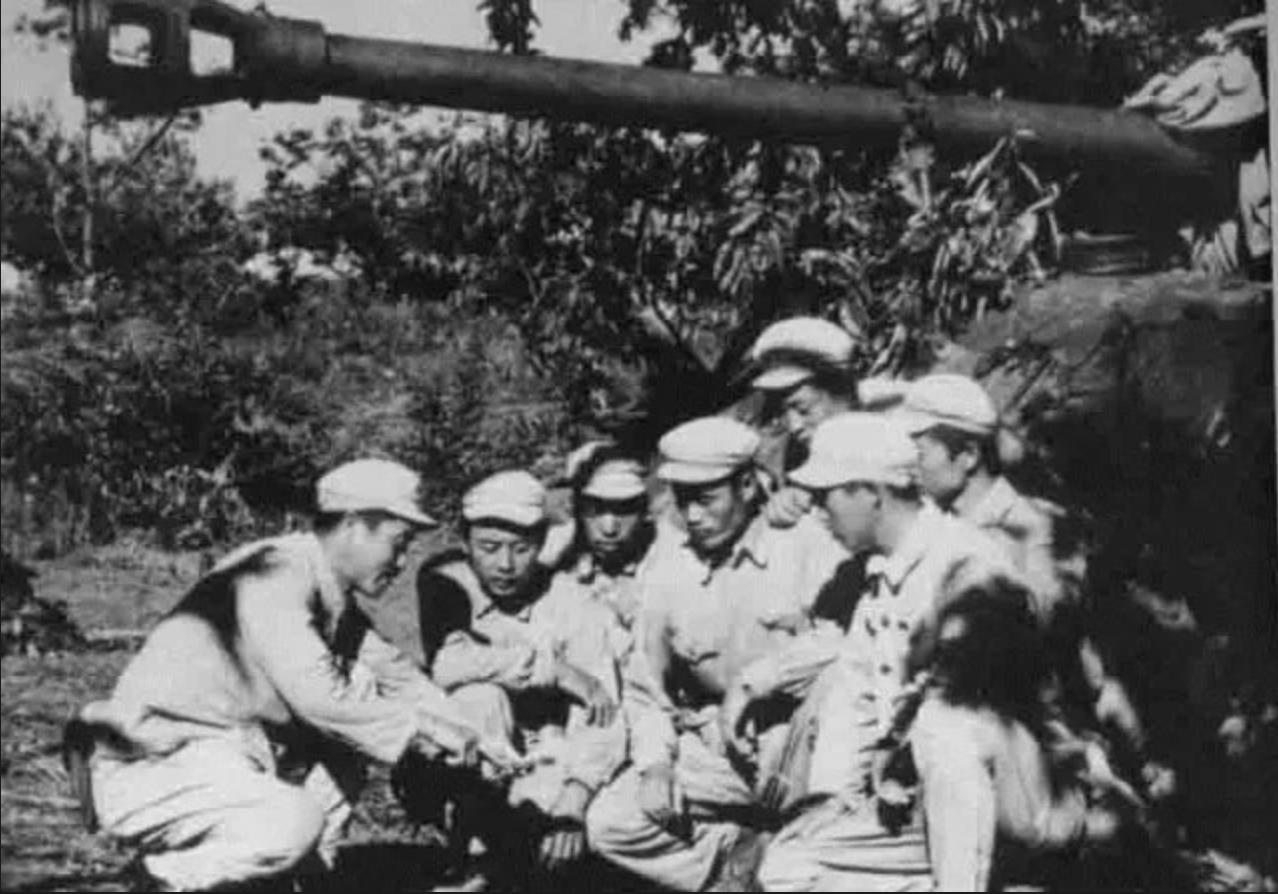
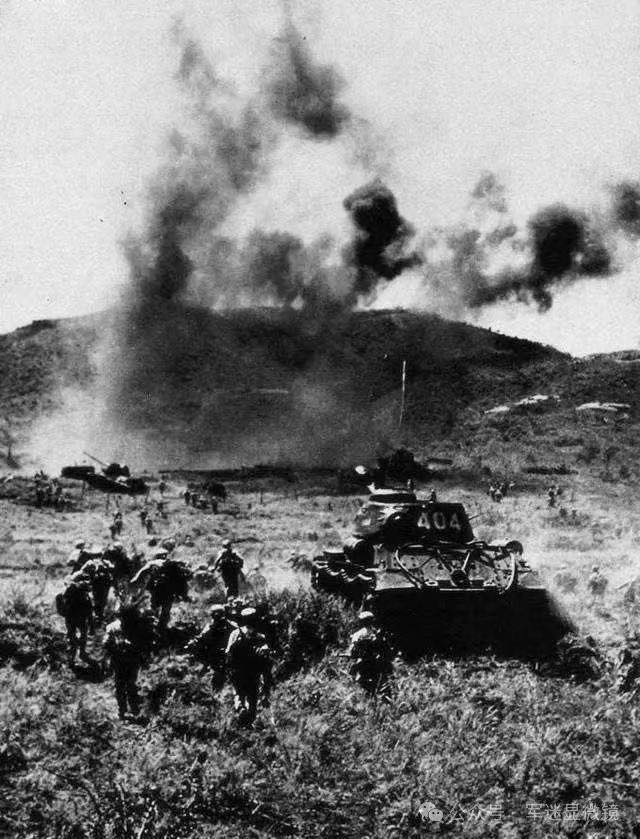
IS-2s in service in Korea with the PVA. IS-2 no. 402 (top-right) is fairly well-known, and is in-game as a Chinese premium
While the above information is well-known, the next gets somewhat confusing. All PVA forces had left Korea by October 1958. Reportedly, at least 12 IS-2s were handed to North Korea. However, evidence for their existence, let alone them entering active service, is scarce. The only known imagery of an IS-2 in North Korea is from the 2012 opening of the KPA Exhibition of Arms and Equipment in Pyongyang. One IS-2 is on display, next to an SU-100 (which may still be in service, albeit in the reserve paramilitary Worker-Peasant Red Guards) and an ISU-122. This doesn’t necessarily confirm the IS-2 was in service with the KPA, however certain details do point in that direction.
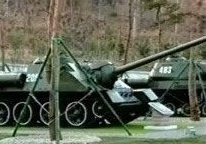
The only known images of a North Korean IS-2, at the aformentioned KPA Exhibition of Arms and Equipment
Firstly, the vehicle has a red plaque on its turret — these plaques are commonly used in North Korea to celebrate vehicles personally inspected by any of the leaders. Although blurry and impossible to read, the plaque likely talks about how the tank was inspected by Kim Il Sung, presumably at some point in the mid-to-late 1950s. The second detail is the numbering — the tank is numbered 483, and is styled differently (and in a different position), to the numbers on PVA IS-2s during the Korean War. While once again not definitive proof of it entering KPA service (not least because it could have just been painted this way for the museum), it does lend credibility to the claim.
No IS-2s have been seen in any North Korean parades. I personally suspect they did enter service for a brief period after the end of the war: by the late 1950s, North Korea was starting to receive large deliveries of T-54/55s which, alongside over 1000 T-34-85s, completely outclassed the IS-2. SU-100s appear to have remained in active service for much longer, although they had a greater niche, given the aformentioned large numbers of T-34s, which would have massively increased the availability of spare parts. It is likely the IS-2s were pulled from service entirely by the 1960s, as North Korea began gearing up for domestic vehicle production and the KPA underwent a large-scale modernisation program, although at what point exactly is unknown.
Characteristics
The IS-2 obr. 1944 is armed with a 122mm D-25T cannon. It can fire APHE and HE rounds: BR-471 APHE penetrates 205mm @ 0° @ 10m, BR-471B APHEBC penetrates 205mm @ 0° @ 10m (with better angled performance), and BR-471D APCBC penetrates 230mm @ 0° @ 10m. 28 main rounds are carried. The gun elevates from -3° to 20°, at 4°/s, and the turret traverses 360° at 14°/s. The obr. 1944 also has a roof-mounted 12.7mm DShK, which fires rounds capable of penetrating 34mm @ 0° @ 10m — 250 rounds are carried in 50 round belts. It also has a coaxial 7.62mm DT, for which 1890 rounds are carried in 63 round belts.
The IS-2 obr. 1944 is thickly-armoured. The hull is upgraded from the earlier obr. 1943 variant: the upper front plate is sloped at 60°, and at variable thickness of around 190mm minimum. The lower front plate is around 150mm at 30°. The upper hull sides are around 104mm at 15°, and the lower sides 90mm @ 0°. The upper rear is 60mm @ 49°, and the lower rear 60mm @ 41°. The turret is variable all over, but is roughly 100mm at the front, sides, and rear.
Despite its weight of 46.2t, the IS-2 obr. 1944 is decently mobile. It has a V-2-10 diesel engine providing 520hp. This gives it a power-to-weight ratio of 11.3hp/t. It has a top speed of 37km/h, and a reverse speed of 14km/h, with good acceleration.
Conclusion
The IS-2 obr. 1944 would be the only heavy tank available to a United Korea Ground Forces Tech Tree, and thus a necessity, despite being copy-paste. It would be identical to the IS-2 (1944) in the Soviet and Chinese trees at BR 6.7.
Specifications
Armament
- 122mm D-25T
- 28 rounds
- Ammunition
- BR-471 APHE
- 205mm @ 0° @ 10m
- BR-471B APHEBC
- 205mm @ 0° @ 10m
- BR-471D APCBC
- 230mm @ 0° @ 10m
- OF-471 HE
- 37mm @ 0° @ 10m
- BR-471 APHE
- Vertical Guidance
- -3°/+20° @ 4°/second
- Horizontal Guidance
- 360° @ 14°/second
- 1x 12.7mm DShK (roof-mounted)
- 250 rounds
- API-T/IAI/API-T/AP-I(c) belt
- 34mm @ 0° @ 10m
- 1x 7.62mm DT (coaxial)
- 1890 rounds
- AP-I/API-T belt
- 13mm @ 0° @ 10m
Armour
- Hull
- UFP: ~190mm @ 60°
- LFP: ~150mm @ 30°
- Upper Sides: ~104mm @ 15°
- Lower Sides: 90mm @ 0°
- Upper Rear: 60mm @ 49°
- Lower Rear: 60mm @ 41°
- Turret
- Front: ~100mm, variable
- Sides: ~100mm, variable
- Rear: ~100mm, variable
- Roof: 30mm @ 87°
Mobility
- Speed
- +37km/h / -14km/h
- Weight
- 46.2t
- Engine power
- 520hp, 11.3hp/t
Other
- Crew
- 4
Images
No other images exist
Sources
Spoiler
The Armed Forces of North Korea — On the Path of Songun. Stijn Mitzer and Joost Oliemans.
Weathersby, K. (2002). “Should We Fear This?” Stalin and the Danger of War with America. Working Paper Number 39. pp. 23–24. Available at: https://www.wilsoncenter.org/sites/default/files/media/documents/publication/ACFAEF.pdf
Volkovsky, N.L., Petrova, I.V. (2003). Война в Корее, 1950–1953. Глава седьмая. Применение танков и самоходно-артиллерийских установок. Available at: https://militera.lib.ru/h/korea_50_53/07.html
志愿军的武器:中国人惯称“斯大林二号”,志愿军少有的重型坦克|装甲兵_网易订阅