Would you like to see this T-62 in-game?
- Yes
- No
0
voters
Iraqi T-62 Model 1972 (Kontakt-1)

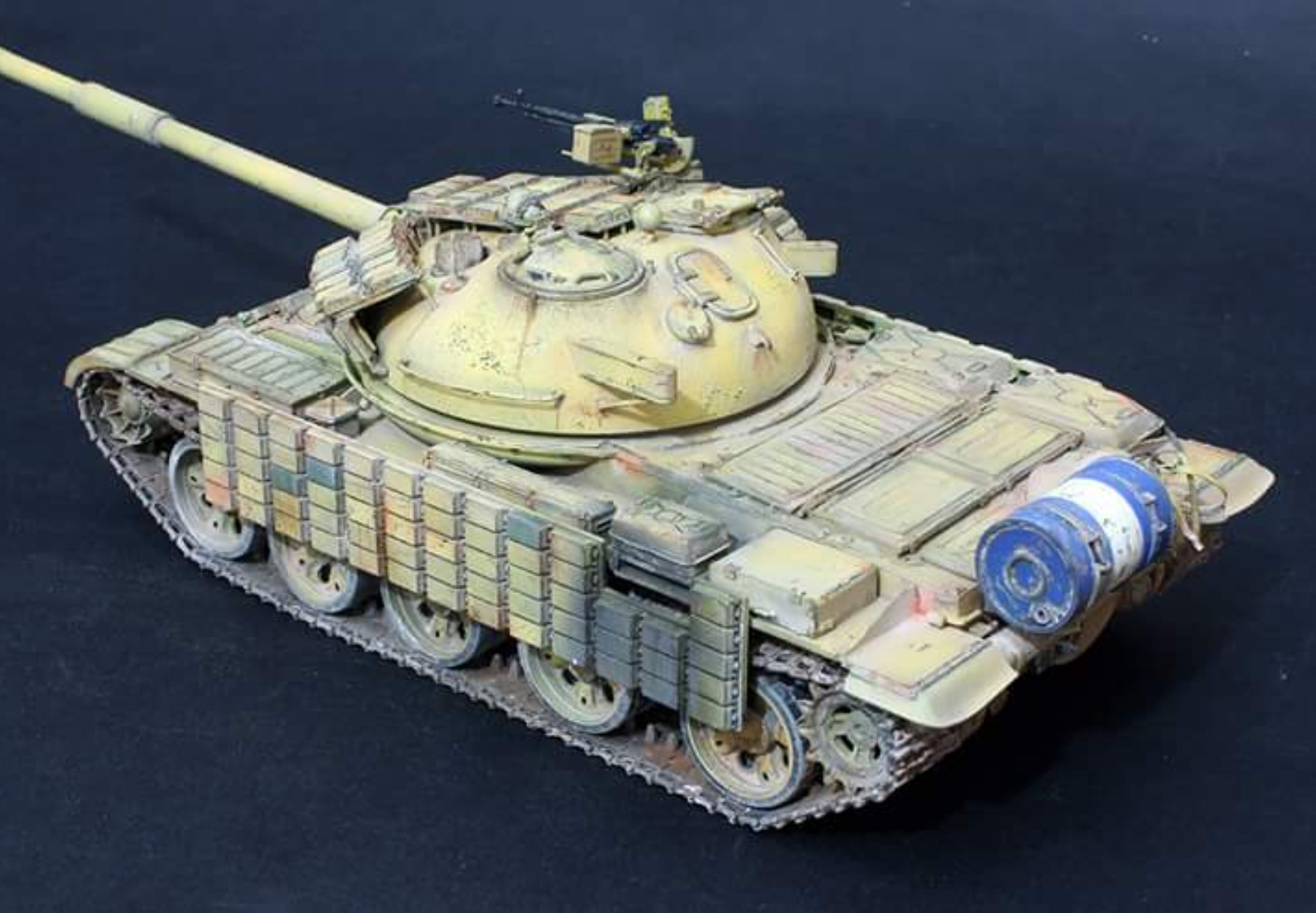
I’d like to suggest an exceptionally rare variant of the T-62: an Iraqi-modified T-62 Model 1972 equipped with what appear to be Kontakt-1 ERA blocks. This vehicle should not be confused with the Soviet T-62MV, despite the similarity in explosive reactive armor layout. Unlike the T-62MV, this Iraqi version is based on the standard T-62 Mod. 1972 platform, featuring a 12.7 mm heavy machine gun and an Improved gunner’s day-sight, but lacking any key upgrades such as a laser rangefinder, ballistics computer, enhanced engine, or ATGM capability.
What makes this tank particularly intriguing is its uniquely applied ERA layout, which diverges from Soviet standards and appears to be a local modification. The existence of this unique vehicle is supported by at least two real photographs, one of which was taken in what appears to be a museum setting, strongly suggesting that this tank still survives today.
History of Iraqi T-62s
Spoiler
Iraq began acquiring T‑62 tanks from the Soviet Union in the mid‑1970s, taking delivery of approximately 100 vehicles in 1974–75 and 600 more between 1976 and 1979. Later, in 1982, a further 2,150 T‑62s were ordered and delivered through 1989. By the late 1980s Iraq had around 1,000 to 1,500 T‑62s in active service, and roughly 500 remaining by the 2003 invasion.
During the Iran–Iraq War (1980–1988), Iraqi T‑62s formed the backbone of armored units fighting Iranian forces equipped with Chieftain, M60A1, M48, and M47 tanks. In Operation Nasr, one of the war’s largest tank engagements, Iran lost around 214 tanks, while Iraq lost approximately 45 T‑62s. By war’s end, total Iraqi T‑62 losses were about 200 units. Despite being outmatched in optics and armor, Iraqi crews often used superior mobility of their vehicles to ambush their opponents at close ranges to mitigate disadvantages.

By the time of the 1990–1991 Gulf War, Iraq had several hundred T-62 tanks in service, used by both regular army units and the elite Republican Guard. Some had already been retired or placed in storage. On the battlefield, however, these tanks were seriously outclassed, lacking thermal imaging, modern fire-control systems, and advanced optics compared to the U.S. M1 Abrams and British Challenger 1. One of the most intense clashes involving Iraqi T-62s took place near Kuwait International Airport on February 27, 1991. U.S. Marines from the 1st Marine Division engaged elements of Iraq’s 12th Armored Brigade (part of the 3rd Armored Division), which included many T-62 and T-55 tanks. Using long-range TOW missiles and tank fire, the Marines destroyed more than 250 T-55/62s and around 70 T-72s, effectively wiping out the entire division. Other battles, such as the Battle of Khafji and the Battle of Al Busayyah, also saw Iraqi T-62s suffer heavy losses. In the latter, Iraqi forces tried to counterattack U.S. troops on February 26 but were quickly defeated, with many tanks destroyed or captured. Overall, Iraqi tank losses during the war were devastating, coalition forces destroyed roughly 3,300 tanks of all types. The 3rd Armored Division alone is believed to have lost around 100 T-62s, while coalition tank losses in direct combat were minimal.
Following the Gulf War, Iraq retained T‑62s in limited service throughout the 1990s and into the 2003 invasion, though most were relegated to reserve units, training roles, or static defense. By the U.S.-led invasion of 2003, many remaining T‑62s were either destroyed, abandoned, or captured. Some vehicles were later operated by militias or paramilitary groups, but by the late 2000s Iraq’s T‑62 fleet was largely obsolete and never modernised beyond limited local modifications.
T-62 Model 1972
Spoiler
The T-62 Mod. 1972, officially designated as Obyekt 166 obr. 1972, was a mid-production enhancement of the Soviet T-62 main battle tank. Introduced around 1972, this variant incorporated several practical upgrades based on operational feedback from earlier T-62 models. These changes primarily focused on improving close-range defense and night-fighting capability, without altering the tank’s overall structure or core systems.
One of the most significant upgrades in the Mod. 1972 was the addition of a 12.7 mm DShK heavy machine gun, mounted on the loader’s hatch. Previous versions of the T-62 lacked any form of roof-mounted weaponry, leaving them vulnerable to low-flying aircraft and helicopters. The second most notable upgrade to the tank was the addition of the TShS-41U improved day sight, which enhanced the gunner’s aiming capability under daylight conditions. In addition, the tank also came with an improved fording attachment.
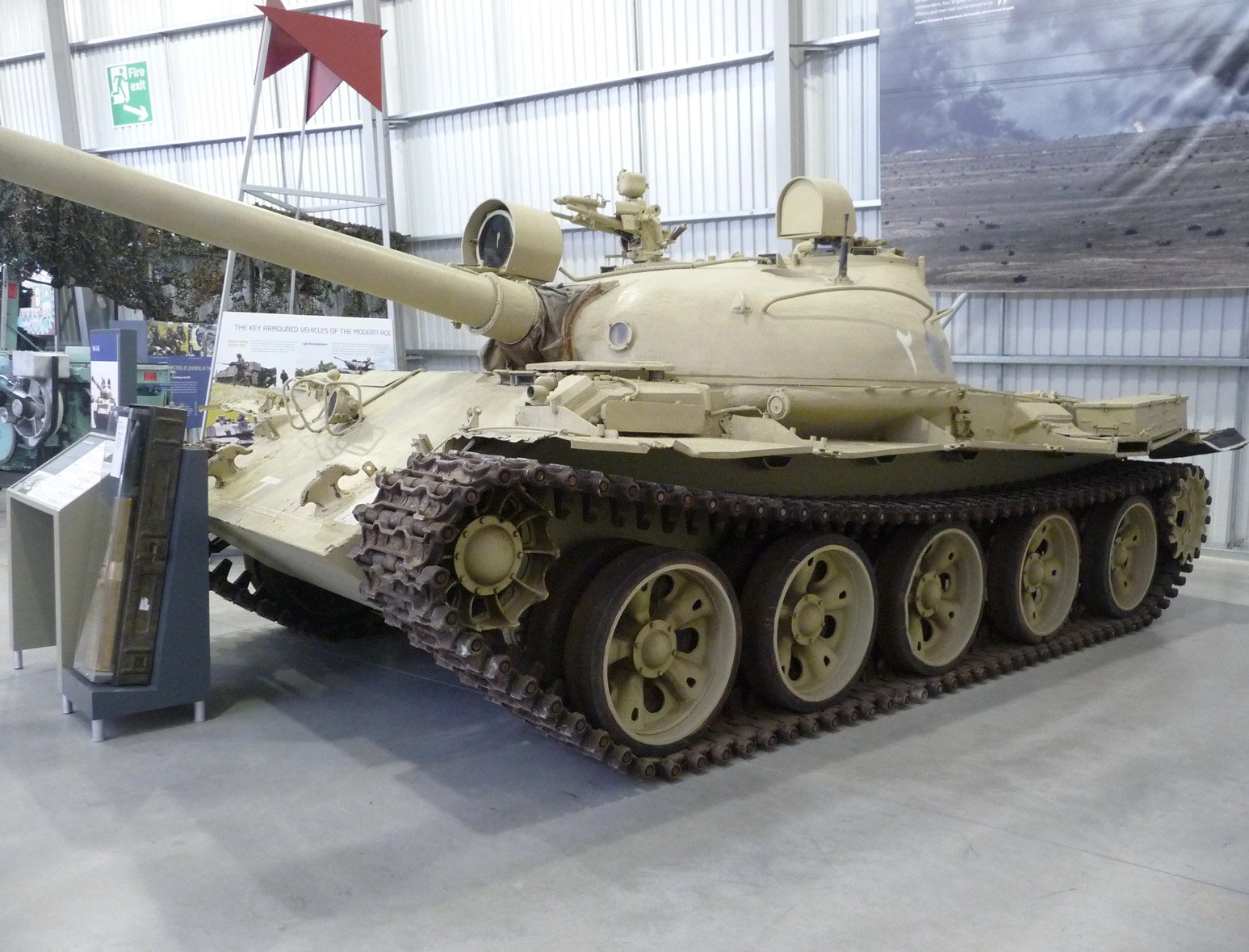
The image above shows a standard captured Iraqi T-62 Model 1972 fitted with anti-shrapnel shielding on its infrared projectors.
In terms of firepower, the Mod. 1972 retained the powerful 115 mm U-5TS smoothbore main gun. This gun could fire APFSDS, HEAT, and HE rounds and featured an automatic spent-shell ejection system that expelled casings through a hatch in the turret rear. The coaxial 7.62 mm PKT machine gun was retained, and with the addition of the roof-mounted DShK, the Mod. 1972 significantly improved its versatility in urban and low-altitude threat environments.
Armor protection in the Mod. 1972 remained largely unchanged from earlier production models. There were no significant increases in hull or turret armor thickness, nor were there any external applique armor additions. One confirmed mechanical improvement was the use of a redesigned drive sprocket and improved track system, aimed at increasing the reliability of the tank during extended operations.
Powering the T-62 Mod. 1972 was the standard V-55 12-cylinder diesel engine, producing approximately 580 horsepower. This engine gave the tank a top road speed of about 50 kilometers per hour and an operational range of 450 kilometers, which could be extended to approximately 650 kilometers using external fuel drums mounted at the rear. The vehicle employed a torsion bar suspension system and was capable of traversing moderately difficult terrain.
This variant of the T-62 was among the most widely produced and exported models during the 1970s. It was supplied to numerous Soviet-aligned states and client armies, including Syria, Egypt, Iraq, and several African nations. In many of these cases, the T-62 Mod. 1972 formed the backbone of armored forces, with some tanks remaining in use well into the 21st century.
Iraqi Modernisations in Detail
Spoiler
Based on my research, I’ve identified two distinct modernization types applied to Iraqi T-62 tanks.
Version A.
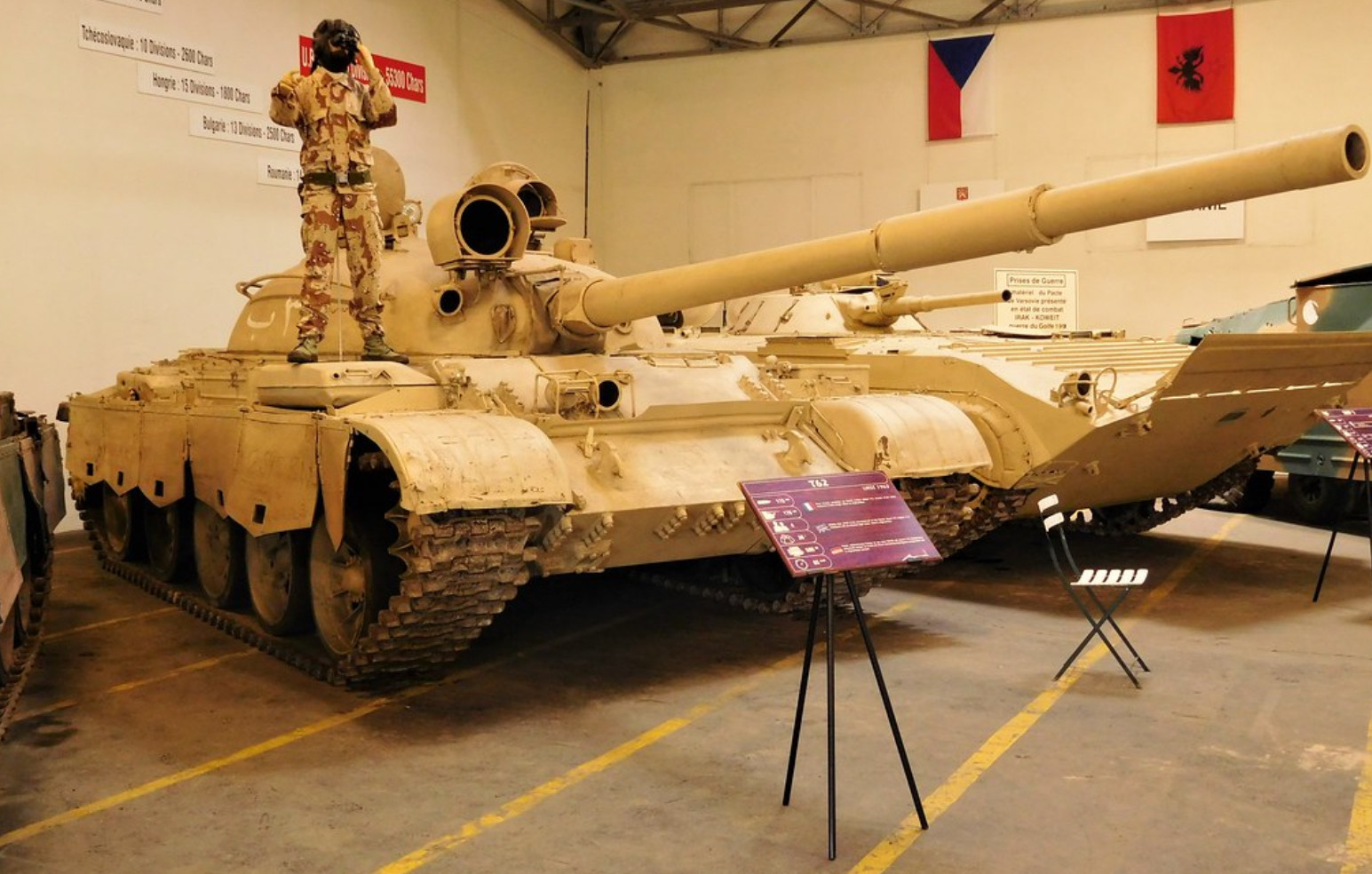
The first is relatively simple. Iraqi forces appear to have scavenged side skirts from their Chinese-imported tanks or possibly manufactured similar copies locally, and fitted them to their T-62s. In addition to the skirts, both of the tank’s searchlights were upgraded with anti-shrapnel shielding. (This feature was also present on some regular Iraqi T-62s). Aside from these external changes, however, the tank remains visually identical to the base T-62 Model 1972, with no major structural or armament modifications. However, unlike the ERA-equipped variant, this upgrade was significantly more widespread.
Version B.
The second modification is far more comprehensive. Based on available evidence, it’s reasonable to assume that the ERA modernization of Iraqi T-62s was developed in parallel with the T-55 “Enigma” program. Iraqi military planners likely recognized that the base armor of both tank types was inadequate against modern anti-tank threats and sought urgent solutions. However, acquiring explosive reactive armor (ERA) proved difficult for Iraq due to limited access to foreign supply and technical constraints. As a result, the Enigma project ultimately used NERA (non-explosive reactive armor) instead (which was surprisingly effective).
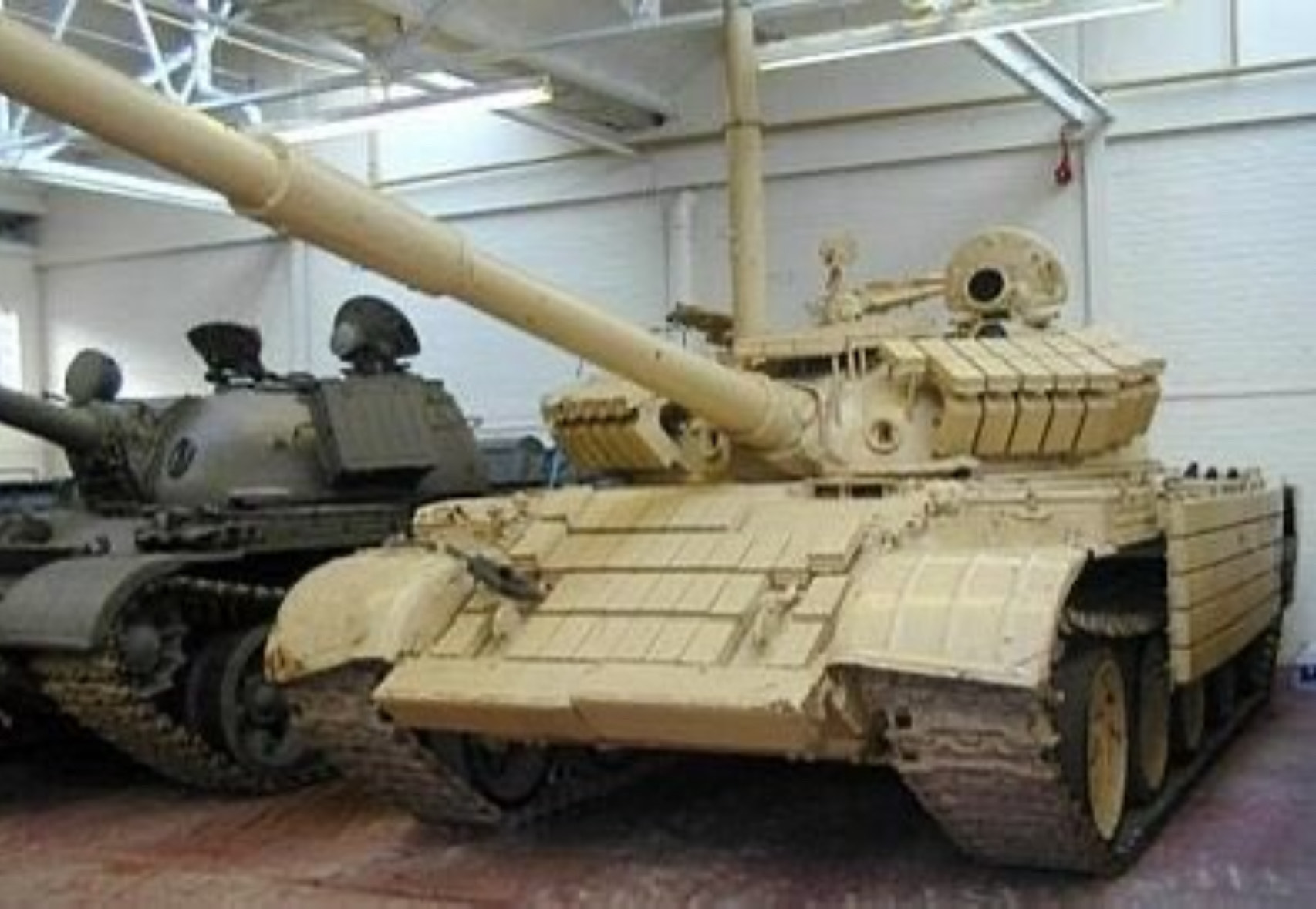
In contrast, the T-62 variant in question is clearly equipped with ERA blocks that visually resemble Soviet Kontakt-1, suggesting that Iraq may have acquired a limited number of genuine ERA modules shortly before the 1991 Gulf War. These blocks appear to have been fitted in a domestic modification effort, possibly in very small numbers if not a single example (that survived). Interestingly, some Iraqi T-72s were also equipped with ERA, although such examples are exceptionally rare, and is a separate topic.
The ERA layout on this Iraqi T-62 appears to be inspired by the Soviet T-62MV, but there are several notable differences. The most obvious is the approach to side protection. While the Soviets mounted ERA blocks directly onto rubberized side skirts, this Iraqi variant lacks those skirts entirely. Instead, it features what seems to be a solid steel plate with ERA blocks mounted on top. However, this plate leaves two large gaps one at the rear flanks and another at the forward hull sides. The reasoning behind these omissions is unclear, though it’s possible Iraqi engineers considered the coverage sufficient or were limited by the number of ERA modules available.
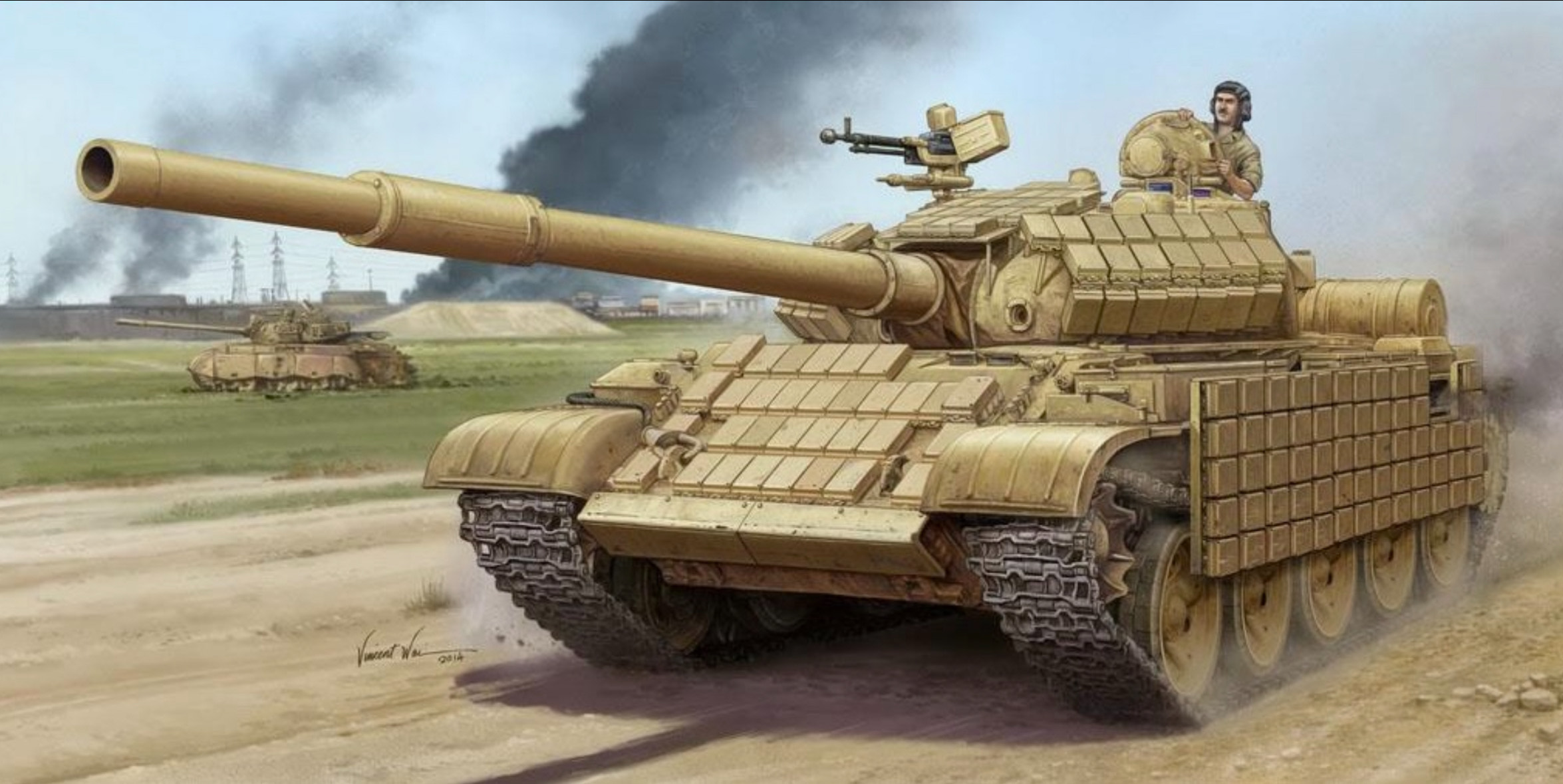
Another clear deviation is the absence of smoke grenade launchers, which are standard on the T-62MV. Additionally, the tank is missing its main infrared searchlight, and the commander’s IR projector lacks the distinctive Iraqi armored shield typically seen on other modified vehicles. Interestingly, the turret-roof mounted ERA blocks appear to be slightly elevated above the surface of the turret, possibly to create a standoff gap. This may have been an intentional design choice to improve the effectiveness of the ERA, potentially offering better protection than the more tightly fitted layout found on the Soviet T-62MV. The Kontakt-1 ERA blocks are relatively lightweight, so it’s unlikely that the modification significantly increased the tank’s overall weight. As a result, it is reasonable to assume that the original engine was retained without any major changes.
Images of the Rear End

Specifications – Base T-62 Model 1972
Spoiler
| Attribute | Specification |
|---|---|
| Designation | T‑62 Model 1972 (Ob. 166 obr. 1972) |
| Crew | 4 (Commander, Gunner, Loader, Driver) |
| Main Armament | 115 mm U‑5TS smoothbore |
| Secondary Armament | 7.62 mm PKT coaxial; 12.7 mm DShKM AA MG |
| Optics | TShS‑41U sight; IR projector; basic IR LV |
| Engine | V‑55V diesel (~580 hp) |
| Max Speed / Range | ~50 km/h; ~450 km (up to 650 km) |
| Weight | ~37 tonnes |
| Armor Thickness | Turret front: 242 mm; Hull front: 102 mm |
| Protection Systems | Basic CBRN/fire suppression systems |