- Yes as a Tech Tree vehicle
- Yes a premium vehicle
- No i don’t want it
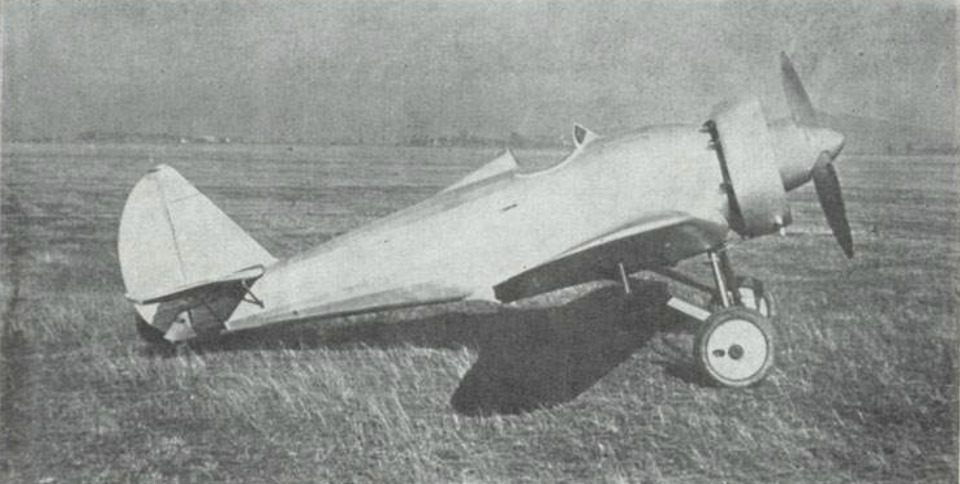
Full history - Developed alongside the IAR 15, the IAR 16 occupies a fascinating place in Romanian aviation history. It was not a successful production fighter, nor did it fight in any war, but it represented an important technological step for Romania’s young aircraft industry. Designed in 1934 by engineer Elie Carafoli at Industria Aeronautică Română (IAR) in Brașov, the IAR-16 was one of the earliest Romanian attempts to create a modern, indigenous fighter aircraft with an advanced all-metal structure The fuselage retained the general shape and layout of the IAR 14, while the wing design also followed the same basic principles, though with an increased surface area of 20.30 m². The tail assembly was redesigned, with the rear section adopting a rounded shape. The two-strut landing gear arrangement from the IAR 14 was preserved, along with the return of a traditional tailskid. The combination of the enlarged wings and the stronger all-metal fuselage resulted in a higher empty weight of 1,430 kg. This gave the aircraft a relatively high wing loading of 70.14 kg/m², which increased further during operations due to its fully loaded weight of approximately 1,650 kg. The IAR 16 was not developed further than a single prototype, bringing to an end Romanian fighter design for several years. Its only significant achievement was the improvement of Romania’s national altitude record. Piloted by Locotenent aviator Papana, on 16 July 1935, the IAR 16 took off from Pipera airfield at 17.48 p.m. 47 minutes later it established a new altitude of 11,631 m (at that time, the world altitude record was held by the Italian Cdr. R. Donati, who reached 14,433 m on 11 April 1934, while flying a Caproni 161), beating the previous 10,518 m set up by the late Romeo Popescu.
Armament and Performance - The armament of the aircraft was very standard for the time period and those were two synchronized 7.7mm Vickers fixed machine guns firing through the propeller. The standard for such guns is about 500 rpg but it’s unknown how many rpg the IAR 16 could carry. The aircraft was not capable of carrying any suspended armament. The aircraft was powered by a Bristol Mercury IV S2, of maximum 560 h.p. (418 kW) output at 4,500 9-cylinder supercharged radial , 418 kW (540 hp). The IAR 16 achieved a maximum speed of 342 km/h at 5,000 meters altitude and could reach this height in approximately six and a half minutes. Its service ceiling was estimated at around 10,000 meters. However, the aircraft’s relatively high wing loading, caused by its heavier all-metal construction and increased empty weight of 1,430 kg, affected its overall agility and maneuverability compared to lighter designs.
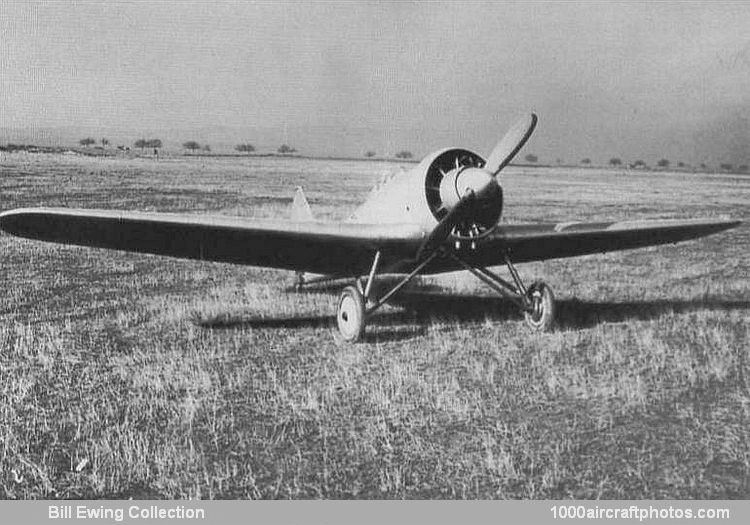
Full specifications
- Crew: one
- Length: 7.76 m (25 ft 5.5 in)
- Wingspan: 11.00 m (31 ft 6 in)
- Height: 2.7 m (8 ft 10 in)
- Wing area: 19.00 m2 (204 sq ft)
- Empty weight: 1,215 kg (2,673 lb)
- Gross weight: 1,650 kg (3,630 lb)
- Powerplant: 1 × Bristol Mercury IV S2, of maximum 560 h.p. (418 kW) output at 4,500 9-cylinder supercharged radial , 418 kW (540 hp)
Performance
- Maximum speed: 342 km/h (213 mph, 185 kn)
- Service ceiling: 10,500 m (34,400 ft)
- Rate of climb: 10.4 m/s (2,050 ft/min) to 5,000 m (16,400 ft)
Armament
- Two 7.7mm Vickers fixed machine guns firing through propeller
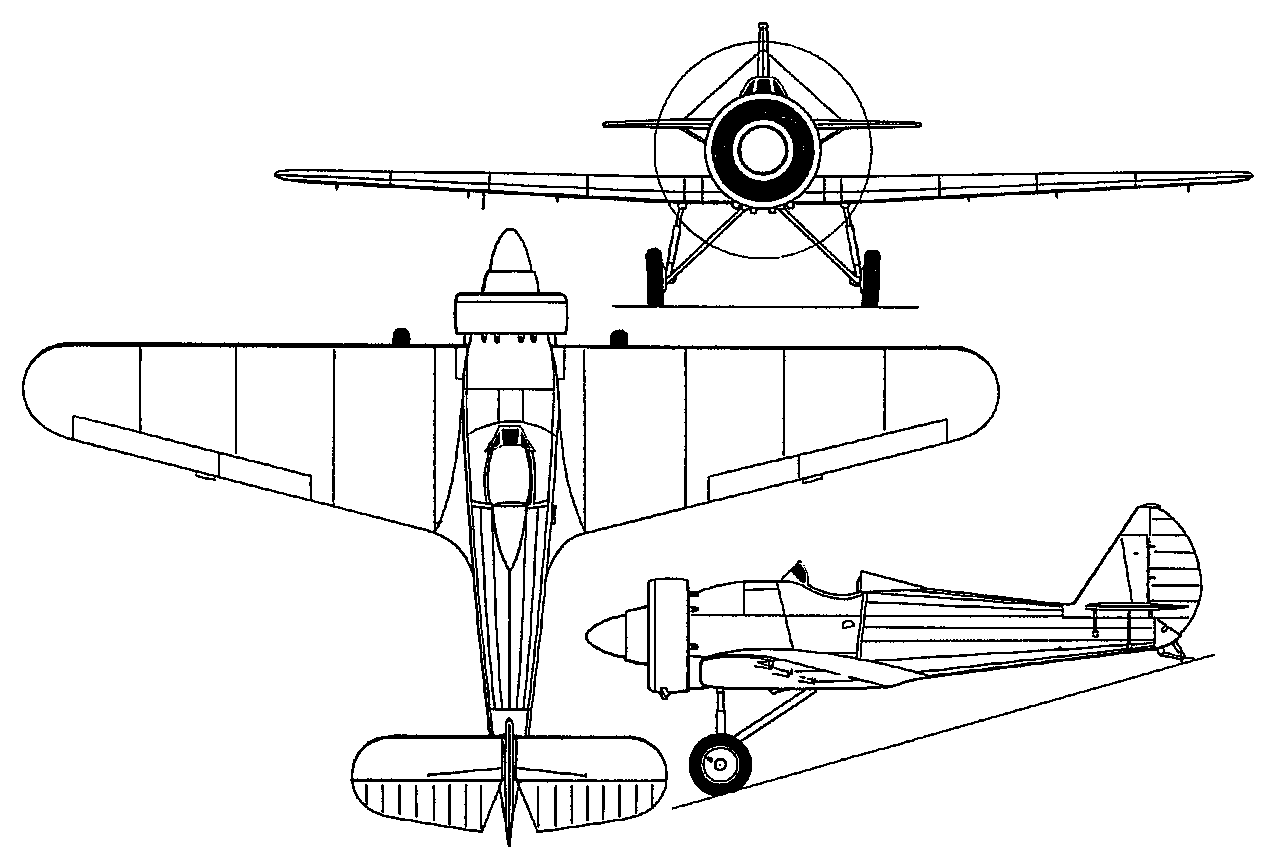
The image above is a three view drawing of the IAR 16, it shows the aircraft from all directions.
Fate - The prototype was still seen in 1935-1936 at various air shows, where Alex. Papana performed high-level aerobatics to the delight of the spectators. Not much else is known about the aircraft, it essentially vanished from records after 1936 and was most likely scraped either during or before the war.
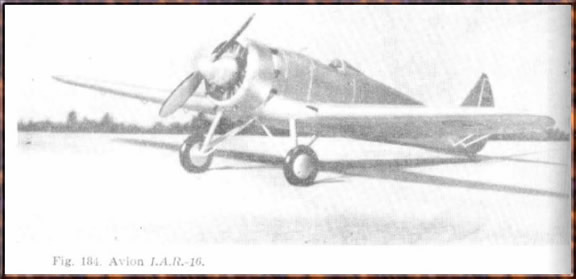
Sources
IAR 16
IAR-16 - Wikipedia
ROMANIAN AERONAUTICAL CONSTRUCTIONS 1905-1974 - ON GUDJU • GHEORGHE IACOBESCU • OVIDIU IONESCU PDF
I.A.R. 16 - fighter