
Hello Pilots!
Here is just a technical dump for any indigenous/imported weapons in service with the Indian Air Force! From the Astra BVRAAM to the Gaurav Glide Bomb, here will be the main post for discussion. New weapon development, published (Declassified!) documents, weapons for indian aircraft already in game, all can be done here!
Indian Aircraft in Game (As of 4/10/2026):
- MiG-21 Bison
- SEPECAT Jaguar IS
- HF-24 Marut Mk.1
Below is a list of weaponry with a short summary and specifications.
Air-to-Air Missiles:
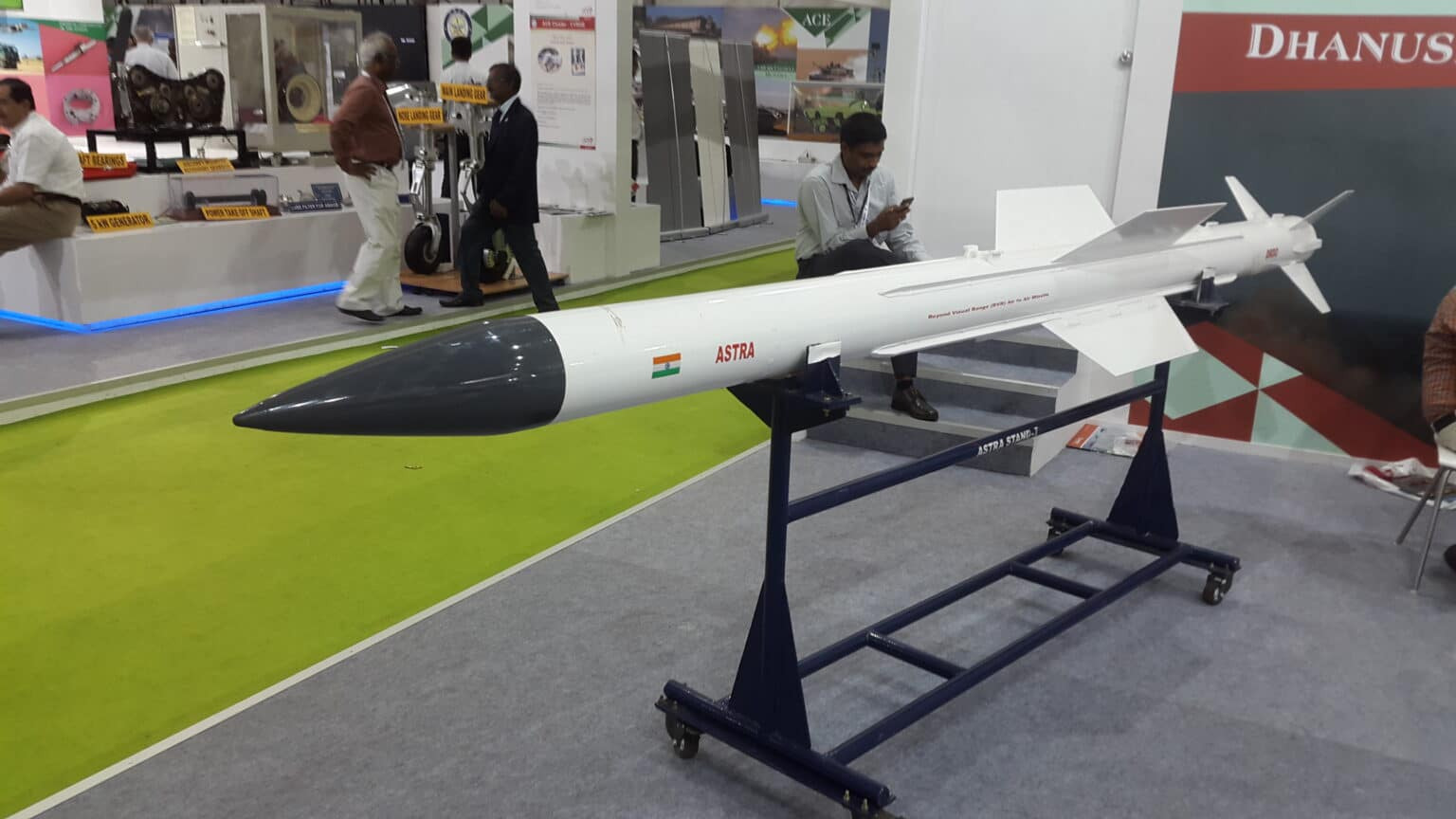
Astra Mk.I (ARH Missile)
Summary
History:
The Astra Mk.I BVRAAM was conceived in the early 2000s as part of India’s push to reduce dependence on imported air-to-air missiles and build a fully indigenous BVR capability. Developed by the Defence Research and Development Organisation, the program faced a long and technically challenging path, particularly in mastering key technologies like active radar seekers, propulsion systems, and reliable mid-course guidance—areas where India initially relied on foreign assistance.
Throughout the late 2000s and 2010s, the missile underwent extensive ground and flight testing, including captive trials and live-fire intercepts against aerial targets, with incremental improvements addressing guidance accuracy, electronic counter-countermeasure resistance, and overall reliability. Integration trials with frontline aircraft, especially the Sukhoi Su-30MKI, were critical in refining the missile’s performance in real combat scenarios. After years of iterative development and validation, Astra Mk.I was finally cleared for induction into the Indian Air Force in the early 2020s.
Specifications:
Physical Characteristics:
- Length: 3.6 m
- Diameter: 178 mm
- Weight: 154 kg
Performance:
- Speed: Mach 4.5
- Range:
- Head-on engagement: 110 km
- Tail chase: 20 km
- Range varies heavily with launch altitude (higher = longer range)
- Operational altitude: Sea level up to 20 km
- Maneuverability: Up to 40g
Guidance & Targeting
- Off-Boresight Launch: Up to 45°+
- Mid-course guidance:
- Inertial Navigation System (INS)
- Data-link updates from launch aircraft
- Terminal guidance:
- Active radar homing (fire-and-forget)
- Seeker:
- RF (radio frequency) seeker (indigenous in newer versions)
- ~25 km seeker acquisition range
- ECCM capability:
- Resistant to electronic jamming
- Lock modes:
- Lock-on-before-launch (LOBL)
- Lock-on-after-launch (LOAL)
Warhead & Fuze:
- Warhead: 15 kg high-explosive pre-fragmented
- Fuze: Laser / radar proximity fuse
Propulsion:
- Type: Solid-fuel rocket motor (smokeless)
Sources:
Astra Mk.II (ARH Missile)
Summary
History:
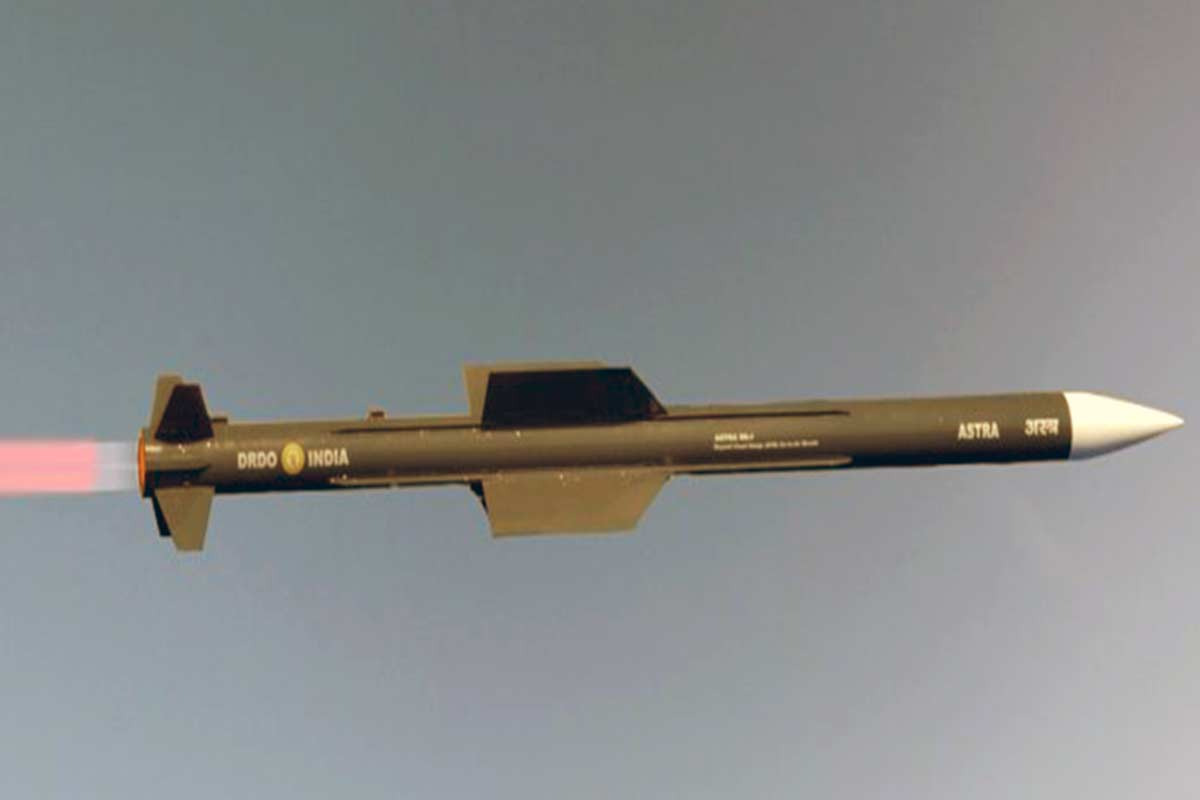
The Astra Mk.II BVRAAM is the second major iteration of India’s indigenous air-to-air missile program, developed by the Defence Research and Development Organisation to significantly extend engagement range and close the gap with advanced foreign systems. Work on Mk.II began in the 2010s as an evolution of the Mk.I, with the goal of increasing kill range, improving energy retention, and enhancing performance against highly maneuvering and electronically protected targets. Unlike the Mk.I, the Mk.II introduces a more advanced propulsion concept (often described as a dual-pulse solid rocket motor) that allows the missile to “re-energize” mid-flight, sustaining speed and maneuverability over much longer distances. Throughout its development, the program has remained heavily test-focused, with repeated trials from platforms such as the Sukhoi Su-30MKI validating extended-range engagements and mid-course guidance updates. While still in the process of full operational integration as of the mid-2020s, the Mk.II represents a major step toward parity with advanced long-range BVRAAMs like the AIM-120 AMRAAM and the Chinese PL-15 missile, and it serves as a bridge toward even more advanced ramjet-powered systems in the Astra family’s future roadmap.
Specifications:
Physical Characteristics:
- Length: ~3.8 m (approx.)
- Diameter: 178 mm
- Weight: ~160–170 kg
Performance:
- Speed: Mach 4.5
- Range:
- Head-on engagement: 160 km
- Tail chase: 20 km
- Range varies heavily with launch altitude (higher = longer range)
- Operational altitude: Sea level up to 20 km
- Maneuverability: Up to 40g
Guidance & Targeting
- Off-Boresight Launch: Up to 45°+
- Mid-course guidance:
- Inertial Navigation System (INS)
- Data-link updates from launch aircraft
- Terminal guidance:
- Active radar homing (fire-and-forget)
- Seeker:
- RF seeker
- ~25 km seeker acquisition range
- ECCM capability:
- Resistant to electronic jamming
- Lock modes:
- Lock-on-before-launch (LOBL)
- Lock-on-after-launch (LOAL)
Warhead & Fuze:
- Warhead: ~15 kg high-explosive pre-fragmented
- Fuze: Optical proximity fuse
Propulsion:
- Type: Dual-pulse solid-fuel rocket motor (smokeless)
Sources:
Gandiva (ARH Missile)
Summary
History:
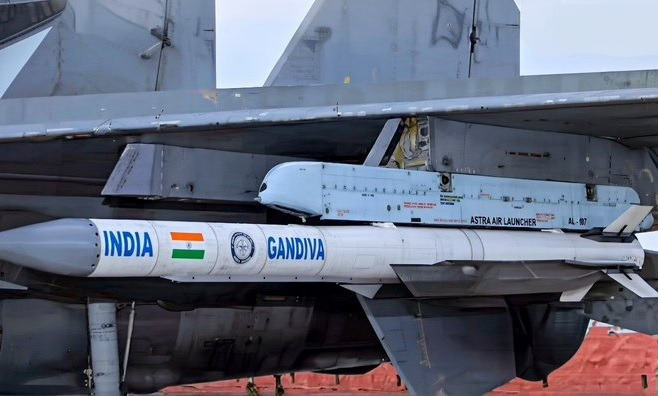
The Gandiva BVRAAM, originally the Astra Mk.III, is the most advanced evolution of India’s indigenous Astra missile family, developed by the Defence Research and Development Organisation as a leap beyond traditional solid-fuel BVRAAM designs. Unlike the Mk.I and Mk.II, Gandiva is built around Solid Fuel Ducted Ramjet (SFDR) propulsion, a fundamentally different technology that allows the missile to breathe air during flight, sustaining thrust over long distances instead of coasting like a conventional rocket. This gives it a major advantage in energy retention, endgame maneuverability, and high-speed interception at extreme ranges. The program emerged in the 2010s as India’s attempt to enter the “next generation” of air-to-air combat systems, comparable in ambition to the most advanced Western and Chinese long-range missiles. Its development has involved extensive testing of ramjet boosters, airflow control systems, and seeker integration, with trials gradually validating its ability to maintain sustained supersonic cruise.
Specifications:
Physical Characteristics:
- Length: 3.83 m
- Diameter: 200 mm
- Weight: ~190+ kg
Performance:
- Speed: Mach 3.6+
- Range:
- Head-on engagement: 340 km
- Tail chase: 20+ km
- Range varies heavily with launch altitude (higher = longer range)
- Operational altitude: Sea level up to 20 km
- Maneuverability: Up to 40g
Guidance & Targeting
- Off-Boresight Launch: Up to 45°+
- Mid-course guidance:
- Inertial Navigation System (INS)
- Data-link updates from launch aircraft
- Terminal guidance:
- Active radar homing (fire-and-forget)
- Seeker:
- RF seeker
- ~25 km seeker acquisition range
- ECCM capability:
- Resistant to electronic jamming
- Lock modes:
- Lock-on-before-launch (LOBL)
- Lock-on-after-launch (LOAL)
Warhead & Fuze:
- Warhead: ~15 kg high-explosive pre-fragmented
- Fuze: Radar/Optical proximity fuse
Propulsion:
- Type: Solid Fuel Ducted Ramjet
Sources:
NGCCM (IR Missile)
Summary
History:
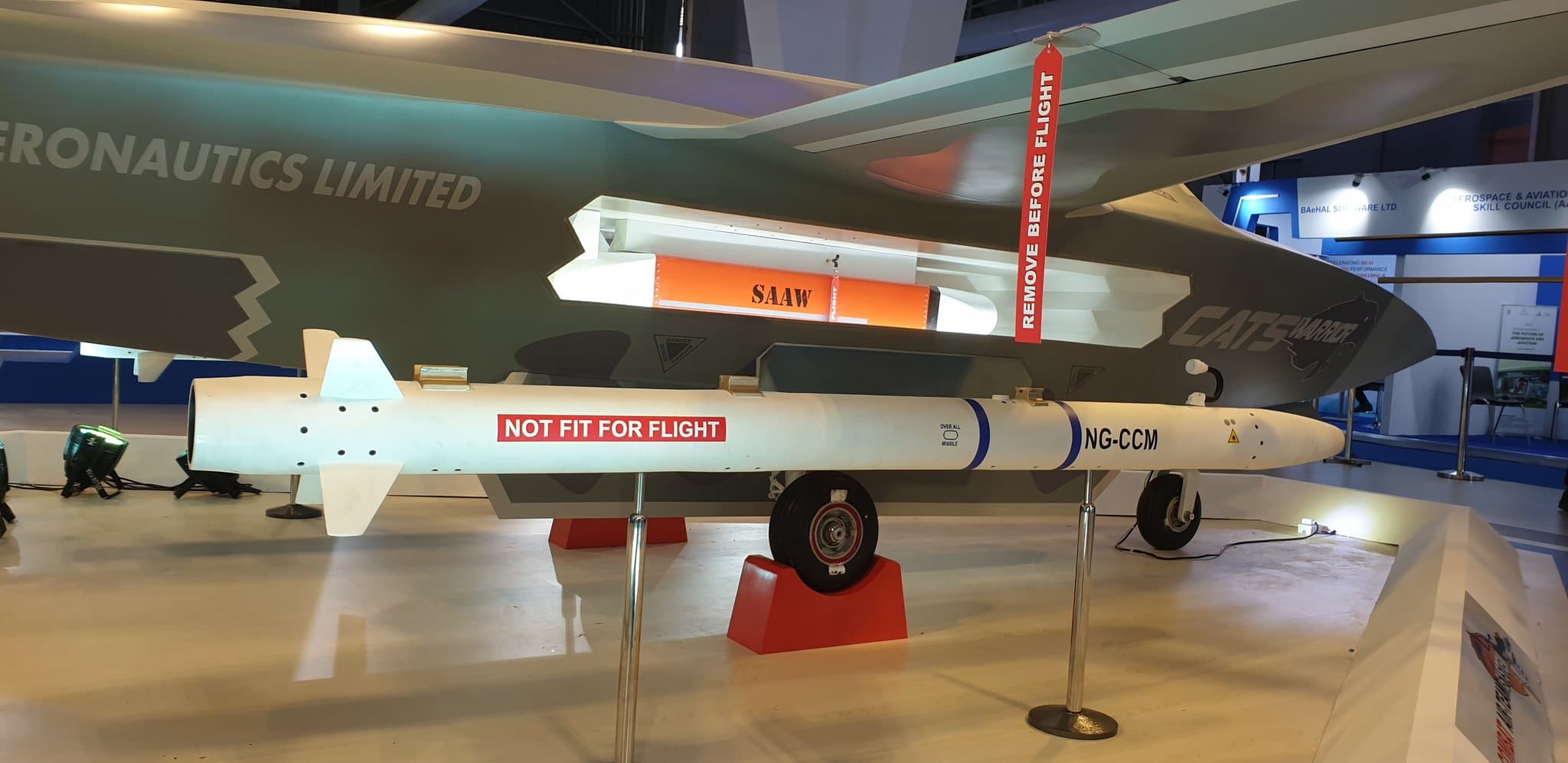
The ASRAAM, known in Indian Air Force service context as part of the NGCCM (Next Generation Close Combat Missile) effort is a short-range, high-off-boresight infrared-guided air-to-air missile designed for close-in dogfight superiority. Unlike BVRAAM systems such as Astra variants, ASRAAM operates in the within-visual-range (WVR) environment, where engagements happen at short distances and seconds matter. The missile was originally developed by the United Kingdom and later integrated into Indian service to arm platforms like the HAL Tejas, reflecting India’s requirement for a highly agile, fast-reacting dogfight missile capable of defeating modern maneuvering threats. In Indian doctrine, the NGCCM/ASRAAM fills the role of a “first-look, first-shot, high off-boresight kill” weapon, pairing with helmet-mounted cueing systems so pilots can lock and fire at extreme angles without needing to point the nose of the aircraft directly at the target. Its adoption was driven by the need to replace older short-range missiles and ensure parity with modern systems like the AIM-9X and R-73 class weapons, especially as aerial combat increasingly relies on high-agility engagements and rapid sensor-to-shooter reactions.
Specifications:
Physical Characteristics:
- Length: 2.90 m
- Diameter: 166 mm
- Weight: 88 kg
Performance:
- Speed: Mach 3+
- Range:
- Head-on engagement: 25 km
- Tail chase: 15 km
- Range varies heavily with launch altitude (higher = longer range)
- Operational altitude: Sea level up to 20 km
- Maneuverability: Up to 50g
Guidance & Targeting
- Off-Boresight Launch: Up to 90°
- Mid-course guidance:
- InfraRed seeker head
- Data-link updates from launch aircraft
- Terminal guidance:
- InfraRed Seeker head (fire-and-forget)
- Seeker:
- IR seeker
- ~25 km seeker acquisition range
- IRCCM capability:
- Resistant to Flare Countermeasures
- Lock modes:
- Lock-on-before-launch (LOBL)
- Lock-on-after-launch (LOAL)
Warhead & Fuze:
- Warhead: 10 kg high-explosive pre-fragmented
- Fuze: Impact/Laser proximity fuse
Propulsion:
- Type: Dual-burn high-impulse solid rocket motor
Sources:
Air-to-Ground Missiles:
RudraM-I (Anti-Radiation Missile)
Summary
History:
The Rudram-I (NGARM) is India’s first indigenously developed air-launched Anti-Radiation Missile (ARM), designed to suppress and destroy enemy radar systems as part of the Indian Air Force’s Suppression/Destruction of Enemy Air Defenses (SEAD/DEAD) capability. Developed by the Defence Research and Development Organisation, Rudram-I was created to reduce reliance on imported Western and Russian ARM systems and give India a dedicated tool for striking enemy air-defense networks. The missile is launched primarily from fighter aircraft such as the Sukhoi Su-30MKI, and it is designed to detect, home in on, and destroy radar emissions from systems like surface-to-air missile batteries, early warning radars, and fire-control radars. Its development reflects a shift in Indian air doctrine toward network disruption warfare, where the goal is not just to shoot down aircraft but to blind and degrade the enemy’s integrated air-defense system before or during strikes.
Rudram-I emerged in the 2010s as part of a broader DRDO push to develop a family of precision-strike air-launched weapons, and it was tested extensively in flight trials where it demonstrated the ability to detect multiple radar frequencies, prioritize threats, and engage emitters at long range. Unlike older ARMs that required continuous radar lock, Rudram-I is designed with a more modern guidance package that allows passive targeting during flight with onboard memory and navigation updates, meaning it can continue toward a target even if the radar shuts down after detection.
Specifications:
Physical Characteristics:
- Length: 5.2 m
- Diameter: 315 mm
- Weight: 600 kg
Performance:
- Speed: Mach 2
- Range: 200km
- Range varies heavily with launch altitude (higher = longer range)
- Operational altitude: Sea level up to 15 km
Guidance & Targeting
- Mid-course guidance:
- Inertial Navigation System (INS) + GNSS
- Data-link updates from launch aircraft
- Terminal guidance:
- Active radar homing (fire-and-forget)
- Seeker:
- RF seeker
- Lock modes:
- Lock-on-before-launch (LOBL)
- Lock-on-after-launch (LOAL)
Warhead & Fuze:
- Warhead: 55 kg high-explosive pre-fragmented
- Fuze: Laser proximity fuse
Propulsion:
- Type: Dual-Pulse solid rocket motor
Sources:

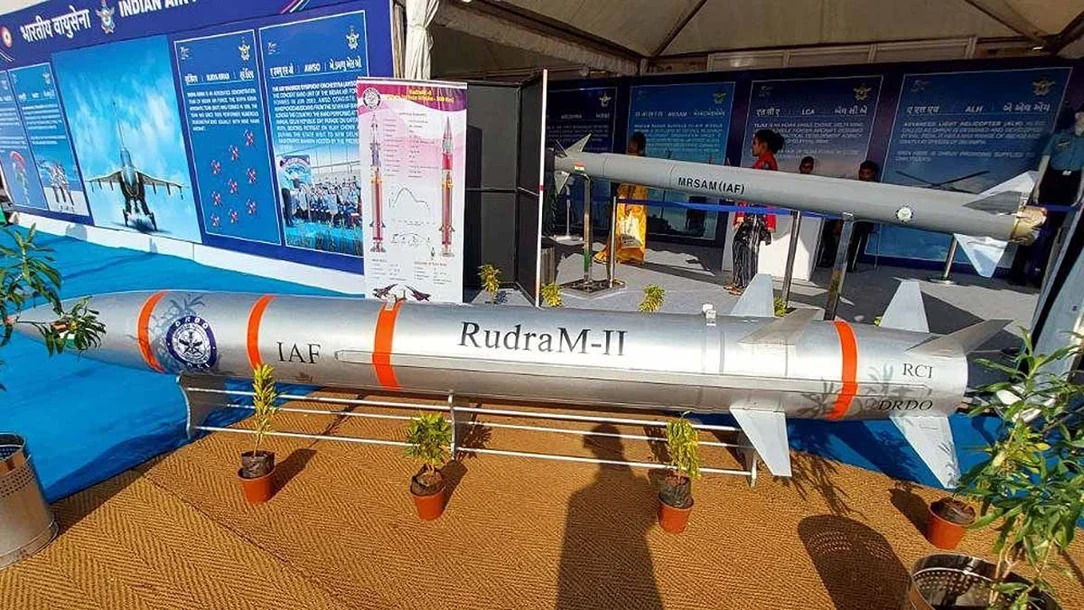
RudraM-II (Air-to-Surface Missile)
Summary
History:
The Rudram-II is the follow-on development to the Rudram-I, created by the Defence Research and Development Organisation to significantly expand India’s ability to conduct long-range suppression and destruction of enemy air defenses (SEAD/DEAD). Building on the foundation of the earlier NGARM, Rudram-II is designed not only to home in on hostile radar emissions but also to strike targets at much greater stand-off distances, allowing Indian aircraft like the Sukhoi Su-30MKI to engage heavily defended airspace without entering the most dangerous threat envelopes. Emerging in the late 2010s and progressing through developmental trials into the 2020s, the missile reflects a doctrinal shift toward deep, pre-emptive suppression of integrated air defense systems, targeting high-value assets such as long-range surveillance radars and surface-to-air missile batteries.
Unlike Rudram-I, which is primarily focused on anti-radiation homing, Rudram-II is believed to incorporate a more flexible guidance architecture, potentially combining passive radar homing with inertial navigation and satellite-assisted targeting, allowing it to strike even when enemy radars shut down or operate intermittently. This makes it more of a multi-role stand-off weapon, capable of both anti-radiation missions and precision strikes against fixed, high-value ground targets. Its extended range and heavier payload place it closer in role to Western stand-off weapons, giving India the ability to degrade enemy air defenses from outside their effective engagement zones, a critical advantage in modern high-threat environments.
Specifications:
Physical Characteristics:
- Length: 5.5 m
- Diameter: [DATA UNKNOWN]
- Weight: 600 kg
Performance:
- Speed: Mach 5.5
- Range: 350km
- Range varies heavily with launch altitude (higher = longer range)
- Operational altitude: Sea level up to 40 km
Guidance & Targeting
- Mid-course guidance:
- Inertial Navigation System (INS) + GNSS
- Data-link updates from launch aircraft
- Terminal guidance:
- Active radar homing + InfraRed Tracking
- Seeker:
- RF + IR seeker
- Lock modes:
- Lock-on-before-launch (LOBL)
- Lock-on-after-launch (LOAL)
Warhead & Fuze:
- Warhead: 200 kg PCB
- Fuze: Laser proximity fuse
Propulsion:
- Type: [DATA UNKNOWN]
Sources:
RudraM-III (Air-to-Surface Missile)
Summary
History
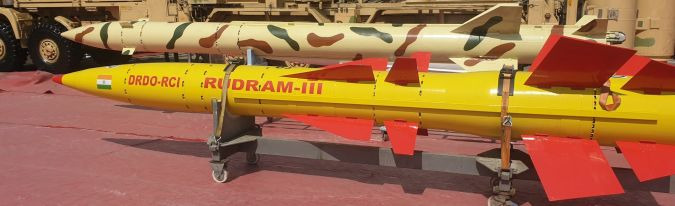
The Rudram-III represents the most advanced and ambitious evolution of India’s anti-radiation missile family, developed by the Defence Research and Development Organisation to push beyond traditional SEAD roles into true deep-strike, long-range suppression and destruction of enemy air defenses (SEAD/DEAD). Building on the foundations of Rudram-I and II, Rudram-III is designed not just to home in on radar emissions, but to function as a multi-role stand-off weapon capable of striking high-value targets such as long-range surveillance radars, surface-to-air missile sites, command nodes, and potentially even airborne assets like AEW&C platforms at extreme distances. Emerging in the 2020s, the missile reflects a doctrinal shift toward network-centric warfare and deep interdiction, where enemy air defense systems are neutralized from well outside their engagement zones before strike packages enter contested airspace. It is expected to be integrated primarily on platforms like the Sukhoi Su-30MKI, enabling Indian pilots to conduct long-range “hunter-killer” missions against air defense networks with minimal exposure to hostile fire.
Unlike its predecessors, Rudram-III is believed to incorporate a high-speed, extended-range propulsion system and a more sophisticated guidance suite combining passive homing with inertial and satellite navigation, allowing it to strike both emitting and non-emitting targets with high precision. This makes it closer in concept to a long-range stand-off cruise/strike missile with anti-radiation capability, rather than a pure ARM. Its ability to retain targeting data and continue toward a last-known location even after radar shutdown significantly complicates enemy defensive tactics, while its extended range—reportedly in the several-hundred-kilometer class—allows it to operate in the same strategic space as advanced Western and Chinese stand-off weapons. In essence, Rudram-III transforms India’s SEAD capability from a tactical support function into a strategic, first-strike tool capable of dismantling integrated air defense systems at the outset of a conflict.
Specifications:
Physical Characteristics:
- Length: [DATA UNKNOWN]
- Diameter: [DATA UNKNOWN]
- Weight: [DATA UNKNOWN]
Performance:
- Speed: Mach 5.5
- Range: 550km
- Range varies heavily with launch altitude (higher = longer range)
- Operational altitude: Sea level up to 40+ km
Guidance & Targeting
- Mid-course guidance:
- Inertial Navigation System (INS) + GNSS
- Data-link updates from launch aircraft
- Terminal guidance:
- Active radar homing + InfraRed Tracking
- Seeker:
- RF + IR seeker
- Lock modes:
- Lock-on-before-launch (LOBL)
- Lock-on-after-launch (LOAL)
Warhead & Fuze:
- Warhead: 500 kg PCB
- Fuze: Laser proximity fuse
Propulsion:
- Type: [DATA UNKNOWN]
Sources:
Crystal Maze “Raptor” (Air-to-Surface Missile)
WIP
Crystal Maze II “ROCKS” (Air-to-Surface Missile)
Summary
History
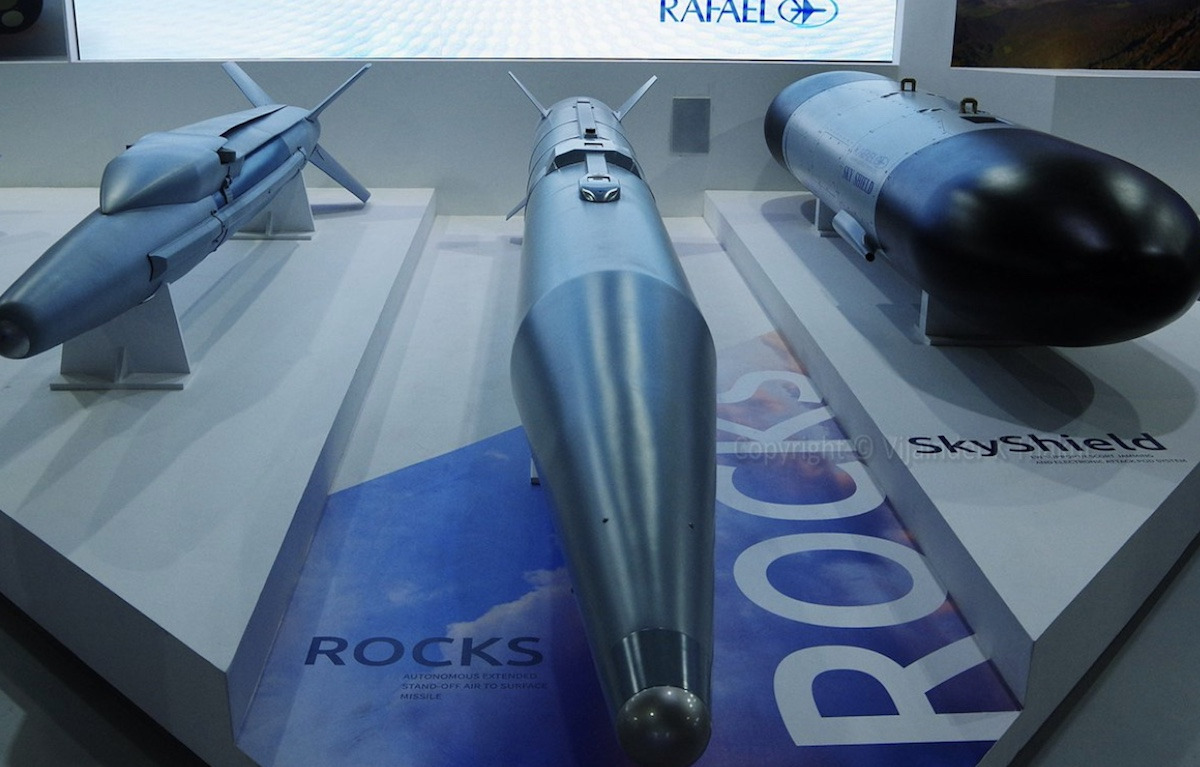
The Crystal Maze II, known in the Indian Air Force by the acronym ROCKS, is an advanced air-launched, long-range precision strike weapon developed by Rafael Advanced Defense Systems. Designed as a deep strike, stand-off missile, it enables aircraft to destroy heavily defended, high-value targets such as airbases, hardened bunkers, radar installations, and strategic infrastructure from long distances without entering dense enemy air defense zones. The system evolved from the earlier Crystal Maze family and incorporates significant upgrades in guidance, survivability, and target discrimination, reflecting lessons from modern high-threat environments. It is intended to function in GPS-denied or heavily jammed environments, using advanced electro-optical and imaging infrared seekers combined with scene-matching algorithms to precisely identify and strike targets. The missile has been integrated on a variety of fighter aircraft worldwide, including the F-16 Fighting Falcon, and is associated with India’s efforts to enhance its stand-off strike capability on platforms like the Sukhoi Su-30MKI. Crystal Maze II represents a shift toward high-precision, autonomous strike systems capable of penetrating advanced air defenses without relying solely on satellite navigation, making it especially valuable in contested electronic warfare environments.
Specifications:
Physical Characteristics:
- Length: [DATA UNKNOWN]
- Diameter: [DATA UNKNOWN]
- Weight: 1,100 kg
Performance:
- Speed: [DATA UNKOWN]
- Range: 250km
- Range varies heavily with launch altitude (higher = longer range)
- Operational altitude: [DATA UNKNOWN]
Guidance & Targeting
- Mid-course guidance:
- Inertial Navigation System (INS) + GNSS
- Data-link updates from launch aircraft
- Terminal guidance:
- InfraRed Tracking
- Seeker:
- EO + IR seeker
- Lock modes:
- Lock-on-before-launch (LOBL)
- Lock-on-after-launch (LOAL)
Warhead & Fuze:
- Warhead: 80 kg High-Explosive
- Fuze: Laser proximity fuse
Propulsion:
- Type: [DATA UNKNOWN]
Sources:
BrahMos-A (Cruise Missile)
Summary
History:
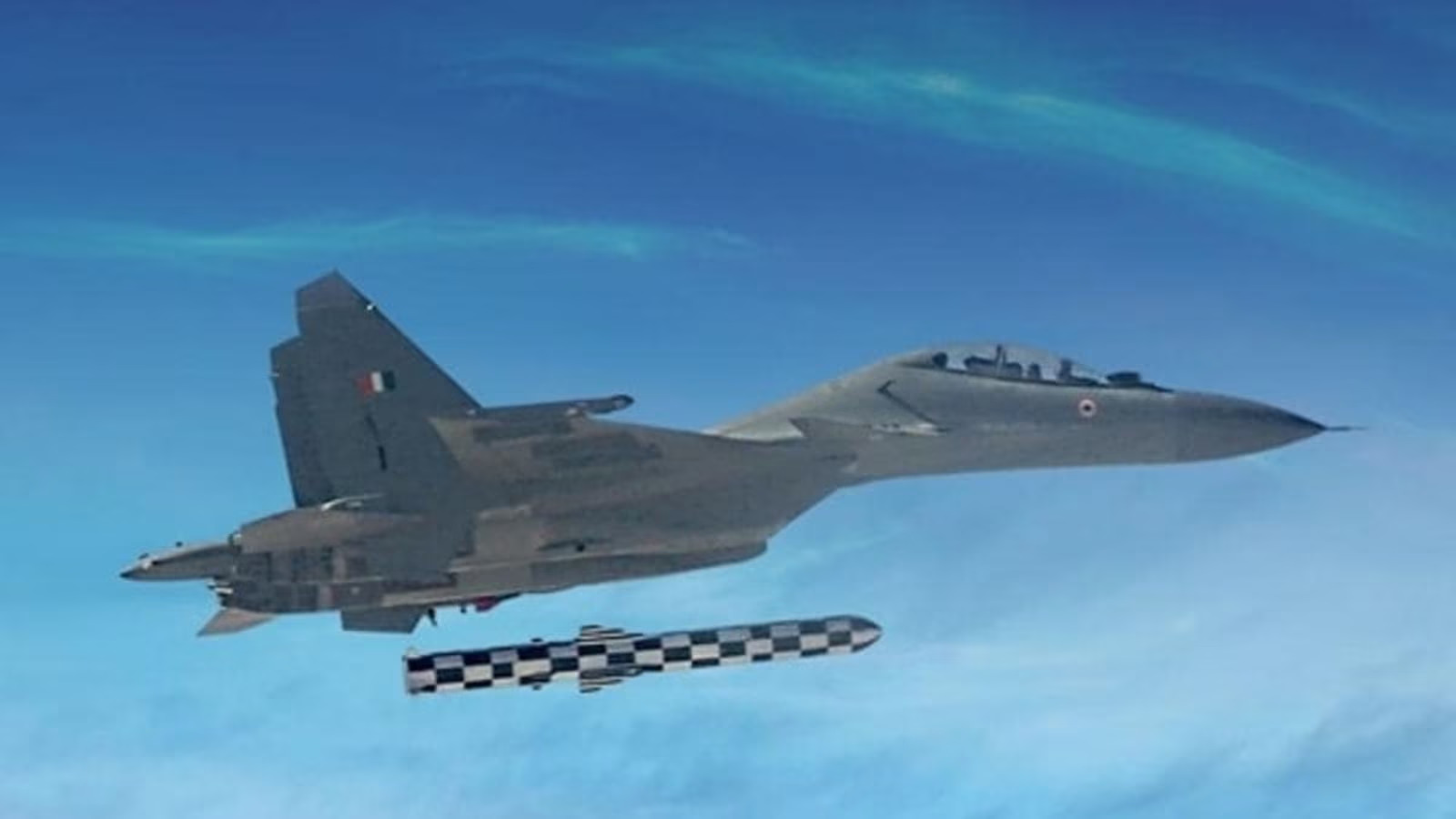
The BrahMos-A is the air-launched version of the Indo-Russian BrahMos missile family, developed jointly by BrahMos Aerospace (a collaboration between India’s Defence Research and Development Organisation and Russia’s NPO Mashinostroyenia). Conceived to give the Indian Air Force a high-speed, precision stand-off strike capability, BrahMos-A allows fighter aircraft to launch a supersonic cruise missile capable of striking heavily defended targets on land or at sea from long distances. Development began in the late 2000s, but adapting the missile for air launch proved challenging—engineers had to significantly reduce weight, redesign the airframe, and modify the guidance and release mechanisms so it could be safely carried and deployed from a fast-moving aircraft. After extensive integration and flight trials, particularly with the Sukhoi Su-30MKI, the system achieved successful test launches in the late 2010s and entered operational service soon after. BrahMos-A fundamentally enhances India’s strike doctrine by enabling aircraft to deliver Mach 2.8+ precision strikes against high-value targets such as warships, command centers, and hardened infrastructure, all while remaining outside the reach of many enemy air defense systems.
Specifications:
Physical Characteristics:
- Length: 8.4 m
- Diameter: 700mm
- Weight: 2,500 kg
Performance:
- Speed: Mach 3.5
- Range: 500km
- Range varies heavily with launch altitude (higher = longer range)
- Operational altitude: Sea level up to 15 km
Guidance & Targeting
- Mid-course guidance:
- Inertial Navigation System (INS) + GNSS
- Data-link updates from launch aircraft
- Terminal guidance:
- Active radar homing
- Seeker:
- RF seeker
- Lock modes:
- Lock-on-before-launch (LOBL)
- Lock-on-after-launch (LOAL)
Warhead & Fuze:
- Warhead: 300 kg PCB
- Fuze: Impact/Radar proximity fuse
Propulsion:
- Type: Solid-Propellant Rocket Motor + Liquid Fuel Ramjet
Sources:
BrahMos-MA (Cruise Missile)
WIP
Bombs:
Sudarshan (Laser-Guided Bomb)
Summary
History:
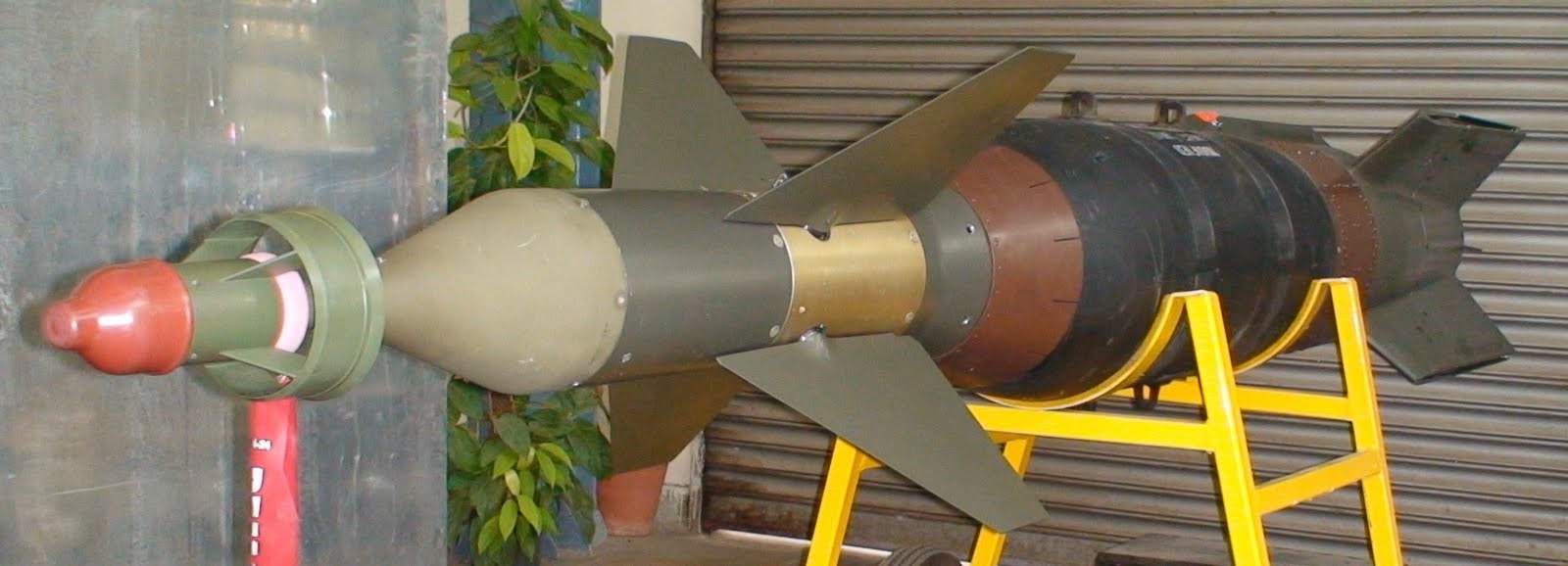
The Sudarshan Laser Guided Bomb (LGB) Kit is India’s indigenous effort to convert conventional “dumb” free-fall bombs into precision-guided munitions. Developed by the Defence Research and Development Organisation, the Sudarshan kit was designed to provide the Indian Air Force with a cost-effective alternative to imported laser-guided bombs by adding a guidance and control package to standard general-purpose bombs, particularly their 450kg HSLD unguided bombs. First demonstrated in the 2000s, the system uses a nose-mounted laser seeker and guidance fins to steer a bomb toward a laser-designated target, which can be illuminated either by ground forces or by airborne designators. The concept was driven by India’s need for affordable precision strike capability, especially for use in scenarios where expensive guided missiles would be unnecessary. Seeing successful trials, the Indian Air Force would order 50 units.
Specifications:
Physical Characteristics:
- Length: 2.8m
- Diameter: 350mm
- Weight: ~460 kg
Performance:
- Range: 9km (From 1,000m altitude)
- Range varies heavily with launch altitude (higher = longer range)
Guidance & Targeting
- Mid-course guidance:
- Laser Guidance
- Terminal guidance:
- Laser Guidance
- Seeker:
- Laser Beam-Riding sensor
- Lock modes:
- Lock-on-before-launch (LOBL)
Warhead & Fuze:
- Warhead: 450 kg high-explosive pre-fragmented
- Fuze: Impact/Laser proximity fuse
Sources:
Gaurav (Glide Bomb)
Summary
History:
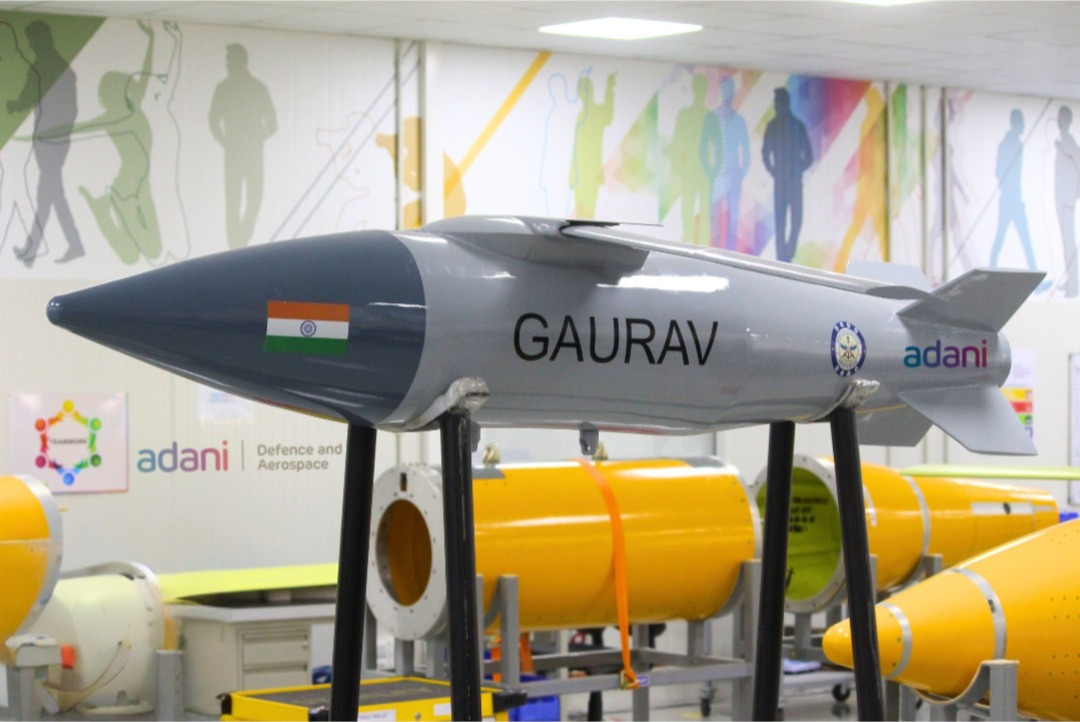
The Gaurav Glide Bomb is an indigenous precision-guided munition developed by the Defence Research and Development Organisation to provide the Indian Air Force with a long-range, stand-off strike capability using a glide weapon rather than a powered missile. Emerging in the 2010s as part of India’s push to expand its smart munitions portfolio, Gaurav was designed to bridge the gap between short-range laser-guided bombs and expensive cruise missiles by offering a cost-effective yet high-precision solution for striking fortified or high-value ground targets. The system consists of a conventional bomb body fitted with a guidance kit and deployable wings, allowing it to glide over long distances after release from high altitude. Development involved multiple flight trials, including releases from platforms like the Sukhoi Su-30MKI, where the bomb demonstrated stable glide performance, accurate navigation, and extended stand-off range. Gaurav reflects a doctrinal shift toward “release-and-exit” strike tactics, enabling aircraft to attack targets while remaining outside dense enemy air defense zones, and it complements heavier systems like cruise missiles by providing a scalable, lower-cost option for precision engagement.
Specifications:
Physical Characteristics:
- Length: 4.0m
- Diameter: 620mm
- Weight: 500-1000 kg
Performance:
- Range: 150km
- Range varies heavily with launch altitude (higher = longer range)
- Operational altitude: Sea level up to 10 km
Guidance & Targeting
- Mid-course guidance:
- Inertial Navigation System (INS) + GNSS
- Data-link updates from launch aircraft
- Terminal guidance:
- Laser Guidance
- Seeker:
- Laser Beam-Riding sensor
- Lock modes:
- Lock-on-before-launch (LOBL)
Warhead & Fuze:
- Warhead: 500-1000 kg high-explosive CL-20
- Fuze: Impact/Laser proximity fuse
Sources:
SAAW (Runway Bomb)
Summary
History:
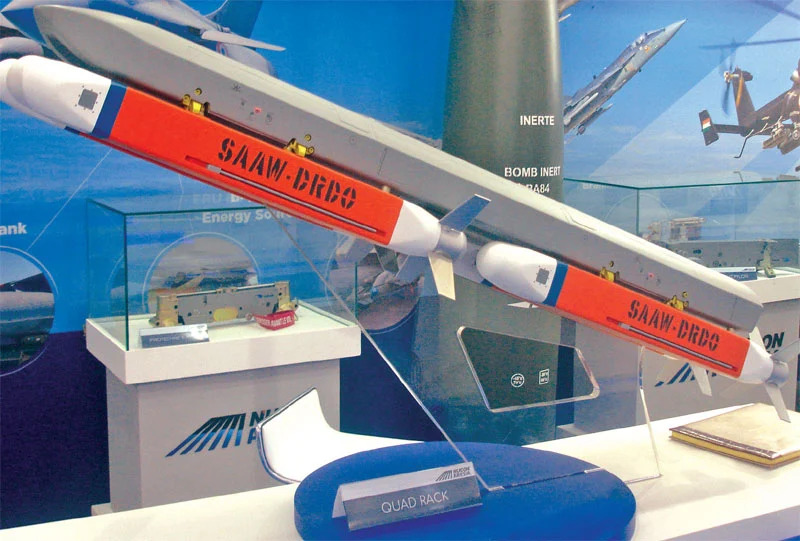
The Smart Anti-Airfield Weapon (SAAW) is an indigenous precision-guided glide bomb developed by the Defence Research and Development Organisation to provide the Indian Air Force with a dedicated airfield denial weapon, specifically designed to cripple enemy runways, taxiways, and aircraft infrastructure. Conceived in the 2010s as part of India’s broader push toward stand-off precision strike capabilities, SAAW was developed to allow fighter aircraft to neutralize enemy airbases from a safe distance, preventing aircraft from taking off or landing without requiring deep penetration into defended airspace. The weapon is relatively lightweight compared to larger glide bombs, enabling aircraft to carry multiple units per sortie, making it highly effective for area denial and saturation attacks against airfields. It uses a winged glide configuration with satellite and inertial guidance, allowing accurate strikes from tens of kilometers away after release. Tested from platforms such as the HAL Tejas and other IAF fighters, SAAW demonstrated the ability to strike runway targets with high precision, marking a significant step in India’s ability to conduct offensive counter-air (OCA) operations by disabling enemy airpower at its source rather than engaging it in the air.
Specifications:
Physical Characteristics:
- Length: 1.85m
- Diameter: [DATA UNKOWN]
- Weight: 125 kg
Performance:
- Range: 100km
- Range varies heavily with launch altitude (higher = longer range)
- Operational altitude: Sea level up to 10 km
Guidance & Targeting
- Mid-course guidance:
- Inertial Navigation System (INS) + GNSS
- Data-link updates from launch aircraft
- Terminal guidance:
- EO/IR Guidance
- Seeker:
- IR sensor
- Lock modes:
- Lock-on-before-launch (LOBL)
Warhead & Fuze:
- Warhead: 80 kg high-explosive
- Fuze: Impact/Laser proximity fuse
Sources:
- Smart Anti-Airfield Weapon - Wikipedia
- India unveils smart desi bomb that can cripple enemy’s airfields 100 km away without crossing into hostile territory - The Economic Times
- Runway Destroyer: How India’s SAAW Can Cripple Pakistani Airbases With 100-Km Strike Range, Pinpoint Accuracy | News | Zee News
250kg HSLD (Unguided Bomb)
WIP
450kg HSLD (Unguided Bomb)
WIP
500kg GP (Unguided Bomb)