- Yes, as a tech tree vehicle
- Yes, as a premium vehicle
- Yes, as an event vehicle
- Yes, as a squadron vehicle
- No, I would not like to see the Independence-class in game.
- Independence A-Class (Bofors 40/70 + Oerlikon 20mm)
- Independence B-Class (Bofors 76/50 + Oerlikon 20mm)
- Neither, I would not like to see the Independence-class in game.
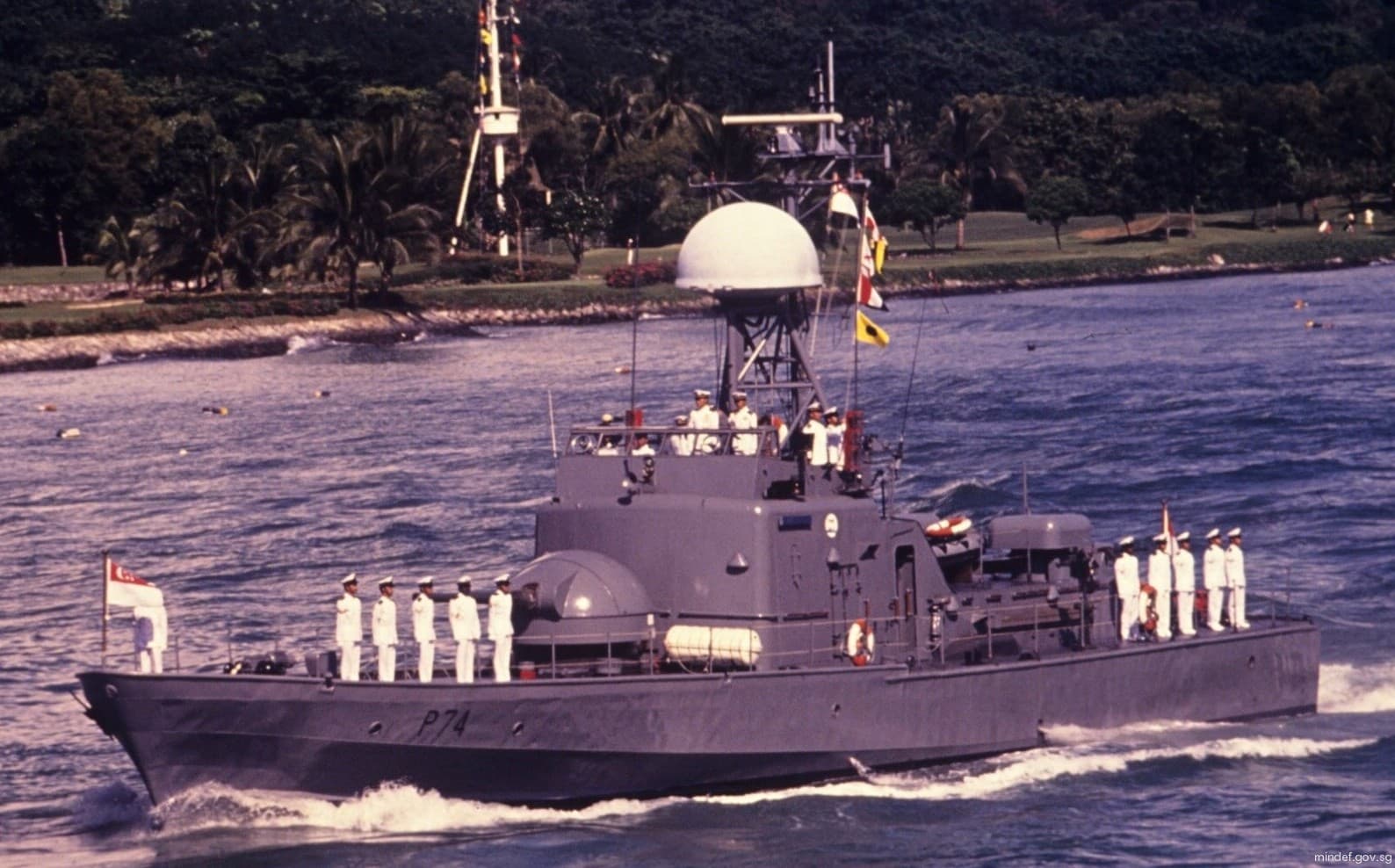
Independence B-class, RSS Dauntless (P 74), underway
TL;DR
- The RSN’s first new-build vessels, courtesy of Vosper Thornycroft
- A-class armed with the potent Bofors 40/70
- B-class armed with automatic loading 3"/50 cannon in a low-angle mount
- Respectable 30 knot speed
- Steel hull with aluminum superstructure
Why it should be in the game: Considering their designer and original builder, I think the Independence-class ships would (somewhat ironically) fit best in the British coastal tech tree. These Vosper-made ships don’t feel out of place with the British design ethos, while providing unique armament opportunities at the same time. As of the time of writing, the closest vessel to the A-class in my opinion is the German Schütze at 3.0 with a single Bofors L/70, so the A-class could fit well at 3.0-3.3, while the B-class compares to the Russian Pr.1204 and could fit at 2.7-3.0. The B-class in particular is a very interesting vessel due to its Bofors-made TAK 76 main turret being exclusive to itself and Finnish Storm-class vessels.
History
Given caption: “THE FIRST SINGAPORE-BUILT 110 FEET FAST PATROL BOAT FOR THE REPUBLIC’S NAVY WAS LAUNCHED TODAY AT THE VOSPER THORNYCROFT UNITEERS (VTU) SHIPYARD AT TANJUNG RHU. THE HAND THAT RELEASED THE CHAMPAGNE BOTTLE AGAINST THE SHIP’S BOW WAS THAT OF MRS GOH KENG SWEE, WIFE OF MINISTER OF FINANCE. SHE NAMED IT RSS FREEDOM. THE SHIP IS THE SECOND OF SIX SIMIILAR VESSELS - COSTING $30 MILLION ALTOGETHER - ORDERED BY THE SINGAPORE ARMED FORCES FROM VTU FOR ITS MARITIME COMMAND” (source)
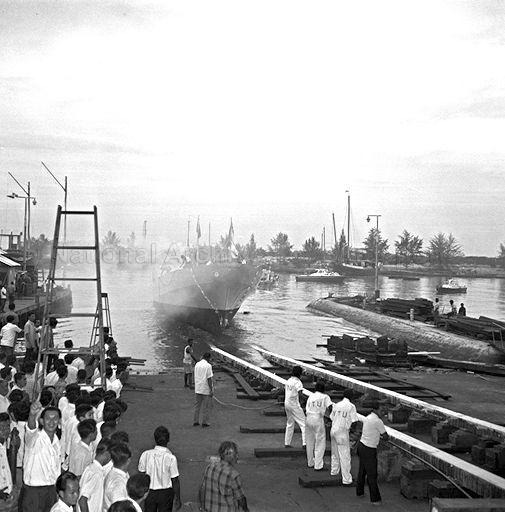
After Singapore seceded from Malaysia and became an independent nation, it was obvious that the nation would need to begin preparing an independent armed forces in order to protect itself, and the Navy was no exception. At first, national sovereignty was at least someone assured by the presence of British forces in the region, but it wasn’t long after Singapore’s navy was established that the British declared they would withdraw all forces east of the Suez Canal by 1971. This forced rapid acceleration of the Navy’s plans to build up a self-defense force. Amid training members overseas to get the necessary experience, the navy procured six 110ft patrol craft from Vosper Thornycroft on May 21, 1968. These offshore patrol vessels were meant to combat crime and provide a level of protection against low-flying aircraft and potential enemy small combatants. In that vein, the Independence-class was a straight upgrade over Singapore’s existing patrol vessels in speed, size, armament and durability.
Independence A-class, RSS Independence (P 69, the namesake ship), underway
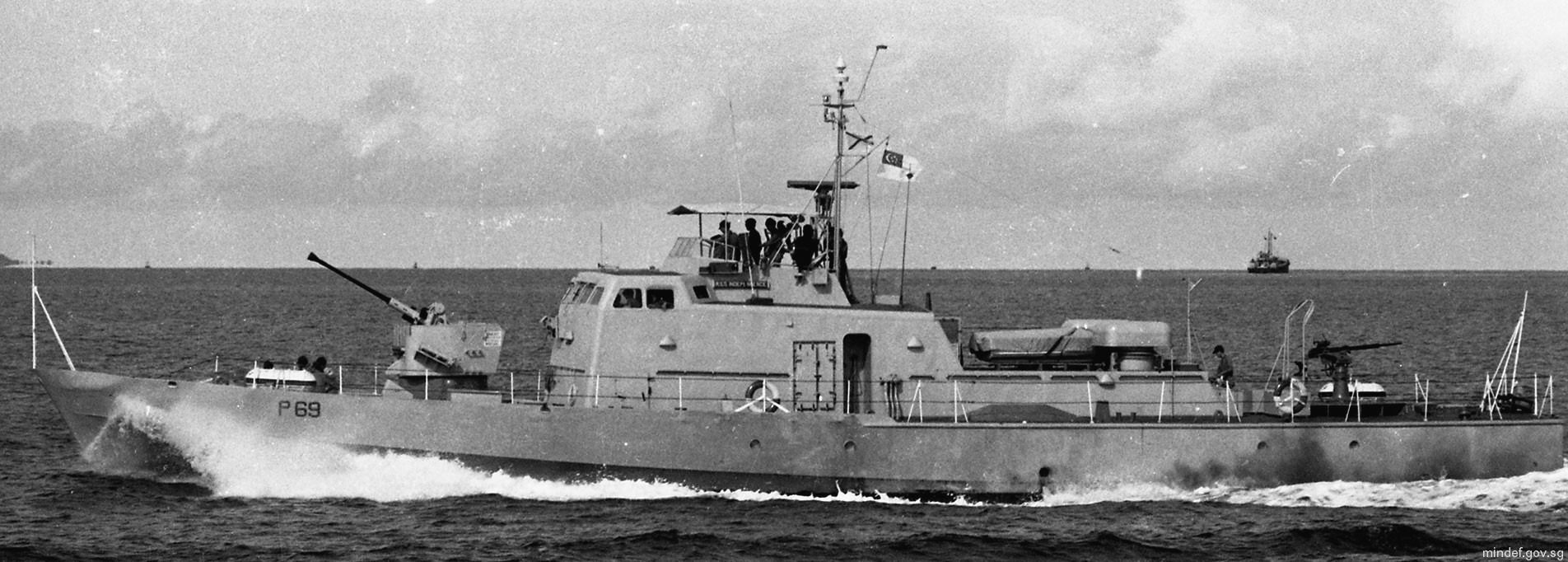
The size of the Independence-class allowed for decently heavy-duty armament to be fitted. Two types of vessel were procured, called the A-class and B-class by the RSN but often referred to as Type A and Type B, respectively. The A-class fielded a relatively standard armament for the time, with a Bofors Model 1958 40mm L/70 cannon forward and a WWII-era 20mm Oerlikon cannon aft. The main gun had a manually operated mounting, so while it was intended that the A-class have the capability to engage aircraft, in actuality it would have struggled in most situations. The B-class fielded a Bofors TAK 76 turret with a 3"/50 cannon. Information is sparse but it’s been assumed that the TAK 76 fired standard U.S. 3"/50 ammunition at a rate of 30 rounds/minute. Besides the loaders in the magazine well, the TAK 76 was unmanned and controlled by a Signaal WM26 fire control radar, which did not have aircraft targeting capability as the TAK 76 was a low-angle mounting. Regardless of the OTO-Melara 76mm gun being superior by most metrics, similarly-sized ships and criminal vessels would not want to find themselves on the business end of the B-class’s main armament. To accommodate the large turret, the front turret was moved back on the B-class and a different mast was used to house the fire control radar. Both ships were equipped with air conditioning, much to the crews’ delight.
An unknown B-class vessel refit with a 40mm gun mounting for unclear reasons
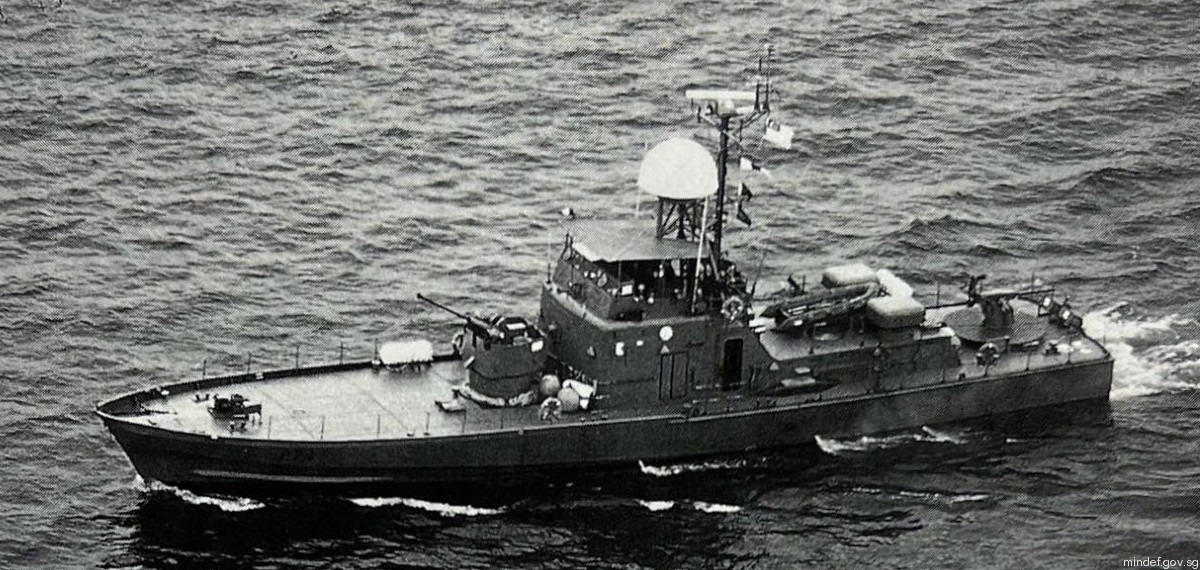
While the Independence-class had solid armament, it was never intended to be Singapore’s only defense, and like many other navies of their size the RSN procured several missile-armed fast attack craft for their main deterrent. These ships couldn’t cover everywhere and were mainly for self-defense, so the Independence-class still had plenty of work to do patrolling Singapore’s waters. All six Independence-class vessels, two of which were constructed in England and the rest built in Singapore, were commissioned by 1972 and entered service even before a proper naval base existed. In 1974 three Independence-class vessels surrounded a civilian ferry, the Laju, which had been hijacked by terrorists and prevented it from escaping. This allowed the government to negotiate the release of the ferry crew who were taken hostage. Following a humanitarian aid effort in 1975 named Operation Thunderstorm, the Independence-class, along with the other vessels in the navy, felt the strain of needing to patrol Singapore’s waters with low serviceability hampering this greatly. Fortunately, the navy was able to secure funds to purchase smaller coastal patrol vessels and began to revitalize itself. Existing boats were upgraded in the 80’s and 90’s, including the Independence-class, which had their WWII-era 20mm guns replaced with more modern GAM-B01 guns with a higher velocity and rate of fire. The Independence-class would be replaced by the Fearless-class offshore patrol vessels and all Independence-class ships had been decommissioned by the mid-late 90’s.
Specifications
Independence-class Patrol Craft
Dimensions:
- Length: 109 ft 7 in (33.40 m)
- Beam: 21 ft 0 in (6.40 m)
- Draught: 5 ft 11 in (1.80 m)
Weight:
- 100 t standard
- 130 t full load
Propulsion: 2 x MTU 16V 538 TB90 diesel engines (3,600 hp each, 7,200 hp total) driving 2 propellers via 2 shafts
Maximum speed: 30+ kt (55.5+ km/h)
Armament:
- A-class:
- 1 x 1 Bofors 40/70 Model 1958
- As built: 1 x 1 Oerlikon 20/70
- Refit: 1 x 1 Oerlikon 20/85
- B-class:
- 1 x 1 Bofors 3"/50 TAK 76 (100+ rounds)
- As built: 1 x 1 Oerlikon 20/70
- Refit: 1 x 1 Oerlikon 20/85
Crew:
- A-class: 22
- B-class: 19
Additional equipment:
- Decca TM 626 navigational radar
- Signaal HSA WM26 fire control radar (B-class only)
Sources
- https://web.archive.org/web/20140701234129/https://www.mindef.gov.sg/dam/publications/ebooks/more_ebooks/onwards&upwards_2007.pdf
- https://www.dso.org.sg/assets/docs/publications/dtc50_commemorative_book_engineering_our_navy.pdf
- Republic of Singapore Navy – naval encyclopedia
- Independence class Gun Boat Republic Singapore Navy
- https://www.secretprojects.co.uk/threads/naval-gun-projects.1672/page-2#post-120733