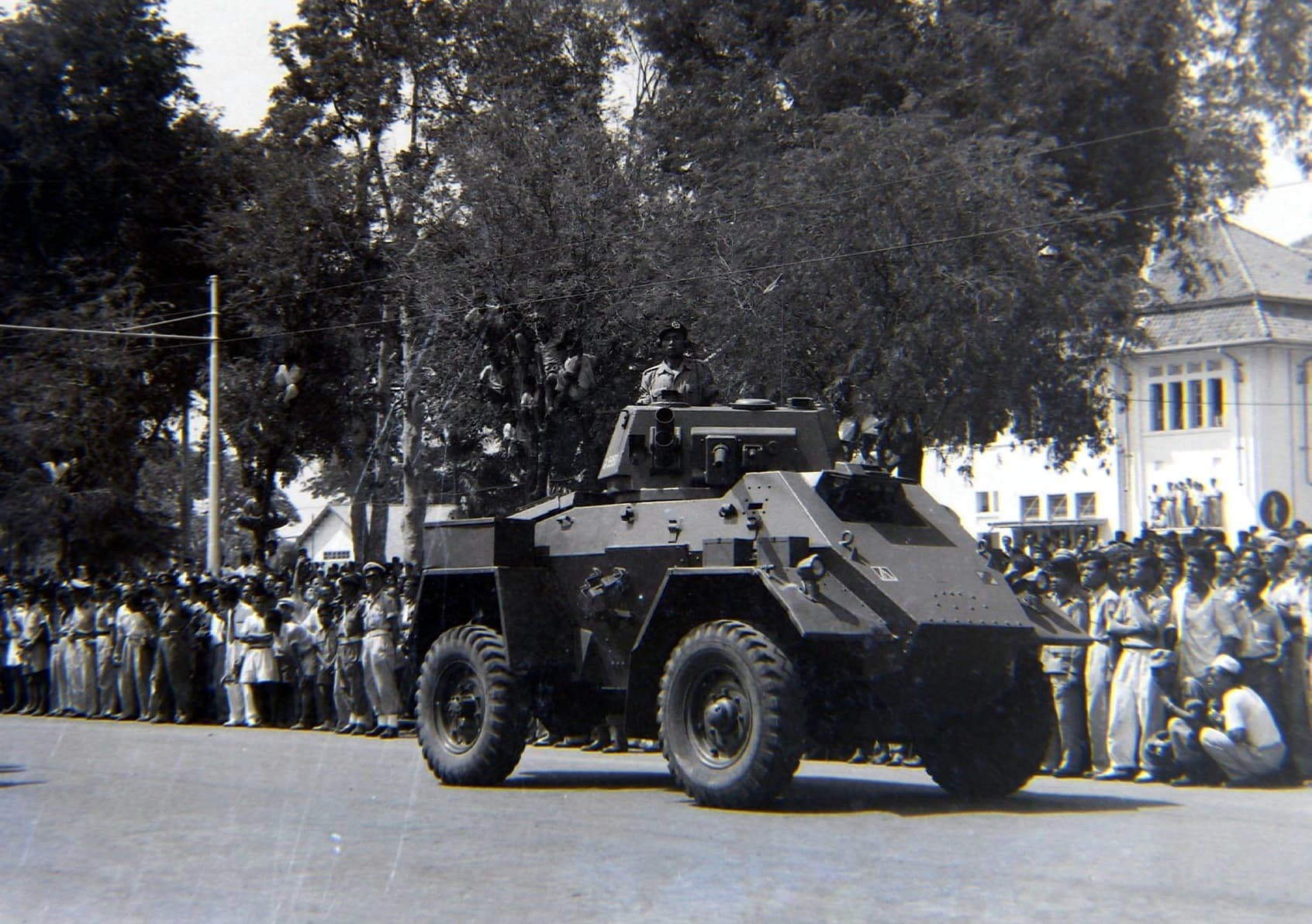
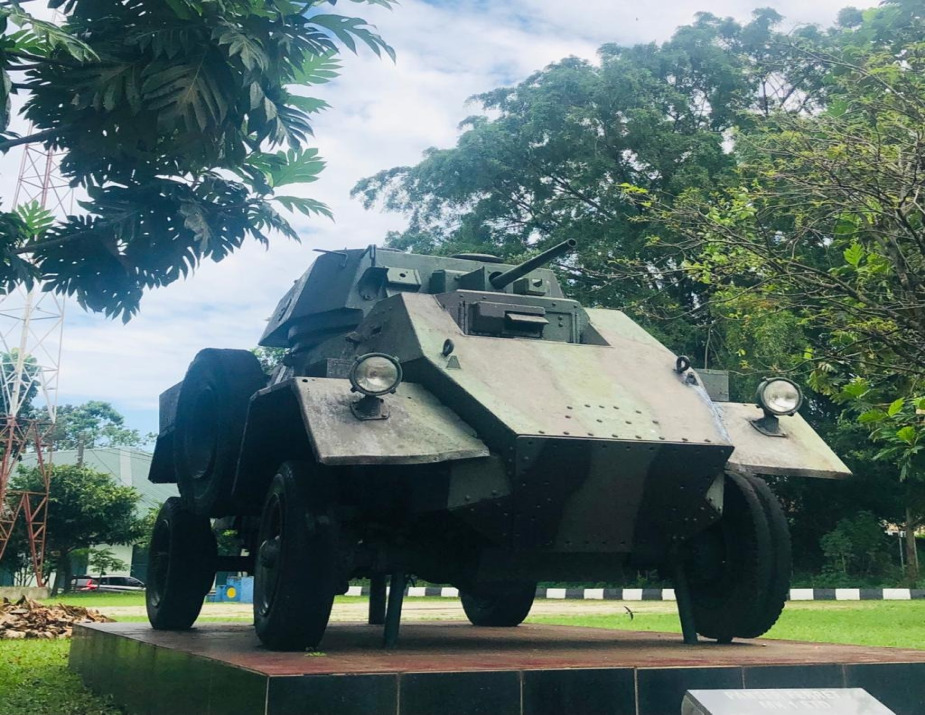
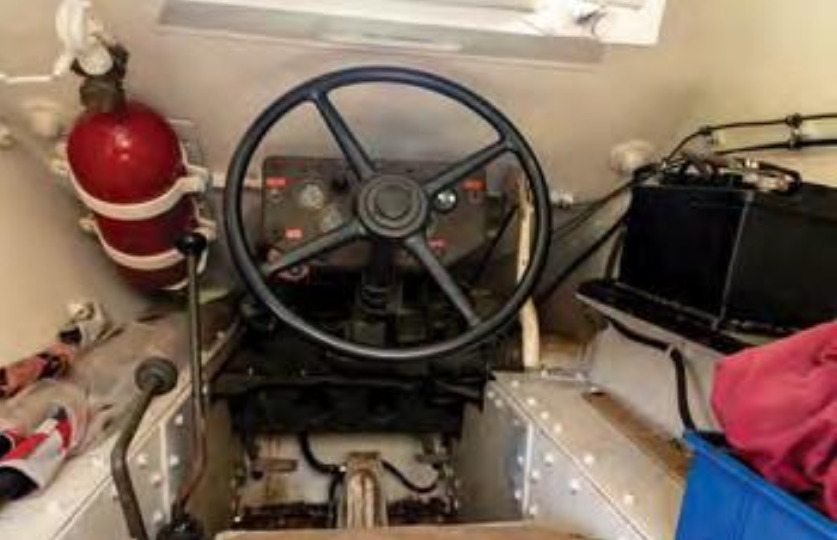
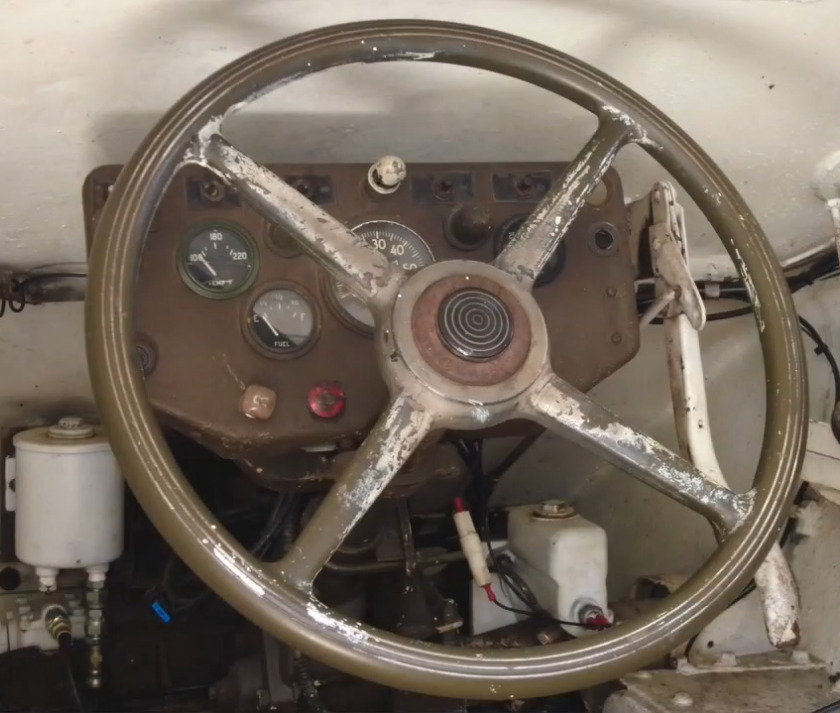
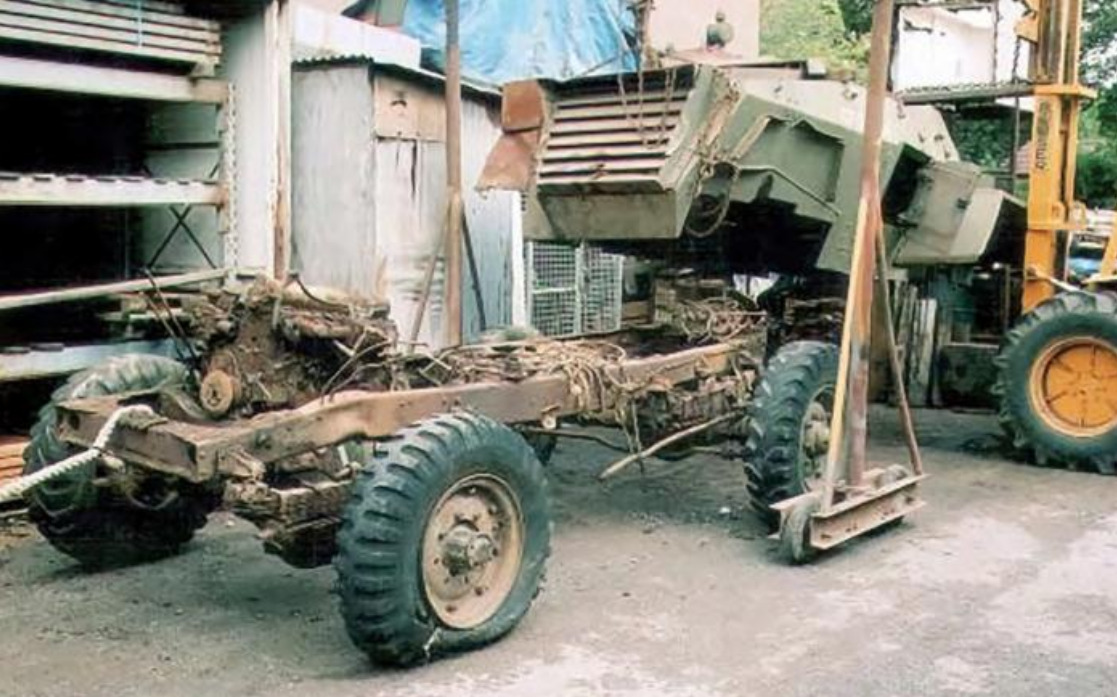
Hello everyone! Today I would like to suggest the Dutch Humfox in Indonesian service! This vehicle is a hybrid of the turret from the British Humber Mk.IV and the hull of the Canadian Fox Armored Car created by the Dutch Company Wilton-Fijenoord for use by the recce squadrons of the Royal Netherlands Army in the Dutch East Indies. Unfortunately like other post-independence armored vehicles, sources are incredibly scarce, with the only proof of Indonesia ever operating it being this one photograph above as well as one surviving unit being displayed at the Army’s Pusdikpal (Equipment Education Center).
In terms of performance it would have the gun of a stuart (37mm) but mounted on a wheeled armored car chassis. In-game it would most likely sit at the very beginning of the rank with a BR of ~1.0 - 1.3 for Indonesia in the Japanese Tree
Details
The Fox Armored Car was built by General Motors of Canada during World War 2. The idea of adapting the Humber to the chassis was most likely born in 1942, where a few hulls were obtained and tested, then adapted to be manufactured domestically in Canada. The original British chassis (Karrier KT4) was switched for the Canadian Military Pattern (CMP) Truck chassis of the C15 Type, with many different modifications to make the hull fit with the chassis. This modification was done quite quickly as the production was ready to start the following year. The development was also supported by Great Britain, with the primary goal to provide the Canadian Army with self-built equipment without causing a production bottleneck in the UK, which was used fully for the war effort.
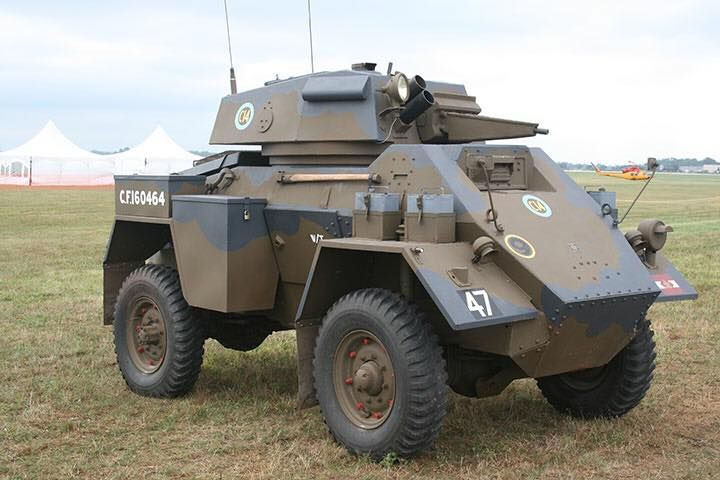
The main hull is very similar to the original Humber. The base vehicle was compact & boxy, with a large sloped front glacis, flat sides and a compact fighting compartment. The armored body has plating up to 15mm (front). The original Fox Mk.I uses a four-man crew: Driver, Commander, Gunner, and wireless operator. The vehicle was powered by a US-designed GMC gasoline, 6-cylinder in-line water-cooled engine. The vehicle had a top speed of 72 km/h on road, with cruise speed and off-road speed being 50 km/h & 40 km/h respectively. The primary armament of the Fox Mk.I was a 0.50 inch M2 Browning and a coaxial 0,30 inch M1919A4.
Fox Armored Car, Mk. I
A total of 1,506 foxes were produced, most of them were sent to Britain to be used for training and home defence duties, freeing up the Humber to perform combat tasks. However this is not the case for all vehicles, as some Foxes were sent to the Polish 15th Pułk Ułanów Poznańskich, which was fighting in Italy. By December 1943 the overseas Canadian Army had 256 Foxes, as well as other armored cars like the Lynxes and Otters. The vehicle was also used by the Canadians themselves, where they were used in different locations, such as France in 1944, taking part in the fighting around Caen, Falaise, and the Scheldt estuary.
However, scout cars in practice prooved to be inadequate, as such the Canadian Army’s Fox would be replaced by the T17E1 Staghound Armored Car. In late 1944, the 21st Army Group requested that all Foxes still in the UK (~200 units from the Canadian Army) were to be sent to Northwest Europe to be used for rearguard security duties, and they would continue to act in that role until the end of the war.
After World War 2, the Canadian government started selling these vehicles. One customer was the Portugese Army, which uses the Foxes in counterinsurgency operations in Angola, Guinea and Mozambique. Some vehicles would also eventually ended up at the Canadian Army’s storage facility in Deelen, Netherlands (Dump Deelen).
Interesting Tidbits: Dump Deelen was one of the largest Canadian Army dumps. The dump houses a wide variety of equipment, including field hospitals, workshops, as well as housing more than 37,000 army vehicles. The contents of the whole dump was purchased by the Dutch after they were left abandoned by the Canadian Army after the end of the war. A Large number of purchased vehicles from this place would eventually end up in the Dutch East Indies
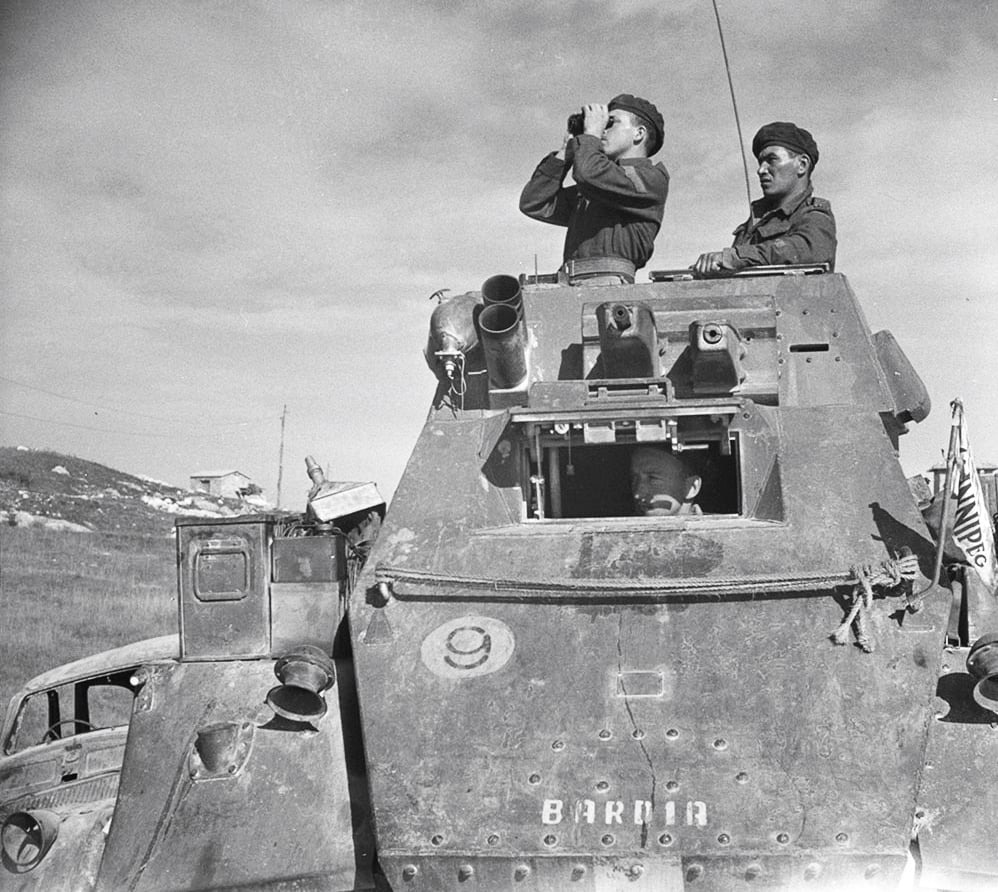
Troopers of the 4th Princess Louise Dragoon Guards of the Canadian Army in a Fox Armored Car in Matrice, Italy. 27 October, 1943
Following World War 2, the Netherlands was trying to reestablish its colonial presence in the Dutch East Indies against the growing Indonesian independence movement. The terrain of the rebelling colony was not adequate for heavy armored vehicles, as such the Dutch purchased a significant amount of ex-British Humber Mk.IV Armored Cars. These vehicles were pressed into service and would serve as the backbone of the reconnaissance squadrons of the Royal Netherlands Army.
However Britain ran out of Humbers to sell, and as such ~39 Fox Armored cars were obtained from Dump Deleen as a substitute. By October of 1946 they were sent to Wilton-Fijenoord (Rotterdam Naval Yard) in order to match the spare Humber Mk.IV turrets with the 37mm M6 gun to the Machine-gun-armed Armored Car. Almost all of the vehicles were converted after successful trials the following month.
This Hybrid would be dubbed the “Fox Mk.II” or the “Humfox”. This vehicle would have commonality in armament to the Humbers, but with an easier engine to maintain. After completition these vehicles were sent to the East Indies where they were used by recce squadrons alongside Ford Lynx and Humber IIIs.
The Humfox in KNIL service
After the Indonesian Independencem the Royal Netherlands East Indies Army (KNIL) handed over a large number of its inventory to the newly independent United States of Indonesia Armed Forces (APRIS). This include an unknown number of these Dutch-modified Humfoxes. It’s unclear exactly the fate of these vehicles during Indonesian service, including how long it was in active service for, and when it was retired. But what is known is that the vehicle was showcased during a military parade on Indonesian Independence Day in 1953, so we know for sure that they were active for several years following the merger of the KNIL to the APRIS in 1949. Anything info after that is entirely lost to history.
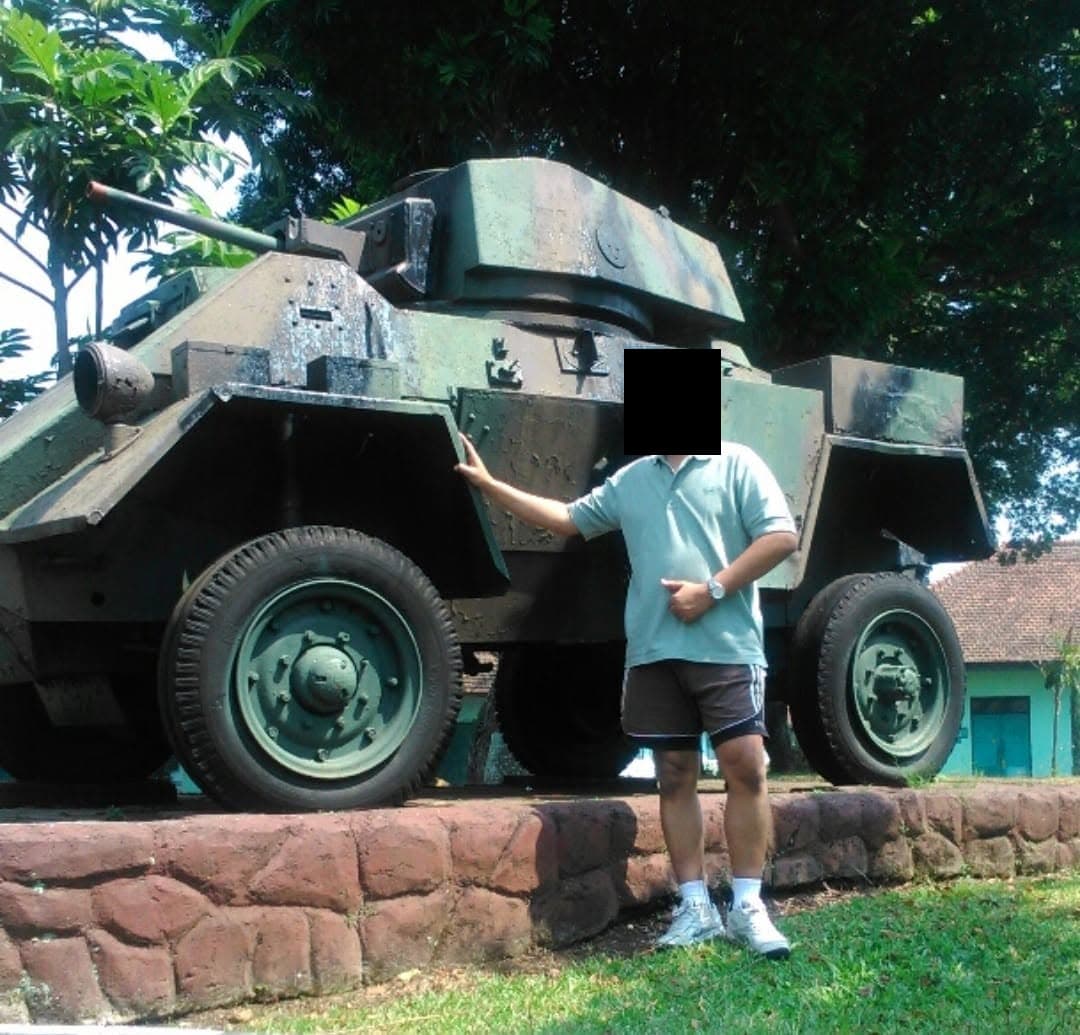
While its fate is unknown, there is one surviving example of the “Humfox” being displayed as a tank monument at the Army’s Equipment Education Center in Cimahi, West Java, with it being called the “Panser Stuart (Armored Vehicle, Stuart)”. Considering it uses the same gun as the stuart, its plausible that the Army classify the Armored Car the same as the M3 Stuart which was also used around the same time, so in records they were classified as the same thing, resulting in a lack of mention of the Humfox in Indonesian records.
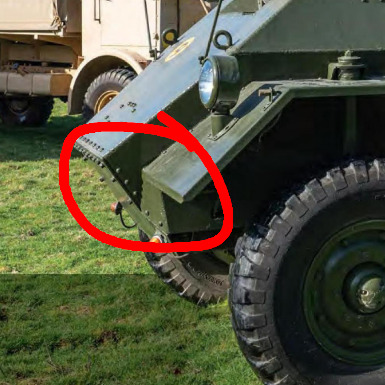
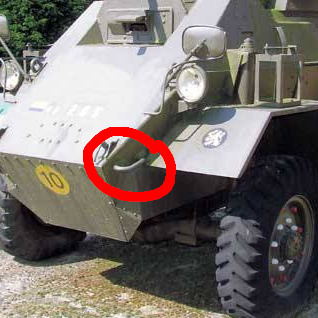
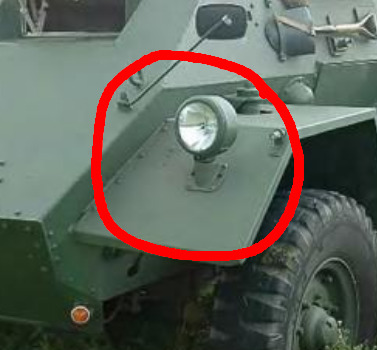
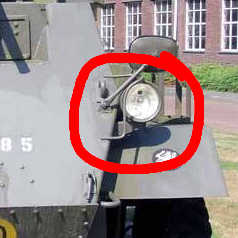
The only surviving Indonesian Humfox being displayed as a tank monument in Cimahi, West Java. You can tell its a humfox because the tow hook is situated under the front fender, rather than in front of it.