History
The AIM-4 Falcon missile series was the first operational guided air-to-air missile to enter US Air Force service. Its earliest presence was noted in 1946, when Hughes was awarded a contract to study a short-range air-to-air missile under project MX-798. It was originally envisioned to be launched from bombers’ tails for self-defense, but the project was cancelled in March 1947 and restarted as the MX-904. By 1950, the requirement had changed from a bomber-launched platform to a fighter/interceptor platform. Now named Falcon, it was to become a missile for use by fighter interceptors against Soviet bombers with contact fuse system in its warhead.
It was designated F-98 as the USAF began assigning aircraft-type designations to its guided missiles in 1950, with interceptor missiles designated as “Fighters.” The Falcon was also originally envisioned as two weapons at this stage: a missile suitable for subsonic fighters like the F-89 Scorpion, designated the XF-98, and a missile suitable for supersonic fighters like the F-102A Delta Dagger, designated the XF-98A. The subsonic variant was eventually dropped in favor of a supersonic-launch variant.
In 1955, the USAF stopped using aircraft designations for missiles, and the Falcon was redesignated. Subsequently, the XF-98A, YF-98A, and F-98A became the XGAR-1, YGAR-1, and GAR-1, respectively.
Beginning in 1951, GAR-1 test launches were conducted for developmental purposes. In the meantime, the Falcon missile was subjected to trial and error and would not be delivered to F-89H units until it reached IOC in March 1956.
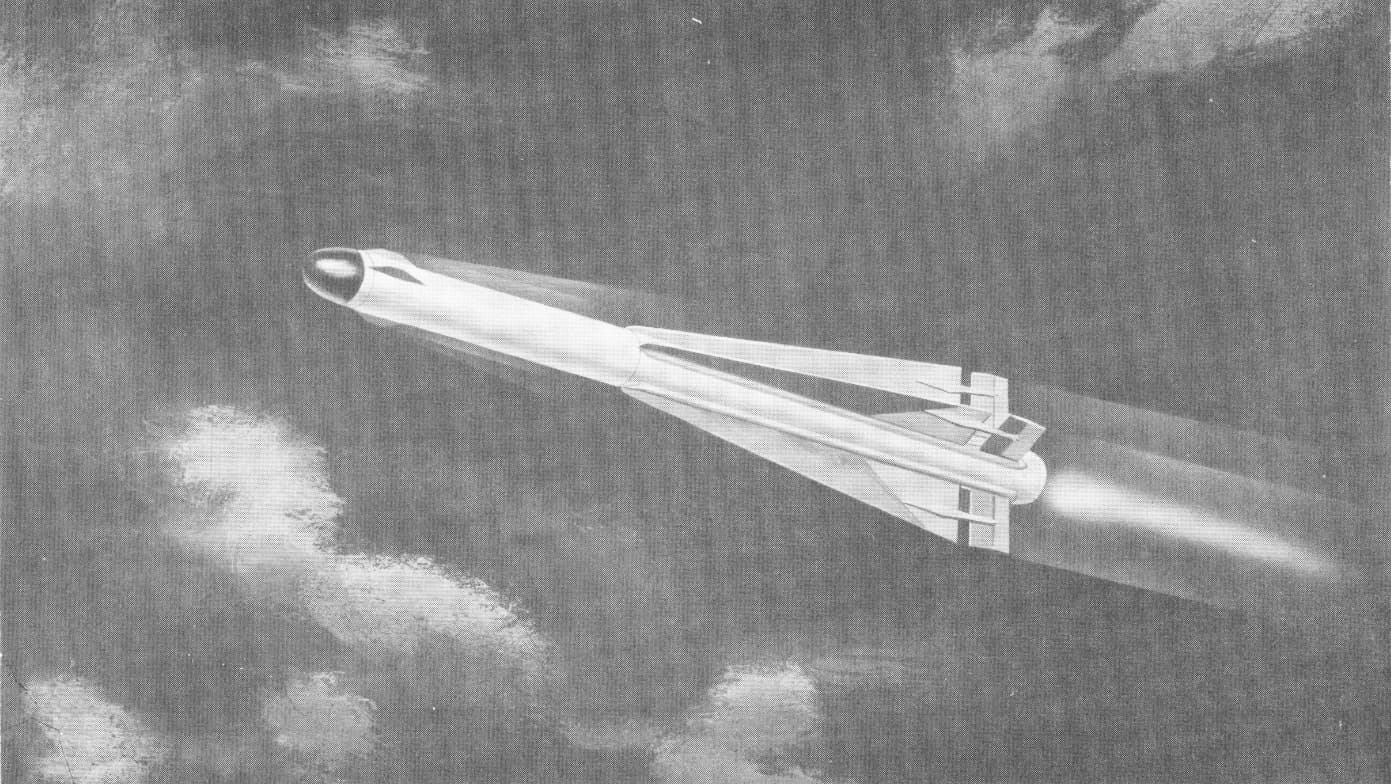
The GAR-1D emerged as the first improved Falcon design over the GAR-1. In its definitive configuration, the GAR-1D could maneuver better and fly faster at higher altitudes because its control surfaces were separated from the delta wings and made larger. In addition, its dimensions remained unchanged from those of the GAR-1. The GAR-1D used a semi-active radar seeker and was mainly employed against Soviet subsonic bombers. The GAR-1D was the main production model of the original SARH Falcon, with about 12,000 missiles built, and its initial platform was the F-102A, an interim product of the 1954 Interceptor program. GAR-1D flight trials began in 1955. The weapon entered service with the F-102A and Falcon-equipped squadrons in early 1956, almost simultaneously with the GAR-1.
The GAR-1D in service performed poorly, with testing citing a failure rate of roughly 50%. Consequently, the USAF suspended GAR-1D production and withdrew the missile type from service until its deficiencies were resolved. In February 1957, after the bugs were corrected, the GAR-1D underwent further testing and performed satisfactorily. In May 1957, the F-102s evaluated the missile with their MG-10 Fire Control System, and once its performance was rated satisfactory, the results validated the F-102’s capability for continental air defense. Following these test results, the GAR-1D reentered service in the middle of 1958, and Hughes enabled GAR-1D compatibility with the MG-13 Fire Control System for the F-101B Voodoo.
The 1962 United States Tri-Service aircraft designation system redesignated the GAR-1 Falcon missile as the AIM-4, making the GAR-1D the AIM-4A.
Ever since the AIM-4A (GAR-1D), Hughes continuously refined the aerodynamics and internal components of the Falcon missiles, introducing several new Falcon variants to meet new objectives and offer new capabilities. The GAR-1D remained in service until the F-101B and F-102A aircraft were retired from ANG service by the late 1970s to early 1980s, bringing the AIM-4 Falcon’s history to an end, as the fighters in service switched to carrying the more cost-effective Sidewinder missiles instead.