- Yes - In the Tech Tree.
- Yes - Event/BP.
- Yes - Premium.
- No - I would not like to see HMAS Hobart in game.
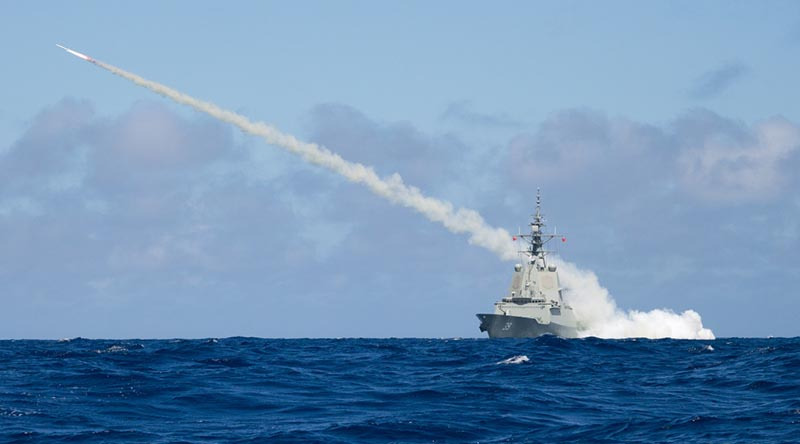
HMAS Hobart firing an AGM-84 Harpoon during weapon trials, (2017)
Background:
With the Royal Australian Navies (RAN) three Perth-class DDGs being slated for decommissioning through 1999-2001, and their Adelaide-class FFGs already in the middle of their lifespan and having to be refitted as to fill the Air Warfare (AW) role lost with the Perth-class’s decommissioning as an interim solution, the RAN decided that new vessels dedicated to the AW role with the 1992 Force Structure Review.
Initially it was planned to build an additional six of the ANZAC-class general purpose frigates, albeit with a new fit that gave them all the extra AAW equipment. This plan however did not go ahead due to their small size, limiting the amount of equipment that could be fitted. By 2000 the Australian Defence Force (ADF), created Project SEA 1400, a project that would acquire purpose built Air Warfare Destroyers for the RAN.
By 2004, the USN’s Aegis combat system was selected for use within this new class, and the ASC shipyard at Osborne South Australia, (otherwise known as simply Osborne Shipyard), was selected as the ideal shipyard for this new class.
Tenders from the German firm Blohm&Voss, with their Type F124 Air Defence Frigate (Sachsen-class in service with the German Navy), the Spanish firm Navantia, with their F-100 Air Defence Frigate (Alvaro De Bazan Classand-class in the Spanish Navy) and finally the American firm, Gibbs & Cox, with their Evolved Flight II Arleigh Burke-class Destroyers.
Of these options, the Arleigh Burke-class was preferred, with the Bazan Classand-class offering the alternative. The US destroyer was preferred due to its larger size offering an increased scale of future upgrades, a larger range, and two helicopters instead of one. However, at this stage the USN was yet to construct any of this new type, and the Spanish navy were proceeding with the construction of five of the Bazan Classand-class. Furthermore the Spanish class was $1 Billion AUD cheaper, and had some technical advantages due to the RAN also operating the Navantia designed Canberra-class LHDs.
The RAN would purchase three vessels of the Bazan Classand-class on the 4th of October 2007 for $8 billion AUD.
This suggestion is for the HMAS Hobart DDG-39 in her 2026 Destroyer Capability Enhancement Program.
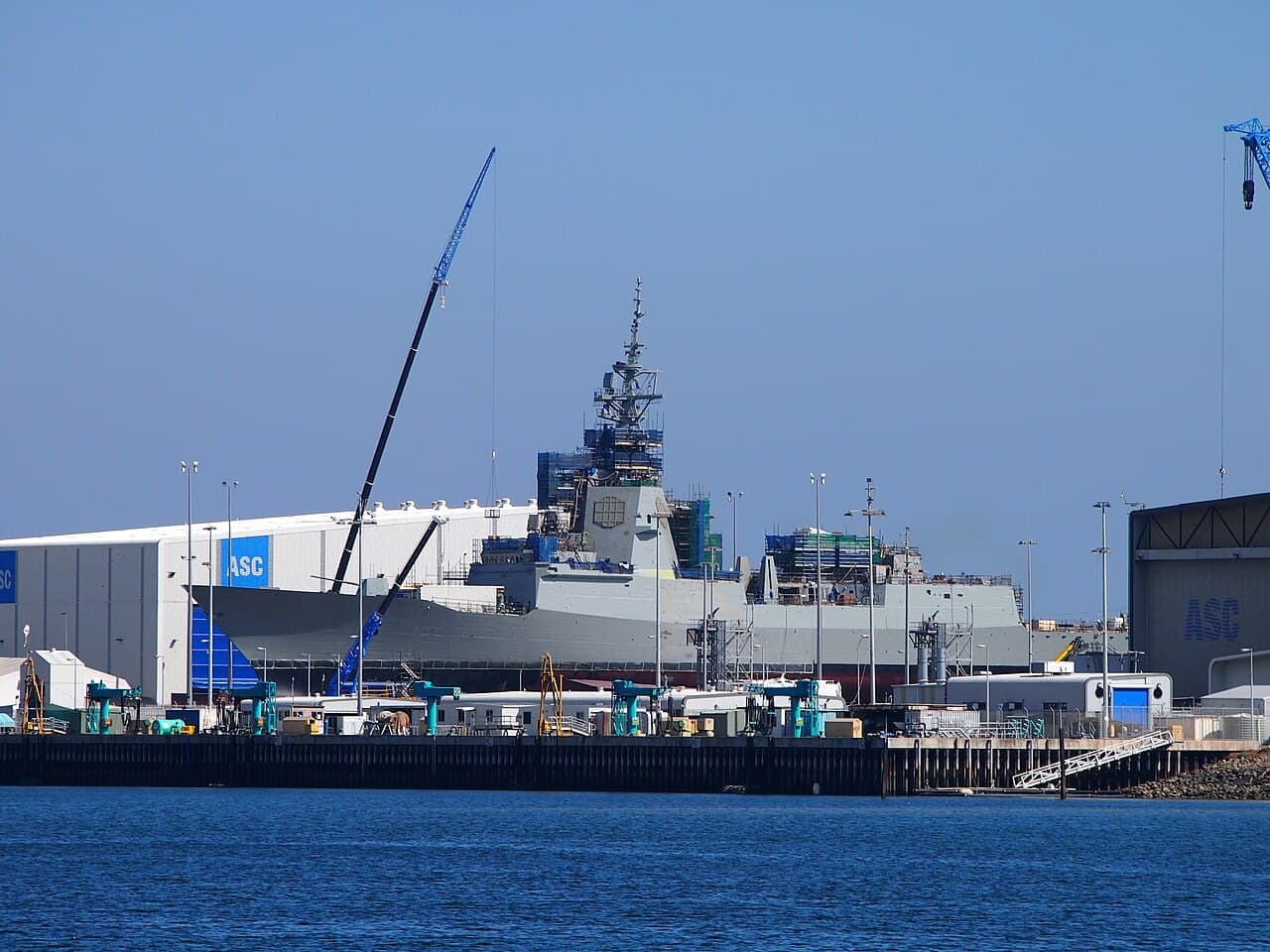
HMAS Hobart under construction at Osborne, South Australia. (2015)
History:
Like most modern warships, the Hobart-class was designed to be constructed out of pre-fab blocks, which are assembled across the country, then put together at a single shipyard. The Hobart had 31 of these blocks, 12 were hull pieces, 9 for the forward superstructure, and 10 for the aft superstructure. These modules were made in South Australia by ASC, in Victoria by BAE, and in New South Wales by Forgacs Group. Final assembly was at the Osborne Naval Shipyard, Osborne South Australia. This group of companies was labeled as the Australian Air Warfare Destroyer Alliance.
Although ordered in 2007, with the ship’s commissioning expected in December 2014, due to several errors in her construction. Some of these construction errors in the pre-fab blocks led Navantia themselves to construct the bow-hull block. Further issues with the internal pipework, led 25% of it to be replaced, and issues with the internal cabling with the mainmast led to that block’s rejection by the shipyard. Due to these errors HMAS Hobart was only laid down on the 6th of September 2012, three years behind schedule and over budget.
HMAS Hobart would launch on the 23rd of May 2015, fitting out and completing trials to commission on the 23rd of September 2017 at Fleet Base East, Sydney. During trials she fired multiple munitions as to prove the ship’s capability with them. The building program total for all three Hobart-class ships was projected to cost $7.9 Billion AUD, however they would actually cost $9.1Billion AUD, over $1.2 Billion AUD over budget and three years late by the time of completion. This placed the program on the Projects of Concern list, however with the first of the class, HMAS Hobart commissioning, they were removed.
Her first operational deployment was to SEA, acting as the flagship for a RAN-led task group. This group included HMAS Hobart, Stuart, and Parramatta with nine other vessels. The task force lasted three months, before the three Australian ships returned to Garden Island. Her Captain stated; “*his ship [Hobart] had performed exceptionally well on her first mission overseas.” and “The success of Hobart’s mission is a credit to the ship’s company, embarked staff and those working in support of the ship from ashore. They’ve all worked superbly together as an integrated team." She would also take part in exercise RIMPAC 2020, in August of that year. She has also participated in exercise La Perouse, a French-led training exercise in the Indian ocean
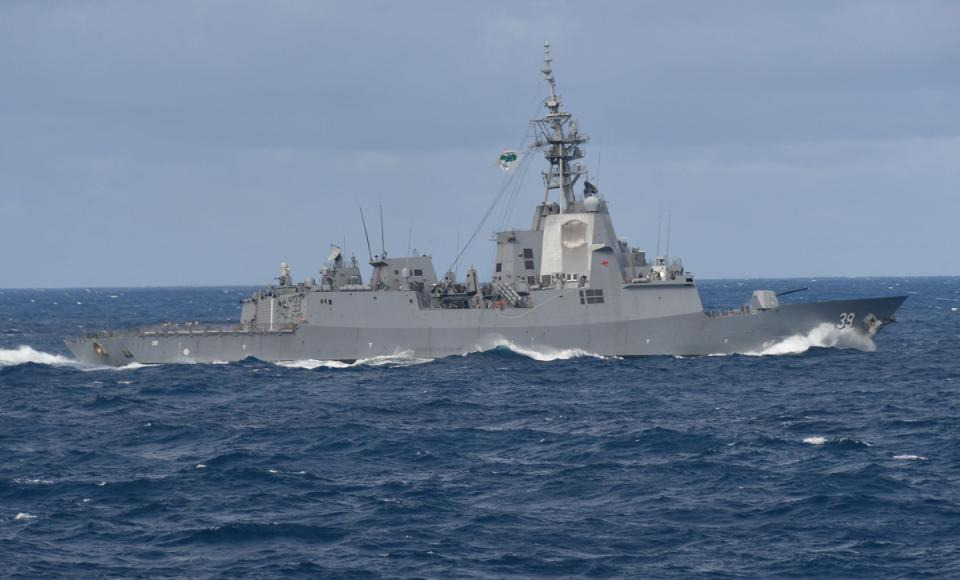
HMAS Hobart during Exercise La Perouse, (2025)
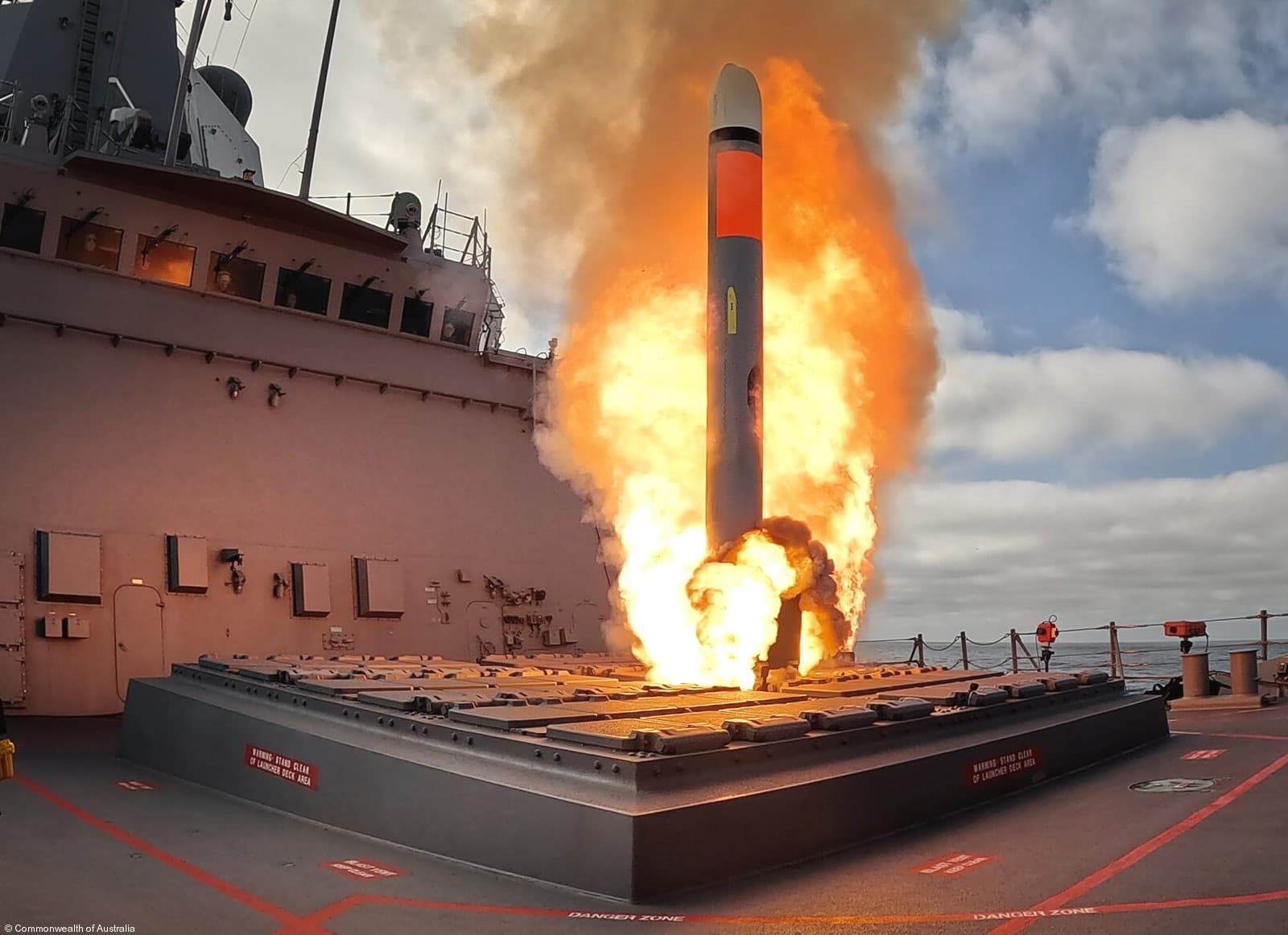
All of the RAN’s Hobart-class have been placed under the SEA4000 Phase 6 project, which is intended to improve combat capabilities and interoperability with allies. This would mostly entail upgrading from Aegis block 8, which they were built with, to Aegis block 9. Weaponry upgrades included the fitting of a land attack capability, with the Mk.41 VLS cells now capable of firing the BGM-109 Tomahawk, replacement of the Harpoon Block II anti-ship missiles with the Naval Strike Missile (NSM), in the same 2x4 canisters. They would also be fitted with the SM-2 Block IIIC missile in addition to the SM-6 they were originally fitted with, during this exercise, HMAS Hobart would be supplied by the French Oilier Jacques Chevallier.
Hobart’s builder, Navantia, was selected as the systems designer, and work was carried out of the Osborne Shipyard, where she was built. She would exit this upgrade on the 20th of August 2026, on time and on schedule, the first of her class to undergo this upgrade.
The RAN has no public plans for the replacement of HMAS Hobart and the rest of her class, as she is expected to serve well into the future.
| General Characteristics: | ||||||
|---|---|---|---|---|---|---|
| Name: Hobart | ||||||
| Country: Australia | ||||||
| Type: Air Warfare Destroyer | ||||||
| Class name: Hobart | ||||||
| Year of commission: 2017 | ||||||
| Refit: 2017 | ||||||
| ----------------------------------------------------------------------------------------------------------------------------------------- | ||||||
| Dimensions: | ||||||
| Length: 146.7m (481ft 3in) | ||||||
| Beam: 18.6m (61ft) | ||||||
| Draught: 7.2m (23ft 7in) | ||||||
| Displacement: 7,000t full load | ||||||
| ----------------------------------------------------------------------------------------------------------------------------------------- | ||||||
| Propulsion: | ||||||
| Main Powerplant: 2x GE 7LM2500-SA-MLG38 Gas turbines @ 35,000kW (46,935hp) overall | ||||||
| Secondary Powerplant: 2x Caterpillar 16V Bravo diesel engines @ 11,300kW (15,153hp) overall | ||||||
| Speed: 28kt + | ||||||
| Endurance: 4500nmi @ 18kt | ||||||
| ----------------------------------------------------------------------------------------------------------------------------------------- | ||||||
| Armament & sensors: | ||||||
| Compliment: 186 with 16 aircrew, accommodation for 234 | ||||||
| Primary armament: 1x1 5-Inch/54 Mark 45 Mod 4 | ||||||
| Secondary armament: 48-cell Mk.41 VLS with SM-6, SM-2 block IIIC, BGM-109 Tomahawk TLAM, or quadpacked RIM-162 ESS, 2x4 NSM canisters | ||||||
| Tertiary armament: 2x2 MU90 ASW torpedoes, 2x1 25mm Bushmaster M242 on Typhoon RWS, 1x1 Phalanx CIWS | ||||||
| ----------------------------------------------------------------------------------------------------------------------------------------- | ||||||
| Systems: | ||||||
| Radar: AN/SPY-1D(V) S-band PESA air search radar, AN/SPQB X-band Doppler horizon search radar, 2x AN/SPG-62 fire control radar, 2x L-3 X-band nav radar | ||||||
| Sonar: Ultra Seasearcher sonar system, hull mounted & towed sonars | ||||||
| Decoy and ESM: 4x4 Nulka RF decoy launchers, SwRI MBS-567A comms & ESM, ES-3701 ESM radar, | ||||||
| Other: Aegis combat system, VAMPIR IR optical search & track system, Rafael Toplite optical target acquisition sights, SAAB 9LV combat management system. | ||||||
| ----------------------------------------------------------------------------------------------------------------------------------------- | ||||||
| Aircraft Specifications: | ||||||
| Type: MH-60R Seahawk | ||||||
| Armament Carried: 2x Mk.54 12.75" Torpedo or 4x AGM-114 Hellfire, or 2x Depth Charges, 1x1 7.62 MG, external fuel tanks | ||||||
| Systems: APKWS, Flares/Chaff, ALFS Sonarbouy, AAR-47 MAWS, AAS-44 FLIR, APS-153 ARPDD, | ||||||
| Engines: 2x GE T-700, producing 1,890hp (1,410 kW) ea | ||||||
| Crew: 3 | ||||||
| Main Rotor Diametre: 16.35m | ||||||
| Length: 19.76m | ||||||
| Height: 5.10m | ||||||
| Range: 470nmi | ||||||
| Max Speed (Never exceed speed) : 330 km/h | ||||||
| Empty Weight: 6,190kg |
HMAS Hobart firing a BGM-109 Tomahawk land attack missile (2024)
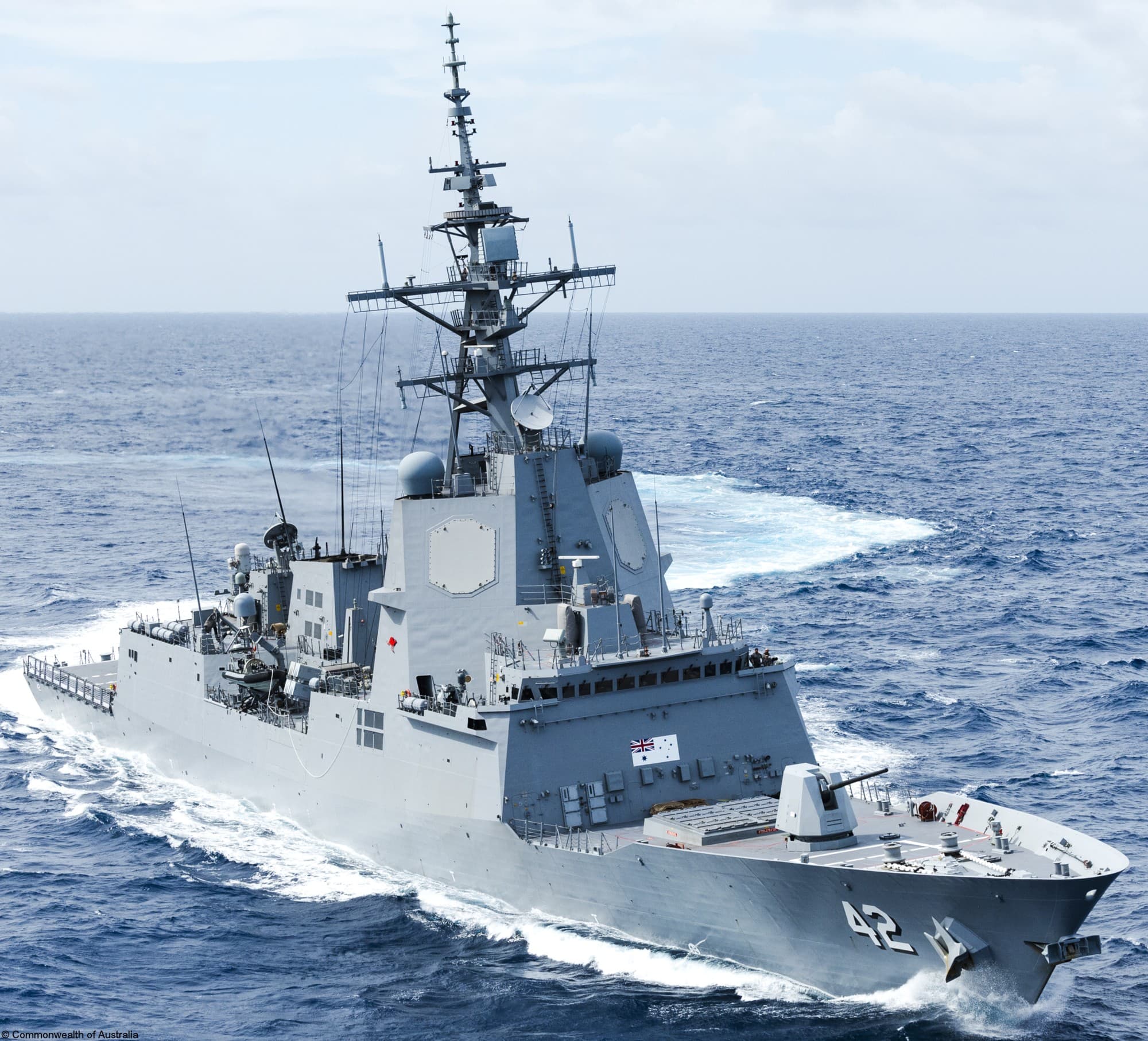
Extra Photos:
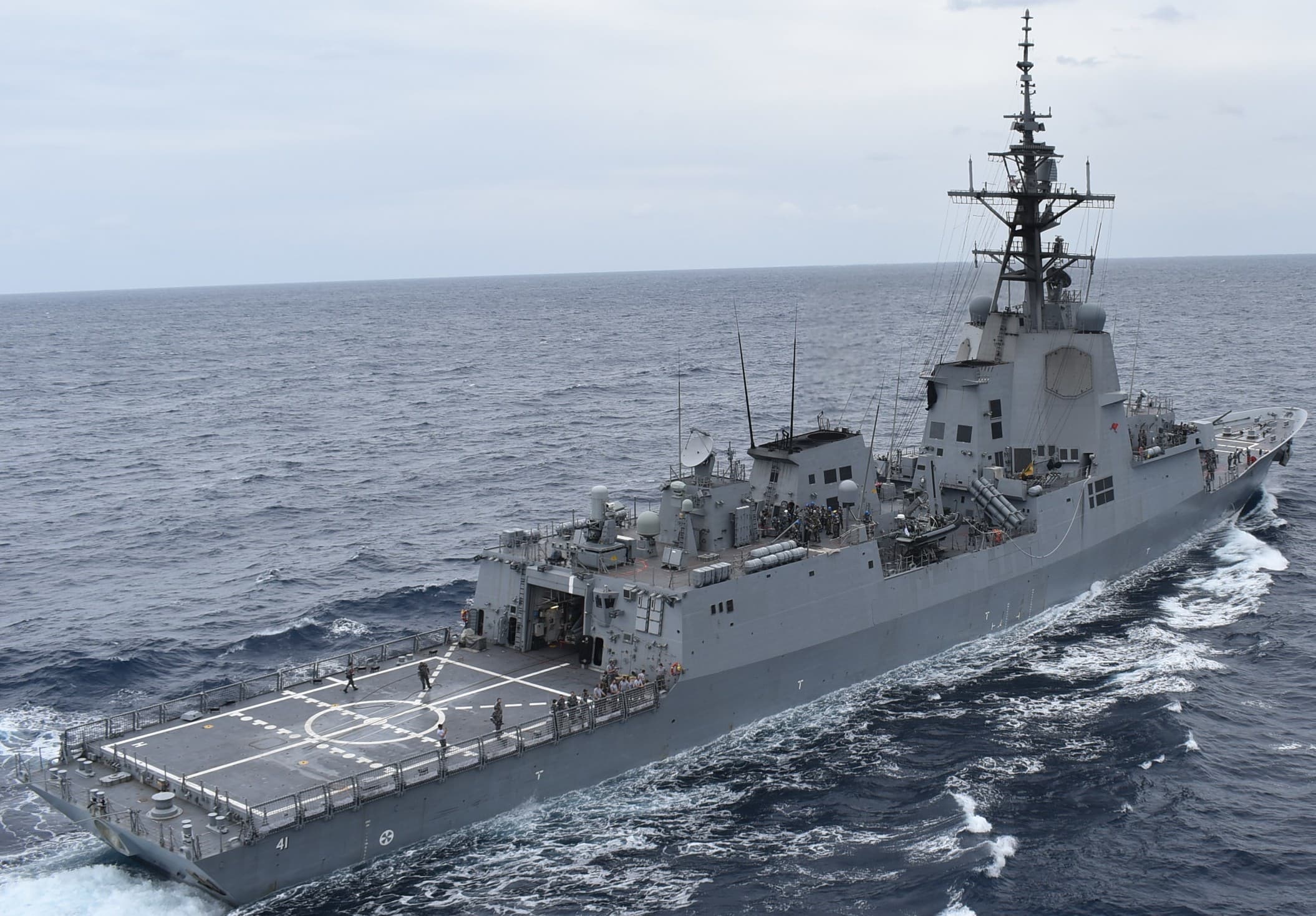

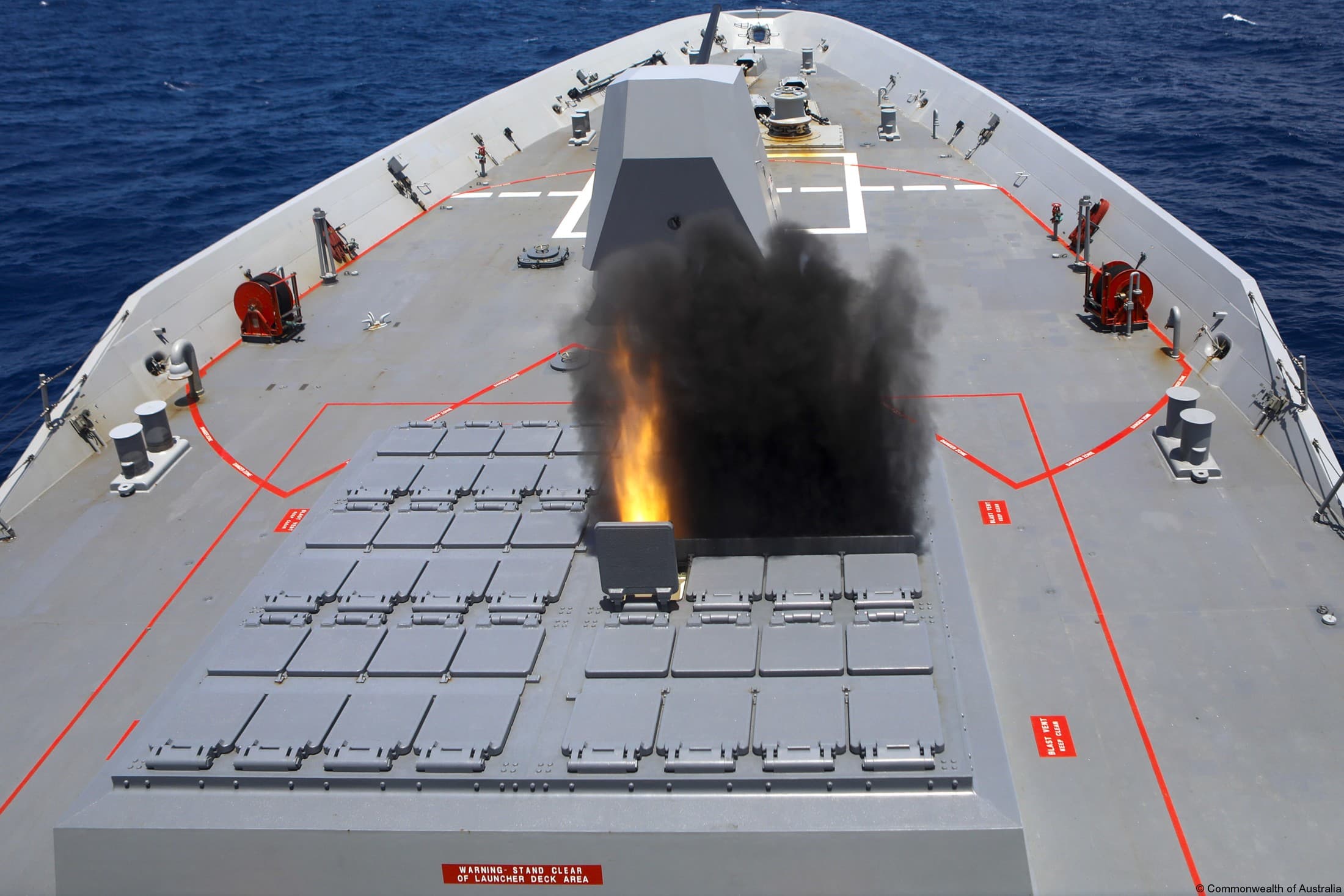
Sources:
Hobart Class Destroyers — Navantia Australia
https://www.navy.gov.au/capabilities/ships-boats-and-submarines/hmas-hobart-iii
https://seapower.navy.gov.au/history/units/hmas-hobart-iii
HMAS Hobart (DDG 39) - Wikipedia
https://umaritime.com/wp-content/uploads/2026/03/Sea-Searche-Active-and-Passive-Hull-Mount-SonarFeb-2024.pdf
Hobart class Guided Missile Destroyer Royal Australian Navy
https://www.defenceconnect.com.au/naval/18746-hmas-hobart-completes-ddg-upgrade-program-on-schedule
SEA 4000 - The Air Warfare Destroyer
https://www.defence.gov.au/news-events/releases/2019-12-06/navy-task-group-returns-from-east-asia-deployment
Defence announces SM-6, SM-2IIIC Order - Australian Defence Magazine