- Yes
- No
Hello, I’d like to suggest another Canadian ship, this time someone who is the last of her class still around.
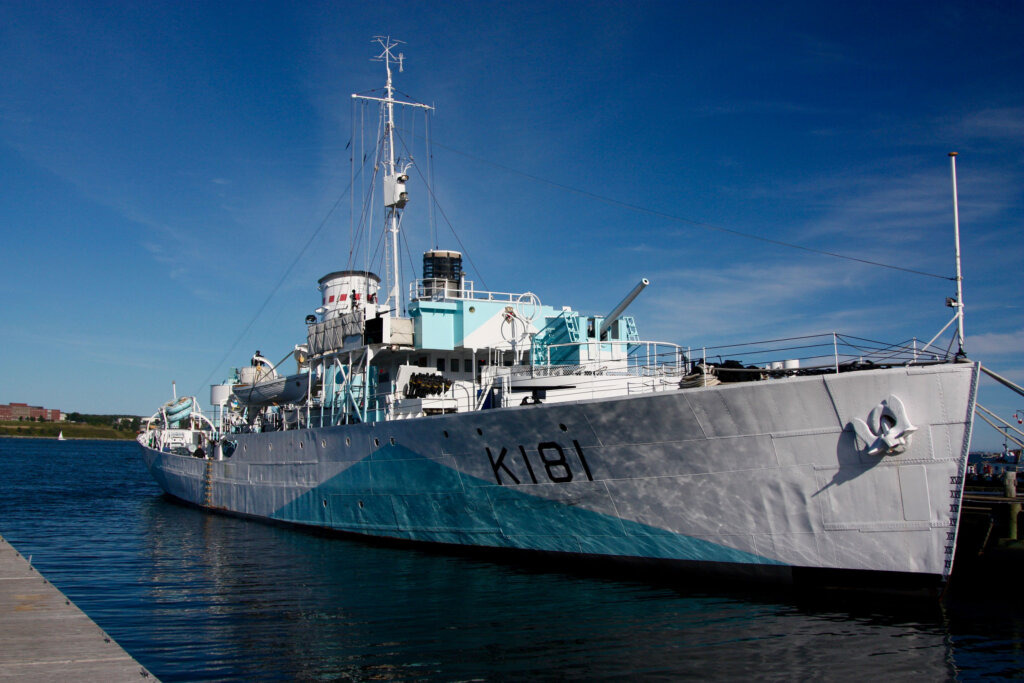
History:
Sackville would have her keel laid down at Saint John Shipbuilding and Drydock Company in early 1940. She would be the second of the Flower-class corvettes that had been ordered by the Royal Canadian Navy. When she was launched on the 15th of May 1941, the entire town council from her namesake town was there, and Sackville was commissioned into the Royal Canadian Navy on the 30th of December 1941. Sackville would help rescue survivors from the Greek ship Lily at the cost of being unable to re-locate her convoy, yet around the same time, she was having issues with her first commanding officer, with this coming to a head with the removal of the officer and her crew being scattered to other ships. She would receive a replacement crew for HMCS Baddeck on the 6th of April 1942, and in the same month she would receive a Canadian-built SW1C radar.
The 15th of May 1942 would see her assigned to Escort Group C-3 or the Mid-Ocean Escort Force, along with two other ships, which allowed those currently serving to go in for an escort. During heavy fog off the coast of Newfoundland in August of 1942, Sackville would fight two wolfpacks that had attacked the convoy she was escorting. Being able to badly damage U-43 on the 3 of August, making it flee to France, this would be followed up the next day with forcing U-704 to dive and break off its attack, and a few hours later it would detect U-552 and being able to land a four-inch shell on the conning tower and a depth charge, nearly causing the submarine to sink. Sackville would continue in the escort role except for the two times she went in for a retrofit, one at Thompson Bros. Machinery Co. Ltd. in Liverpool, Nova Scotia and the other at Galveston, Texas; these would happen in January 1943 and February 1944, respectively. She’d continue convoy work until August of 1944, when she would be reassigned to a training role due to a leak in a boiler that was able to be repaired. Tho bassicly immediately afterwards, she would be converted to a loop layer, with her damaged boiler removed for storage for the cable and the 4-inch gun replaced with cranes; she would stay performing this role until April of 1946.
Unlike most Flower-class corvettes, who were scrapped after the war, Sackville got lucky. She would be reactivated in 1952 as a research vessel for the Department of Marine and Fisheries and would remain that way until December of 1982. Well, there was a desire to buy one of two other Flower-class who had been sold to the Dominican Republic; both would be wrecked by Hurricane David in 1979. This left Sackville as the last remaining Flower-class corvette. She would be transferred to the Canadian Naval Corvette Trust (now known as the Canadian Naval Memorial Trust), which restored her to her 1844 appearance, as the original want for the 1942 appearance was too costly.
Sackville has been recommissioned on a symbolic and ceremonial basis on the 15th of May 2026.
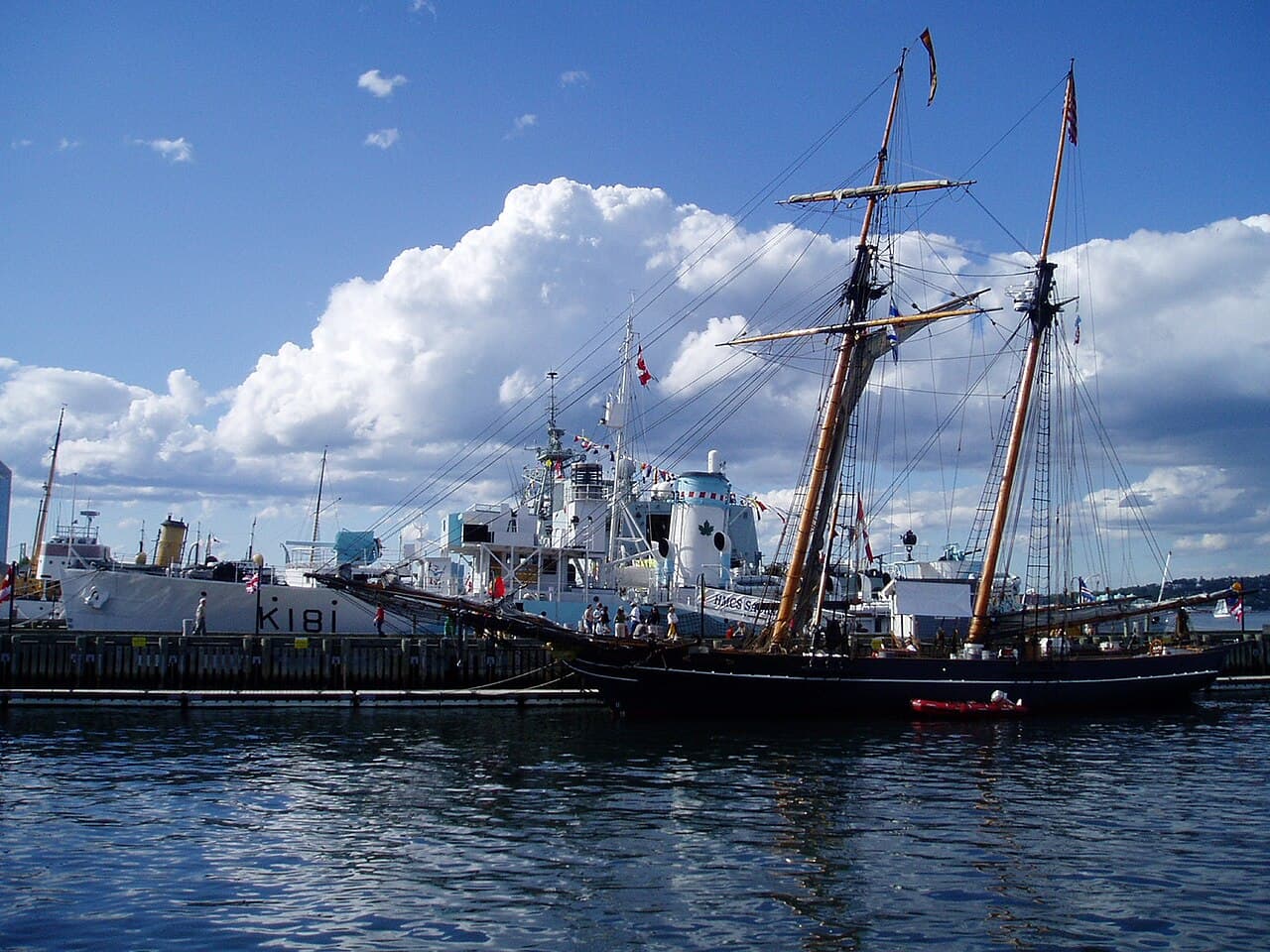
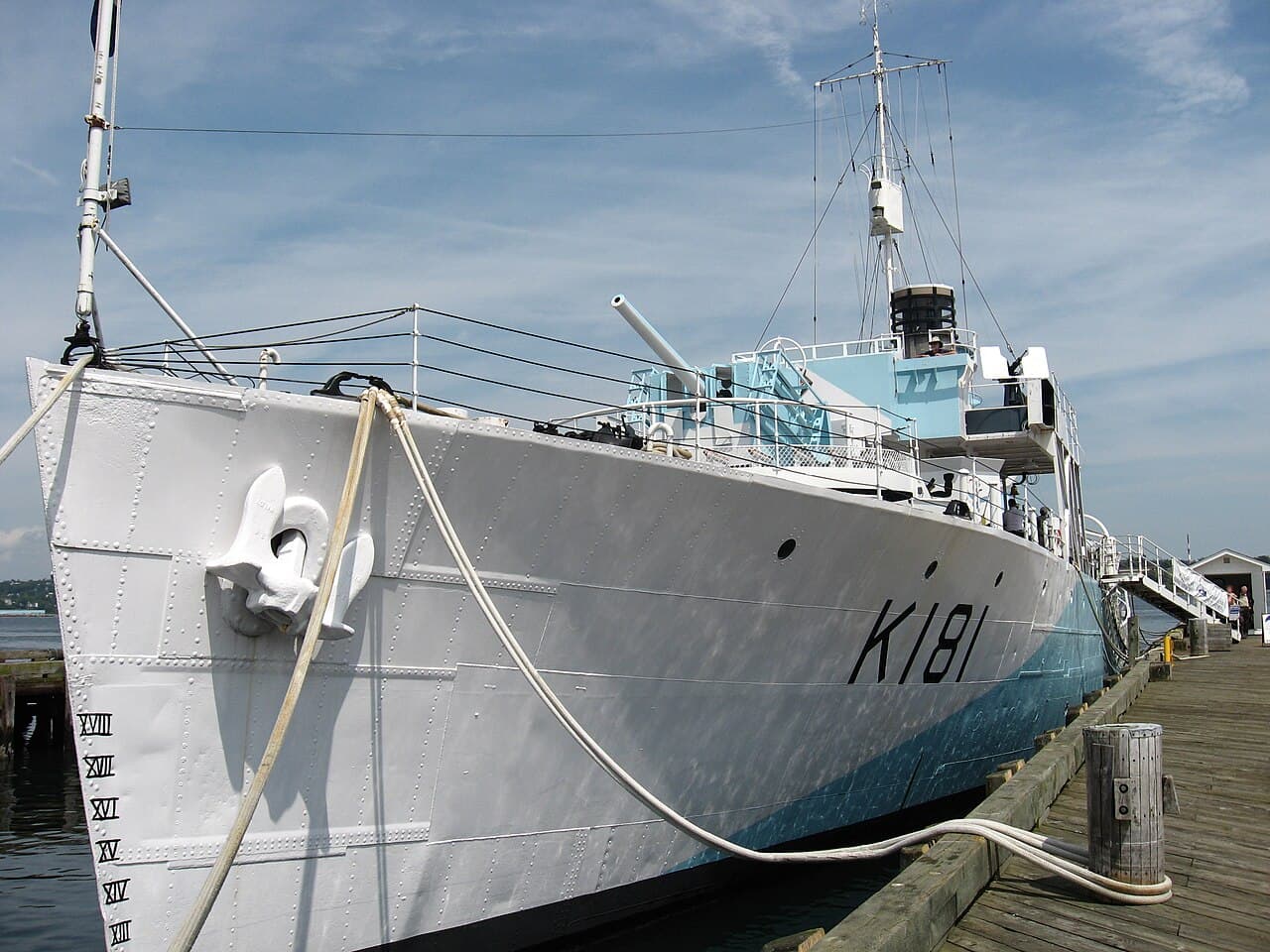


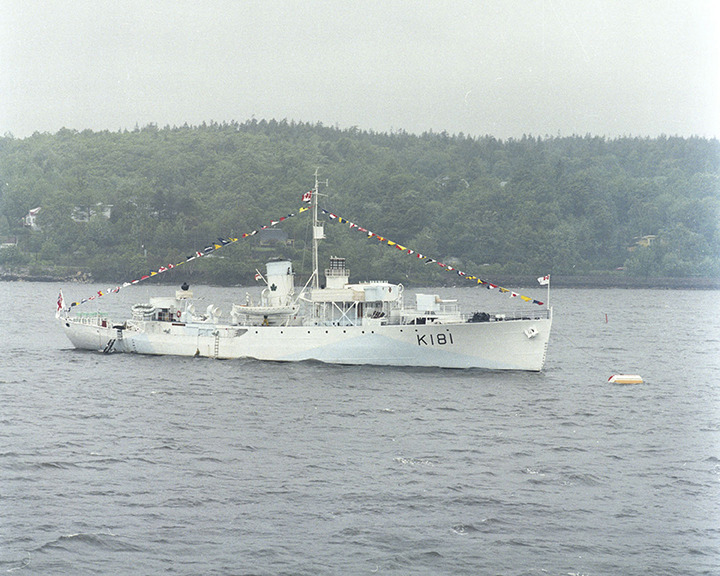
Specs:
Class & type Flower-class corvette
Displacement 950 tons
Length 62.5 m (205 ft 1 in)
Beam 10 m (32 ft 10 in)
Draught 3.5 m (11 ft 6 in)
Propulsion Single shaft, 2 fire tube Scotch boilers, 1 4-cyl. triple expansion steam engine, 2,750 hp (2,050 kW)
Speed 16 knots (30 km/h; 18 mph)
Complement 85
Armament
1 BL 4 in (102 mm) Mk.IX gun
1 QF Mk.VIII 2-pounder gun on antiaircraft mount
2 20 mm Oerlikon AA cannon
2 Lewis .303 cal twin machine guns
4 Mk.II depth charge throwers
2 depth charge rails with 40 depth charges
1 Mk 3 hedgehog
Sources
HMCS Sackville - Wikipedia
https://www.cnmt.ca/
WW II’s HMCS Sackville to be formally recommissioned into the RCN - Legion Magazine
Parks Canada - HMCS Sackville National Historic Site of Canada
HMCS Sackville — Canadian Naval Memorial Trust
https://www.canada.ca/en/navy/services/history/ships-histories/sackville.html
HMCS SACKVILLE K181 - For Posterity's Sake