- Yes
- No
- Pre-modernization
- Post-modernization
- I said no.
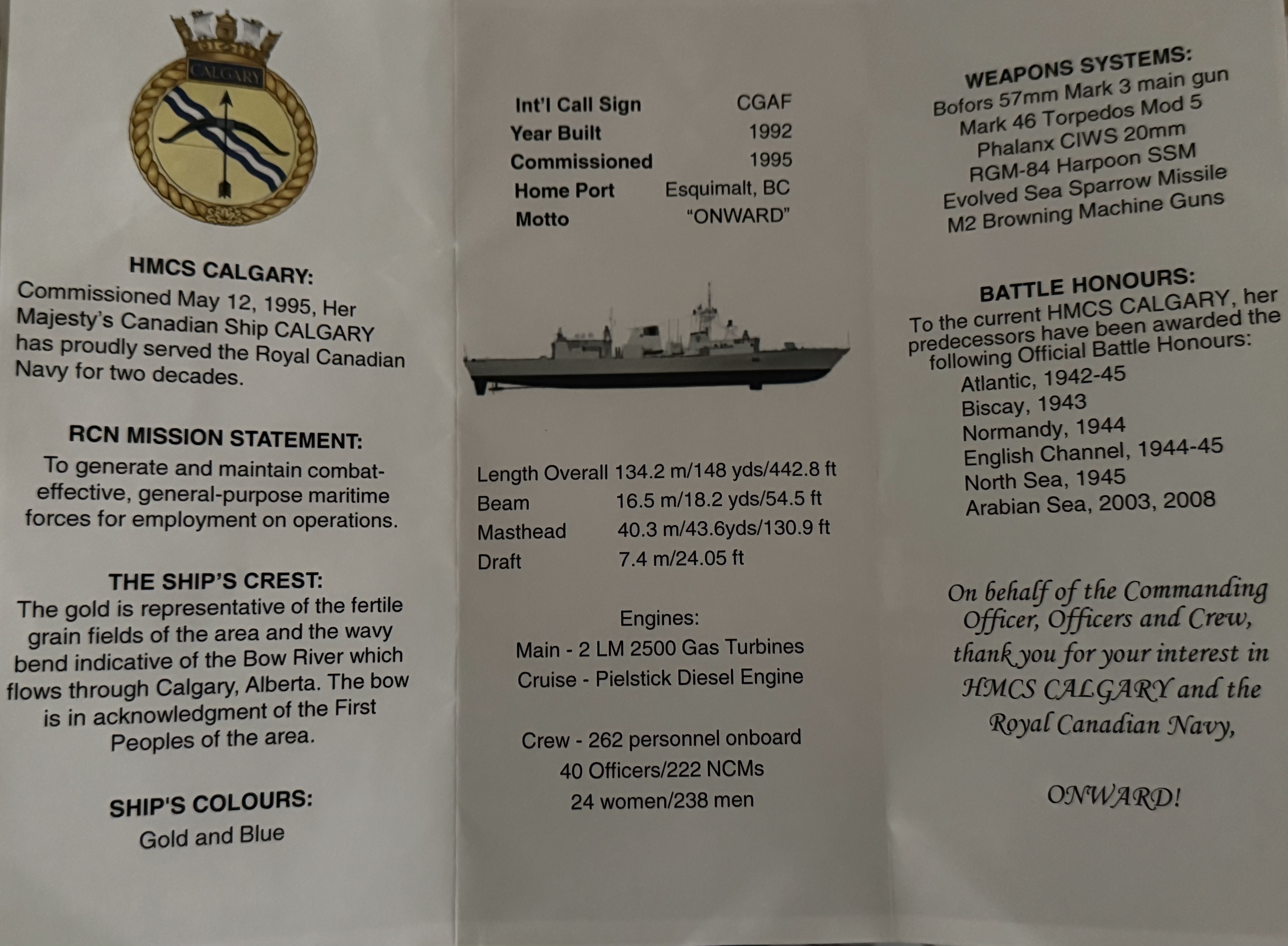
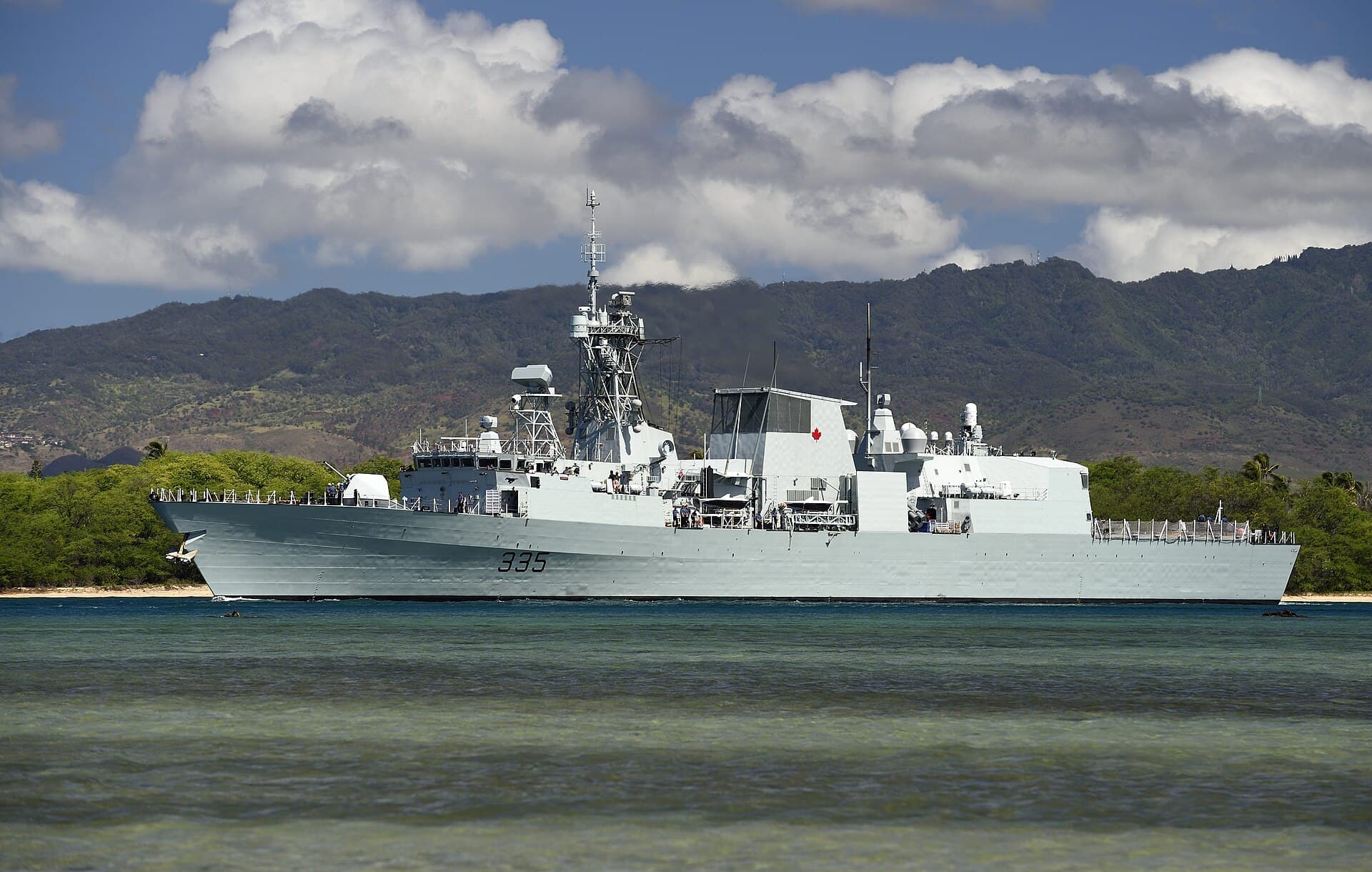
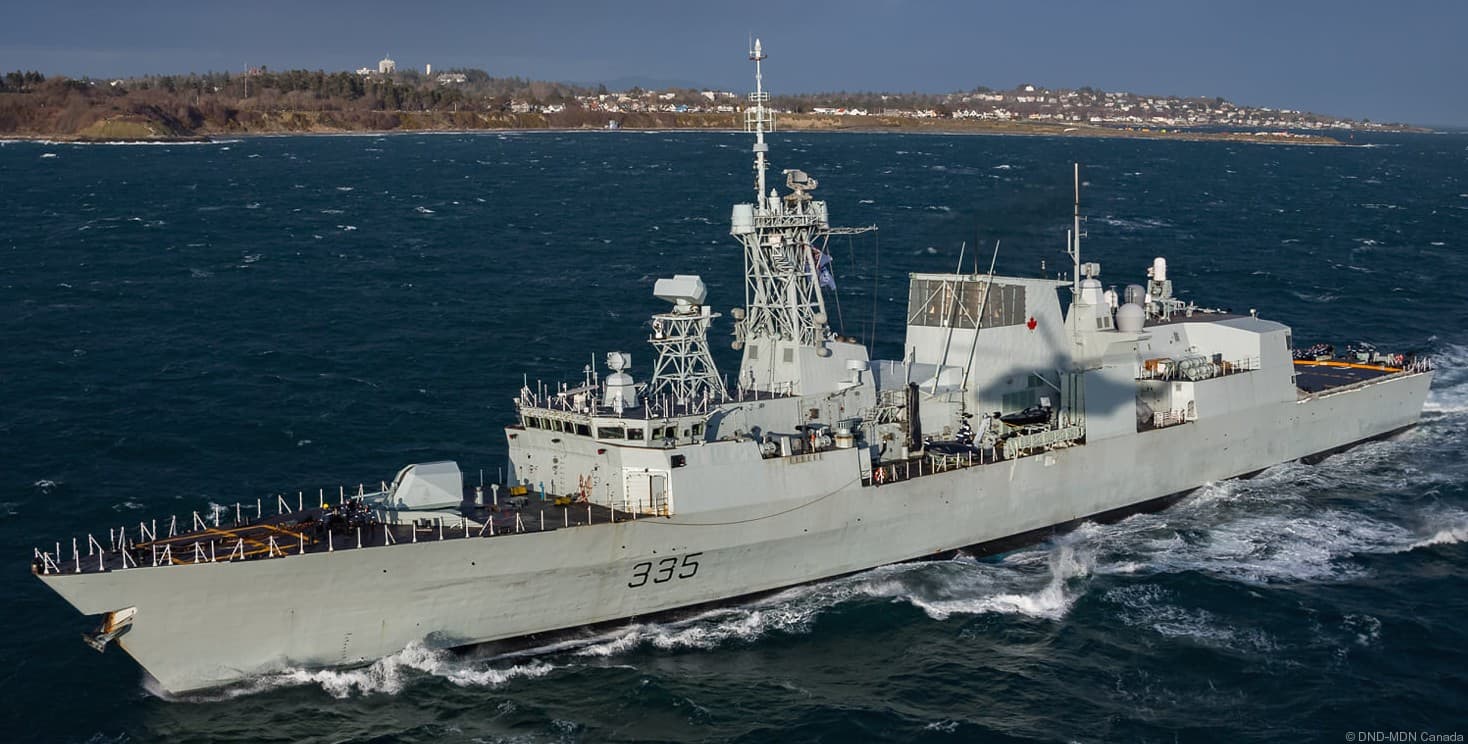
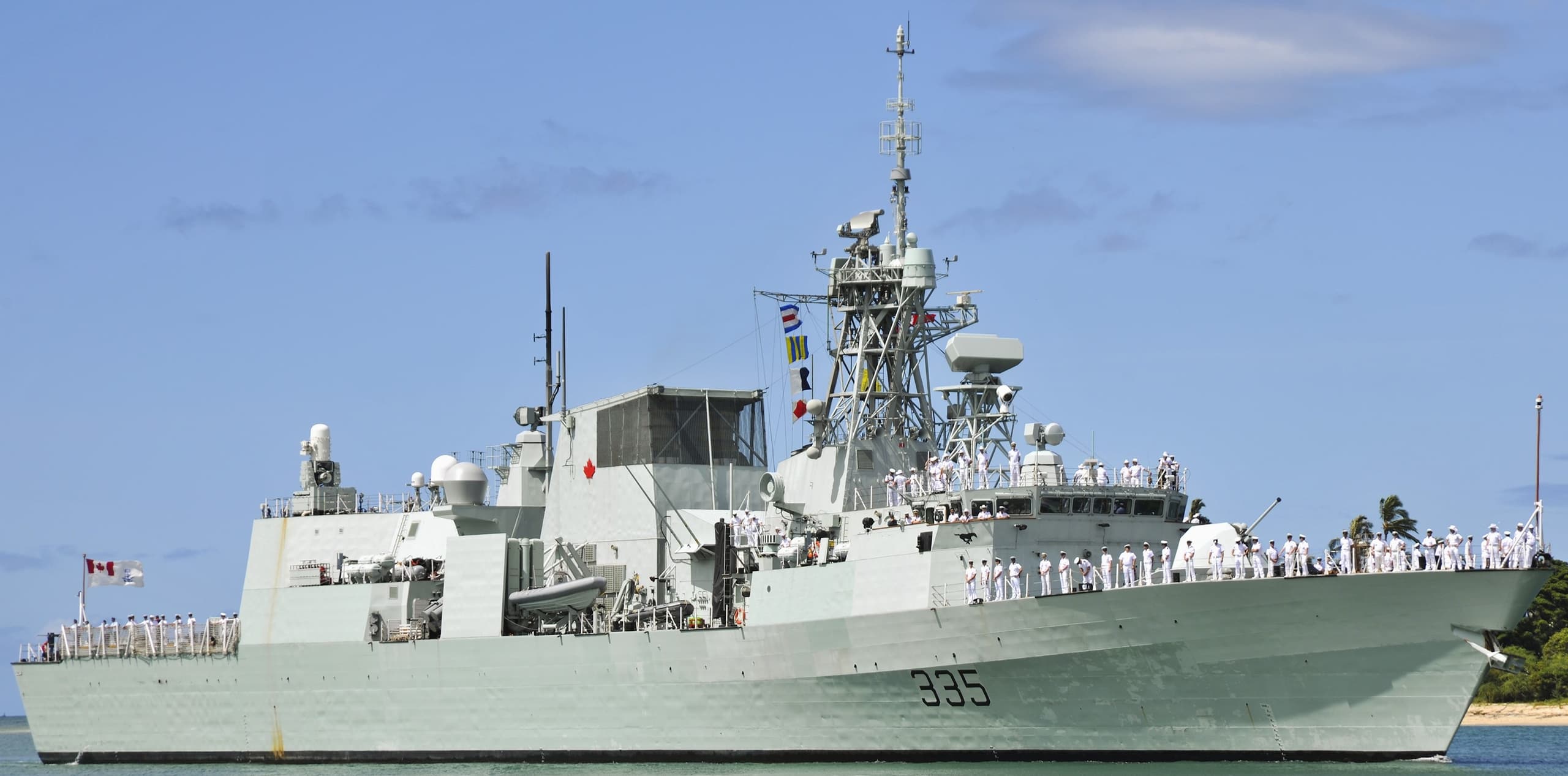
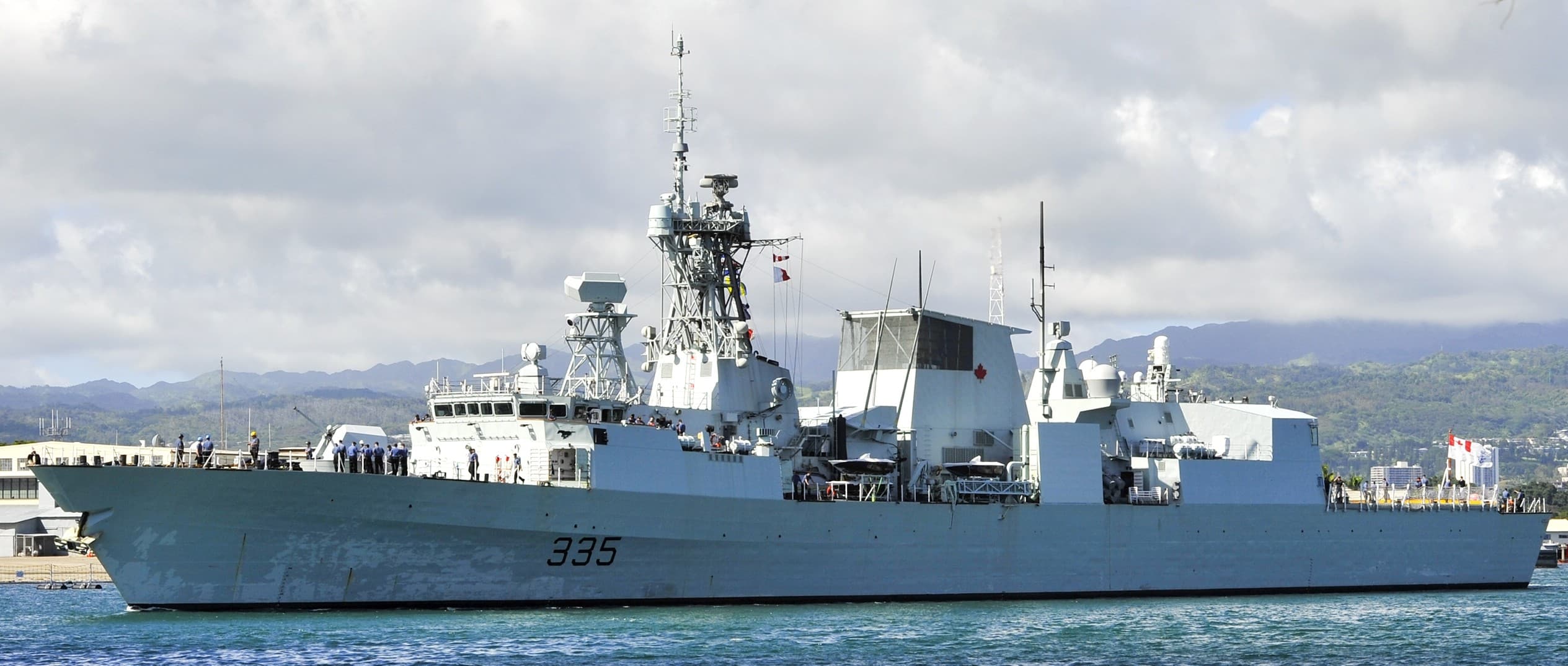
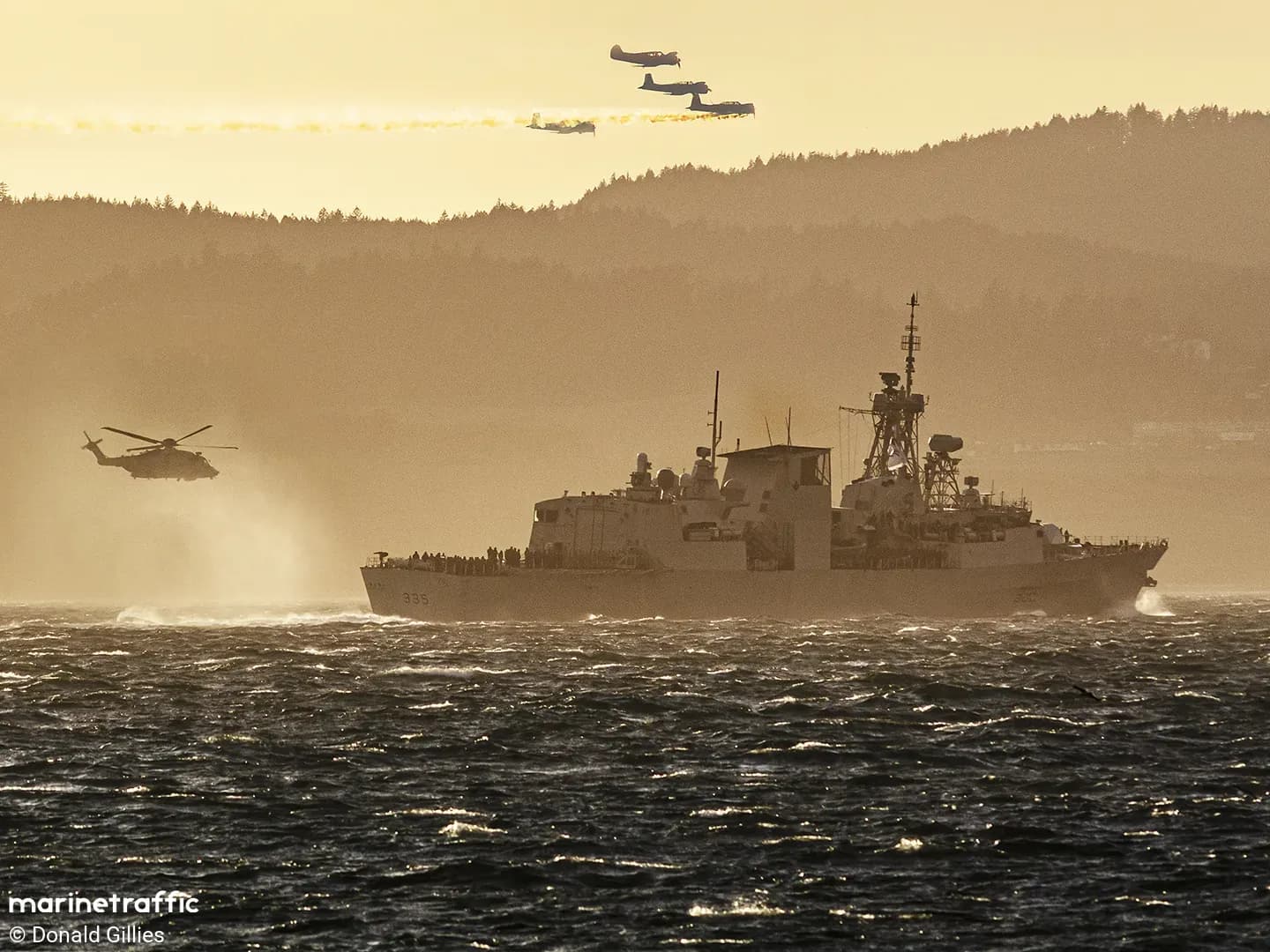
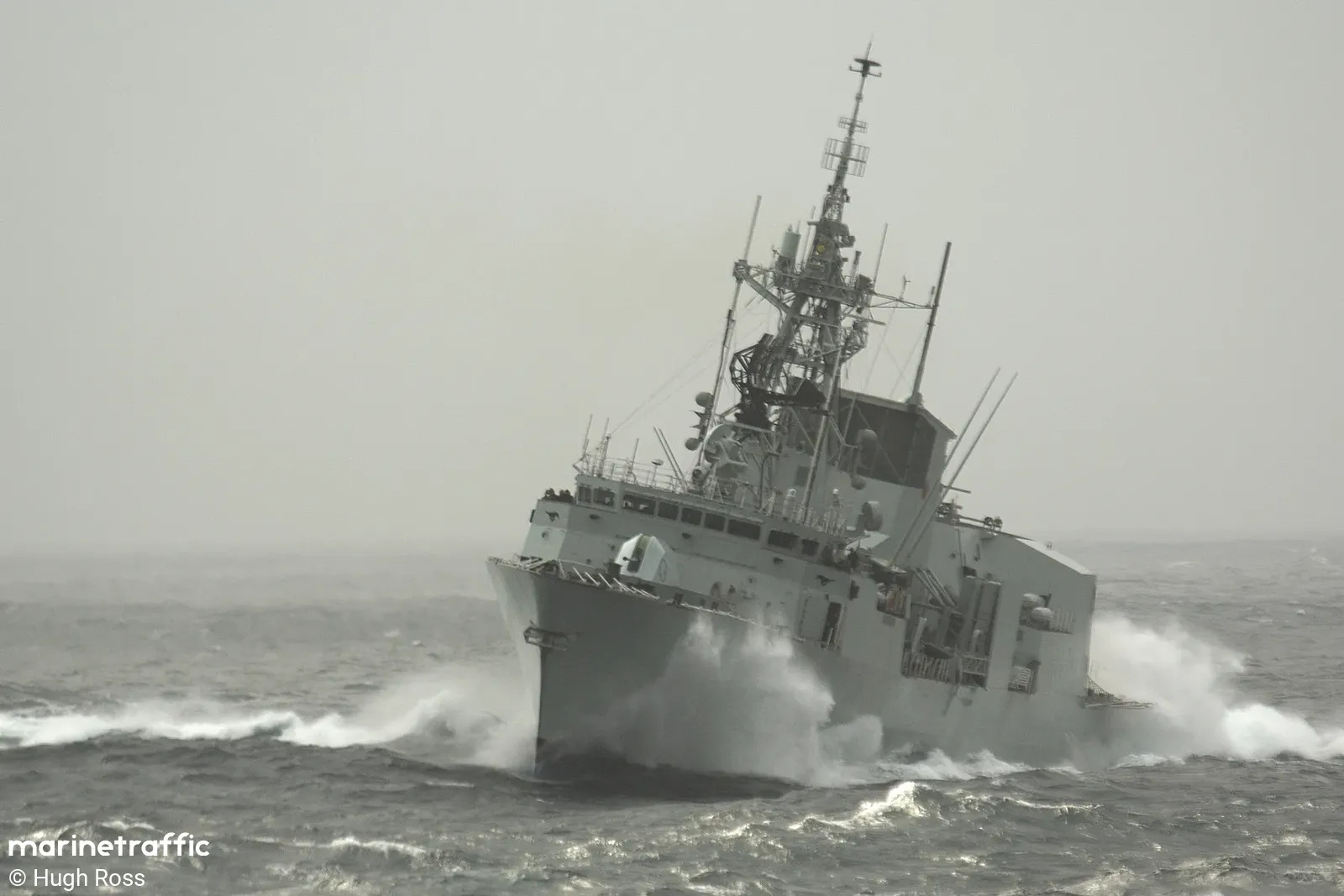
Hello, I’m suggesting HMCS Calgary, one of the Halifax-class ships. Why not Halifax herself? Because I was itching to do a ship with the name “Calgary” and my other option was a Flower-class I already had down a few of.

History:
To replace a number of destroyer escorts (including the St. Laurent, Restigouche, Mackenzie and Annapolis), the federal government would approve a budget to design and construct six new frigates in July of 1983. This would lead to the Halifax-class, which was designed around the Royal Canadian Navy’s changing strategy, which was happening in the 80s and 90s, that had a long-term outlook, leading to the class being multipurpose ships with a focus on ASW warfare.
Calgary would be laid down in 1991 on the 5th of June and would be launched in 1992 on the 28th of August after she was built by MIL Davie Shipbuilding in Lauzon. It would be on the 12th of May in 1995 when she’d be commissioned into the Canadian Forces and gain the hull classification symbol 335 on the 12th of May 1995.
Calgary would see action not long after, being set to the Persian Gulf to help with enforcing the sanctions on Iraq. Spending from the 10 of July, 1995, to December on that mission. She’d have more glory going back home, saving the crew of Mount Olympus, a bulk carrier that was sinking.
Calgary would have the unfortunate issue of having one of its diesel generators break down during the naval exercise “Tandem Thrust” in 1999. The year after that, she’d be redeployed to the Persian Gulf to rejoin the group that was enforcing the sanctions against Iraq, where she replaced one of her sisters, Regina. Calgary would perform boarding of 24 suspect vessels. She’d be the last ship deployed there, ending the operation in the Gulf when she departed on the 1st of November in 2003. 2008 would see Calgary, Protecteur and Iroquois head to the Horn of Africa to join Combined Task Force 150. During her time there, she’d spend between Somalia and Yemen performing interdiction of people, drug smuggling and piracy. She’d take part in a similar mission in 2009 when she took part in Operation Caeibbe, taking part in Canadian drug-interdiction operations in the Caribbean Sea.
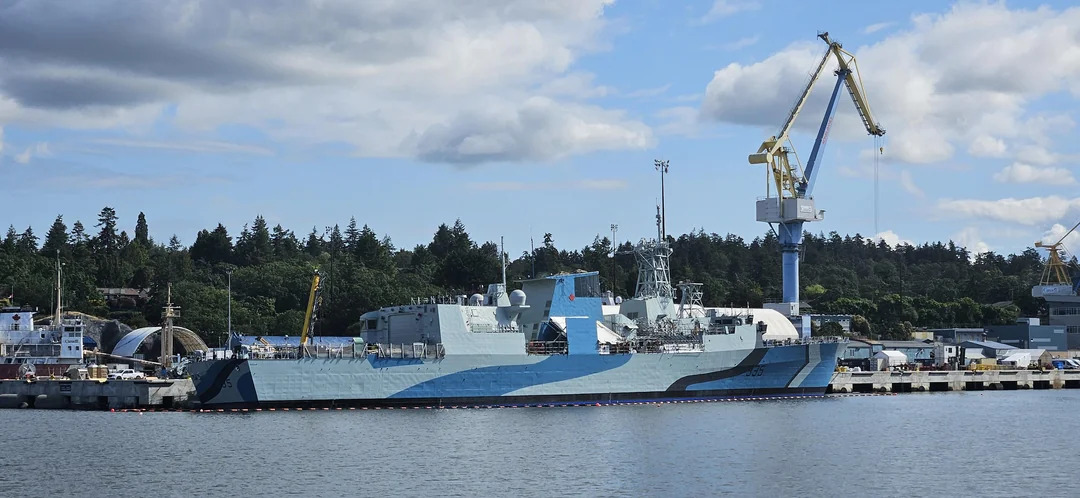
Calgary would be handed over to Seaspan Marine Corporation’s Victoria Shipyards on the 6th of June 2011 to have an 18-month mid-life upgrading and modernization. The Royal Canadian Navy would get her back on the 1st of June, 2012, with her sea acceptance trials completed in the fall of 2013.
In June of 2014, Calgary would take part in RIMPAC 2014, being the first time both China and Norway had taken part. And in October of the same year, Calgary, along with Winnipeg, Yellowknife and Brandon, would depart to take part in both San Francisco Fleet Week and the Task Group Exercise (TGEX). In October of the following year, Calgary would once again take part in the TGEX naval exercise just with Chicoutimi and Vancouver this time instead. June 2016 would see Calgary, Vancouver, Saskatoon and Yellowknife take part in RIMPAC that year.
The 15th of February in 2018 would see 10,000–20,000 litres (2,600–5,300 US gal) of fuel spilled from the ship as she was sailing the Georgia Strait. Due to this, there was an all-out search for signs of an oil sheen between the Royal Canadian Navy, Canadian Coast Guard and Environment Canada. Thankfully, none was found, with Environment Canada believing this to be due to the weather breaking it up. On the 30th of July in 2018, Calgary would depart to take part in various naval exercises and visits in the Pacific until returning on the 18th of December 2018.
Calgary would intercept a ship that was suspected of smuggling and would recover 1,286 kg (2,835 lb) of heroin, and not even 24 hours later would do the same to a second vessel, recovering 360 kg (790 lb) of methamphetamine, with the two loads having a combined total that was worth over $23.22 million. She’d also take part in Talisman Sabre in July before returning home to Canada on the 31st of August.
Specs
Pre-Modernization (As Built)
General Characteristics
- Displacement: 4,750 long tons (4,830 t)
- Length (Overall): 134.65 m (441 ft 9 in)
- Length (Between Perpendiculars): 124.49 m (408 ft 5 in)
- Beam: 16.36 m (53 ft 8 in)
- Draught: 4.98 m (16 ft 4 in)
Crew
- Ship’s Company: 198
- 17 Officers
- Air Detachment: 17
- 8 Officers
Propulsion
Configuration
- CODOG (Combined Diesel or Gas)
Gas Turbines
- 2 × General Electric LM2500
- Total Output: 47,500 shp (35,400 kW)
Diesel Engine
- 1 × SEMT Pielstick 20 PA6 V 280
- Output: 8,800 shp (6,600 kW)
Propellers
- 2 × Escher Wyss controllable-pitch propellers
Performance
- Maximum Speed: 29 knots (54 km/h; 33 mph)
Range
- 7,000 nmi (13,000 km; 8,100 mi) at 15 knots using diesel engines
- 3,930 nmi (7,280 km; 4,520 mi) at 18 knots using gas turbines
Armament (Pre-Modernization)
Main Gun
- 1 × Bofors 57 mm/70 Mk 2 naval gun
- Rate of Fire: 220 rounds/minute
- Maximum Range: 17 km (11 mi)
- Shell Weight: 2.4 kg (5.3 lb)
Anti-Ship Weapons
- 8 × RGM-84 Harpoon Block 1C
- Two quadruple launchers
Surface-to-Air Missiles
- 16 × Sea Sparrow
- Two Mk 48 Mod 0 eight-cell VLS launchers
Close-In Weapon System
- 1 × Raytheon/General Dynamics Phalanx Mk 15 Mod 21 CIWS
Anti-Submarine Warfare
- 2 × Twin Mk 32 Mod 9 torpedo launchers
- Mk 46 torpedoes
Aircraft Facilities (Pre-Modernization)
Aircraft
- 1 × CH-124 Sea King helicopter
Flight Facilities
- Flight deck
- Bear Trap helicopter recovery system
- Capable of helicopter operations up to Sea State 6
Countermeasures (Pre-Modernization)
Decoy Systems
- 2 × BAE Systems Shield Mk 2 launchers
- Chaff
- Infrared rockets
Torpedo Countermeasures
- AN/SLQ-25A Nixie towed acoustic decoy
Electronic Warfare
- SLQ-501 CANEWS radar warning receiver
- SLQ-505 radar jammer
Sensors (Pre-Modernization)
Air Search Radar
- Raytheon AN/SPS-49(V)5
- Long-range
- C/D-band
Air & Surface Search Radar
- Ericsson HC150 Sea Giraffe
- Medium-range
- G/H-band
Fire Control Radar
- 2 × Thales Nederland SPG-503 (STIR 1.8)
Navigation Radar
- Kelvin Hughes Type 1007 I-band
Sonar
- GD-C AN/SQS-510 hull-mounted sonar
- CANTASS towed array sonar
- Acoustic Range Prediction System
Sonobuoy Processor
- GD-C AN/UYS-503
Post-Modernization (HCM / FELEX)
Combat System
Combat Management System
- CMS330 Combat Management System
Data Links
- IBM Multi-Link Processor
- Link 11
- Link 16
- Link 22
Radar & Sensors
Air Search Radar
- Thales SMART-S Mk 2
- 3D surveillance radar
- E/F-band
- Replaced AN/SPS-49
Fire Control Radar
- 2 × Saab Ceros 200
- Replaced STIR 1.8 radars
Navigation Radar
- 2 × Raytheon Anschütz Pathfinder Mk II
- Replaced Kelvin Hughes Type 1007
Identification Friend or Foe
- Telephonics IFF Mode 5/S interrogator
Electronic Warfare
Electronic Support Measures
- Elisra NS9003A-V2HC
- Replaced SLQ-501 CANEWS
Decoy System
- Rheinmetall MASS (MASS DUERAS)
- Replaced Shield Mk 2 decoy launchers
Weapons Upgrades
Main Gun
- Bofors 57 mm upgraded from Mk 2 to Mk 3
Anti-Ship Missiles
- Harpoon upgraded from Block 1C to Block II
Surface-to-Air Missiles
- Sea Sparrow replaced with Evolved Sea Sparrow Missile (ESSM)
Close-In Weapon System
- Phalanx upgraded to Block 1B
Aviation Upgrades
Aircraft
- Modified to operate the Sikorsky CH-148 Cyclone helicopter
Communications
- Satellite communications links added
Sources
HMCS Calgary (FFH 335) - Wikipedia
https://www.youtube.com/watch?v=6jwWAiiArfs
https://www.canada.ca/en/navy/services/history/ships-histories/calgary.html
Seaspan Victoria Shipyards completes its largest-ever Docking Work Period, delivers HMCS Calgary back to Royal Canadian Navy - Seaspan
HMCS Calgary FFH-335 Halifax class Frigate Canadian Navy RCN
https://www.marinetraffic.com/en/photos/of/ships/shipid:383598/shipname:HMCS%20CALGARY?order=date_uploaded
https://www.reddit.com/r/WarshipPorn/comments/1kt52ld/hmcs_calgary_ffh_335_alongside_the_esquimalt/