- Yes
- No
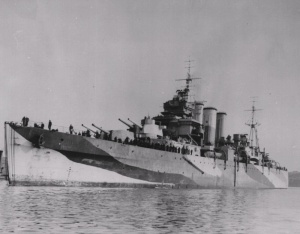
History:
Spoiler
Laid down in 1927, HMS Shropshire (as it was then called) started life in the Royal Navy as one of the new London design County Class Heavy Cruisers. It is still to this day the only ship named after the glorious county of Shropshire. After being commissioned in 1929 she was assigned to the British Mediterranean Fleet, during which she served as a response to the Abyssinia Crisis trying to ensure stability in the region. Later she served as a response to the Spanish Civil War in which she helped rescue and transport refugees. And apart from a new refit the rest of the time before the war was uneventful.
However that changed for there was war brewing. Her first assignment after returning to England from the Med was convoy protection, specifically in the Atlantic, but that was to be short lived as she was sent off the join in the hunt for the Graf Spee. Unfortunately that was to be short lived due to Graf Spee’s fate and HMS Shropshire had no encounter with the German Vessel.
Following this she was assigned onto several different convoy protection routes in which she protected trade in the Atlantic and then she relieved HMS Canberra in the convoy between the UK and Australia. Where she was time and time again deployed for convoy protection duties or the occasional German ship hunt, all of which was mostly uneventful.
At the start of 1941 she was still on convoy escort duties but caught a mild case of a ship wide epidemic and so had to sit in port for just over a month. Upon returning to the sea she engaged in action right away and was crucial in the bombardment of Mogadicio where she and fellow ships caused extensive damage with the loss of one tanker. After the Italian positions were captured she was right off to find herself another German boat, Admiral Sheer however in doing so she found and took Vichy French Freighter VILLE DE STRASBOURG as a prize. After that she went into refit and unfortunately began a common trend where the sea trials failed after each refit for the exact same reason, the starboard engine failed.
In august of 1941 she briefly became a passenger liner transporting both Prisoners of War and Prime Minister Winston Churchill to and from Britain. After her brief service as a cruise liner she returned to escort duties until in 1942 she was recalled for a refit where the sea trials suffered the same issue as last, during her repair however she received new radars and fire control computers. Type 281 for aircraft warning, Type 273 for surface warning, Type 285 for Secondary armament fire control and Type 282 for close range AA armament fire control. And unfortunately the rest of her Royal Navy career was escort duties.
HMAS Canberra has sunk, this leaves a gap in the Royal Australian Navy where they need a cruiser. This was also an opportunity for HMS Shropshire, soon to be HMAS, to get some action and earn her beautiful name.
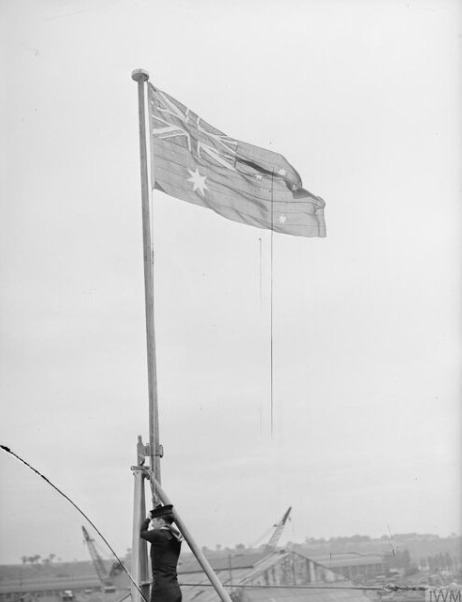
Under a new flag and Captain, as well as a few disagreements about her name with the US President even getting involved personally, she was set to sail for yet another refit in which she actually passed her sea trials. This refit is the one suggested and it bolsters her AA abilities, secondary guns but removes her aircraft catapult.
In her new role as Australia’s new top end cruiser she was set onto more escort duties, but not for long. She joined the other Aussie ships in Task Force 74 and provided cover for the landings in OPERATION DIRECTOR. And then yet again in OPERATION DEXTERITY, both times supporting American troops. Following this she went off with other Task Force 74 members to bombard Japanese gun positions on Hauwei and Nbrilo Islands at entrance to Seeadler Harbour during the assault on the Admiralty Islands by 5th US Cavalry.
Her Illustrious career carried on with several more bombardments in support of landing with praise from American command until yet another refit, this is a 1944 but was caused by a need for repairs due to a propellor shaft becoming defective, this refit removed her torpedo tubes in place of more anti air guns. After her repair she resumed her duties in providing shore bombardment for American troops until the Battle for Leyte Gulf, and due to a Kamikaze plane damaging and forcing HMAS Australia to sit back HMAS Shropshire took lead of all Australian ships in the battle. In where she engaged ships MOGAMI, SHIGURE and YAMASHIRO with all 3 enemy vessels sunk with an impressive volley fire of 8 salvos from the main cannons in 2 minutes. However all pursuits of the remainder of the ships was unsuccessful
The remainder of her career was filled with near misses of Kamikaze aircraft with a few shoot downs and more shore bombardment until a refit in 1945 where her AA was replaced by bofors and she received more updated fire control computers. She returned to sea just in time to bombard more shores until the Japanese surrender, in which HMAS Shropshire was present for the signing of the terms and was once again turned into a cruise liner for a short while between the UK and Australia until her eventual fate being scrapped in 1949.
In the end she played a pivotal role in both the RN and RAN used for escorting important supplies and providing a vital role in the pacific, according to some she may have just won the war for the allies with her sheer might.
Specifications:
Spoiler
Besides having a better name, she is similar to the London in game already however she has her own gizmos.
In 1943 she had:
-
4 × Turret | 2 × 8 inch/50 Mark VIII cannon
-
4 × Turret | 2 × 4 inch/45 Mark XVI cannon
-
2 × Turret | 8 × 40 mm 2pdr QF Mk.VIII automatic cannon
-
7 × Turret | 2 × 20 mm/70 Oerlikon Mark V autocannon
-
6 × Turret | 1 × 20 mm/70 Oerlikon Mark V autocannon
-
2 x Turret | 4x 0.5 inch Vickers Machine Guns
-
8 x 21-inch torpedo tubes (2 quadruple mounts)
-
Speed: 32.5 Knots
-
80,000 Horsepower
-
820 crew (War time)
-
Displacement: 9850 tons
-
Length: 633 feet
-
Beam: 66 feet
-
Draught: 17 feet
Awards:
Spoiler
- PACIFIC 1941-45
- NEW GUINEA 1942-44
- LEYTE GULF 1944
- BORNEO 1945
- LINGAYEN GULF 1945
Images:
Spoiler
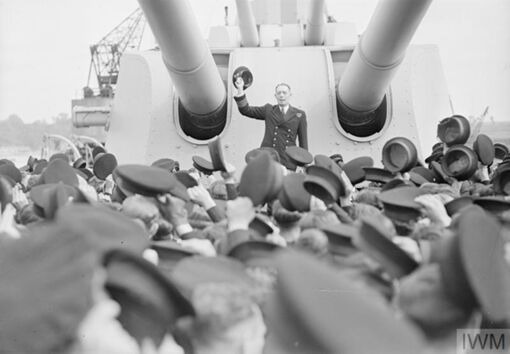
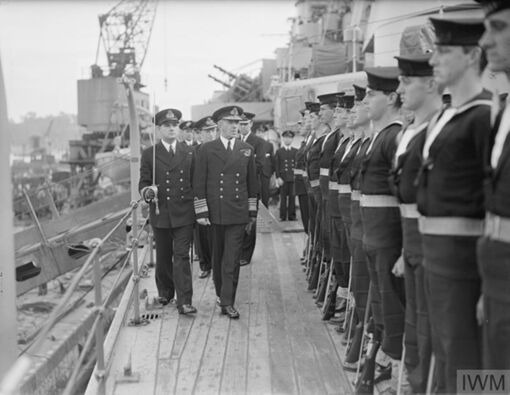
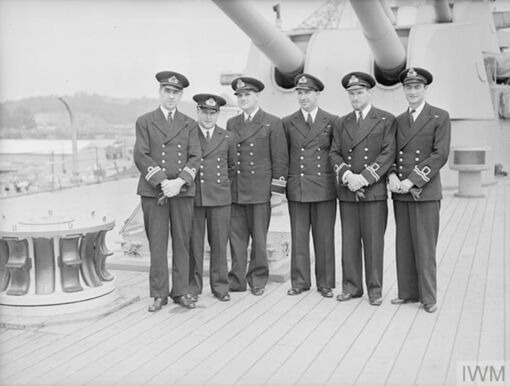
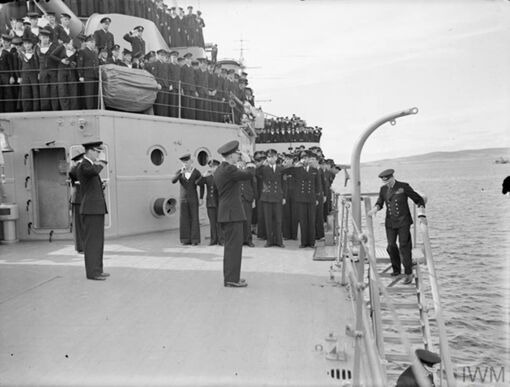
The one above has The King in it.
Sources: