All information provided below is taken exclusively from open sources — official publications of “Ukrspecexport,” the Kharkiv Morozov Machine Building Design Bureau (KMDB), Ukrainian and international media, as well as publicly available photos and videos. No classified or restricted data is used.
After the recent addition of the Oplot-M tank to the Chinese tech tree under the Pakistan sub-branch, it should be clarified that Pakistan has never received or operated the Ukrainian Oplot-M. The vehicle developed for export was the Oplot-P, an export-oriented variant specifically tailored for Pakistan. These two tanks differ significantly in design, protection, electronics, and equipment.
The Oplot-M was accepted into service with the Armed Forces of Ukraine in 2009. It is a deep modernization of the T-84U featuring improved armor protection, a new fire control system, and advanced defensive measures. The Oplot-P, developed between 2011 and 2013, was a simplified and cost-reduced export version adapted for hot climates and the financial and logistical requirements of Pakistan.
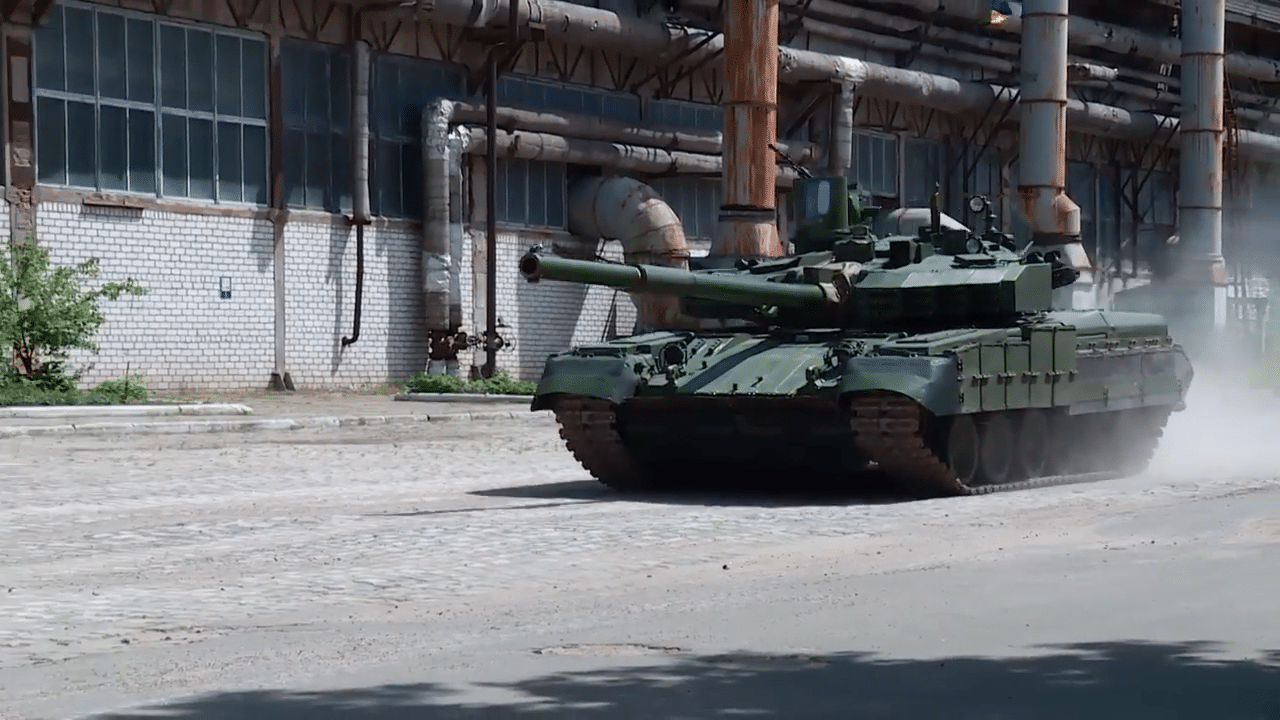
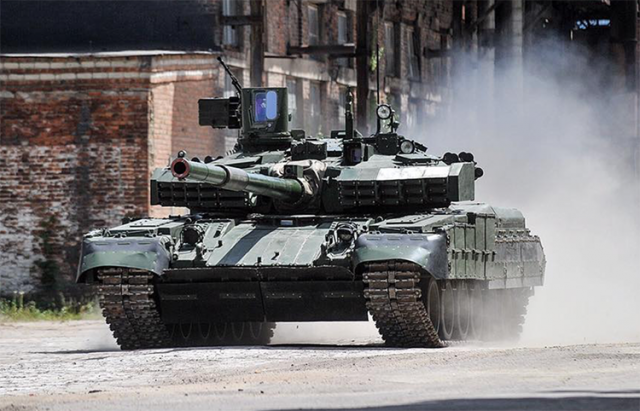
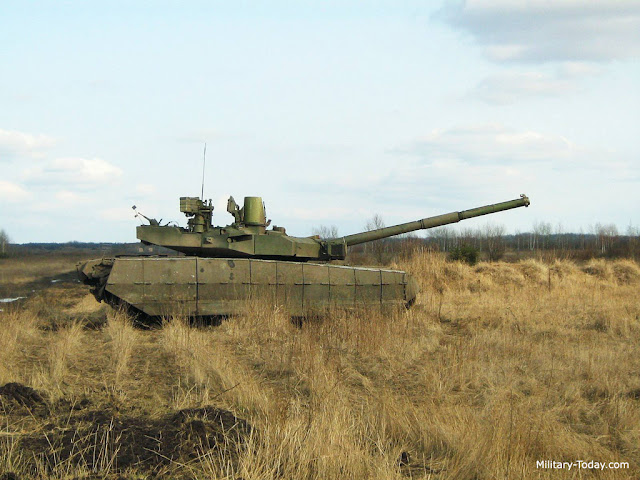
The primary difference lies in the armor and protection systems. The Ukrainian Oplot-M features enhanced side skirts integrated with the “Duplet” reactive armor, a modular turret with composite protection, and additional frontal armor modules. The overall combat weight is about 51.5 tons. The export Oplot-P, on the other hand, uses lighter side skirts with reduced or imitation ERA blocks, a simplified turret armor layout, and less overall protection. Its weight is around 47–48 tons, offering better mobility but weaker protection.
Another key distinction is the presence or absence of the optical-electronic countermeasure system (KOEP). The Oplot-M is equipped with the “Varta” countermeasure system, which includes laser warning sensors, thermal detectors, and automatic smoke deployment. The Oplot-P lacks this system entirely — there are no sensors on the turret, only standard smoke grenade launchers. This represents a major downgrade in active protection.
The sighting and fire-control systems also differ. The Oplot-M uses the “Buran-Catherine” complex with a French Catherine-FC thermal imager, a digital fire-control system with target tracking, and an independent commander’s panoramic sight. The Oplot-P employs a simpler export configuration, partially replaced with Chinese or Pakistani components and without the full feature set of the Ukrainian version.
Both tanks use the 6TD-2E diesel engine rated at 1,200 hp, but the Pakistani version is fitted with a modified version featuring improved cooling and air filtration for desert conditions. Because of the lighter armor, the Oplot-P has a slightly higher power-to-weight ratio (approximately 25.5 hp/t vs. 23.3 hp/t for the Oplot-M).
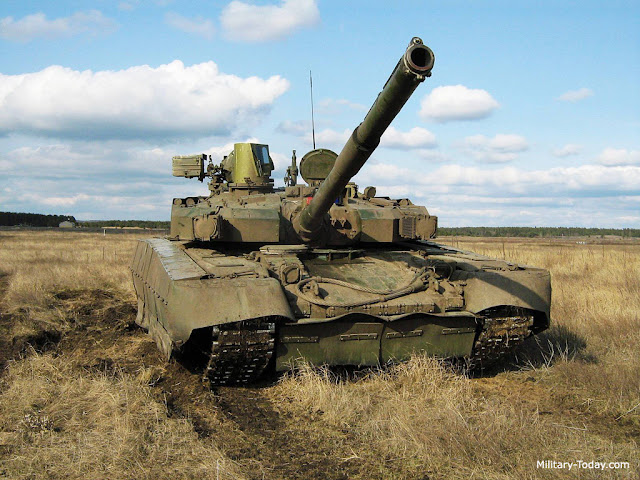
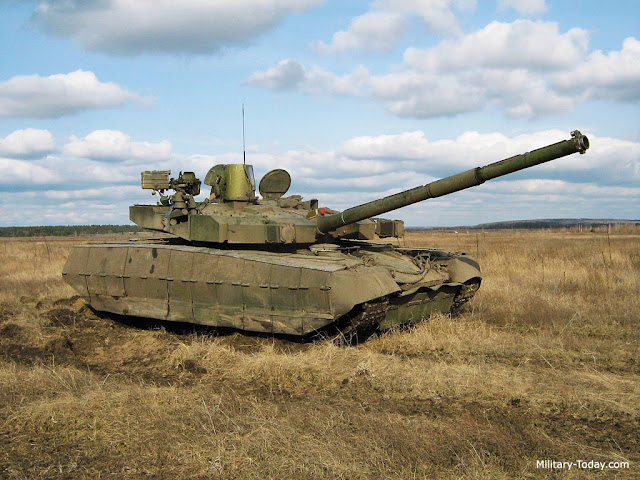
The differences are also visible in photographs. The Oplot-M turret has visible “Varta” sensors and thicker, modular side skirts. The Oplot-P turret lacks these sensors, has simpler armor geometry, and thinner side skirts. The paint schemes differ as well — the Oplot-M often uses olive or camouflaged patterns, while the Oplot-P is typically shown in solid dark green export colors.
Therefore, the tank currently represented in War Thunder as Oplot-M under Pakistan is historically inaccurate. Pakistan received and tested the Oplot-P, an export variant that differs from the Ukrainian Oplot-M both externally and technically.
Suggestion: Replace the current Oplot-M model in the Pakistan sub-tree with the accurate Oplot-P variant, featuring its proper visual and technical characteristics. This would make the game more historically authentic and consistent with real-world military data.