- Yes
- No
Introduction
The Hawker Typhoon needs little introduction. It is among the most well-known of the Allied fighter-bombers, equally as capable as dropping 1000lb bombs on Axis fortifications, strafing armoured columns with 3-inch rockets, and going toe-to-toe with Messerschmitts and Focke-Wulfs in aerial combat. It’s development began pre-war, with a first flight in 1940 and an entry into service in 1941. It served throughout the remainder of the war, and was generally well-liked by its pilots.
The Typhoon was designed around the exceptionally powerful liquid-cooled Napier Sabre engine. Whilst able to deliver a huge amount of horsepower, the Sabre wasn’t without it’s troubles, and it took a significant amount of development to dispel the mechanical gremlins. Alongside this, the engine also produced a huge amount of excess heat, which needed significant cooling capacity to prevent catastrophic overheating failures. This resulted in the chin radiator (more aptly described as a gaping maw) as seen on the two aircraft that saw service with the Sabre - the Typhoon and the Tempest.
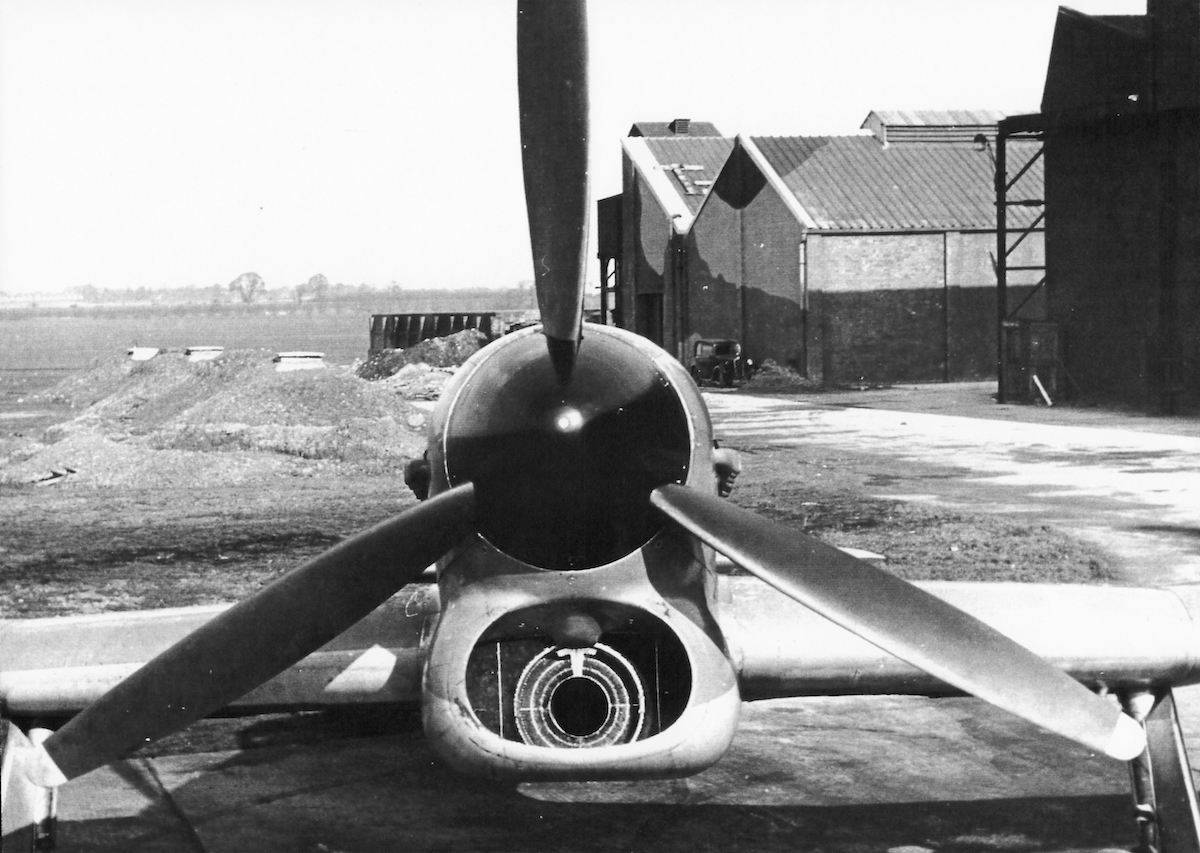
A test rig showing the chin radiator on the Typhoon, used to cool the Napier Sabre.
Although this radiator proved adequate for taming the Napier Sabre, it wasn’t without its problems. The first major issue was the large increase in drag caused by the radiator - it is not dissimilar to an airbrake being permanently deployed under the engine block. The chin radiator was claimed to contribute 13% of the total drag of the entire Typhoon/Tempest airframe, a huge amount. The second major issue was the difficulties encountered crash landing, water landing, or belly landing the Typhoon or Tempest. Because the radiator protruded below the rest of the plane, it would undoubtedly be irreparably damaged during any inclement landing, with the potential to significantly damage or destabilise the rest of the airframe at the same time.
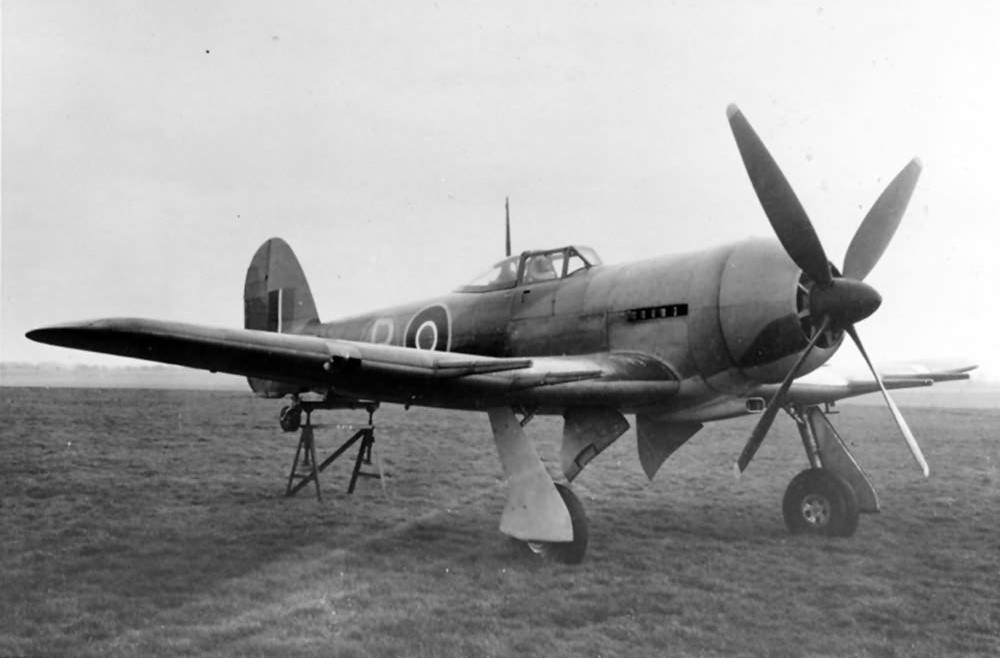
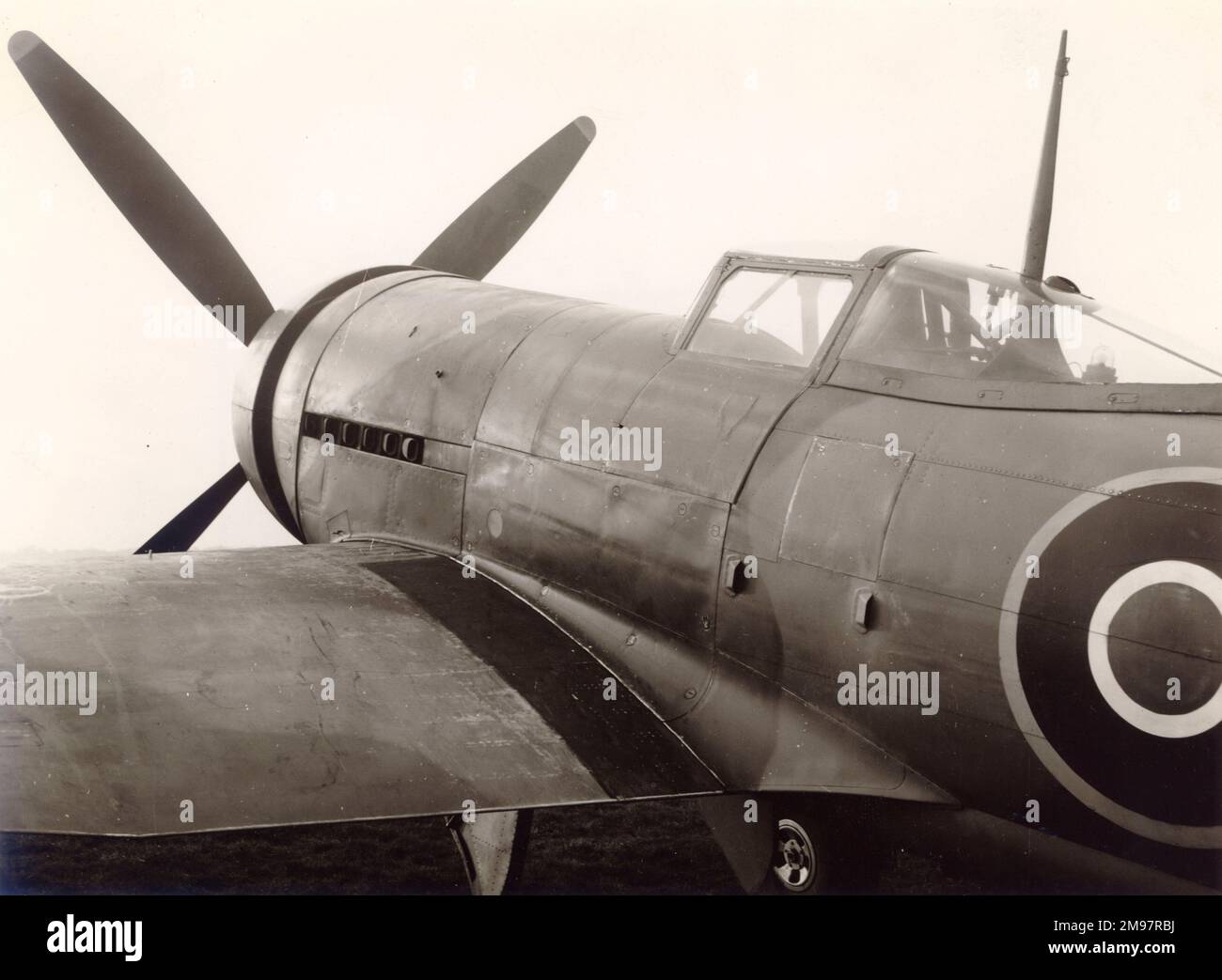
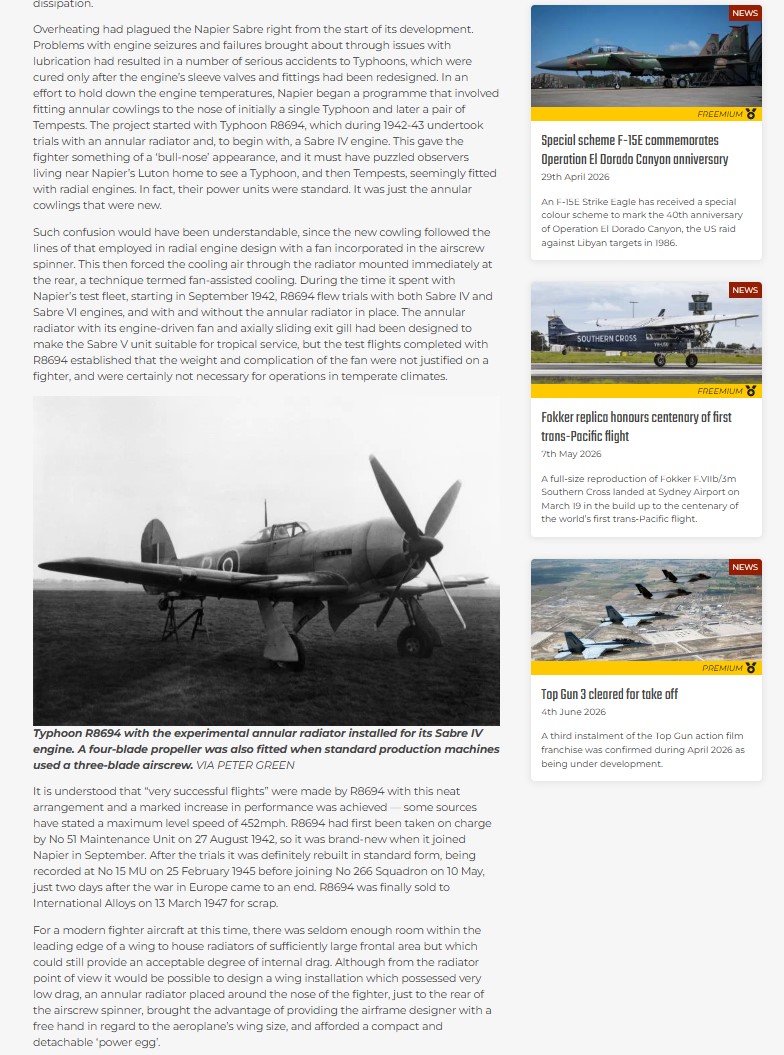
As such, late in the war, Napier invested significant resources into alternative cooling arrangements for the Sabre, resulting in a sizeable amount of experimentation with annular radiators, installed around the propeller hub with a much less protrusive circular intake. A couple of Tempest airframes were modified, as well as a Vickers Warwick bomber, and the subject of this suggestion - Typhoon R8694.
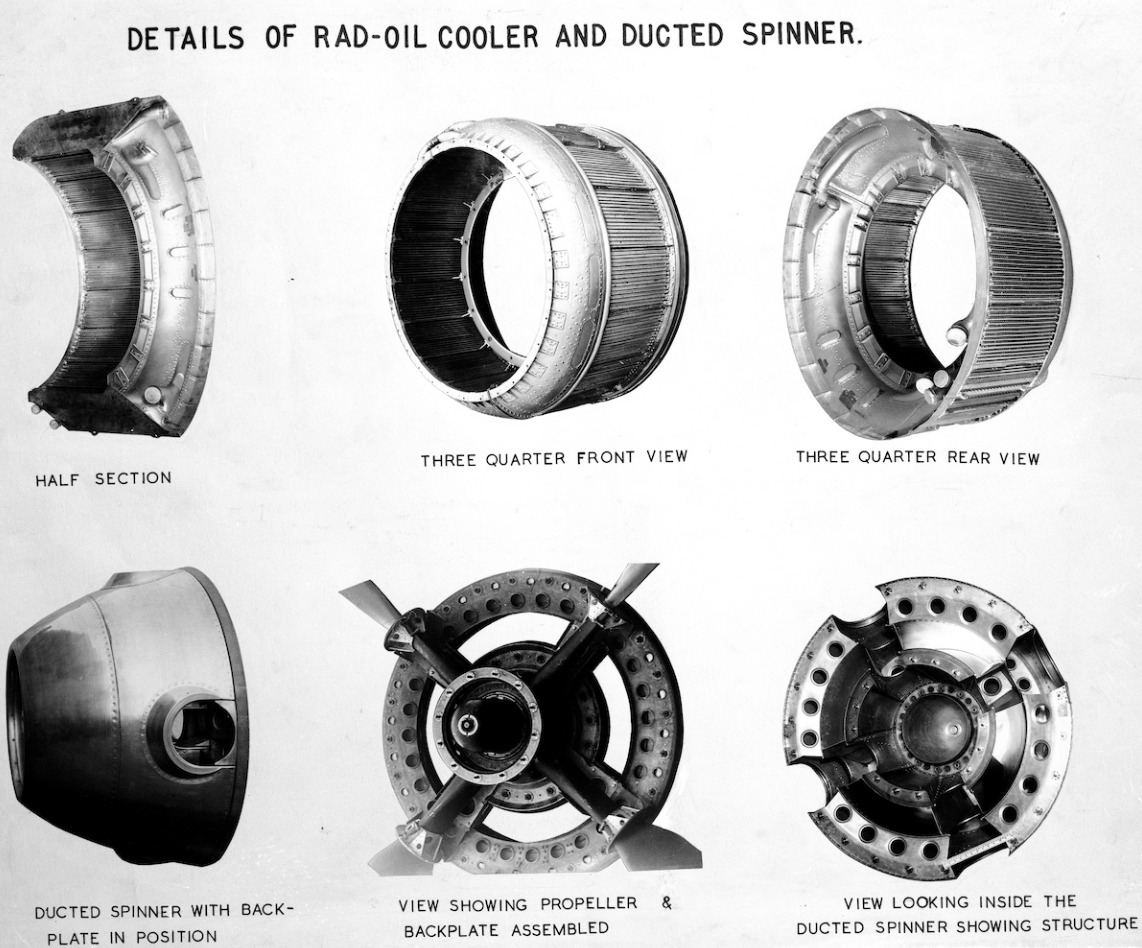
A detailed breakdown of the components of the annular radiator (along with a ducted spinner, which this Typhoon was not fitted with)
Typhoon R8694 joined Napier’s test fleet in September 1942 shortly after being delivered new. During 1942 and 1943 it flew extensive trials with both Sabre IV and Sabre VI engines, operating both with and without the annular radiator installation. Reports described the flights as “very successful”, Napier quoted a maximum speed of 452mph with the installation fitted. On both the Typhoon and Tempest airframes, the total % of airframe drag produced by the radiator was reduced from 13% to 4.5%, a huge overall reduction.
Unfortunately, the development of the annular radiator was considered too complex and costly to warrant a change in the production standard Typhoons, and, despite the significant performance increases, it remained a one-off prototype. After the trials, R8694 was rebuilt to standard configuration, later serving with No. 266 Squadron before ultimately being sold for scrap in 1947.
In-game, Typhoon R8694 represents the peak of the Typhoon lineage, not only with an improved airframe but also fitted with the Sabre IV and VI engines, the latter of which offers a notable bump in horsepower compared to the Sabre IIs of the production Typhoons. Typhoon R8694 would therefore be a perfect option, both historically and in the tech tree, to bridge the current sizeable gap between the Typhoons and Tempests.
Specifications
Spoiler
General characteristics
Crew: One
Wingspan: 41 ft 7 in (12.67 m)
Wing area: 279 sq ft (25.9 m2)
Empty weight: 8,840 lb (4,010 kg)
Gross weight: 11,400 lb (5,171 kg)
Max takeoff weight: 13,250 lb (6,010 kg) with two 1,000 lb (450 kg) bombs
Powerplant: 1 × Napier Sabre IV, 2,240hp or 1 × Napier Sabre VI, 2,310hp
Propellers: 4-bladed Rotol constant-speed propeller
Maximum speed: 452 mph (727 km/h)
Armament
Guns: 4 × 20 mm Hispano Mk II cannon
Rockets: 8 × RP-3 air-to-ground rockets.
Bombs: 2 × 500lb (230 kg) or 2 × 1,000lb (450 kg) bombs
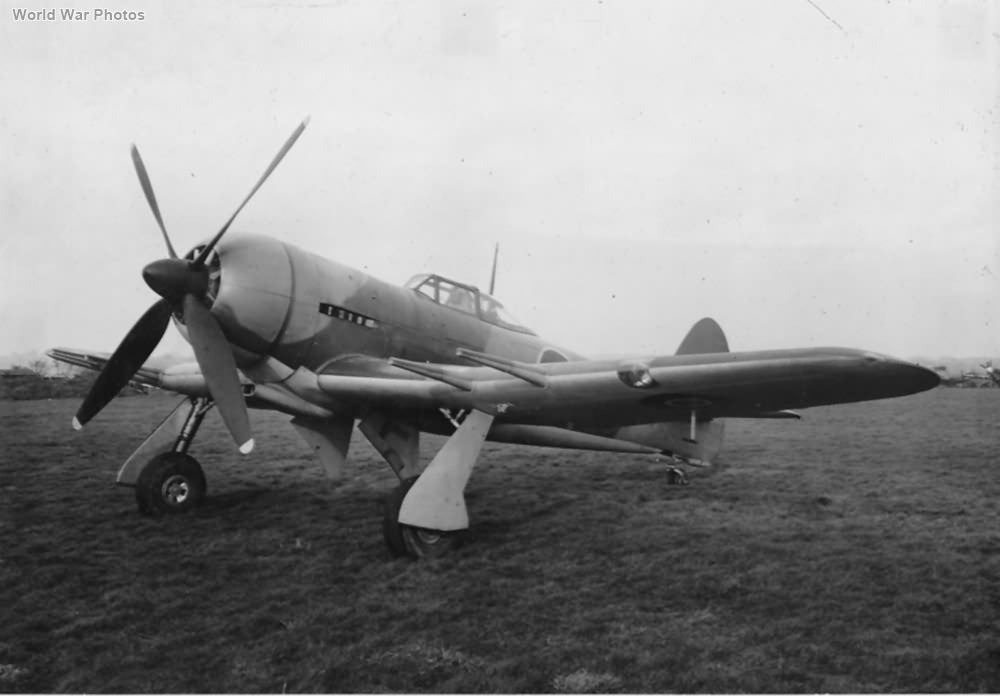
Images


Sources
Spoiler
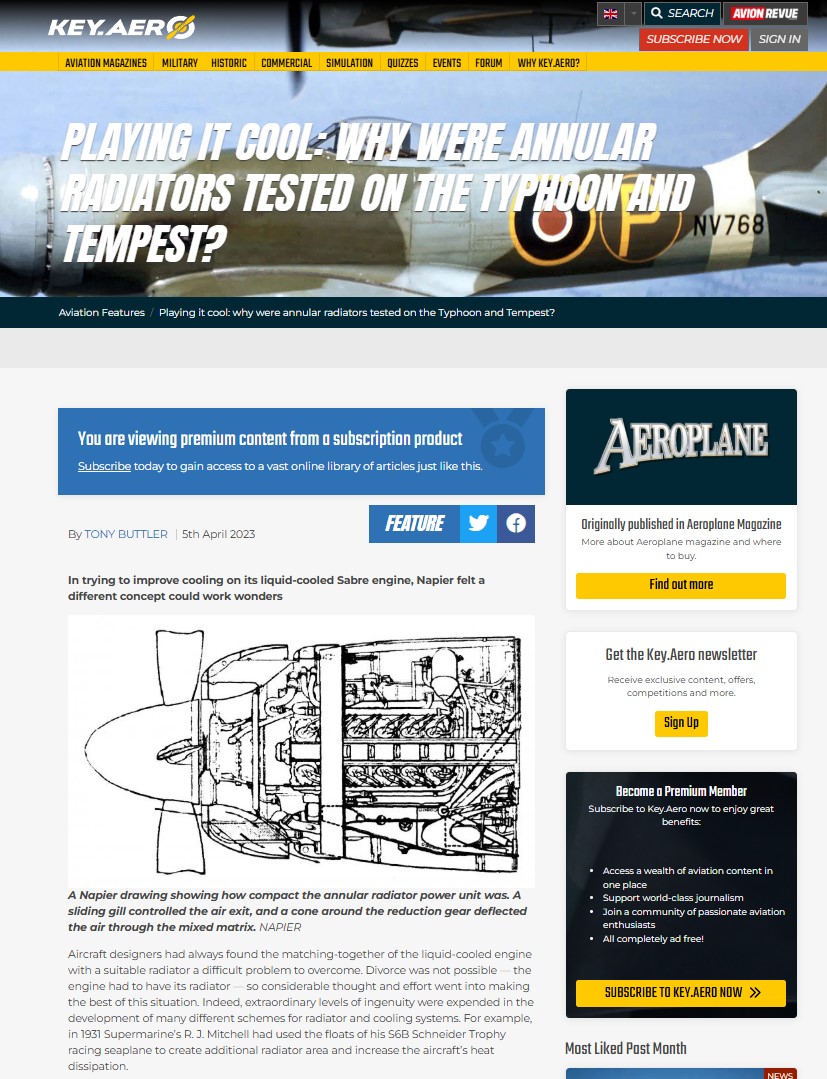
https://www.key.aero/article/playing-it-cool-why-were-annular-radiators-tested-typhoon-and-tempest
This article can be randomly paywalled. Full article below
Profile Publications - The Hawker Typhoon
Napier Report - Flight and Manufacturing Experience with the Napper Annular Radiator Installation in the Tempest Aircraft - this report focuses on the annular radiator installation in the Tempest, but the overall assesment of the flaws of the chin radiator and benefits of the annular radiator is highly relevant to the Typhoon.
https://npht.org/napier-sabre-annular-radiator/