H.M Jagare Mode (1942)
- Yes
- No
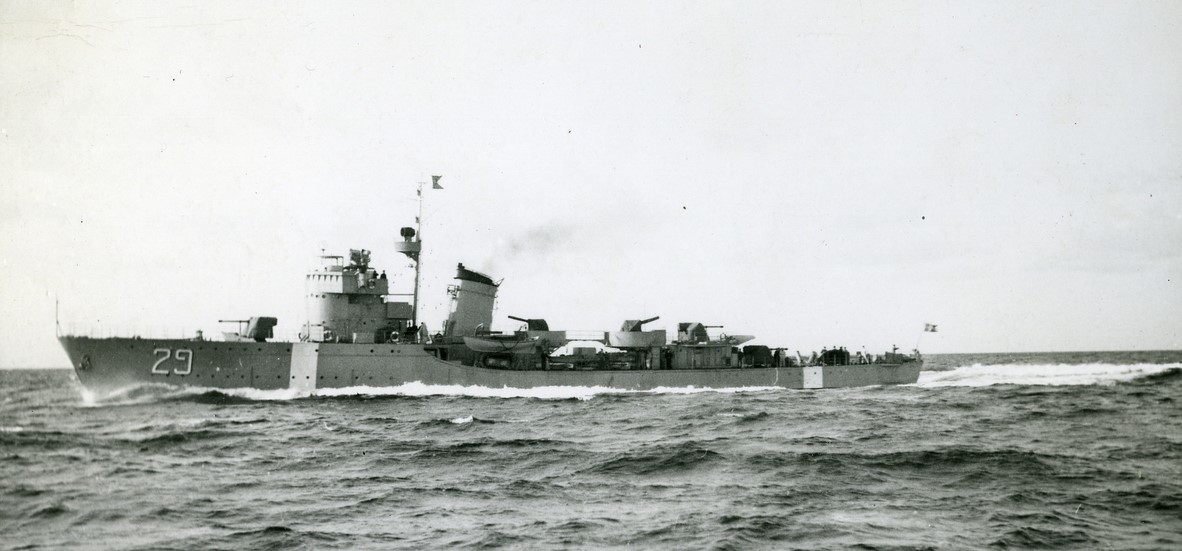
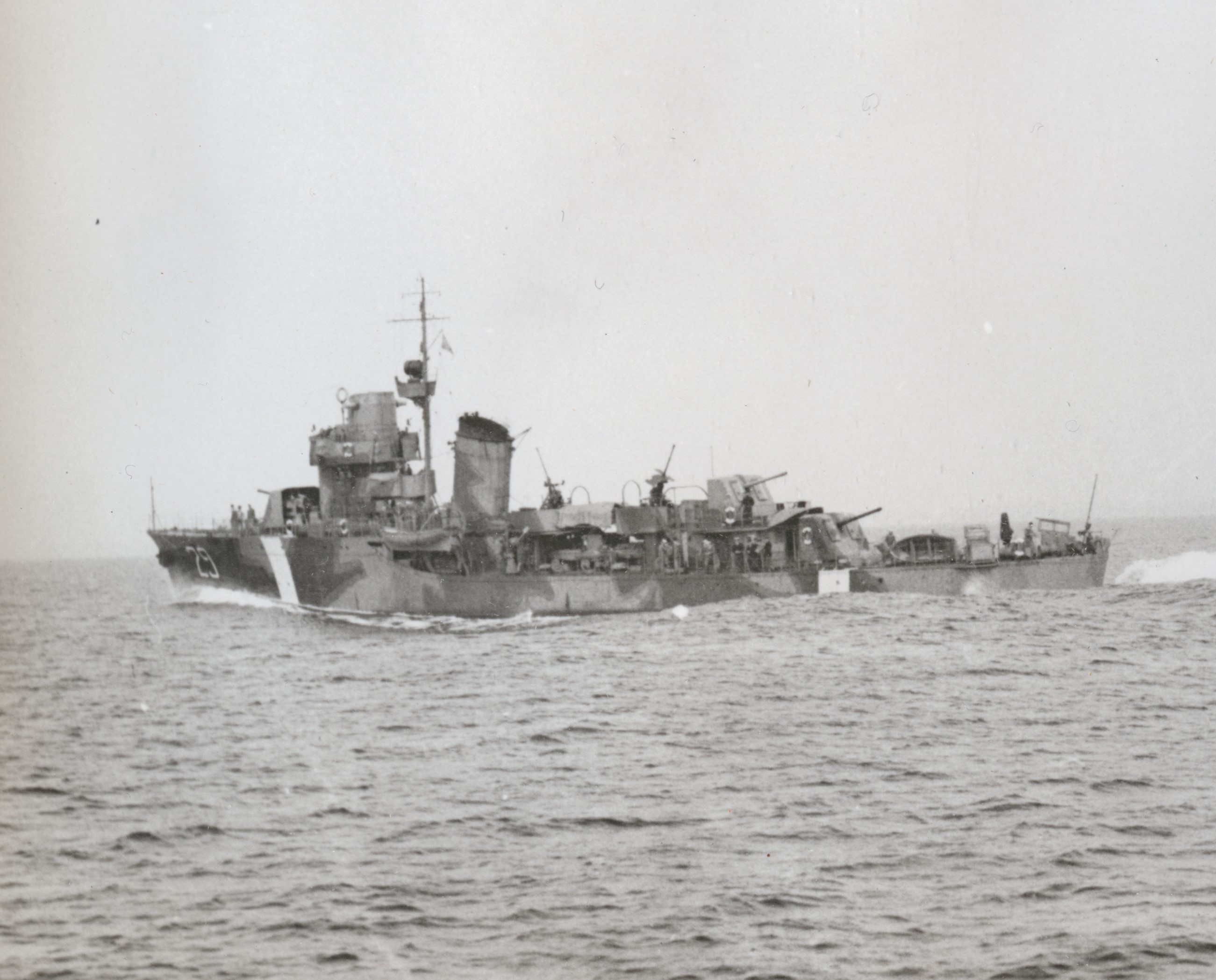
H.M Jagare Mode was a coastal destroyer in the Swedish navy and the first of the four ships of the mode class. Launched and delivered in 1942, she was built on the idea of the Italian Spica class torpedo boats recently purchased by Sweden (Romulus class) with inspirations from other ships. Four ships would be built in total with HM Mode coming first, she served well during the war preforming duties such as escorting the larger Pansarskepp and general surveillance missions. Post war in 1953 she was rebuilt as a frigate, having (among other things) one of her 105mm cannons removed and her AA guns modernized. She served as a frigate until 1970 where she was put out of service and instead used as a school ship until she was scrapped in 1978.
History
The story begins in 1940, the Swedish navy was in dire need of new ships, however Swedish shipyards could only work so fast and as such they went abroad to see if any foreign ships were available for purchase. Luckily the Italians were more than happy to sell some of their old stock, not just ships but aircraft and equipment too. In the deal with the navy four ships were bought, two destroyers of the Sella class and two torpedo boats of the Spica class. White the two Sella class destroyers, who became HM Psilander and HM Puke, were of a rather poor design, the Spica class torpedo boats that became HM Romulus and HM Remus proved themselves to be of excellent making. As such the Swedish navy ordered a new class of ships similar but to the Spica class, only modern and upgraded. The new class, to be named the Mode class, were heavily based on the Spica class, however they also took inspiration from blueprints of a more modern Sella class destroyer also purchased in the deal with Italy as well as the Norwegian Sleipner class and preceding Swedish destroyers as well. All in all the design was of a small destroyer, lightly armed but nevertheless an valuable asset to the navy.
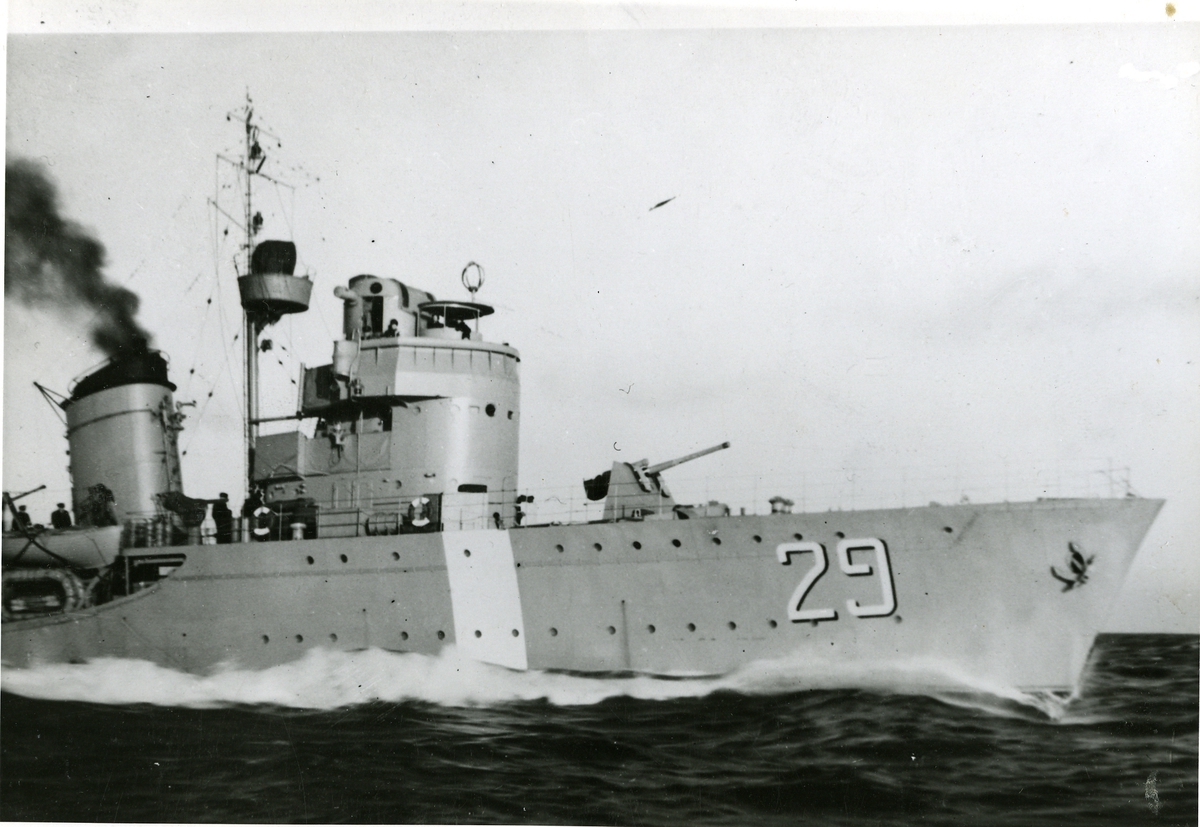
HM Jagare Mode on the sea.
HM Jagare Mode would launch in 1942 with her joining the navy later that same year. She was built by Götaverken in Göteborg as well as her sister ship HM Mange. Two more ships were ordered as well, being HM Munin and HM Mjölner with them being built at the Öresund shipyard and Eriksberg shipyard respectively. The sisters would serve well in the navy, being appreciated for their comfortably compared to other destroyers serving at the time. They would preform surveillance and patrol duties as well as escorting the likes of the navy’s battleship equivalents, the Pansarskepp. Post war HM Mode would continue to serve in the navy, breifly departing Swedish waters to go on a trip around Europe with her sister HM Munin as well as the Anti-Aircraft cruiser HM Gotland in 1947. In 1953 she was reclassified and rebuilt into a Frigate, having one of her aft 105mm cannons removed and her AA guns modernized as well as having better anti submarine weaponry installed. She surved in this form for many years until she was put out of service in 1970 and used as a school/training ship for the Berga örlogsskolor naval school. She stayed there until 1978 where she was finally scrapped in Ystad.
Armament and stats
Legnth: 78 meters
Width: 8,1 meters
Draught: 2,7 meters
Weight: 785 tons
Speed: 30 knots
Crew: 67 men.
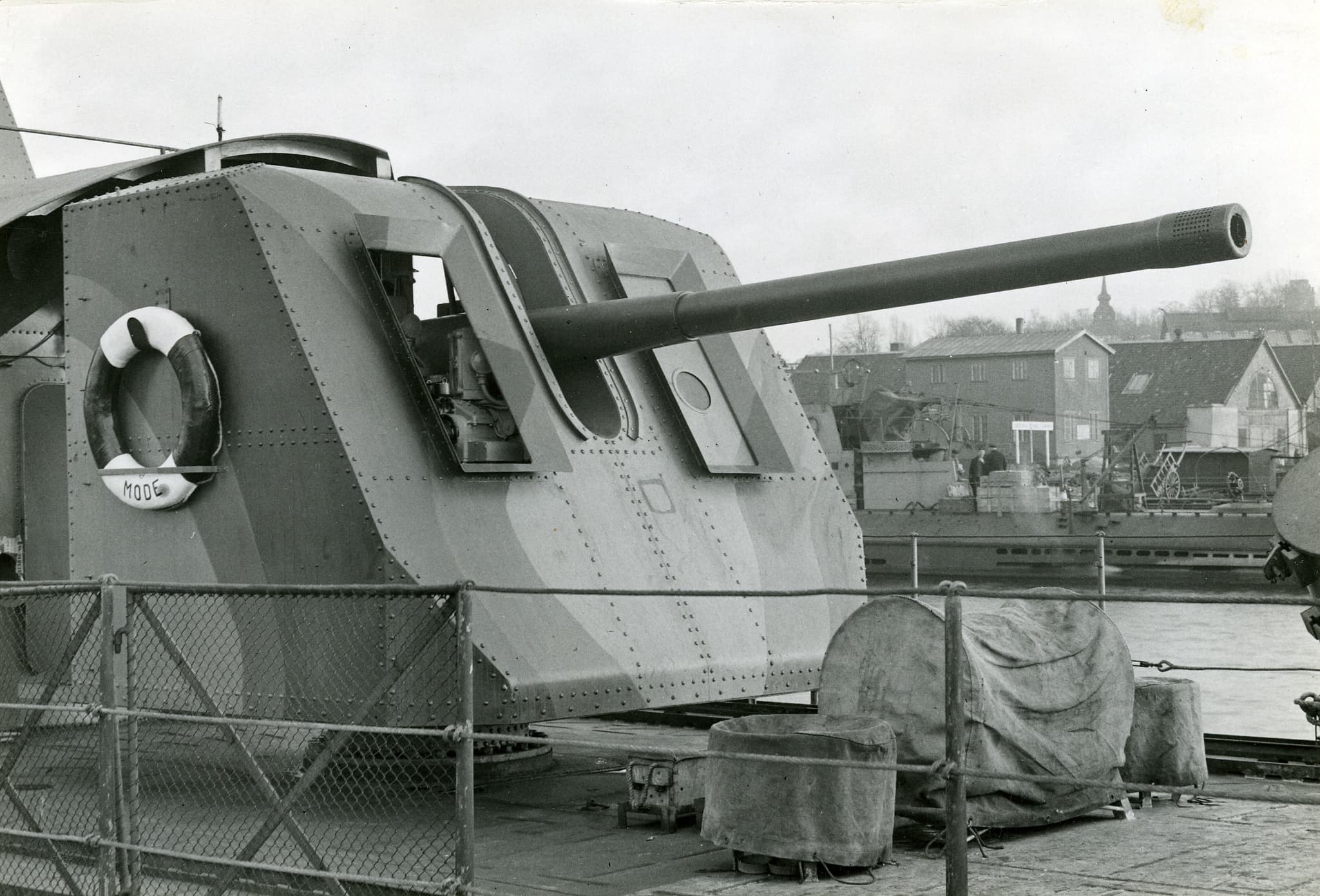
Main armament: 3 x 105mm lvkan m/42.
105mm shells:
Stgr m/40, 16,5 kg with 1,32kg filler, velocity of 831 m/s.
Sgr m/40, 16 kg with 1,36kg filler, velocity of 840 m/s.
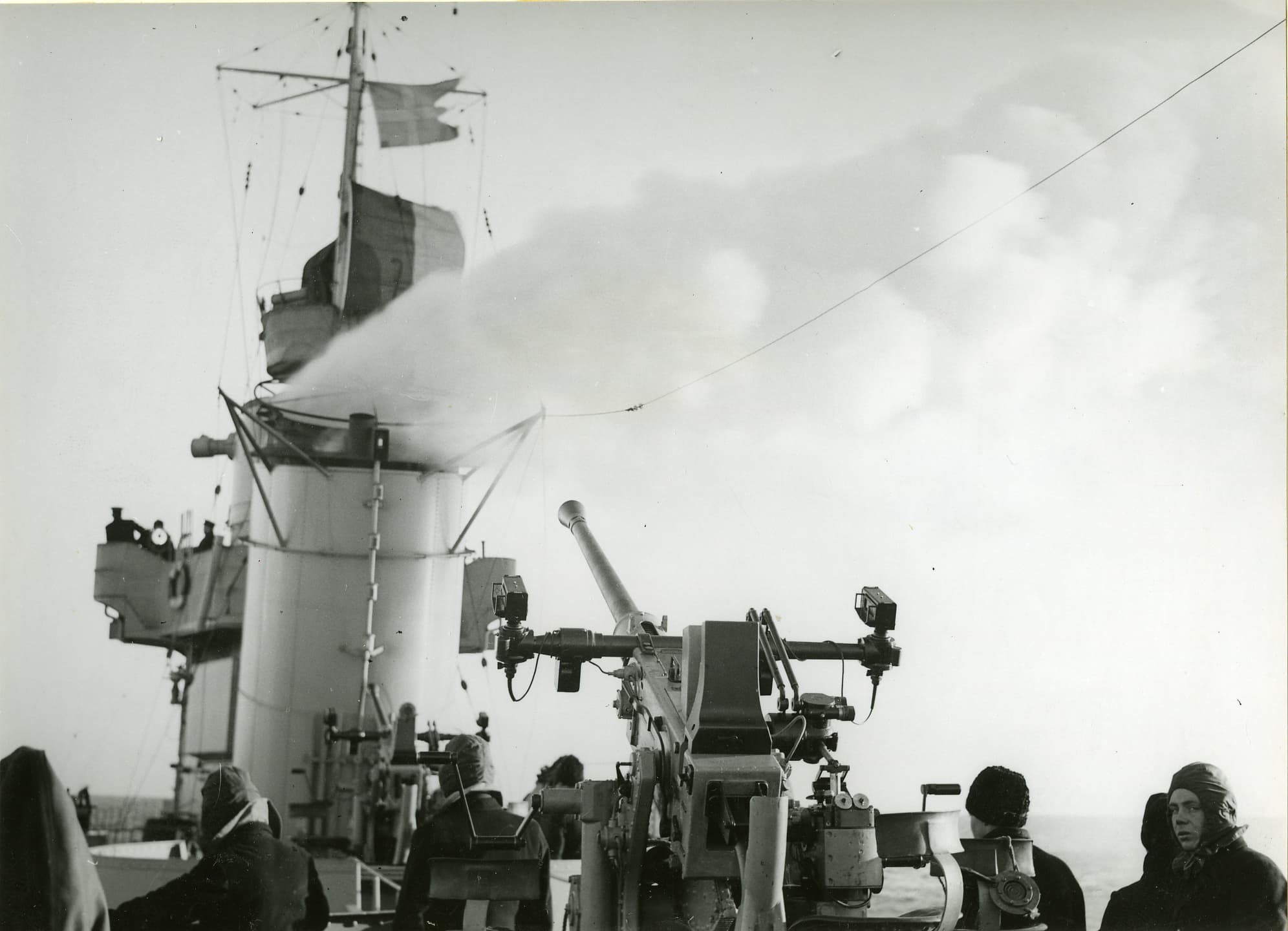
Anti air armament: 2 x 40mm lvakan m/36 and 2 x 20mm lvakan m/40.
Secondary armament: 3 x 53 cm torpedo tubes in a tripple mount, 2 x depth charge launchers Sjbk m/33, 2 x depth charge droppers Sjbf “type C”, she could also carry up to 42 mines.

Sources
Swedish navy’s ammo register, 1947.
The book “Örlogsfartyg, Svenska maskindrivna fartyg under tretungad flagga.” by Gustaf von Hofsten and Jan Waernberg, 2003.