- Yes
- No
History
In 1974, when the U.S. Navy deployed the AIM-54A Phoenix missile alongside the F-14A Tomcat, it marked a paradigm shift in aerial combat. The AIM-54 was the world’s first Active Radar Homing (ARH) missile, which did not require the launch aircraft to maintain a radar lock until impact. This capabilities were very innovative at that time.

However, weighing as much as a 1,000-pound bomb, it was so heavy that even the F-14 struggled to carry a full load of six missiles. Furthermore, while its range was impressive, its maneuverability left much to be desired.
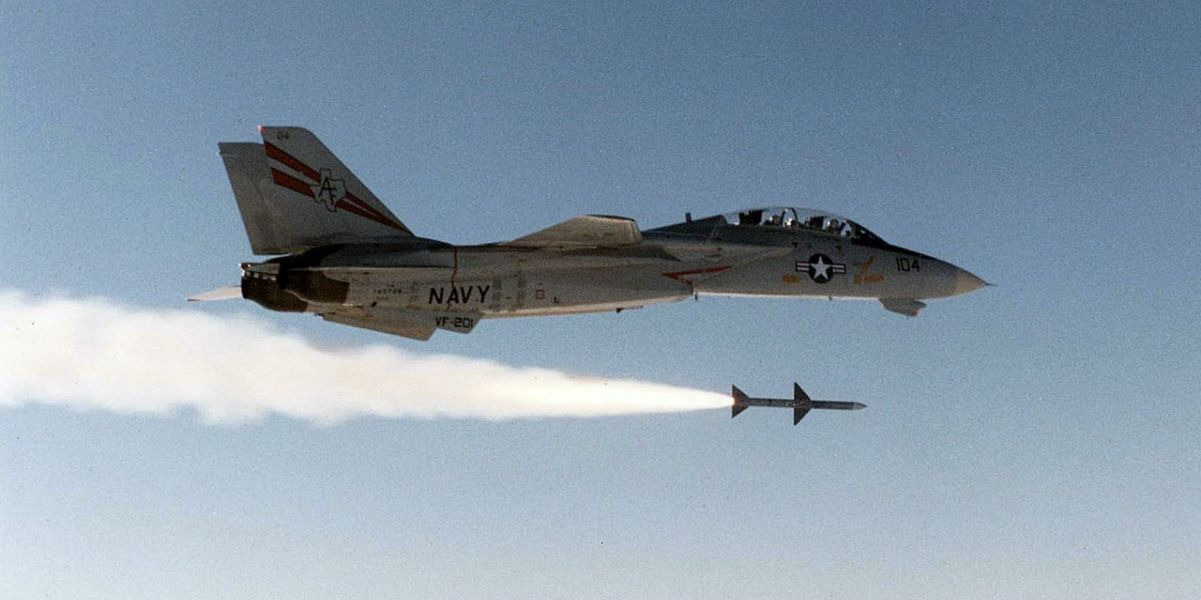
On the other hand, while the AIM-7 Sparrow was significantly smaller and lighter, its semi-active radar homing nature meant that hit probability could not be guaranteed if the launch aircraft had to perform evasive maneuvers after firing.
Naturally, this raised a obvious question: why not make a compact, lightweight air-to-air missile with superior maneuverability and an active radar homing system? And yes, that is exactly where our imagination led us.
From 1974 to 1978, the U.S. Department of Defense conducted a joint test and evaluation at Nellis AFB called the Air Combat Evaluation/Air Intercept Missile Evaluation (ACEVAL/AIMVAL). The conclusion drawn from these tests was precisely that: packing the multi-launch and terminal attack capabilities of the AIM-54 into an AIM-7-sized airframe.
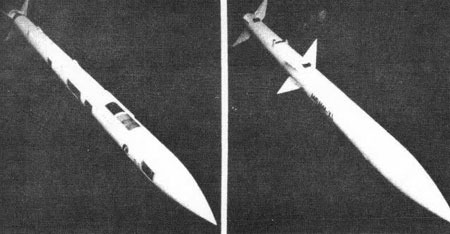
(Raytheon and Hughes YAIM-120A, respectively)
In February 1979, Hughes and Raytheon were selected as the final contenders to develop the YAIM-120A AMRAAM. And in December 1981, Hughes was declared the winner. The first test firing of the AIM-120 took place from an F-16 in February 1984.
However, due to a storm of technical and political hurdles, the program suffered delays and budget overruns. As a result, the first Low-Rate Initial Production (LRIP) AIM-120A was not delivered until October 1988, and its Initial Operational Capability (IOC) was finally declared in September 1991.
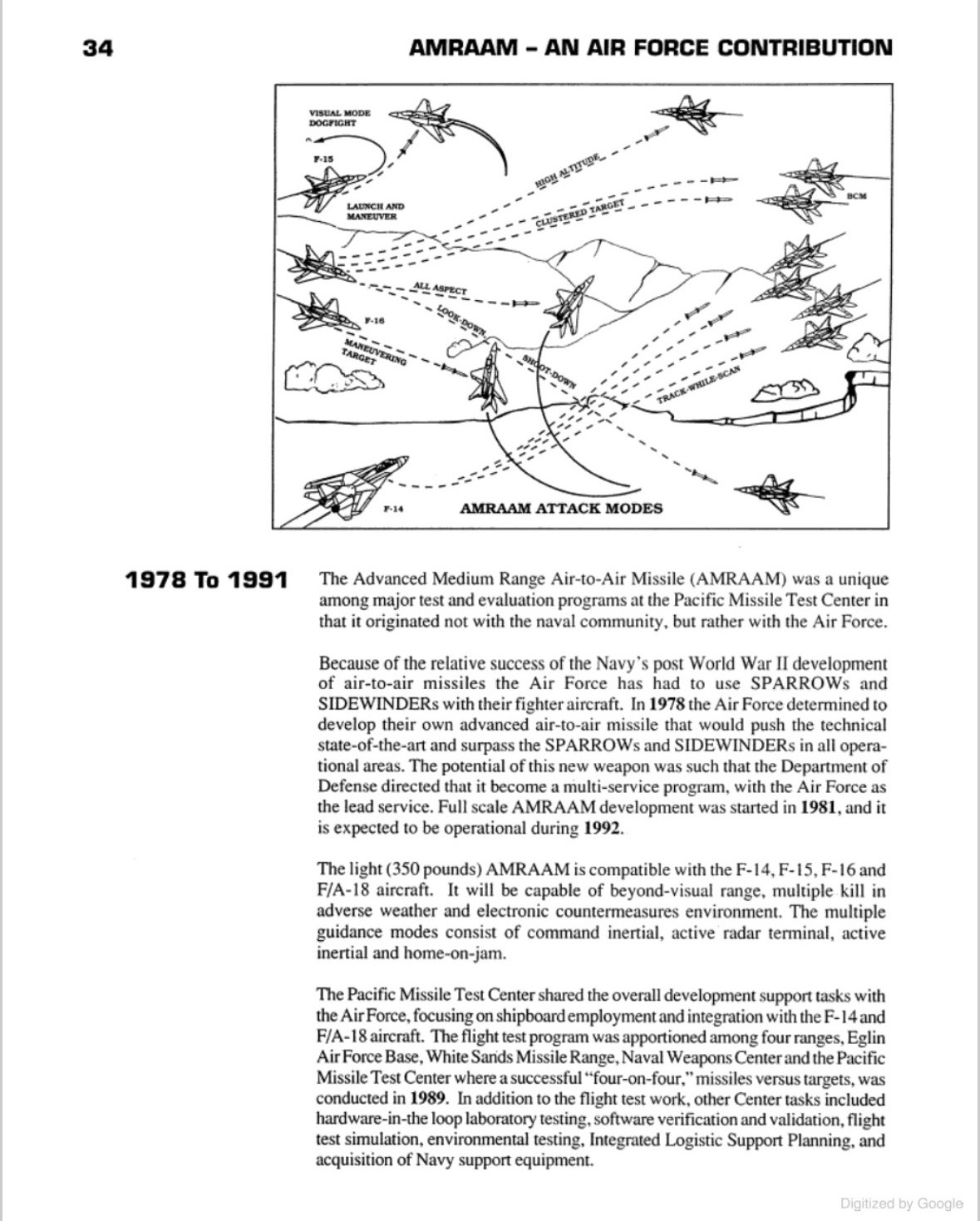
Although the U.S. Air Force led the AMRAAM program, it was a joint effort with the U.S. Navy. Naturally, the Navy planned to integrate the AIM-120 onto its own tactical aircraft, with the F-14 and F/A-18 being the top candidates.
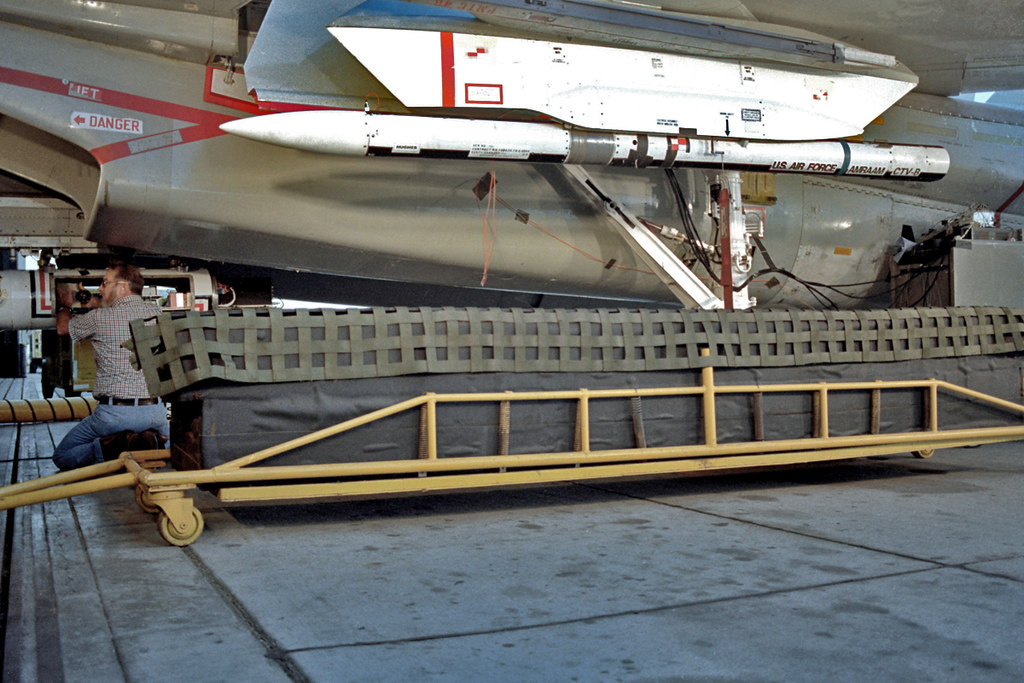
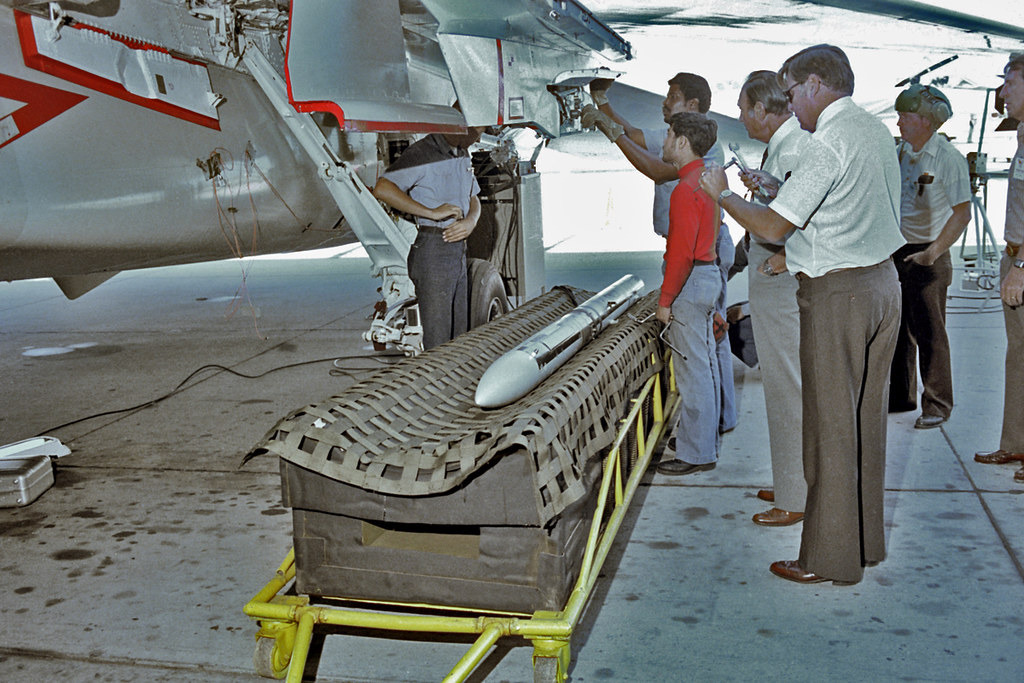
(NF-14A PMTC-226 during the AMRAAM ground ejection test, 16 September 1981)
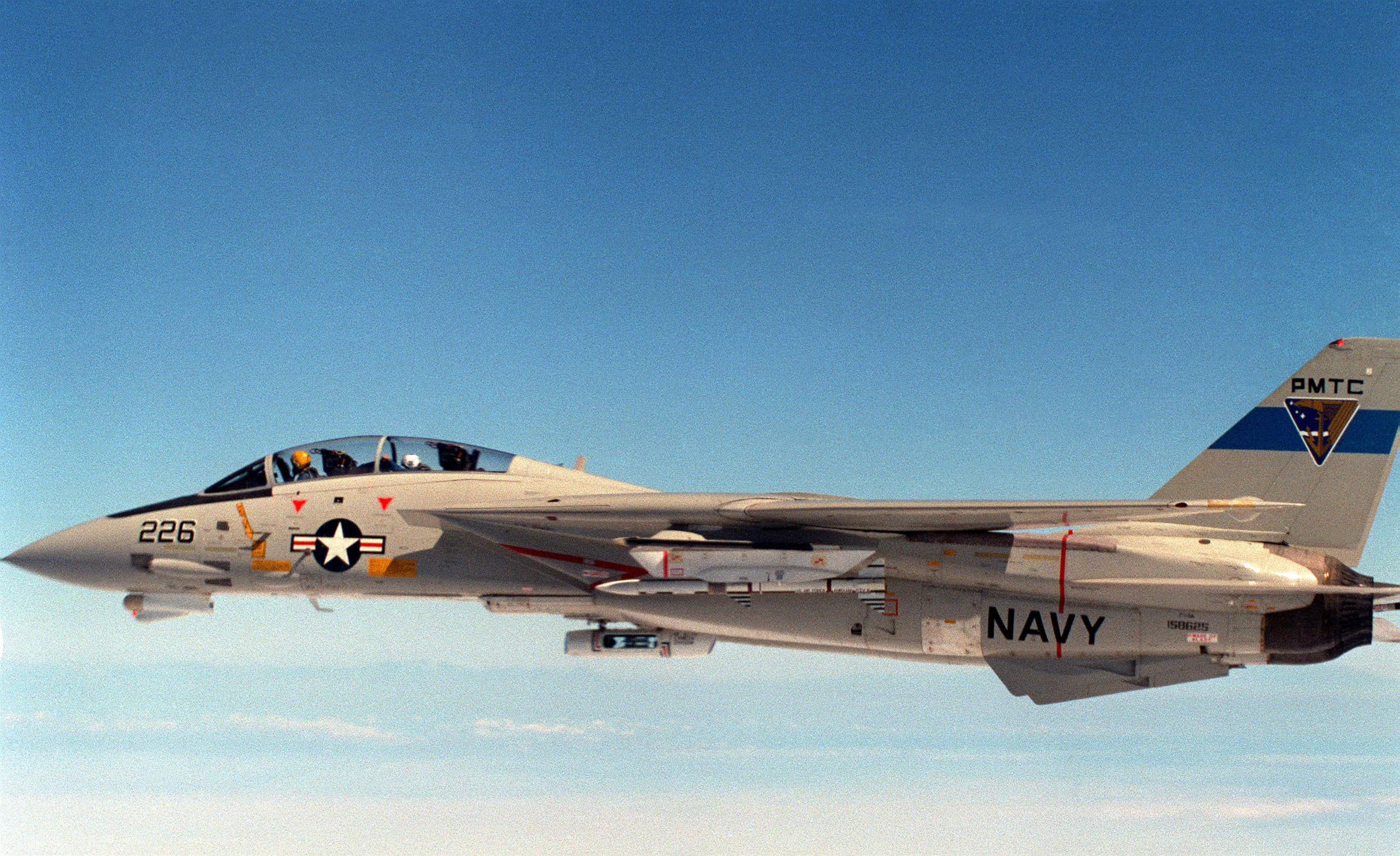
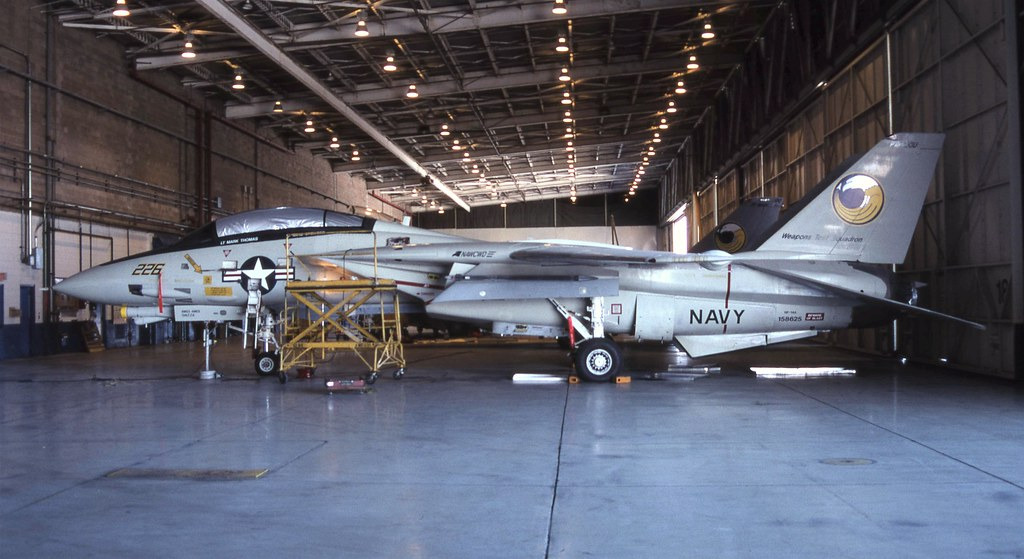
For the Tomcat, the aircraft assigned to these tests was NF-14A PMTC-226 belonging to the Pacific Missile Test Center. In December 1981, this aircraft conducted the first separation and ignition test of the AIM-120.
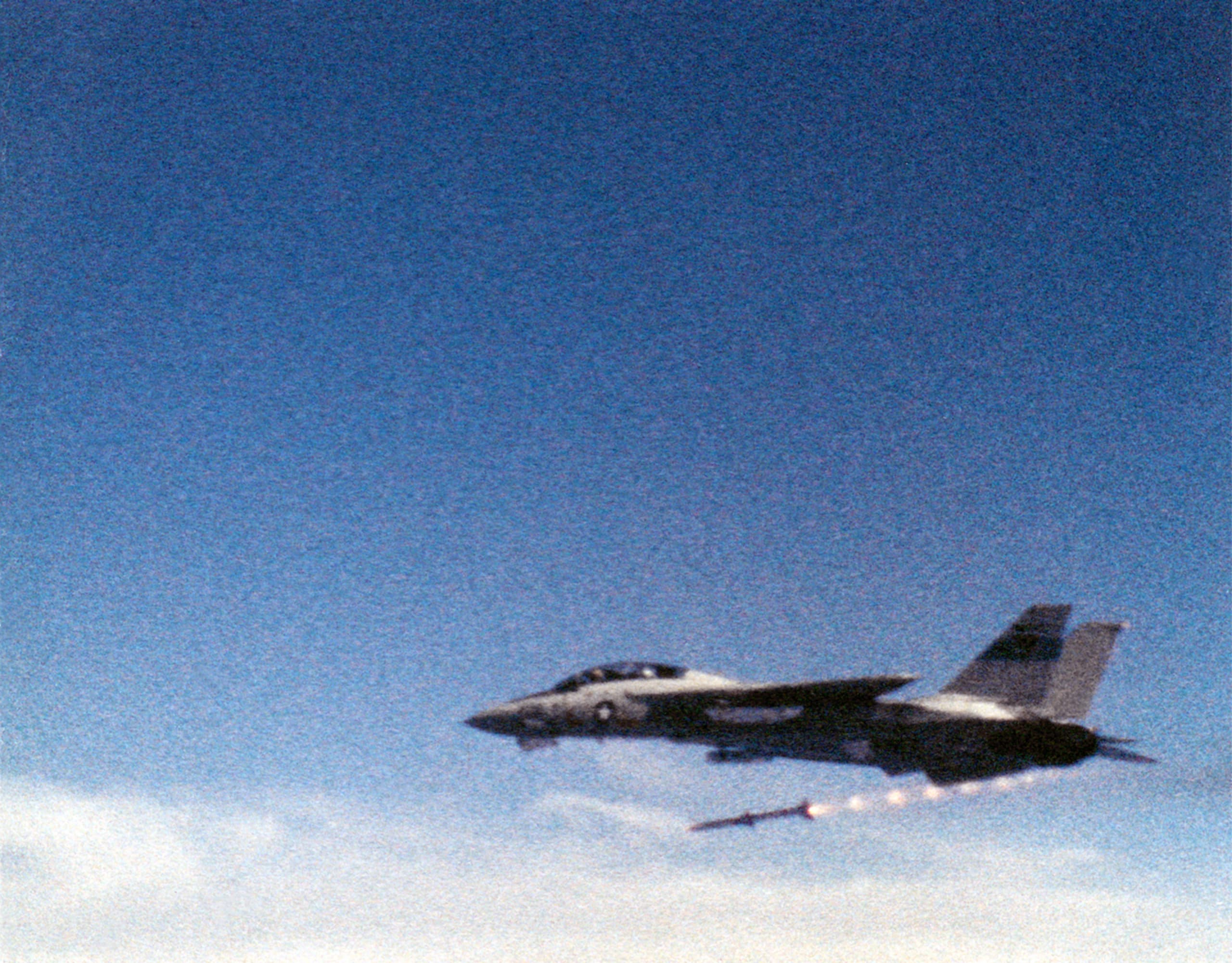
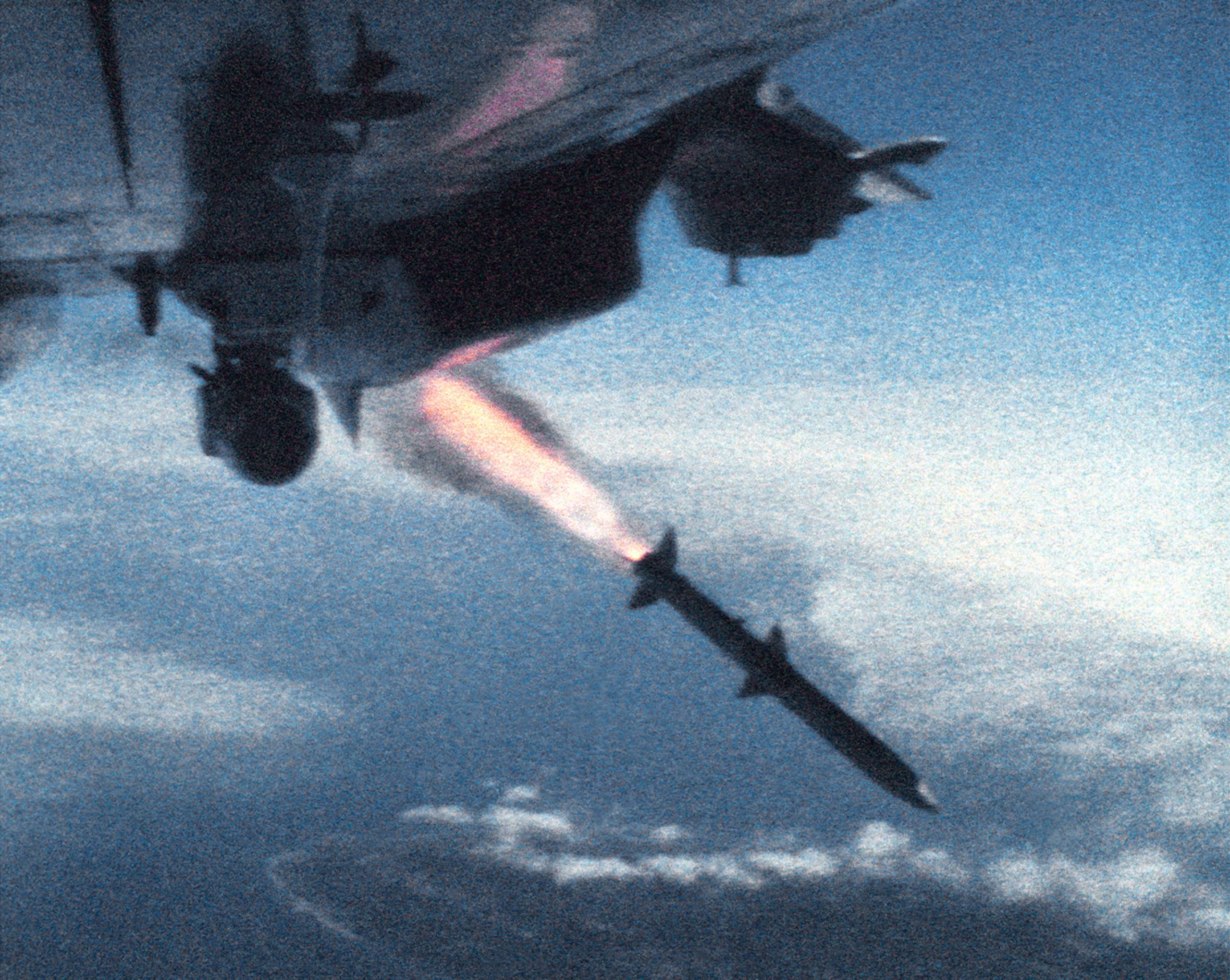
(NF-14A PMTC-226 performes ejection and ignition test of AIM-120, 1 December 1981)
The U.S. Navy originally planned to integrate AMRAAM on F-14 through software upgrades, but reality proved far less accommodating. The abrupt end of the Cold War brought massive budget cuts. Critically, the failure of the A-12 program and the cancellation of the A/F-X left the retirement of the A-6 Intruder without a direct successor, creating a temporary gap in the carrier strike group’s long-range strike capabilities.
Consequently, until the F/A-18E/F Super Hornet could be fielded, the Navy had to choose between integrating the LANTIRN pod onto the F-14 to use it as a gap-filling strike fighter, or integrating the AIM-120. The Navy (wisely) chose the former, and the plan to integrate the AMRAAM onto the Tomcat was scrapped.
So the NF-14A went down in history as the only Tomcat to ever ‘fire’ the AMRAAM—right before the Navy ‘fired’ the Tomcat from the AMRAAM program altogether.
Description
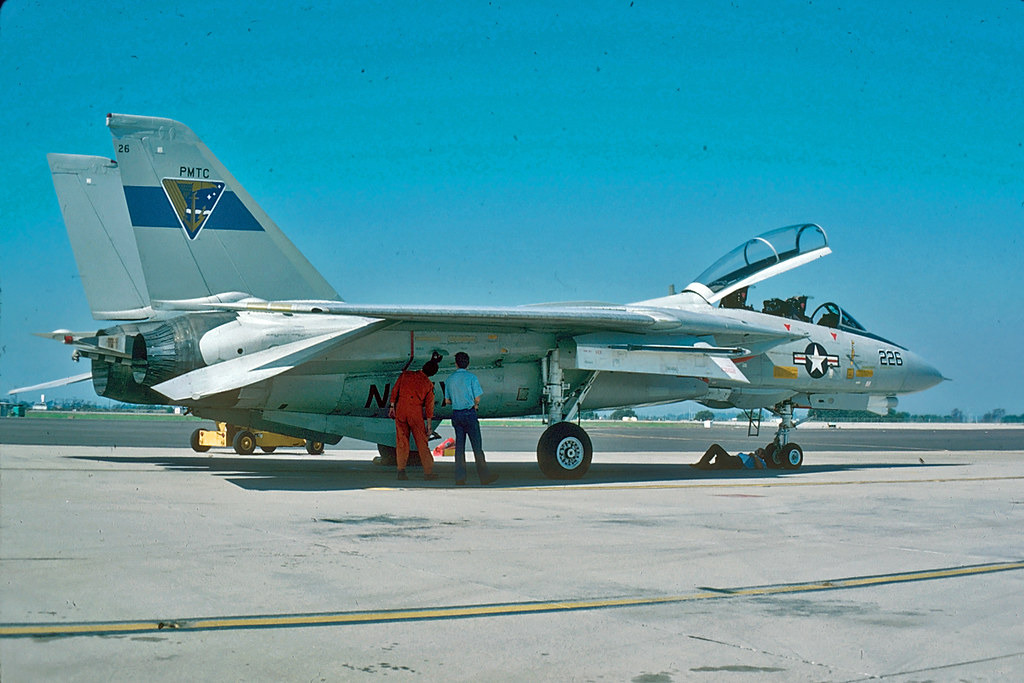
The NF-14A PMTC-226 is a F-14A BuNo 158625, a very early production (block 65) aircraft. So technically speaking, the airframe and avionics are identical to the F-14A early in game.
Since I believe many players are already familiar with the F-14A, I won’t go into detail about it here. Instead, I will focus solely on the differences between the NF-14A and the in-game F-14A.
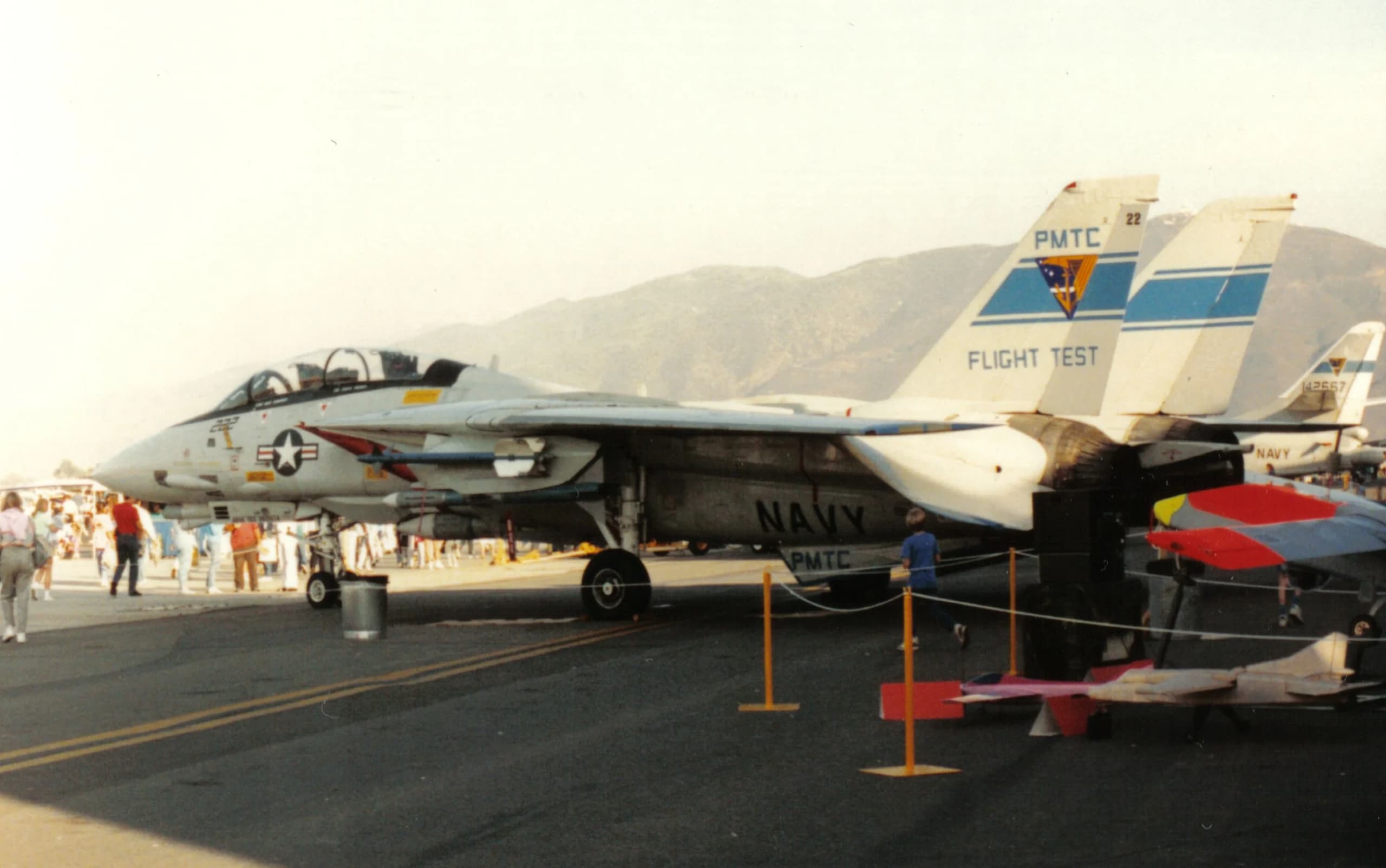
(NF-14A PMTC-222, different aircraft but from the same base)
In the PMTC, NF-14s were used to develop, test and evaluate various air-to-air missiles. This includes AIM-9L/M, AIM-7M, and of course the AIM-120.
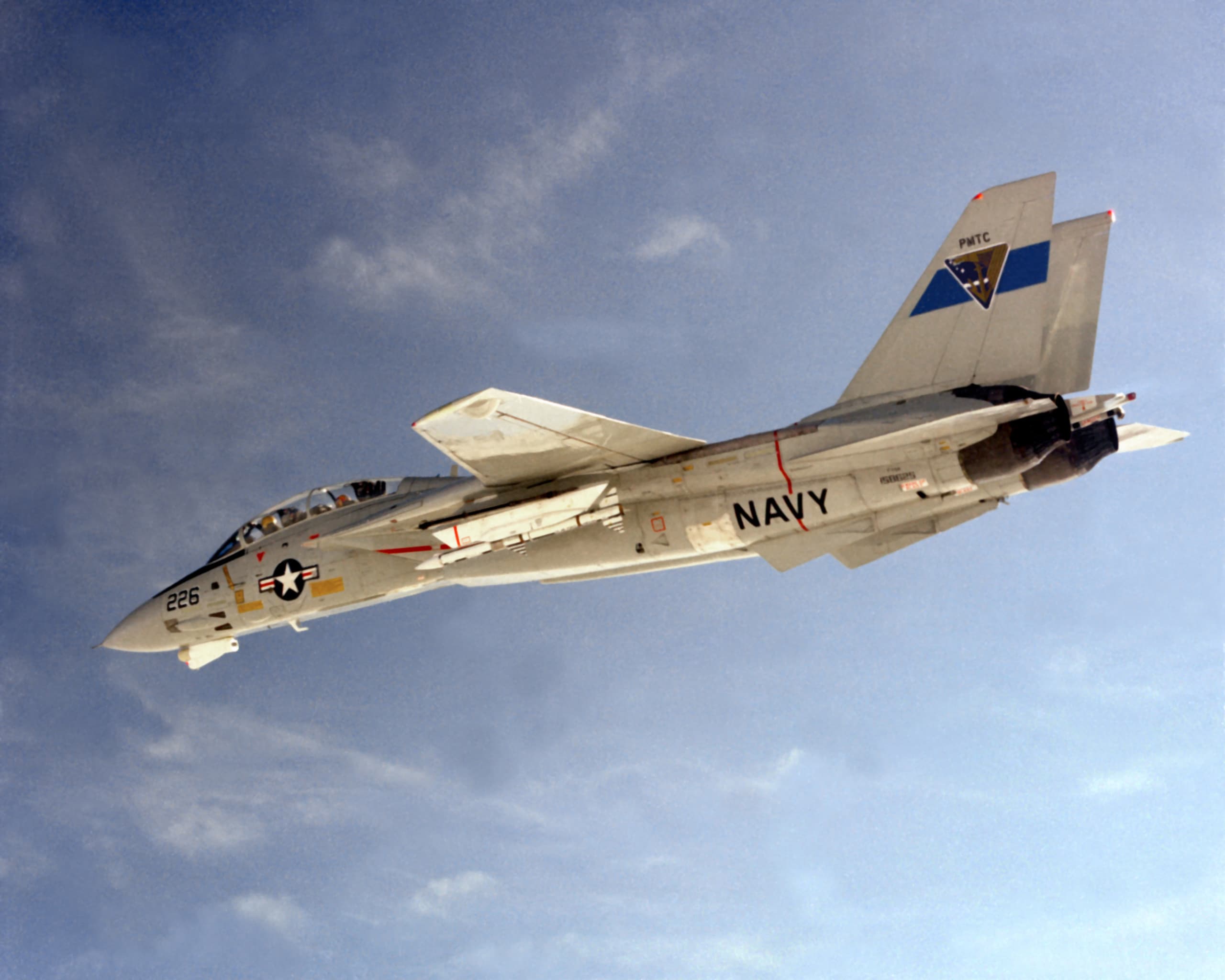
As already said, NF-14A PMTC-226 is a unique aircraft as an only Tomcat to ever carried and launched AMRAAM during flight. This aircraft carried YAIM-120A (prototype of the AIM-120A) on station 1B using LAU-92 adapter, which used to carry AIM-7 under wing.
Although it is uncertain if they went as far as ejection and ignition testing, it is verified that at least one other NF-14A, including PMTC-224 (BuNo 158623), was involved in AMRAAM carriage trials.
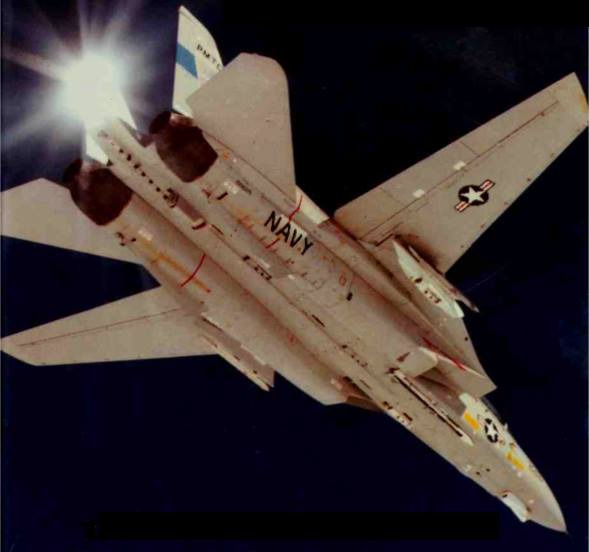
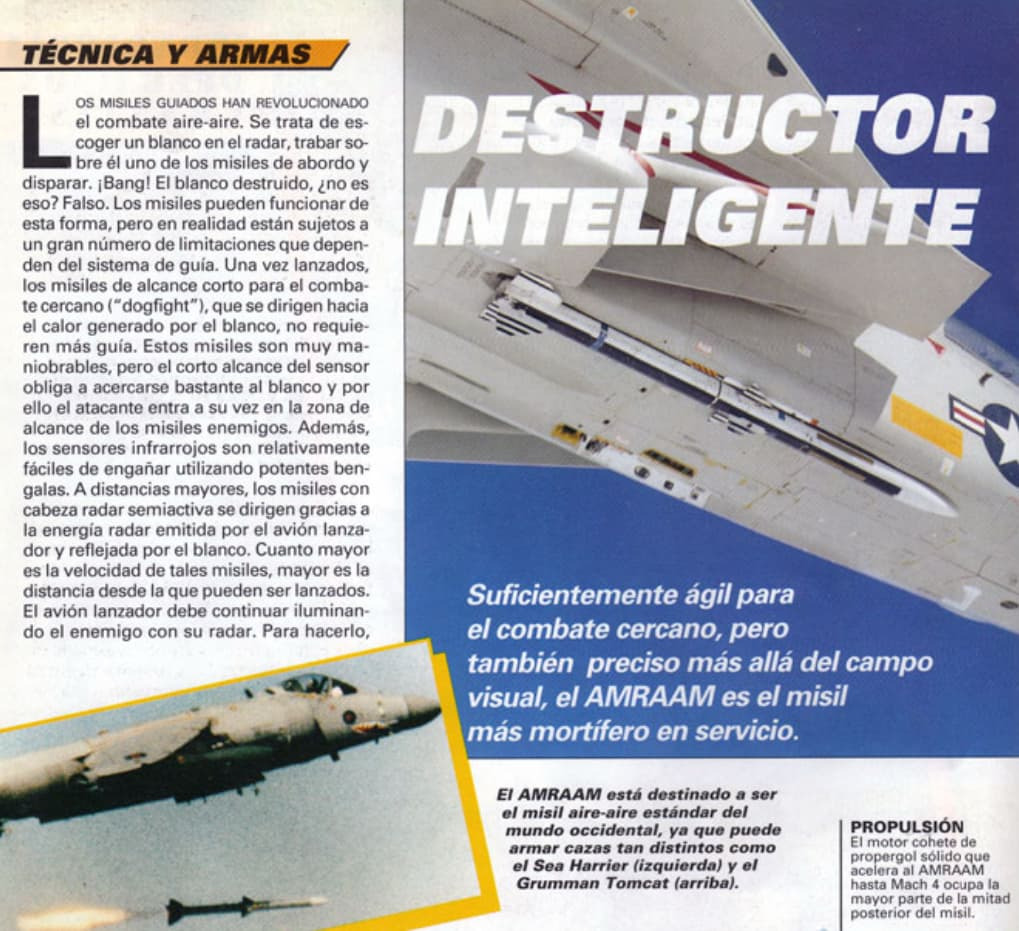
Technically speaking, the external shapes of the AMRAAM were meant to be compatible with existing AIM-7 launchers, and the NF-14A at least once flown with carrying YAIM-120A on station 6.
So in a nutshell, the NF-14A could theoretically carry six AMRAAM, but it only demonstrated successful eject and ignition capability on wing pylon. Since this is a potentially controversial issue, I’ll leave that decision up to the developers.
However, the NF-14’s AMRAAM test is only performed in STT mode, so it cannot be used during the TWS mode.
Although it’s a minor difference, there is also a mounting structure for the AN/ALR-23 IRST.
Specifications
Crew: 2
Length: 61 ft 10.6 in (18.86 m)
Height: 16 ft (4.88 m)
Wingspan:
- Swept: 38 ft 2.4 in (11.64 m)
- Unswept: 64 ft 1.5 in (19.55 m)
Wing area: 565 ft² (52.5 m²)
Weights:
- Basic: 37,787 lb (17,140 kg)
- Maximum takeoff: 71,000 lb (32,205 kg)
Powerplant: 2× TF30-P-412A
Armaments:
- Hardpoints: 10 total
- Gun: 1× M61A1 20 mm gun
- Air-to-air missiles:
- 4× AIM-9L/M Sidewinder
- 6× AIM-7M Sparrow
- 6× AIM-54A/C Phoenix
- 2~6× YAIM-120A AMRAAM
- Unguided bombs:
- 14× Mk 81 bombs
- 14× Mk 82 bombs
- 4× Mk 83 bombs
- 4× Mk 84 bombs
- Unguided rockets:
- 16× Zuni Mk32
Avionics:
- Radar: AN/AWG-9
- RWR: AN/ALR-45(V)
- IRST: AN/ALR-23
Countermeasures:
- Chaff/Flare: 2× AN/ALE-39 (60 total)
- ECM: AN/ALQ-100
Sources
- NAVAIR 01-F14A-1 Preliminary Flight Manual (u) F-14 (1 June 1972)
- NAVAIR 00-110AF14-1 Standard Aircraft Characteristics Navy Model F-14A Tomcat (July 1974)
- NAVAIR 00-110AF14-1 Standard Aircraft Characteristics Navy Model F-14A Tomcat (April 1977)
- F-14 Tomcat: Grumman’s “Top Gun” from Vietnam to the Persian Gulf by David F. Brown
- F-14 Tomcat in Detail & Scale by Haagen Klaus
- US Naval Aviation in the 1980s: Marine Corps, Naval Training, Test and Reserve Air Stations by Adrian Symonds