- Yes
- No
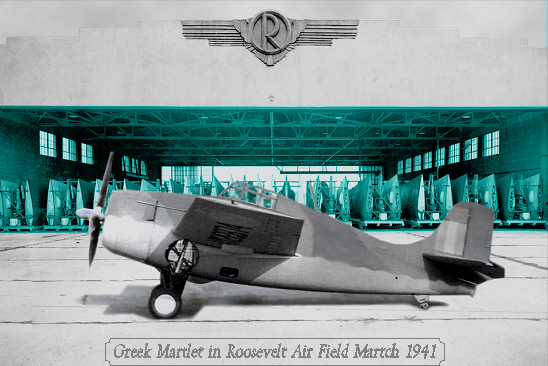
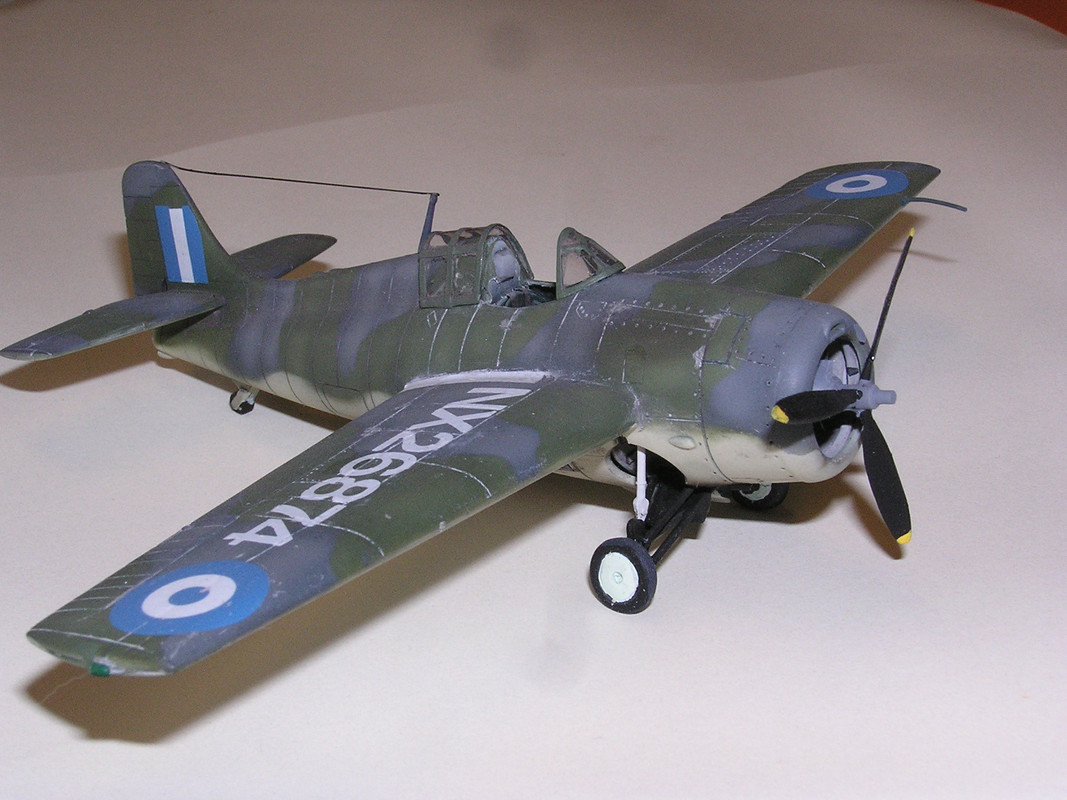
In late 1940 Greece came to the conclusion that it needed more modern fighters as the current force of mainly P.Z.L 24 even if they fought well they well outdated. So they ordered some Wildcats, unfortunately they were never delivered as Germany invaded Greece from a second front leading to the collapse and withdraw of HAF to North Afrika.
General History of the Wildcat
The Grumman F4F Wildcat, a rugged American carrier-based fighter, originated in the mid-1930s as a monoplane redesign of Grumman’s earlier biplane fighters after the initial XF4F-1 biplane proposal lost out to the Brewster Buffalo; the improved XF4F-3 prototype first flew in 1939 and entered U.S. Navy and Marine Corps service in late 1940 as the F4F-3. It became the primary Allied naval fighter in the early Pacific War, holding the line against the more maneuverable Mitsubishi A6M Zero through superior armor, self-sealing tanks, diving ability, and tactics such as the Thach Weave, while also serving with the British Fleet Air Arm (initially as the Martlet) from 1940 onward in the Atlantic, Mediterranean, and elsewhere. Production shifted to General Motors (as the FM-1 and more powerful FM-2) after Grumman focused on the Hellcat, totaling roughly 7,800–7,885 aircraft by war’s end; though largely replaced on fleet carriers by the F6F Hellcat and F4U Corsair from mid-1943, the Wildcat continued effectively on escort carriers until 1945, claiming a strong overall kill-to-loss ratio of about 6.9:1.
The History behind the F4F-3A Wildcat / Martlet III
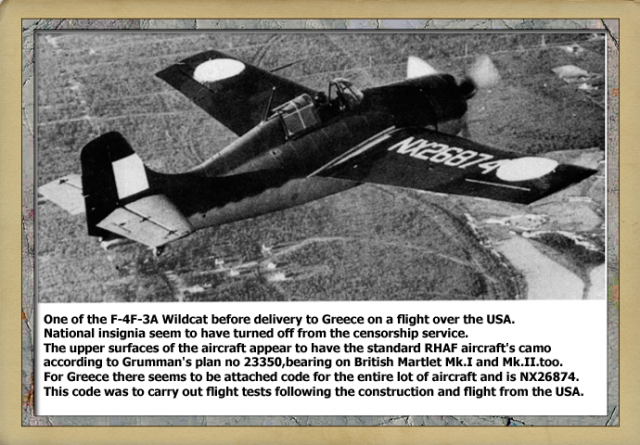
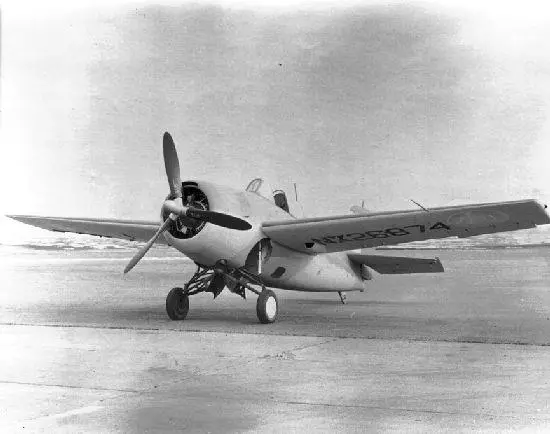
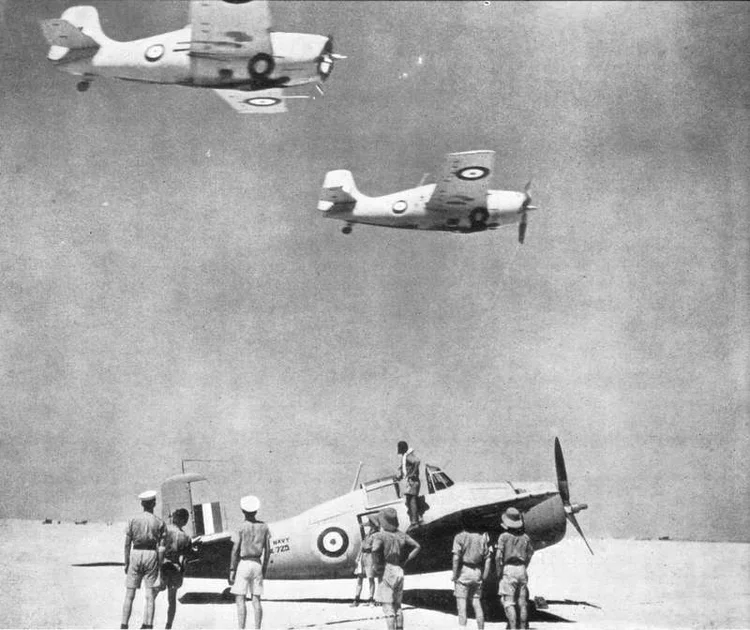
The F4F-3A destined for Greece (later redesignated Martlet III by the British) was a fixed-wing variant of the early Wildcat ordered by the Hellenic Air Force in 1940–1941. After initial U.S. hesitation and British priority under pre-Lend-Lease arrangements, the March 1941 Lend-Lease Act enabled the release of 30 aircraft. These were essentially F4F-3 airframes powered by the Pratt & Whitney R-1830-90 Twin Wasp (1,200 hp) fitted with a single-stage, two-speed supercharger rather than the more complex two-stage supercharger of the standard F4F-3. This change was driven by shortages and the fact that the two-stage engines were not cleared for export at the time. The aircraft retained the non-folding wings and four 0.50-in Browning machine guns of the early production F4F-3, with performance figures including a top speed of about 502 km/h, a service ceiling around 34,000 ft, and the ability to carry two 100-lb bombs.
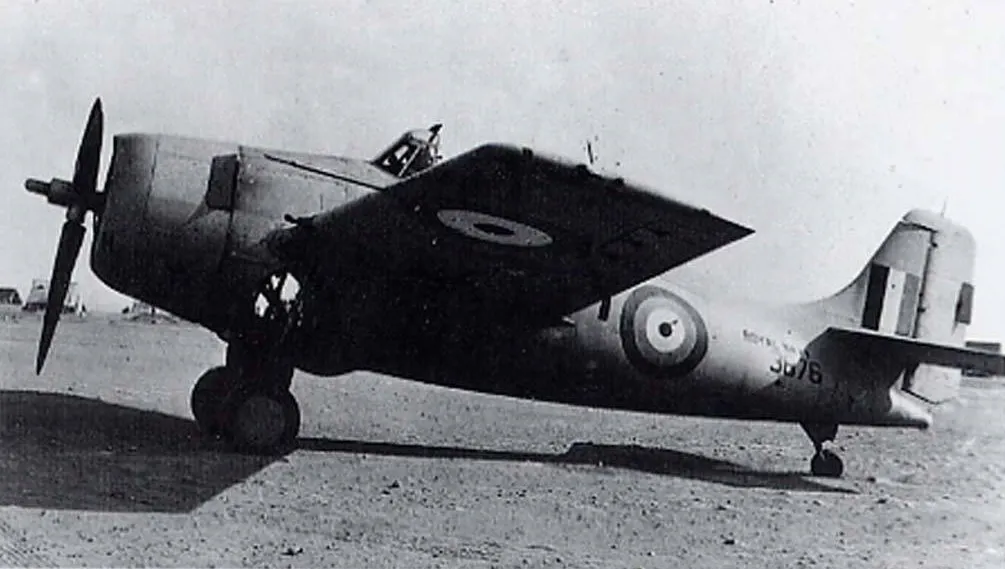
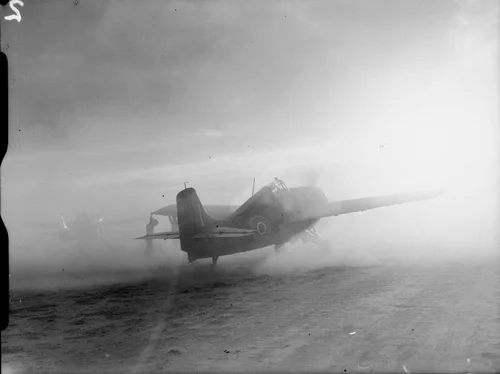
What made the Greek-configuration F4F-3A unique was primarily its engine and the resulting operational limitations, combined with its fixed wings. The single-stage supercharger reduced high-altitude performance compared with the dual-stage F4F-3, making it less competitive at higher altitudes and unpopular with some U.S. Navy pilots, though it remained adequate for lower-altitude work. The non-folding wings (unlike later folding-wing Martlets and F4F-4s) restricted it to land-based operations. The aircraft never reached Greece: they were loaded for sea transport just as the German invasion of Greece began in spring 1941, reached Gibraltar (or were diverted via Port Suez) after the country’s fall, and were taken over by the Royal Navy as Martlet III (sometimes distinguished as III(B) from the separate fixed-wing early G-36B Martlet IIIs), (once again Britain took something Greek and never return them). They then served with Fleet Air Arm units (notably 805 and 806 Squadrons) in a shore-based role in the Western Desert and North Africa, performing fighter and ground-attack duties.
In short, the Greek F4F-3A stood out as an export-adapted, fixed-wing, single-stage-supercharged “insurance” version of the early Wildcat that never flew under Greek markings but filled a critical gap for British land-based fighter strength in the Mediterranean theater.
Specifications
Spoiler
Length: 8.76 m
Wingspan: 11.58 m
Height: 3.60 m
Wing area: 24.2 m²
Empty weight: 2,226 kg
Maximum weight: 3,367 kg
Engine: Pratt & Whitney R-1830-90
Power: 1,200 hp
Maximum speed: 502 km/h
Range: 1,360 km
Service ceiling: 34,000 ft
Rate of climb: 2,303 ft/min
Armament
Spoiler
Guns: 4x 0.50 in (12.7 mm) M2 Browning
Ground Ordinance: 2x 100 lb bombs
Images

Sources