- Yes
- No
Introduction
General Warrior History
The British Warrior IFV was born from Cold War thinking that traditional APCs, such as the FV432, were no longer sufficient for high-intensity mechanised warfare. Formal work on a replacement for the FV432 began in the late 1960s, heavily influenced by the appearance of the Soviet BMP-1 in 1967. Through the 1970s, the Fighting Vehicle Research and Development Establishment developed the Mechanised Infantry Combat Vehicle concept, culminating in the MCV-80 design. In 1977 GKN Sankey won the development contract, and by 1984 secured the £1 billion production contract after meeting reliability, time and cost targets. Production began in 1986, and the vehicle officially entered service as “Warrior” in 1988, designed to operate closely with Challenger main battle tanks and deliver infantry onto the battlefield while under armour.
Warrior was conceived as a family of vehicles sharing a common hull and automotive components. The primary FV510 Infantry Fighting Vehicle carried a three-man crew and seven dismounts and was armed with the 30 mm RARDEN cannon, entering service between 1988 and 1990. Other in-service variants included command (FV511), repair and recovery (FV512 and FV513), artillery observation (FV514), and battery command (FV515). Numerous other concepts were proposed over the years, including mortar carriers, reconnaissance variants, self-propelled air defences, export versions such as Desert Warrior for Kuwait in the 1990s, and experimental vehicles like VERDI and VERDI-2.
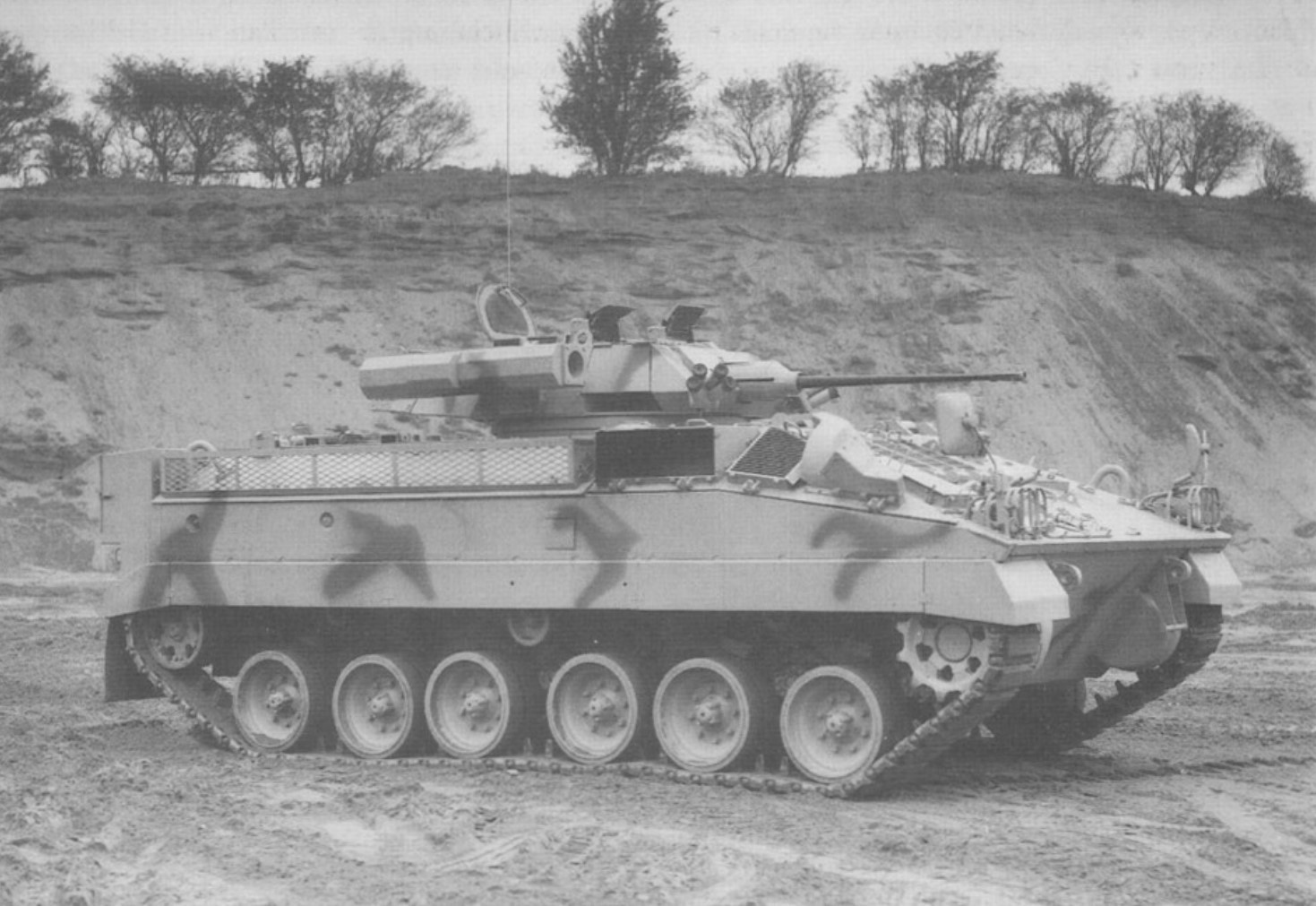
The vehicle being discussed in this suggestion is the earliest variant of the Warrior’s only export success story - the Desert Warrior. GKN was extremely keen to find orders for the Warrior platform, but understood that certain decisions made by the UK MoD (no missiles under armour and a 3 round magazine fed unstabilised 30mm Rarden cannon) were not necessarily going to be popular with export customers. In an effort to fix this, they swapped out the turret of the Warrior for a Delco 25mm turret, fitted with the ubiquitous 25mm Bushmaster and a pair of TOW missiles, a much more standard configuration. The earliest variant of this demonstrator, offered to any and all potential customers in the Middle East, was significantly different to the eventual production standard Desert Warrior operated by Kuwait, featuring different missile launchers, different optics, different turret geometry, and lacking the re-designed hull and composite add-on screens.
In-game, the Desert Warrior (Prototype) could be added as more-or-less an equivalent to something like the base M3 Bradley at 8.3, with a stabilised 25mm firing APDS but no APFSDS, and a pair of TOW missiles but lacking TOW 2A and 2B. And whilst it’s true that Britain already has the capable regular Warrior at 8.3, its a rather unorthodox and quirky vehicle, featuring modern thermals and lethal 30mm APDS, but with a lethargic fire rate and no stabiliser. Adding the Desert Warrior (Prototype) alongside it would mean more flexibility and what could be considered an overall more well-rounded vehicle
Specifications
Spoiler
Generic Hull Specifications
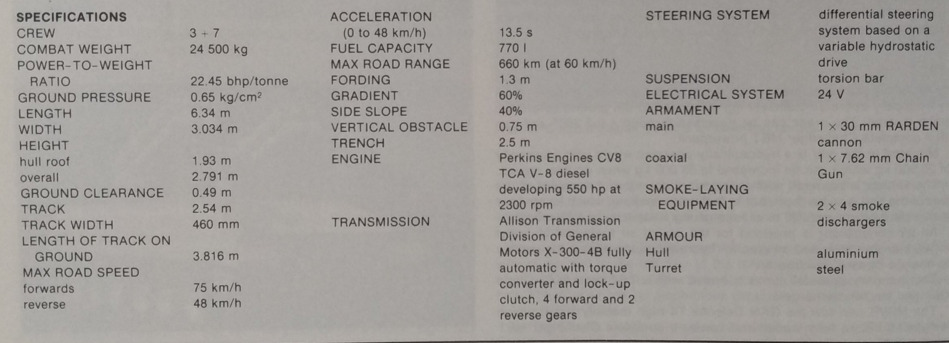
Armament & Turret

Images
Spoiler
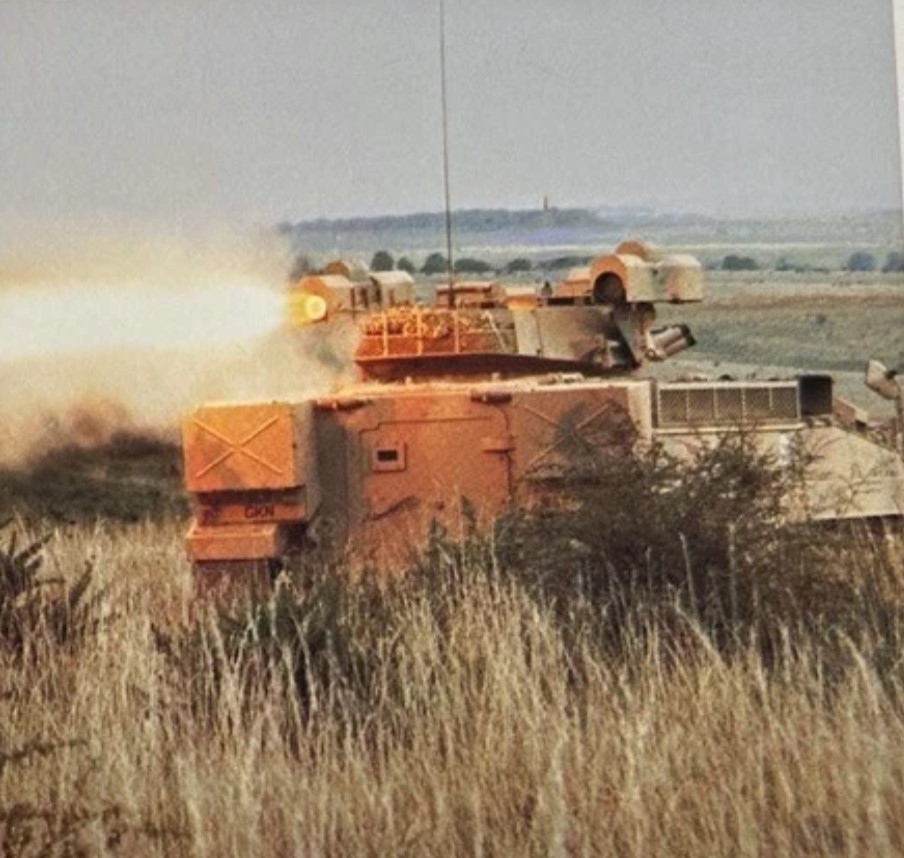
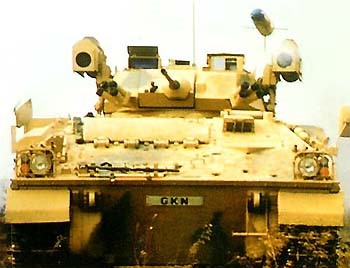
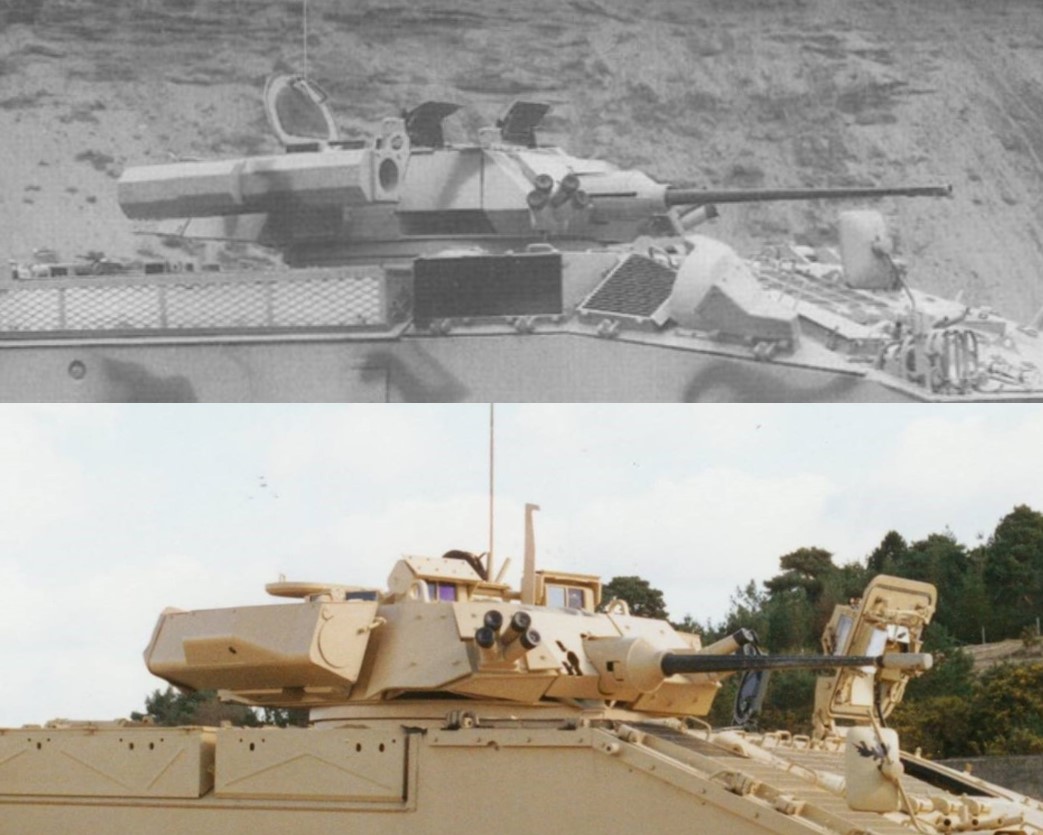
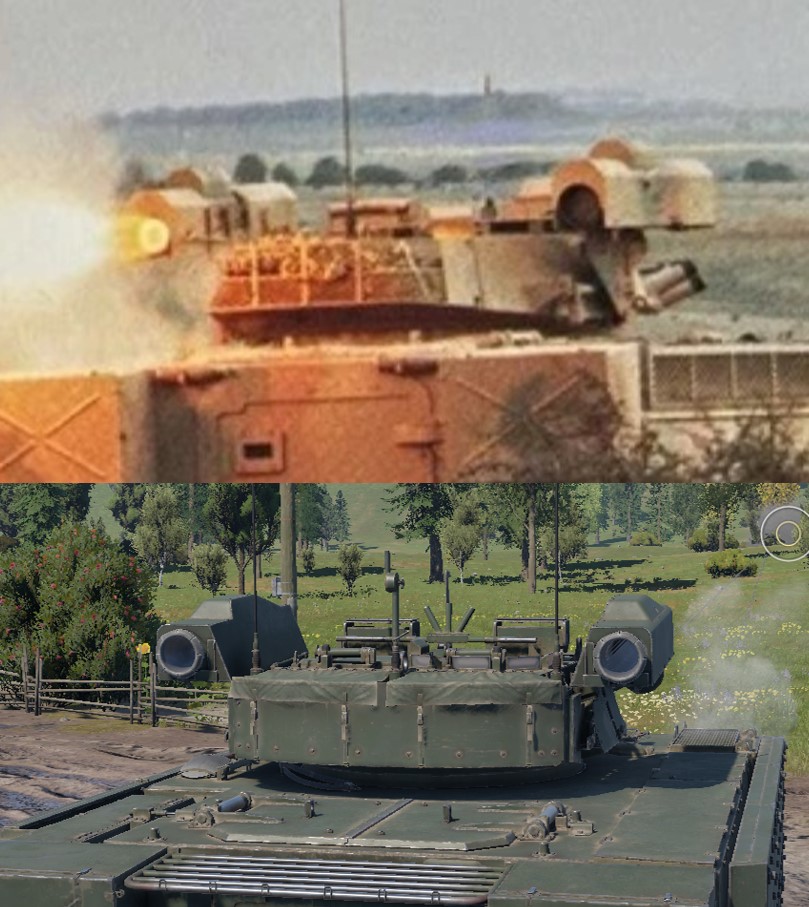
Comparison of the turrets from the rear
Sources
Spoiler
https://www.youtube.com/watch?v=w7lOzaEiG0A
GKN Warrior Brochure Material
Alvis Warrior Brochure Material
Warrior 1987-1994, New Vanguard
Warrior Variants, Operations, Upgrades, Tankograd British 9036
Warrior FV510 Infantry Section Vehicle, Tankograd British 9035