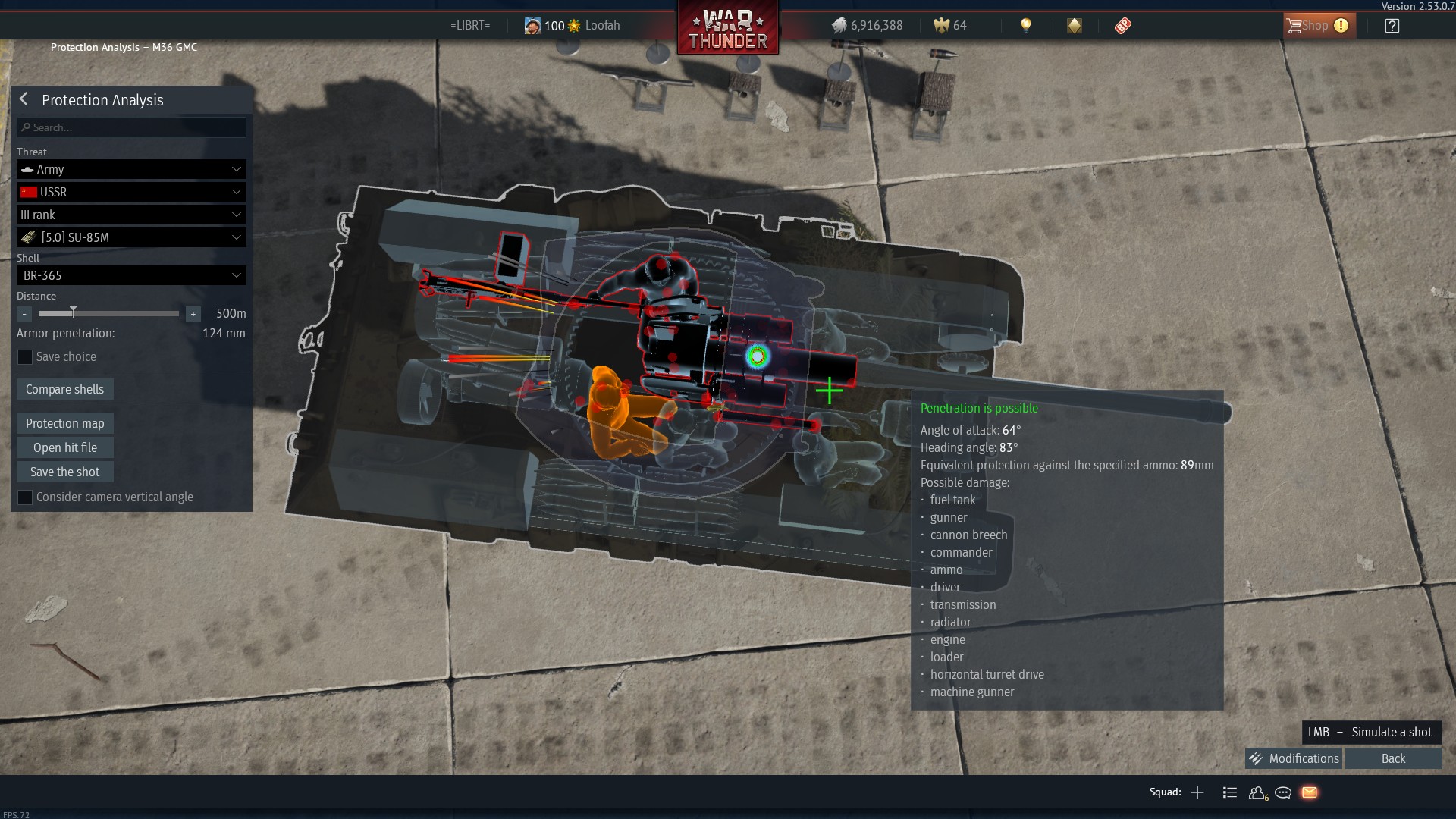
Yes, it also deals “less damage” in my screenshot, but the difference is negligible. 25mm deals 100% same damage, 23% is basically 90% of damage, 20mm is 75-80% of damage.
In reality it should be more like (the following numbers are not well thought out, I’m going by rough comparison of kinetic energy, explosive charge, fragmentation ability and incendiary filler effectiveness):
37mm (German has way more explosives, Soviet is heavier and more muzzle velocity, so I guess they should be fairly equal) = 100%
30mm M-geschoss = 70%
Soviet 25mm = 43%
Soviet 23mm = 30%
German 20mm = 22%
Soviet 20mm = 14%.
Are you incapable of grasping what’s my entire point?
Do you really think that at 2,75 times the mass, 3,5+ times the energy (that’s assuming similar ballistics of 37mm M-geschoss and 23mm FI-T) and 6,3 times (I mean, 17g vs 108g, I haven’t used the calculator, but it’s something like this) the bursting charge ( the difference between 23 and 37mm should be as small as in the screenshots?
EDIT: Adjusted some numbers, but nothing huge, in a lot of these cases a lot of things are under the “depends” category, or may be not exactly correct (but in the general ballpark of correct values) but I’m just trying to deliver the general idea.
LMAO, no, the problem is not “modules” as bombers can tank multiple 37mm rounds.
You buff “modules” and what happens, if 25mm deals 100% of 37mm’s damage and 23mm deals 90% and 20mm deals 75-80%?
The problem is there’s clearly 3 types of shells I’ve tested:
20mm HE
23mm HE
25-37mm light (M-geschoss only)
Other types of 37mm shells deal slightly more damage.
Still the difference is way too small to really justify switching from 25mm to anything bigger.
There’s only 3 damage patterns used between multiple weapons with vastly different characteristics.
There’s 0 difference between Shvak, Type 99 Mk2 or MG151/20 when it comes to HE effectiveness. They deal exact same damage.
There’s 0 difference between Soviet 25mm and German 37mm M-geschoss.
Of course there exists 1 more type of shell:
“20mm useless round” - German FI-T and British 20mm SAPI fall into this category. But there’s no point discussing these.
Mineshells, which deal damage by blast and not fragmentation, with worse ballistics as shells that would rely on fragmentation, have no advantage over shells that deal damage primarily with fragments.
Amazing.
You could pump 10 ShVAK shells into a P-47s wing and it would still be flying in RL.
Because fragmentation shells don’t blow off an aircraft’s wing or tail.
It’s literally in the name of the shell, Minengeschoss, that implies it deals damage from overpressure.
If we applied the realShatter logic to FlaK cannons, B-17s and B-24 would have constantly lost their wings or tails due to 88mm, 105mm and 128mm HE round fragmentation, while flying over Germany.
So yeah, it remains the king of canned tomato soup manufacturing process.
Which is pretty damn funny, since 85mm with 164g explosive filler produces 0 overpressure, because giving APHE short-range overpressure that scales up with filler size is just too much, nah, instead lets make it 0 OP till 170g and then and only then make it scale up with filler size.
But hey, it’s Gaijin. Nothing makes sense.
Yeah, this one is nice. If only Gaijin managed to make a penetration vs angle chart. I mean, if they ever played their own game, they would have come up with one long, long time ago.
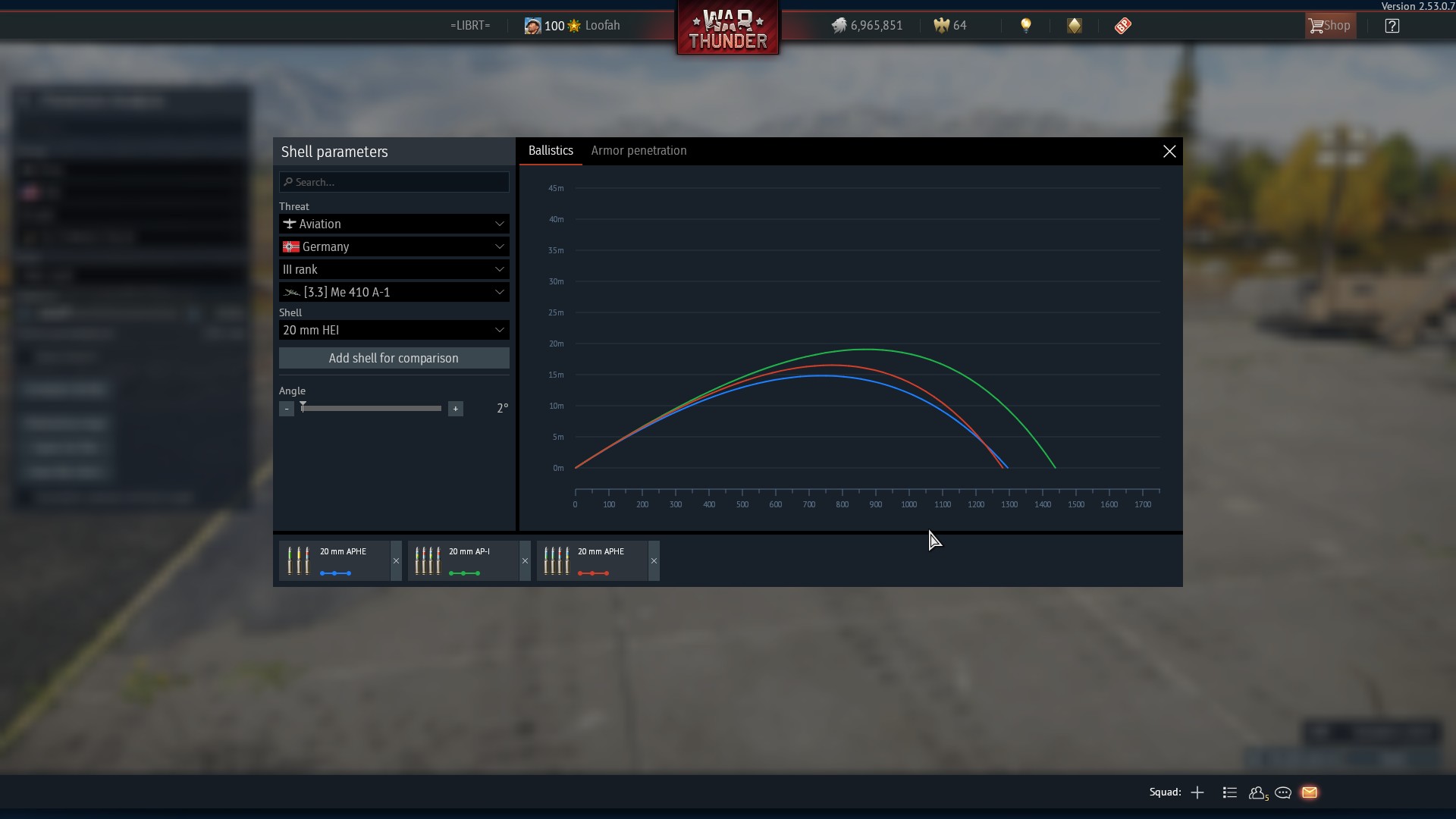
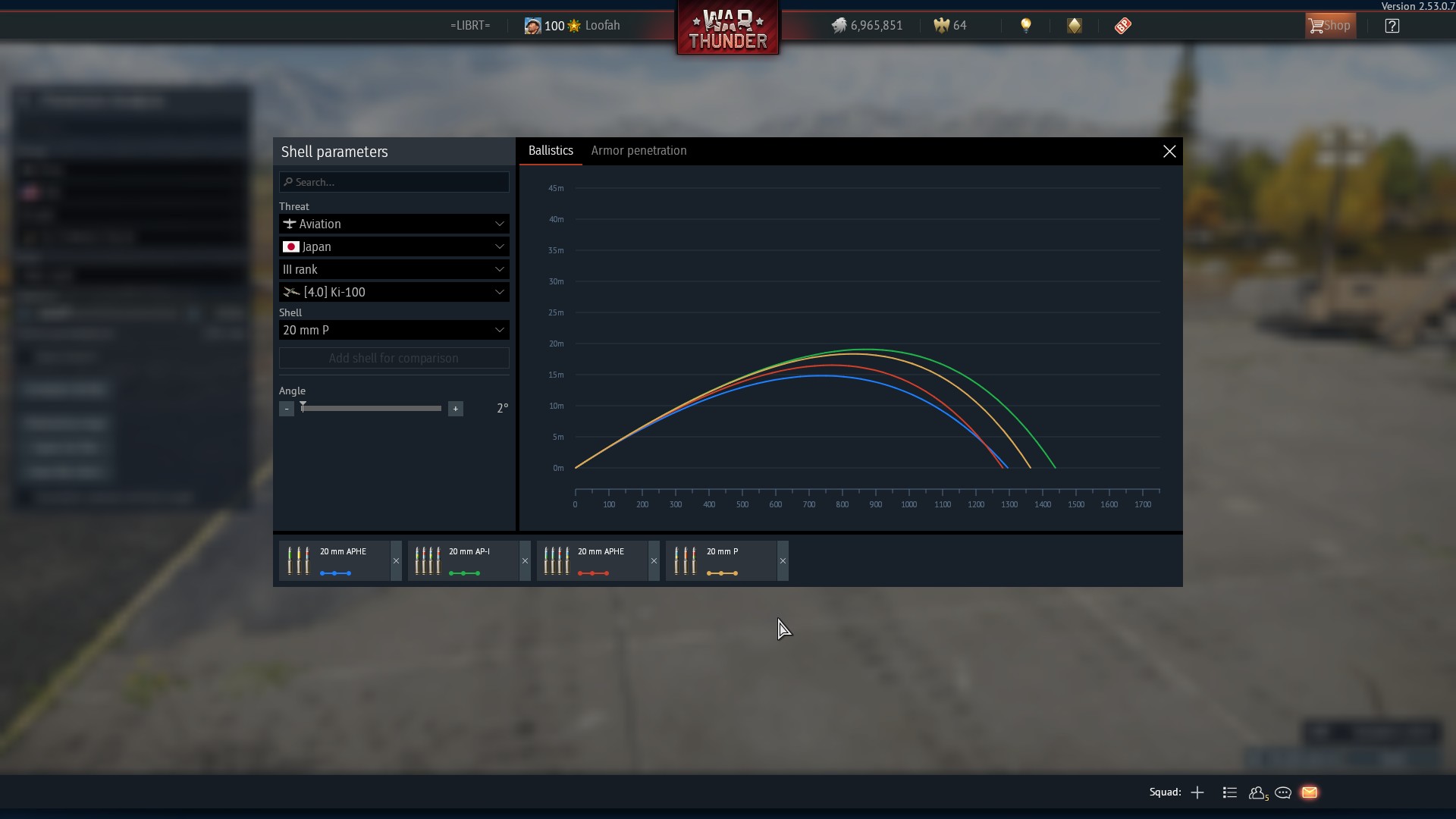
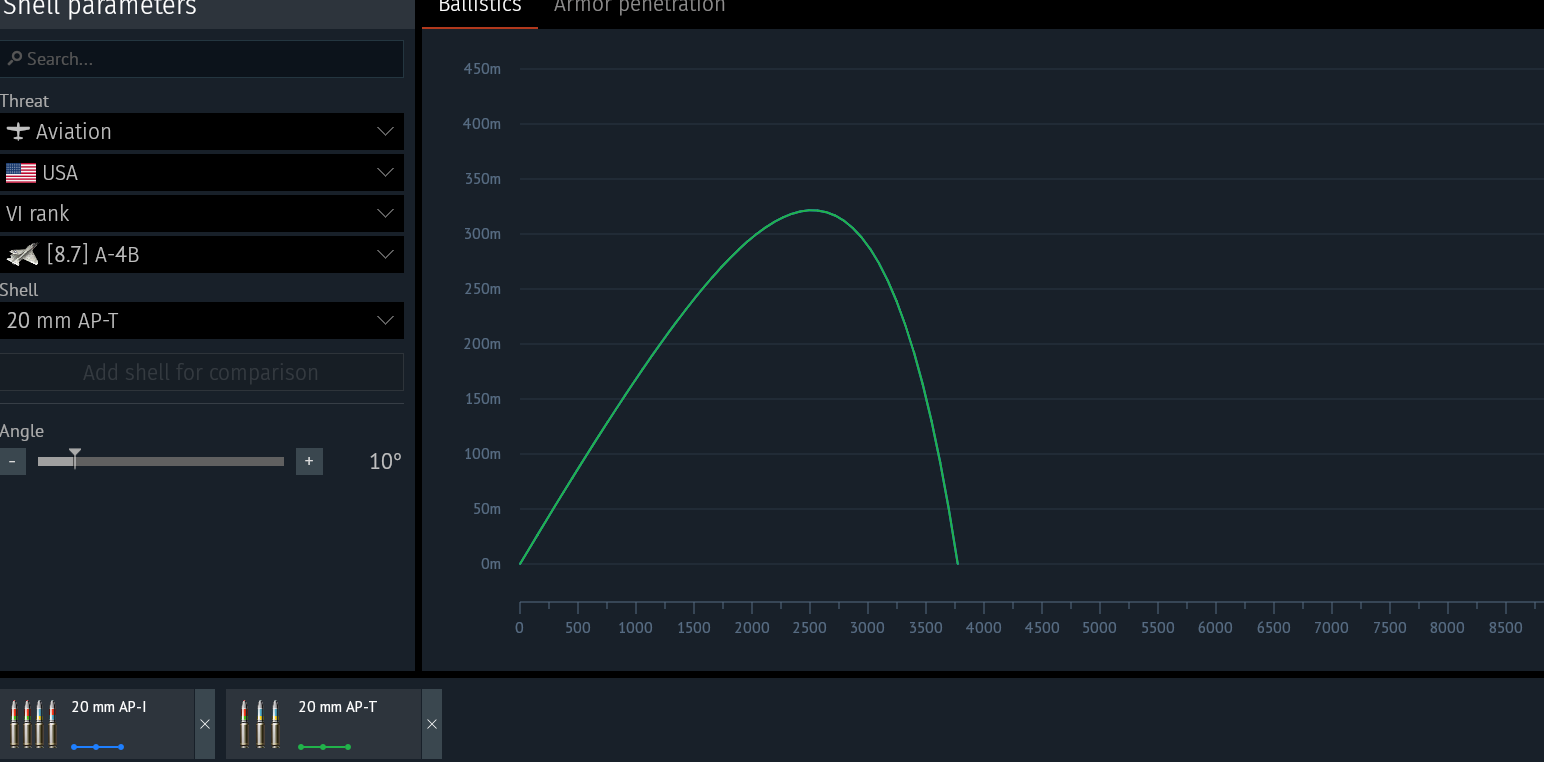
Some stuff is hilarious, f.e. we have clear proof German 20mm AP has hilariously bad ballistics despite being heavy for 20mm.
It gets outranged by Japanese 600m/s APHE that is like 13g heavier. So speed is not the limiting factor.
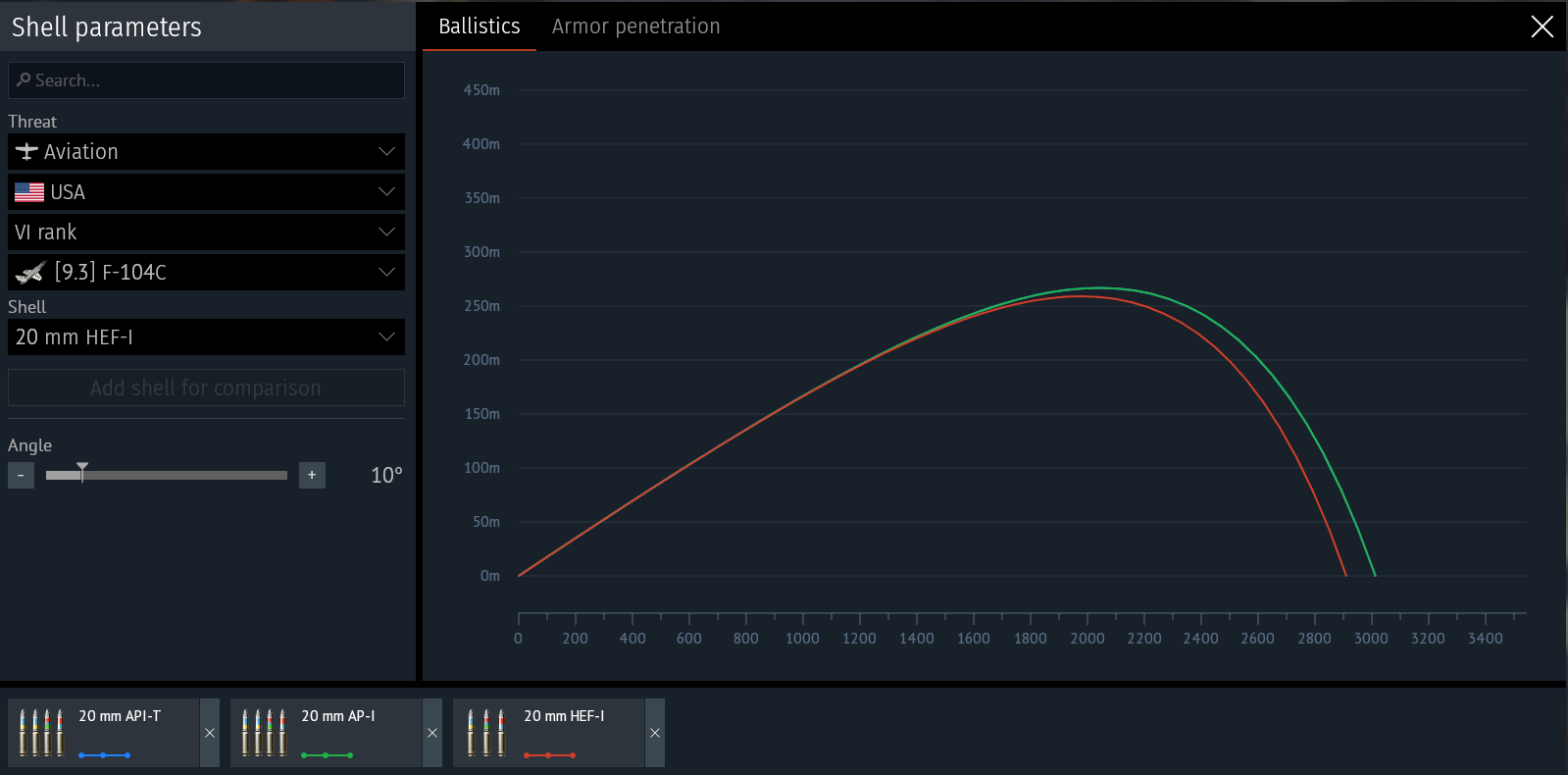
It’s the “airbrake” gaijin attached to it - German APHE in the red. Japan in blue. Soviet AP-I in green.
Yes, it works better, but the 30mm and 37mm are still in the same place as before, Gaijin buffed MG151/20, other than they - they’ve fixed absolutely nothing.
Even plywood bug 2.0 is alive and kicking.
@KillaKiwi
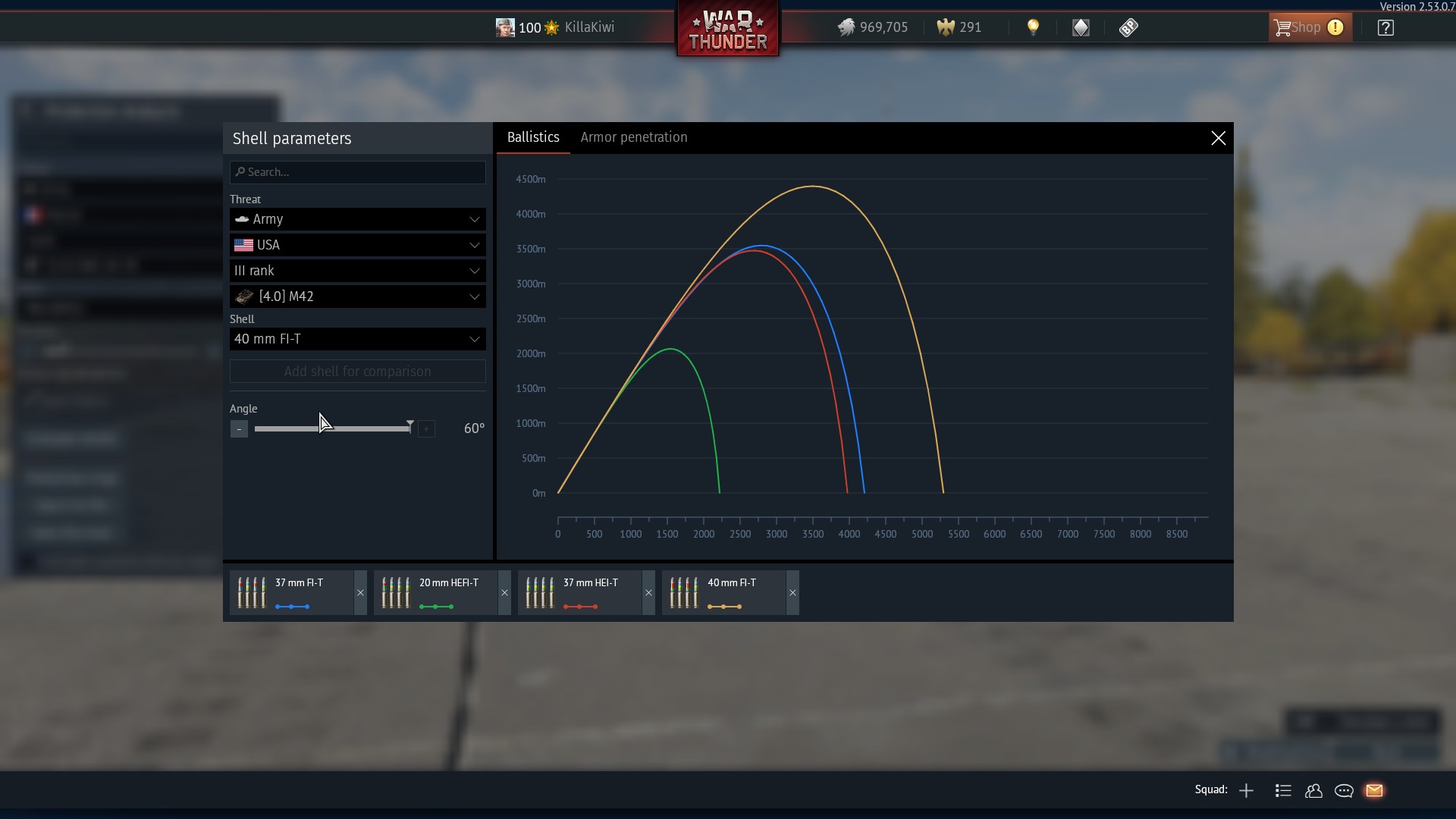
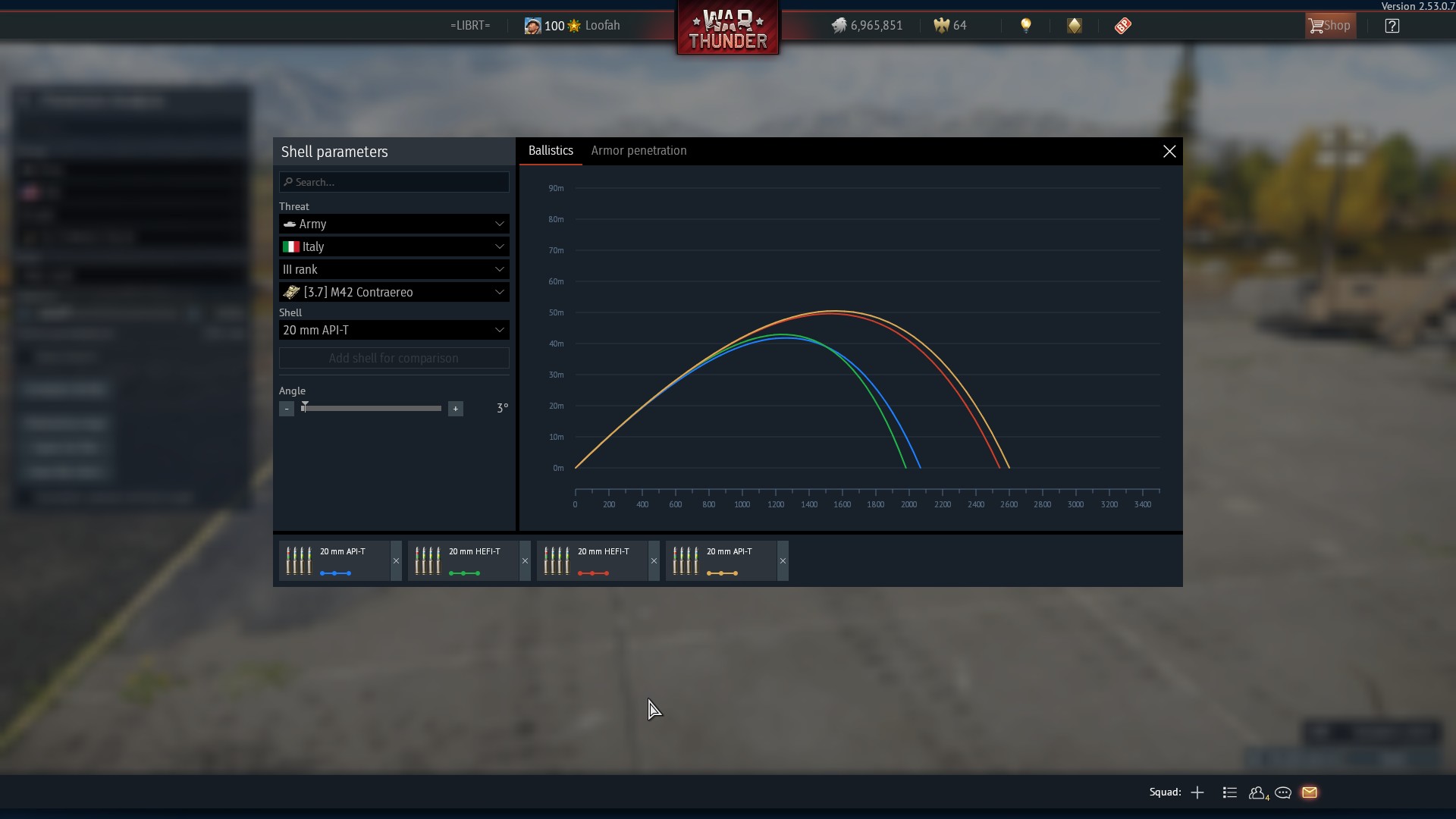
Well, at least now I know why Italian M42 allows me to snipe people from waay beyond Wirbel’s range:
2 shells to the left - Wirbel, 2 to the right - M42:
@KillaKiwi Guess what happens when German 117g AP faces against Japanese 80g practice non-tracer round fired at 800m/s?
It gets absolutely roflstomped, because Japanese have achieved ABSOLUTE BALLISTIC PERFECTION.
I knew German 20mm had way too high drag coefficient, and this shows here very nicely.
Now way should 117g AP get ouranged by Shvak or Ho(e)-5 Practice round.
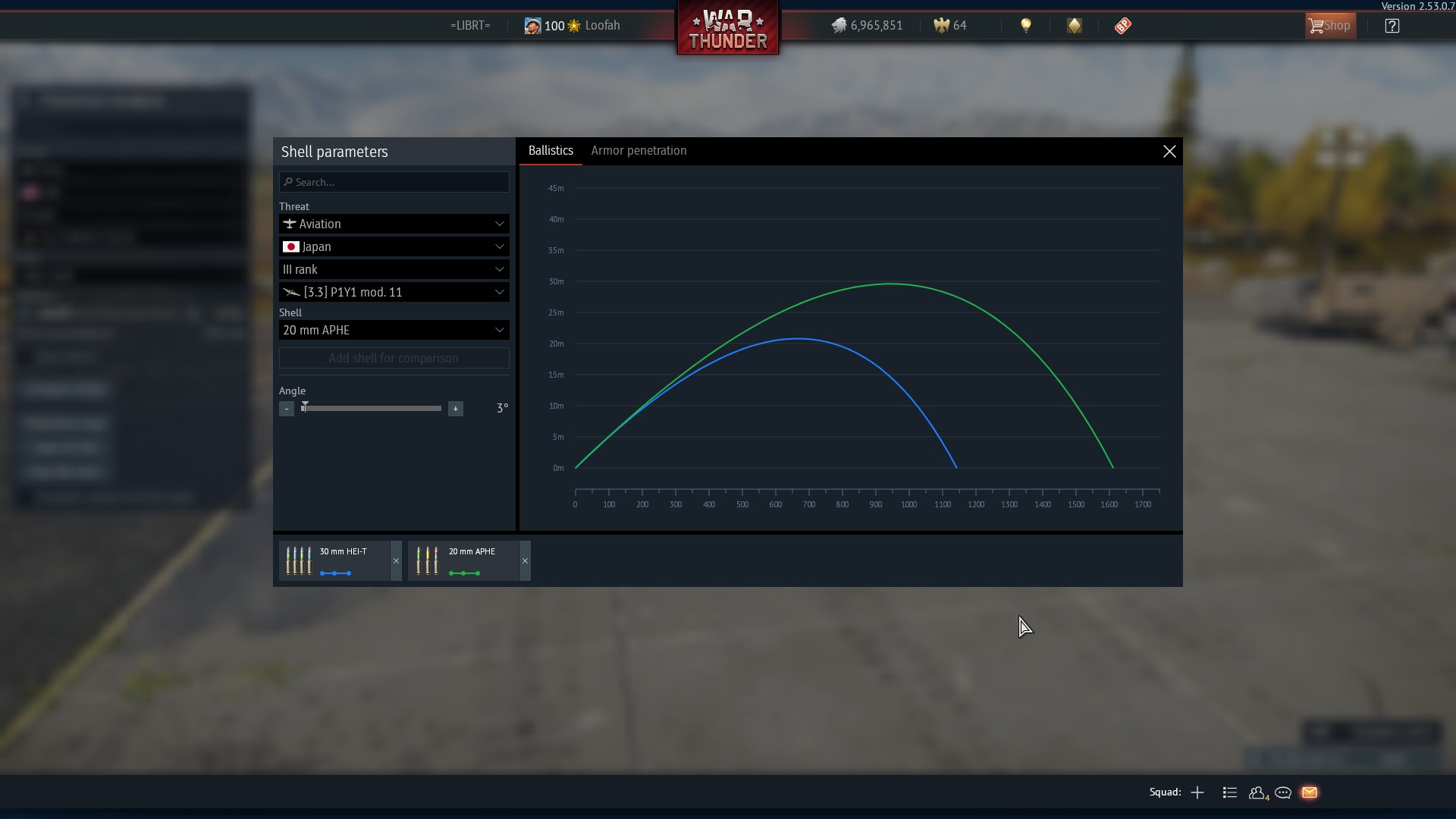
Also MK108 M-geschoss bleeds speed way faster than Japanese 20mm non-tracer round fired at 600m/s:
Yeah, but god damn it, 80g practice non-tracer Ho-5 round (was looking for the worst 20mm round in game to compare German AP to it, and this lightest and shittiest round still outperformed it) outranging German AP and it’s not even close. Well, so does Ho(e)-5 HE round which may have even worse ballistics IRL due to fuse in the nose, still beats MG151/20 APHE. This is just sad. I’m done with this shit…
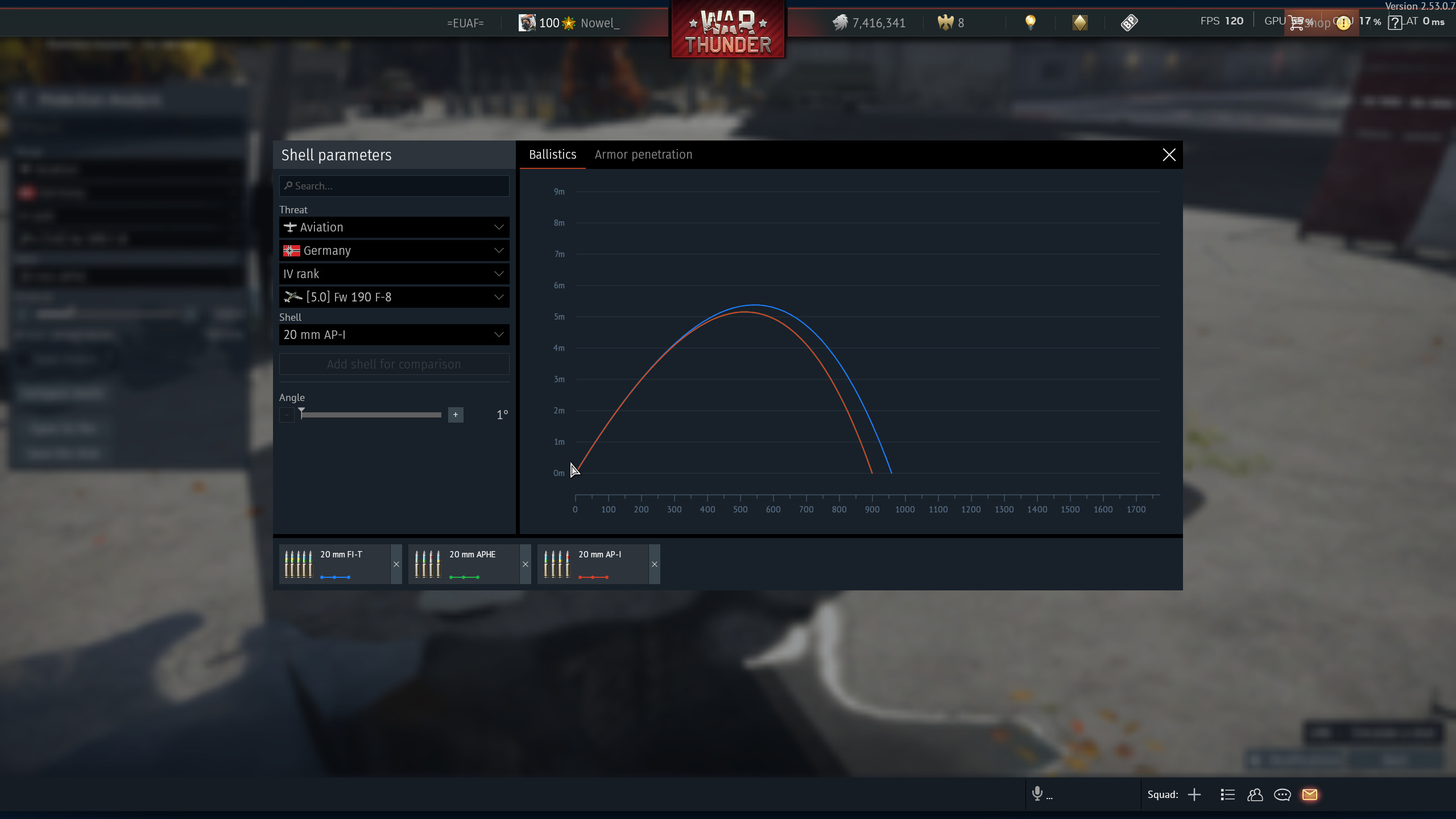
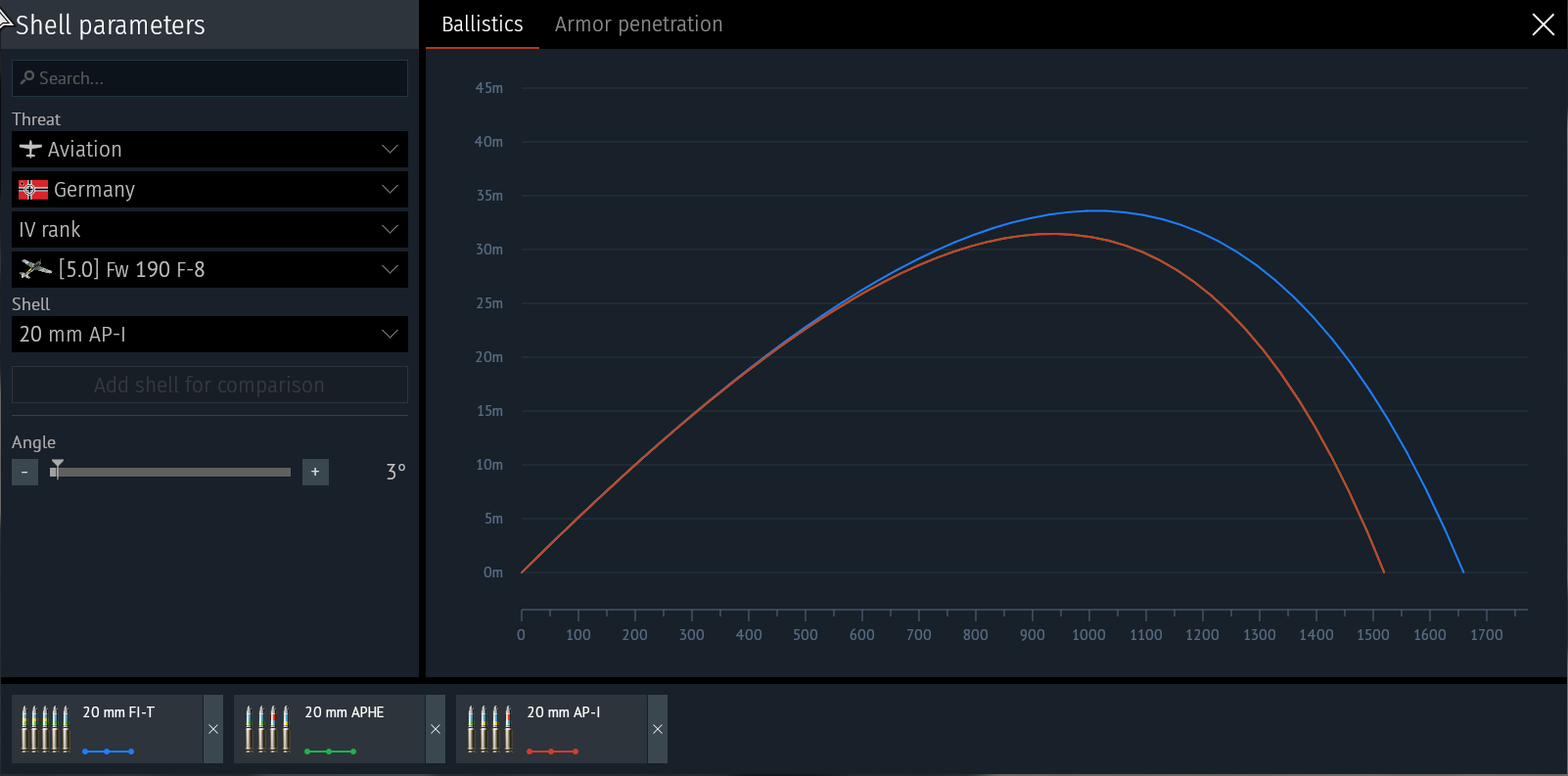
I think that there is actually a high coheficient on the ap themselves, here it is compared with the german 20mm FIT, which, in game have the same muzzle velocity and the same mass, so they should actually archive around the same range, with some minor changes due to the different nose (iirc in the case of the Ap it should be lower than on the FI-T).
There are levels to this.
Me and Killa (I think, I sometimes mistake him for @Ghostmaxi , I’m sorry) have figured it out some time ago. You see, for lower calibers tracer works in similar way to base-bleed in high caliber artillery shells, actually improving ballistics, despite the less aerodynamic nose of IT, it also had better ballistics IRL for this very reason - this is consistent with most ballistic data out there. Generally, tracer beats boattail and pointed nose.
This is also part of the reason while Shvak FI-T has pretty decent ballistics despite low weight.
But Ho-5 (80g) or Shvak API/HEF/FI (each under 100g with no special shape) have absolutely no reason to have better ballistics than German 20mm 117g AP.
FI-T have a tracer which gives them better ballistics.
The ballistics would change after the tracer burns out but that is of course not taken into account.