Since its debut, there haven’t been major renovations accompanied by changes in appearance, but over the course of 15 years of production, minor renovations have been carried out. These are said to be generally divided into five lots, and with the modernization of the fire control system and the addition of new types of shells, firepower has been significantly enhanced. In terms of defense, strengthening measures, such as applying high-molecular liners to the interior and turret, which cannot be discerned from the outside, have also been implemented.
If their second gen MBTs are already featured with spall liner, why would Type 90 or Type 10 not having it ?
I don’t and no one trusts Wikipedia. I also didn’t necessarily say they didn’t I only implied that they may not have it since they have never been in direct combat ever. As the times they were in war was always support jobs way beyond the actual battlefield
The Japanese wiki has proven its reliability in my past comparisons with other sources. The information it provides closely aligns with my findings.
Consider this: must we wait for an actual war to recognize the significance of spall liners? Picture Japan facing a sudden attack; waiting until then to develop and upgrade all their armored fighting vehicles with spall liners would be too late. It only makes sense for them to have already developed and pre-installed this technology on their tanks, doesn’t it?
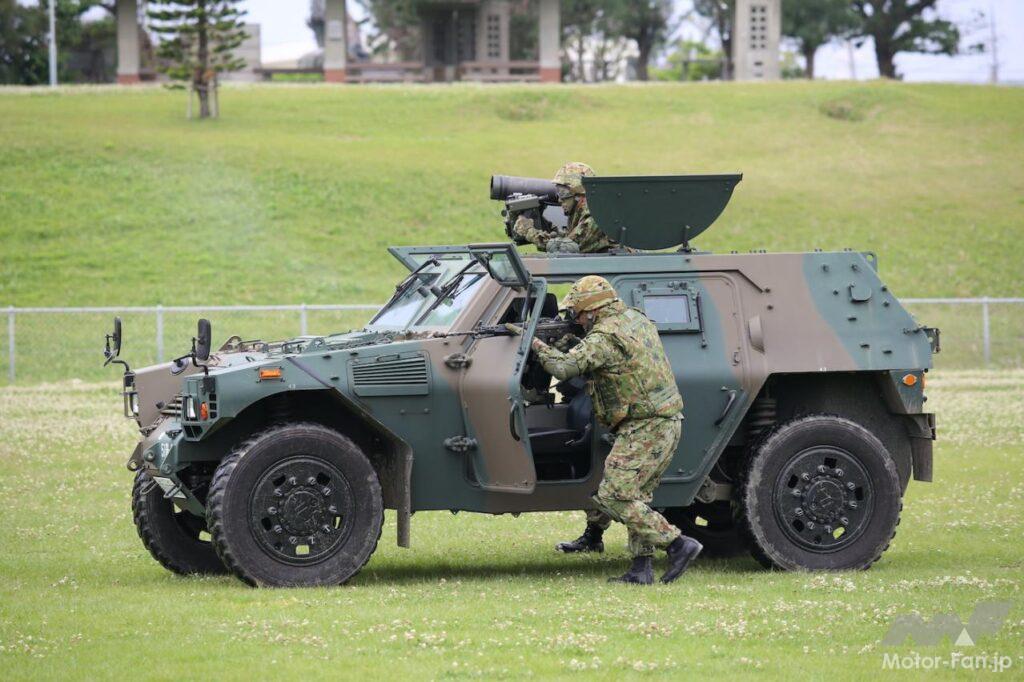
Moreover, examining the Komatsu LAV reveals what seems to be spall liners installed all around the vehicle, particularly behind its doors, strategically serving as shields during potential attacks.
Claiming that Japan lacks knowledge about spall liners simply because they haven’t experienced an active warzone seems nonsensical to me.
its like that time a lot of people started to complain that the armor of the type 10 dosent make sense since its lighter than the type 90 and they have never been to a war etc etc basically excuses to say the type 10 shouldnt have as much armor
Pretty sure the French have also employed lightweight composites similar to nanometric steel, Germany too, though for Germany most of that armor is on APC/IFVs.
I doubt its THAT effective, signitficantly better than RHA yes but that much i doubt. There was a study about it from ~13 years ago. Its called “Ballistic performance of nanocrystalline and nanotwinned ultrafine crystal steel”
Here is one thing, not sure how effective it would be.
“While conducting shooting tests to improve and stabilize bullet resistance, large-sized shooting test boards necessary for equipment were prototyped. After comprehensive real-size testing, the grain-refined bulletproof steel plates were adopted for the Type 10 tank and the subsequently developed Type 16 maneuver combat vehicle.”