TBF, the J/APG-1 was inferior in many ways like sidelobe suppression and accuracy to radars 2 decades older.
The J/APG-2 is lacking scanning speed and beamforming though. Basically, all AESAs are, but the J/APG-2 in game is slower than its contemporaries when it should be leaning more towards being faster.
I’ve seen some recent videos about a Thai F-15EX, but they’re just commentary about whether it will be good or something like that.
The thing is, I haven’t seen any news or anything about Thailand and the F-15EX, except that at some point the US apparently offered it. Does anyone knows if there’s anything else about this?
The Ki-109 was a Ki-67 with a 75mm gun (about 20 aircraft were built), initially used as an interceptor and later as an attack aircraft. A 75mm gun was also tested on the Ki-49. The Japanese planned to install large-caliber guns (possibly even 240mm) on the P1Y.
iirc they offered the EX cause they didn’t wanna sell them the F-35. And so Thailand went with the gripen. mind you this is from a quick Google search so take it with a grain of salt.
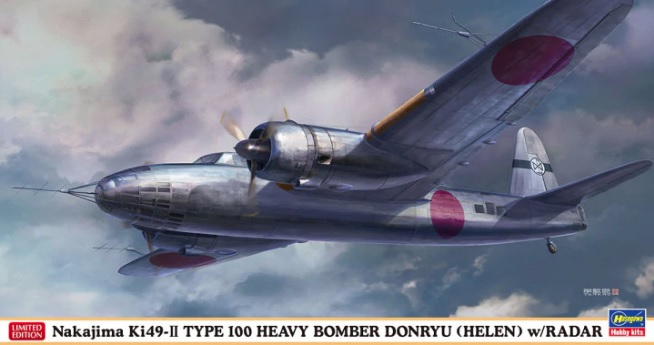
Is it just me or does the Ki-49-II Otsu (late) seem like the most pointless plane in the Japanese tech tree? The only difference from the regular Ki-49-II Otsu is a modified engine cowling and it’s slightly faster. I still wonder why it was added to the game. The Ki-49-II Hei or Ki-49-III would have been better, although the appearance of the latter is unknown.
Probably to get the record for “most planes on a simulation game” and to pump up the vehicle numbers with less effort. There are similar aircraft like the Spitfire MK 22 and 24 where they only differ from the 24 having better speed and an extra armament preset.
I personally don’t mind them as long as they are foldered as they are still different variants, even if it’s not by much.
It would be nice if there was at least a difference in armament. Historically, the Ki-49-II Otsu (late model) should have been better defensively armed.
There’s honestly more I could’ve included about how clutter rejection works. Where it works by comparing waveform amplitudes, and about how dual band seekers actually make it able to perform very similar to gatewidth + tracking suspension anyways. As tracking can still be maintained as long as interfearence isn’t to similar to the phase and amplitude. But I didn’t feel like making the report a mile long going over clutter rejection algorithms and all the ways they can work.
I was mistaken. The largest aircraft gun planned by the Japanese navy was of 76.2 mm caliber. It was the gun 仮称五式空八糎砲 (Temporarily called Type 5 Air Gun 8cm). However, the Japanese army used the Type 88 75 mm gun in the Ki-109, and for the Ki-93 Otsu, the Ho-501 gun was developed and probably built, which was based on the Type 41 75 mm mountain gun. Additionally, Ho-601 guns of 120 mm caliber and Ho-701 guns of …
The Ho-501 cannon, which is a modified Type 41 75 mm mountain gun, uses the same ammunition as the 75 mm Type 99 cannon from the Type 2 Ho-I tank. This means the Ki-93 Otsu had HEAT shells with 90 mm penetration or APHE shells with 41 mm penetration. That is much better than the Ho-401 cannon on the Ki-102 Otsu, which would have 55 mm penetration with HEAT shells or 21 mm penetration with APHE shells.
Weren’t you referring to the Ho-402 57mm cannon that the Ki-93 Ko is equipped with? Unfortunately, I don’t know the penetration of its shells. I know it should probably have the same shells as the Ho-401, only with a higher muzzle velocity.