The History Time:
The ‘Other’ Su-37: The Ambitious Soviet Fighter Jet That Disappeared with the End of the USSR

In the turbulent early 1990s, as the Soviet Union neared collapse, the country’s aeronautical industry was still conceiving bold projects. Among them was a little-known project—often confused with the later super-maneuverable demonstrator—designated Su-37 (also referred to in some studies as S-37), conceived as a modular multi-role fighter capable of replacing a wide range of tactical aircraft.
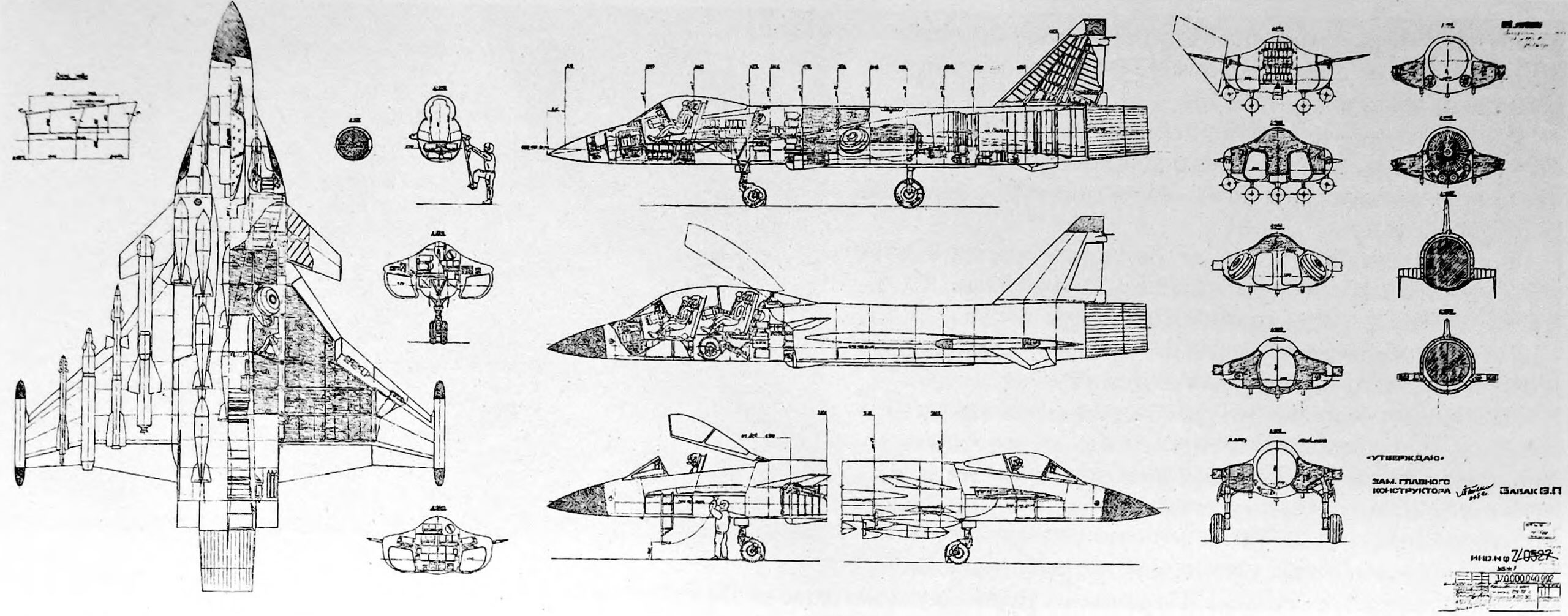
The project emerged in the context of a profound Soviet doctrinal review at the end of the Cold War. The central idea was to create a single aircraft capable of assuming functions traditionally distributed among several models, including:
the Su-25 attack aircraft
tactical fighters such as the MiG-21 and MiG-23
export versions of the MiG-21

According to studies of the time, the aircraft would be a new generation multi-role aircraft, combining ground attack, limited air defense, and interdiction missions — something relatively uncommon in classic Soviet designs, which were historically more specialized.
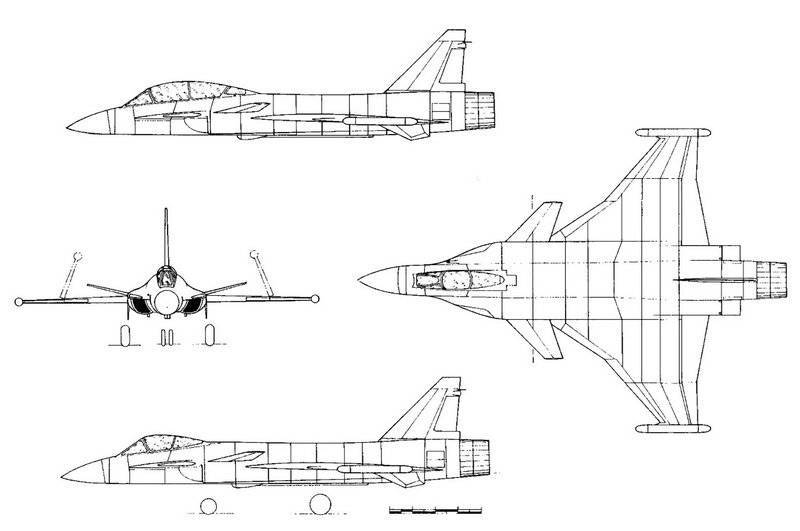
The proposed aerodynamic configuration also attracted attention: a delta-canard combination with an “area-ruled” fuselage, aiming to reduce transonic drag and improve performance at high speeds.
Unusual engineering for Soviet standards
One of the most curious aspects of the concept was the concern with logistics and operation at existing bases. The project included folding wingtips, allowing the aircraft to occupy the same hangar space as variable-geometry fighters and even the compact MiG-21 — a rare solution in Soviet designs of the time.
Another advanced point was the emphasis on reducing the radar cross-section (RCS) and the extensive use of composite materials in the structure and skin. Although it was not a stealth aircraft in the modern sense, the approach indicated a shift in mindset in the Soviet industry, already sensitive to the low-observability trends gaining traction in the West.
Projected Performance (1992 Configuration)
Data released for the early 1990s reference configuration indicated a relatively light aircraft by Sukhoi standards:
Normal Takeoff Weight (NTOW): 18.35 t
Maximum Takeoff Weight (MTOW): 25.8 t
Internal Fuel: 5.8 t
Normal Payload: 1.96 t
Maximum Payload: 8.42 t
Maximum Speed: Mach 2.0
Range with Normal Payload: 2,400 km
Maximum Range: 3,750 km
Operational Ceiling: 16–17 km
These figures would place the design in an intermediate category between light fighters and dedicated attack aircraft, reinforcing the idea of a “universal” replacement platform.
A Product of the End of the Cold War
The program reflected a broader trend observed in the late 1980s: the search for multi-role aircraft capable of reducing logistical costs and simplifying fleets. The Soviet leadership itself had ordered studies for a new multi-role fighter-bomber intended to replace several types in service with the Warsaw Pact.
However, the political and economic context changed rapidly. The dissolution of the Soviet Union in 1991 triggered a deep financial crisis in the Russian defense industry, halting numerous promising aeronautical programs.