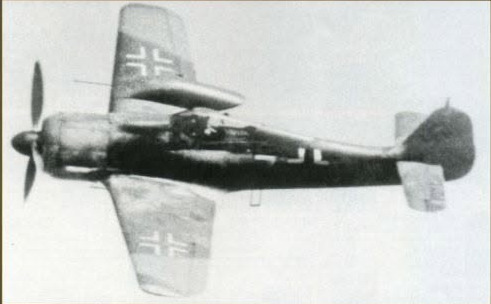
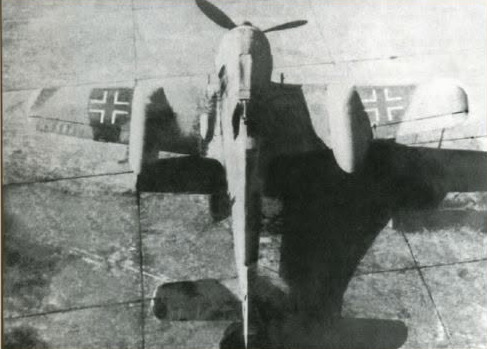
- Yes
- No
The Focke-Wulf Fw 190 A‑7 was introduced in late 1943 as an incremental but important development of the A‑series, designed to give the Luftwaffe a sturdier fighter against American heavy bombers. It represented a transitional step between the earlier A‑5/A‑6 and the heavily armed A‑8, combining improved firepower with modest refinements in equipment and protection.
History and development :
Spoiler
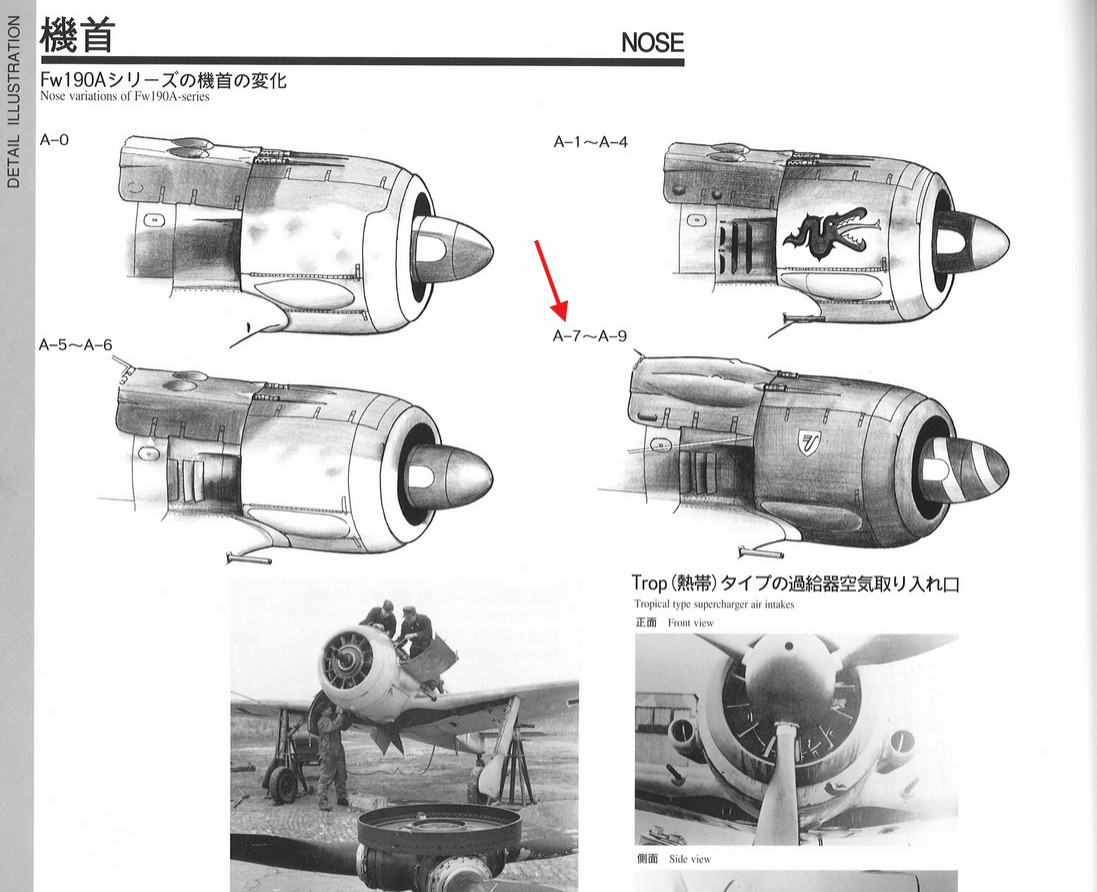
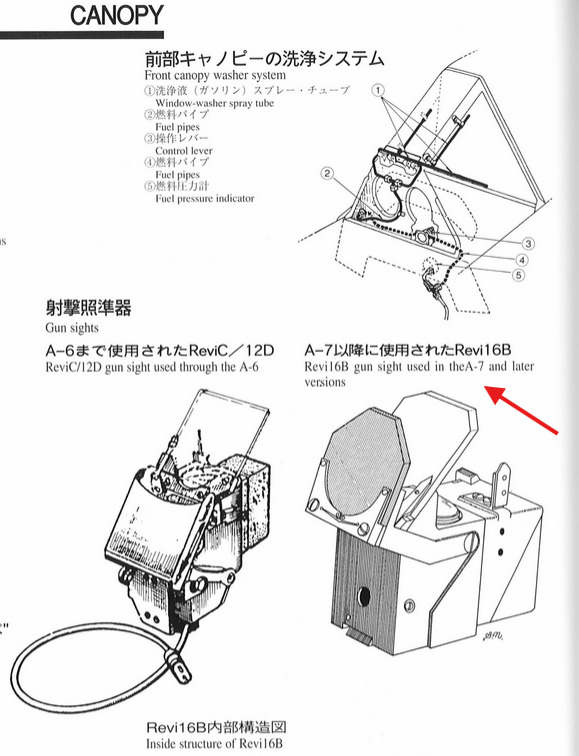
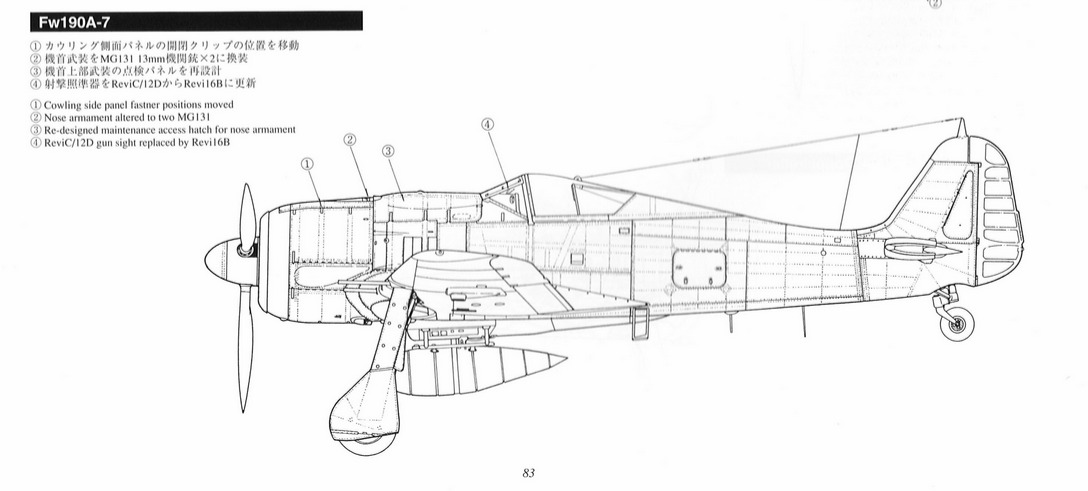
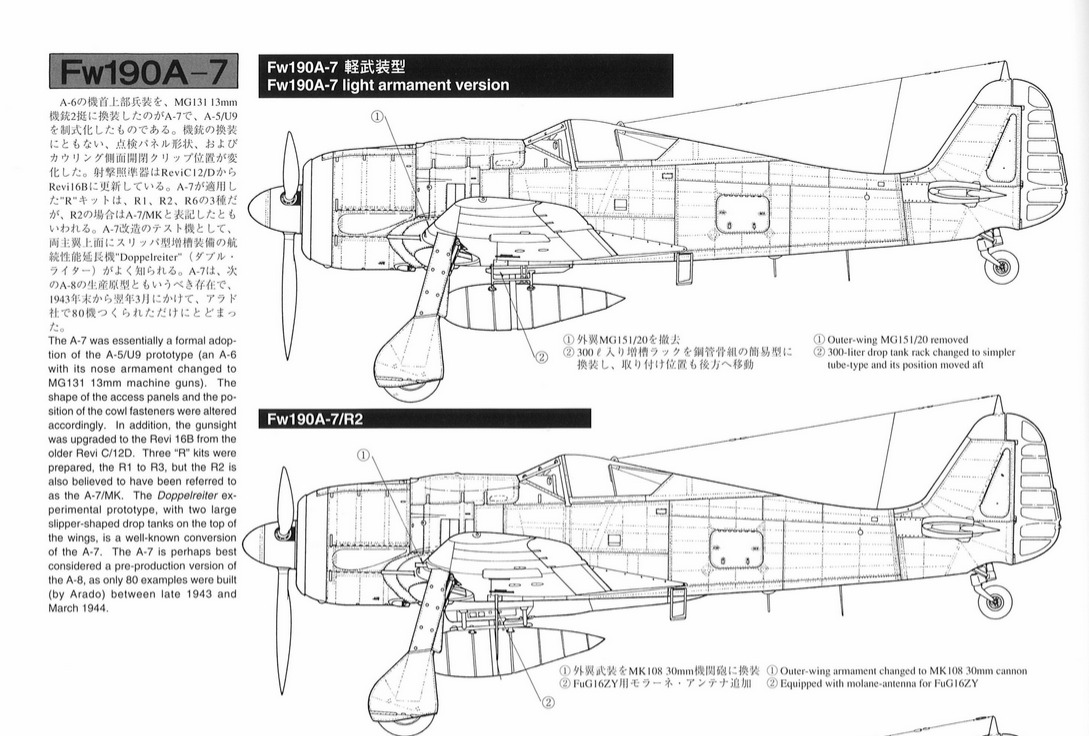
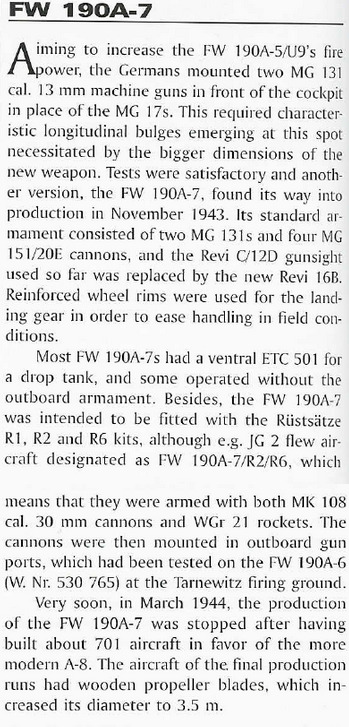
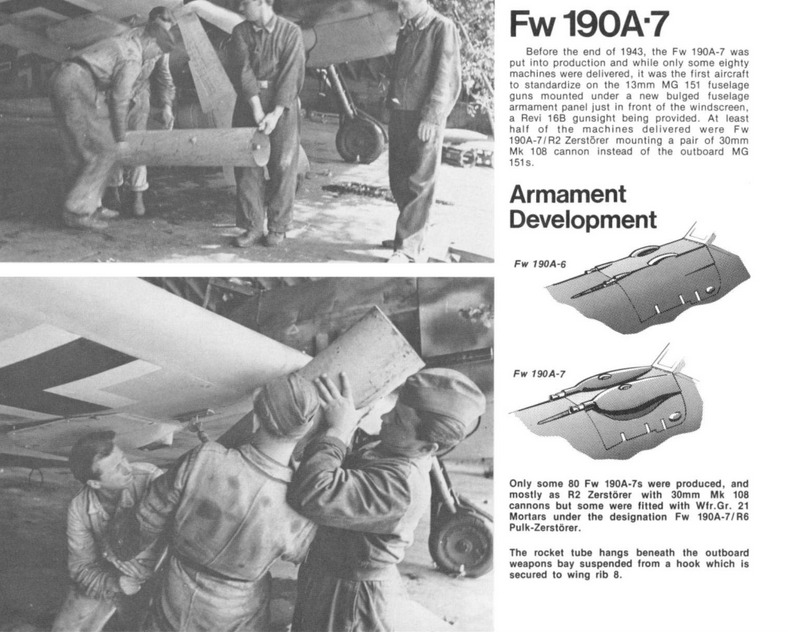
By 1943 the Luftwaffe faced a new challenge: the steady arrival of American four‑engined bombers over Europe. Earlier Fw 190 variants had proven formidable against RAF Spitfires and medium bombers, but the growing threat of massed daylight raids demanded heavier armament and better survivability. The A‑7 was conceived as a response to this situation. Entering production in November 1943, it retained the rugged BMW 801D‑2 radial engine of the A‑6 but introduced a revised weapons layout: two 13 mm MG 131 heavy machine guns mounted above the engine cowling replaced the lighter MG 17s, while the wings carried four 20 mm MG 151/20 cannons. This gave the aircraft a powerful punch capable of shredding bomber formations, while still keeping it agile enough to contest Allied escorts.
Structurally, the A‑7 was very similar to the A‑6, with only minor changes in canopy fittings and equipment. It could carry bombs or drop tanks, allowing it to serve as a fighter‑bomber when required, but its primary role was interception. In service, the A‑7 was flown by units such as JG 26 in northern France, where pilots like Adolf “Addi” Glunz used it to score victories against both bombers and fighters. Glunz himself flew the A‑7 during 1943, claiming dozens of kills, including heavy bombers, without ever being shot down.
Performance remained solid at low and medium altitudes, with a top speed of about 605 km/h (376 mph) and a range of roughly 800 km, but like all radial‑engined Fw 190s it struggled above 6,000 meters. This limitation meant that while the A‑7 was effective against bomber streams at moderate altitudes, it was increasingly vulnerable to high‑flying escorts such as the P‑51 Mustang. Production numbers were relatively limited compared to the later A‑8, which became the most numerous variant, but the A‑7 marked an important evolutionary step: it was the first Fw 190 to adopt the heavier MG 131s, setting the pattern for subsequent models.
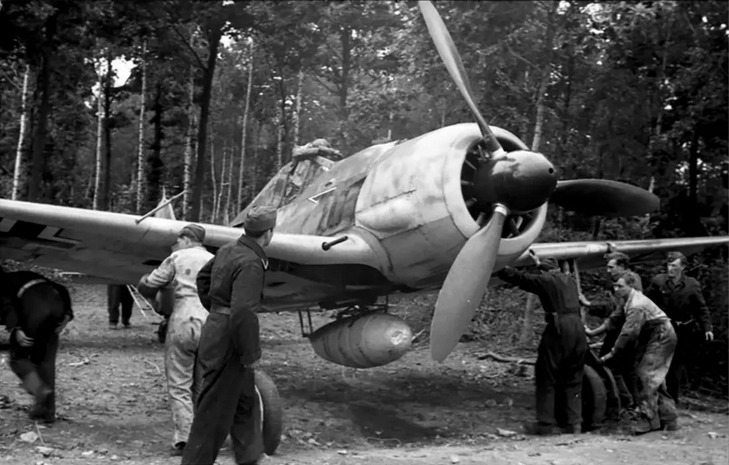
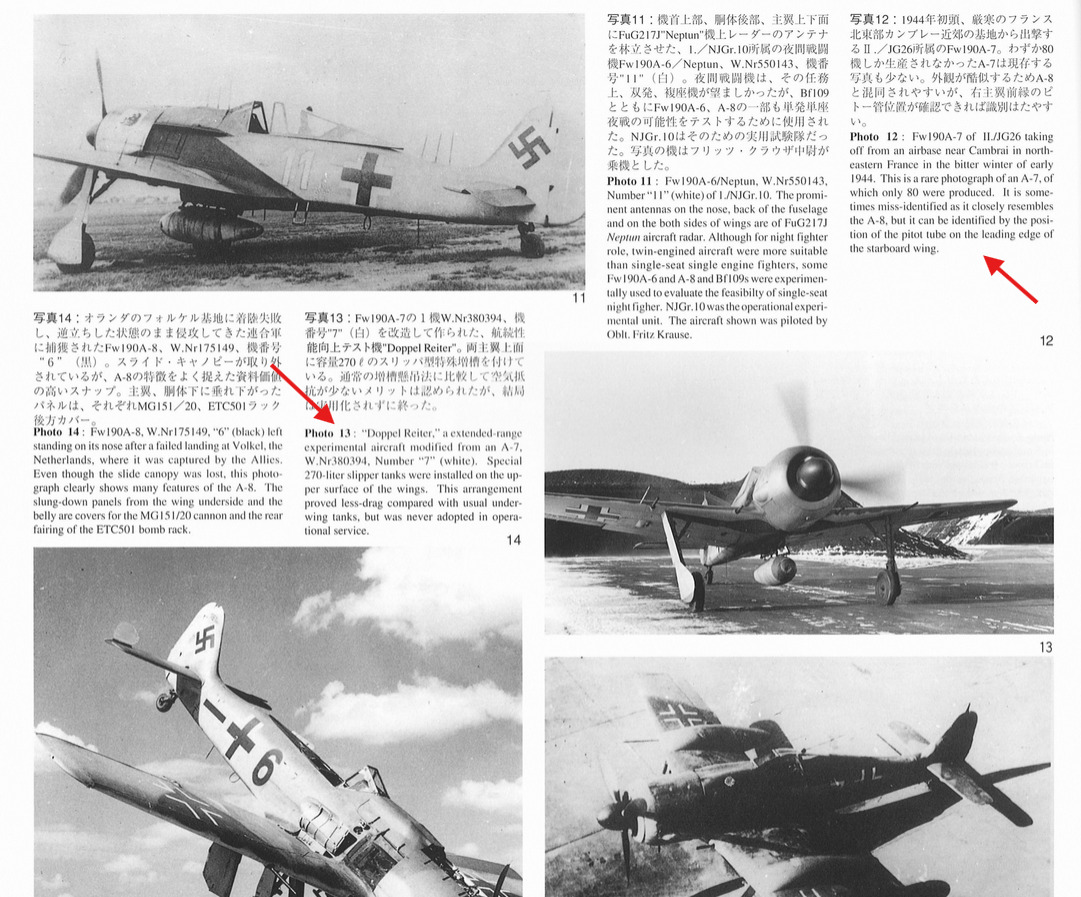
Focke-Wulf Fw 190 A-7 from the JG26 stationed at Boissy-le-Bois in the North of France between Paris and Rouen, 1944.
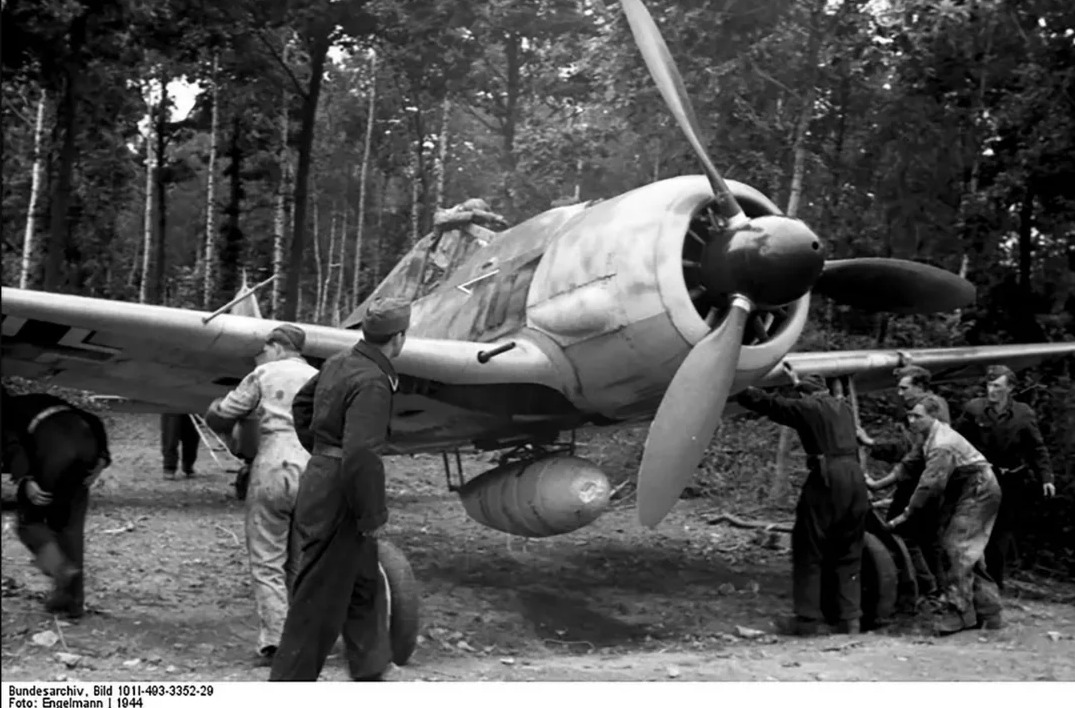
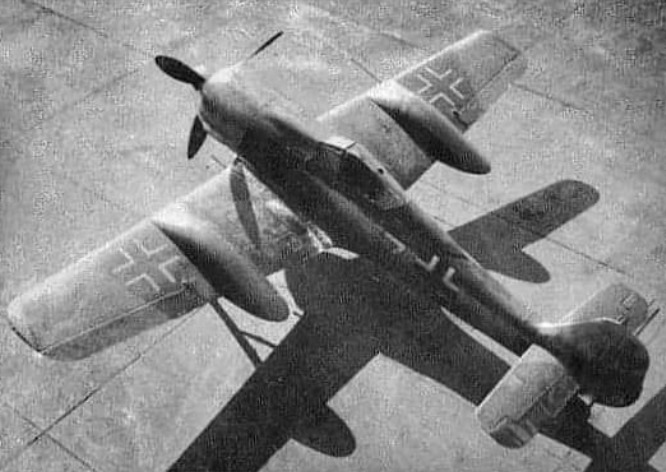
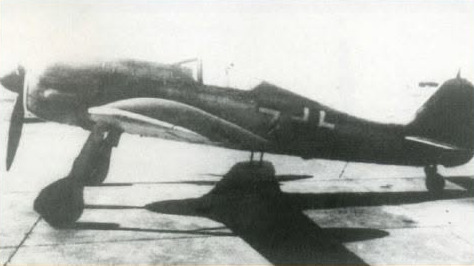
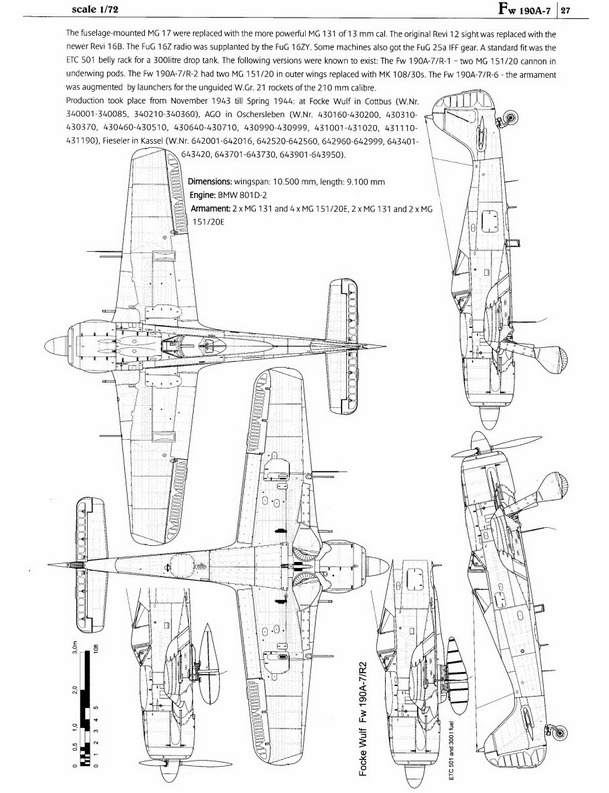
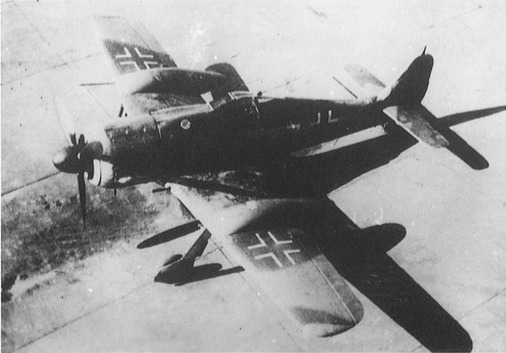
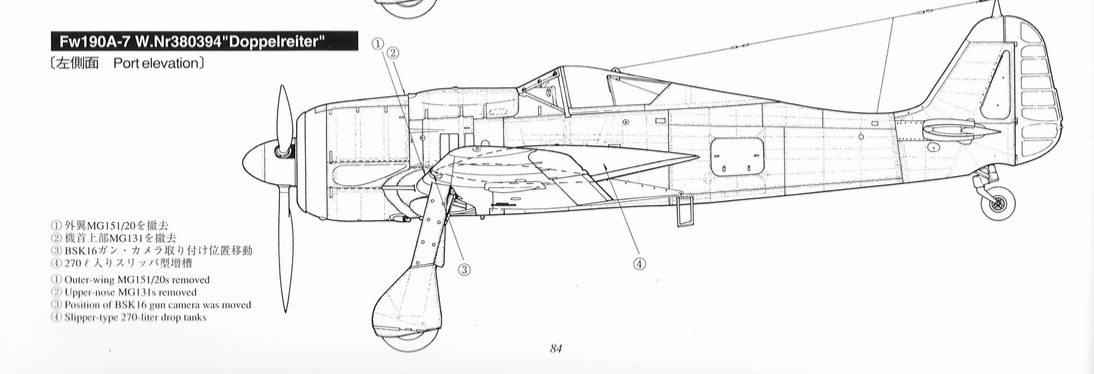
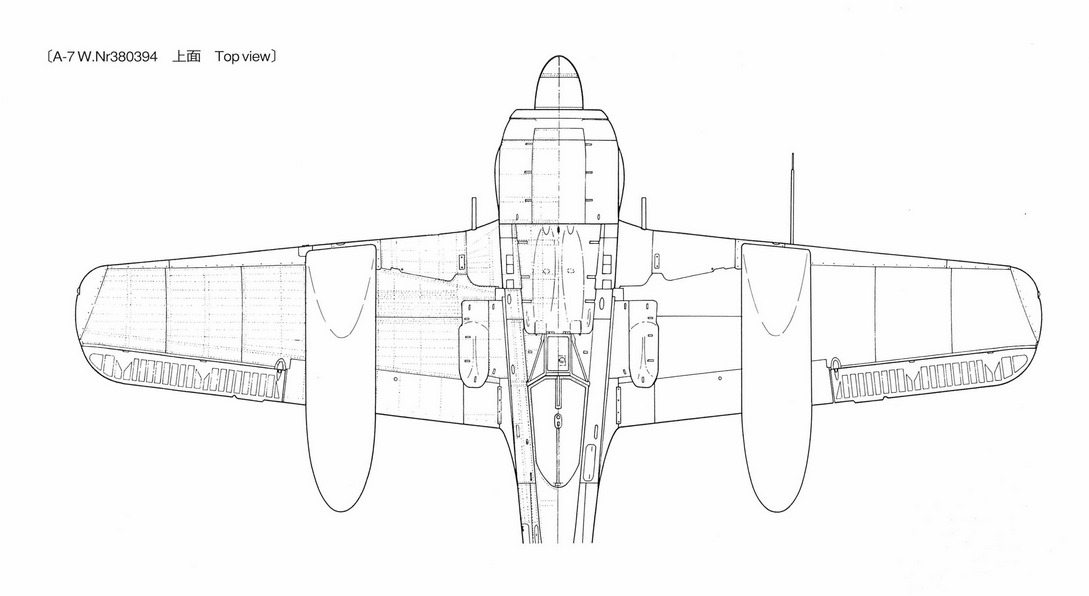
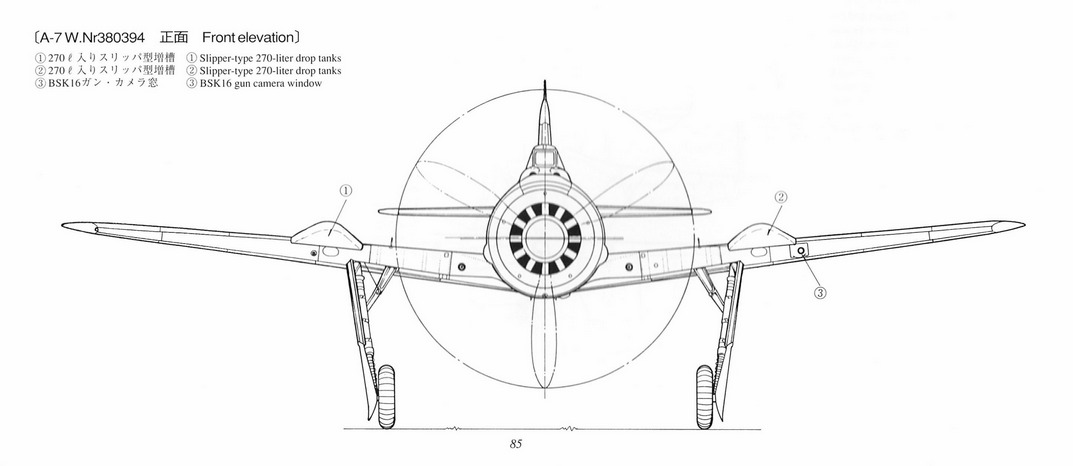
art Images of Fw 190 A-7 / image of the fw 190 A-7 with 270l fuel modification :
Specifications
General Characteristics :
Spoiler
Crew: 1 (pilot)
Length: 9.10 m (29 ft 10 in)
Wingspan: 10.51 m (34 ft 6 in)
Height: 3.95 m (12 ft 11 in)
Empty Weight: 4,000 kg (8,820 lb)
Loaded Weight: 4,900 kg (10,800 lb)
Powerplant: 1 × BMW 801D‑2 radial engine, 1,700 hp
Performance Maximum Speed: 605 km/h (376 mph) at 6,000 m
Range: 800 km (500 miles) combat radius
Service Ceiling: 10,600 m (34,775 ft)
Rate of Climb: 15 m/s (3,000 ft/min)
Armament :
Machine Guns: 2 × 13 mm MG 131 (mounted above the engine)
Cannons: 4 × 20 mm MG 151/20 (two in wing roots, two in outer wings)
Optional Kits: A‑7/R2: 2 × MK 108 30 mm cannons (outer wings) A‑7 “Doppelreiter”: 270 L slipper tanks on upper wings
Ordnance Options: Up to 500 kg (1,100 lb) of bombs or drop tanks for extended range
Sources :
Spoiler
1- Special drawing
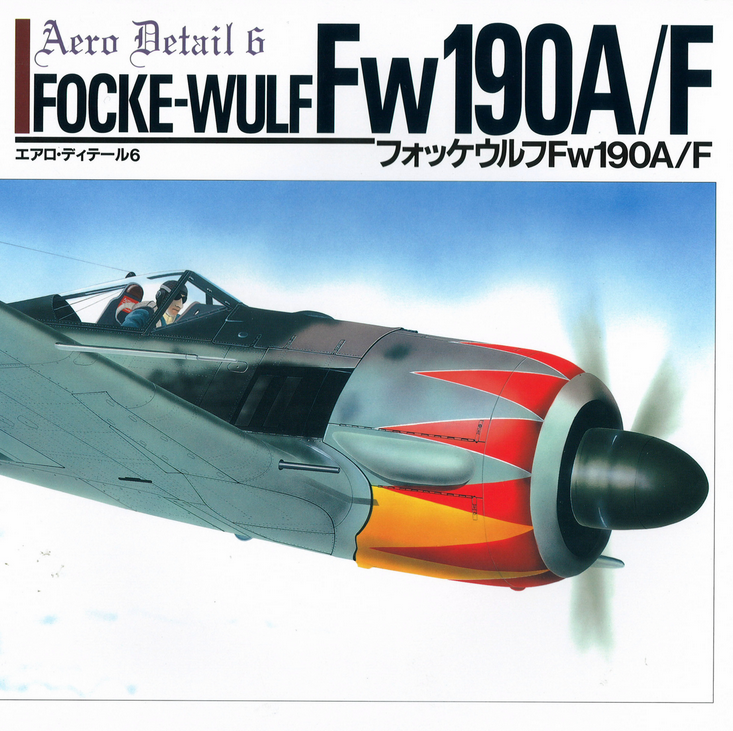
2–Aera Detail 6
3-Wiki Focke-Wulf Fw 190 - Wikipedia
4- Focke-Wulf FW 190 Vol. 1 (Monografie 01) by Krzysztof Janowicz
5-