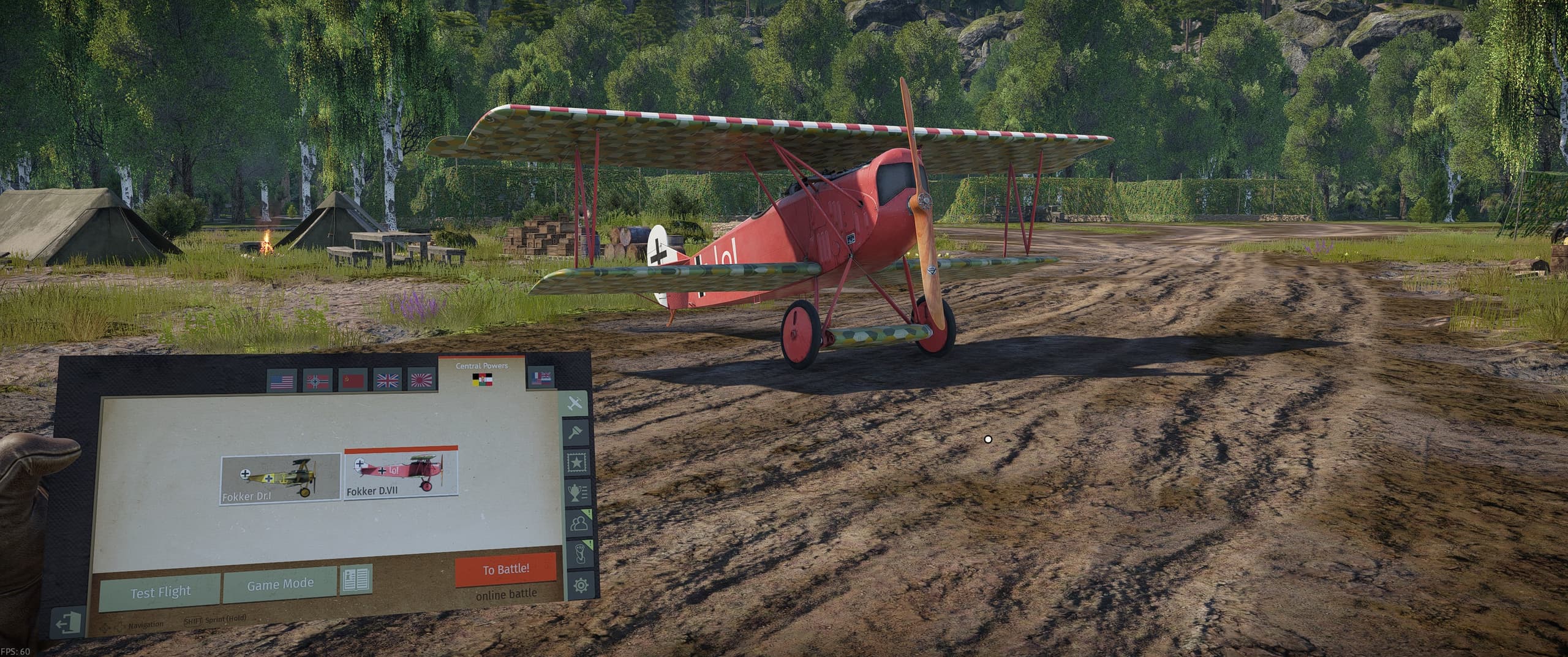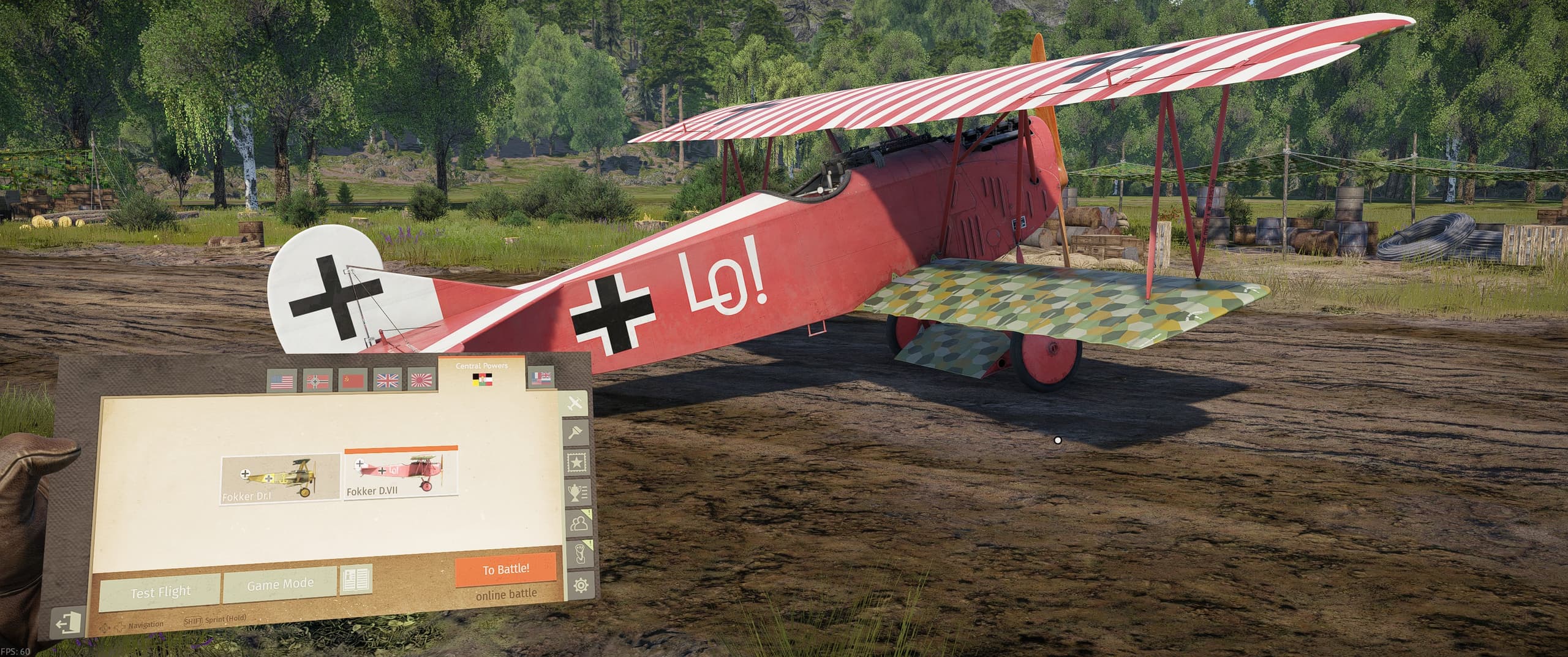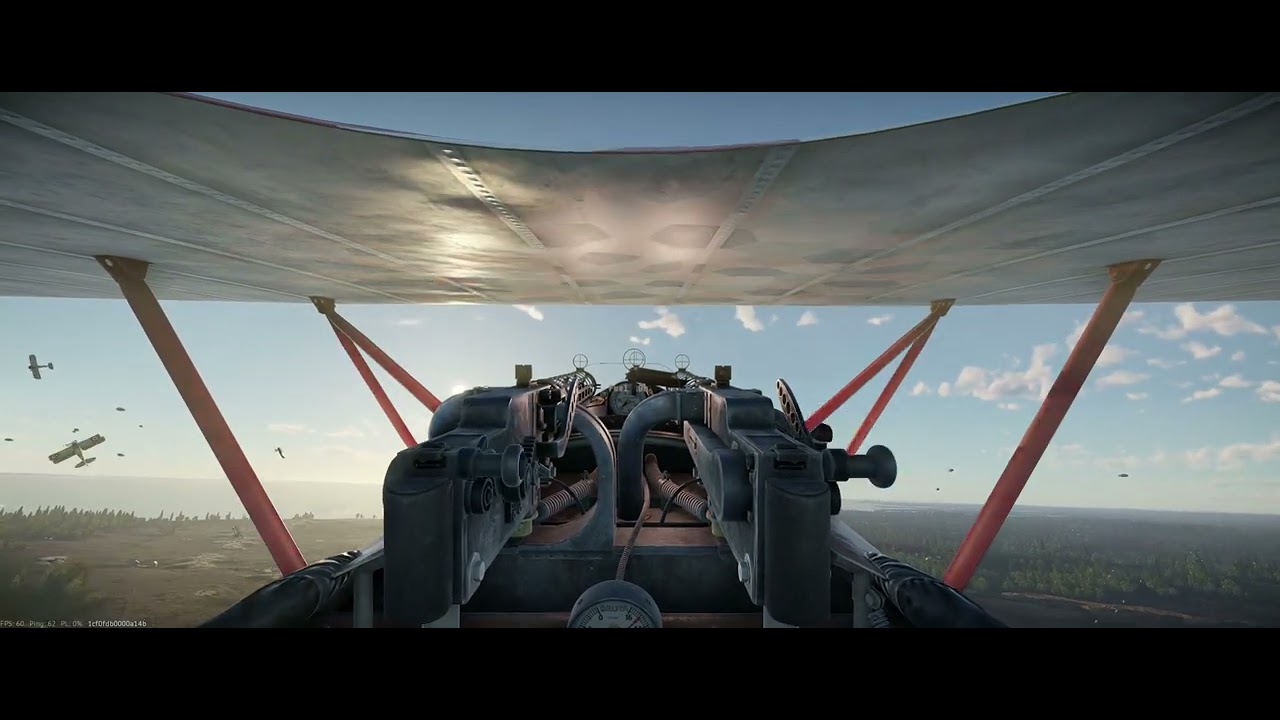
The Fokker D.VII was a German WW1 single-seat fighter that saw service in the skies over the Western Front in the second half of 1918 near the end of the war.
History
In 1916 Fokker Chief Engineer Reinhold Platz started work on a series of experimental aircraft known as the V-Series. These aircraft notably featured cantilever wings first used on the Junkers J 1 monoplane. Later in 1917 Fokker built the V.11 which would be the precursor to the D.VII.
In 1918 the V.11 would be put into a fighter competition to choose Germany’s next fighter aircraft, testing was done by one Manfred von Richthofen, otherwise known as the Red Baron who found it tricky and unpleasant to fly with a main point being that it was unstable when in a dive. To compensate for this the rear fuselage would be lengthened and re-submitted for the tests in which Richthofen would praise the design saying it was the best aircraft of the competition. Immediately after the competition Fokker would be given an order for 400 units.
The Fokker D.VII would enter service in the spring of 1918 where it would immediately prove itself in combat. As units became more available to the squadrons on the Western Front it racked up an impressive kill count, by August the D.VII had achieved 565 victories. By the end of the war there were 775 D.VII’s in service. It was well liked by it’s pilots as unlike older Albatros aircraft pilots could dive without the fear of structural failure along with it’s ability to stay controllable during a stall. Unlike many other aircraft the D.VII was reluctant to spin when in a stall making it very safe during low speed engagements. It also had the ability to “hang on its prop” without stalling which allowed pilots to engage enemy aircraft from below for much longer than other aircraft could.
A large amount of these were confiscated by the Allied nations after the Armistice. 142 were sent to American to be evaluated by the US Army and Navy air services, France, Great Britain, and Canada also received a large amount however that number is unspecified. Nations such as Poland also used some D.VII’s after the war during the Polish-Soviet War.
Specifications
Size
- Length - 6.954 m (22 ft 10 in)
- Wingspan - 8.9 m (29 ft 2 in)
- Height - 2.75 m (9 ft 0 in)
Weight
- Empty weight - 670 kg (1,477 lb)
- Gross weight - 906 kg (1,997 lb)
Powerplant
- 1 x Mercedes D.III 6-cylinder water-cooled in-line piston engine - 160hp
Performance
- Max Speed - 189kph (117mph)
- Service Ceiling - 6,000m (20,000ft)
- Rate of Climb - 3.92m/s (772ft/min)
Armament
- 2 x 7.92mm LMG 08/15 Spandau machine guns
- Yes
- No
- 0.0
- 0.3
- 0.7
- New Reserve Aircraft (Move everything up by 1 BR)
- Have a separate TT for WW1 vehicles
- I Said No
- Standard TT (Lower than reserve tier, 0.0-0.7)
- Standard TT (Replacing current reserve tier, move everything else up 1 BR)
- Premium
- Event
- Separate WW1 TT
- I said I don’t want it