- Yes - In the Tech Tree.
- Yes - Event/BP.
- Yes - Premium.
- No - I would not like to see HMNZS Arbutus in game.
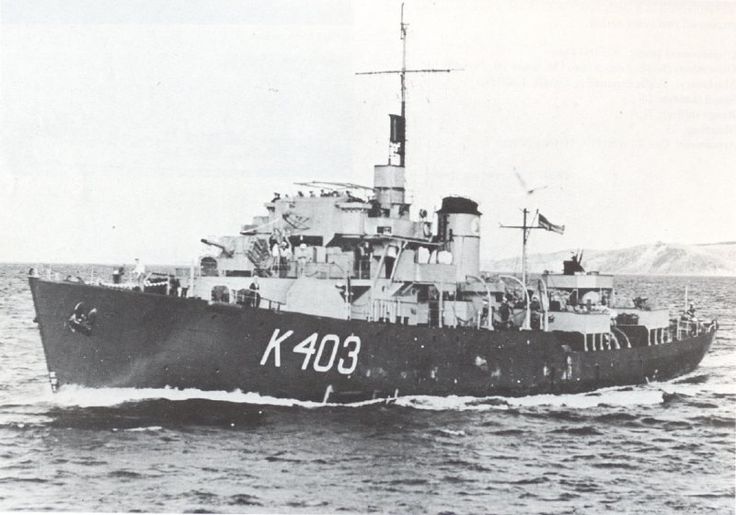
Description:
One of two modified Flower-class Corvettes to serve in the Royal New Zealand Navy during the Second World War and Post-War environments. HMNZS Arbutus, along with crew from three other vessels, would get the rather dubious honour of being the first RNZN vessel to have her crew participate in a mutiny.
This suggestion is her fit at the end of the Second World War.
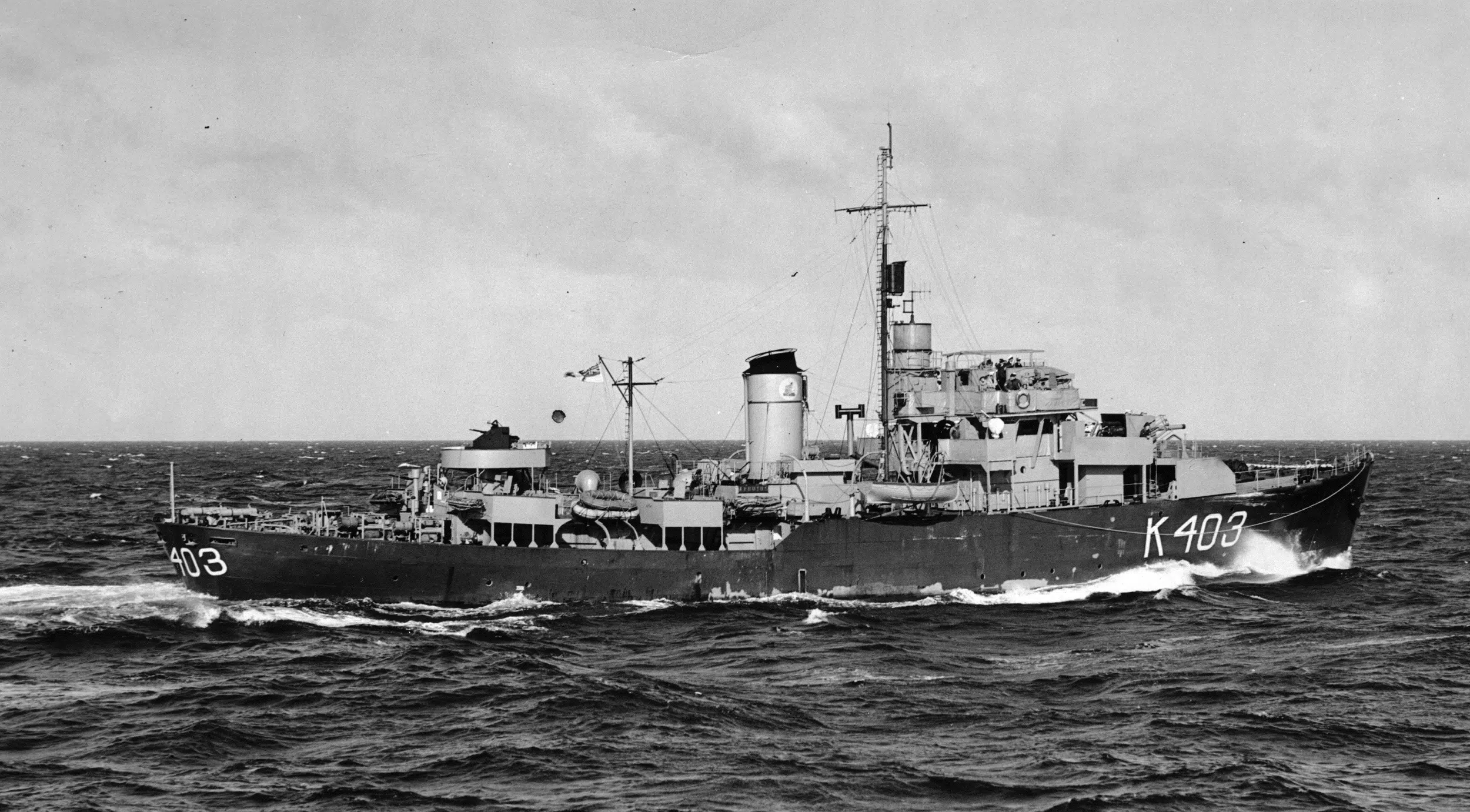
History:
Laid down by George Brown & Co, Greenock, Scotland, in May 1943, she would be offered to the NZ government as a gift while she was still being built, providing they pay for the altercations made for tropical service. The need for more minesweepers/patrol vessels in NZ waters was impressed by pressure from civilian companies to release their converted vessels back into civilian use. She would launch on the 26th of January, commissioning directly into the RNZN as HMNZS Arbutus on the 16th of June 1944.
She would finish working up and sail for NZ via the Panama Canal on the 1st of August 1944. While passing Fiji, she ran aground off Viwa Island, losing a rudder blade, bending the prop shaft, and having her hull breached by taking on water. She was towed by two US vessels into Suva. Temporary repairs were finished, and she sailed with HMNZS Aroha to Auckland, arriving on the 27th of October 1944.
Due to demands at Auckland’s dry-dock, she was put in Lyttleton’s dry-dock for permanent repairs, finishing in April 1945, sailing back into Auckland in May.
As the RNZN’s 27th Mine sweeping Flotilla did not need her services, Arbutus was offered to the British Pacific Fleet. This was accepted, and she was to be refitted in Sydney, Australia, to be a radar and radio maintenance ship. She joined the fleet on the 28th of July, escorting and undertaking repair duties. During her time in the Fleet, she steamed for thirty-three days continuously, sailing 7,600 miles without stopping her engines.

By the 16th of September she joined the Allied fleet taking the Japanese surrender, following which she was released from the British Fleet, returning to Auckland on the 1st of October 1945. Almost immediately after returning she took scientific teams to islands around NZ, leaving in November, and only finishing in December.
By January 1946 HMNZS Arbutus and her sister Arabis had mine-sweeping gear added and were put to use clearing the Hauraki Gulf minefields as part of Operation NA. This was the job of the 25th mine-sweeping flotilla, which consisted of HMNZS Arbutus, Arabis, Kiwi, and three converted Dan-layers. The rest of the year she visited multiple pacific island nations to show the flag.
On the 1st of April 1947, while she was docked at HMNZS Philomel with the cruiser HMNZS Black Prince about one hundred men from the land facility, and another hundred from Black Prince and Arbutus declared their intent to refuse their work, over poor pay compared to both civilian jobs and the pay of the other branches of service.
To try and get the 200 men back on base, the pay scale review was to be posted later the same day. This increase was an improvement, however, Sailors were still only receiving half the pay of Army and Air Force personal. This combined with an increase in tax rate, resulted in most of this pay increase being absorbed.
With the majority of sailors walking off the base, the mutineers were offered two choices, rejoin and suffer punishment, or be discharged, only twenty three of the mutineers chose the former option. As news of this spread throughout the Navy, portions of numerous other ships companies also deserted, including HMNZS Tasman, Hautapu, and Bellona, with the mutinies running across to the 29th of April.
To reduce the risk of loyal men turning to the mutineers, the Captain of Arbutus decided to crew her with the 23 men who returned, and 18 British Sailors assisting the RNZN at the time. She set sail the afternoon of the 1st of April for the Cook Islands. Due to the lack of provisions, the crew had to eat canned pilchards for the entirety of the voyage.
This early discharge of at least 244 men, set back the Naval Boards future plans by about ten years, as there was not enough personnel to man the planned Cruisers, instead multiple ship’s companies would be combined to crew a reduced fleet.
She was paid off in 1948, and returned to the Royal Navy. Being broken up at Dunston, Tyne and Wear in 1951.
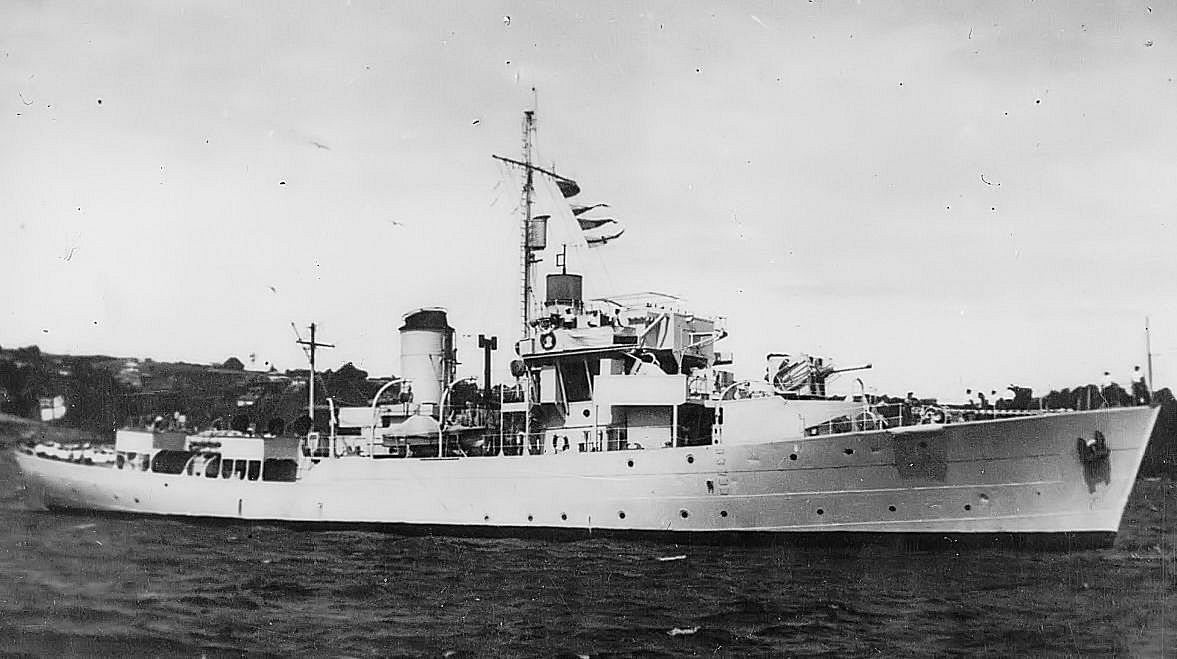
| General Characteristics: | |||||
|---|---|---|---|---|---|
| Name: HMNZS Arbutus | |||||
| Country: New Zealand | |||||
| Type: Corvette | |||||
| Class name: Flower (modified) | |||||
| Year of commision: 1944 | |||||
| Refit: 1944 | |||||
| ----------------------------------------------------------------------------------------------------------------------------------------- | |||||
| Dimensions: | |||||
| Length: 63.5 m (208 ft) | |||||
| Beam: 10.1 m (33 ft) | |||||
| Draught: 5.3 m (17 ft) | |||||
| Displacement: 1,350t | |||||
| ----------------------------------------------------------------------------------------------------------------------------------------- | |||||
| Propulsion: | |||||
| Powerplant: 1x oil fired triple expasnion steam - 2,280hp (1700kW) | |||||
| Speed: 16kt | |||||
| Endurance: 3,500nmi @ 12kt | |||||
| ----------------------------------------------------------------------------------------------------------------------------------------- | |||||
| Armament & sensors: | |||||
| Compliment: 102 | |||||
| Primary armament: 1x1 BL-4 inch Mk IX | |||||
| Secondary armament: - 6x1 20mm Oerlikon, 1x2 20mm Oerlikon | |||||
| Tertiary armament: - Hedgehog, 72 DC | |||||
| Sensors: Type 127DV ASDIC, Type 271 Radar |
Sources
HMNZS Arbutus - Wikipedia
https://navymuseum.co.nz/explore/by-collections/ships/arbutus/
H.M.N.Z.S. ARBUTUS
1947 Royal New Zealand Navy mutinies - Wikipedia
Gillett, R. (1983). Australian and New Zealand Warships 1914-1945 (p.288)
McDougall, R. J. (1989). New Zealand Naval Vessels (pp. 49-51)