Still following this thread hoping to hear good news.
Was playing the FRS1(e) in sim today and had some great fun in it running air superiority.
It definitely feels better which makes me all the more excited for if it ever gets it’s full performance.
Gave the red team a good bit of grief :)
Keep up the good work Matrix and I’ll keep upvoting your reports haha.
Cheers,
Sebdspy
6 Likes
OOOO:

Gonna try them out immediately. Looking forward to giving it a go in Sim too.
Not sure how much is left to go after this but congrats on getting it this far Matrix!
Just wanted to share the good news :)
Cheers
1 Like
Feels like it’s maneuvering like a Tornado — instantly jumps to angles of attack over 20, starts shaking and bleeding speed. Turn rate is low, too.
2 Likes
Ah great work Gaijin…I swear they would add the Spitfire in a broken state if they added it now.
3 Likes
Damn i was hyped for a better flight model
So harrier worse than before?
I still recommend checking it out yourselves. From what I can tell, low-speed maneuverability has gotten worse.
1 Like
No surprises then
Since i started playing 6 months ago its a game of dissapointment and stuff that makes me just WTF
1 Like
Quite a bit still unfortunately, but it’s a good start
3 Likes
It feels worse because higher aoa/manuverability leads to more speed bleed
1 Like
Bleeds speed more, roll rate is reduced at speed,
Yep…
Well after a very long time and probably close to 1000 hours of research now I think I have a good picture of its IRL performance.
Funny enough they actually have a bad high Mach number departure characteristic. This limits AOA at high Mach number a fair bit. Naturally this also reduced the buffet AOA.
At .6 Mach and below you could essentially pull whatever AOA you want if the nozzles where deflected slightly as they alter the aerodynamics of the aircraft significantly.
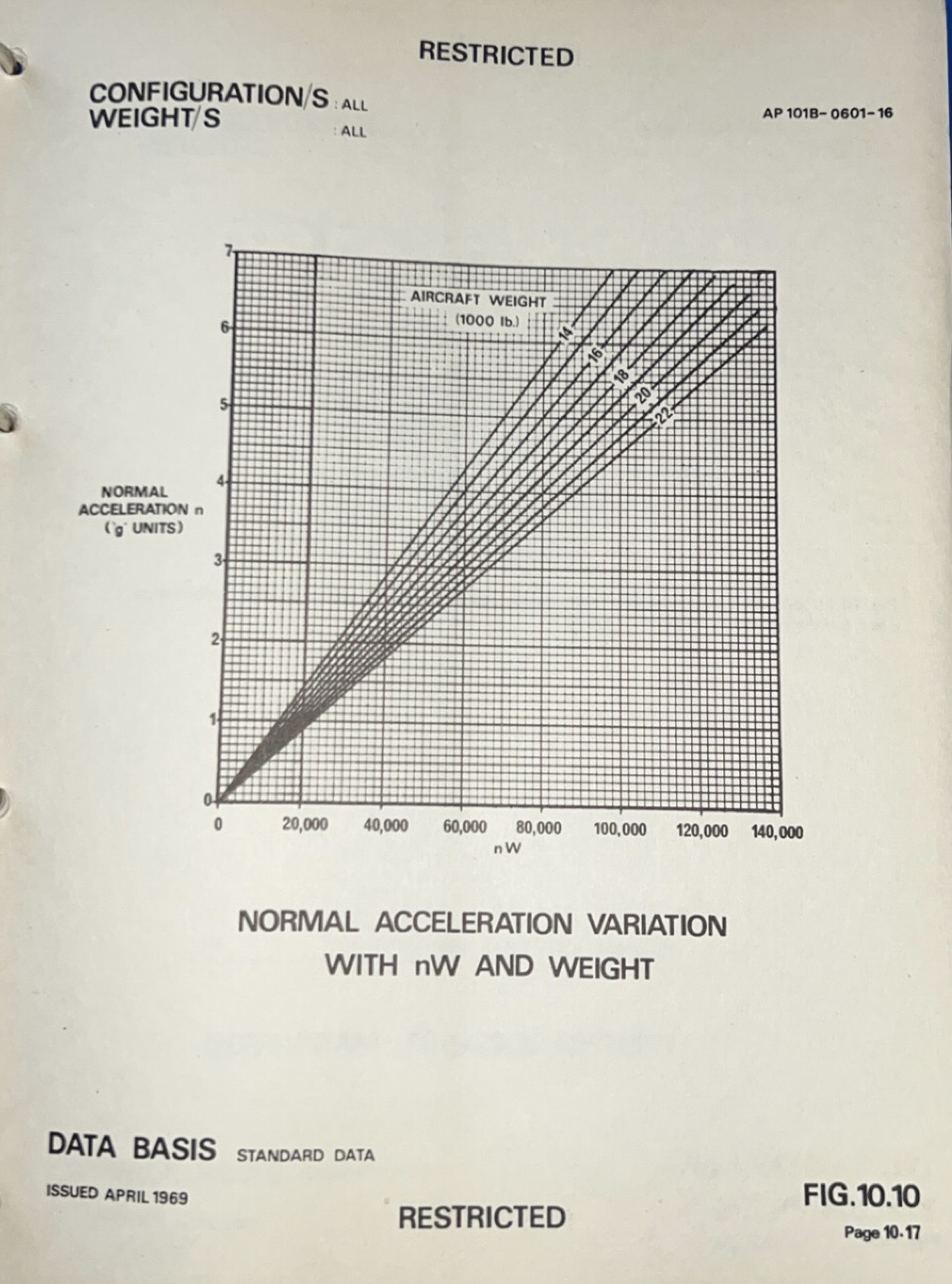
Now here is where gaijin got the whole thing wrong. The AV-8A manual has a G capabilities chart but it uses an indicated cockpit AOA that doesn’t appear to match the irl AOA (This is common and is seen on both the F-14 and F-15) They do this to standardize flight characteristics.
In game the AOA = AOA regardless meaning that gaijin modeled the G pull for speed and AOA on a chart that doesn’t show actual AOA.
Maneuvering boundaries for the Harrier are based on either deep buffet or lateral onset for max useable CL.
Example:
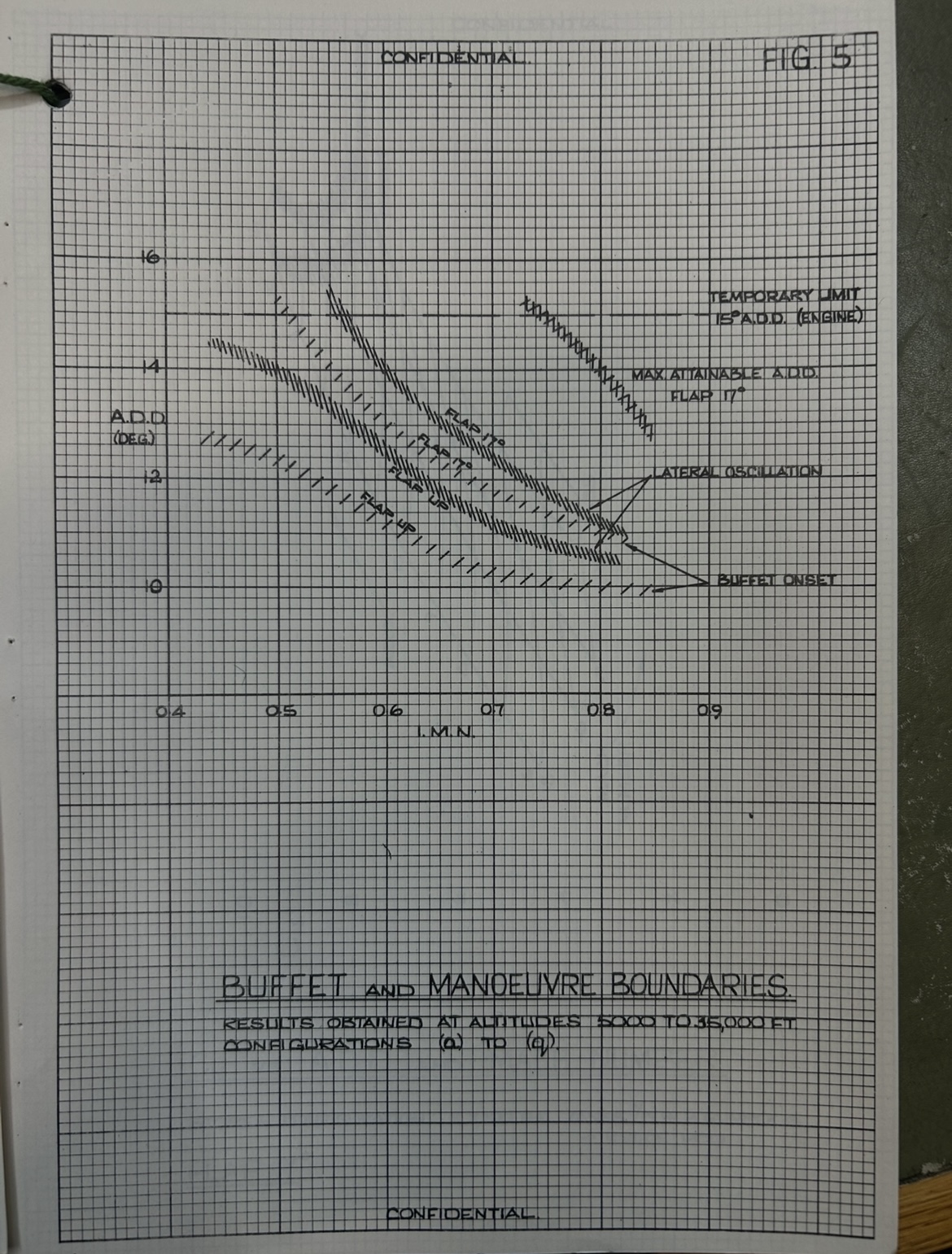
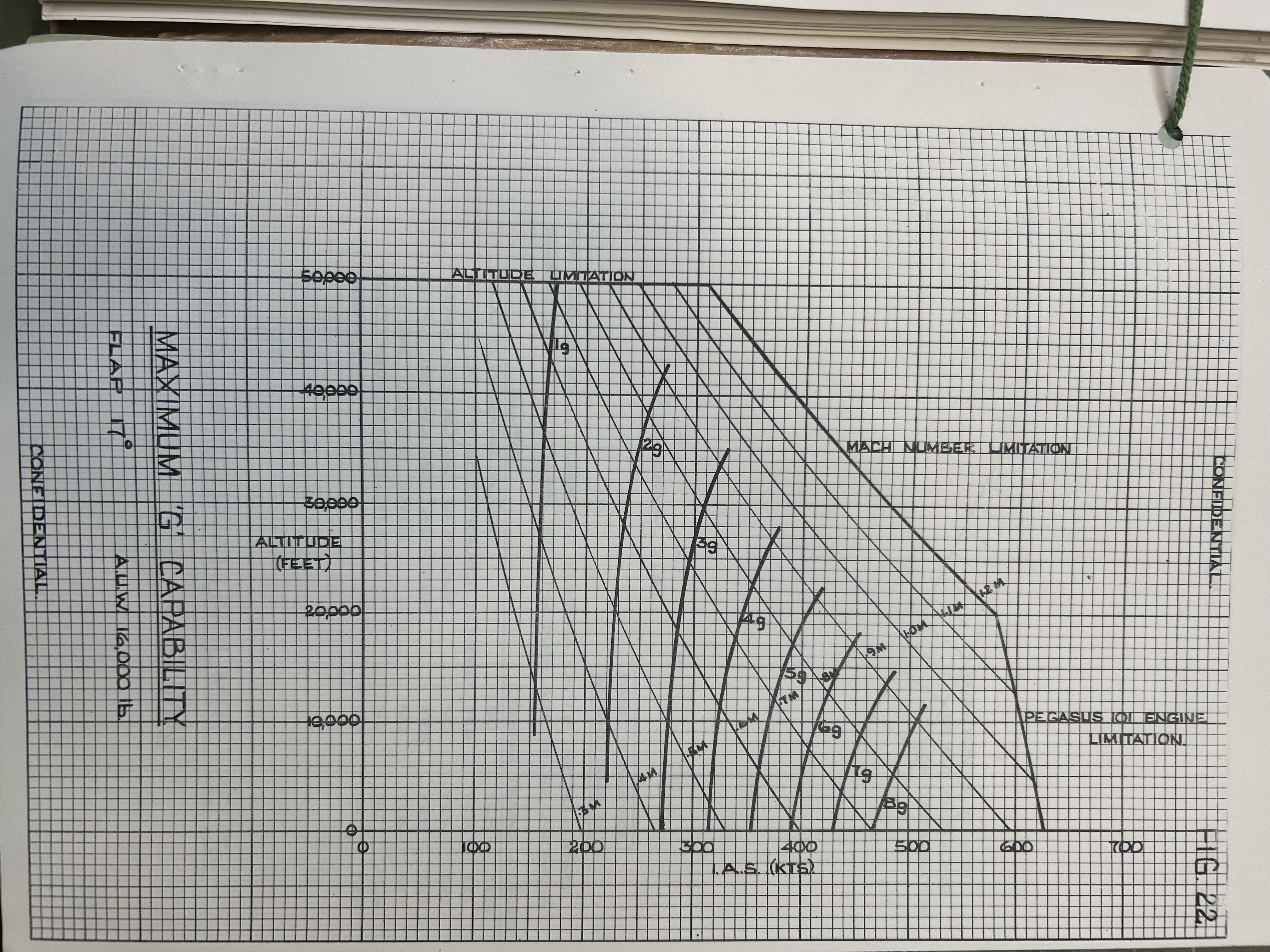
At .6 Mach, with flaps at the mid setting, the max useable AOA at lateral oscillations is 14 degrees AOA. That is the maneuver boundary. At 14 degrees AOA with the flaps at mid, a 16,000 lbs Gr.1 can achieve just over 6G at this speed. (This is from the RtoS manual as well as the ODM manual for buffet limits both of the manuals give the same value for the same exact weight and situation)
The AV-8A manual gaijin used from a redacted part of the manual at a weight of 17,000 lbs would need 20 degrees AOA to reach 5.5G at .6 Mach. At 14 degrees AOA it will achieve 4.8G.
Despite the weights being different we can still make a direct comparison of lift at the given AOA.
16,000 lbs X 6.1G = 97,600 lbs lift at 14 degrees AOA (Same lift value as given in the ODM manual for buffet limit + RtoS manual)
17,090 lbs X 4.8G = 82,032 lbs lift at 14 degrees AOA. (In game figure using redacted AV-8A manual)
That is a lift loss of 15,568 lbs for the given 14 degrees AOA.
4 Likes
RtoS G capabilities plot along with the AOA maneuvering boundaries.
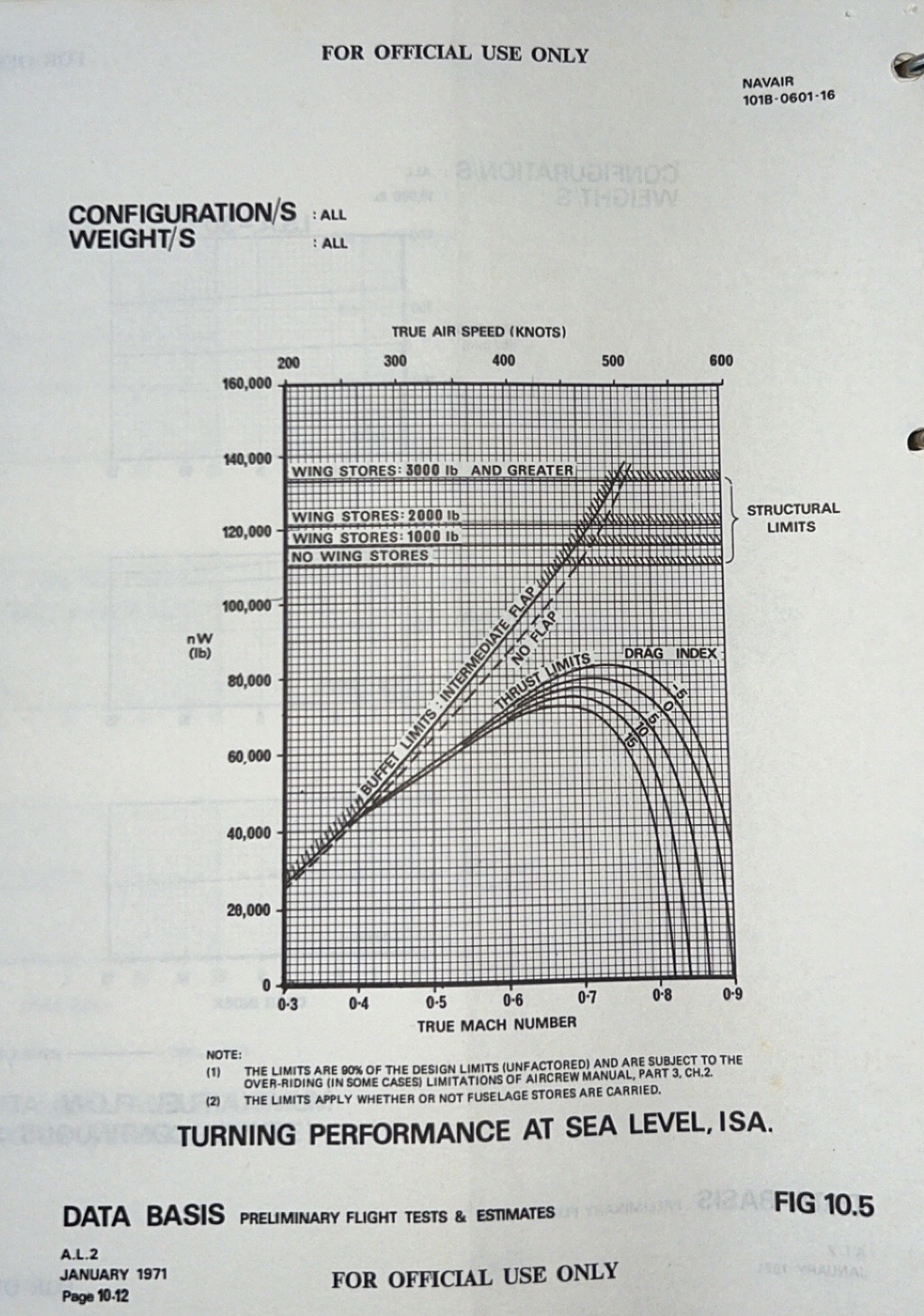
ODM figures for sea level as well as the lift force to aircraft weight chart.
The solid line indicates buffet onset and the hashes above the flap limit represents deep buffet.
6 Likes
Finally here is the data the harriers lift was derived from. The combat performance section of the AV-8A manual.
Now, this section was changed and revised it originally contained accelerations, fuel flow, dive recoveries, and maximum performance envelopes.
After the Tactical manual for the AV-8A was created all of these items where removed from the AV-8A manual and moved into the Tac man for further classification.
Its very likely this manual using indicated AOA units for buffet onset.

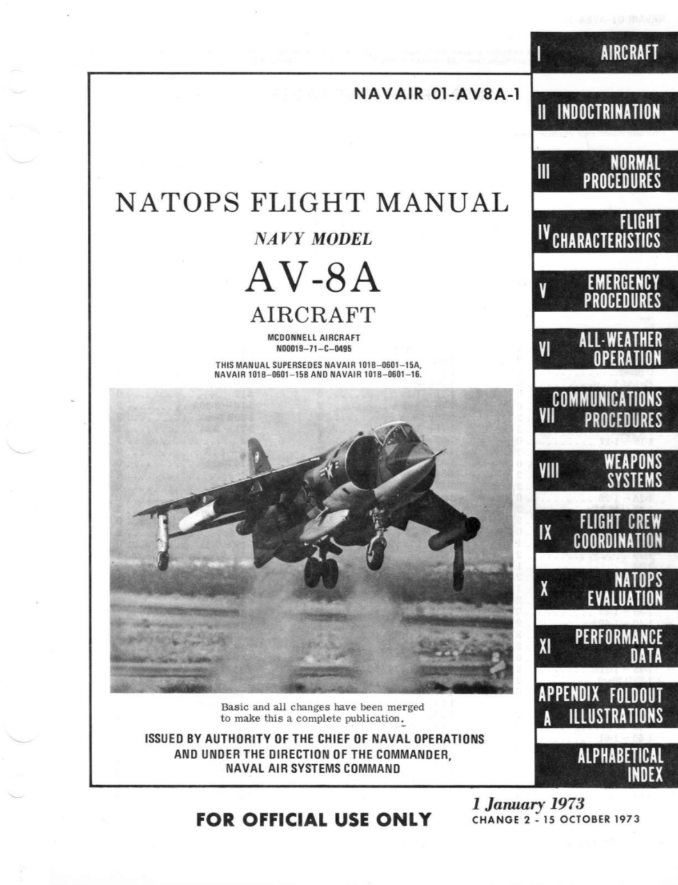
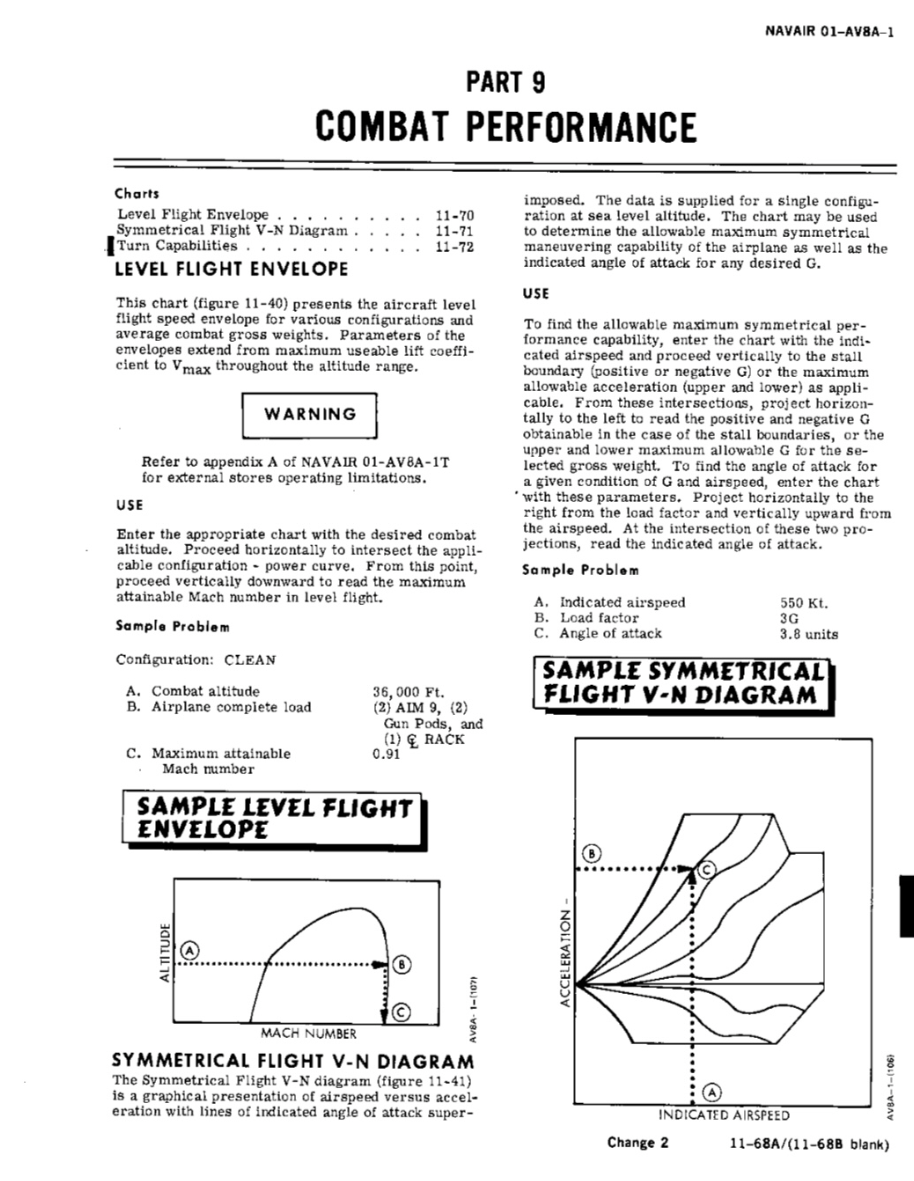
Note the Change 2 seen in the bottom right hand corner.
2 Likes
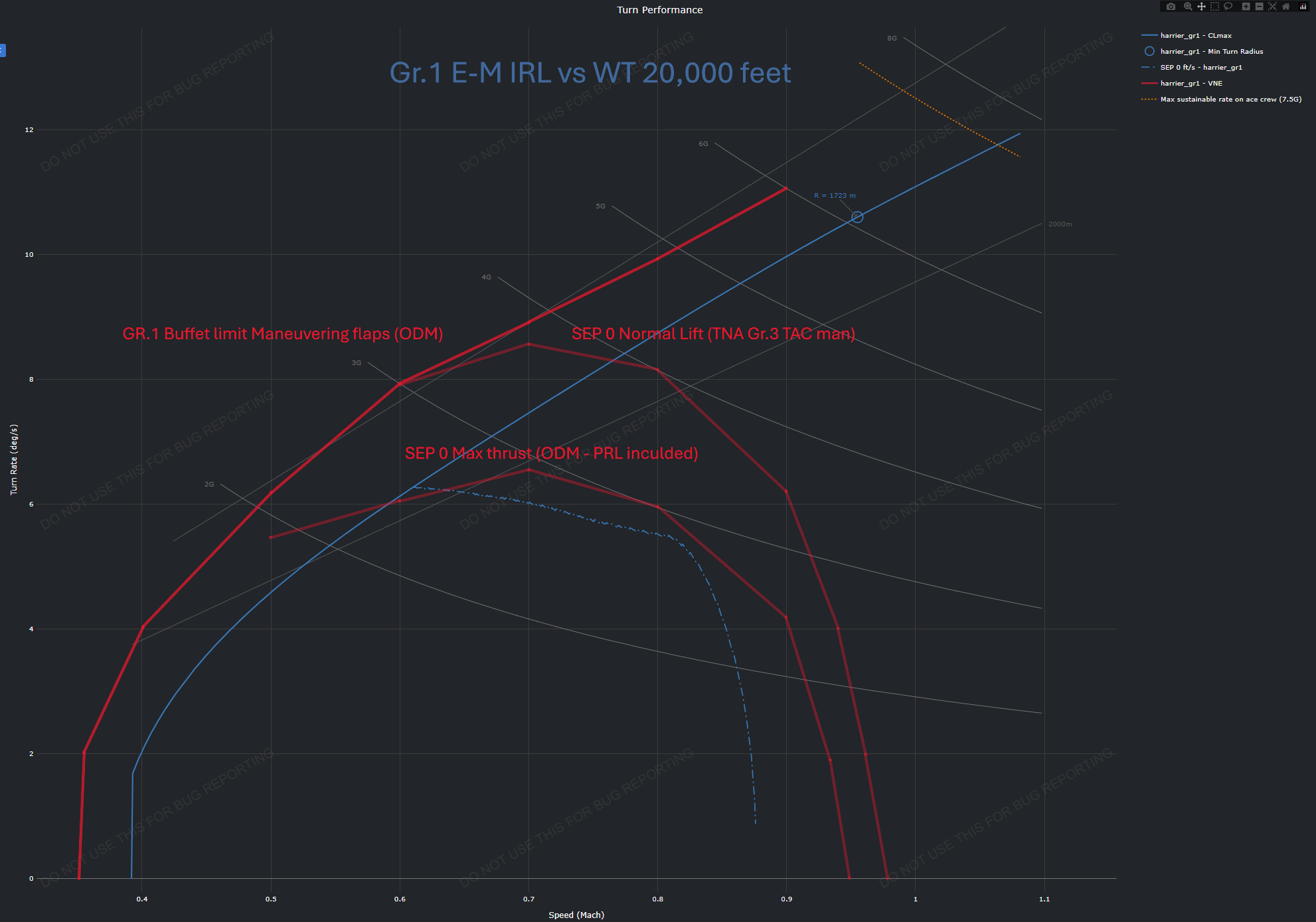
What this compares to in game. There is a .2G margin of error compared to the AV-8A manual but is still fundamentally missing an entire 1 G in standard lift.
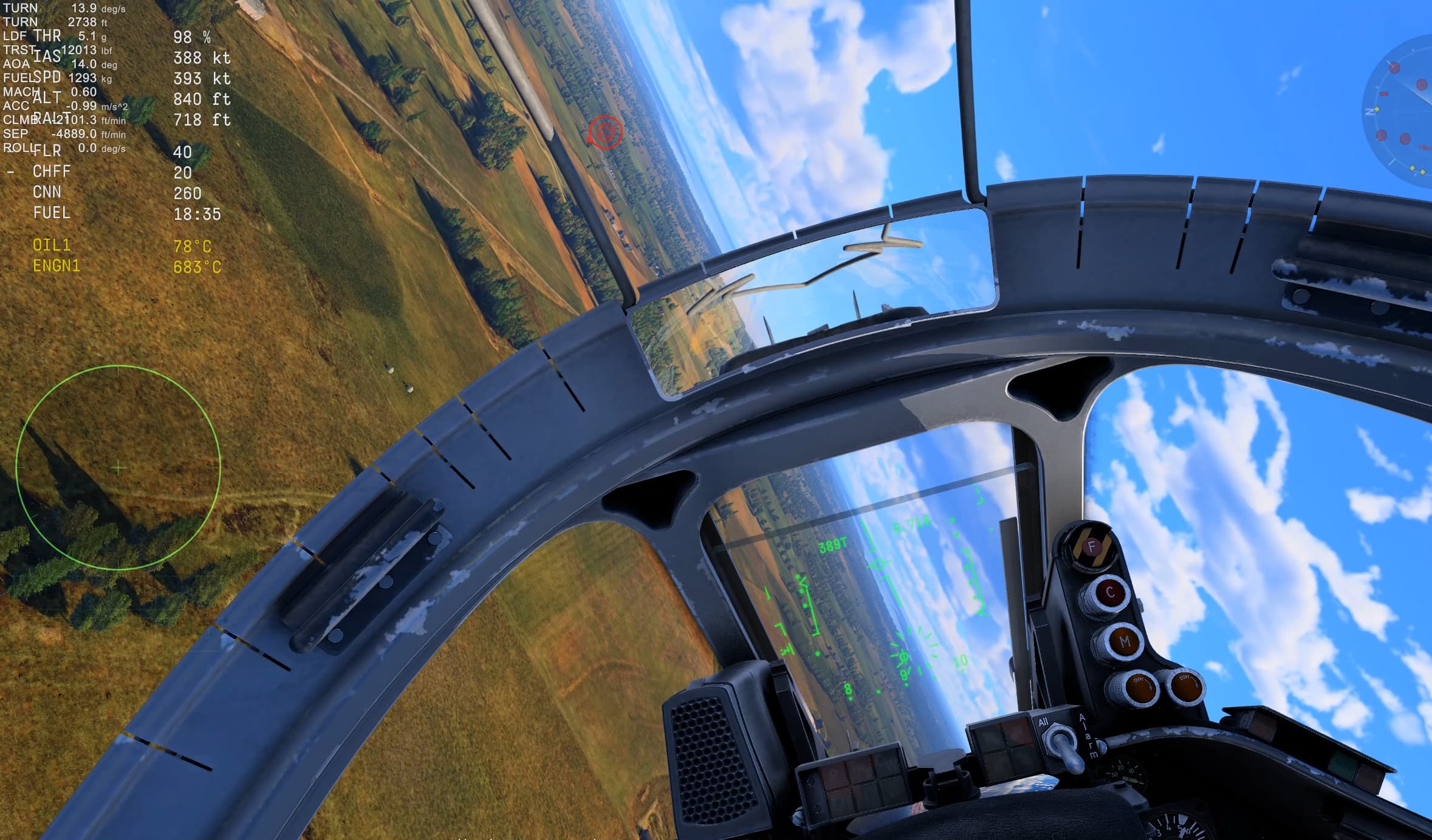
As seen the Buffet limit AOA turn rate in game is just 14 degrees per second. Compared to 17 degrees per second as seen on a real harrier.
More G for less AOA also means less induced drag, less speed loss, and greater sustained turns.
A Harrier Gr.3 using the Normal lift rating (Or the war time 100% RPM limit Datum plug) is capable of SUSTAINING a 5.25G turn at the onset of buffet curve at .6 Mach. At a weight of 17,211 lbs.
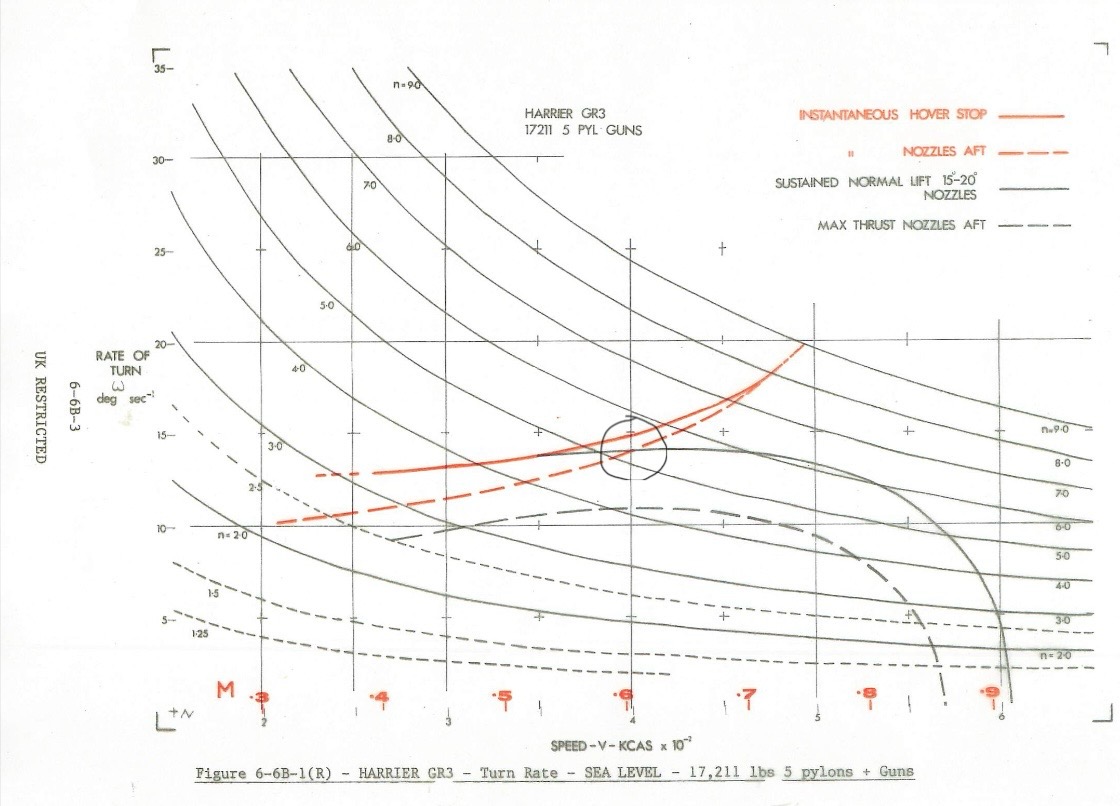
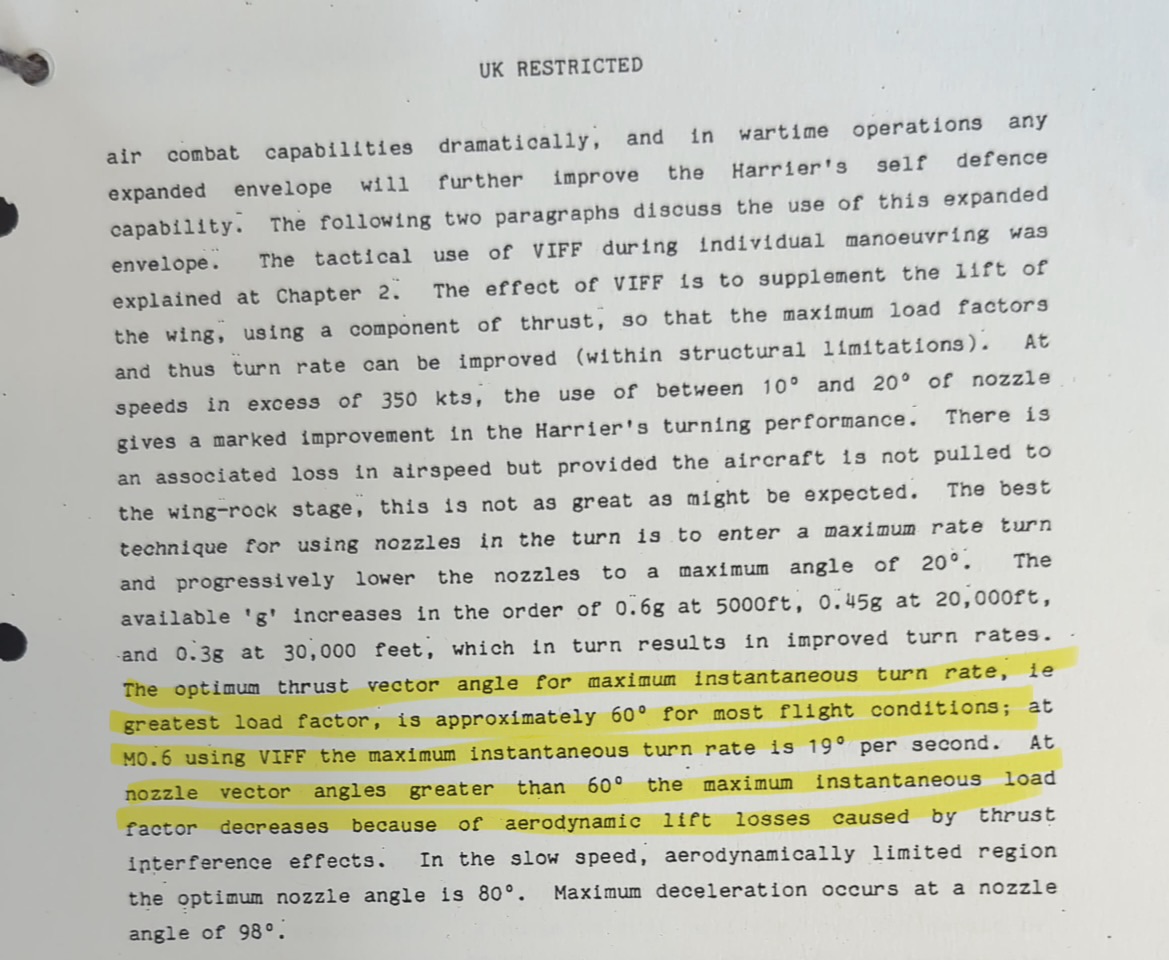
As for the Instantaneous G with the nozzles it is for hover stop or 98.5 degrees nozzle angle and this great an angle in nozzles actually reduces the overall lift due to it locally stalling the wing. Without the nozzles it is buffet onset.
The use of 60 degrees nozzle angle IRL will give an instantaneous turn rate of 19 degrees per second at .6 mach. With approximately 13 degrees AOA.
(No documents shared here are classified or export restricted and have been checked with a Tech mod or come from open sources such as the national archives)
6 Likes
The RN has expressed the F-35B actually fell short of the anticipated range btw.
I’ll use some data from the manuals to demonstrate range for a ski jump launch from HMS invincible.
The max operational take off weight with a slight headwind for the carrier is about 26,000 lbs for the Shar. The FRS.1 empty operational weight with the pilot is about 13,500 lbs. increasing to 14,500 with the pylons and attachment equipment added.
With 5,050 pounds fuel being full internal fuel, the weight is 19,550 lbs.
Add 5 X 1000 lbs, the weight of a sea jet is 24,550 lbs and well within the launch capabilities of the carrier.
Now for a High - High - High attack profile with full internal fuel is looking to have about a 275 nautical mile strike radius.
So that’s the tiny sea jet with 5 x 1000 lbs bombs can take off from a carrier drop all of those bomb accurately in a loft attack profile using the NAVHARS and radar a whole 275 nautical miles away, and fly all the way back, and land vertically on the carrier with some fuel left to spare.
1 Like
Make it 3 x 1000 lbs bombs and 2 combat fuel tanks the range increases to some 400-420 nautical miles strike radius.
The F-4J
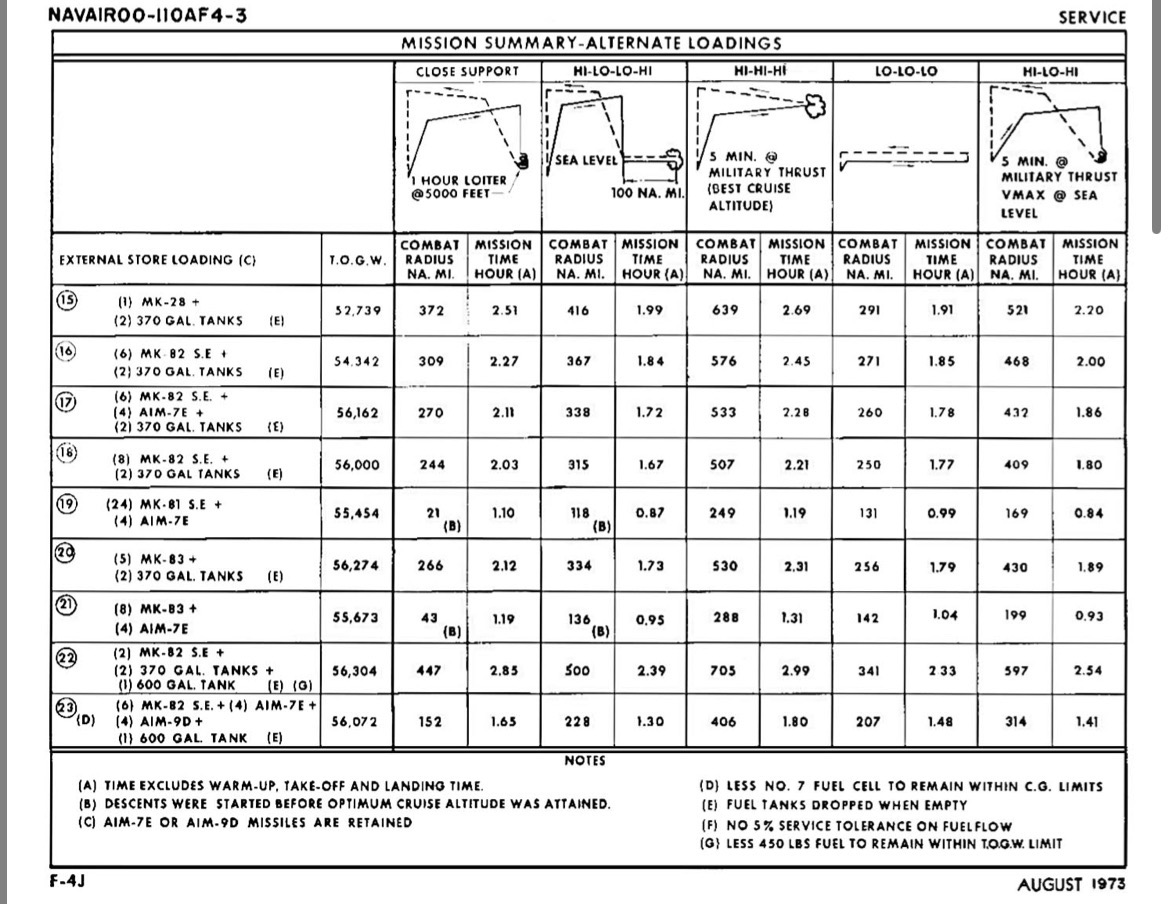
Carrying only 6 1000 lbs bombs and 2 massive 370 gallon fuel tanks can only just exceed the radius of the sea harrier.
For the fuel cost of 1 F-4 carrying 6 bombs you could send 2 sea jets and drop 10.
The sea jet can extend its range by flying far past the strike radius of the F-4 and landing and refueling on a frigate half way back to the carrier.
You can’t do that with any other jet.
2 Likes
Replying to the 2 above comments someone was silly enough to say the harrier couldn’t operate at any range capacity. Claiming we Brit’s love it so much bc it was the only plane that works.
They prolly deleted said comment after my 2 replies.
3 Likes