- Yes
- No
History
幕の裏-Before the Curtain Rises
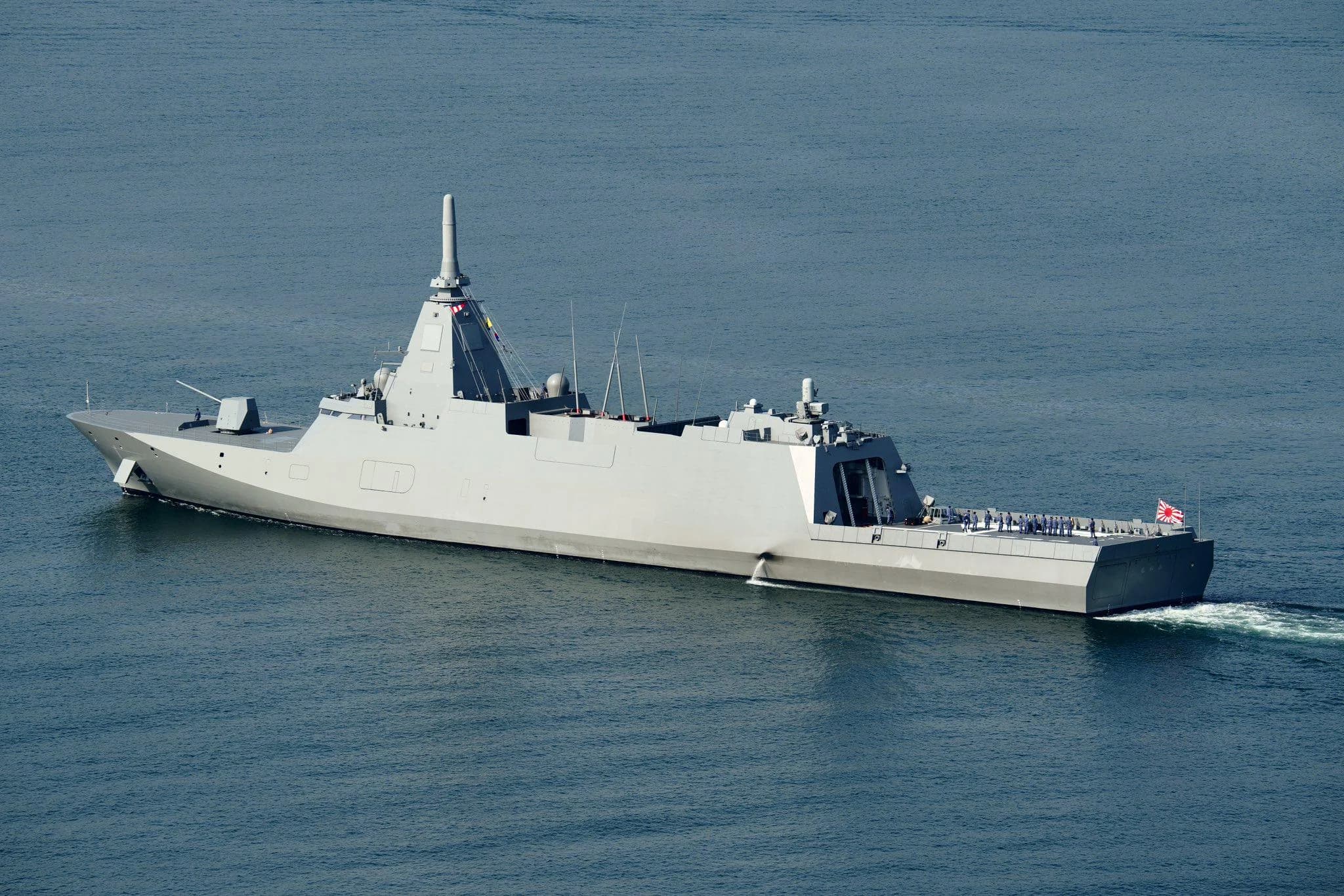
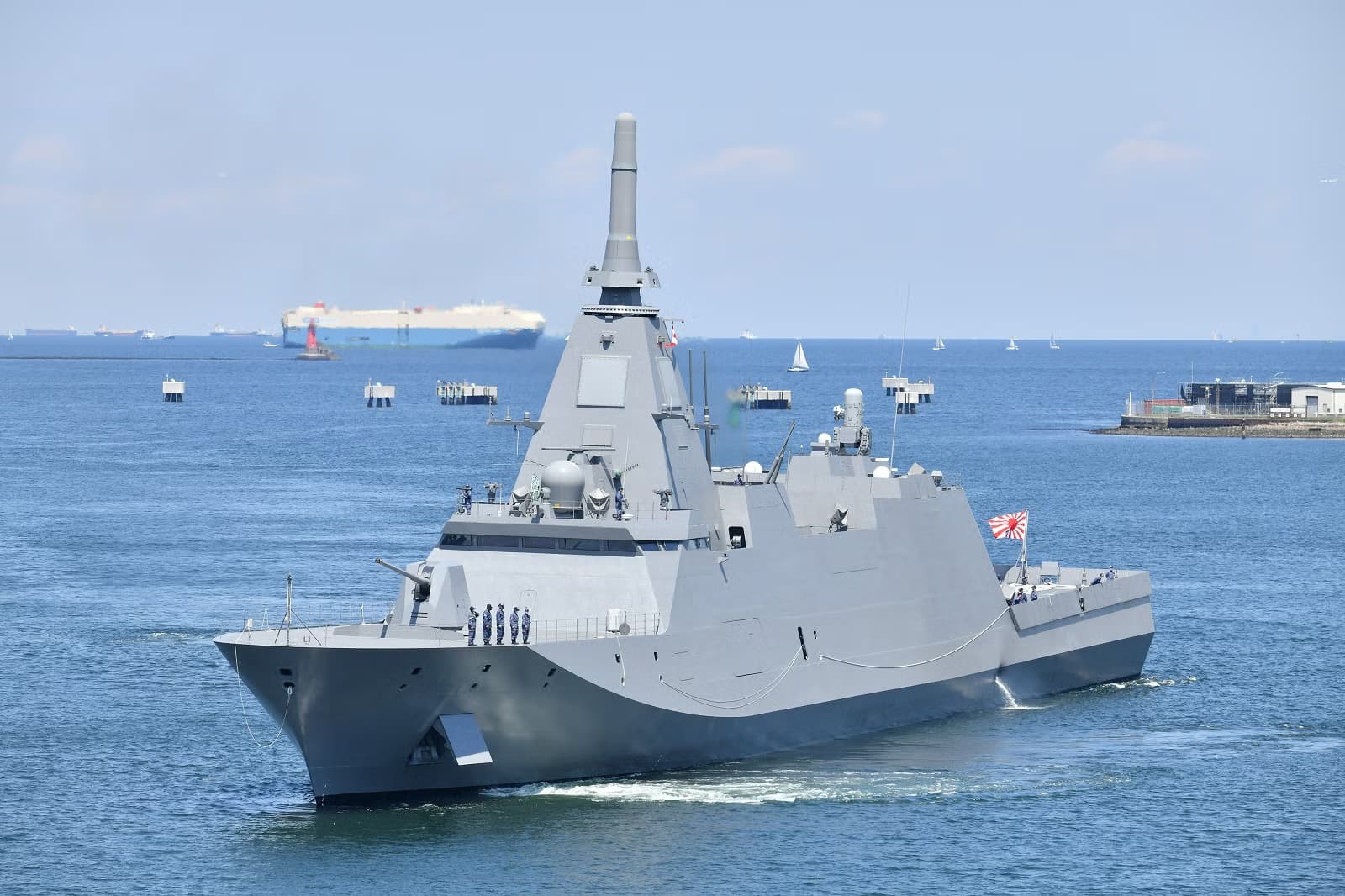
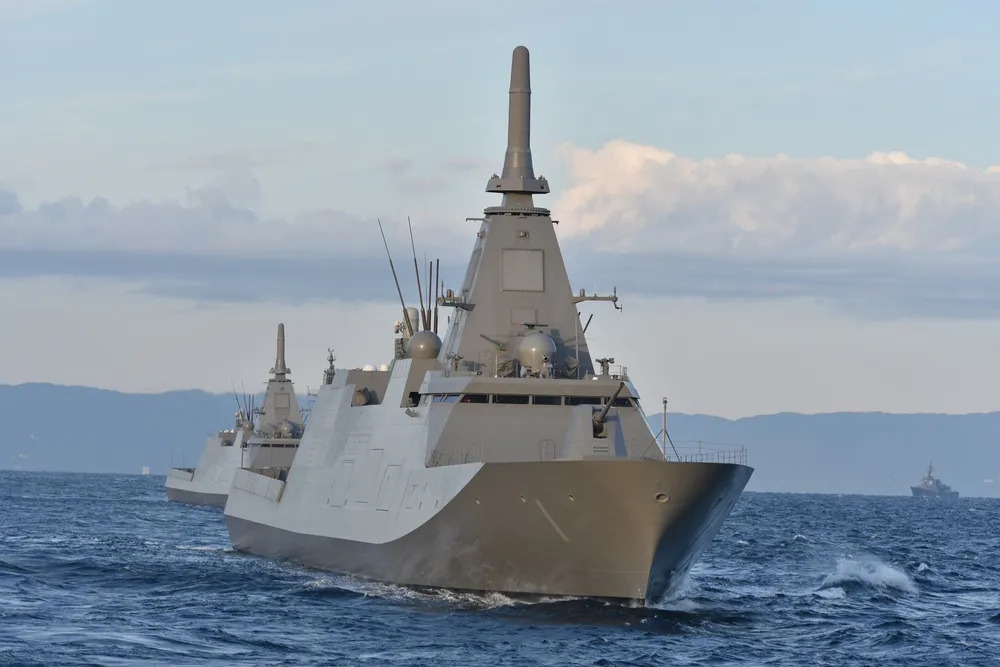
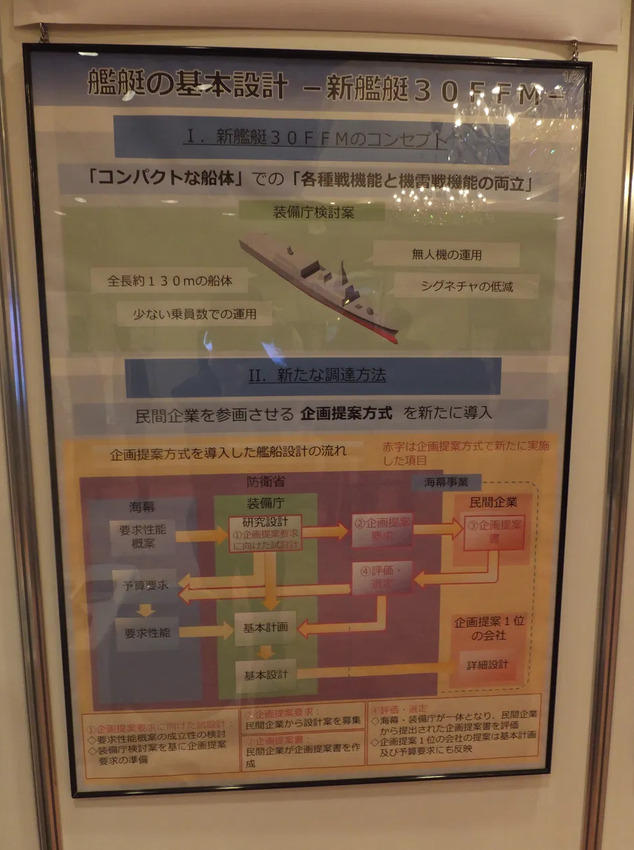
The class traces back to the 26th Medium Term Defense Program planning cycle, first appearing publicly as a column feature under the name “新たな護衛艦” (a new type of escort ship) in the Heisei 26 (2014) Defense White Paper. ATLA and JMSDF planning documents subsequently referred to the concept as “新艦艇” (new vessel), then as “新型護衛艦” (new model escort ship) by the 31st Medium Term Defense Program. In the “確定研究” (finalized study) stage as of 2015, the design was sized as a “3,000 ton type,” but was ultimately enlarged roughly 30% to the “3,900 ton type” that entered production, in order to reconcile ATLA’s competing requirements of expanding multi role capability while keeping the hull compact.
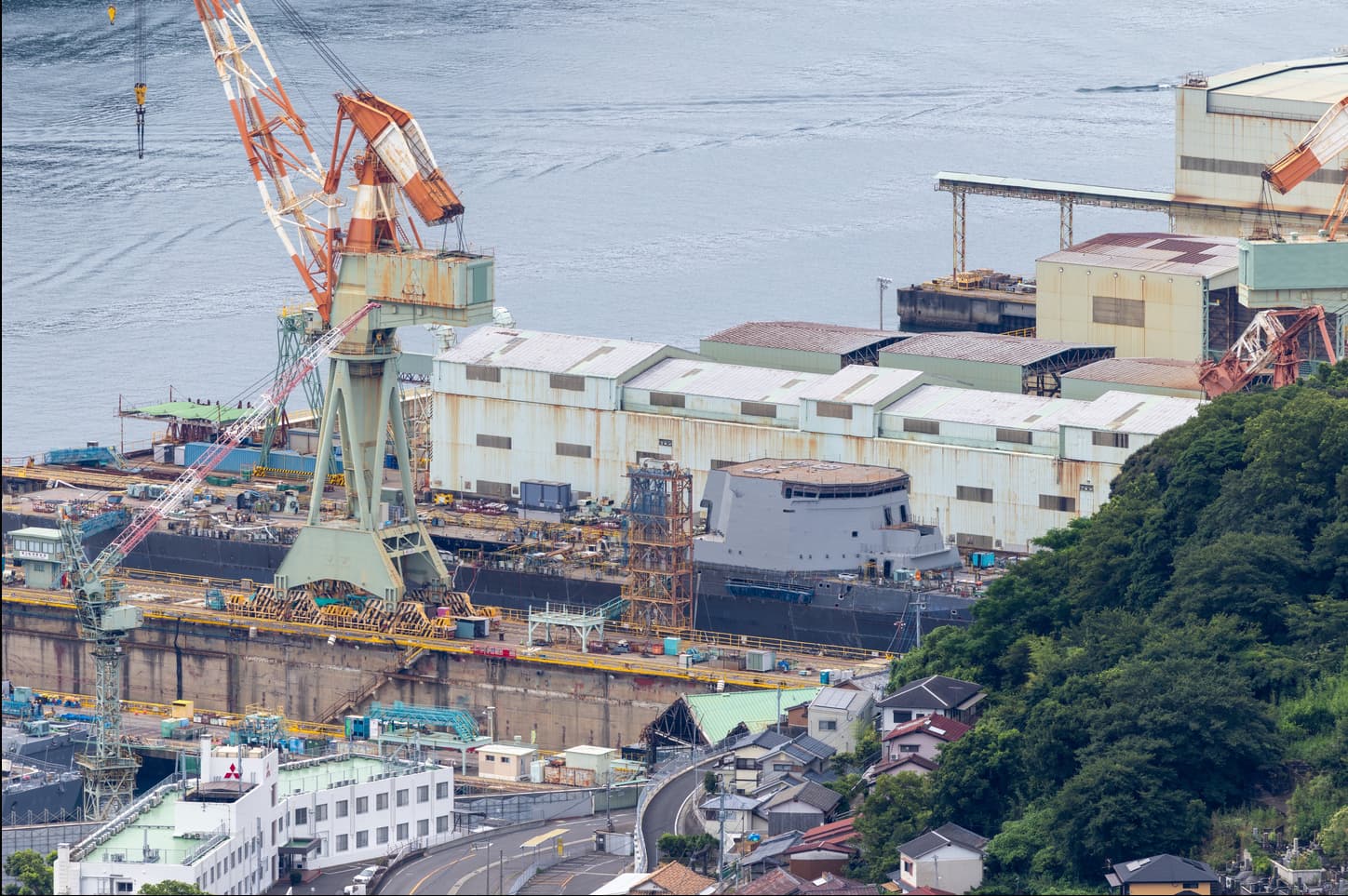
Construction of the first hull was approved under the Heisei 30 (FY2018) budget, giving rise to the common nickname “30FFM.” On April 3, 2018, the Maritime Staff Office formally settled on the “FFM” ship classification combining “FF” (the international designator for frigate sized vessels) with “M,” representing both “Mine” (mine countermeasures) and “Multi-purpose.” This was the first time in roughly half a century that a JMSDF vessel carried an internationally recognized frigate designation, following a run of larger, more heavily armed destroyer classes.
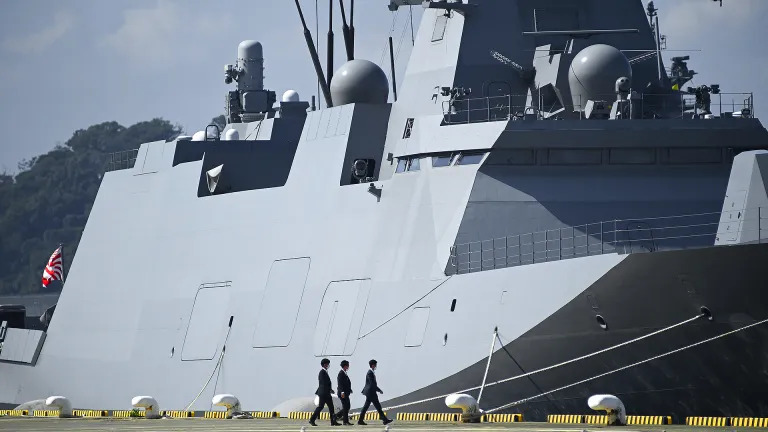
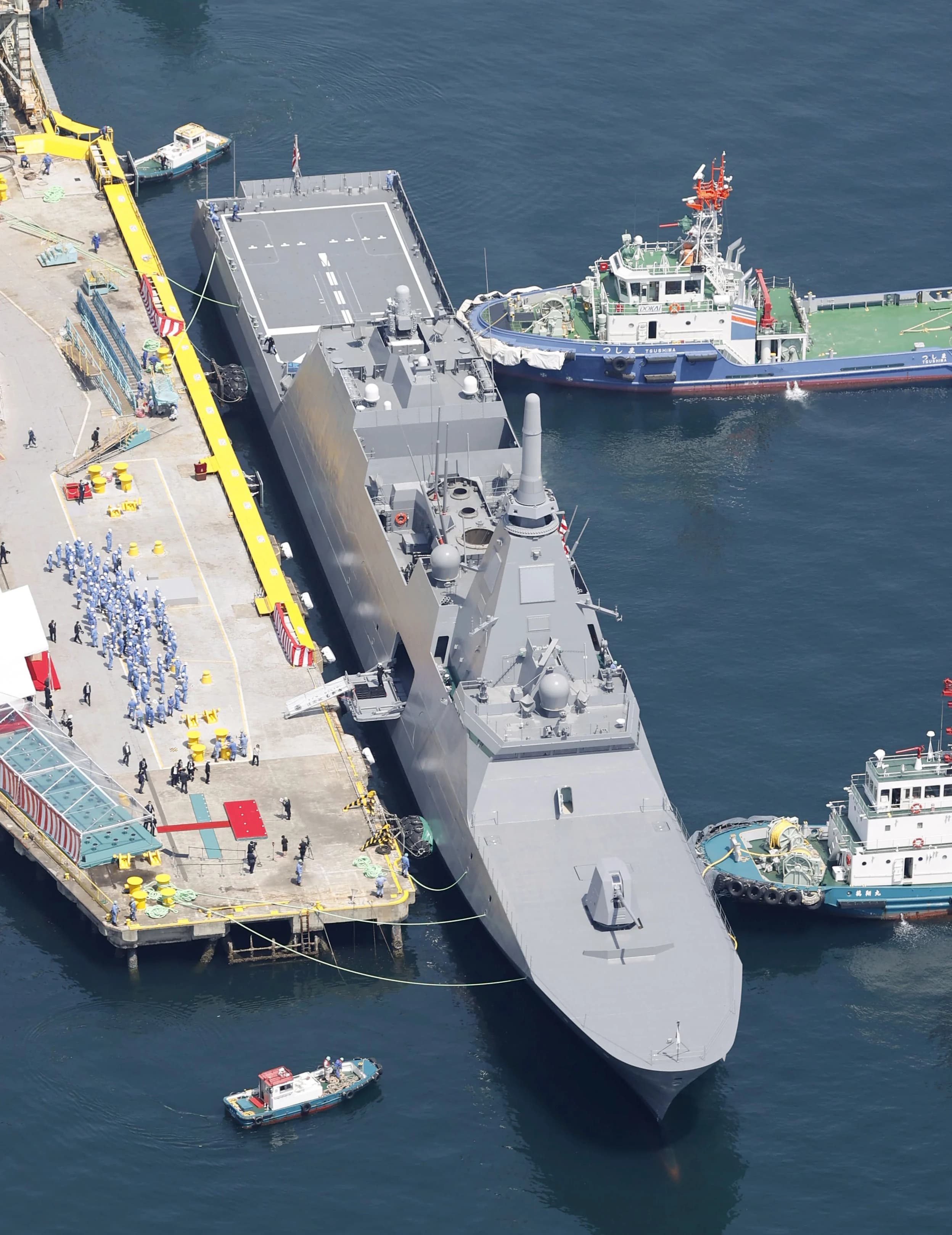
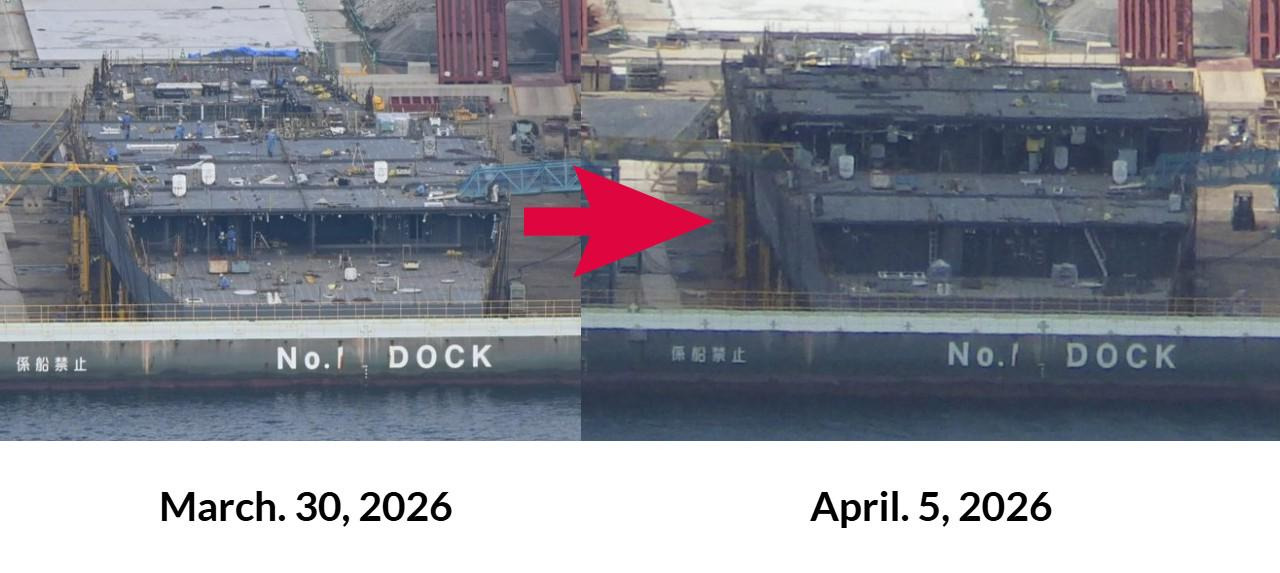
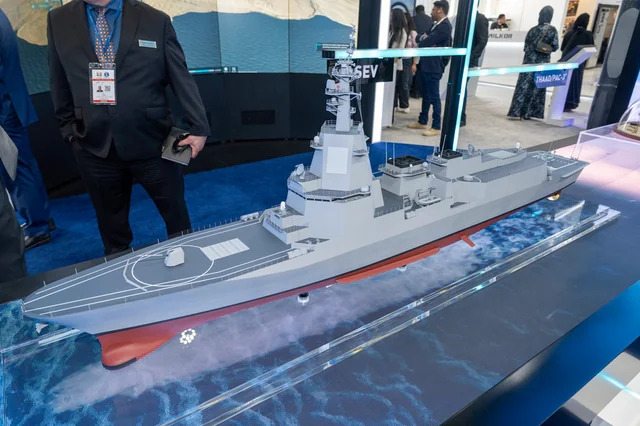
Twelve hulls were originally planned procurement of the base Mogami design has since been capped at that number, with follow-on construction shifting to an enlarged, more heavily armed derivative informally known as “新型FFM” (New FFM), which doubles VLS cell count to 32 and adds dedicated anti air missile capability the base Mogami class lacks. As of the JMSDF’s own class roster, nine hulls are commissioned (FFM-1 Mogami through FFM-9 Natori), with FFM-10 Nagara listed as building/fitting out.
Hull & Propulsion
骨組み-The Framework Unseen
| Spec | Value |
|---|---|
| Class code | FFM (Frigate, Multi-purpose/Mine) |
| Standard displacement | 3,900 tons |
| Full capacity | 5,500 tons |
| Length: | 132.5–133.0 m |
| Beam | 16.3 m |
| Depth | 9.0 m |
| Draft | 4.7 m |
| Propulsion | CODAG: 2× MAN 12V28/33D STC diesel engines + 1× Rolls Royce MT30 gas turbine (license built by Kawasaki Heavy Industries) |
| Speed | 30 kn (55.6 km/h) |
| Crew | 90 (reduced-manning “crew rotation” system (four crews rotate across three hulls) |
Armament
爪と牙-Claws and Fangs
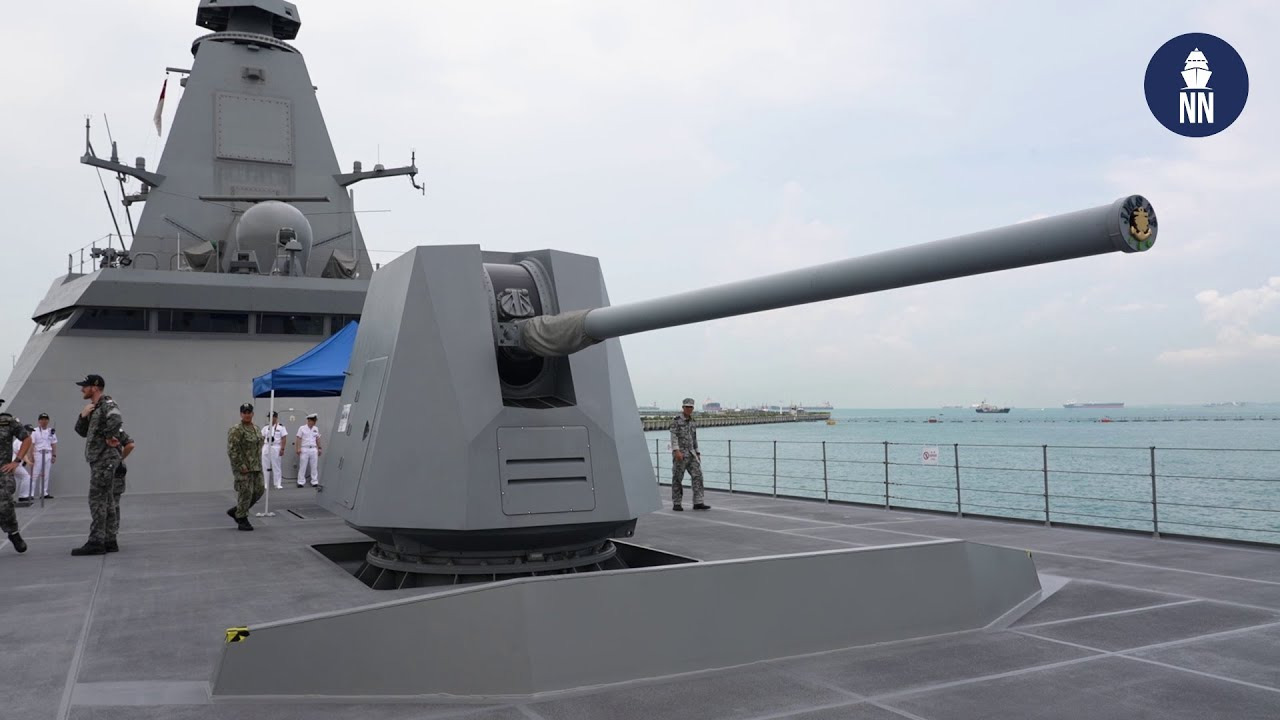
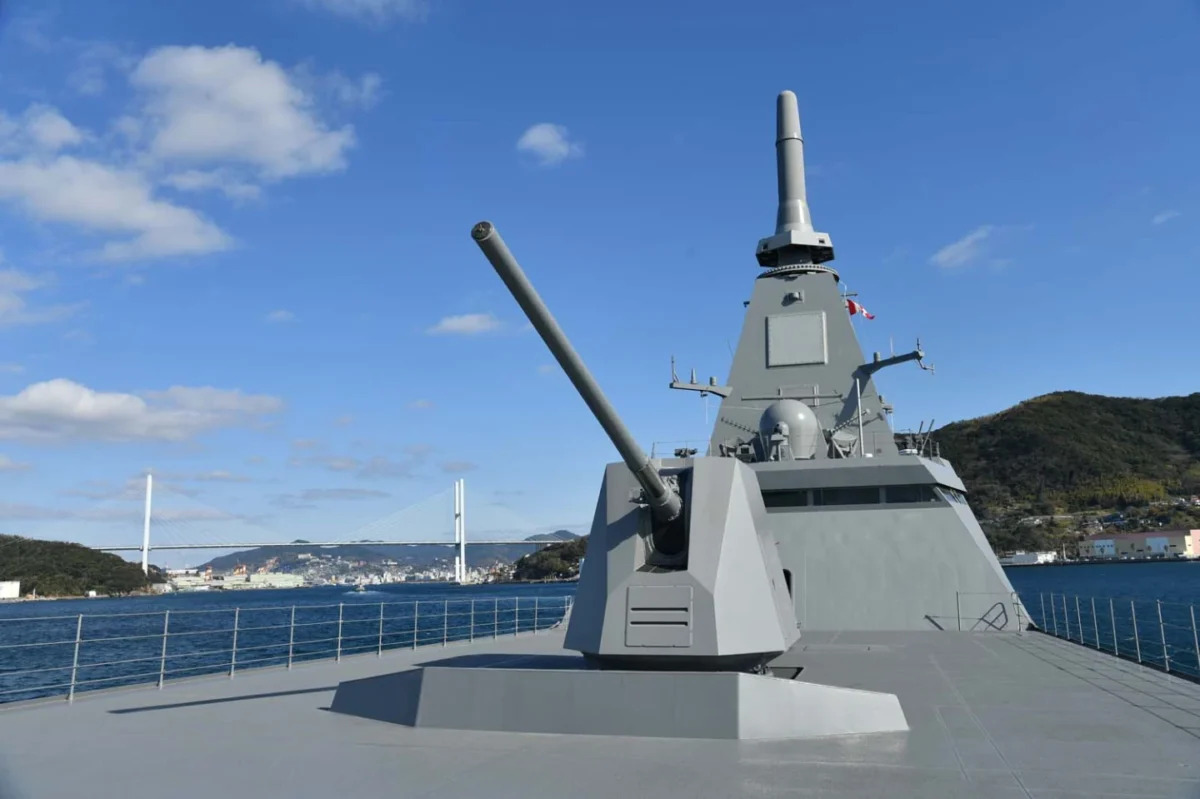
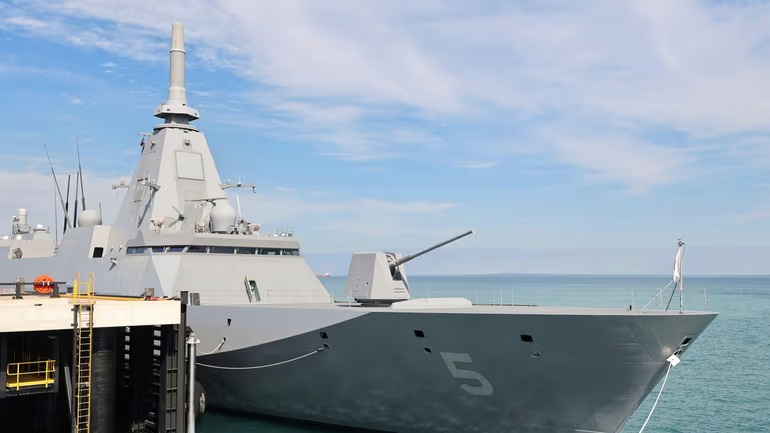
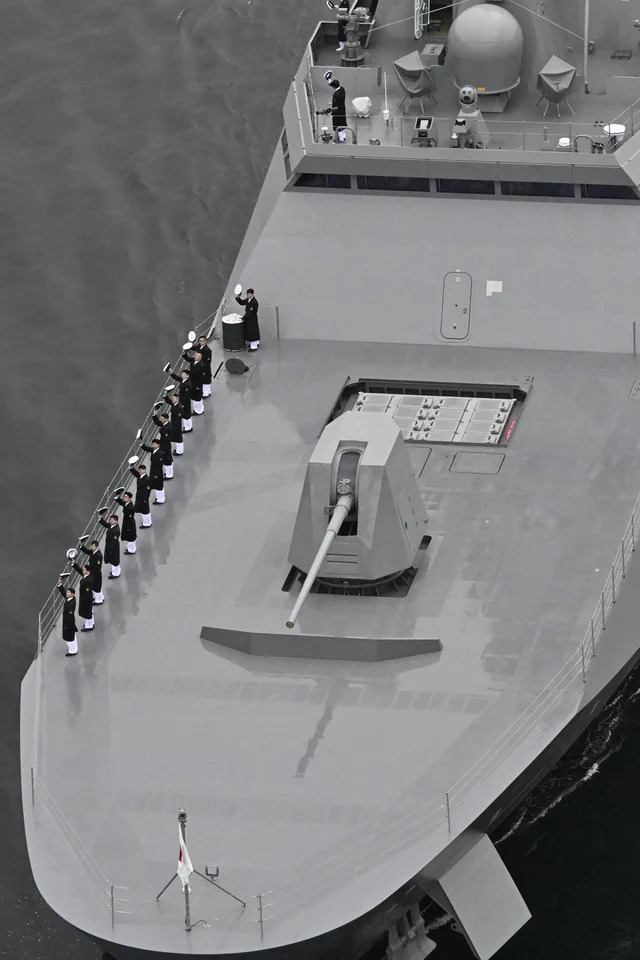
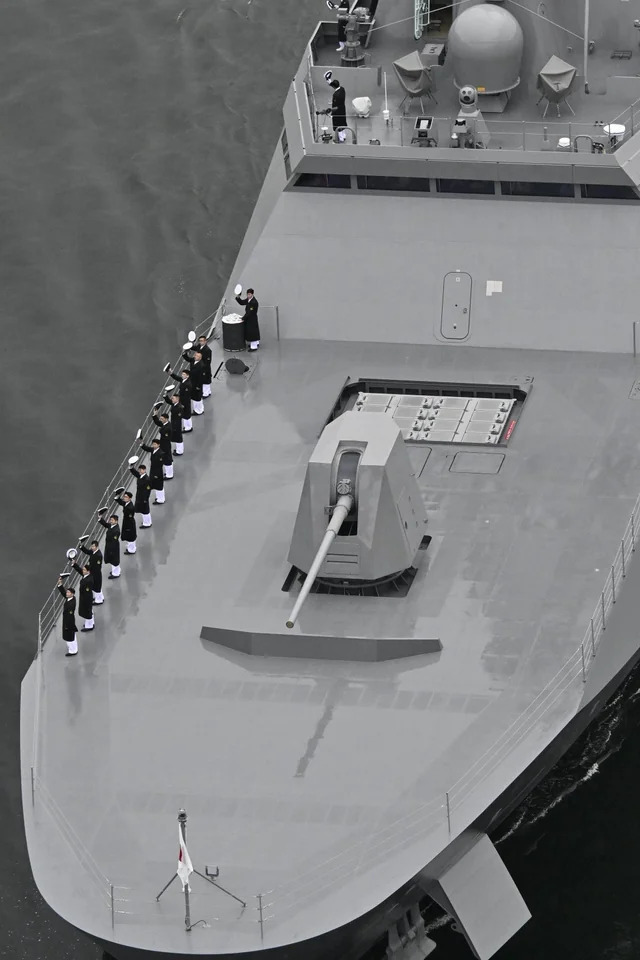
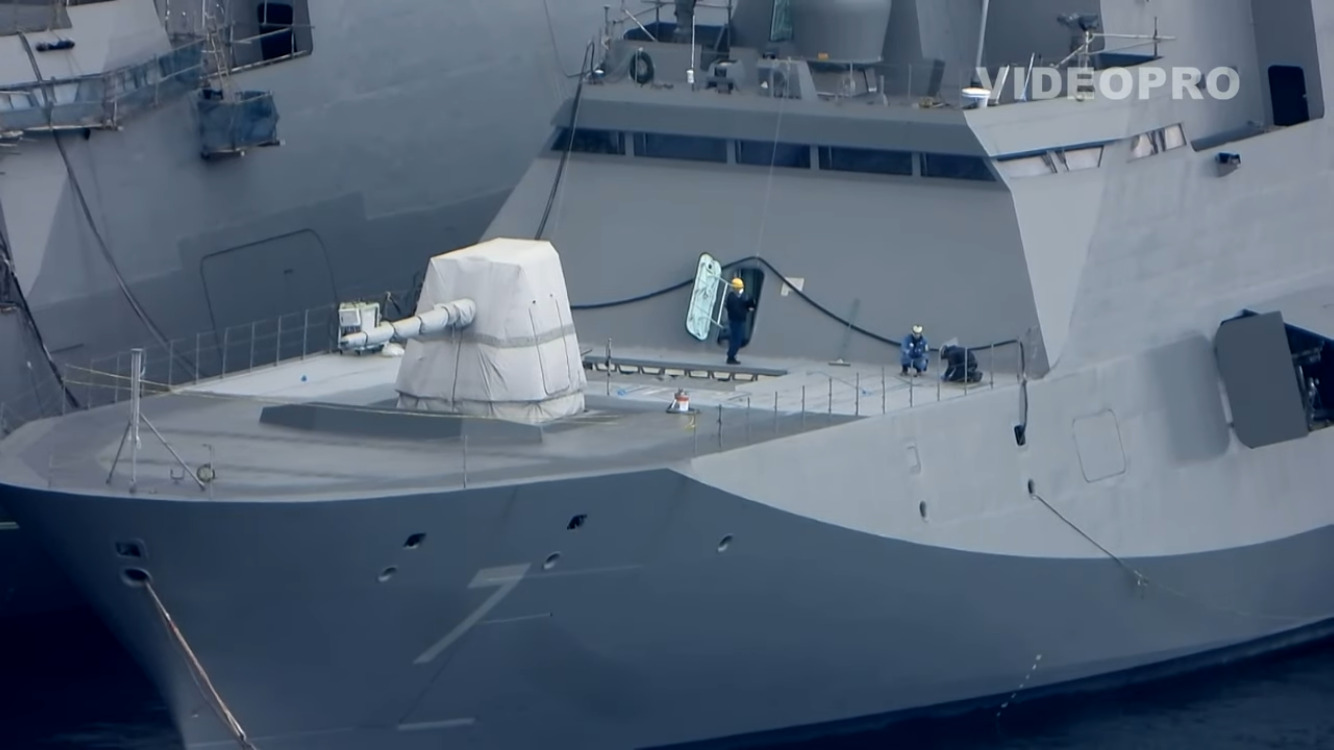
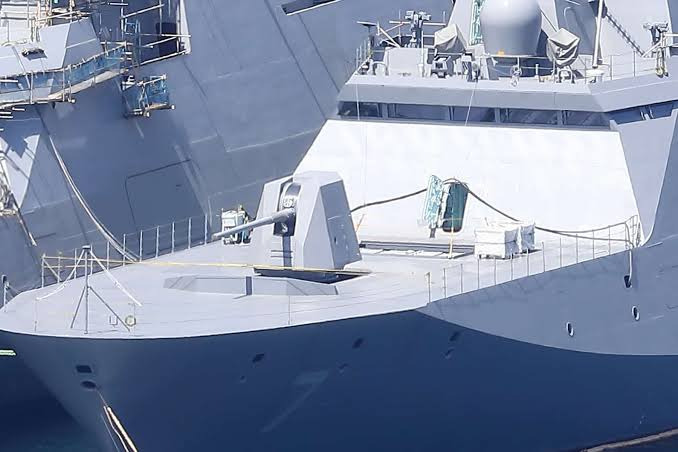
Mk 45 Mod 4 5"/62 Gun
The Mk 45 Mod 4 is a lightweight, fully automatic 127mm naval gun capable of firing at 16–20 rounds per minute to ranges exceeding 20 km with conventional ammunition. It is the same mount used on U.S. Navy Arleigh Burke-class destroyers.
SeaRAM (RIM-116 RAM)
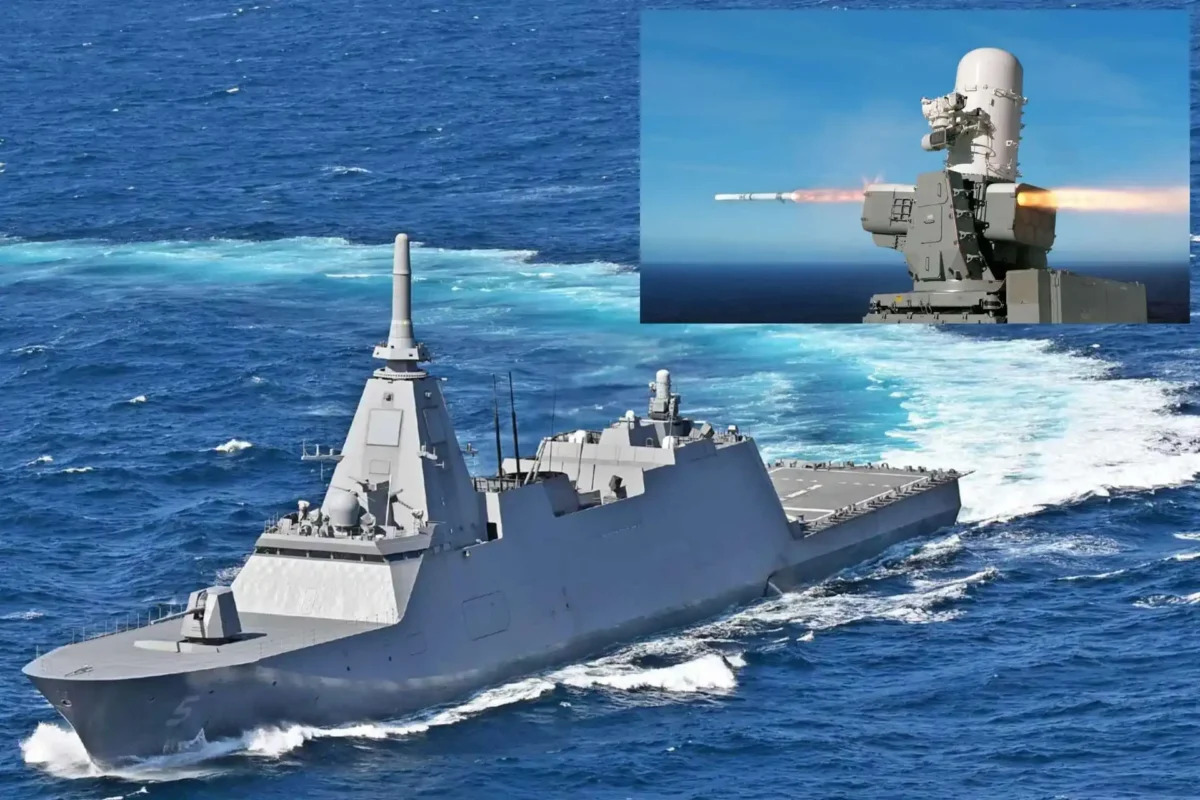
SeaRAM integrates the Phalanx Block 1B sensor dome (search/track radar + FLIR) with an 11-cell RIM-116 Rolling Airframe Missile launcher, replacing the 20mm Vulcan cannon. This is a missile-only system there is no separate CIWS gun. The RIM-116 is a supersonic, fire-and-forget missile with a dual mode RF/IR seeker, effective against anti ship missiles, aircraft, and small surface craft at ranges up to 9–10 km.
Note: Early imagery of Mogami sometimes caused confusion, as the Phalanx-derived sensor dome resembles a gun mount. The SeaRAM launcher contains only missiles.
Type 17 SSM-2 Anti-Ship Missile
The Type 17 is an improved variant of the earlier Type 90/Type 12 anti-ship missile family, featuring enhanced stealth characteristics and waypoint navigation and features a dual quad launcher positioned in parallel.
Mk 41 VLS - Type 07 VLA
From FFM-7 (Niyodo) onward, Mogami-class ships have been fitted with a 16-cell Mk 41 VLS forward of the main gun. As of commissioning, these cells are loaded exclusively with the Type 07 VLA (Vertical Launch ASROC), an anti-submarine rocket delivering a lightweight torpedo to ranges of approximately 30 km. No surface to air missiles are currently deployed in Mogami’s VLS, though the Type 23 SAM is planned for the New FFM successor.
HOS-303 triple 324mm torpedo tubes
The mogami carries 2x3 HOS-303 Triple 324 mm light torpedo tubes capable of using the type 12 light anti submarine torpedo capable of passive and active guidance, its described as upgrading from its predecesor (Type 97) with a new wideband acoustic transducer array, now capable of high-frequency operation for shallow-water detection, added side-scan sonar + magnetic sensor for bottomed submarine detection, better reverberation/clutter rejection for coastal waters, agility and manouverability
RWS (12.7mm)
Two Japan Steel Works remote weapon stations provide close-in defense against asymmetric threats. Each mounts a single 12.7mm M2HB heavy machine gun with powered traverse and elevation.
Sensors
闇の目-Eyes in the Dark
OPY-2 Multi-Function Radar
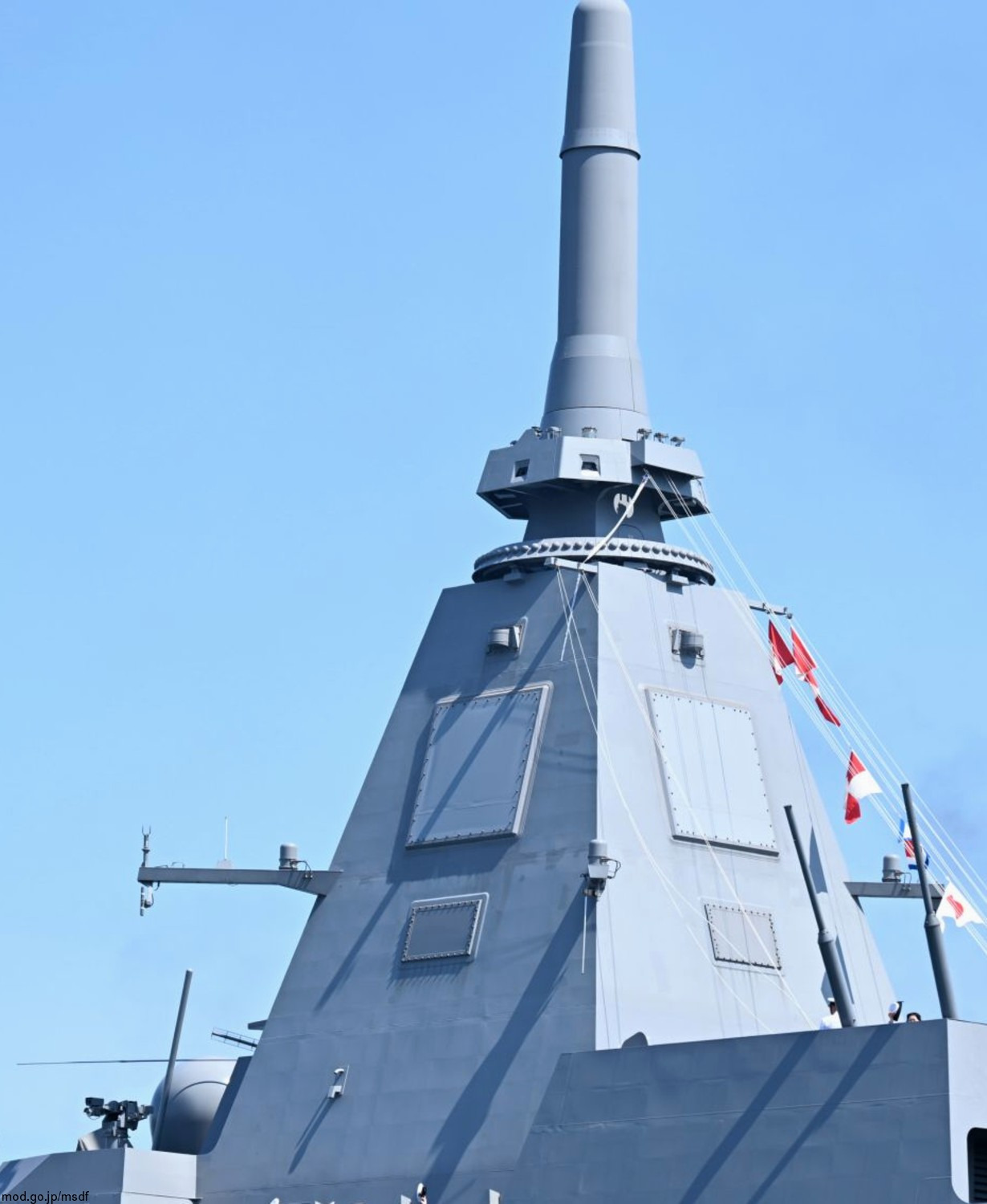
The OPY-2 is an X-band active electronically scanned array (AESA) radar developed by Mitsubishi Electric, representing a generational leap from earlier JMSDF radar families. It is mounted within the UNICORN (NORA-50) integrated mast, a unified structure that consolidates all radar, communications, and electronic warfare antennas into a single stealth-optimized enclosure.
Lineage & Architecture
The OPY-2 is spiritually descended from the FCS-3 fire-control radar system found on Hyūga-class helicopter destroyers and Akizuki-class destroyers, but with a fundamentally different architecture:
Smart Block Module Technology
OPY-2 employs Mitsubishi Electric’s Smart Block Module technology, which packages transmit/receive (T/R) elements into modular, replaceable units. This approach maximizes power efficiency and maintainability — a damaged or degraded module can be swapped without removing the entire array. DSEI Japan 2025 featured a display of OPY-2 T/R modules, confirming the technology’s continued evolution.
Performance Estimate
There hasn’t been any released data on the OPY-2 actual performance against targets instead im based on other available data and physics to make an fan estimate.
| Target Type | Estimated Detection Range | Basis |
|---|---|---|
| Fighter-sized aircraft (3–5 m² RCS) | 80–150 km | Comparison with EL/M-2052, APG-79 class X-band AESA |
| Anti-ship missile (0.1–0.5 m² RCS) | 25–40 km | X-band resolution advantage vs. small RCS targets |
| Periscope / low-RCS surface target | 10–20 km | High-resolution X-band discrimination |
Electronic Warfare:
NOLQ-3E + OPY-2 Integrated EA
The Mogami class carries the NOLQ-3E electronic warfare suite, with antennas integrated into the UNICORN mast. NOLQ-3E functions primarily as a passive ESM/ELINT detector while also doubling as an ECM anthena providing jamming capacities against incoming threats, it listens for hostile radar emissions, classifies threats, and passes bearing and signature data to the combat management system. This cueing allows the OPY-2 radar to direct its search or track beams precisely toward the threat axis, conserving energy and reducing the ship’s electromagnetic signature.
For soft kill defense, the ship retains Mk 36 SRBOC decoy launchers firing chaff and expendable jammer rounds (EJ-rounds) as a last ditch layer.
Sonar Suite
OQQ-25
Variable Depth Sonar (VDS) / Towed Array Sonar System (TASS) primary ASW sensor
OQQ-11
Hull-mounted mine-detection sonar (Hitachi)
Electro-Optical / Infrared
-
OAX-3 EO/IR sensor system (Mitsubishi Electric) for passive target detection and identification
-
Integrated into the combat management system for redundant tracking
Combat Management System
-
OYQ-1 Combat Management System
-
OYX-1-29 Information Display/Processing System
-
Link-22 tactical data link for network-centric operations
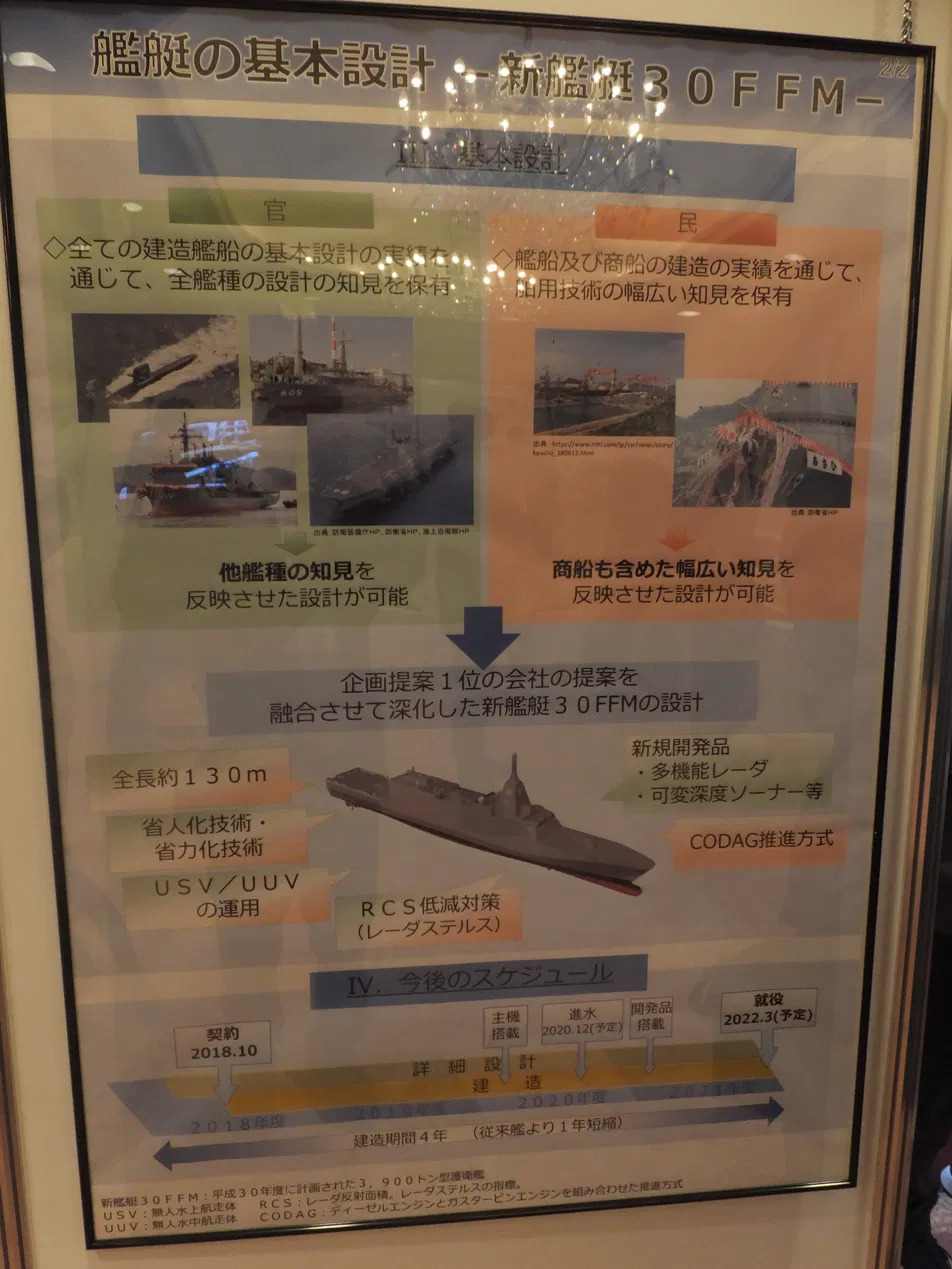
Stealth Design & RCS Reduction
黒衣を纏う-Dressed in Shadow
The Mogami class was designed from the outset with signature reduction as a named requirement. MHI’s June 2015 investor briefing (IDSS 2015) explicitly listed RCS reduction as a design goal for the new frigate program, alongside radar technology, cybersecurity, and weapon-system integration. The briefing noted cross-domain technology transfer from MHI’s aircraft division an inference commonly drawn as relating to X-2 Shinshin stealth fighter research, though the slide itself did not specify the source program.
stealth features include:
-
Sloped hull sides and enclosed superstructure minimizing corner reflectors
-
Integrated mast (UNICORN/NORA-50) housing all antennas in a single streamlined structure
-
Flush mounted deck fittings and concealed boat davits
-
Infrared signature reduction through exhaust cooling
The result is a frigate that presents a radically smaller radar return than conventional designs of comparable displacement a critical advantage in littoral waters where detection ranges are compressed.
Sources
Spoiler
Tier 1 — Official / Primary
-
JMSDF Mogami-class Equipment Page — https://www.mod.go.jp/msdf/equipment/ships/ffm/mogami/
2.Official JMSDF equipment overview for the class.* -
Japan Ministry of Defense, “Defense Programs and Budget of Japan Overview of FY2015 Budget” (January 2015)
4.Original budget allocation for the “compact-type hull destroyer” study.* -
ATLA, “Acquisition Program Analysis and Evaluation Report (New frigate)” (31 August 2018)
6.Official program analysis for the 30DX/FFM selection.* -
ATLA Contract Portal — https://www.mod.go.jp/atla/souhon/supply/jisseki/rakusatu/index.html
8.Official procurement record database (Reiwa 5/2023 onward).* -
ATLA Solicitation K-06-6100-0069 (October 2024) — https://www.mod.go.jp/msdf/bukei/t2/nyuusatsu/K-06-6100-0069.pdf
10.Bidder qualification requirements explicitly referencing ESSM/Sea Sparrow family and new SAM.* -
MHI 2015 Investor Briefing (IDSS 2015) — https://www.mhi.com/jp/finance/library/business/pdf/idss2015.pdf
12.Confirms RCS reduction as named design requirement; lists cross-domain technology inputs.* -
Rolls-Royce MT30 Press Release (21 April 2026) — MT30 to power Australia’s new upgraded Mogami-class frigates | Rolls-Royce
14.Confirms MT30 + MAN diesel CODAG configuration.*
Tier 2 — Professional Defense Media
-
Naval News, “Japan’s Futuristic Mogami Frigates: Everything You Need To Know” (17 November 2023) — Japan's Futuristic Mogami Frigates: Everything You Need To Know
9.Comprehensive overview of armament, sensors, and design philosophy.* -
U.S. Naval Institute Proceedings, “Japan’s Multimission Mogami-class Frigates” (August 2023) — https://www.usni.org/magazines/proceedings/2023/september/japans-multimission-mogami-class-frigates
11.Authoritative analysis of program origins, cost, and operational concept.* -
Naval News, “Japan’s MHI Awarded Contract to Build Three Upgraded Mogami-class Frigates” (17 April 2026) — Japan's MHI awarded contract to build three Upgraded Mogami-class Frigates - Naval News
13.Details on New FFM armament, displacement, and VLS expansion.* -
Naval News, “Japan Is Looking For A New Class Of FFM Frigates” (17 May 2023) — https://www.dsaexhibition.com/japan-is-looking-for-a-new-class-of-ffm-frigates
15.Details on the 12-hull cap and New FFM transition.* -
Army Recognition, “Japan Orders 3 Upgraded Mogami-class Frigates” (16 April 2026) — Japan orders 3 Upgraded Mogami-class frigates to carry more missiles in Pacific operations
17.New FFM armament and procurement details.* -
ATLA research document, 2012 — https://web.archive.org/web/20160916191318/http://www.mod.go.jp/atla/research/dts2012/R2-3p.pdf
Symposium 2018:
Mogami stealth
IDSS 2015:
https://www.mhi.com/jp/finance/library/business/pdf/idss2015.pdf