With how bad PL-12 was nerfed, you’d think it was a mistake too lol
8 Likes
Whether it was a mistake or intentional depends on the speed of the ‘fix’
2 Likes
I didn’t forget about the daily message, I got banned for hating on the F14D.
Today is day 9 of asking gaijin to revert the changes.
10 Likes
What defines a ‘mistake’ from the eyes of the players and bug report mods?
Here is the bug report on the R-73: Community Bug Reporting System
Nothing of substance was added to it besides stating the R-73 is not performing correctly. That is a correct statement yes, but given how our Pl-12 reports were all denied for the same type of report, stating the missile is not performing correctly, even with sources for the G limits, we get denied. Yet here, in broad daylight we see the R-73 report acceptable for the same type of issue. Nowhere in the devblog state the Pl-12 was overperforming on it’s turning rate, only that the devs believed they finally fixed the wobble error. However in doing so, they broke the turning performance of the missile, thus a bug report just like the R-73 should have been accepted for the devs to investigate. Instead they deny ours while passing theirs.
@Smin1080p_WT any comment as to why the R-73 can get it’s report passed while we cannot get our Pl-12 reports to pass for a “obviously not an intended change”? All we want is the devs to review the Pl-12 change for if the parameters changed to fix the wobble bug also inadvertently bricked the turning performance of the missile unintentionally (hence the devs referring to the change as a buff, not a nerf like it actually is).
16 Likes
Seriously. It isn’t this hard. We’d probably (as a community) be better developers than Gaijin. It’s just straight laziness at this point. Nobody asked for a PL12 change and I’m straight up convinced the developers don’t even play their own game. Killing an entire tech tree for no reason.
7 Likes
let me make this clear gaijin does what it wants, “sources” are just an excuse, if they want something to perform a certain way no source will change their mind
2 Likes
the pl-12 change was intentional, that’s the difference. nothing was changed to the r-73 yet it still performed differently in the dev server, so it’s clearly a bug and not something they intended to change
2 Likes
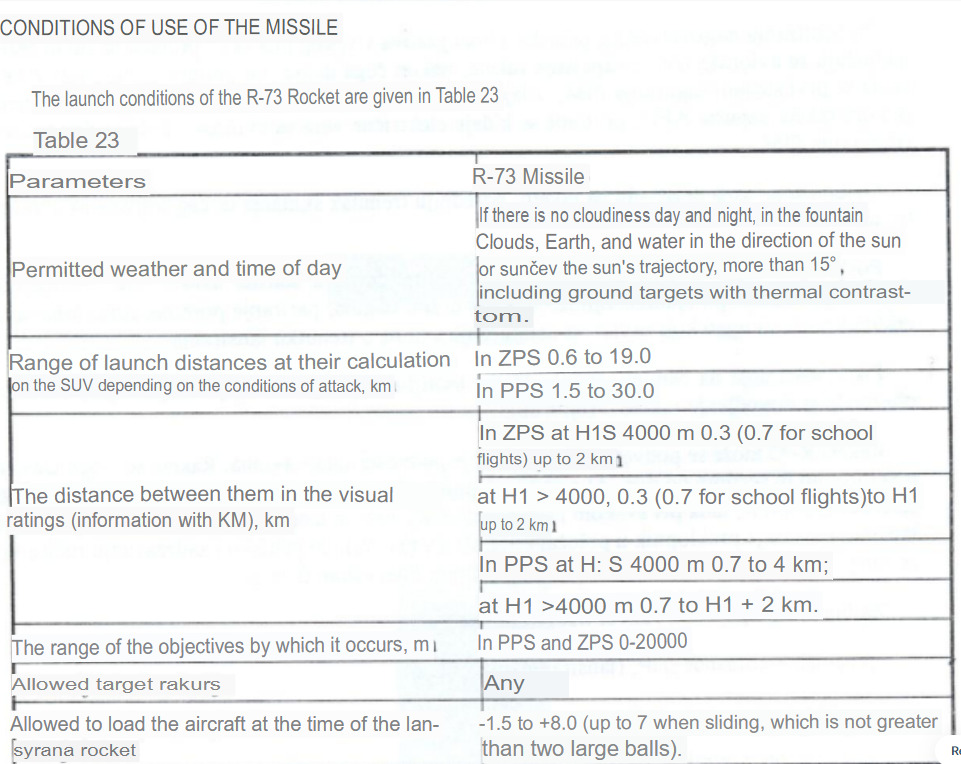
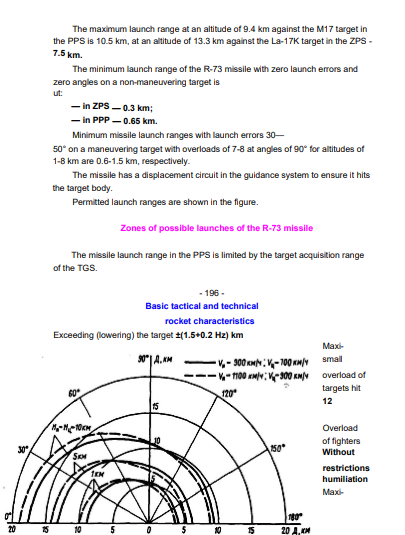
well unlike pl-12 we do have launch conditions for r73 so it is reportable if they don’t fix it
Spoiler
4 Likes
I see so many people on tiktok and youtube shorts calling dev server r73 ‘lore accurate’ and ‘realistic’ performance I was on verge of tears
That’s so sad, bro.
never open any short content comments.
3 Likes
These submitted materials may not be accepted, and even if accepted, they may not be implemented.
1 Like
Well, now that the dev server is open, it’s probably time for us to become active again and revisit the PL-12 issue. That said, we’ve already discussed most of what needed to be said, and there isn’t much genuinely new to add.
I’m now summarizing and forwarding the PL-12 issues compiled by Bilibili up SpitfireMkIX here. The content basically follows up on the PL-12 performance issues I discussed in this commentary:
It seems that many people still do not fully understand what is so unusual about the current PL-12. A lot of players simply assume that it has become an “AIM-120 analogues”,however, there are actually significant differences between the two.
Because War Thunder’s missile aerodynamic model is relatively simplified, modifying the distance between the center of gravity and the aerodynamic center effectively results in one thing: the missile’s available angle of attack at high speed is restricted.
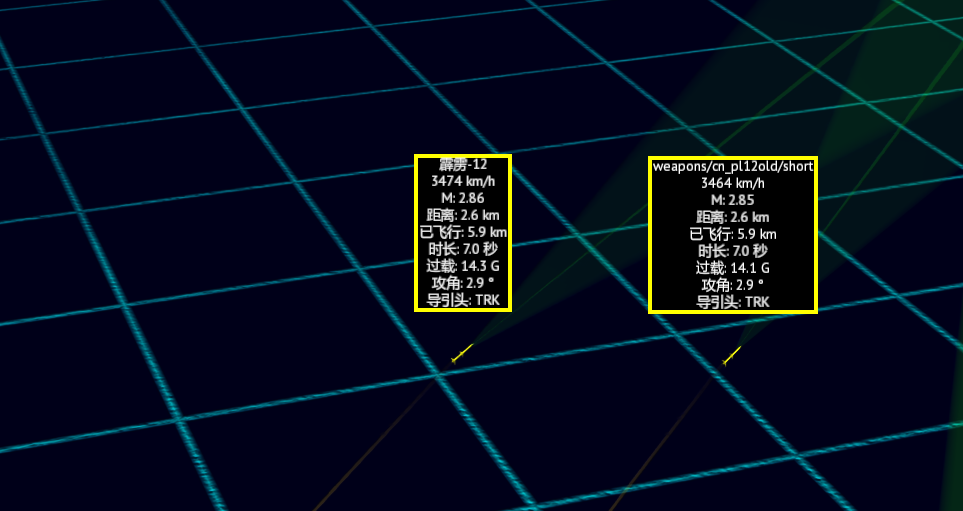
As shown in the figure, by limiting the flight control system and capping the missile at 15G, both the old and new versions achieve virtually identical angles of attack and suffer nearly identical energy loss when performing the same maneuver. (The slightly higher speed of the new missile in the image is simply because the old version reaches the full 15G limit sooner after launch, causing it to lose a bit more energy.)
Therefore, the missile’s energy retention characteristics have not been meaningfully improved or degraded. Contrary to some rumors, there has been no direct buff to energy retention. Likewise, the claim that “a shorter moment arm requires a larger angle of attack for the same G-load, increasing drag and reducing energy retention” does not to be true.
What has actually changed is that the missile’s maximum available angle of attack has been reduced. It can no longer pull the 25G+ maneuvers it was previously capable of. This indirectly reduces energy loss in a small number of situations, but those situations are relatively uncommon to begin with.
Another common misconception is that this update only nerfed the PL-12’s close-range high off-boresight capability.
That capability has indeed been significantly degraded. However, if that were the only change, the situation would not be nearly as serious as it is now.
A much more important issue is that the missile’s available overload has been reduced during the late powered phase and the early glide phase when it still possesses high energy.
Back when players used mixed AIM-120A/B and AIM-120C/D loadouts, the usual problem was that an AIM-120 launched at shorter ranges sometimes lacked sufficient available G before it had accelerated, allowing opponents to evade it through aggressive maneuvering. However, AIM-120A/B launches with small off-boresight angles from medium-close ranges beyond roughly 5 km still maintained a reasonably reliable probability of kill.
With the current PL-12A, that unreliable engagement zone appears to have expanded significantly compared to the AIM-120A/B. Based on current observations, even small off-boresight launches from 5–10 km are no longer consistently reliable.
In other words, this is not merely a case of the missile performing worse in close-range dogfights.
13 Likes

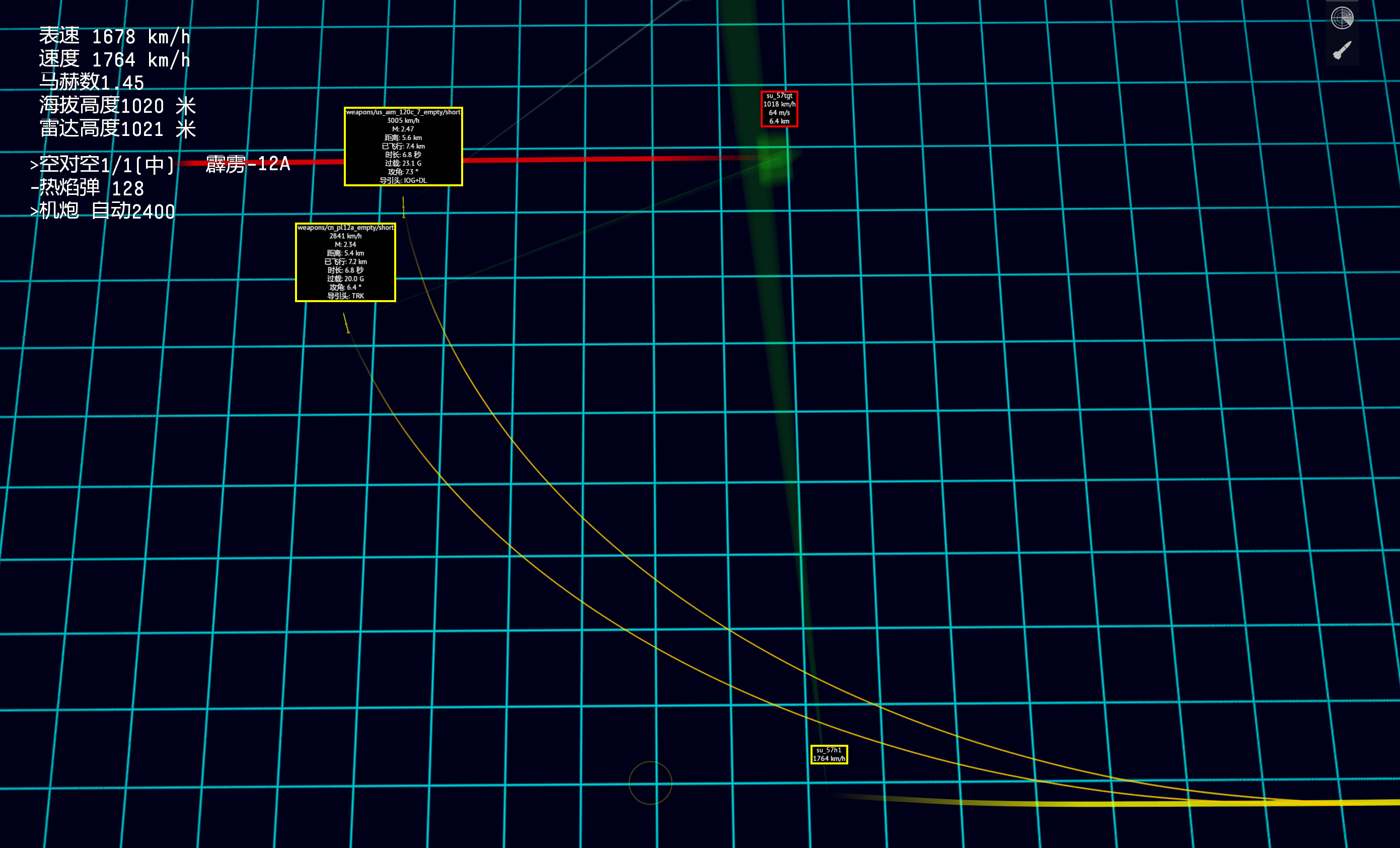
All tests were conducted with missiles carrying no fuel, released at an altitude of 1,000 meters and at very high speed, in order to evaluate their available G-load during the inertial flight phase.
120C-old refers to the AIM-120C before Version 2.55, prior to receiving its maneuverability buff.
By comparing these two missiles, both of which exhibit a pronounced tendency to “lock their control surfaces” at high speeds, we can see that the current PL-12A has more than 3G less available overload than the old AIM-120C at the same speed in the high-speed regime, despite the latter having been infamous for its poor maneuverability.
These test results largely match in-game experience.
Although the old AIM-120C was essentially incapable of performing large off-boresight launches at close range due to its terrible low-speed maneuverability, it could still achieve respectable hit rates in small off-boresight engagements once it had time to build up some speed.
The current PL-12A is not quite as catastrophically bad as the old AIM-120C when it comes to high off-boresight turns, but asking a missile that often struggles to reach even 20G to hit War Thunder’s “superhuman aircraft” is a challenge for it.
In addition, because of the terminal-phase maneuverability, the PL-12’s performance in missile interception roles has also become somewhat unreliable at times.
18 Likes
Day 10
3 Likes
Test conditions: All missiles were released at an altitude of 1,000 meters with a very large off-boresight angle and at speeds exceeding Mach 3.5. The missiles were unpowered at release (therefore the MICA did not benefit from thrust vector control in this test). All missiles had their fuel removed, and the navigation constant limit was disabled, meaning they would immediately attempt to maneuver at maximum control input upon release. Speed, angle of attack (AoA), and G-load were recorded every 0.067 seconds.
It should be noted that when a missile is maneuvering under thrust, the presence of an angle of attack causes the thrust vector to deviate from the missile’s velocity vector. This allows the missile to generate somewhat higher G-loads than it could in an unpowered glide at the same speed, particularly during low-speed, high off-boresight launches. As a result, the G-load figures presented here only reflect the missile’s maximum maneuvering capability during the glide phase and should not be considered directly equivalent to its off-boresight engagement performance.
Currently, missile flight control systems generally begin to progressively limit the available angle of attack once a certain speed is reached, causing the available G-load to decrease. In most cases, this does not have a particularly severe impact. However, the PL-12 already has a low overload, so imposing further restrictions on it results in noticeably poor performance.
The differences in the airframes’ intrinsic maneuvering capabilities are quite substantial. Even though both are nominally rated as 50G missiles on paper, the MICA’s available G-load without thrust vectoring still significantly exceeds that of the R-77-1 (its large strake wings outperform the latter’s lattice fins). Meanwhile, despite being rated at 38G and 40G respectively, both the PL-12A and the Derby exhibit lower available high-speed G-load than the 35G AIM-120D.
5 Likes
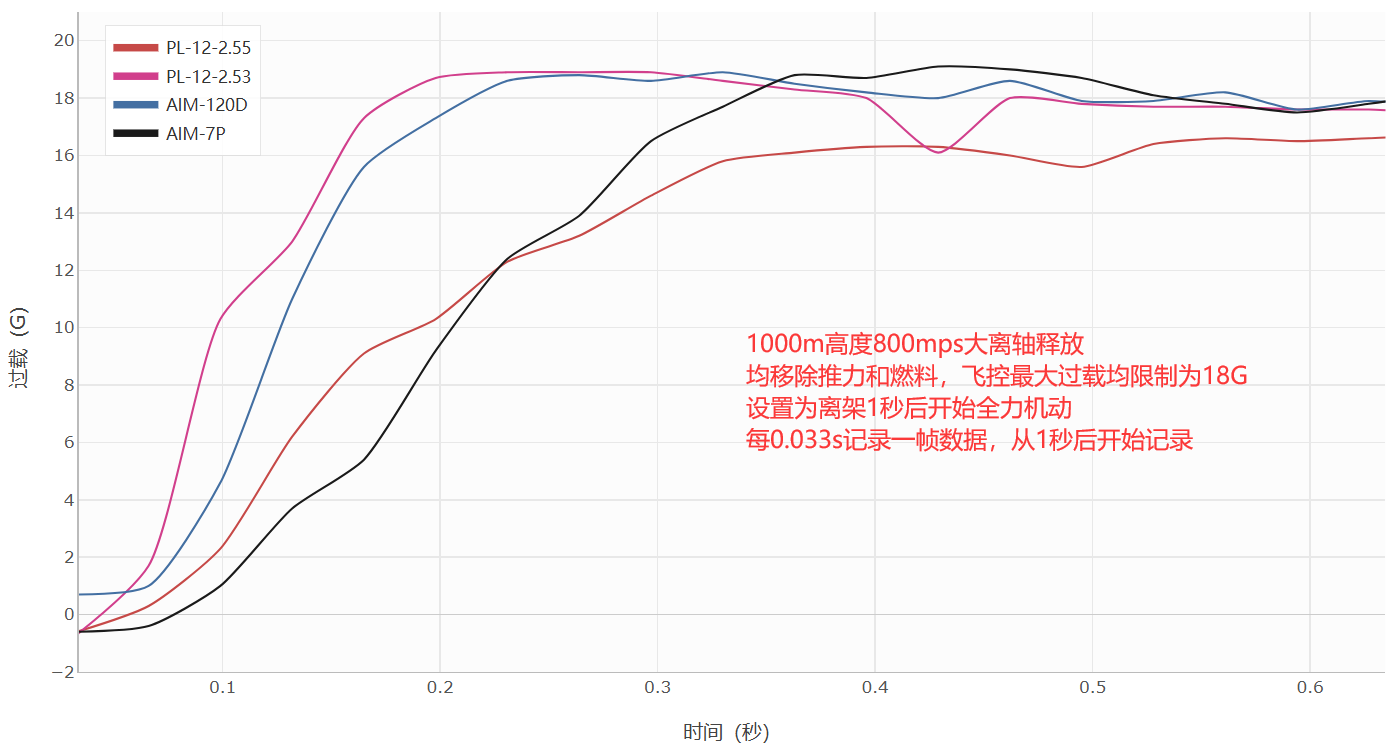
Test Conditions:
Missiles were launched at 800 m/s from an altitude of 1,000 m with a large off-boresight angle. Engine thrust and fuel were removed. The flight control system’s maximum G-limit was set to 18G, and the missile was configured to begin maneuvering at full control authority 1 second after launch. Data was recorded every 0.033 seconds, with logging beginning at the 1-second mark.
Previous posts focused on the issue of available maneuvering capability. This one is about the PID, and will probably be the last in the series. The more testing I do, the more problems I seem to find.
The PL-12 is indeed too stable.
For all tests, the missiles’ maximum flight-control G-limit was restricted to 18G, ensuring that airframe aerodynamics would not be the limiting factor. At present, a normal medium-range missile takes roughly 0.15 seconds to pull from level flight to its full 18G limit. The PL-12, however, requires about 0.3 seconds to reach the same overload, which is closer to the behavior of late-model AIM-7.
Another observation is other missiles exhibit a small degree of overshoot (briefly exceeding 18G) before the PID controller corrects them back toward the target value—even the AIM-7P behaves this way. PL-12, by contrast, increases its overload in a very “conservative” and gradual manner, to the point that its actual overload does not even reach 17G.
When engaging maneuvering targets, the ability to generate sufficient G-load quickly is extremely important. At present, the PL-12’s primary issue remains its excessively low available maneuvering overload. However, this PID only makes the situation worse.
8 Likes
Alright, reposting the technical analysis is done. Now it’s time for my own thoughts.
I’ve already said most of this multiple times before. In fact, some of the points originally came from comments I made on the Chinese forums (although that particular comment has since been deleted, lmao). Still, I don’t mind saying it again.
This may very well be the most baffling and most damaging balance change I’ve experienced in War Thunder. I know similar things happen to vehicles in other tech trees too, but most of my time is spent on PLA vehicles, so that’s where my attention is focused.
The VT-4A1 had serious issues when it was first introduced, but at least it wasn’t the only top-tier MBT suffering from serious problems. The J-10A’s drag and top-speed issues were frustrating, but they didn’t stop it from being an excellent aircraft overall. The VT-5 and the J-15T… well, to this day I honestly don’t know what they are doing at 11.7 and 14.7. But regardless, all of those issues were limited to individual vehicles.
The PL-12 situation is different.Not only was no explanation provided, but the change was even presented in the patch notes as if it were some kind of improvement. More importantly, this change affects the entire PLAAF lineup rather than a single vehicle.
For Chinese aviation players, the PL-12’s maneuverability and well-rounded performance were always something to be proud of. No matter what issue a particular aircraft had, someone could always say: “At least the PL-12 is still a great missile.”
Now we can’t even say that anymore.The PL-12 has gone from being an all-round missile to an all-round useless missile.It honestly feels like the playerbase is being mocked.
On the other hand, Gaijin can make changes like this without providing any credible sources or even a basic explanation. Yet players are expected to provide evidence that meets standards defined entirely by Gaijin themselves.
What exactly are we supposed to find? Classified information on the PL-12’s available overload throughout its flight envelope? PID parameters? Data that is obviously inaccessible to the public?
What’s even more frustrating is the inconsistency.During this dev server, the R-73 experienced issues that looked remarkably similar to what happened to the PL-12. Players only had to say:
“This is obviously not an intended change.”
And that was accepted.
Meanwhile, when players spend hours digging through the tiny amount of publicly available information, assembling evidence, and writing detailed arguments explaining why the PL-12 changes are unreasonable, the response they get is:
“It’s a medium range missile. It’s not supposed to work at close distance as well as short range missiles. This missile works much better at longer ranges.”
I’ve been trying very hard to keep my emotions under control throughout this whole situation, but every time I read that statement, it still makes me angry.If a player posts an issue using this kind of words, the manager will reject it faster than he can throw away crumpled paper at home.
The magistrate is allowed to set fires, but the common people are forbidden to light lamps.
Since Gaijin hasn’t provided a reason for this change, I’ll explain it for them:Players were unhappy with the Su-30MKK at 13.3. Instead of moving the aircraft to 13.7, Gaijin chose to nerf the PL-12 in order to preserve the MKK’s battle rating and, by extension, protect its sales.
My opinion is simple:Moving the Su-30MKK to 13.7 would have been completely reasonable. Even if it were no longer as dominant as it is at 13.3, it would still be a strong and enjoyable top-tier aircraft.
Instead, Gaijin chose to weaken the PL-12.The result is that many players will inevitably think:“If the PL-12 has been nerfed and the overall strength of the PLAAF has been reduced, why should I grind these aircraft? Why should I buy the Su-30MKK?”
Personally, after this nerf, I no longer feel any desire to play the Su-30MKK either.I know the aircraft itself isn’t at fault but every time I look at it, I can’t help thinking:“If it hadn’t existed, maybe the PL-12 wouldn’t have been nerfed.” Maybe this is simply the outcome that players collectively paid 80 dollars for.
I’m tired.
Changes like this are nothing new in War Thunder. The PL-12 is not the first victim of a completely unreasonable balance decision, and it certainly won’t be the last.
20 Likes
Day 11
6 Likes
