+1
One look at this thing and you can tell that it’s french
2 Likes
By December of 1939, APHE development was canceled. The armor piercing projectiles of this program were all to be solid shot.
The plans for 90-40-1 are from a few months after this decision, and it would show the cavity if there was one.
The part of the blueprint referring to the HE round was in reference to the assembly of specific section of the HE round. This is likely just part or design commonality between the APCBC and HE where possible. Probably also some logistical factors involved in wanting to have a uniform process for creating both rounds for the gun.

8 Likes
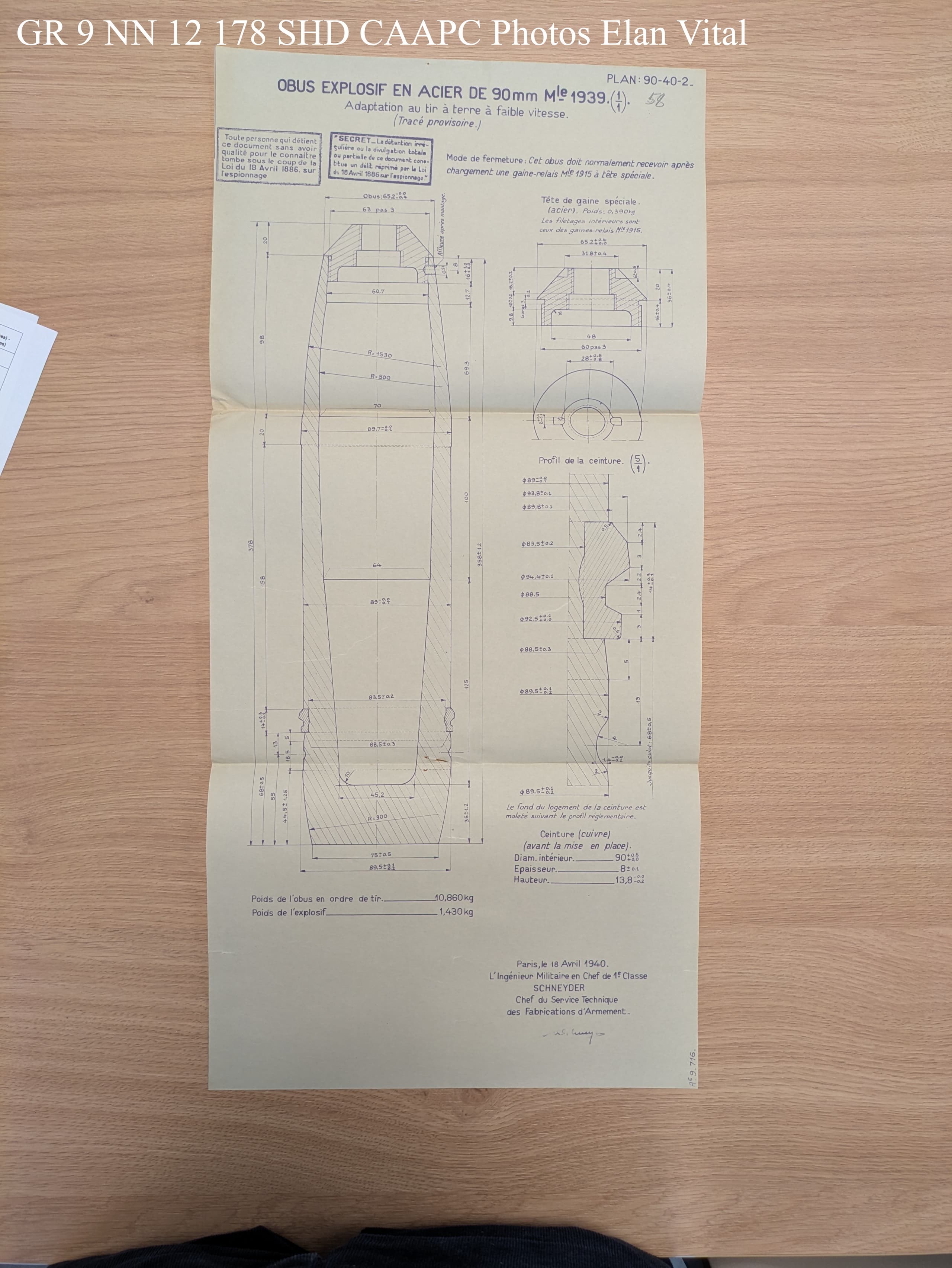
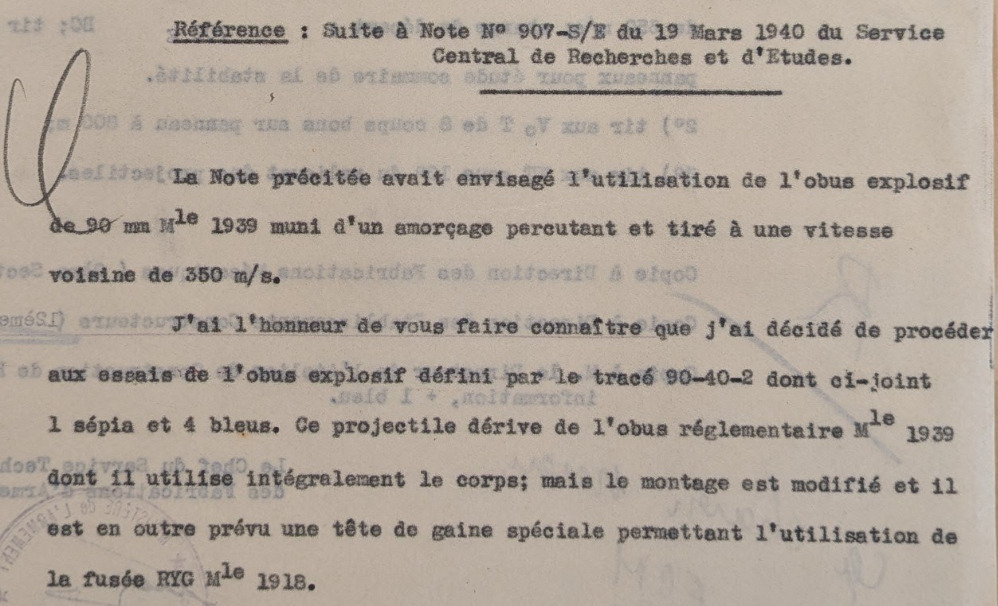
I’ve also got specs on the Mle.1939 HE round. It weighs 10.86 kg with an explosive mass of 1.43 kg, which is likely TNT. For this round, it seems they opted to lower the charge quite a bit, so the velocity is just 350 m/s.
For a 90 mm round, that is a lot of filler, so it could have some respectable HE penetration
(~20 mm)
5 Likes
Nice findings.
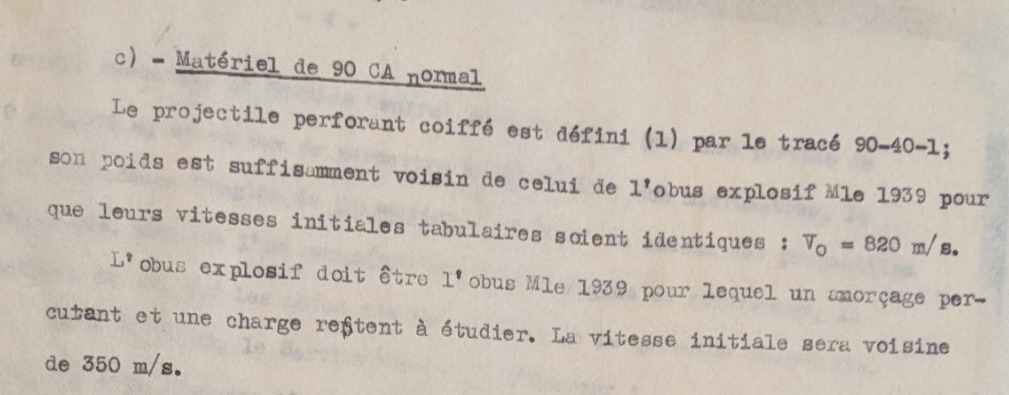
But am I getting it right: 90-40-1 was still 820 m/s, even tho the HE mle 39 had 350 m/s?
I also wonder how come the APCBC weights about 400g more considering caps overall weight ~1.4kg (doesn’t line up with 11.2kg of the round mass). Does it mean something was done to the HE shell, like the changing of fuse or something as it made a bit more sense with mle 25 HE that weighted below 10kgs
EDIT: also, if my calculations are right, even with 1.43kg of explosive filler, penetration will be around 140 mm point blank, which I sort of doubt is true
Yes, 90-40-1 had a velocity of 820 m/s with the Mle.1926 or Mle.1939 gun. It was 750 m/s on the shortened Mle.1939 gun. Mle.1939 HE had a velocity of 350 m/s since they used a heavily reduced charge.
Also, see the post I made just before the HE round specs. 90-40-1 is solid shot APCBC.
1 Like
Oh, missed that part. Thanks.
Spoiler
Pity it wouldn’t be the funny, skill-less, lobotomised round to oneshot KV-1s wherever it lands on it

3 Likes
You know what they say. The French copy nobody and nobody copies the French.
3 Likes
+1
Suggestion passed to the developers for consideration.
7 Likes