Suggestion Number: 485 😎
ARMAMENT
Spoiler
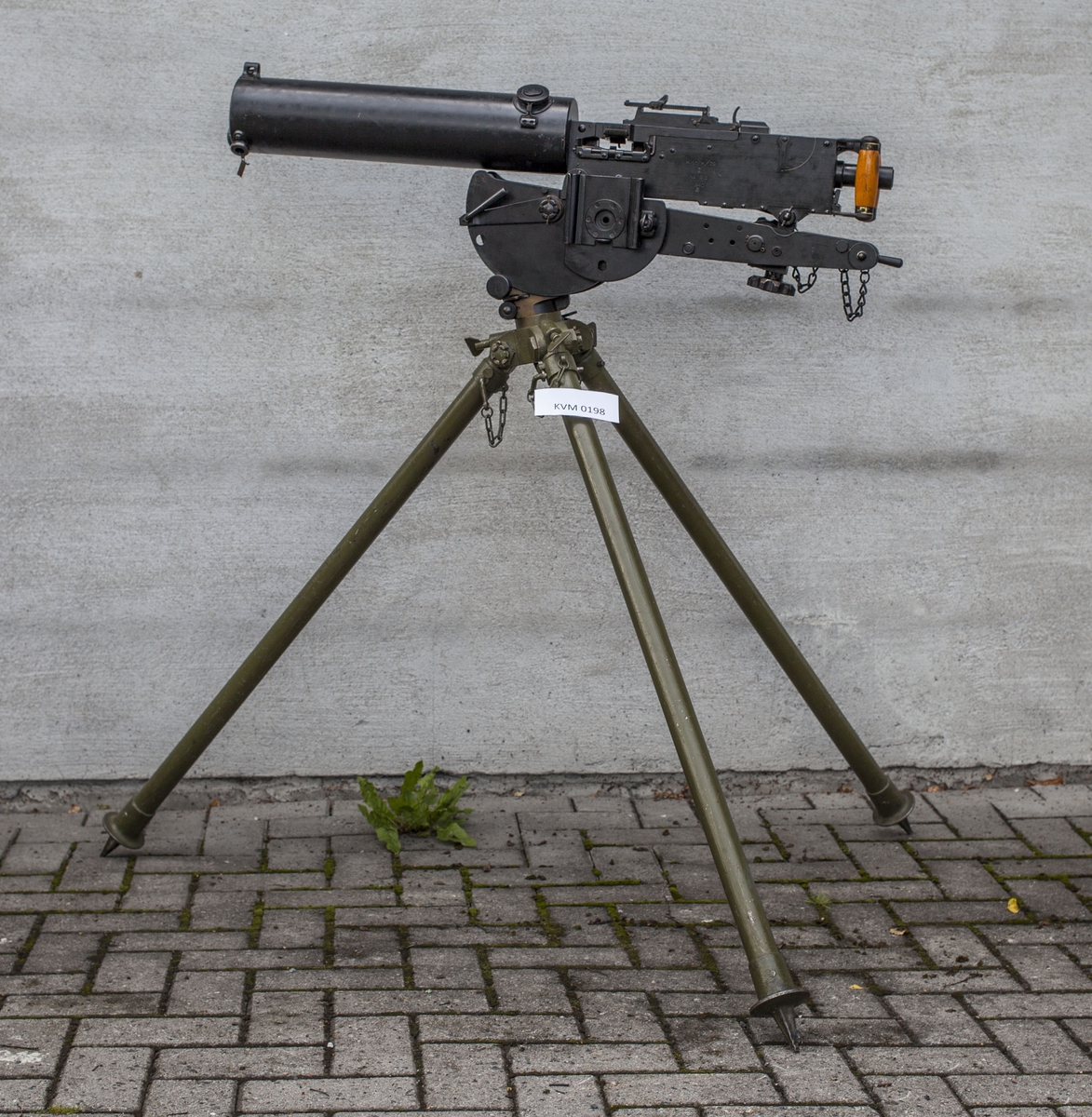
- 1x 7.92x61mm Colt M/1929 Heavy Machinegun
- Tripod: Luftmålstativ M/36
- Type: Machine gun
- Manufacturer: Kongsberg Våpenfabrikk
- Designer: Browning/Colt
- Customer: Army and Air Force
- Model: Colt M/29 TUNG
- Caliber: 7.92x61
- Production period: 1937-1943
- Number produced: 1150
- Serial number: 1050-2199, + rebuilt from previously delivered
- Mechanism: Automatic
- Fire rate: 650 rounds per minute
- Magazine capacity: 220 (belt)
- Overall length: 956 mm
- Barrel length: 607 mm
- Weight: 15000 grams
- Sight: Gallows sight
Tripod
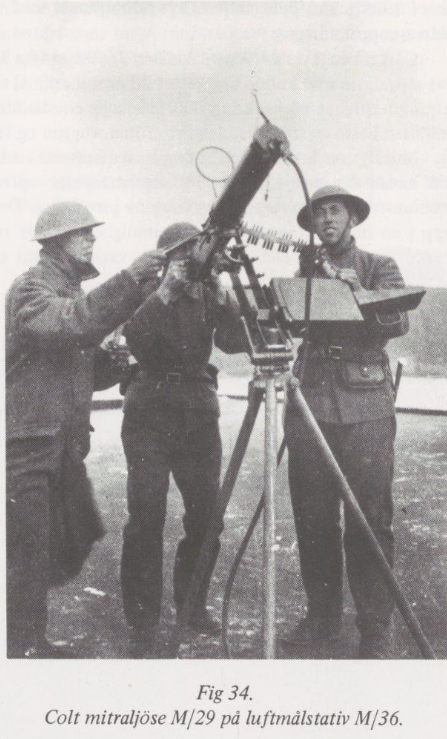
Clearer image of the MG itself
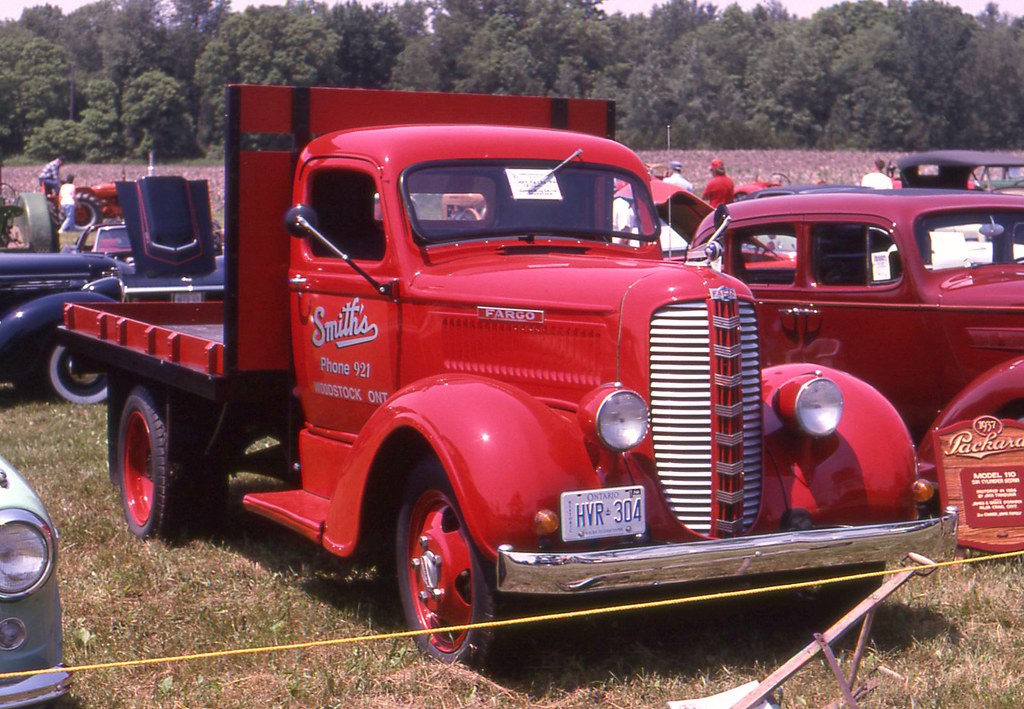
TECHNICAL DATA
Engine: Inline 6-cylinder Gasoline Engine
Horsepower: 75 hp at 3,000 rpm, 218 cubic inches (3.6 liters)
Torque: Approximately 170 lb-ft @ 1,200 rpm
Transmission: 3-speed manual
Drivetrain: Rear-wheel drive
Wheelbase: 116 inches
Overall Length: Approximately 197 inches (varies slightly with flatbed configuration)
Overall Width: Approximately 72 inches
Overall Height: Approximately 70 inches (unloaded)
This Specific Bed: 7.5 feet long
Tires: 6.00x16-inch
Wheels: 16-inch steel artillery-style
HISTORY
Before the second world war Norway didn’t have much of an army, the army consisted mostly of horse and truck drawn cannons and artillery, they had no tanks or armored vehicles. Because of this, when the Germans invaded Norway the 8/9th of April 1940, lots of improvisation’s and desperate measures had to be made. Some examples of this was the fights near Uskedalen, south of Bergen, Norway where several naval cannons were demounted the ship, brought on land and installed on civilian requisitioned trucks, which then were used in several skirmishes throughout the April month. But this were not the only area where something like this was done, near Rjukan, they installed a 40mm Bofors cannon onto a Chevrolet, and in the west part of Oslo, near the harbor they did something similar, just to mention a few. With Machineguns the improvisations were much wider, and among them, are this vehicle.
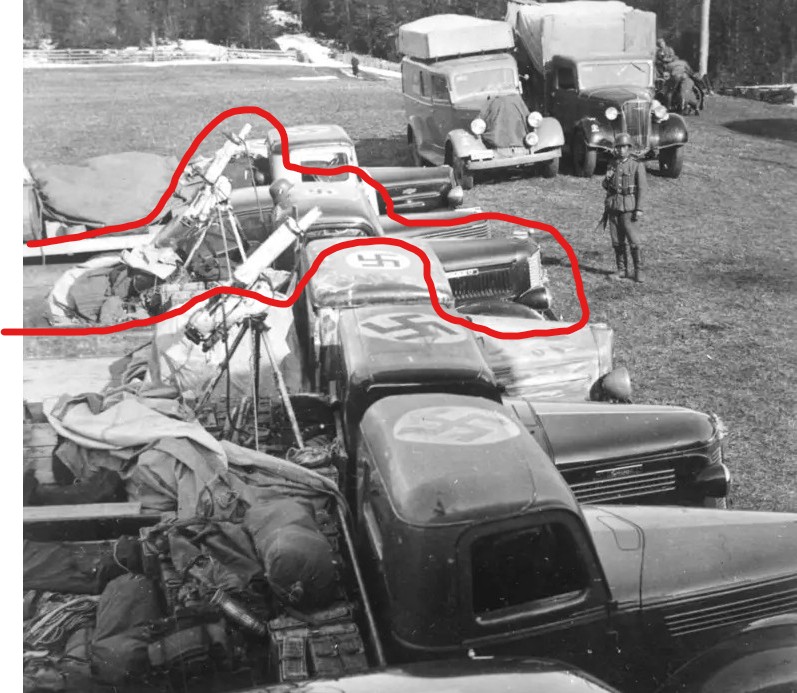
In April 1940 in the area around Gudbrandsdalen, several Civilian Norwegian trucks were requisitioned by the army in their desperate attempt to slow down the German invasion for as long as possible. Many of these were used for transportation of ammunition and other goods, as well as to in some situations tow cannons and other equipment. Many had machineguns installed in order to fight off German planes, as well as to have some more mobile and fast way of supporting infantry. In the image i have put a red line around the vehicle this specific suggestion is about, the truck is an Fargo 1937 model Half Ton truck. This has an Norwegian Modified Colt M/1929 in the unique caliber 7.92x61mm, this machinegun is installed on an Norwegian anti air tripod. The machinegun is water cooled, as can be seen in the image the hose from the water tank of the machinegun goes down into a bucket. Each ammunition package/belt has 220 rounds. The specific amount carries is unknown, but looking very closely on the image, 5-10+ can be assumed. For elevation i would assume 65 degrees elevation and 30 degrees depression in front, as well as an traverse of at least 270 degrees.
Norwegian Heavy M/29 Machinegun, a machinegun modified to fire the Norwegian developed 7.92x61mm cartrigde. This cartrigde was developed as it was better suited against planes than the 7.92x57mm cartrigde. This machinegun has been in use in the Norwegian army and Airforce for many many years, and around the year 1937 the Kongsberg arms factory were in full swing rebuilding the older M/29 machineguns chambered in the new Norwegian 7.92x61mm cartridge.
This is the only image i have found of these so far, and unfortunately this show’s only the German version, where they have captured the vehicles and painted swastikas on the roofs to avoid them being targeted by their own aircrafts. It an also be seen that they have modified the machineguns by adding their own standard sights for the machineguns, intended for ground to ground operations, and not anti air as the Norwegians used it. This was probably as they did not expect attack from any Norwegian or allied planes in these areas. The only difference between the Norwegian and the captured one is the machinegun sights and the insignias on the rooftop
IN GAME
This should be an effective Reserve to 1.3 in br Anti Air vehicle in the game, and would be effective enough against many of the planes it will face in this area. The vehicle is highly mobile and very small, making it easy to hide and hard for the enemy to spot, with an fire rate of 650 rounds per minute it should face a threat to most planes, as well as being able to knock out a variety of open top and lightly armored tanks.
AMMUNITION 7.92x61mm (Every specs & detail included)
Spoiler
The machinegun could use all those cartrigdes, every spec is included and the dates
Raufoss Ammunitionsfabrikker - 7.92x61 MG Heavy - Sharp - MG heavy, full metal jacket
Spoiler
https://i.ibb.co/FDnV8q5/Patron-792x61-MG-Tung-Helmantel-1938-1.jpg
Model and production
Caliber: 7.92x61 MG Heavy
Type: Sharp
Model: MG heavy, full jacket
Manufacturer: Raufoss Ammunitionsfabrikker
Country of manufacture: Norway
Year of production: Approx. 1937-1944
ID: SAA4495

Technical data
Total length: 83.85 mm
Cartridge weight: 29.2 grams
Ball diameter: 8.2 mm
Bullet length: 37.7 mm
Bullet weight: 14.2 grams
Bullet type: Full jacket
Ball casing material: Copper-nickel coated steel
Ball core material: Lead
Gunpowder type: Light smoke
Gunpowder weight: approx. 3.67 grams
Ignition mechanism: Berdan
Sleeve material: Brass
Sleeve length: 60.95 mm
Bottom diameter: 11.9 mm
Sleeve base: Rimless
Teeth cap: None
Live ammunition in 7.92x61 MG heavy from Raufoss had cartridge cases and caps in brass. Production took place from 1937 to 1944 with steel jacketed projectiles of 14.2 grams.
For firing tests in 1936, cartridges with two stars and an R at 12 o’clock were tested. Ammunition from 1943 and 1944 has copper-plated projectiles with a steel jacket. A small number of cartridges loaded by Finower Industrie GmbH in Germany with German pattern markings have been observed. These are dated 1943 with factory code cg. The German designation for this caliber is “7.9 mm Patr s.S 294/2 (n) norw tung” or “Patrone M/37”.
The cartridges were normally packed in cloth bands of 220 cartridges. These were regular 250 tapes with the last 30 cartridge pockets cut away. The ammunition was delivered in wooden boxes with 9 cardboard boxes, each containing one cloth band. The label on the wooden box was white. The cardboard boxes had an arrow on the lid which should point towards the weapon when you put the box in the ammunition box. This meant that the belt remained with the projectiles in the correct direction. These belts were designated “Sharp ammunition, heavy, unmixed”. If the belts contained tracer cartridges, the designation was “Sharp ammunition, heavy, mixed”.
The ammunition was produced until 1944. After this, it was reloaded in old empty casings to an unknown extent.
Raufoss Ammunitionsfabrikker - 7.92x61 MG Tung - Trace light - MG heavy, tracer
Spoiler
https://i.ibb.co/s20KhYz/sporlys-1.jpg
Model and production
Caliber: 7.92x61 MG Heavy
Type: Tracer
Model: MG heavy, track light
Manufacturer: Raufoss Ammunitionsfabrikker
Country of manufacture: Norway
Year of production: 193x-1942
ID: SAA4495

Technical data
Total length: 83.9 mm
Cartridge weight: 25.7 grams
Ball diameter: 8.2 mm
Bullet length: 37.3 mm
Bullet weight: 11.0 grams
Bullet type: Track light
Ball casing material: Copper-nickel coated steel
Bullet core material: Lead + track light kit
Ignition mechanism: Berdan
Sleeve material: Brass
Sleeve length: 60.95 mm
Bottom diameter: 11.9 mm
Sleeve base: Rimless
Teeth cap: None
Quantity in package: 50
The tracer cartridges for the heavy cartridges had the same steel jacketed 11 gram projectile used in the light cartridges. The tracer light burned with a greenish color out to 1000-1200 m.
In 1943, a new 12 gram projectile was constructed. This had a candle set that was supposed to be easier to light, and burned with a yellowish colour.
The German term for heavy tracer light was 7.9 mm Patr. Sml’spur 293/2(n) heavy.
The tracer cartridges were delivered in boxes of 1,500 rounds. These contained 30 boxes of 50 rounds. A green stripe was used above the label. Track light cartridges were also delivered ready-made in strips together with sharp cartridges.
Raufoss Ammunitionsfabrikker - 7.92x61 MG Tung - Tracer - MG heavy, tracer light (yellow)
Spoiler
https://i.ibb.co/h9pj3BW/gul-tracer.jpg
Model and production
Caliber: 7.92x61 MG Heavy
Type: Tracer
Model: MG heavy, track light (yellow)
Manufacturer: Raufoss Ammunitionsfabrikker
Country of manufacture: Norway
Year of production: 1943-
ID: SAA4495

Technical data
Total length: 84 mm
Cartridge weight: 27.3 grams
Ball diameter: 8.2 mm
Bullet weight: 12.0 grams
Bullet type: Track light
Ball casing material: Copper-nickel coated steel
Bullet core material: Lead + track light kit
Ignition mechanism: Berdan
Sleeve material: Brass
Sleeve length: 60.95 mm
Bottom diameter: 11.9 mm
Sleeve base: Rimless
Teeth cap: None
The tracer cartridges for the heavy cartridges had the same steel jacketed 11 gram projectile used in the light cartridges. The tracer light burned with a greenish color out to 1000-1200 m.
In 1943, a new 12 gram projectile was constructed. This had a candle set that was supposed to be easier to light, and burned with a yellowish colour.
The German term for heavy tracer light was 7.9 mm Patr. Sml’spur 293/2(n) heavy.
The tracer cartridges were delivered in boxes of 1,500 rounds. These contained 30 boxes of 50 rounds. A green stripe was used above the label. Track light cartridges were also delivered ready-made in strips together with sharp cartridges.
Raufoss Ammunitionsfabrikker - 7.92x61 MG Tung - Exercise cartridge - MG heavy, exercises
Spoiler
https://i.ibb.co/dMx4Zk4/exsersise-bukllet.jpg
Model and production
Caliber: 7.92x61 MG Heavy
Type: Practice cartridge
Model: MG heavy, exercises
Manufacturer: Raufoss Ammunitionsfabrikker
Country of manufacture: Norway
Year of manufacture: 1938
ID: SAA4495

Technical data
Ball diameter: 8.2 mm
Ball type: Brass rod
Ball casing material: Brass
Ball core material: Brass
Sleeve material: Brass
Sleeve length: 60.95 mm
Bottom diameter: 11.9 mm
Quantity in package: 50
The practice cartridges were made from cut-out sleeves where 4 longitudinal grooves were applied to distinguish them from live ammunition. The projectile is a turned brass rod that is drilled inside. The rod goes down towards the bottom of the sleeve so that it was not pressed in during repeated use.
The cartridges were delivered in boxes of 50 cartridges.
Raufoss Ammunitionsfabrikker - 7.92x61 MG Heavy - Tracer
Spoiler
https://i.ibb.co/4jW1ZWx/tung-tracer.jpg
Model and production
Caliber: 7.92x61 MG Heavy
Type: Tracer
Model -
Manufacturer: Raufoss Ammunitionsfabrikker
Country of manufacture: Norway
Year of production: 193x-1942
ID: SAA4495

Technical data
Total length: 83.9 mm
Ball diameter: 8.2 mm
Bullet weight: 11.0 grams
Bullet type: Track light
Ball casing material: Copper-nickel coated steel
Bullet core material: Lead + track light kit
Ignition mechanism: Berdan
Sleeve material: Brass
Sleeve length: 60.95 mm
Bottom diameter: 11.9 mm
Sleeve base: Rimless
Teeth cap: None
Quantity in package: 50
The tracer cartridges for the heavy cartridges had the same steel jacketed 11 gram projectile used in the light cartridges. The tracer light burned with a greenish color out to 1000-1200 m.
In 1943, a new 12 gram projectile was constructed. This had a candle set that was supposed to be easier to light, and burned with a yellowish colour.
The German term for heavy tracer light was 7.9 mm Patr. Sml’spur 293/2(n) heavy.
The tracer cartridges were delivered in boxes of 1,500 rounds. These contained 30 boxes of 50 rounds. A green stripe was used above the label. Track light cartridges were also delivered ready-made in strips together with sharp cartridges.
SOURCES
Spoiler
Nasjonalbiblioteket
Nasjonalbiblioteket
Nasjonalbiblioteket
Vehicles identified by the Norwegian Digital Museum: Tyske tropper i Gudbrandsdalen i april 1940. Oppstilt rad av rekvirerte, norske lastebiler og personbil med hakekors på taket av førerhuset. Våpen på lasteplan er Colt mitraljøse m/29. Nærmest og bakover: Uidentifisert amerikansk personbil 1937-39, fire lastebiler: Ford (?) 1938-39, Oldsmobile 1938, Chevrolet 1936, Fargo 1937-38, Opel Kaptein personbil 1939. To av lastebilene har våpen på lasteplanet. Bak, fra venstre: Ukjent varebil, Chevrolet lastebil 1937. Sivile norske biler, rekvirert av tyskerne og påmalt hakekors for å unngå angrep fra eget flyvåpen (Luftwaffe). -Østfold fylkes billedarkiv / DigitaltMuseum
Ammunition specs
Ammunisjon i kaliber 7,92x61 mm Tung
Machinegun specs and images
Mitraljøse - Colt M/29 TUNG - Automat - Hær og Flyvåpen
Norske soldater med en Colt-mitraljøse. Våpenet er montert på lavett for skyting mot fly. -Sør-Troms Museum / DigitaltMuseum
Nasjonalbiblioteket
Vehicle specs
https://www.hcvc.com.au/forum/restore/3469-fargo-trucks
https://forums.aaca.org/topic/130191-1934-and-1937-fargo-trucks/
Fargo Trucks - Wikipedia
https://www.youtube.com/watch?v=qhiYleTAiYQ
- Yes
- No