Yeah but not top speed which is modeled with no ordinance
Seems interesting.
Would need to look at more data too confirm. It should be doing like 1325 KPH in indicated airspeed at 3 km (10,000 feet ish) Based on the full burner sustained G chart.
Peoples turn rate “assessments” on this chart might also largely be incorrect as this appears to use indicated airspeed instead of actual velocity.
I’m correct
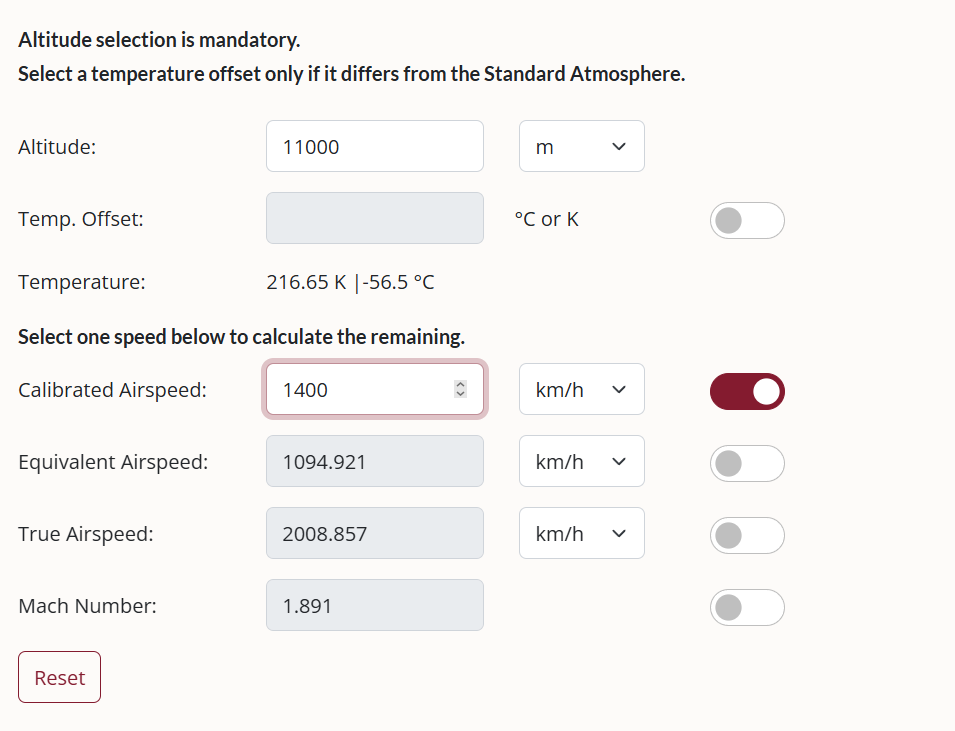
Yeah it says that in the manual.
And it’s obvious cause otherwise the sustained turn rates for multiple altitudes being on the same chart would makes 0 sense with true air speed
Yes its funny though the amount of people claiming it sustains 21 D/S. They all forgot to convert to velocity.
Ah so the goalposts have moved then? I assume this means you have abandoned your view that the F/A-18E should be able to do Mach 1.1 on the deck because that’s what the Operational limit speed is?
Gaijin model aircraft based off their 1g level flight speed (aka SEP=0), that is just a fact. They do not always get an aircraft modelled correctly but the 1g speed is what they aim for and if you submit a report to change the level flight speed of an aircraft using a source which shows the 1g speed it will be accepted. If you try to report an aircraft using the operational limit speed it will get thrown out because that is (quite rightly) not the standard they use.
And Gaijin allow themselves a couple of % tolerance when modelling aircraft so their standards are indeed very relevant to the discussion of how they model aircraft.
Cool so if they are not modelled off 1g limit speed what are they modelled to?
I compared the F-15A to the first source I had laying around. @MatrixRupture has now found a different source citing a lower 1g speed for the F-15A (with more stores admittedly).
I don’t know where you are pulling 23°C from? Aircraft performance figures and calculations are always (unless very clearly stated otherwise) based on “Standard Day” conditions, as defined in International Standard Atmosphere, or one of it’s sub-variants, all of which define 15°C at sea level as the standard (hence it is the default value of the calculator).
That graph is the operational limit not the achievable speed in level flight.
3 Likes
I was just basing it off the 800 kts @ sea level given in the SAC. Looks like your manual gives a lower value.
Spoiler
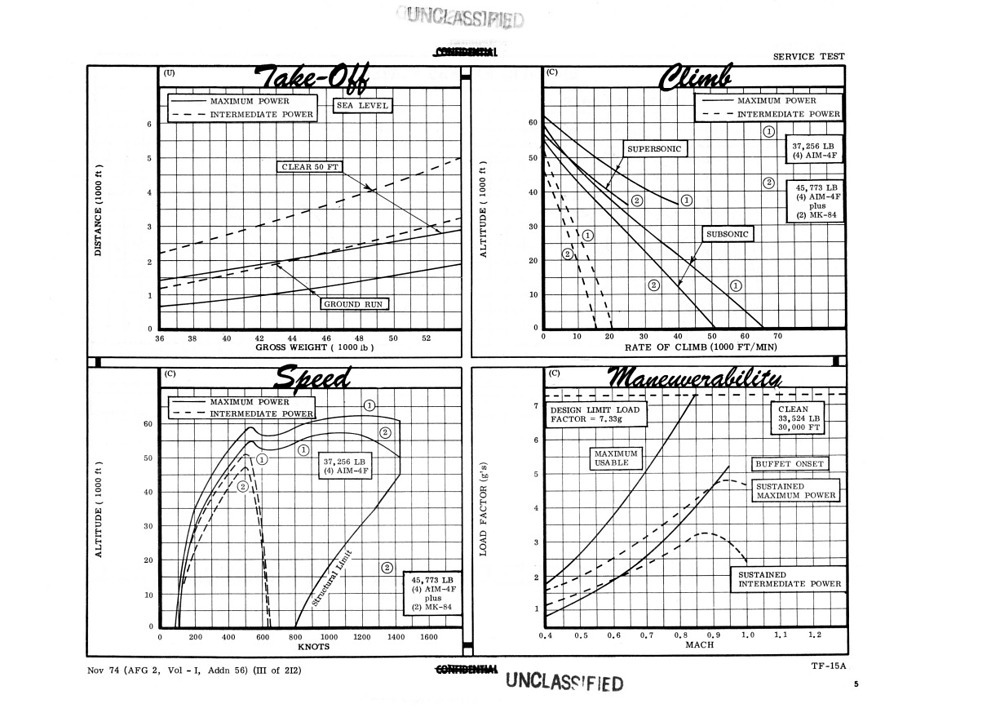
Yoink
I never bother to look at the SAC for the eagle just the manual.
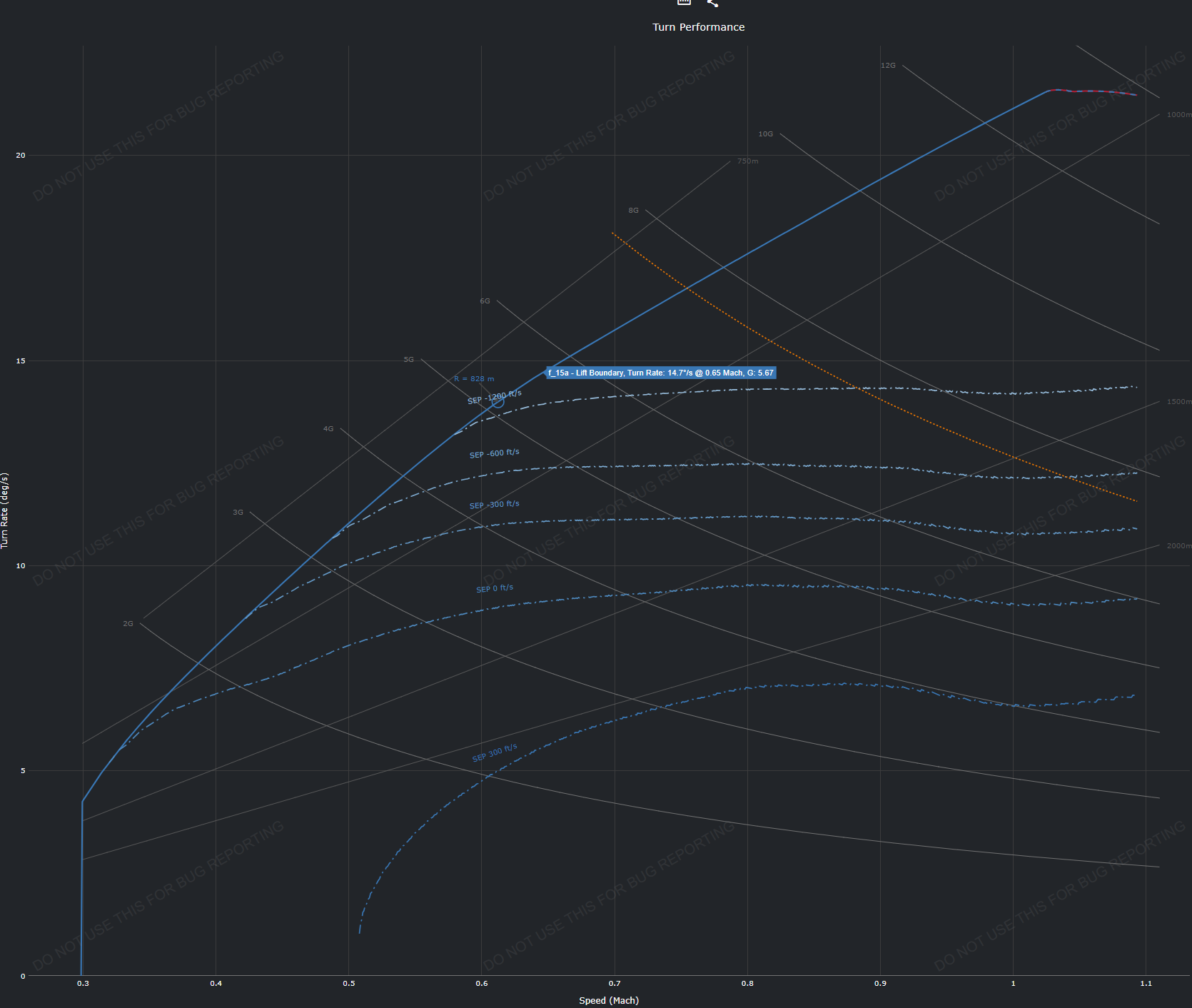
Looks like its overperforming in lift ( a whole G 4.5 vs 5.67) too based on that 52% fuel weight at 30,000 feet
As well as SEP actually, however seeing as the A is already overperforming its not surprising.
at least according to stat shark
Oh I adore it when people forget that the search function exists, or just the basic ability to scroll.
You even replied to it when you first arrived.
You sure do seem to think so.
Majority as you proved yourself, at least for the US tree.
Ah yes, we are once again back to gaijin’s techmods being the arbiters of reality, a fantastic quantification.
Yes, a few knots here and there, not tens.
Oh my you think the USAF uses civilian testing metrics.
I’m pulling from the military standards that exist, that being 64F to 74F and 66F to 77F, I chose one of the many middle ground values from the non-extreme average values.
And?
Very good point, gaijin commonly just forgets stuff exists unless its nerfing random vehicles that don’t start with a B.
I also like how fast this thread became a F-15 thread, has more actual F-15 related posting than the F-15 thread has had in weeks.
I was referring to the claim you made later on in the thread. Has this one been abandoned?
They do not model max speed off NATOPS operational limits. Why would they?
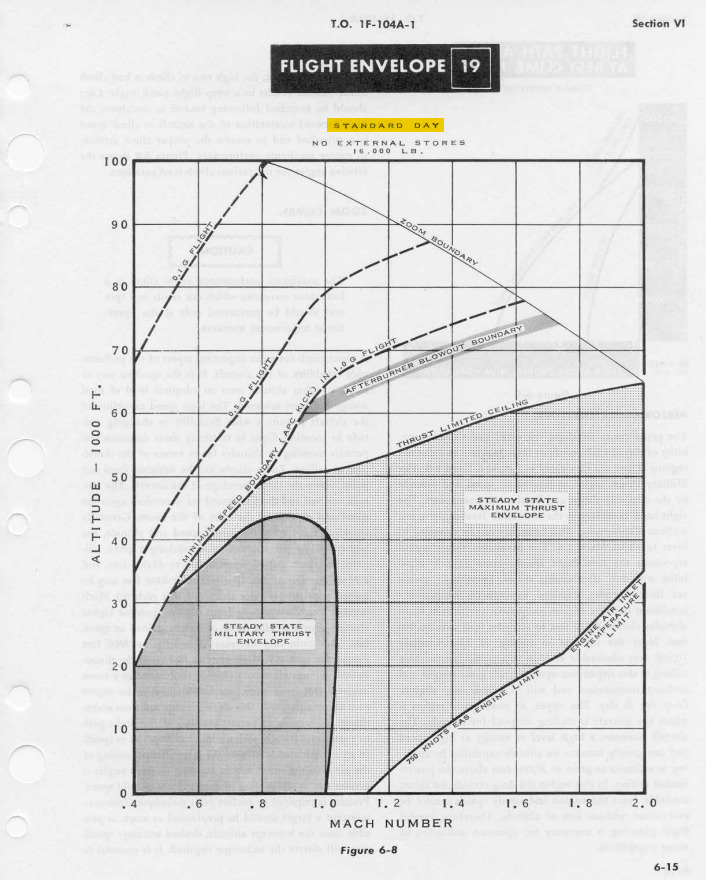
The 1g limit / SEP=0 speed dictates the maximum speed an aircraft can accelerate to in real life, not the operational limit (with the exception of the few cases where the 1G limit is higher than the operational limit).
Who do you think the tech mods get their standards from? But this isn’t even about the tech mods, I’ve had reports forwarded by the tech mods and then rejected by the developers themselves because the aircraft in game is “close enough” or “with margin of error”.
I don’t think, I know. One of the first things they you learn about when you study aeronautical engineering is international standard atmosphere, and how essentially everyone (US military included) uses it.
However, it is clear that you don’t believe anything I say, so unlike you I will provide evidence to backup my statement. US military flight manuals (at least for the era we are discussing) must be written in accordance with a standard called MIL-PRF-7700F Manuals and Abbreviated Checklists, Flight.
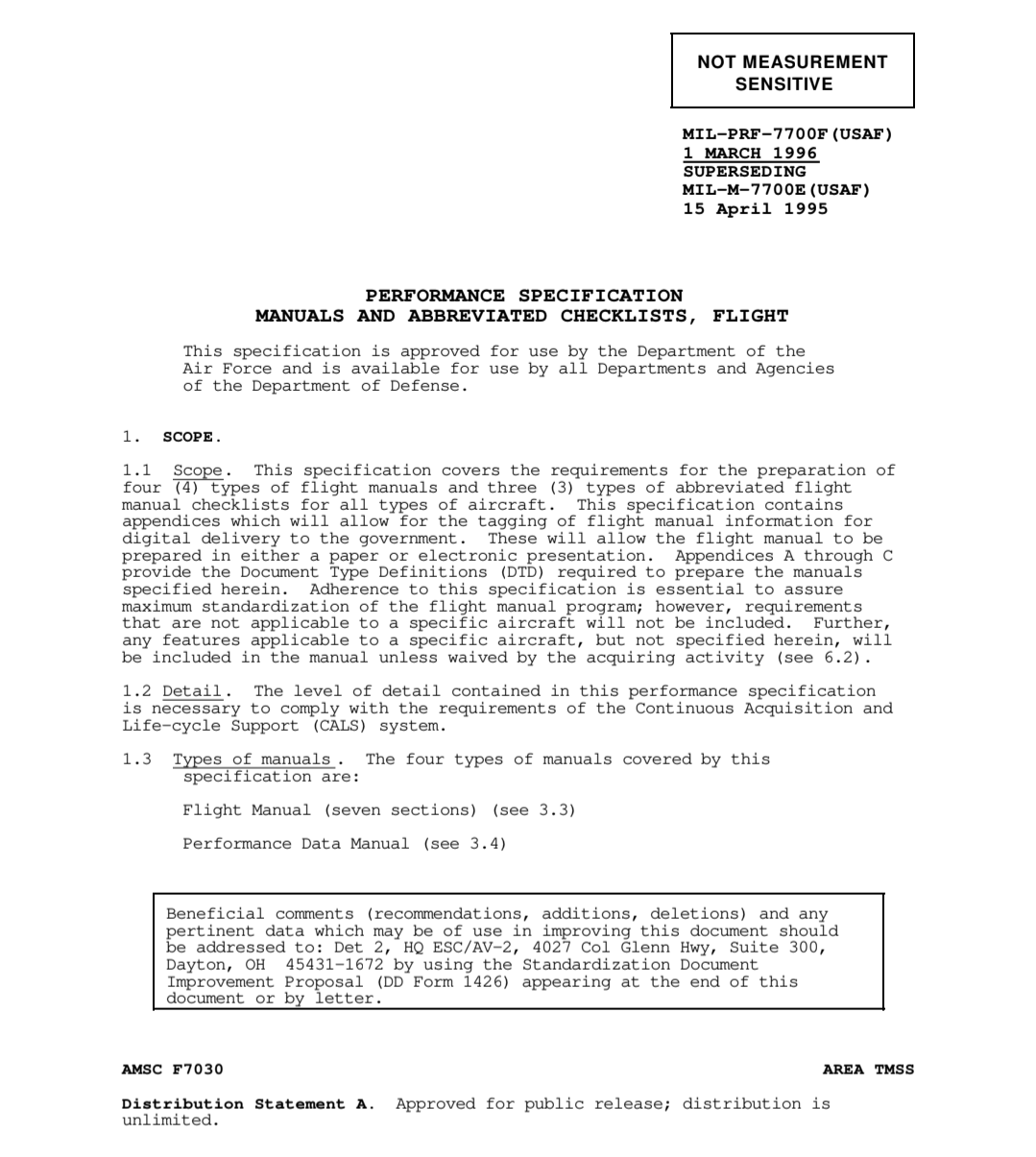
So if we crack open our copy of MIL-PRF-7700F, what do we see? A requirement that aerodynamic performance data be given in accordance with US Standard Atmosphere 1976.
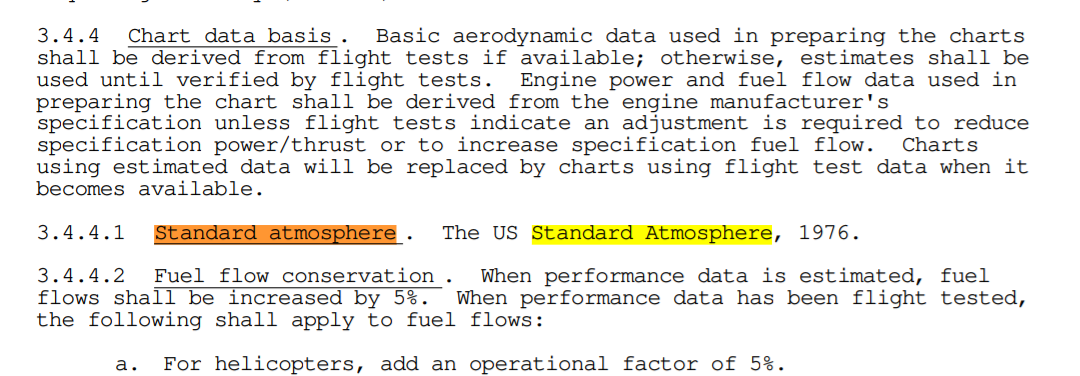
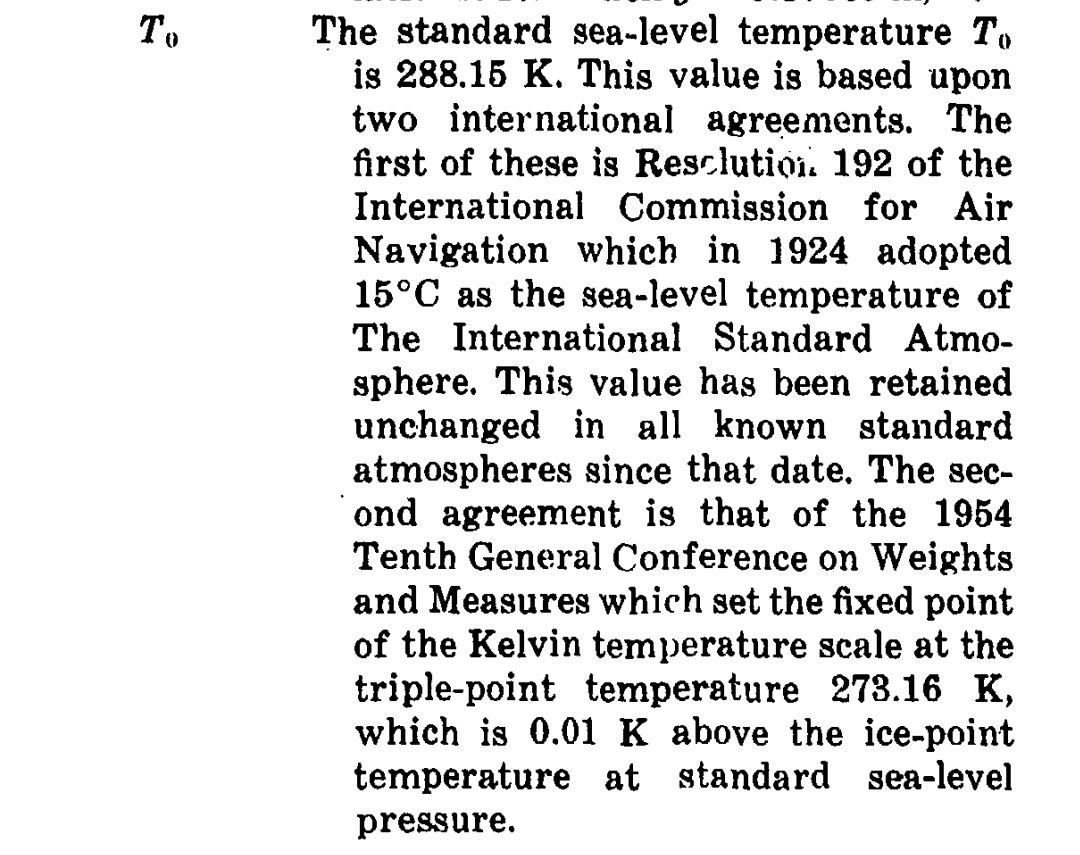
And what does US Standard Atmosphere 1976 say the standard temperature at sea level is? That would be 288.15°K, also known as… 15°C.
And there is even an acknowledgement that US Standard Atmosphere is based upon International Standard Atmosphere.
Please do share which military standard you are referring to.
3 Likes
And I am not as as all future discourse that I partook in was to state that the mach 1.06 limit was flawed, and thus is supporting information on the matter.
Thank you for pointing out that I made a grammatical error, I have corrected it here.
And yet we’ve proven such does not line up with a majority of the vehicles we’ve already covered.
The ether, Lenin’s Ouija board, we can speculate but really never know given so many of their responses. There are only 2 techmods that actually retain any respect from the community and for good reason.
And I’ve had reports accepted for years, then stated to be false by the devs, then added by the devs themselves, see the AN/MPQ-64 rotation rate.
Once again, if you think gaijin are the arbiters of reality then you need to get your head checked.
If by learned, you mean noted and then passed by because it is largely irrelevant for actual design then yes. The literal only time I’ve ever had to remember it existed was when I was getting my high performance license.
Ah thank you for also including 3.4.4, the part I was going to directly reference, now, tell me, do you think that the aggregate flight test data present here would be adjusted for the unobtainable ISO standard atmosphere or the actual test location?
If you choose the former you would have over or underperformance due to viscosity that you can’t calculate, latter, you would just need to know the temperature.
Such is even noted as a issue in the following document and why they provide atmosphere models.
MIL-STD-810H, I will not be posting such here as while it retains a distribution A statement, it is from 2019.
I pulled my data from Table 520.5A-III, and I will also correct myself, it should be 62F to 72F and 66F to 77F.
You can also borrow the 0 altitude values of 90F and 85F if you want but I chose to not make the range wider and I can’t actually compare such to WT without setting SV cheats to 1.
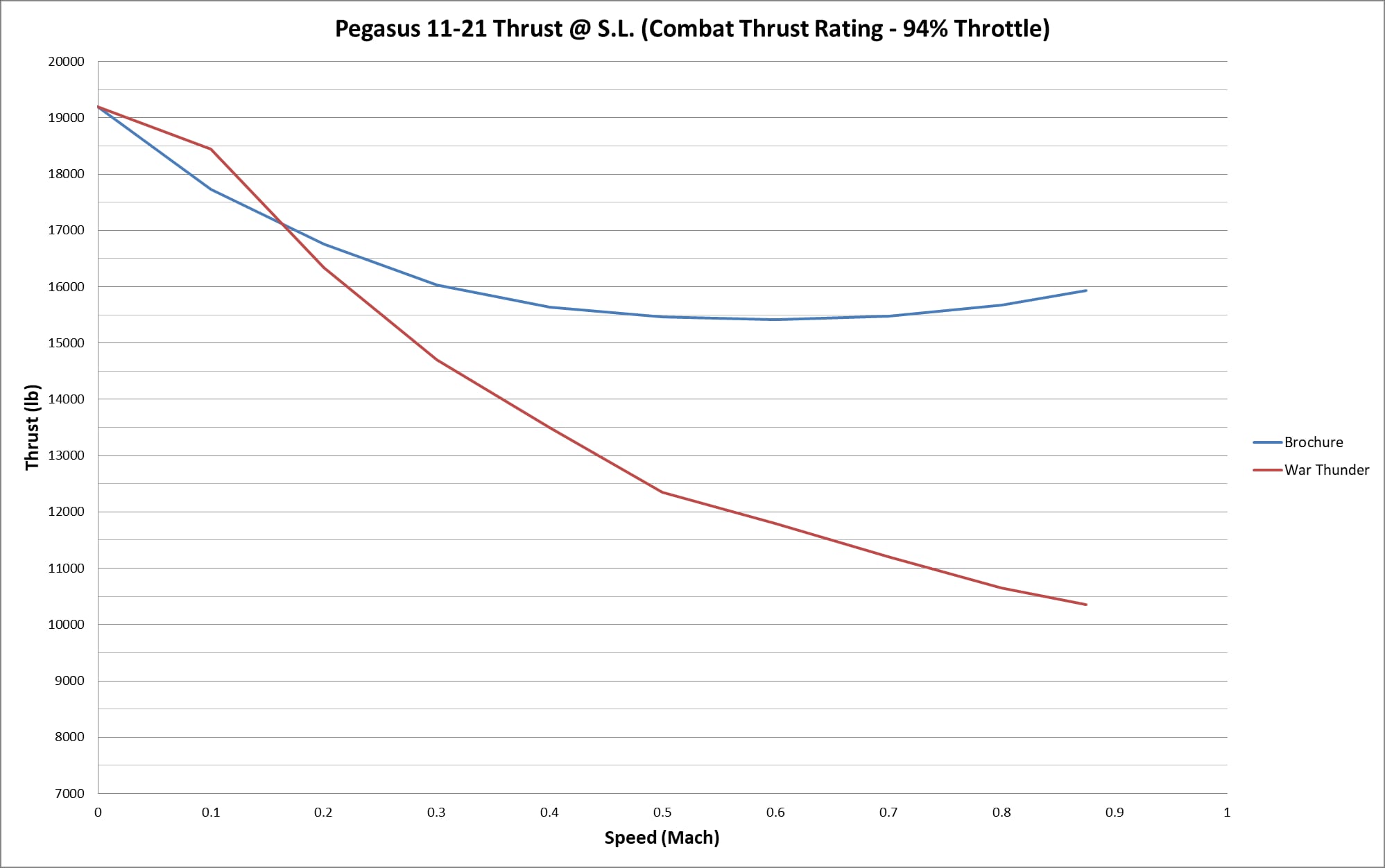
Alot of aircraft in game are missing thrust not just the F18
The source which was provided shows the 1g envelope for the F/A-18C being Mach 1.07 at sea level. In real life the 1g envelope is what dictates the maximum speed an aircraft can achieve in level flight. The F/A-18C’s speed in game matches the real life 1g envelope, ergo the speed of the F/A-18C in game is accurate to real life. Like it or not the in game implementation of the F/A-18C is accurate to real life. And like it or not the the F/A-18E appears to be over-performing compared to real life.
That’s an easy one: data collected from flight testing is normalised to provide values corrected for International Standard Atmosphere. Notice how every flight manual snippet included back in my testing post include the term “Standard Day”?
Spoiler
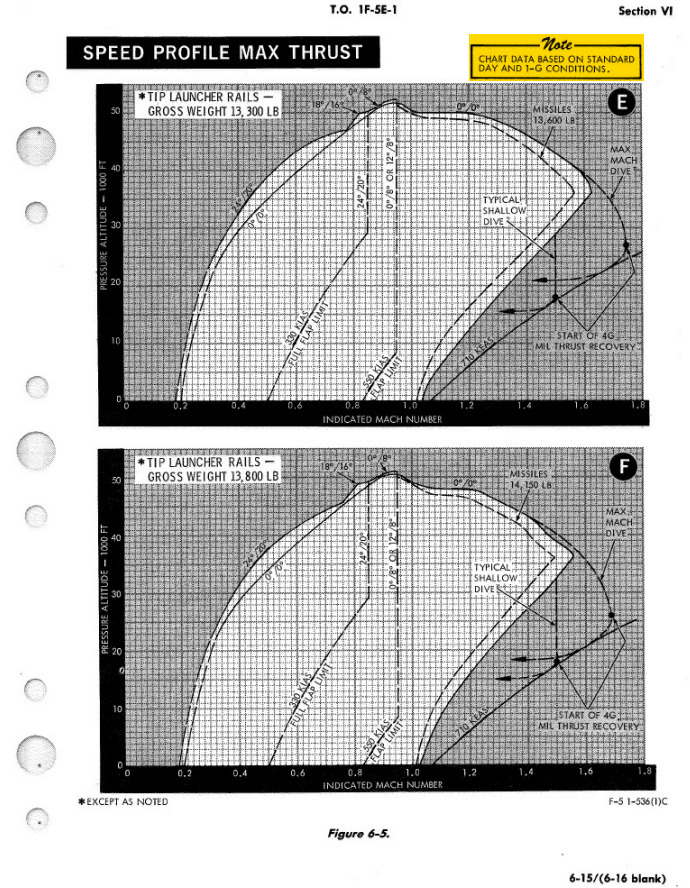
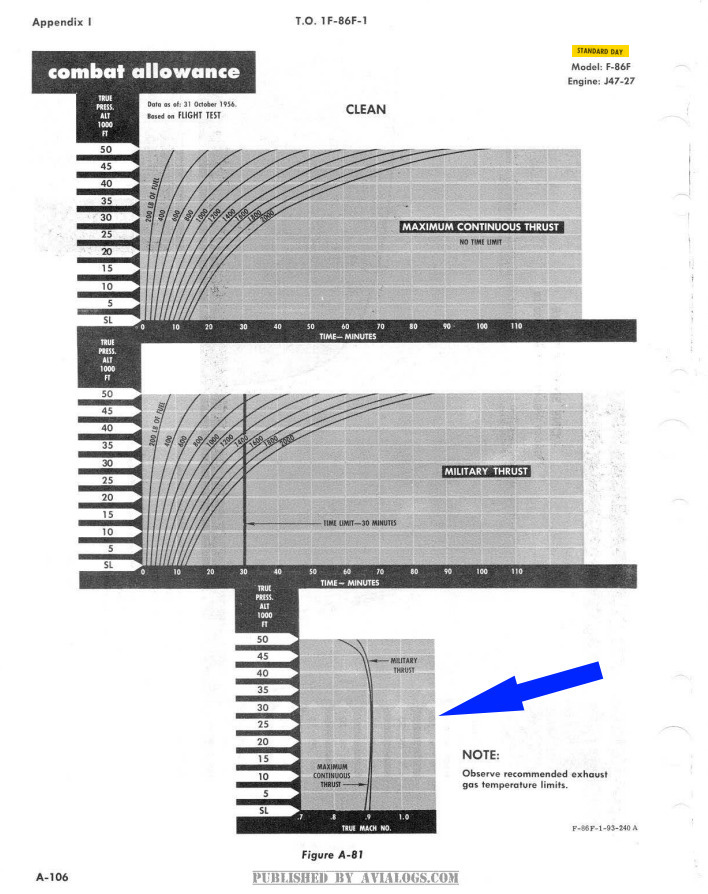
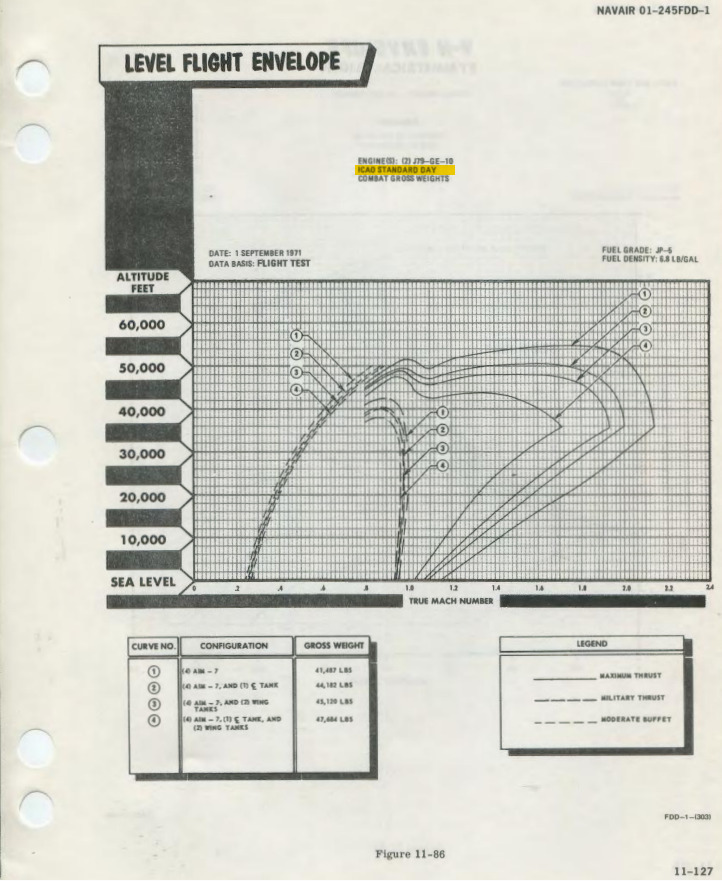
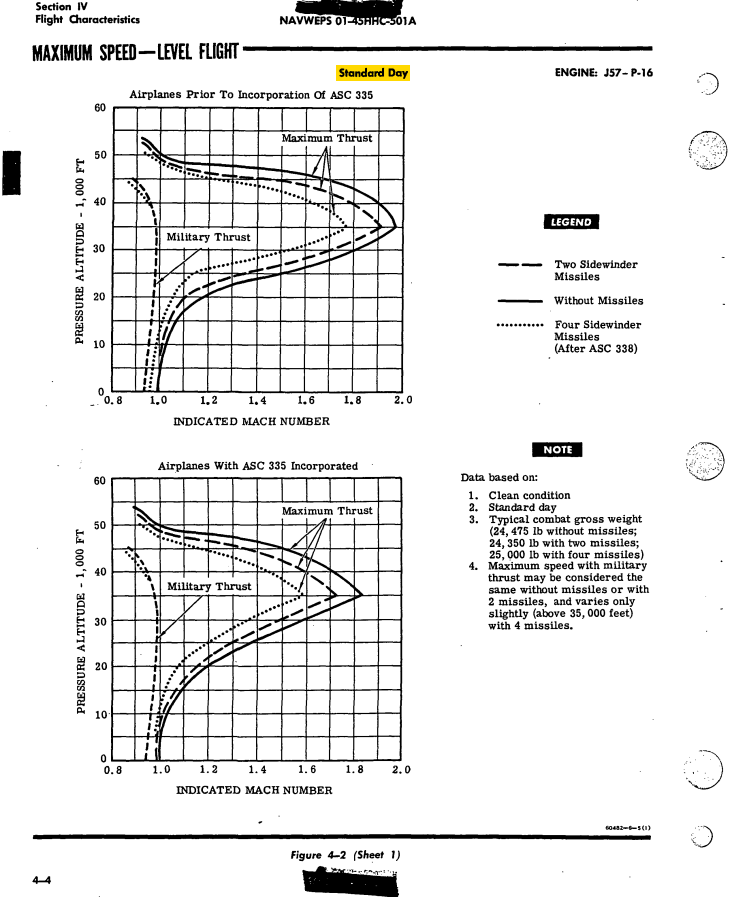
Standard Day has a specific meaning as nicely explained in MIL-STD-3013 (one of the standards which defines performance testing for military aircraft):
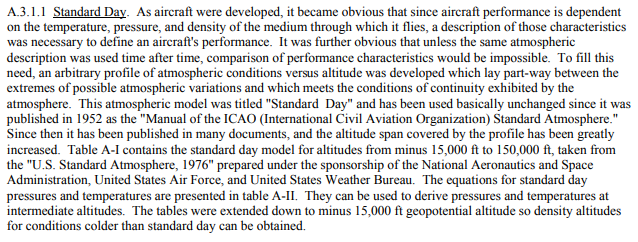
Basically because the performance of aircraft is affected by atmospheric conditions it does not make sense to put raw flight test data into manuals. Doing so would make it impossible to compare that data to any other data because any number of parameters in the atmosphere could be different between tests. Lets say you want to compare the performance of aircraft A and aircraft B you can’t do that with raw flight test data, because any differences you see in performance could be down to the aircraft or any number of variables in the atmosphere.
So what you do instead is measure loads of atmospheric parameters during your flight testing. Then once testing is complete you take your test results and your atmospheric readings and do a whole bunch of maths to determine what the performance would be under “Standard Day” conditions. You do that for both aircraft and now you can compare their performance because the calculated performance figures are now based on identical atmospheric conditions; so any difference in performance is due to the aircraft not the atmospheric conditions being different between tests.
Standard Day conditions are defined in International Standard Atmosphere and look something like this (note 15°C at sea level).
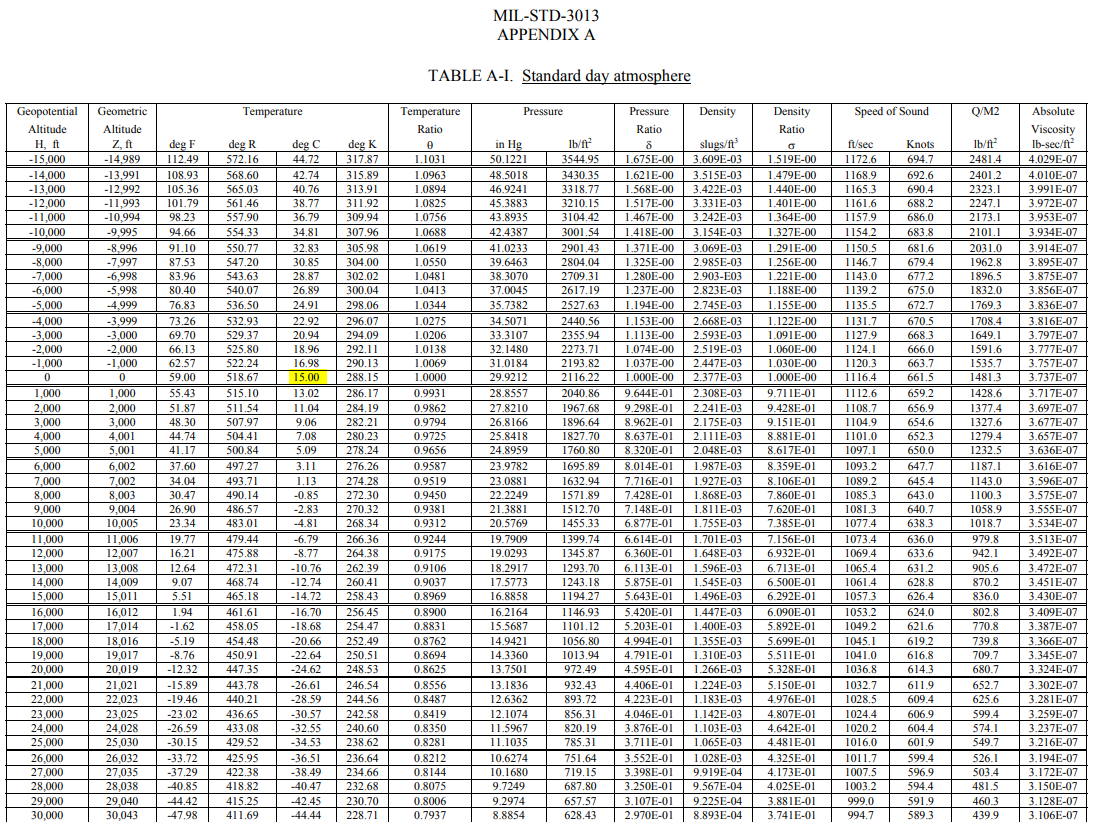
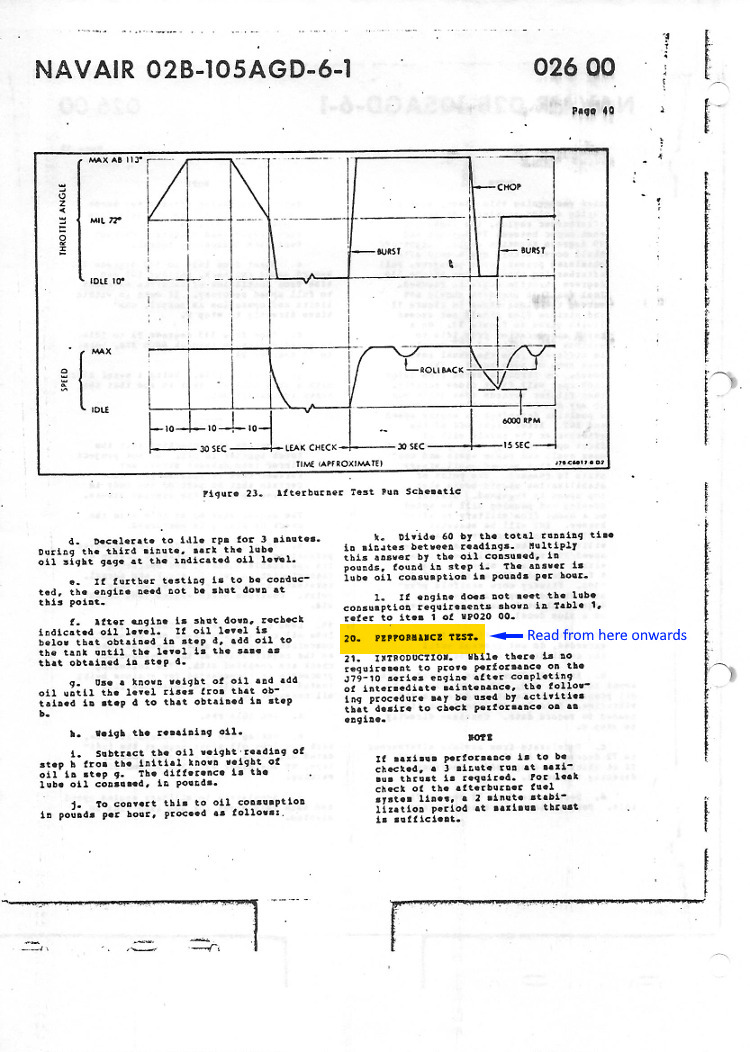
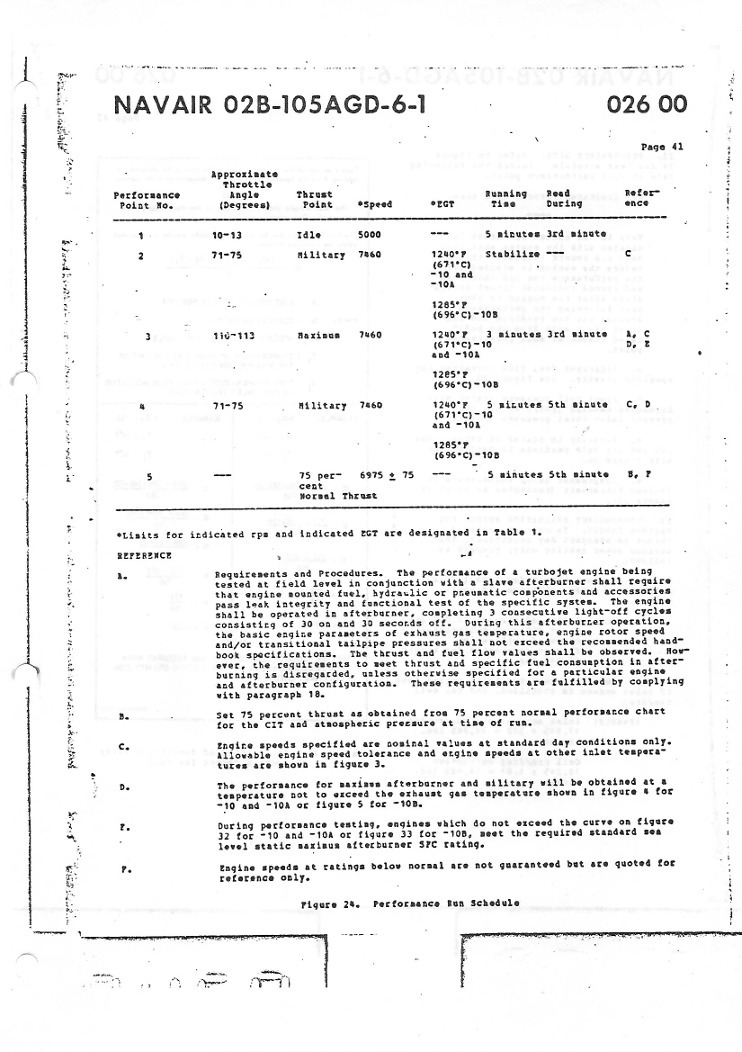
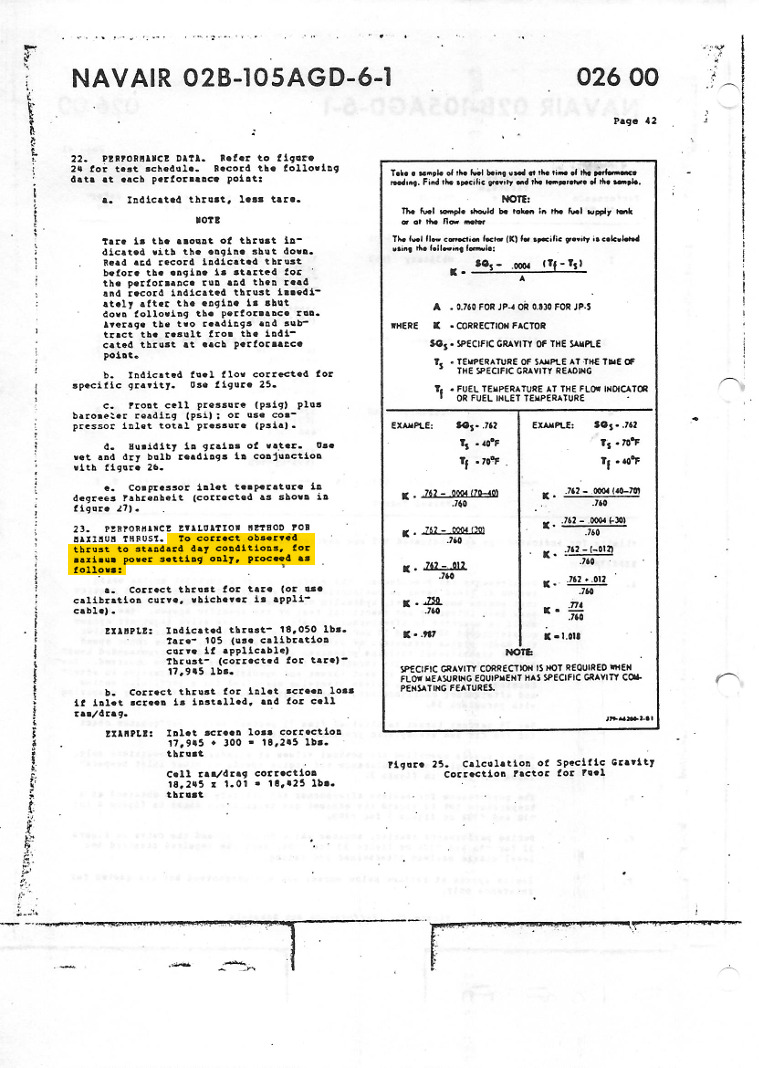
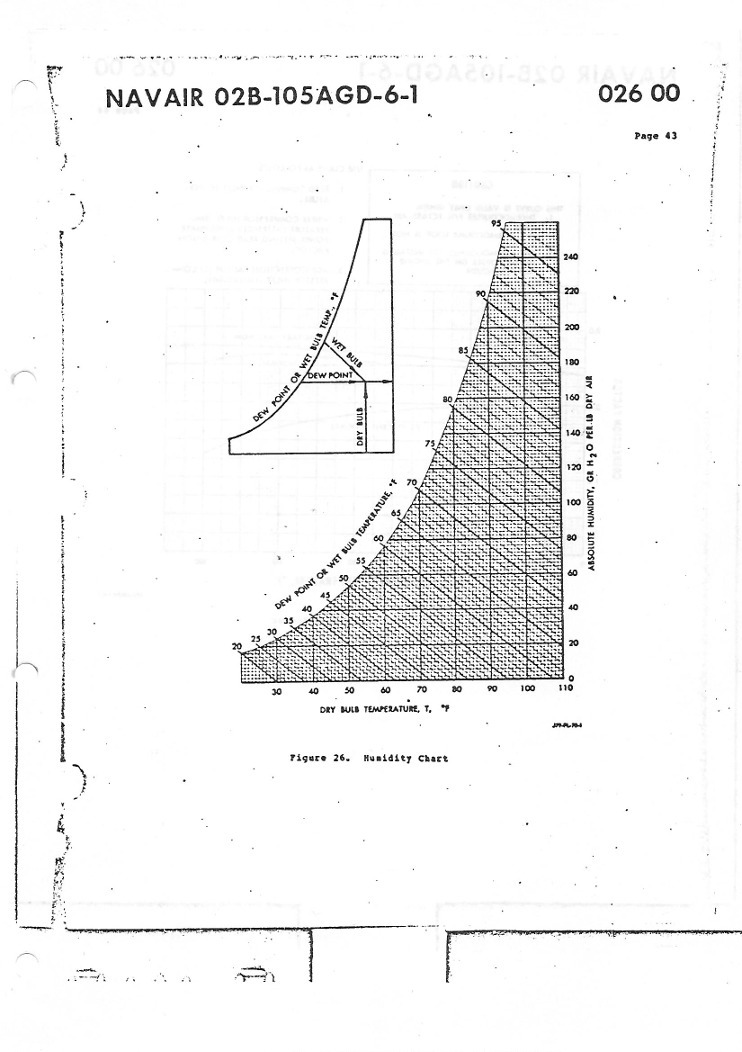
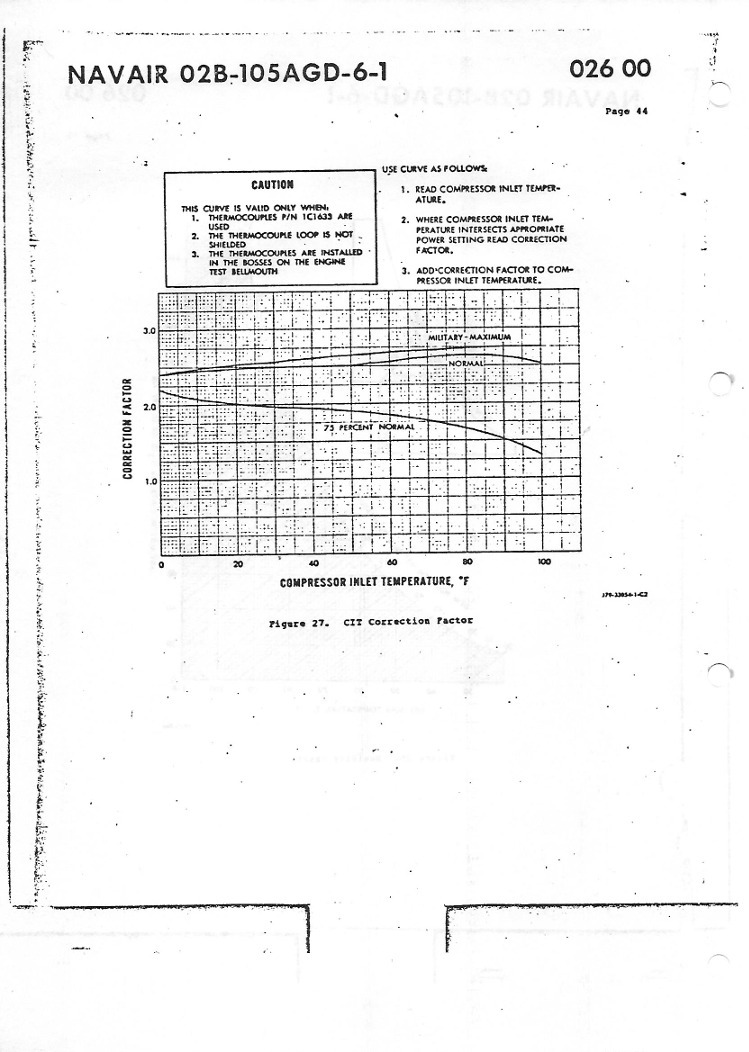
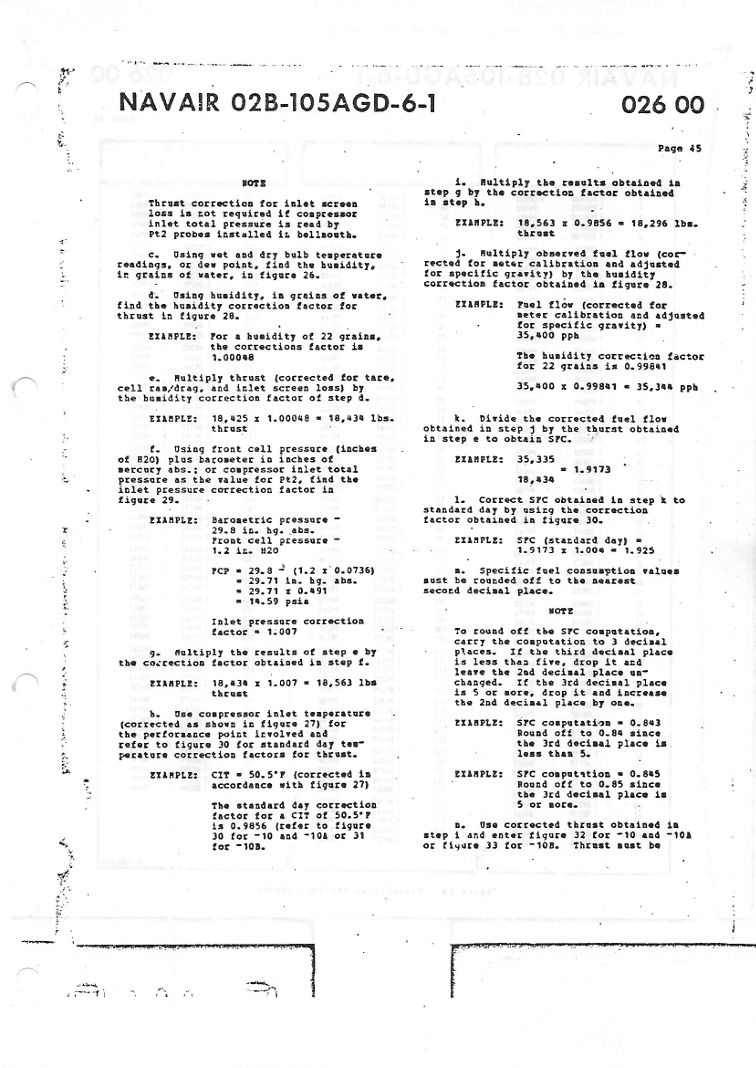
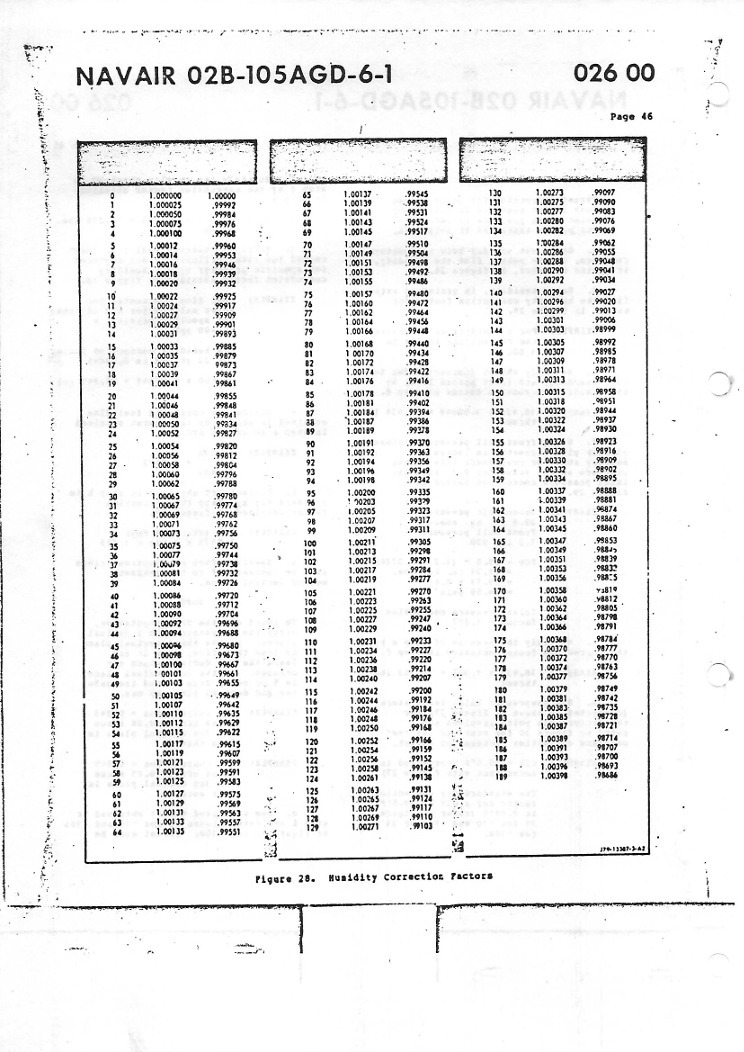
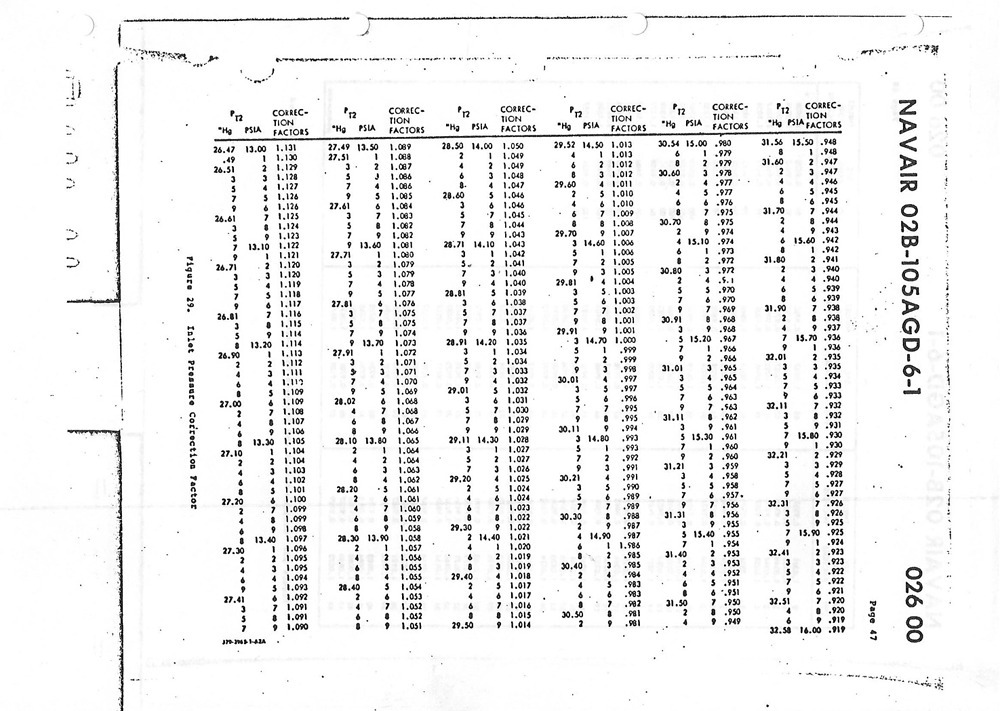
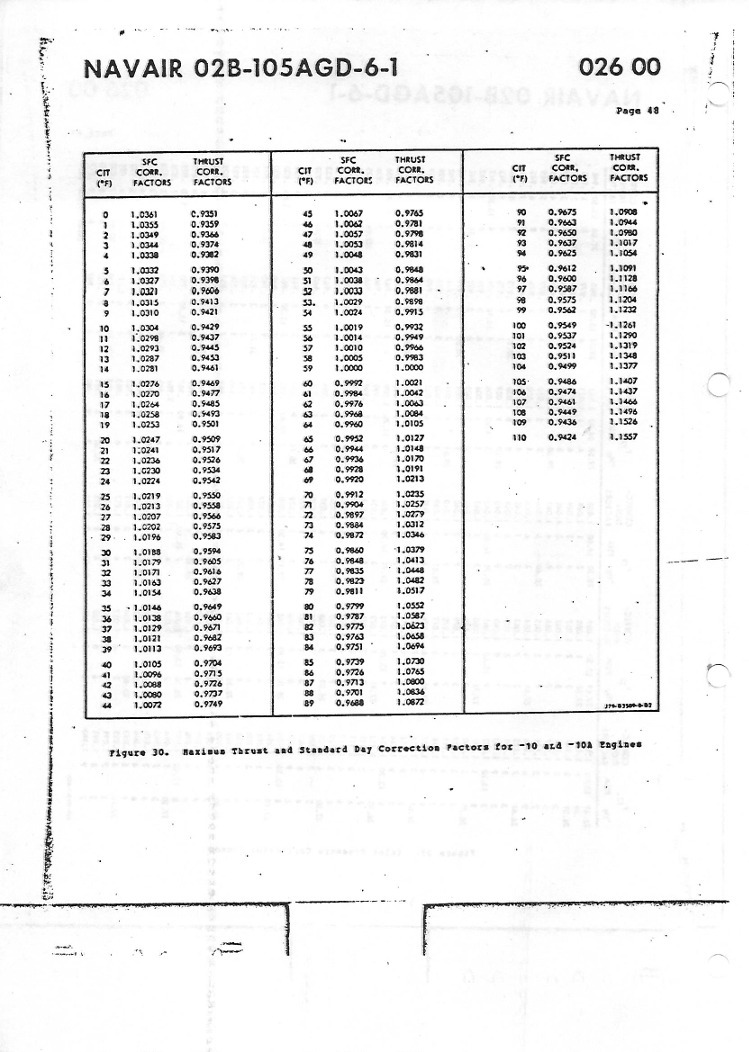
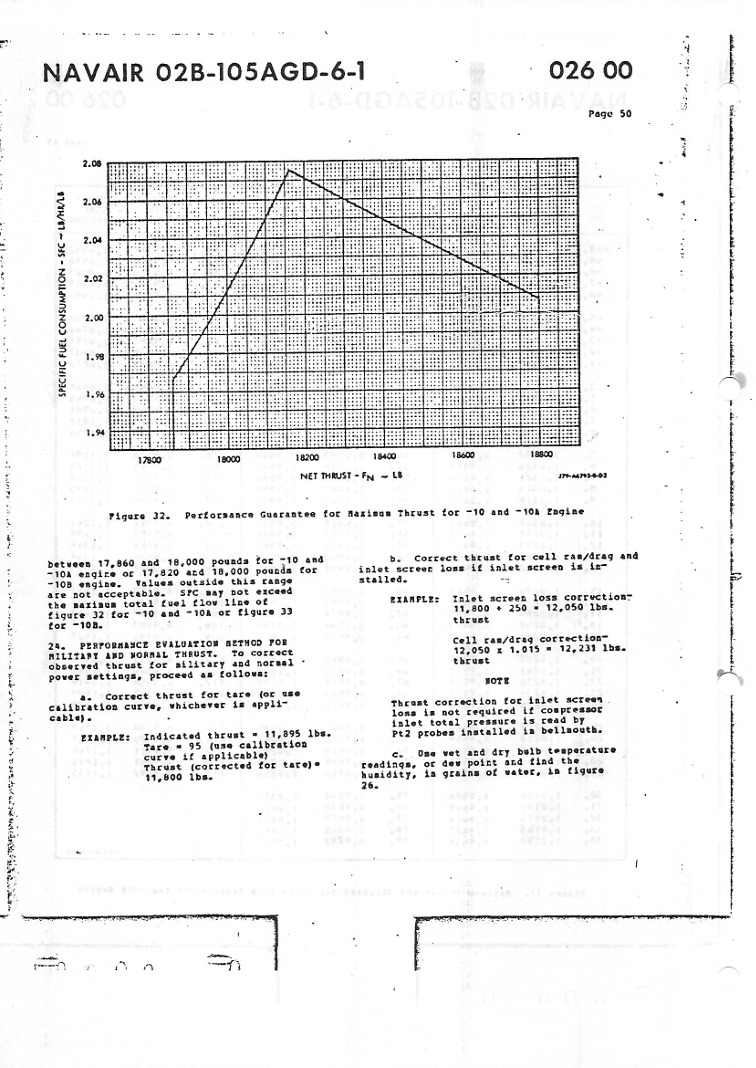
If you want just one example of how this works in practice here is the entire procedure for conducting performance testing of the J79-GE-10 jet engine. The entire testing procedure is 11 pages long, you will notice that less than 3 pages actually concern the testing of the engine, the following 8 and a bit pages are dedicated to taking the readings you measured during testing and converting them to standard day conditions.
Specifically:
- Page 1 is basically just two paragraphs of introduction.
- Page 2 defines the schedule of testing (x minutes at y throttle setting)
- Paragraph 22 on page 3 tells you what readings to take
- Literally the entire rest of the procedure from paragraph 23 onwards is about taking the measurements from paragraph 22 and applying one correction factor after another to them, until eventually you have a number representing how the engine would perform under standard day conditions.
Notice how paragraph 23 literally says “To correct observed thrust to standard day conditions” so yes in aerospace we do in fact convert test measurements to standard day conditions rather than just publish whatever raw testing figures you get.
MIL-STD-810H is for component testing in laboratory environments. It is not relevant to aircraft flight performance testing which is covered by different standards and is calculated using standard day conditions, as defined in international standard atmosphere.
5 Likes
Wait now hold on a second, do you agree that mach 1.06 is the incorrect maximum ASL mach limit for the non E F/A-18s?
please show us when he ever said it isnt
this thread is about the Superhornet if you didnt notice it yet
Dude your first few sources posted are for the F/A-18A and C and the irrelevant acceleration snip if you can even remember such. Even you admit they are different aircraft.
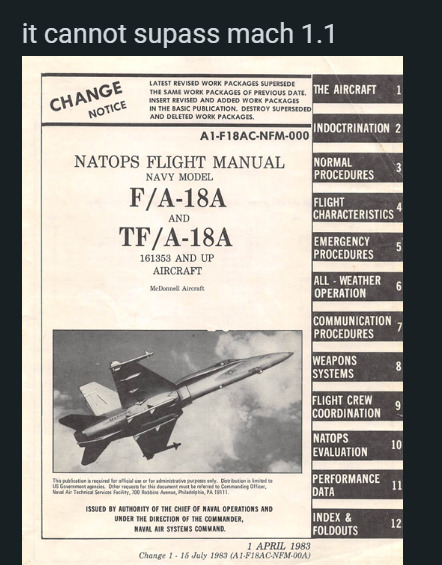
The argument we had was always been about the A and C, and you even sourced for that.
The F/A-18E’s only issues is that it’s intakes are somehow worse than the F/A-18A/C’s, it holds almost mach 1.08 fine.
Edit here since I cannot make new replies because the game requires play time.
Nice job ignoring the rest of the sentence.
Yes it was.
And? They are two totally different airframes, using one’s manual to gauge the other is irrelevant and Kizvy’s later document proves such.
Hey look its the original argument.
nope my first source was a document comparing the legacy to the super hornet that gave clear performance values for both and stated:

and i used that to disprove this claim:
no it wasnt
i brought those sources becasue sources for the F-18E are classified and cannot be posted
so the legacy hornet is the closest thing i had for sources and could post, if you were to actually read the post where you got the screenshot from then you would realize that i said something around those lines as well
ontop of that it was to further disprove the “it should be able to go mach 1.2” claim since a jet limited to mach ~1.07 isnt able to go mach 1.2 on the deck
this thread has always been about the super hornet
and if you dont belive me then read the opening message
1 Like
come on bro, its like a .01 difference. that’s not noteworthy at all