- Yes
- No

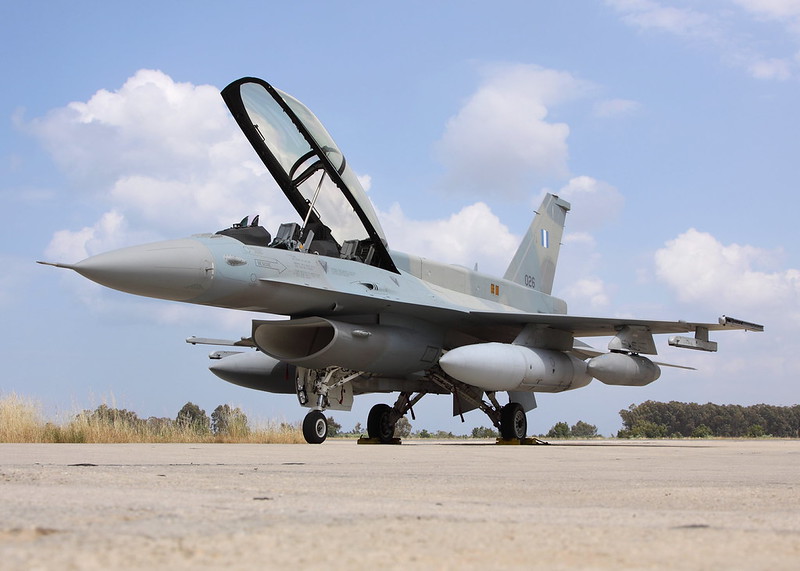
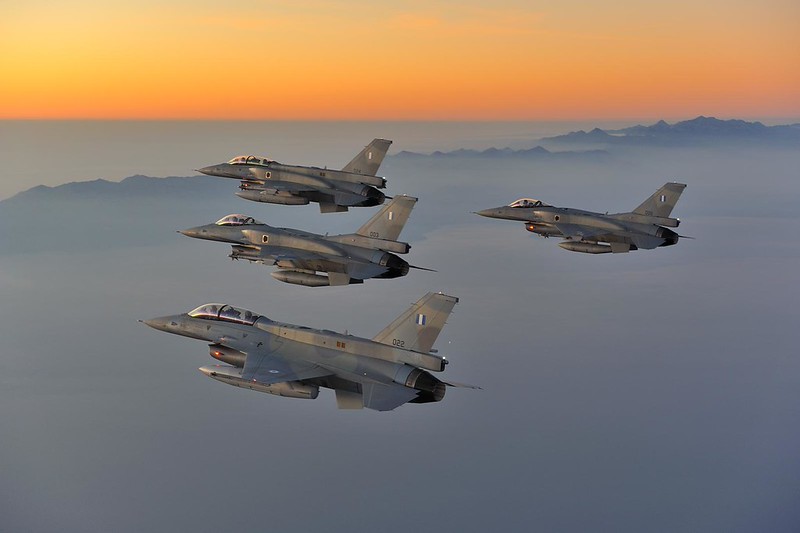
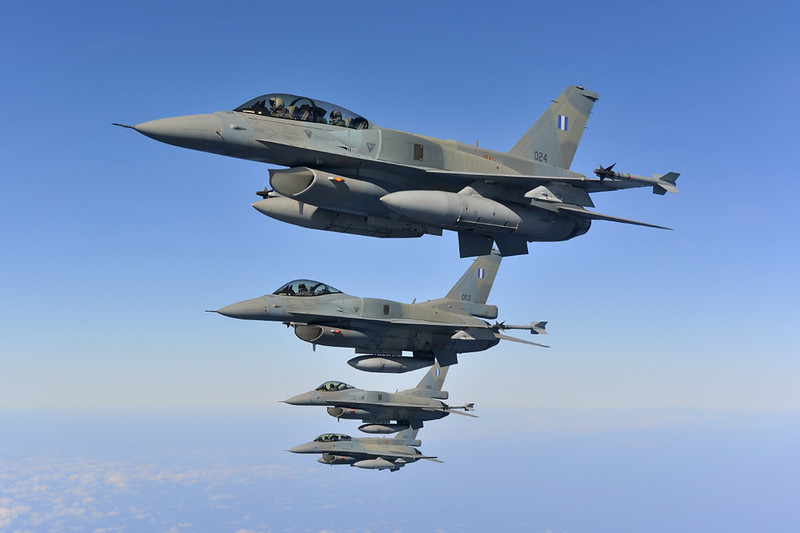
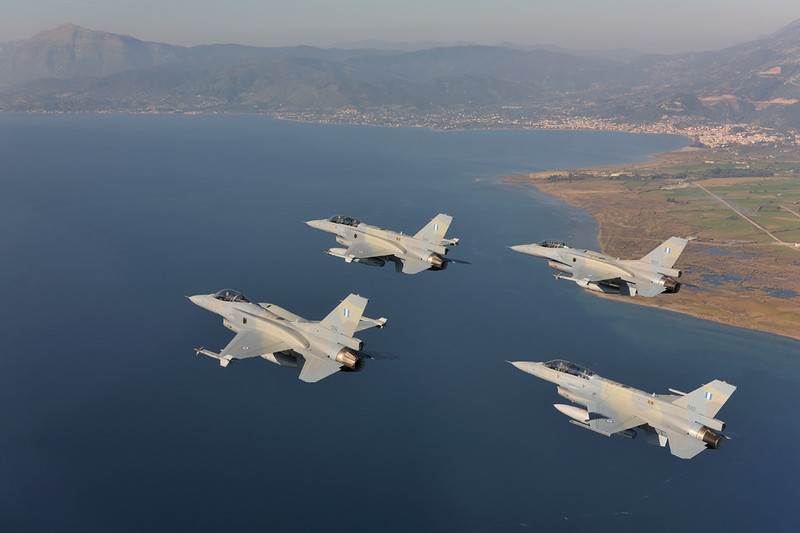
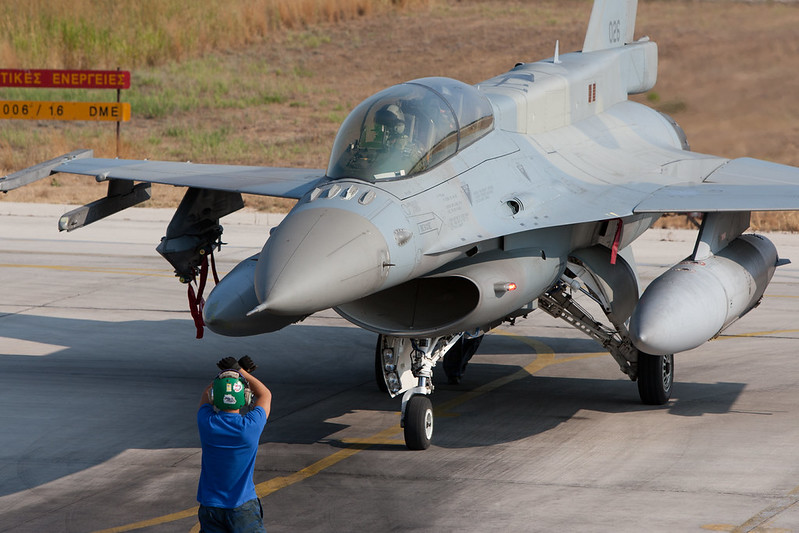
The F-16D Block 52+ Advanced (sometimes referred to as the F-16D Block 52M by the Hellenic Air Force) is a distinct Greek variant of the F-16D Block 52+. It features upgraded electronics and expanded armament options. These were not upgraded airframes — they were newly built aircraft.
The F-16D Block 52+ History
The F-16D Block 52+ is an advanced, export-focused multirole version of the Lockheed Martin F-16 Fighting Falcon. Developed in the late 1990s and early 2000s, it builds on the earlier Block 50/52 standard that first entered production around 1991.
Those earlier Block 50/52 aircraft introduced more powerful Improved Performance Engines (the Block 52 variant uses the Pratt & Whitney F100-PW-229), upgraded avionics and radar (based on the AN/APG-68 series), better countermeasures, and wider weapons options. This included improved support for precision-guided munitions and, in some configurations, the AGM-88 HARM for Suppression of Enemy Air Defenses (SEAD) missions.
The Block 52+ itself was never fielded in pure form by the U.S. Air Force; it was designed primarily for export customers. Greece became the first operator, taking delivery of its initial F-16C Block 52+ aircraft under the Peace Xenia III program on 2 May 2003 after ordering more than 50 jets around 2000–2001. It later received additional advanced examples sometimes referred to as Block 52M.
Poland ordered 48 aircraft (36 single-seat F-16C and 12 two-seat F-16D) under the Peace Sky program in 2003. The first Polish jet flew in March 2006, with deliveries completed by 2008; the type is known locally as the Jastrząb. Israel received a heavily customized two-seat version designated F-16I Sufa (“Storm”), fitted with extensive Israeli avionics, electronic-warfare systems, and other indigenous equipment. Other operators have included Pakistan, Singapore, and later recipients of related Block 52-standard aircraft.
Production of Block 50/52 and 50/52+ airframes continued into the mid-2000s (the U.S. received its final examples around 2005). Many of these aircraft remain in service today and have often received further upgrades toward the F-16V / Block 70/72 standard. The Block 52+ stands as one of the most capable non-AESA “legacy” Vipers before the arrival of the later Block 60 and full Viper configurations.
The Greek upgrade of the F-16D Block 52+
The F-16C Block 52+ Advanced is a distinctly Greek development of the standard F-16C Block 52+. While the earlier Peace Xenia III programme was Greece’s largest single F-16 order and brought the overall fleet to 130 aircraft, Peace Xenia IV carried special weight as the last acquisition of third-generation fighters.
Compared with the Block 52+ jets received under Peace Xenia III, the new aircraft brought a number of extra capabilities:
- Fully fitted and operational Advanced Integrated Self-Protection Suite (ASPIS) II
- Digital video recording (DVR) of the multifunction displays, HUD, Joint Helmet-Mounted Cueing System (JHMCS) and targeting pod, paired with an advanced ground debriefing system
- Colour moving-map navigation display (with the option of static imagery)
- Fully installed and operational JHMCS
- Advanced mechanical integration of the IRIS-T missile, adding three extra capabilities
- Enhanced performance with the AIM-120C-5 AMRAAM
- Integration of a reconnaissance pod together with expanded functionality for the LANTIRN pods
- Link-16 datalink for better situational awareness
Deliveries ran from 2008 to 2009, with the first flight taking place in December 2008. The estimated cost was around €1.1 billion and was covered by a government-to-government agreement that delivered 100 % offsets. These included Lockheed Martin co-production work with Hellenic Aerospace Industry (EAB) for F-16 components made in Greece, plus the transfer to Greece of the modernisation and maintenance of roughly 5 000 U.S. military vehicles previously used in Iraq.
Supporting infrastructure for the Hellenic Air Force was also significantly upgraded. Two three-bay maintenance hangars were built for the 335 and 336 Squadrons. Each hangar features a main aircraft bay of 1 180 m², plus offices, workshops, plant rooms, dormitories and other spaces totalling 1 190 m², along with aircraft access aprons of 2 076 m² (335 Squadron) and 3 120 m² (336 Squadron). Two squadron headquarters buildings, each measuring 1 050 m², were also constructed. In addition, a dedicated engine workshop of 2 280 m² was completed; it includes a 1 390 m² main hangar fitted with two dual-load overhead cranes, plus offices, workshops, plant rooms and auxiliary spaces (890 m²) and external engine handling aprons of 1 320 m².
Technical Specifications
More Info
- Crew: 2
- Length: 15.06 m
- Wingspan: 9.96 m
- Height: 4.88 m
- Empty Weight: approximately 8,573 kg (18,900 lb )
- Max Takeoff Weight: approximately 19,187 kg (42,300 lb)
- Powerplant: 1x Pratt & Whitney F100-PW-229 turbofan
- Dry thrust: 79.2 kN (17,800 lbf)
- Thrust with afterburner: 129.7 kN (29,160 lbf)
- Max Speed: Mach 2.05 (2,175 km/h) at high altitude / Mach 1.2 at sea level
- Service Ceiling: 15,240+ m (50,000+ ft)
- Radar: Northrop Grumman AN/APG-68(V)9
Greek F-16 Blocks Visual Differences
More Info
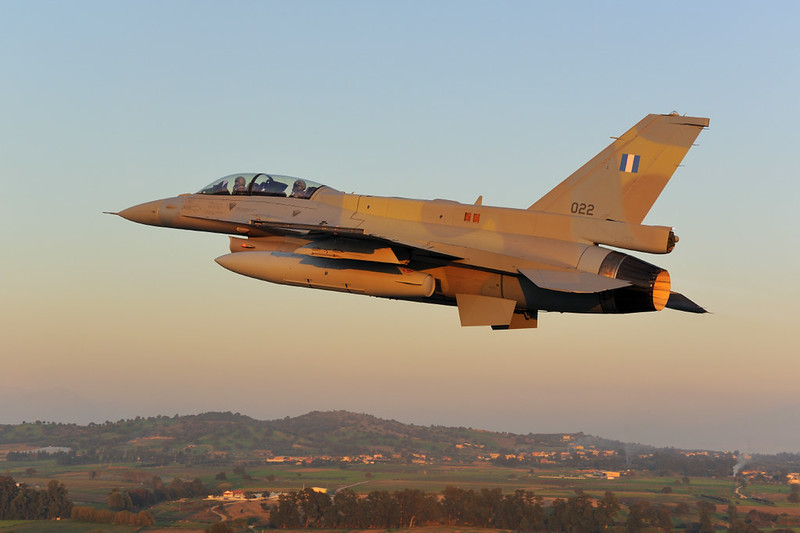
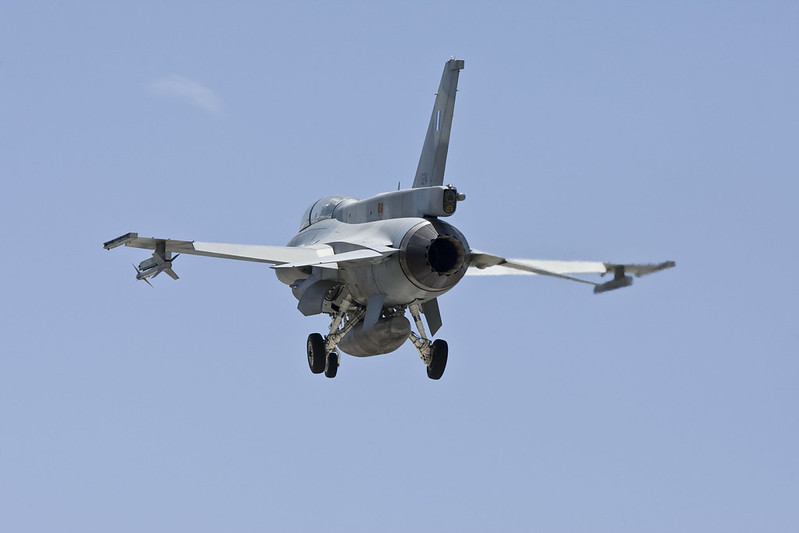
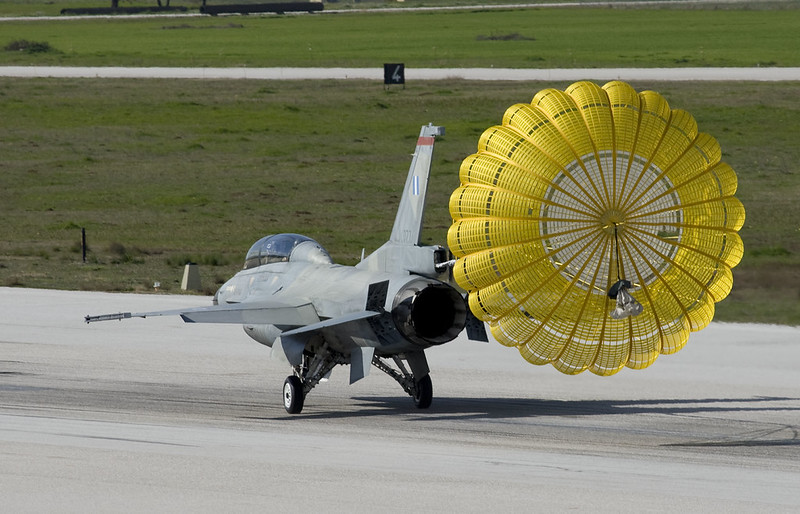
All Greek F-16 Fighting Falcons, in addition to their distinctive “Ghost” camouflage, are fitted with a tail-fin root extension that houses the drag parachute. Mounted on this extension is also the rearward-looking ASPIS II probe for detecting incoming missiles.
Every Hellenic F-16 except the Block 30s carries the AN/APX-113 IFF interrogator antennas ahead of the canopy. The Block 30s are unique among the Greek fleet in having an intercept light on the starboard side of the fuselage, positioned just below and forward of the canopy.
Aegean Ghost Camouflage
More Info
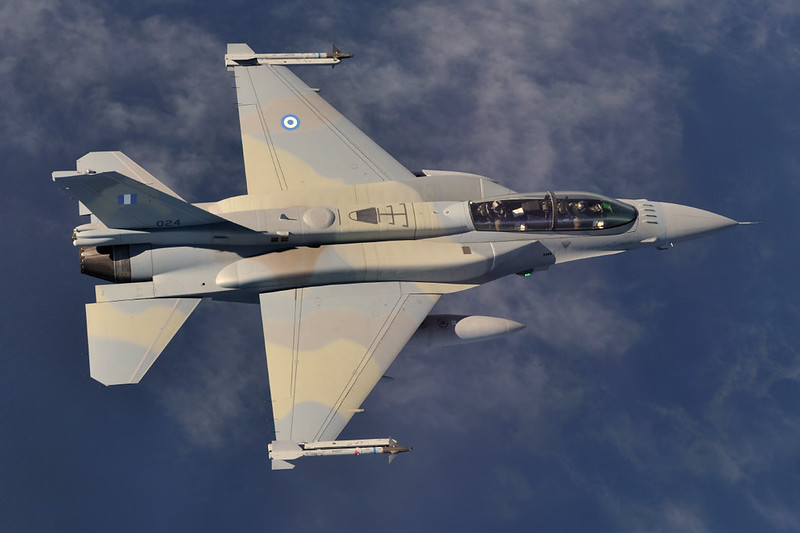
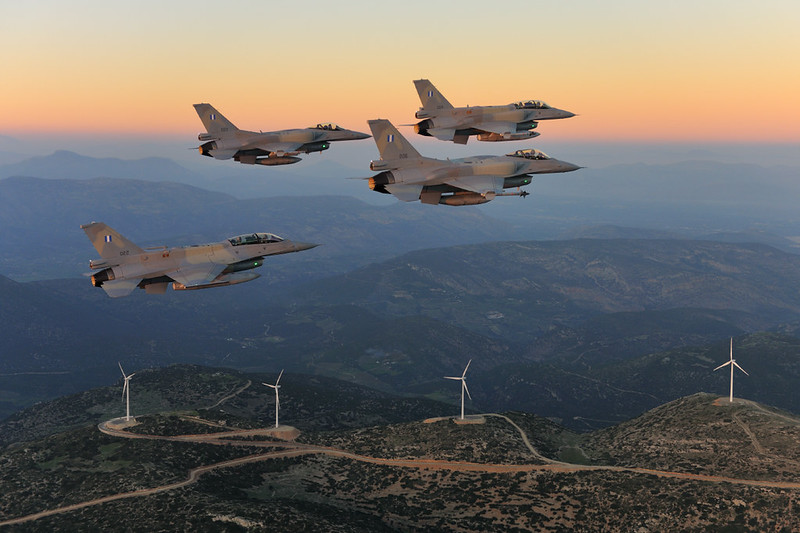
The color scheme of the HAF F-16s is known as the “Ghost” or “Aegean Ghost” scheme and is one of the most interesting in modern military aviation. This distinctive camouflage was first tested on several aircraft such as the Mirage F-1CG but was never used. It was adopted on some F-5As for a short period of time just before their retirement, but more extensively used on all the F-4E Phantom IIs after their AUP upgrade. All the F-16s in Hellenic service wear this scheme but in this case this a special coating has been applied.
This coating is a new technology called “Have Glass” which reduces the Radar Cross Section (RCS). The paint included in this Have Glass program is called Pacer Gem. Used on the later airframes (52+ and 52M), the coating alters the appearance of the paint visually. It is very rough to the touch and contains shiny flakes, almost like metal flake paint.
On the F-16 Block 52M the Have Glass III coating is much cleaner, but on the F-16 Block 52+ the Have Glass II coating has after all these years resulted in a distinctive grey and weathered camouflage.
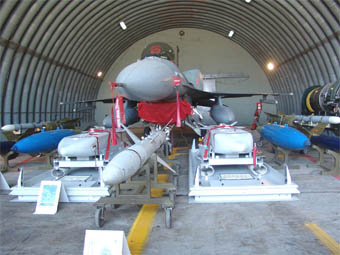
Armament
More Info
Air to Air missiles:
ΑΙΜ-120 B (ΑΜRΑΑΜ)
ΑΙΜ-120 C-5 (ΑΜRΑΑΜ)
ΑΙΜ-120 C-7 (ΑΜRΑΑΜ)
AIM-2000 (IRIS-T) Infrared Imaging Seeker – Tail
ΑΙΜ-9 L/I
ΑΙΜ-9 L/I-1
ΑΙΜ-9MAir to Ground Munitions:
AFDS (Autonomous Free-flight Dispenser System)
CBU 58 & 71
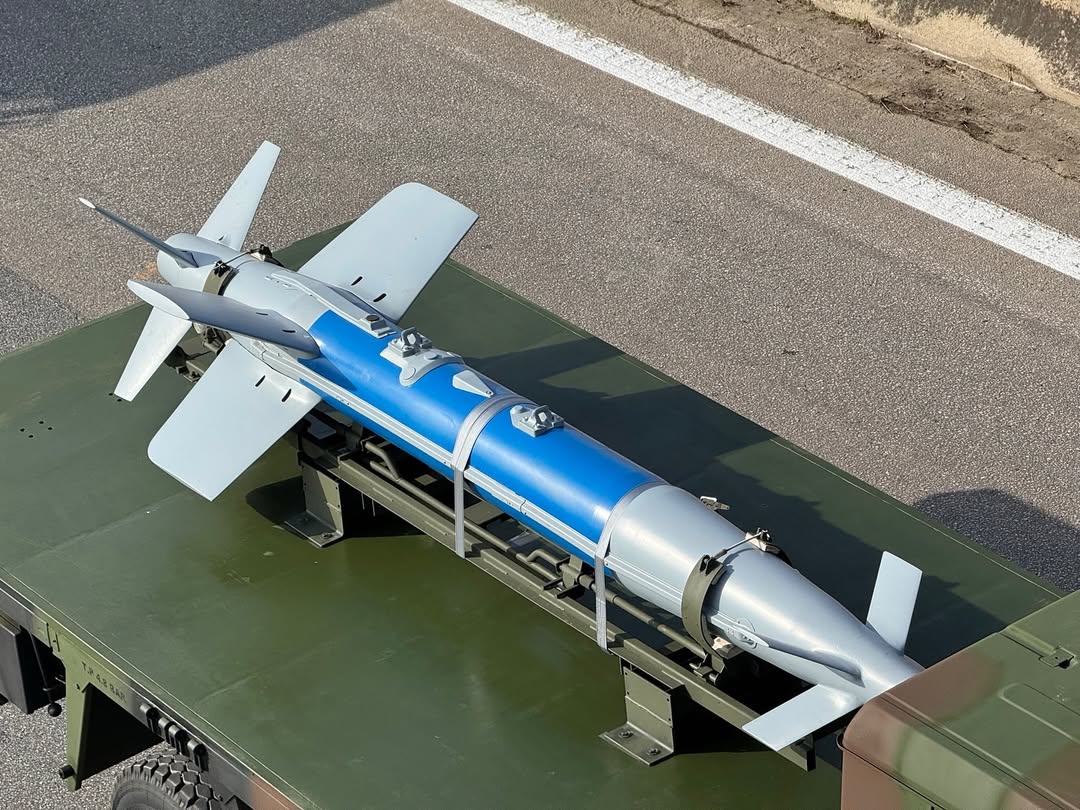
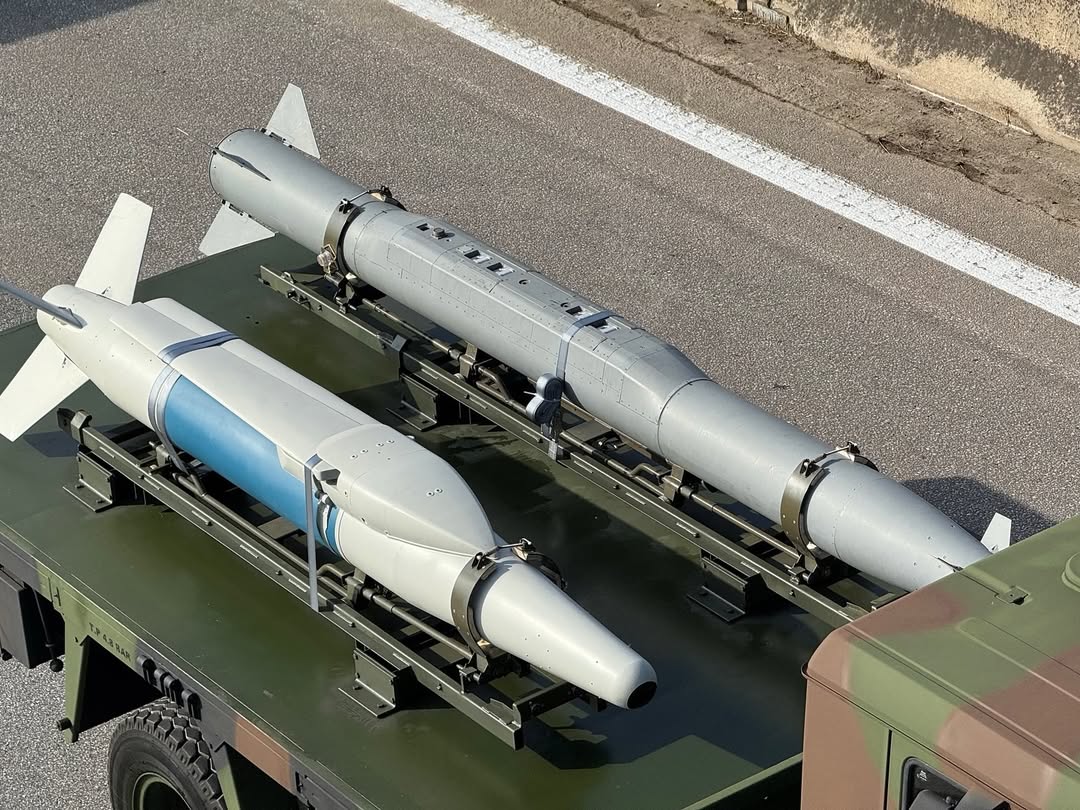
GBU-50 EP II
GBU-24 PW III
GBU-10-12-16 (Guided Bomb Unit)
GBU-31 JDAM (Joint Direct Attack Munition)
AGM-65 A/B
AGM-65 G
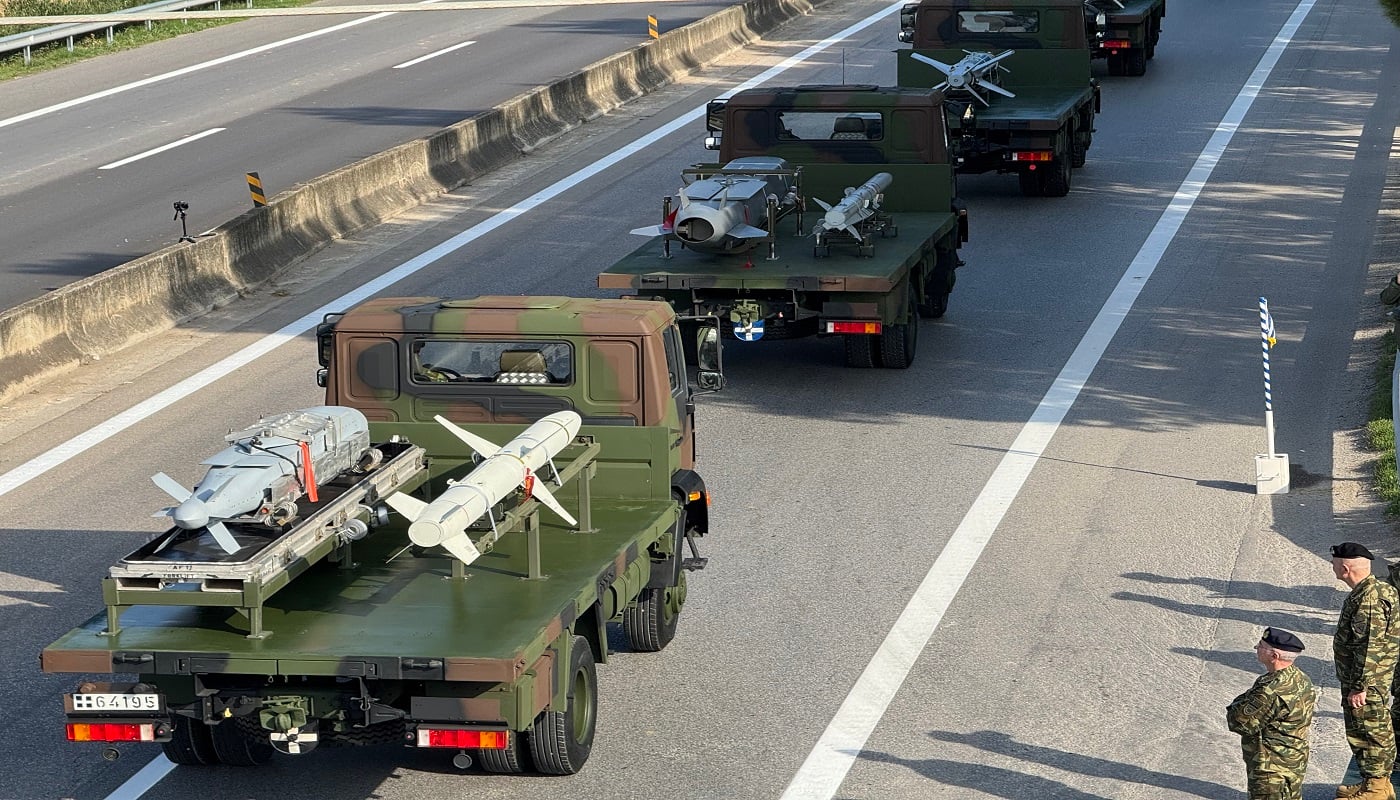
AGM-154 Joint Stand Off Weapon (JSOW)
SPICE 1000
SPICE 2000
RAMPAGEDumb bombs
Mk-81 General Purpose (GP) Bomb
Mk-82 General Purpose (GP) Bomb
Mk-82 500lb / Mk-15 Snakeye
Mk-83 General Purpose (GP) Bomb
Mk-84 General Purpose (GP) Bomb
Mk 36 Destructor bomb
MK-20 ROCKEYE
BLU-109/B (Bomb Live Unit)
Μ-129 Leaflet 250 lbs
M-117 General Use 750 lbsAnti Radiation Missiles:
AGM – 88 High-speed Anti-Radiation Missile (HARM)Internal Gun:
M61A1 Vulcan 20 mm six-barrel rotary cannon
More Photos

Sources: