I’m not even gonna continue this after without you having a proper info on what truly happened
I didn’t bother because of that document was saying. So I didn’t bother asking and was waiting for someone to answer and you seem know to what you’re talking about sometimes witch is why I asked you but know I see you don’t
Careful for what you’re wishing for there, unless you want to use TWS in medium to close range dogfights, that will make the F-14 even harder to use its main weapon system than ever…
I would like to see they model compressor stalls at the least in Air SB but I don’t know they will do that.
Even if compressor stall were modeled using a mechanism similar to that of the DCS, it wouldn’t be such a big problem. This is because compressor stall does not necessarily lead to a flat spin.
For anyone who doesn’t want to read the full bug report, here’s a quick explanation of the issue.
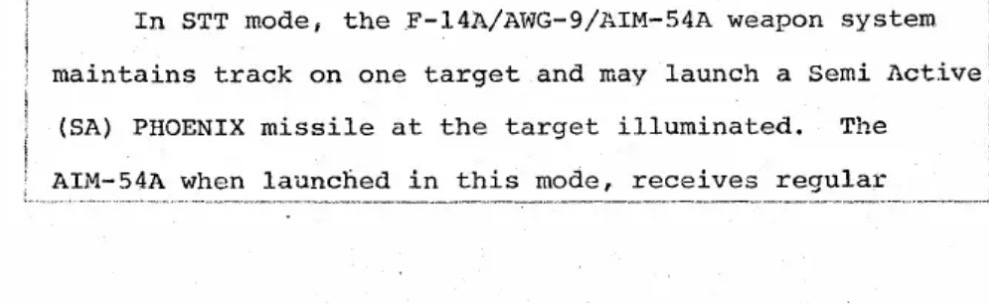
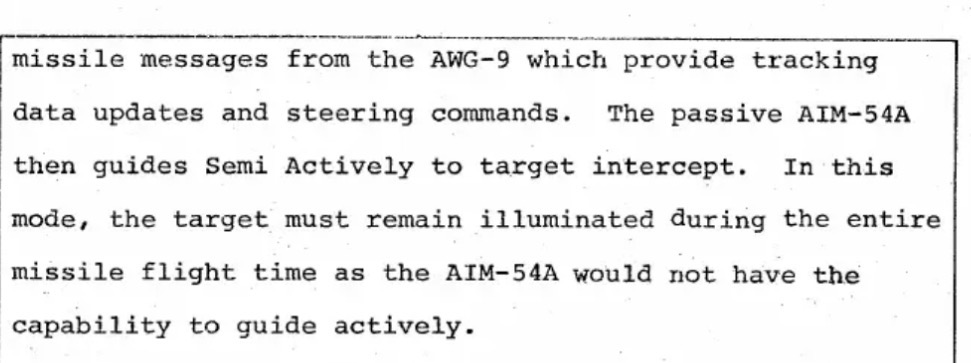
The AIM-54 Phoenix is supposed to behave differently depending on whether it is launched in PD-STT or P-STT.
In PD-STT, the missile uses continuous SARH guidance. This means the F-14 must maintain its radar lock on the target throughout the missile’s flight, all the way until impact. The missile does not automatically switch to its own active radar during the terminal phase. If the F-14 loses the lock, the missile loses the radar support it needs for guidance.
In P-STT, the missile operates in ARH mode shortly after launch. This means it must detect and acquire the target using its own radar seeker. If the seeker fails to acquire the target, the missile cannot guide properly toward it and will probably end up getting trashed. Unlike PD-STT, the F-14 does not need to maintain the radar lock after launch.
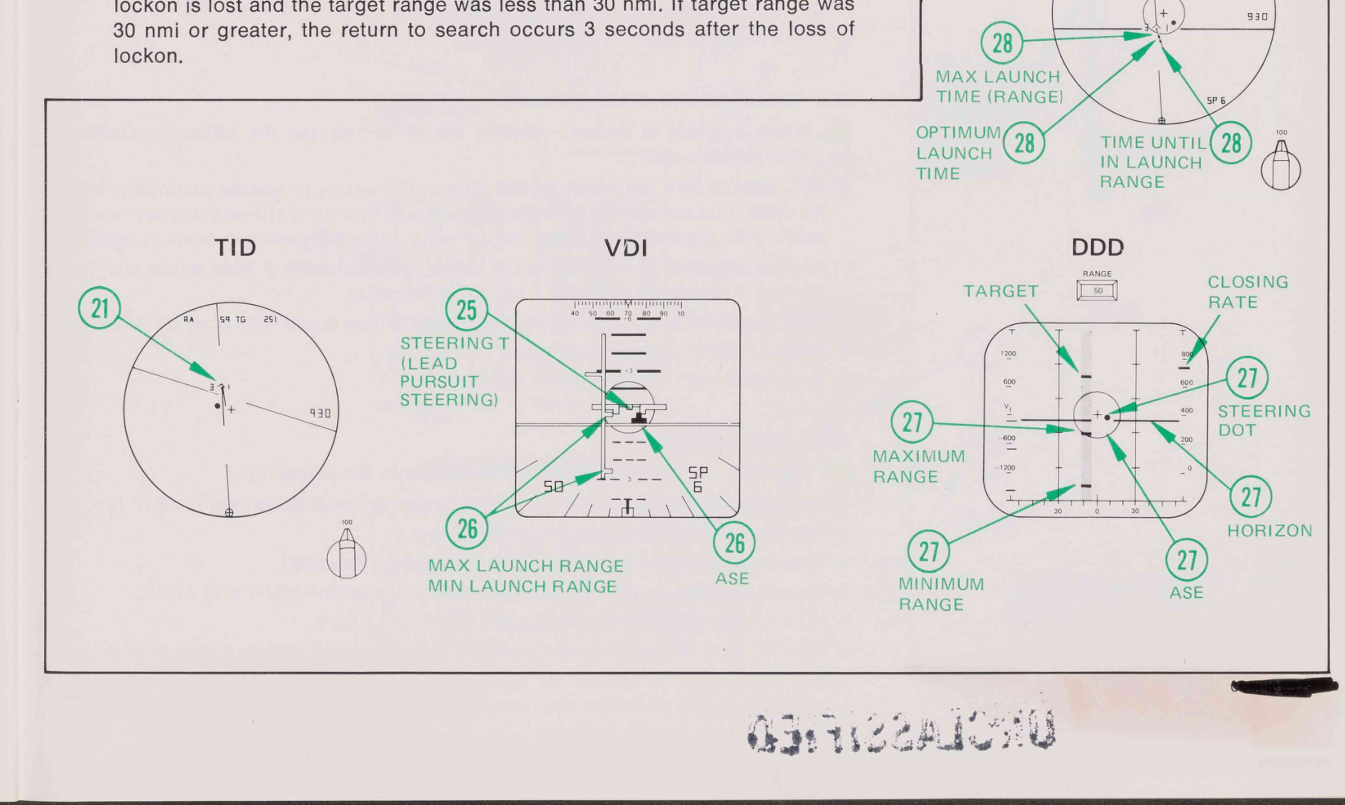
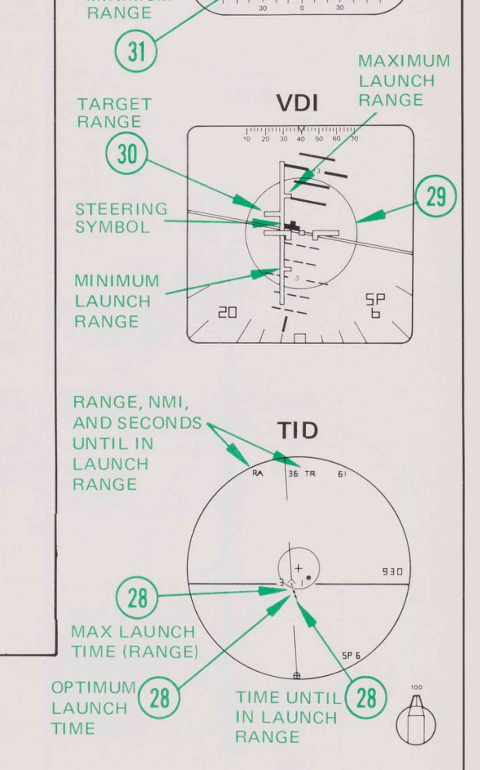
These capabilities existed on the real AIM-54 and are documented in Hughes Aircraft Company’s technical publications from 1973, as well as other sources from the 1970s.