Hello everyone
Seeing as new antiships missiles recently appeared in the files (YJ family) and since Exocet has been in the files for quite a while now, not to mention the addition of Rafale M, I decided to create this thread dedicated to Exocet (and potential successor) performances and history.
First things first, the names : Exocet missile family follows a simple pattern, like for example :
AM-39
- The 2 first letter designates where it is launched and what it is launched at. There is 3 possibilities :
- AM => Air-Mer (Air to sea) refers to the missiles launched from an aircraft
- SM => Sous-marin-Mer (Submarine to sea) refers to missiles launched by submarines
- MM => Mer-Mer (Sea to sea) refers to missiles launched from ships
- The number initially was supposed to refer to the range (39 km), but it was found in testing that the missile could reach further than that depending on conditions. The variant MM-40 for example has far more than 40km of range, and this number now seem to designate a major version of the missile.
All Exocet missile use active radar homing + inertial navigation for guidance, with the later variants adding GPS to the mix.
Now let’s dive in the different versions of the missile :
Variants
-
AM-39 (latest : Block 2, Mod 2)
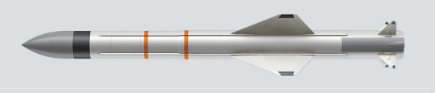
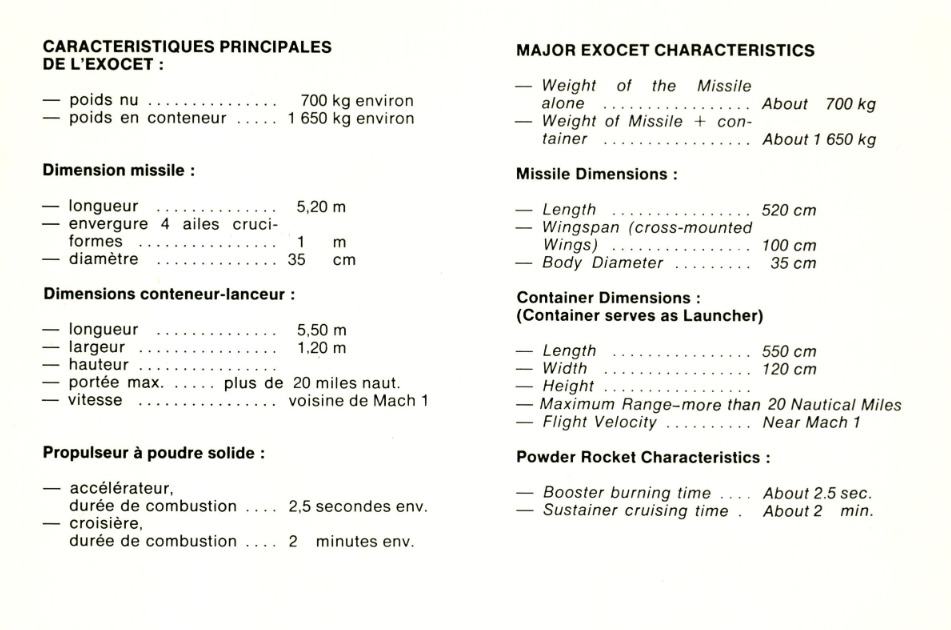
- Weight : 670kg
- Length : 4.69m
- Diameter : 350mm
- Speed : High subsonic, Mach 0.93 often cited
- Warhead : SAPHE with a total weight of 165 kg
- Range given between 50 and 70km depending on launch parameters
- This version saw no major refit to increase its range, but saw different modifications to improve its seeker resistance to jamming and countermeasures.
- Source : https://www.mbda-systems.com/sites/mbda/files/2024-06/2018%20EXOCET%20AM39%20datasheet.pdf
-
SM-39

- Weight : 655kg
- Length : 4.69m
- Diameter : 350mm
- Speed : High subsonic, Mach 0.93 often cited
- Warhead : SAPHE with a total weight of 165 kg
- Range limited to 40-50 km
- This version, just like AM-39, saw no major refit to increase its range, but saw different modifications to improve its seeker resistance to jamming and countermeasures. The missile is fired via the torpedo tubes of the submarine using a torpedo shaped capsule. It is then jettisoned of said capsule once it reaches the surface, and begins its usual journey to its target. Targetting is either done using the perisocpe of the submarine carrying it, or using the passive sonar if completely submerged.
- Source : https://www.mbda-systems.com/sites/mbda/files/2024-11/2024-exocet-sm39-datasheet.pdf
-
MM38
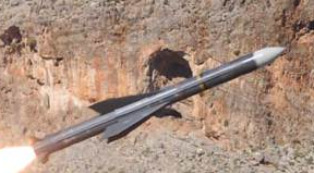
- Weight : 670kg
- Length : 4.69m
- Diameter : 350mm
- Speed : High subsonic, Mach 0.93 often cited
- Warhead : SAPHE with a total weight of 165 kg
- Range limited to ~40 km
- First variant of the Exocet for ship to ship uses and first variant in general
-
MM40 Block 3C
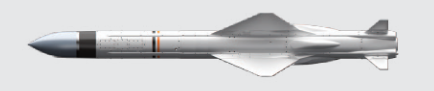
- Weight : 780kg with booster, 530kg without
- Length : 4.70m
- Diameter : 350mm
- Speed : High subsonic, Mach 0.93 often cited
- Warhead : SAPHE with a total weight of 165 kg
- Range : around 250km
- Latest addition to the ship to ship family, the missile features air breathing engine, increasing the range drastically. The missile also features a booster.
- Source :
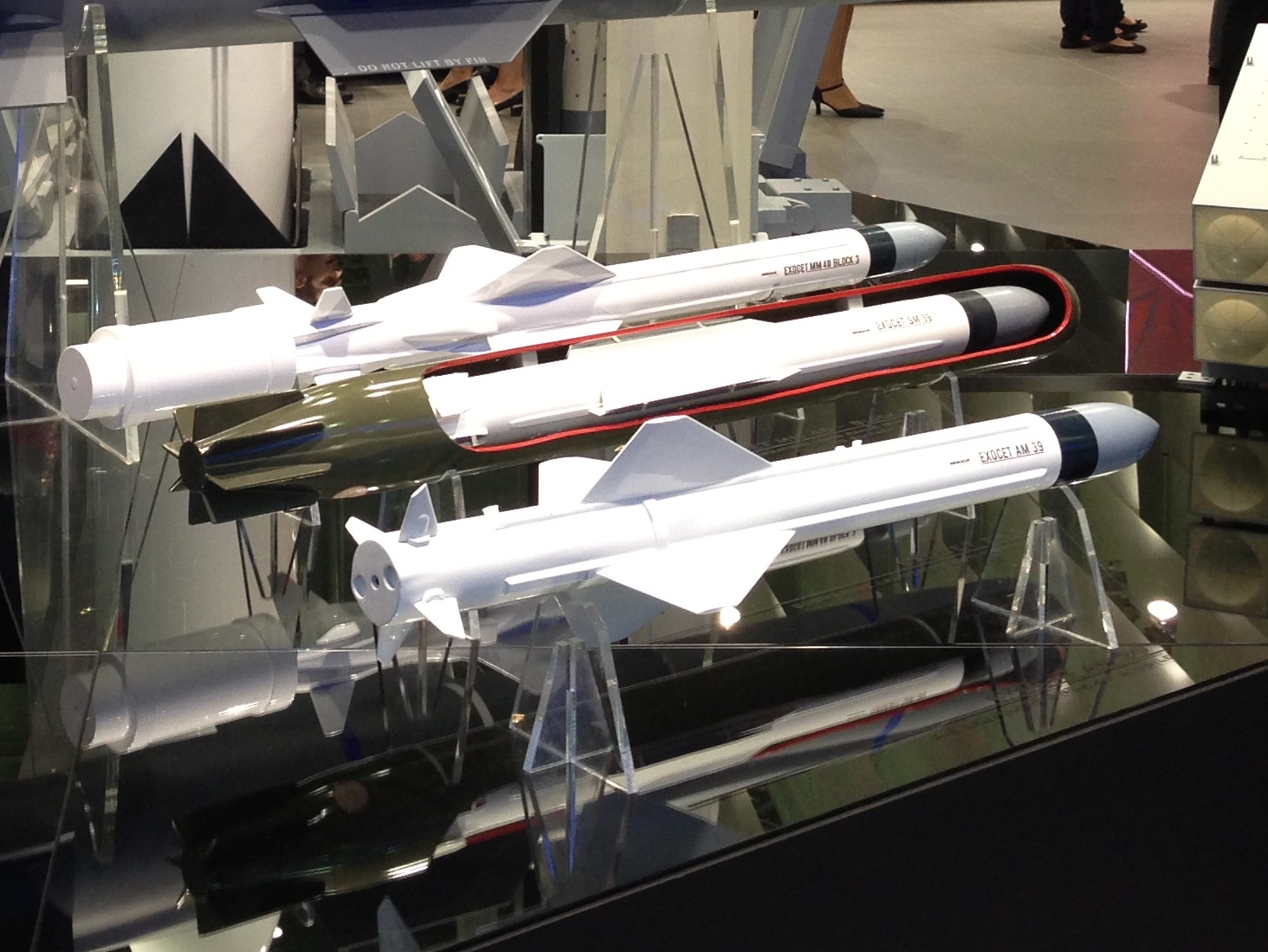
Here are 3 mockups of the lastest missiles for each variants :
History
Exocet’s development started in the late 1960s, following the success of th AS-33 program which was later partly used for the AS-34 Kormoran program as well. Both Exocet and Kormoran were developped in parallel and share many features.
Exocet first entered service in the french navy in 1974 (in the form of MM38), followed by AM39 in 1979 and SM39 in 1985. The most well known variant to this day is the AM39
Falklands : the first use of the missile in active combat
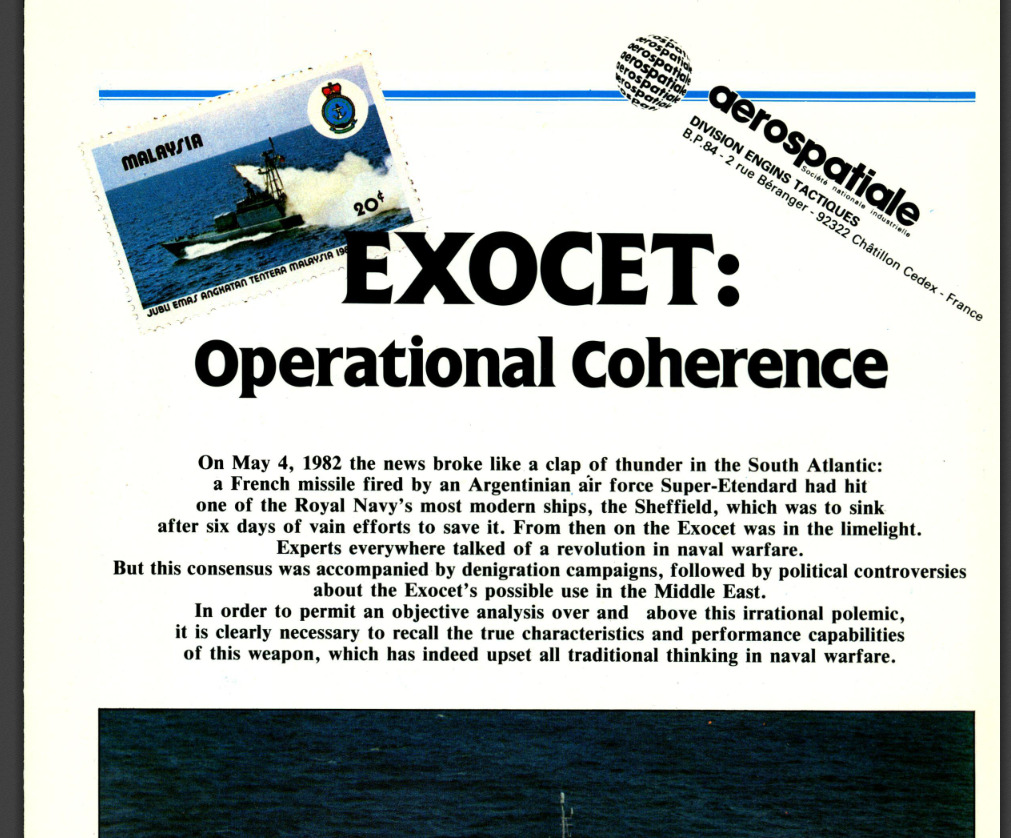
On the 4th of may, 1982, while a british carrier group is patrolling south east of the coast of the falklands islands, 2 Argentinian Super Etandards equipped with 1 Exocet each engage HMS Sheffield, one of the type 42 destroyers forming the anti-air screen west of the 2 carriers HMS Invincible and HMS Hermes. 1 of the missiles will eventually hit HMS Sheffield, while the other will ditch into the sea, either losing lock or not having enough propellant. No evasive action was taken by HMS Sheffield during the engagement, and she will eventually sink about a week later due to flooding in the scar left by Exocet.
An interesting video on the subject :
https://www.youtube.com/watch?v=48oEzRlEB0s
on the 25th of May, SS Atlantic Conveyor is also hit by 2 Exocet missiles and eventually sinks.
5 years later, during the Iran-Irak conflict, USS Stark was also engaged by either a modified Mirage F1 or a modified Dassault Falcon 50 carrying 2 exocets. Both missiles found their mark, as the US ship was not expecting hostile activity in this area at the time and did not take evasive actions in time.
Early variants of Exocet and more generally sea skimming missiles proved to be a threat to any navy during this time. Exocet experienced some upgrades to its seeker and to its propulsion (on the sea launched variants) and eventually became a widespread missile around the world, with 4000 missiles produced in total as of 2024.
Over time however, this missile would have to face more capable interception systems. New models of antiship missiles around the globe also started to appear, being faster and boasting a longer range.
In order to address this new environment, MBDA UK and MBDA France started working on a family of missiles at the request of their respective governments. The program, initially named FC/ASW in the UK and FMAN/FMC in France eventually became Stratus. This new family will be made up of 2 main missiles :
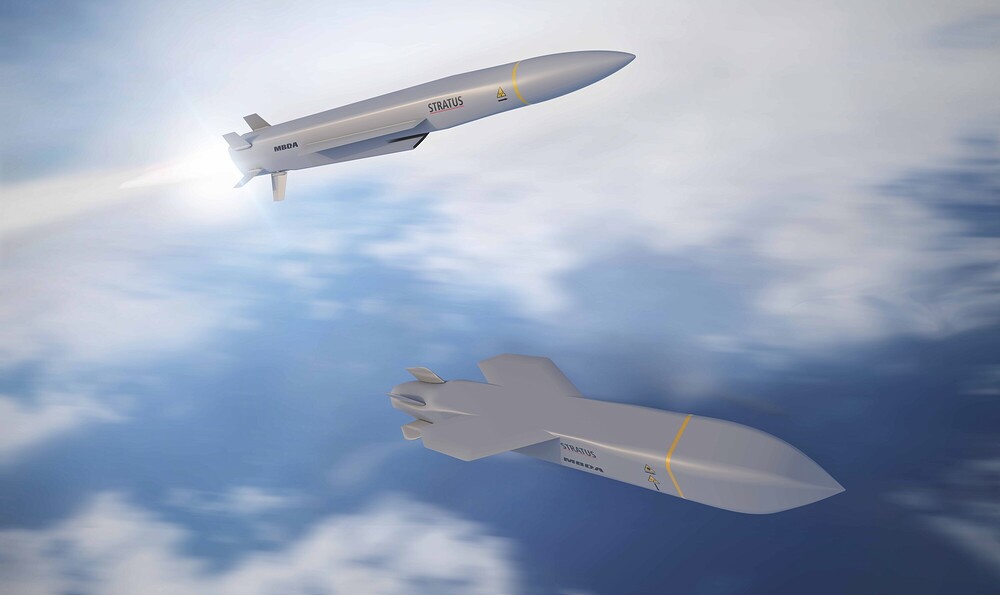
- Stratus LO (Low Observable) : mainly developped by the UK, which put an emphasis on a stealth, and long range missile (probably around 1000km). This version is also the successor of Storm Shadow / SCALP cruise missile
- Stratus RS (Rapid Strike) : mainly developped by France, which put an emphasis on a fast missile (mach 3), more similar to Soviet, indian or chinese type of antiship missiles. Stratus RS is also meant to carry different tasks : antiship, SEAD, and potentially anti AWACS, making it more capable than Exocet.
These 2 missiles, while quite different in appearance, will share many internal components
Illustration : Stratus LO at the bottom and Stratus RS at the top:
While the Stratus program is going on, it is still uncertain if these new missiles can fit in a Submarine. To tackle that issue, MBDA unveiled a new variant of the SM Exocet : SM40. Based on MM40 Block 3C, this missile is shortened compared to its surface launched counterpart because of limited space. Its range is therefore limited to 120km and not 250. It is only meant as a stop gap while more capable solutions are being developped, be it a new missile entirely or a derivation of Stratus.
Source : EXOCET SM40: a new game changer in the EXOCET family for mastery of the seas | MBDA
Source : MBDA unveils STRATUS for future cruise and anti-ship capabilities | MBDA
Videos
MM40 :
https://www.youtube.com/watch?v=8elfKsYXLW0
https://www.youtube.com/watch?v=KGijldcPUr4
Additional documentation
Thank you to @Macron-Spokesman for sharing :
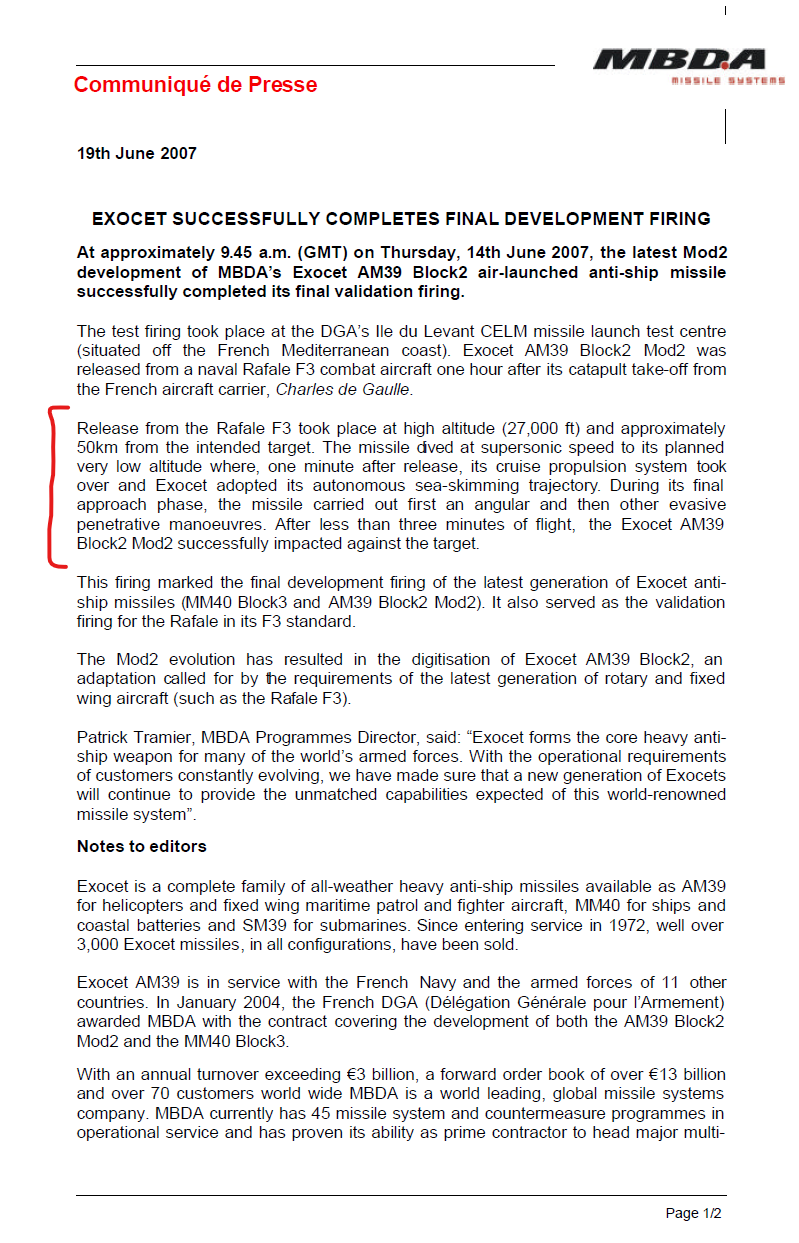
AM-39 Block 2 Mod 2 additional info from MBDA :
Coastal exocet :
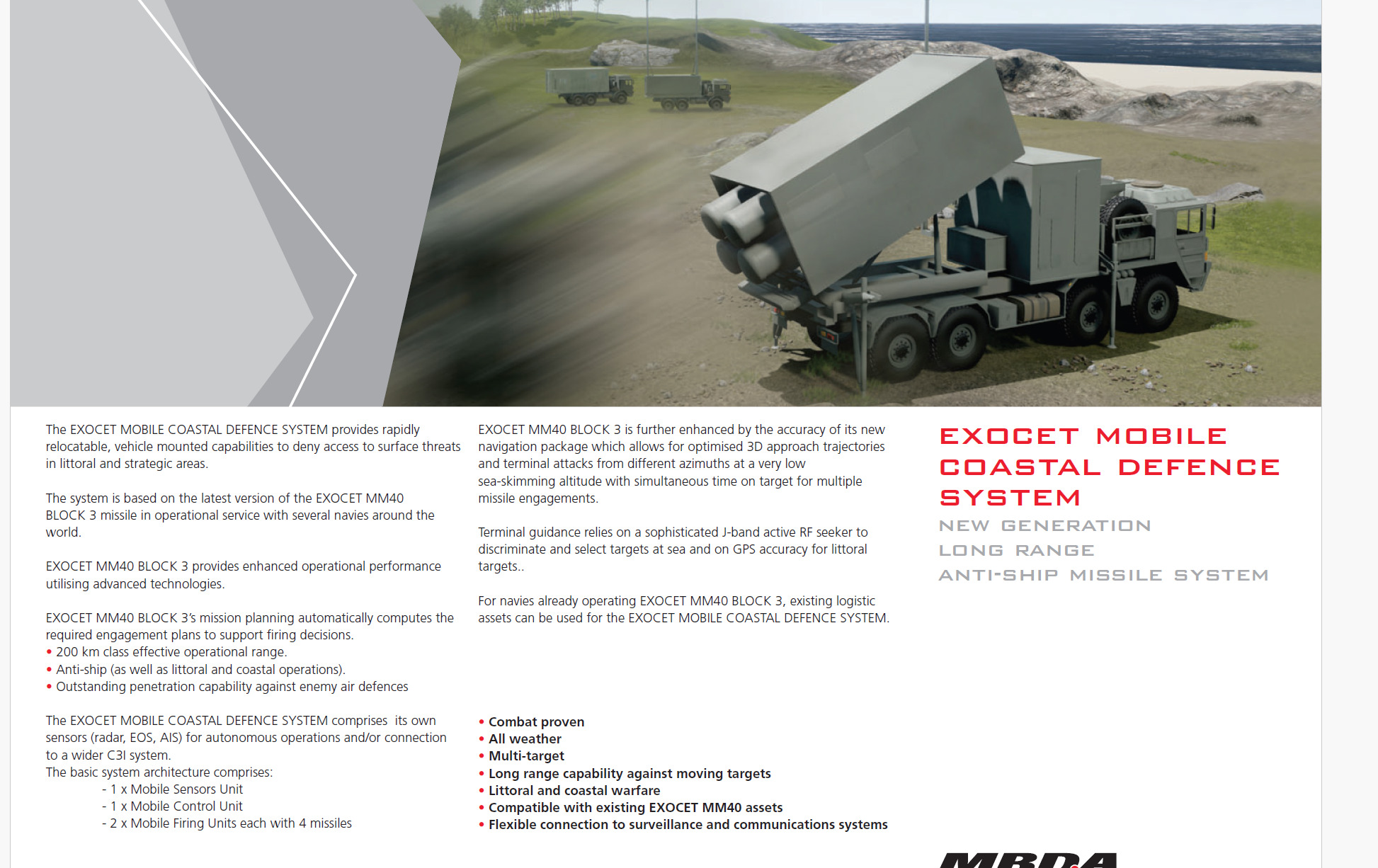

MM38 related doc :