You can’t really see the thrust behavior in that vid sadly as the thrust depends on the geometric form of the fuel and not the fuel itself so the smoke trail doesn’t really change. Also the point of view and quality make it impossible to judge the speed/acceleration behavior :/
Yeah, obviously, but what I’m saying is that it doesn’t seem to behave the way we described earlier, although we can’t know for sure either
Does seem to do basically the entire turn in the first few seconds, and then just accelerate in a straight line to intercept instead of pulling a constant turn
3 Likes
Exactly, and that’s what I’ve been trying to replicate.
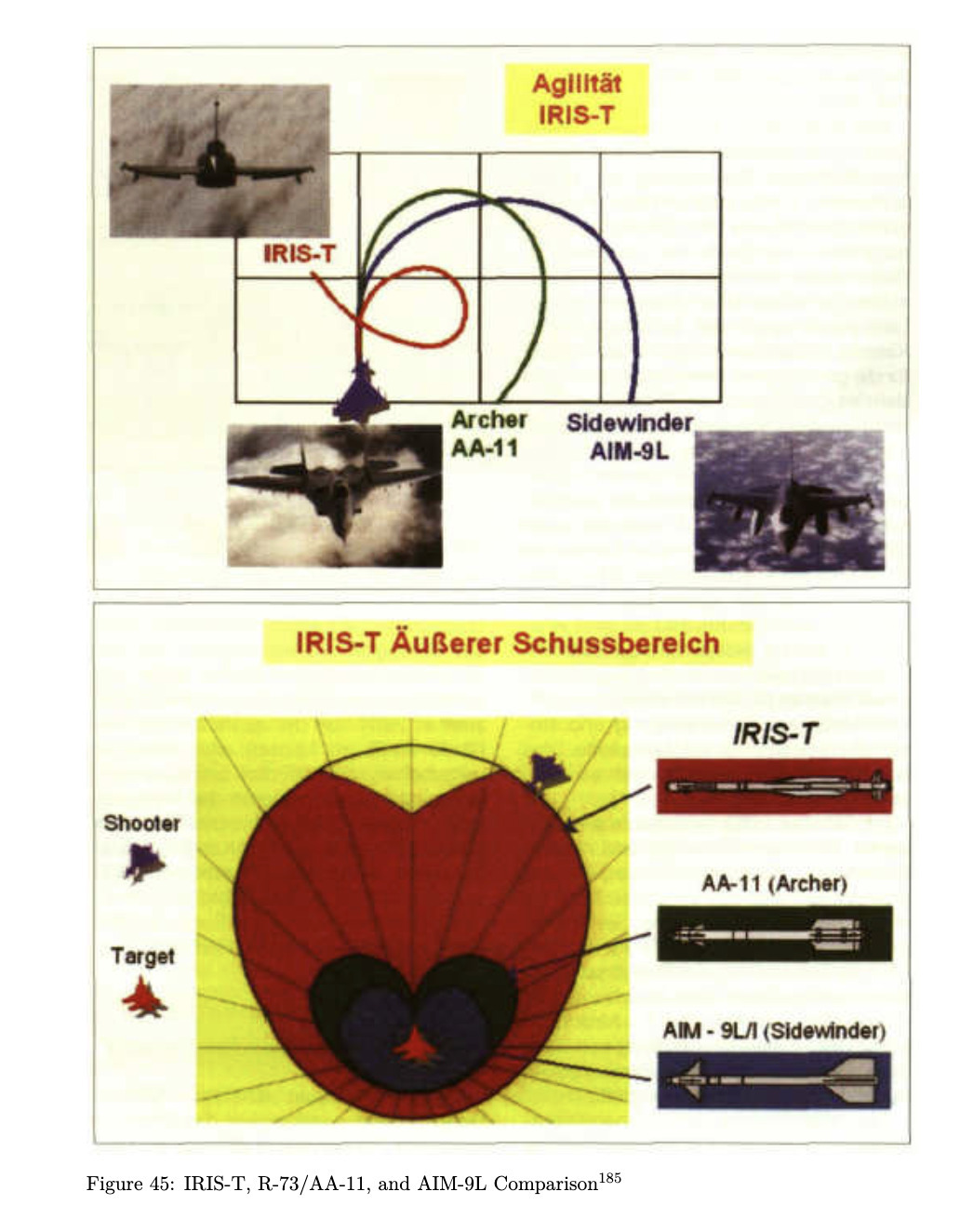
As you can see in this video and in other footage of the IRIS-T, right after launch, when the missile has the least kinetic energy, it can make the most of its high off boresight maneuverability and thrust vectoring. It can quickly point its nose towards the target, take advantage of its extreme turning capability, and then accelerate towards the enemy.
However, as the missile gains speed, things become much more complicated from a physics perspective. Performing an extremely tight turn while maintaining a high AoA would require a massive increase in lateral G loading, and in my case I’ve been working with a 60G limit.
So here I’m showing two situations where the IRIS-T is capable of performing these maneuvers.
If both the launching aircraft and the target are flying slowly, the missile starts with much less speed, allowing it to perform a much tighter 360° turn with a smaller turning radius.
But if either the launching aircraft or the target is flying significantly faster, the missile has to deal with a much higher engagement speed. As it attempts to turn back towards the target, the 60G limit becomes the restricting factor. Since the required lateral acceleration increases with the square of the missile’s speed for a given turning radius, the autopilot ends up commanding less AoA to stay within that limit. As a result, the missile performs a wider 360° turn instead of the extremely tight one it can achieve at lower speeds.
I’d say this is probably the most realistic IRIS-T I could make based on the information we currently have and the parameters that Gaijin use to make missiles.
Vid 1: Enemy behind up
Spoiler
Vid 2: Dogfigh low speed
Spoiler
Vid 3: Too much speed diff, the missile ends up making a wider turn than the aircraft’s ITR
Spoiler
4 Likes
i dont wanna read allat but i think the endpoint is that one of you thinks the motor layout should be similar to the Python 5
Spoiler
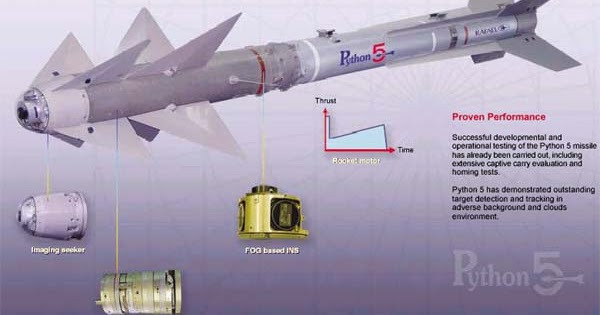
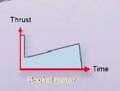
correct me if i am wrong @kensai16
Genuinely impressive what you’ve made ngl. would be neat if it could be plopped into statshark to compare it against the 9L, and R-73 (for the sake of radius comparison vs the irl image).
3 Likes
Thanks, man. I’ve made like 140 versions of this missile because it’s really hard to make a missile that meets a bunch of requirements without messing up other things, the most important thing is making sure it doesn’t stall or start sliding around like the current missiles do.
Modeling a missile is way harder than it looks, and on top of that, you have to balance everything without making it too extreme in some areas or too weak in others.
I think this missile is a pretty accurate representation of what we’ve seen from the IRIS-T so far, I’d love to compare it in Statshark, but I have no idea how to do that, and I don’t think it’s even possible
4 Likes
TheIRIS-TThunder
1 Like
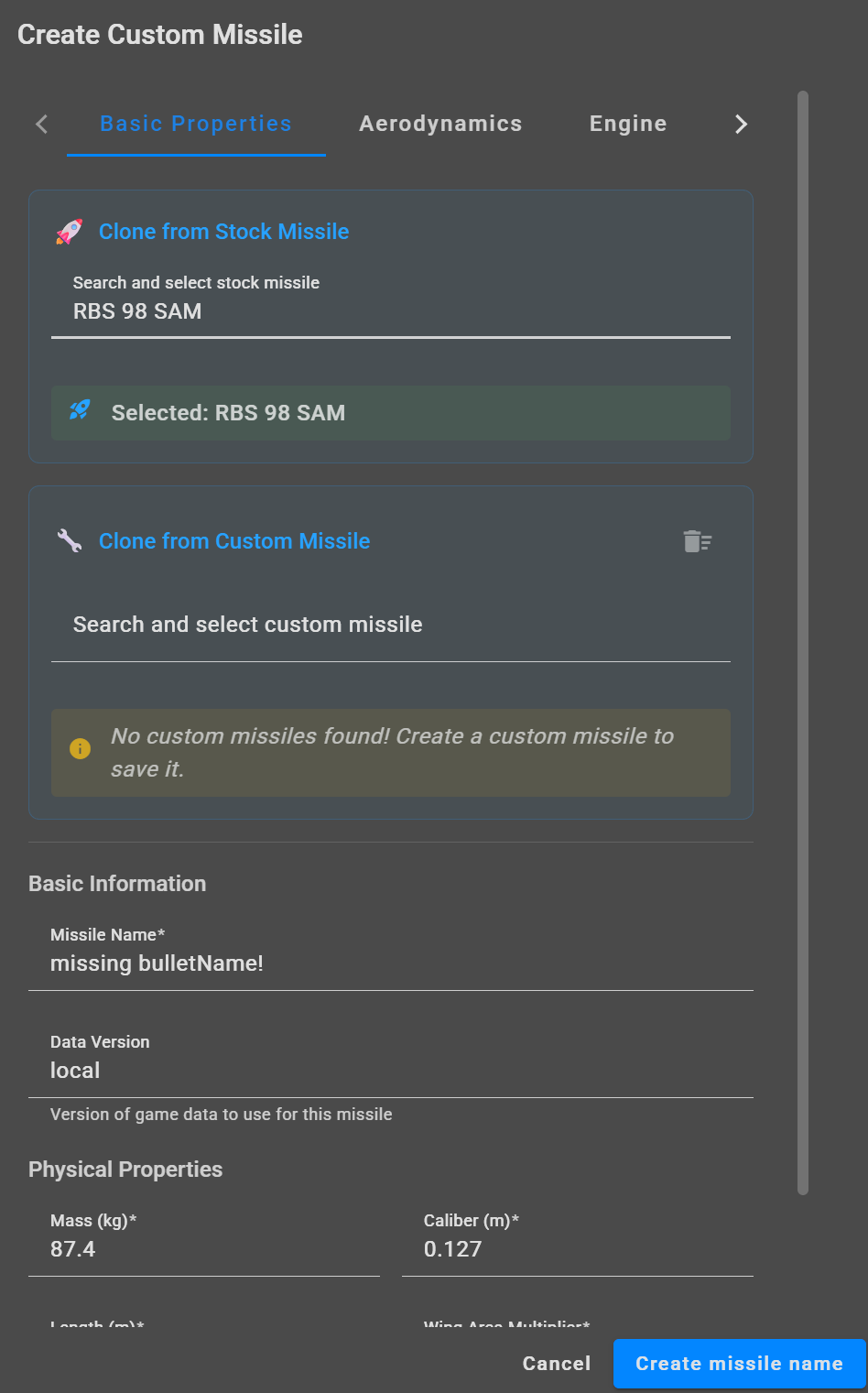
I might be able to do it if you tell me what you adjusted? Theres a custom missile function in statshark that you cant start from a baseline missile with. I’m kind of surprised there isnt a way to upload a custom missile file (atleast afaik?)
1 Like
This post was flagged by the community and is temporarily hidden.
I’ve changed some things that aren’t available here, so it’s not possible to test it this way, I’ve updated the mission with the new missile for anyone who wants to try it out
3 Likes
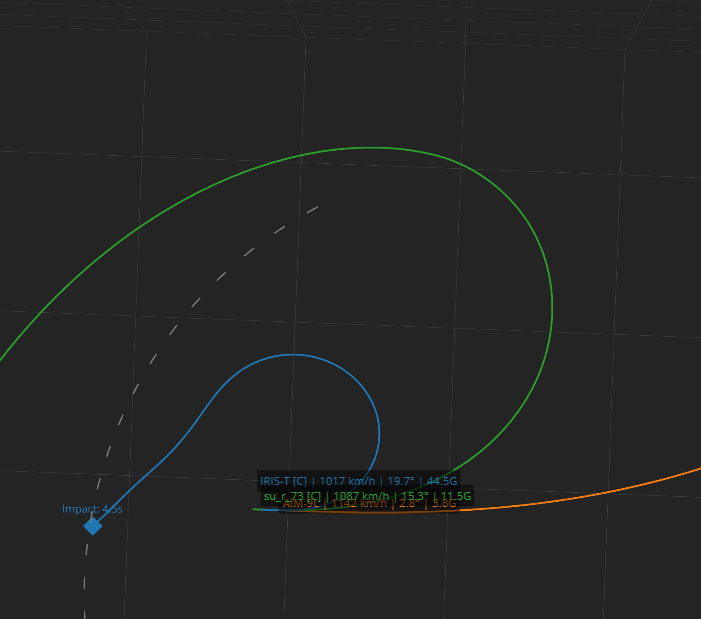
I managed to get it working, the test is a low speed dogfight, but I don’t really trust StatsShark that much because it does some weird stuff sometimes, It doesn’t always reflect what actually happens in game, I’ve actually managed to get better results with this missile in game sometimes, but it’s impossible to properly compare them here because the R-73 goes into a spiral stall, so it’s not really a fair comparison
The missiles are pretty nerfed tbh, the R-73 barely turns, and the AIM-9L is even worse.
Approximate recreation:
Statshark
Spoiler
In game
Spoiler
4 Likes
Looks pretty close actually (minus the 9L being unable to turn at all in-game lol) thanks for the work o7
4 Likes

Nah for real, thats some excellent work youve done there. Its really nice to see the things that Gaijin will never give us.
3 Likes
There’s a reason why it’s a next gen missile 💯
1 Like
typhoon forum reportedly gives up on waiting for gaijin, does their own missiles better
more at 10
11 Likes
Inb4 a second “marketting lie” hit the tower forum thread
1 Like
Not the first time either:
- VWS
- Cockpit
- UV Vilter
All have been kinda fixed by the community.
They really need to just make the entire HUD and HMD something configurable too.
3 Likes
There’s a working VWS? And what’s wrong with the Cockpit? The wide HUD?
This gives proper british VWS for the Typhoon instead of the American Placeholder we have at the moment.
(and appropriate ones for the German and Italian ones too)
Spoiler
That and all the issues with the EEGS missing its symbology among other things. There is also the missing button back lighting.

but there are many aircraft with HUD issues and they should just let the community handle it at this point. Its hardly a balance problem most of the time, no different to gunsights or a skin.
3 Likes