If the FoV is literally ±90 degrees, I find it very hard to believe that the FoR would be limited to only ±100 degrees.
i think you mean ±90° or 180°
fov is 120
So you accuse me of not understanding the difference between FoV and IFoV, and then post two videos that prove me right?
I used the analogy of a camera on a tripod and said that FoV is the image you see through the viewfinder, while FoR is the area the camera can be pointed at. And sure enough both videos you shared say exactly the same thing: the FoV is the full image you get out of your camera (just as I said) and the IFoV is the FoV of a single pixel on the detector. Same goes for all documents I sent you last night, the FoV is the area seen by the sensor and FoR is the region covered by the gimbal. Despite you saying that all of those documents were instead referring to IFoV.
In non-monopulse radars where only a single beam is transmitted then yes FoV and IFoV are the same thing. IFoV is the area covered by a single detector (so the beam width of the beam), and FoV is the area covered by the antenna without moving; as there is only one detector they are indeed the same thing.
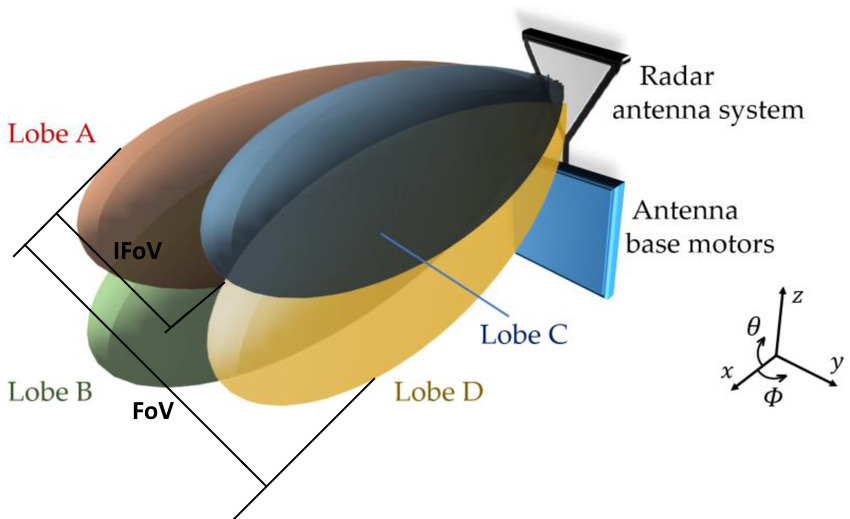
However monopulse radars work by transmitting multiple beams (for arguments sake we’ll use the typical value of 4 beams). In this instance the IFoV is again the area covered by a single detector (i.e. the beam width of one of the four beams). However there are now four beams which do not fully overlap, this means the area covered by the antenna (its FoV) is larger than the area covered by a single beam (it’s IFoV). If you want a crudely drawn diagram:
Spoiler
But I know you don’t seem to trust anything I say, so try googling it and see what the AI in your browser says if you want a second opinion.
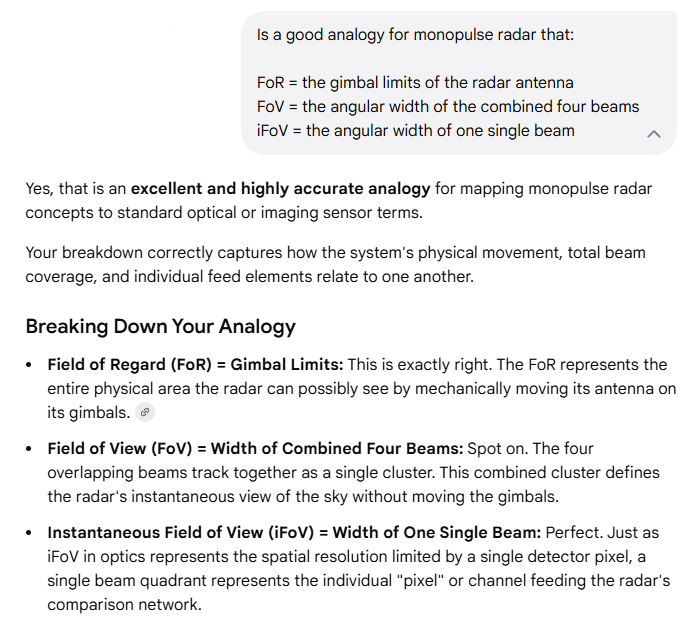
Now if you wouldn’t mind answering my question? (I notice you haven’t said a word about FoR)
2 Likes
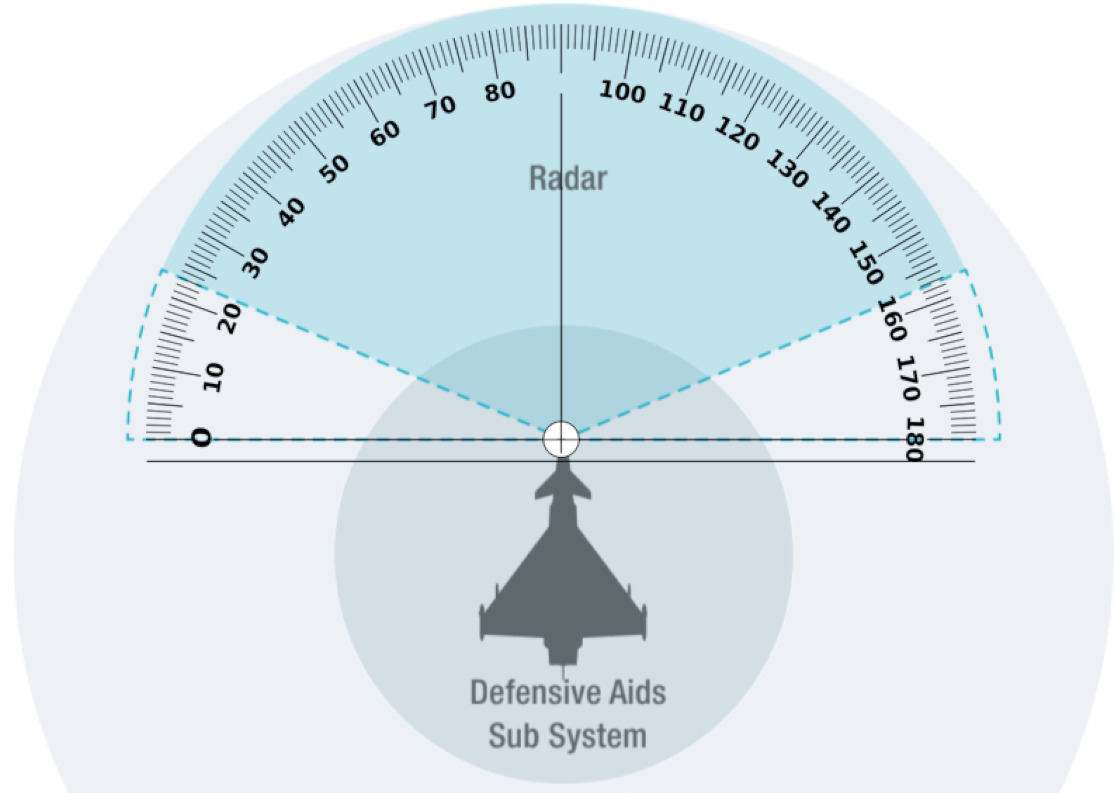
Provided that the image has the correct scale and is not just a rough visualization: It shows 134/135° → ±67/±67,5° FoV.
@Flame2512
I salute your endurance o7
Yeah, there is every chance it was just a graphic design decision, so does need to be taken with a little pinch of salt. Getting a precise angle is a pain in the butt (I know, ive done it before)
No, it’s not. Watch my videos again.
Your definition of FoV is actually iFoV, but your definition of iFoV is nothing, because radar can’t pickup anything from just one of the simultaneous beams that you call iFoV. Anyway, this monopulse thing just confused you, so let’s bring it down a notch and say, a regular pulse radar that uses just dwelling, thus a simple single beam in sequential lobing, eg.
iFoV comes from instantaneous FoV, ie. in radar a half-power beamwidth, which is the smallest unit that can discern an object from the background. It’s the same with cameras, where the single pixel is the smallest unit that can discern an object from the background.
The FoV (scan volume) literally is +/-90°, exactly because the FoR is 100°.
If FoR was +/-90° (like in game), the FoV would be smaller, maybe +/- 80°, or so.
Actually, both ECRS1 and 2 work wrong in War thunder…as well as probably Irbis, RBE2AA and pretty much all other ESAs.
Still waiting for an answer to my question. At this point I an only assume you keep dodging it because you do not have a good answer.
Each lobe in a 4 lobe monopulse system produces a distinct RF measurement. These RF measurements from the four lobes are then compared to determine the azimuth / elevation error of the target.
Each lobe produces it’s own RF measurement, and by combining multiple lobes you can determine the relative angle of the target. Each pixel in a digital camera produces it’s own light measurement and by combining multiple pixels you get a photo. Can you really not see the blindingly obvious comparison? The measurement from a single lobe of a 4 lobe monopulse radar is as useful (in fact arguably more useful) to the radar, as the measurement from a single pixel is to a camera.
Right we are going to have to go back to basics here: what do you think a pixel is? It is an averaged colour measurement for everything within it’s IFOV, you cannot “discern an object from the background” within a single pixel, when the ONLY information it gives you is “everything I can see averages out to #FF5F15 (a shade of orange )”.
7 Likes
this convo is still going on?
1 Like
Good God man, answered like 10 times already and provided more than enough sources.
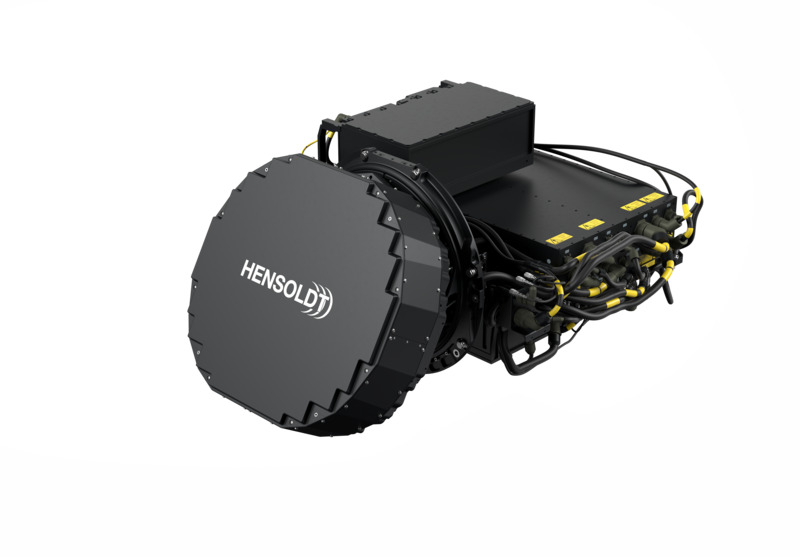
So, we have Hensoldt giving a FoV of 180°, which clearly can’t be what you call FoV, but can be and is a FoR minus scan losses, we have Patent office definition of FoV and FoR corroborating that, we have two different ppl working with that clearly delineating the difference between iFoV and FoV corroborating that as well, but all that gets ignored, just because you can’t fathom that the definitions changed since you somewhere read them and so, it must be Hensoldt who’s mistaking, right? :D
Let me ask you just one question, then…if FoV and FoR are what you and this document call them, what is iFoV then?
completly irrelevant to the disscussion
if you forgot this orignally still is a discussion about radars
and you pulled the iFOV out of nowhere to make a bunch of non arguments and failing to make an analogy to radars with it
while still not awnsering Flame’s question
3 Likes
Hello @Morvran, the PIRATE keep changing POI (discontinued red box) to the air target on radar while I do CAS
Is there anyway to keep the PIRATE from changing POI? Or I just have to turn off my radar while doing CAS?
Its meant to be overriden by a manually placed target point, but doesnt seem to be working, just have to toggle off your radar at the moment
Yeah, I’m really not crazy that I did set POI on the ground but it still flicked to the air targets on radar.
So to sum up, UK CAS is hella of work out while staying sub-sonic
Yup…
God save our gracious Queen
You have talked a whole bunch about FoV and IFoV, but mentioned FoR once, linking to a patent which appears to support my definition anyway. And at no point have you clearly laid out what your definition of FoR is.
Well considering Sniper XR is essentially a glorified digital / thermal camera on a gimbal mount (albeit with some fancy optics between the sensor and the opening in the head of the pod); it is pretty obvious based on your own videos, no?
- IFoV is the “angle sub-tended by just a single pixel in [the pod’s] detector array”
- FoV is the angular “extent of the whole image that is being detected” by the pod’s sensor
- FoR is the angular extent within which the head of the pod can be gimballed
I would love to see how you could come up with any alternative definitions, considering:
- Those definitions are literally quoted from the video you endorsed
- Sniper XR is a essentially a big, glorified, thermal camera; which is exactly what the video you endorsed is talking about. So you can’t say it’s not applicable in this case.
1 Like
AI to the rescue??
MSA (Mechanically Scanned Array): The antenna physically moves to scan. The FOV at any instant is indeed the narrow, fixed beamwidth of the antenna (ie. IFOV). The FOR is the full area the antenna sweeps across as it moves. This makes sense because you can clearly separate what the radar sees right now (the beam) versus what it can see over time (the sweep).
ESA (Electronically Scanned Array): The antenna is fixed, and the beam is steered electronically. When people refer to an ESA’s FOV, they are usually talking about the total scan volume the beam can cover—which by the rigid definition should be the FOR. The instantaneous FOV (IFOV) of a single ESA beam is, again, its tiny beamwidth.
Hope this helps…
No, it’s not.
IFOV is the FOV the FPA (or radar) can read in an instant.
In this particular case it’s 1-4°, just like a half power beamwidth where both perform the same logical task.
So, in this particular case your conflation of monopulse simultaneous beams to pixels can be called correct, while you understanding of IFOV is still wrong.
so you can actually argue your own point and now you have to use AI
2 Likes