- Yes
- No
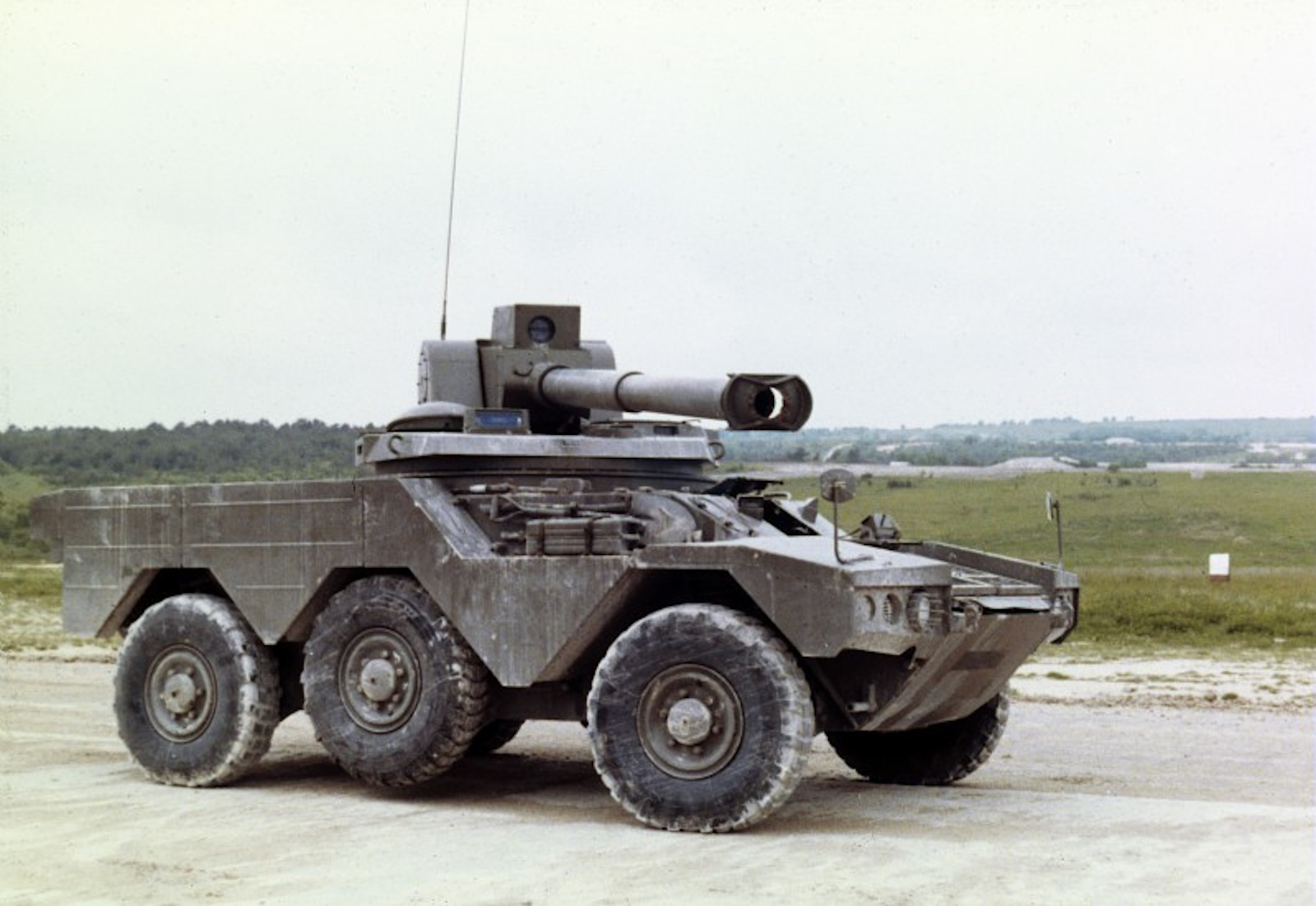
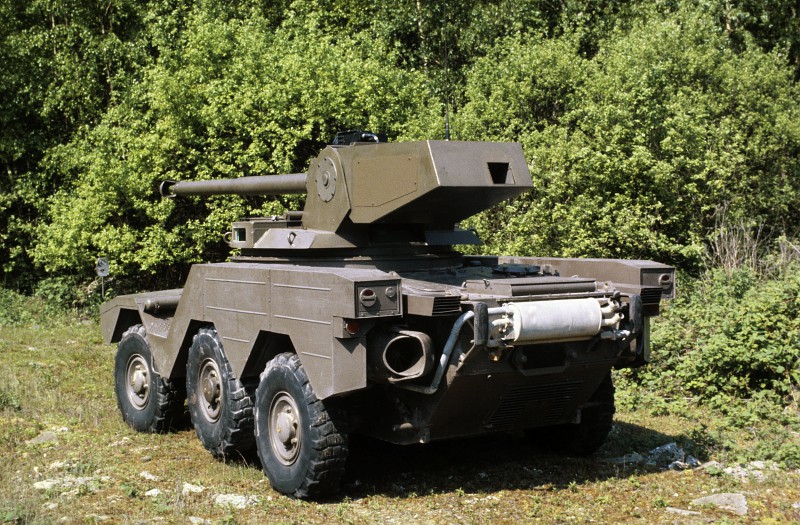
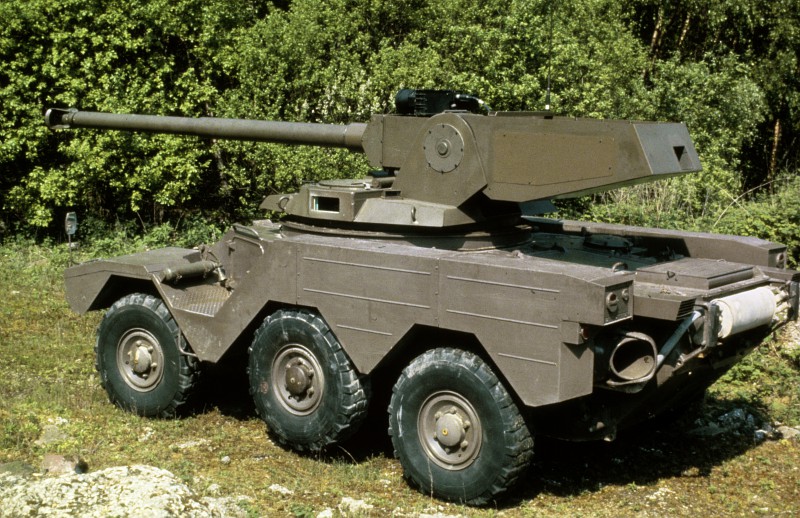
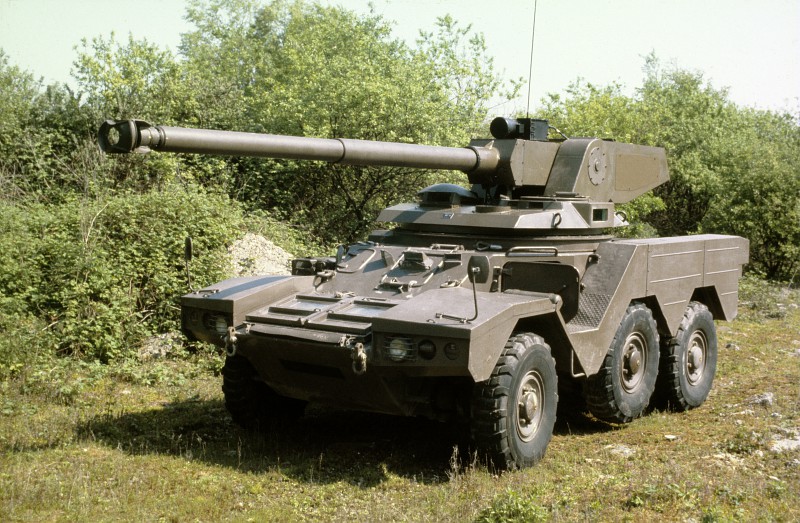
Welcome to the suggestion for the ERC-90 MARS 90-F4! While the ERC-90 chassis has yet to be in-game, it is at the very least somewhat well known among AFV enthusiasts. What isn’t as well known is the turret. The MARS 90-F4 uses a CN 90 F4 gun found in-game on the MARS 15, but unlike the TS 90 turret, the MARS 90-F4 turret has a less favorable profile for incoming fire, and is autoloaded, with a maximum rate of fire of 10 rounds per minute. In War Thunder, this would be a nimble little light tank, one of many in the French tree, and not the only with this turret!
History
An early ERC-90 being marketed with the older 90 mm F1.
In the late 1970s, Panhard finished work on its new ERC, or Engin à Roues, Canon (Wheeled Vehicle, Canon) armored reconnaissance vehicle. In 1980, the French Army would trial and accept the ERC 90 F4 Sagaie into service, armed with the long CN-90-F4 gun, capable of firing APFSDS rounds. It was a successful vehicle, being both light and fairly heavily armed, capable of taking out older vehicles like the T-55 and T-62 with ease using its APFSDS round. During this time however, Hispano-Suiza began work on a new turret known as the MARS 90-F4, capable of enhancing the ERC-90’s abilities.
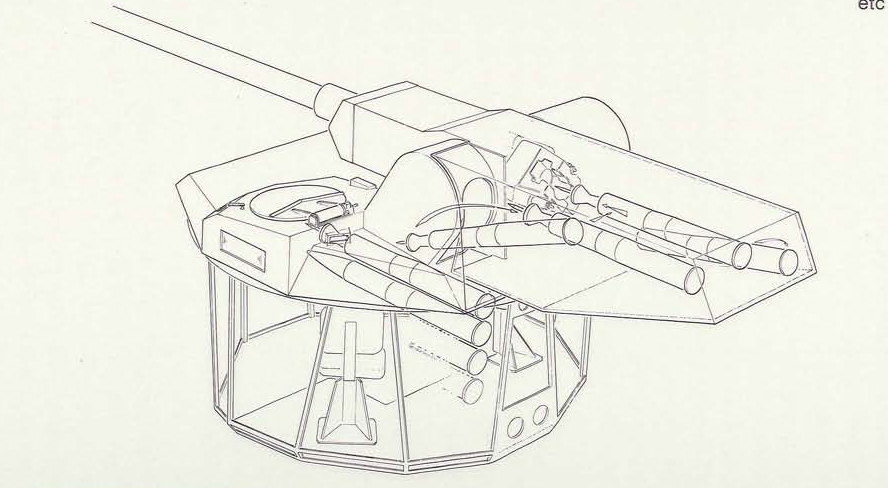
A diagram of the interior of the MARS 90-F4.
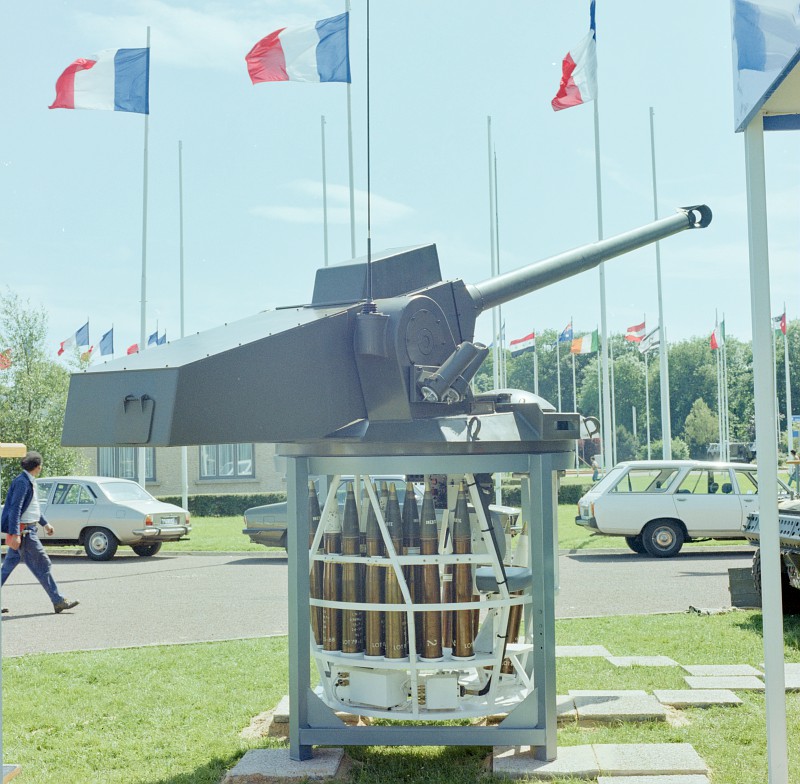
The MARS 90-F4 on display at Satory, likely 1981.
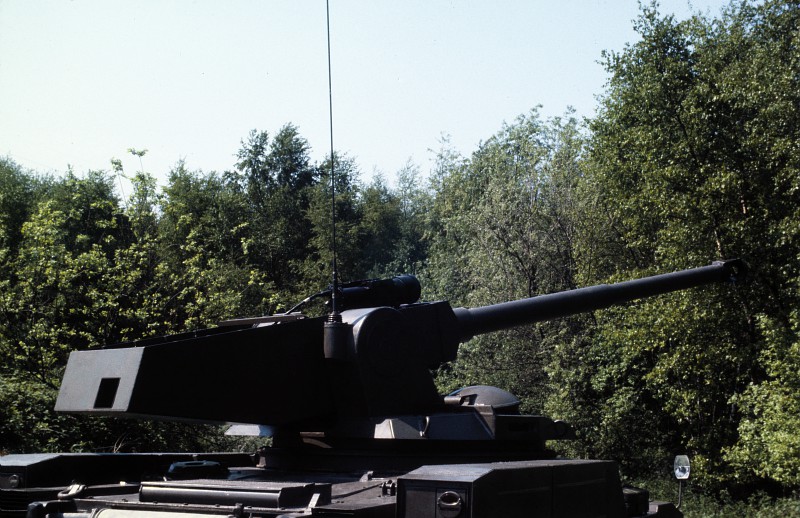
The MARS turret was designed to be a low profile turret for vehicles in the eight to fifteen-ton range. It had excellent elevation angles, able to depress 8 degrees and elevate 30 degrees, had a decent amount of space inside the turret, and was designed to be less noisy inside the turret than the other AFVs. The Thomson-CSF Canasta LLLTV used on the AMX-30B2 was mounted over the rear part of the main armament, giving the turret crew a TV monitor. The gunner was provided with a SOPELEM M371 periscopic sight with ×1 to ×6 magnification, as well as two vision periscopes, and one vision block.
Loading is done via a loading hatch and automatic loader located over the gunner’s left shoulder. A round is selected, pushed into the hatch, then fed into the breech by the autoloader into a ready-round chamber, allowing three rounds to be fired in 10 seconds, with follow-up rounds theoretically being able to be fired from 8 to 10 rounds a minute.
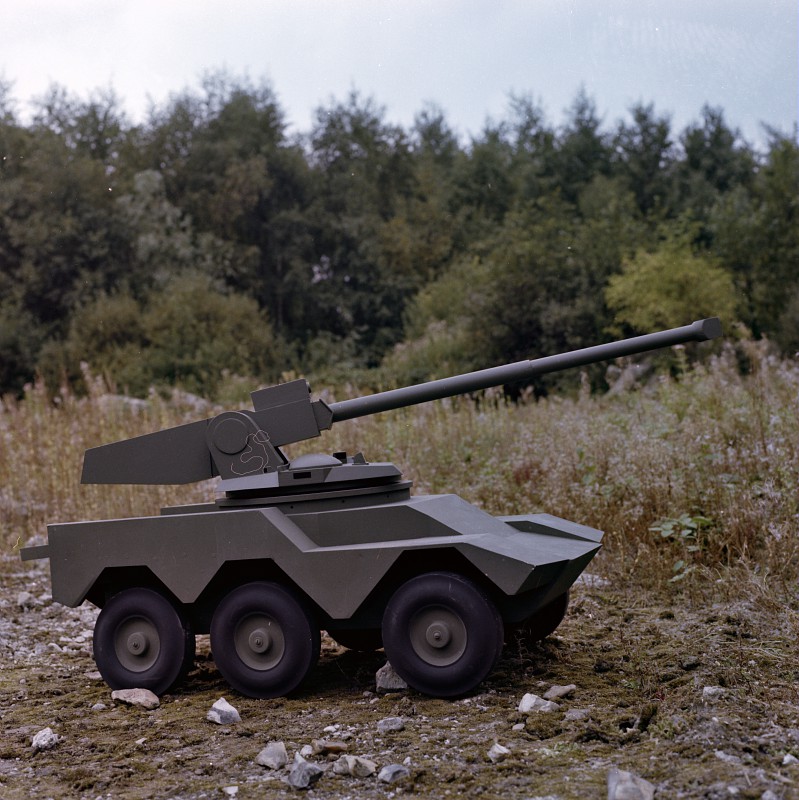
A mockup of the ERC-90 MARS 90-F4.
The MARS 90-F4 turret was first shown at the Satory Exhibition 1981, and trialed on the ERC-90 in 1982 for firing trials. It was mounted on the VBC, Lohr RPX, and Panhard AML, showcased at Satory 1983, also showcasing its ability to be mounted on a variety of chassis’. While its versatility and utility were obvious, as is the case with many of these export and retrofit projects, no interest was shown, and marketing of the MARS turret ended in the 1980s.
ERC 90 Sagaie during exercises in Haute-Savoie, Auvergne-Rhône-Alpes, 1996.
Specifications
- Crew: 3
- Turret weight: 2,200 to 2,600 kg
- Main armament: 90 mm CN-90-F4
- Main armament ammunition: 21 rounds of OFL 90 F1, OE 90 F2, or OCC 90 F2 carried in the turret
- Main armament elevation: -8°/+20°
- Secondary armament: 7.62 mm (2,100 rounds, 600 ready to fire) or 12.7 mm machine gun
- Engine: 155 hp Peugeot V-6 Petrol engine
- Maximum speed: ~90 km/h
Sources
Gallery