- Yes
- No
Hello everyone, and welcome to this new suggestion.
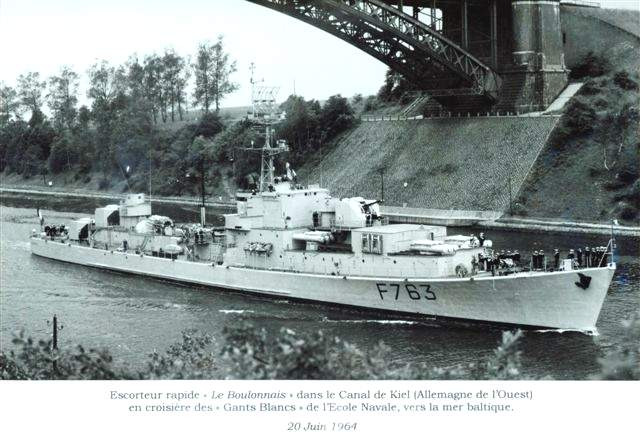
Today, I present to you an E50 class ship: the Boulonnais (F763).
After the World War II, the French Navy undertook a major effort to rebuild and modernize its fleet. The war had highlighted the growing importance of anti-submarine warfare, particularly in the context of protecting convoys and major naval units from increasingly capable submarines. It was within this framework that the E50 class was designed. These ships were designed as fast escorts, capable of accompanying a wide variety of vessels while ensuring their protection against underwater threats. Drawing on technologies that had proven effective during the war, such as sonars and air-surveillance radars, these ships represented a first step in the modernization of the French Navy during the early Cold War period.
The Boulonnais was the third unit of the E50 class. Construction began in 1952 at the shipyards of Nantes, and the vessel entered service in 1956. Upon commissioning, the ship was assigned to the anti-submarine forces, integrating the GAASM (Anti-Sous-Marine Action Group). In this role, it was tasked with protecting French naval units, particularly high-value ships such as aircraft carriers, against submarine threats.
During his relatively short career, the Boulonnais took part in several important operations. One of its most notable deployments occurred during the Suez Crisis, when France and the United Kingdom intervened militarily against Egypt. During this operation, the Boulonnais was involved in the protection of the aircraft carrier Arromanches, a key asset of the French fleet at the time. This mission highlights the primary role of the E50-class escorts: to provide close protection to major naval units operating in potentially hostile environments.
Despite its operational usefulness, the Boulonnais had a relatively short career. It was the first ship of its class to be withdrawn from service, being placed in reserve as early as 1964, after only eight years of active duty. The vessel was then kept at the naval base of Brest for about a decade. Like many French naval ships of this period, it was eventually repurposed as a target for live-fire exercises.
The ship takes its name from the Boulonnais, a historic area whose main city, Boulogne-sur-Mer, has long been associated with maritime activity.
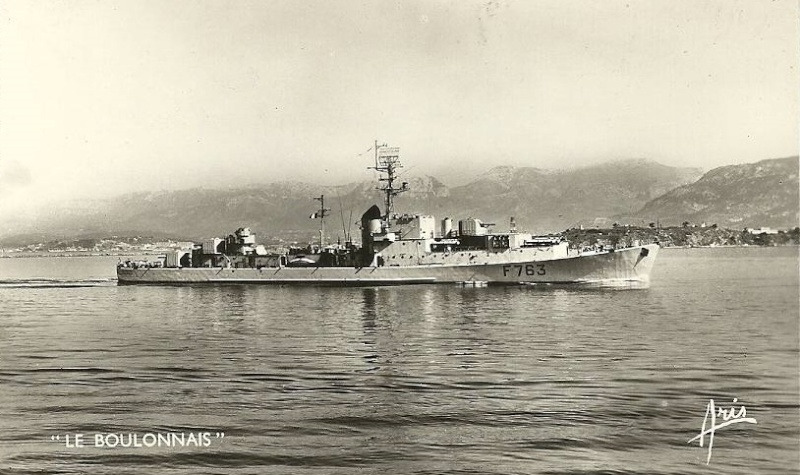
Characteristics
Length : 99.80 m
Width : 10.30 m
Draught : 4.30 m
Mass : 1520 tons
The vessel is powered by two Indret diesel engines, each driving a propeller, giving it a maximum power of 20000 hp. Its top speed is 27 knots, and its range is estimated at 4,500 nautical miles at a speed of 15 knots.
Its crew consists of 170 sailors.
Equipment
Radar :
- DRBV-20A air/surface search radar
- DRBN-32 navigation radar
- DRBC-31 fire control radar
Detector :
- ARBR-10 radar warning receiver
Sonar :
- DUBV-1 sonar
- DUBA-1 sonar
Weapons
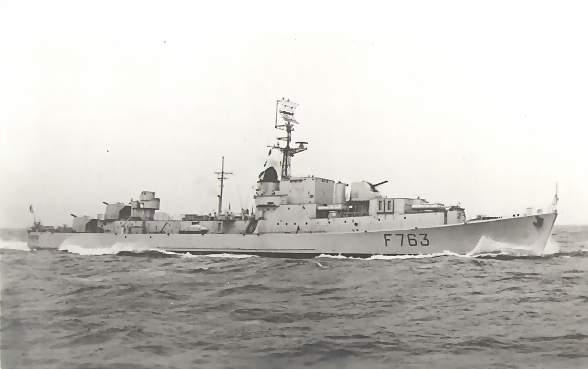
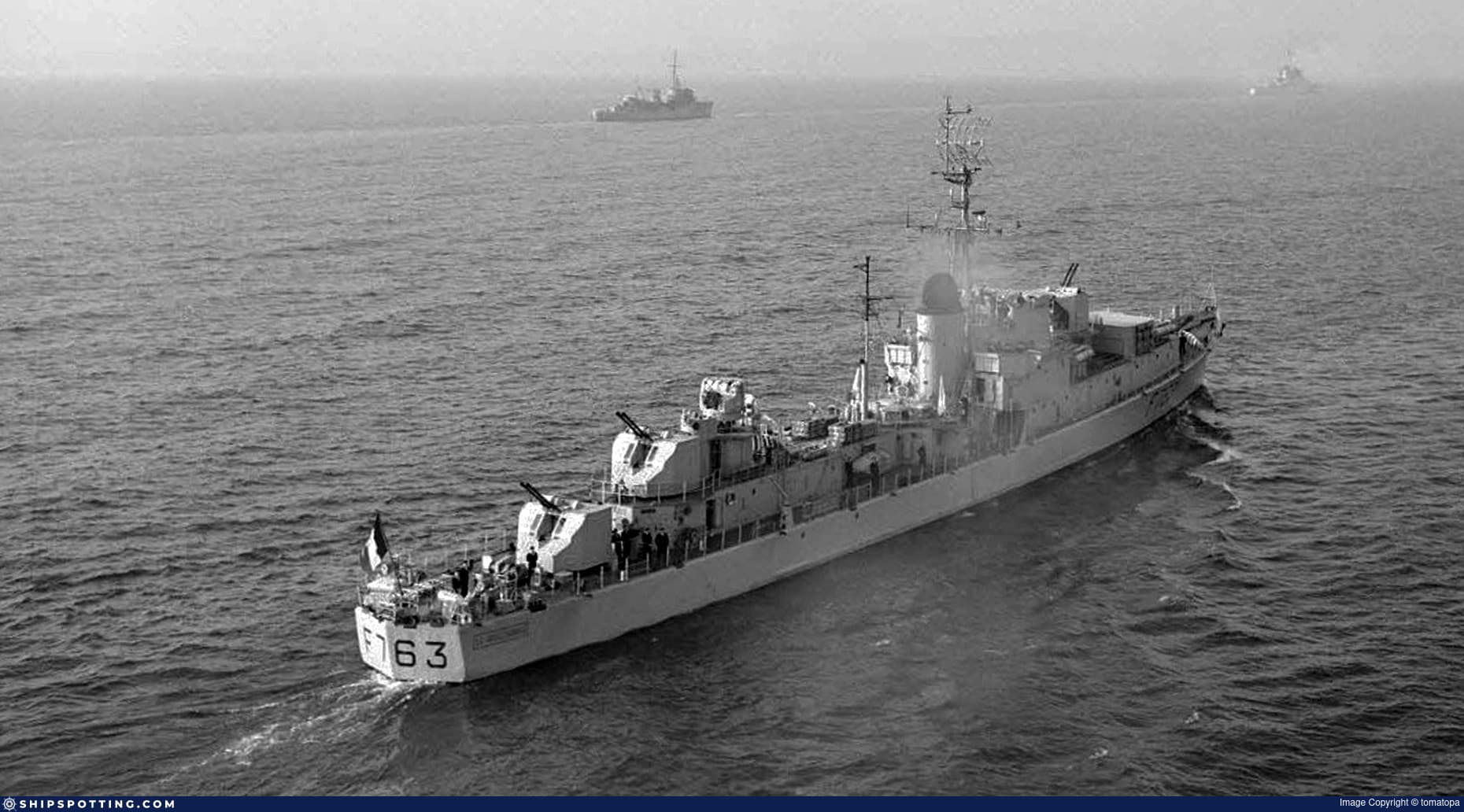
The ship’s armament is the same as that of other ships in the class, including the following:
Guns :
- 3 x 2 57mm/L60 Mle 1951 canons
- 2 x 20mm Oerlikon canons
Torpedo :
- 4 x 3 550mm torpedo tube
Other :
- 375mm Bofors ASW rocket launcher
- Depth charges
In the game, this ship would be an interesting addition to the French coastal tree, complementing in an interesting way the first two ships of the class already present in the game.
Sources
- NHMM30_001-XXXb- N&B_Mise en page 1
- Le Corse class Frigate Escorteur Rapide French Navy Marine
- SHDAA_REP_5I_NO_661_1773_1976
- https://www.netmarine.net/bat/er/boulonnais/caracter.htm
- * LE BOULONNAIS (1955/1976)
- https://www.meretmarine.com/fr/histoire-navale/plongee-dans-les-archives-les-anciens-escorteurs-d-escadre
- Escorteur Rapide Le Boulonnais
- FS Le Boulonnais F763 - ShipSpotting.com - Ship Photos, Information, Videos and Ship Tracker